9 Elegant Living Room with Patterned Decor: Chic Patterns, Calm Vibes

9 Elegant Living Room with Patterned Decor: Chic Patterns, Calm Vibes

Listen to this article
0:00 / 0:00

Most patterned living rooms fail for one reason: too many patterns competing at the same visual weight, with nothing telling your eye where to land first. An elegant living room with patterned decor isn’t about restraint for its own sake — it’s about giving one pattern the lead role and letting everything else support it. That’s the difference between a room that reads as “designed” and one that reads as “collected in a hurry.” If you’re also mixing in vintage or one-of-a-kind finds, our guide to mixing patterns, textures, and vintage pieces covers how to layer without losing that hierarchy.

Below are nine pattern-led approaches, what actually makes each one work, and the specific mistakes that turn a good idea into a cluttered one.

See also  22 Minimalist Aesthetic Living Room Ideas For a Calm and Stylish Home

Quick-Reference: What to Know Before You Start

  • Pick one lead pattern per room. Everything else should be solid color or a much smaller-scale version of that same motif.
  • Scale matters more than color. A small floral and a large floral in the same room will fight each other even if the colors match perfectly.
  • Neutral walls buy you room to be bold elsewhere. Save your boldest pattern for a rug, a single chair, or curtains — not the walls plus the furniture plus the rug.
  • Texture is a pattern substitute. Boucle, velvet, and linen add visual interest without adding another print to balance.
  • Swap-ability protects your budget. Put pattern on cushions and throws first — they’re the cheapest thing to change if a combination doesn’t work.

1. Bold Geometric Walls Meet Soft Furnishings
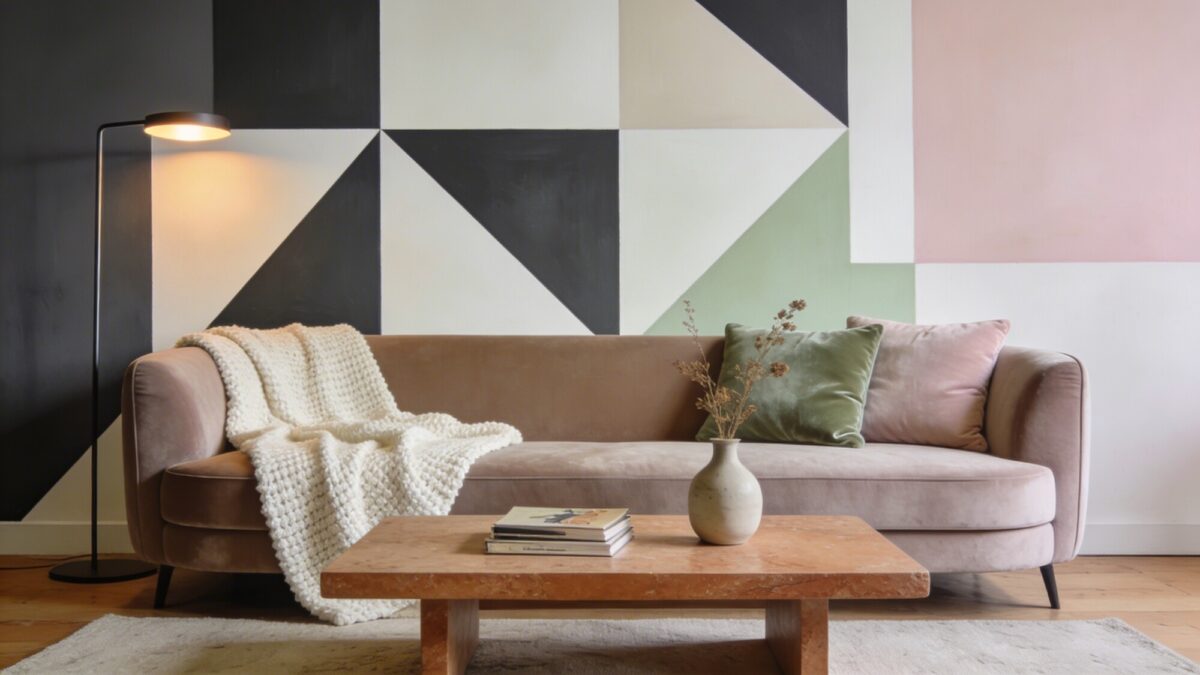
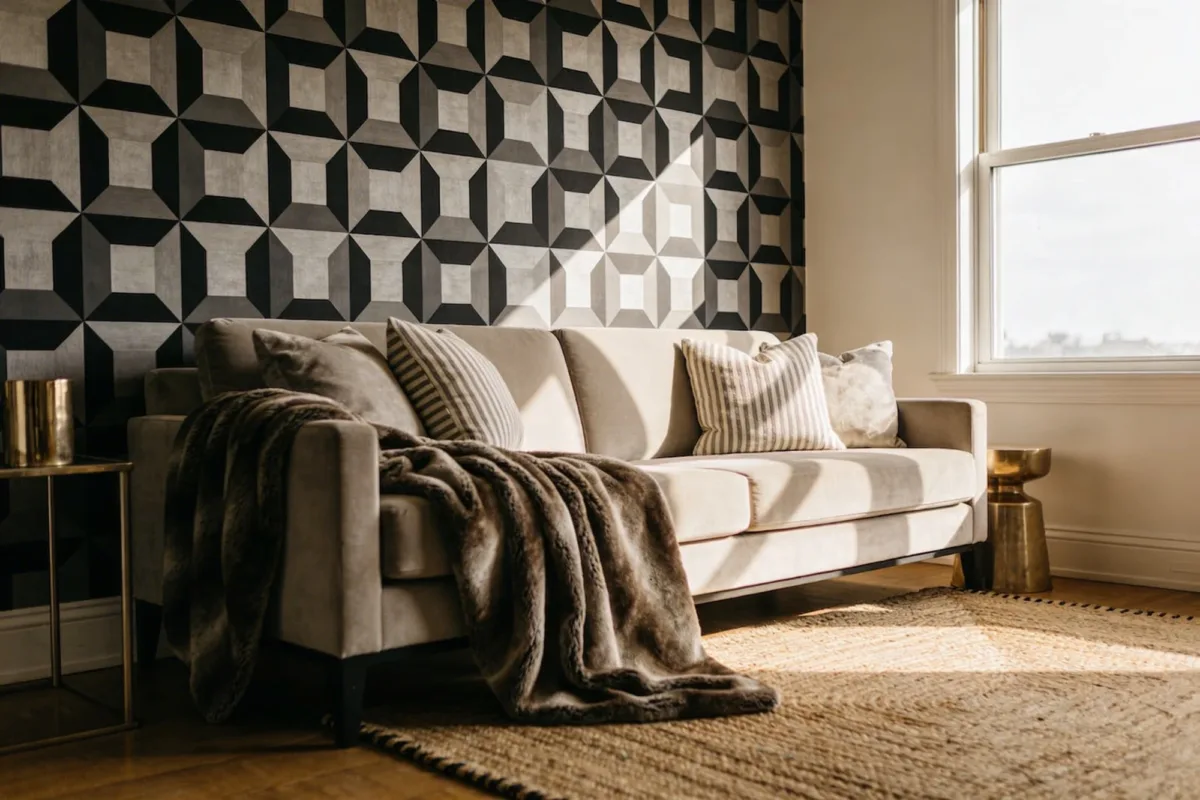
A geometric statement wall does the heavy lifting a lot of people try to spread across five different pieces of furniture. Charcoal and ivory geometric wallpaper or panels give the room a single, confident focal point — and once that’s in place, everything else in the room should go quiet. A taupe or oatmeal sofa with clean lines, a knit throw, and two muted cushions in sage and blush are enough. You don’t need a patterned rug on top of a patterned wall; that’s the most common overcorrection people make with this look.

💡 Pro Tip: If you’re renting or not ready to commit to wallpaper, a large geometric canvas or a set of framed panels gives you 80% of the same focal-point effect and comes down in an afternoon.

2. Striped Sophistication Across Soft Surfaces
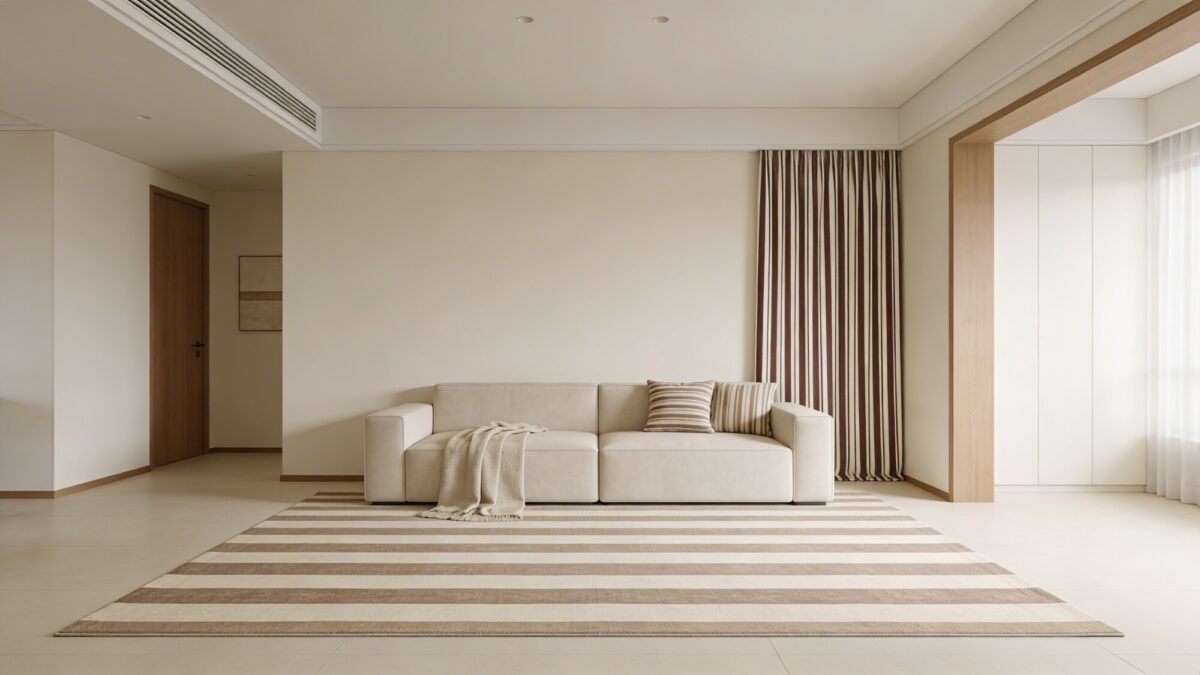
Stripes get dismissed as a nautical cliché, but wide, soft-toned stripes on a rug do something specific: they visually widen a narrow room and, if you run them the right direction, can make a low ceiling feel taller. The trick is direction discipline — horizontal stripes on the rug, and if you add a striped element elsewhere, run it vertically (a single curtain panel, for instance) rather than repeating the same orientation everywhere. Keep the sofa and walls solid. One striped surface is confident; two competing stripe directions on furniture start to look like a packing pattern.

See also  7 Elegant Living Room Decor with Books That Wow

3. Floral Patterns With a Modern Twist
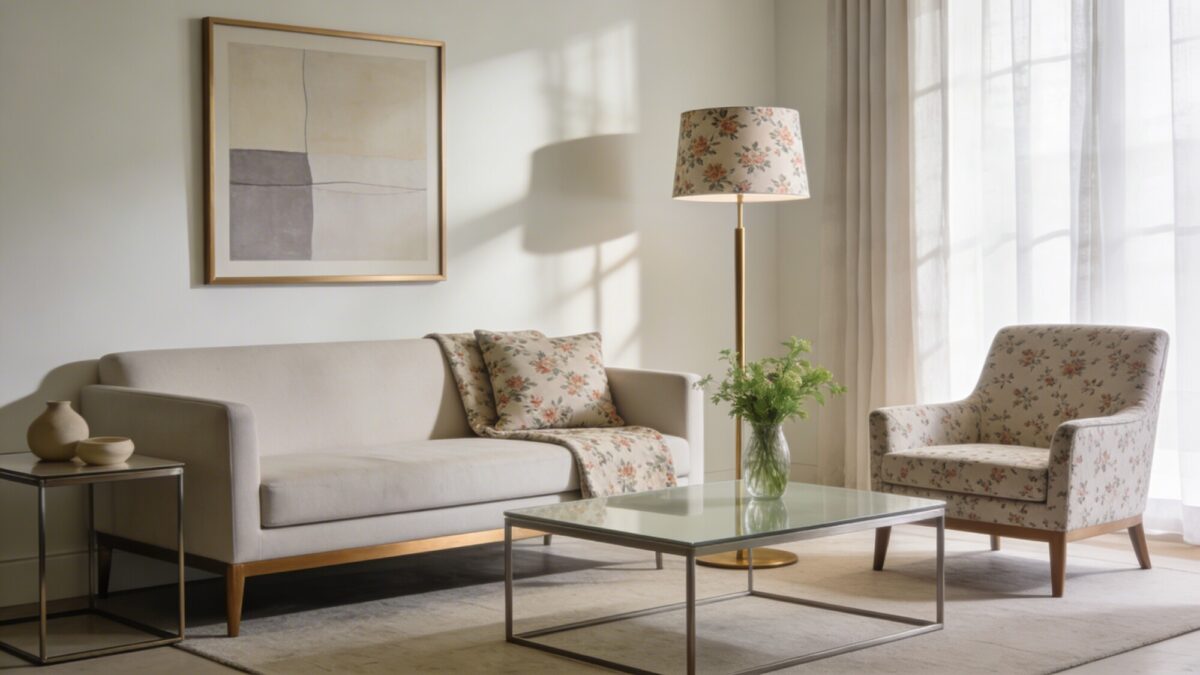
Small-scale florals in a limited palette read completely differently than a large cabbage-rose print — this is the single biggest lever for avoiding a dated look. Put the floral on one chair, echo it in a single cushion, and stop there. A lamp shade in the same print is optional and only works if the scale is noticeably smaller than the chair’s. Pair it with matte brass or brushed nickel hardware rather than anything polished or ornate; the hard metal edge is what keeps a floral room from tipping into “cottage” territory when that’s not the goal.

💡 Pro Tip: Hold the fabric swatch at arm’s length across the room before you commit. If the individual flowers blur into a solid color from six feet away, the scale is too small to register as a statement — size up.

4. Checkerboard Charm That Feels Lux

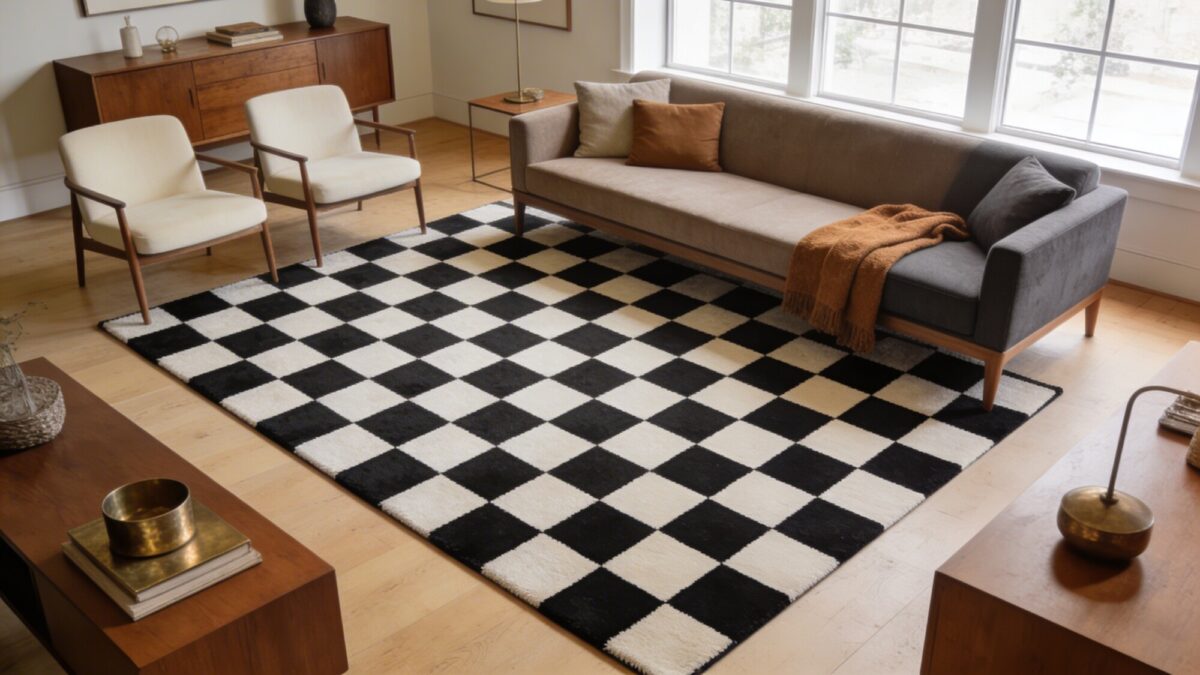
Black-and-white checkerboard is one of the few bold patterns that reads as timeless rather than trendy, mostly because it’s been in continuous use in design for a century. The move that separates a lux checkerboard room from a dated one is warmth: pair the high-contrast rug with warm wood tones (walnut, not gray-washed oak) and soft cream textiles rather than more black-and-white pieces. If you’re already drawn to a strong, graphic color story, our green and gold living room ideas show a different way to get that same confident, unmistakable-focal-point effect without going monochrome.

5. Chevron Chic With Calm Color

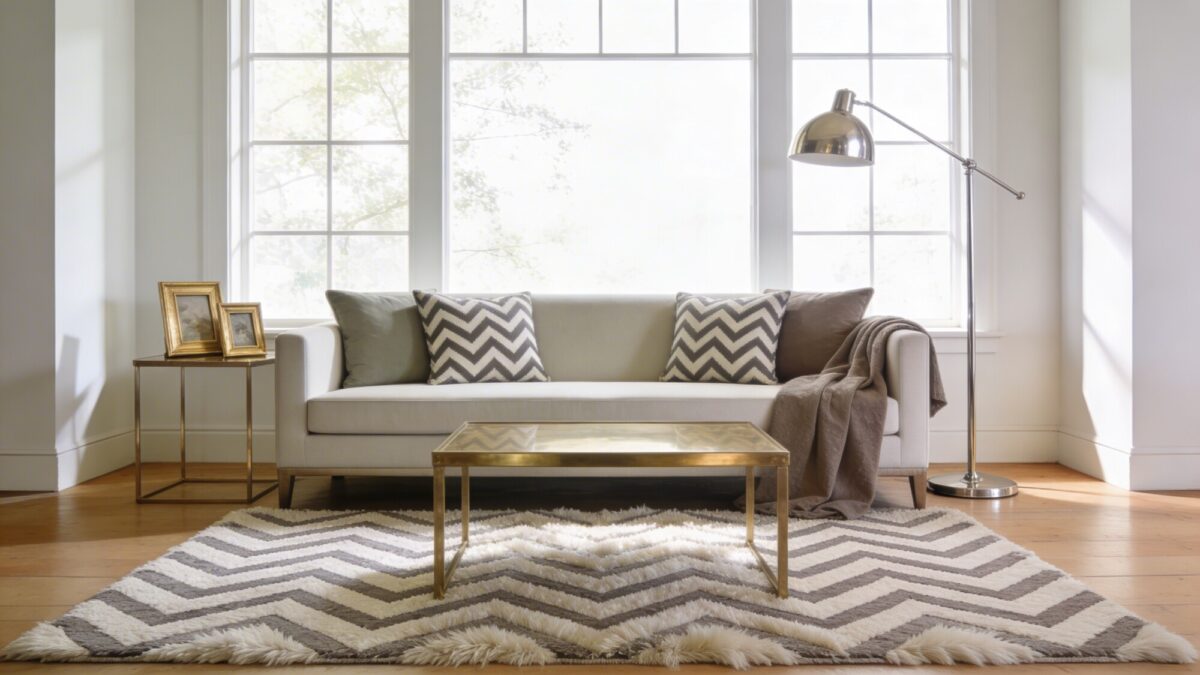
Chevron in a saturated, high-contrast palette can feel like a nightclub floor. Chevron in soft, tonal colors — think two shades of oatmeal, or dusty blue on cream — keeps the visual movement without the energy overload. This is a good pick if the room gets a lot of natural light, since the pattern’s zigzag reads more clearly (and more calmly) when sunlight is moving across it during the day. A brass coffee table or picture frames add the shine that keeps the room from feeling flat once you’ve muted the chevron’s contrast.

See also  9 Elegant Living Room Decor with Chandelier: Luxe Ideas for Wow-Factor

6. Maximalist Yet Minimal: Repeating Motifs
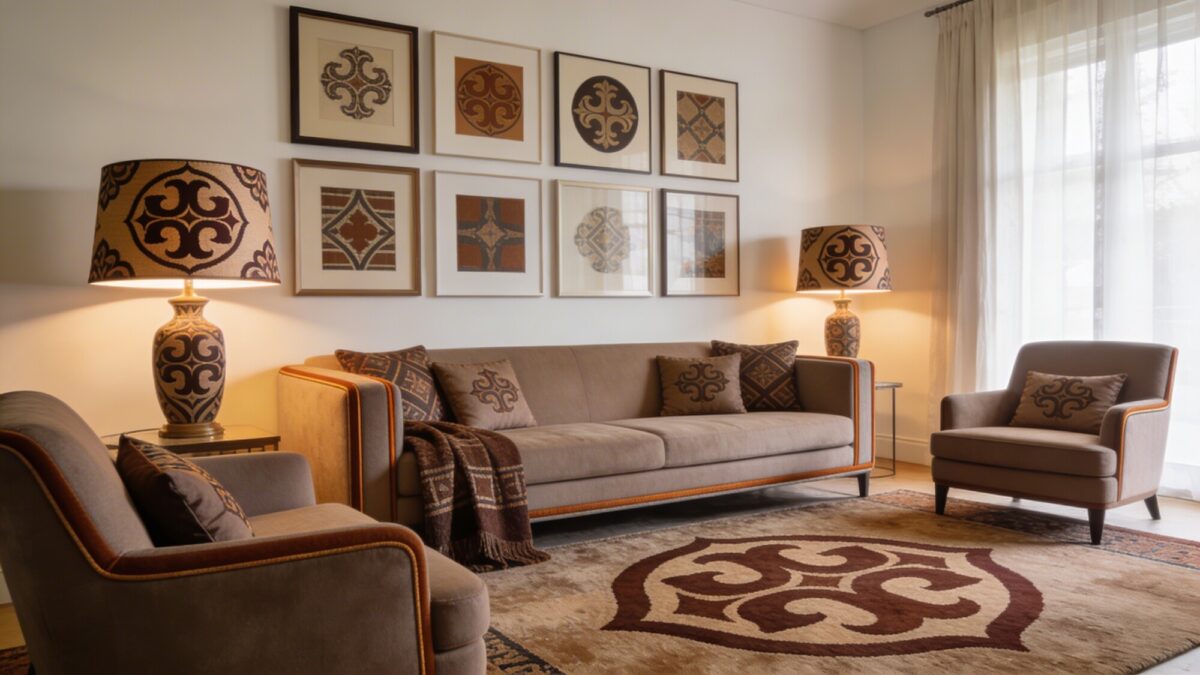
This is the pattern approach for people who genuinely love a lot of visual energy but don’t want a room that looks like it was decorated by committee. The rule: one motif, three scales. A large version on the rug, a medium version on a lampshade, a small version on the piping or trim of the sofa. Because it’s the same shape repeating rather than three unrelated patterns, your eye reads it as intentional instead of busy. A neutral wall color is non-negotiable here — it’s the one thing holding the whole system together. For more on building a room around a display-worthy focal point like this, see our notes on elegant living room surfaces and subtle glam.

💡 Pro Tip: If you’re not confident sourcing three different products in the same print, buy the rug first — rugs come in the widest range of scaled-down or scaled-up versions of a given motif, so it’s easier to find matching cushions and a lampshade afterward than the other way around.

7. Animal-Inspired Patterns With Subtle Glam
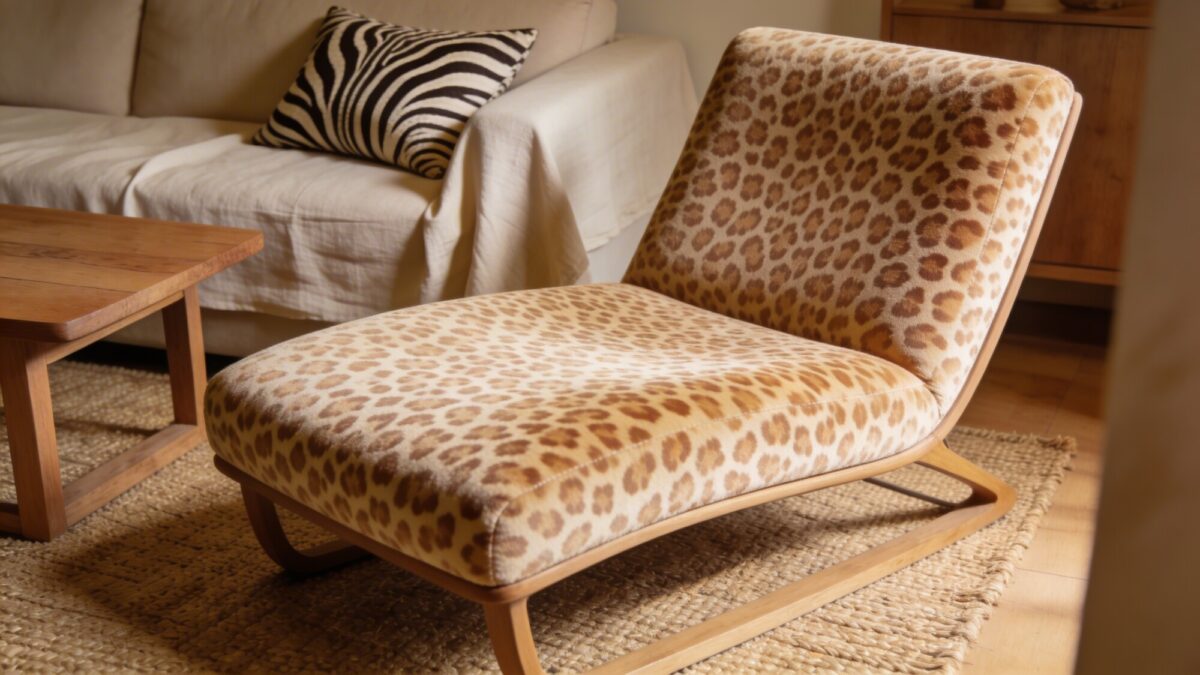
Animal print is polarizing mostly because people go too big with it — a leopard-print sofa is a very different commitment than a leopard-print accent chair. Keep it to two pieces maximum: one chair, one cushion, and stop. Warm neutral base colors (beige, taupe, warm brown) read as sophisticated; stark black-and-white leopard tends to read more costume-y. This is genuinely one of the fastest ways to update a dated neutral room, since you’re only replacing one or two pieces rather than repainting or re-flooring.

8. Ikat and Velvet: Texture-Rich Combo

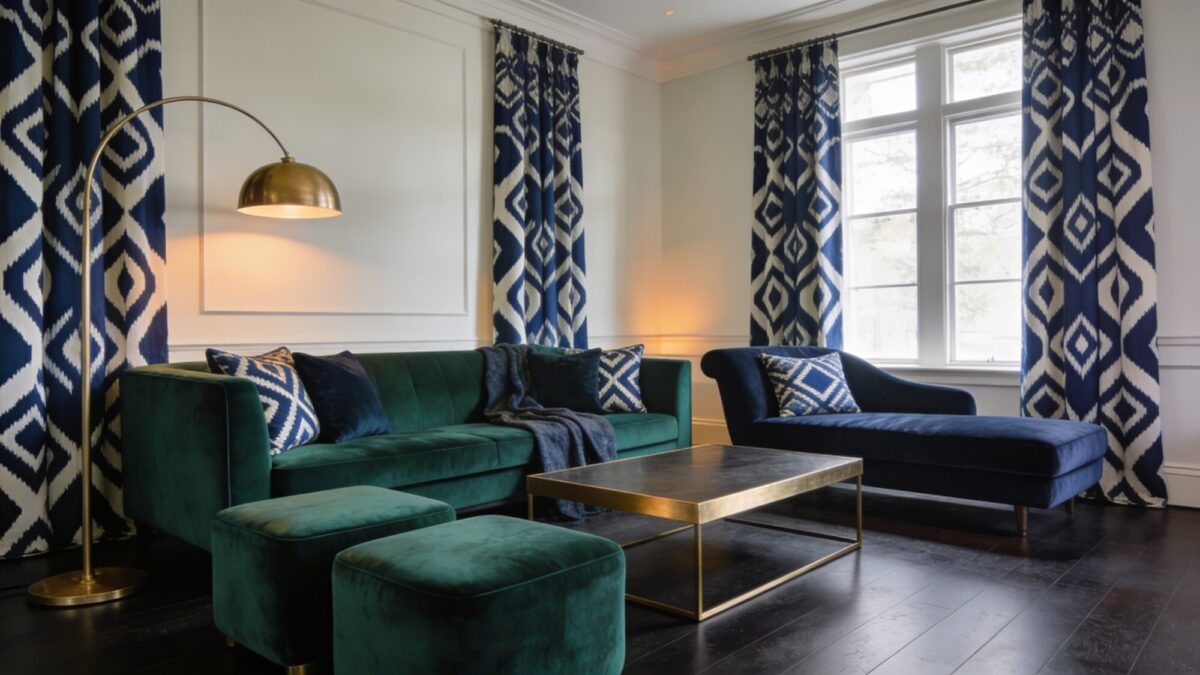
Ikat’s soft, blurred-edge geometry pairs unusually well with velvet because the two textures do opposite things: ikat’s pattern is busy but visually soft, and velvet is a solid color but visually rich because of how it catches light. Put the ikat on curtains or cushions, and the velvet on the main seating piece, in a deep, saturated color like emerald or navy. This combination tends to work best in rooms that get real use — a family room, a den — rather than a formal, rarely-sat-in space, because velvet shows wear differently than performance fabric and rewards regular use rather than sitting untouched. If you like this heavier, more layered direction, our guide to modern luxe living room updates has more ways to add that same richness quickly.

9. Monochrome Pattern Play With a Pop

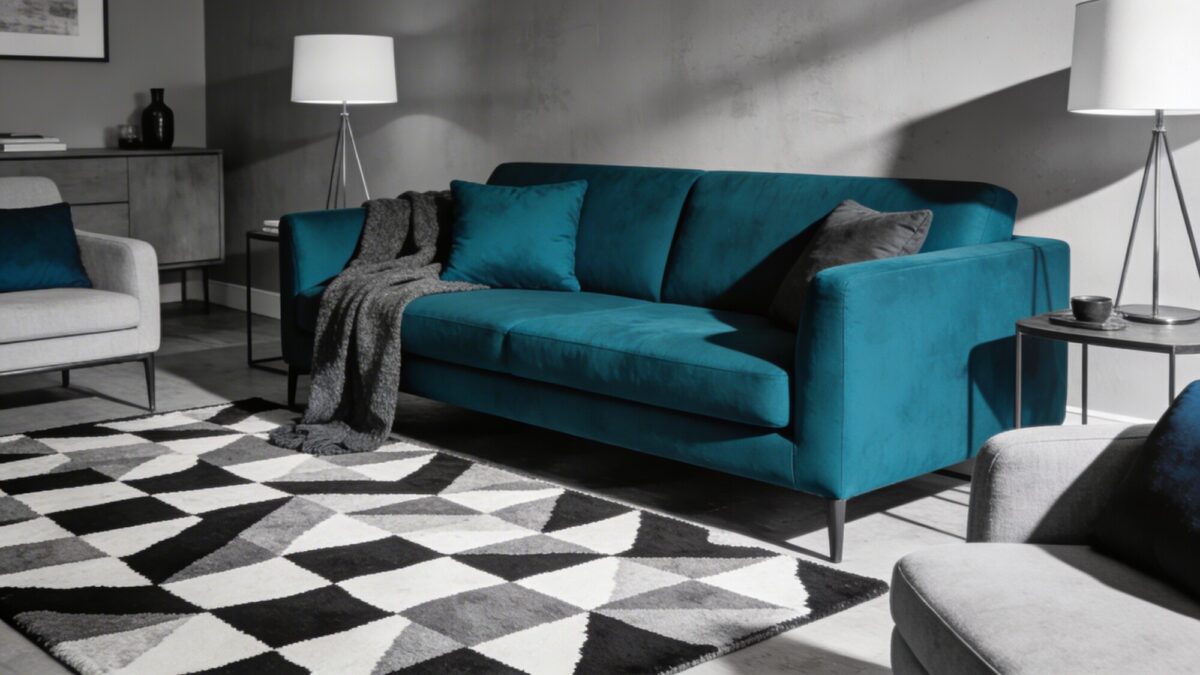
Grayscale patterns (a black-and-white patterned rug, for instance) paired with one saturated accent color is one of the most forgiving formulas on this list, because you’re only ever making one color decision. Pick emerald, cobalt, or another jewel tone, use it on the sofa and nowhere else but a throw or a lamp, and let the rest of the room sit in gray and white. The most common mistake here is using the accent color in three or four places — at that point it stops being an accent and the room loses the intentional, restrained feeling that makes this approach work in the first place.

💡 Pro Tip: Test your accent color as a large square of paper taped to the wall for a few days before buying furniture in it. Jewel tones shift noticeably under warm bulb light versus daylight, and a color you loved in the store can read differently once it’s the size of a sofa in your actual room.

Comparing the Nine Approaches

Pattern StyleBest ForCommitment LevelCommon Mistake
Bold Geometric WallRooms needing a single strong focal pointHigh (wallpaper/panels)Adding a patterned rug on top
StripesNarrow rooms, low ceilingsLow (rug or curtain only)Mixing stripe directions
Floral, Modern ScaleSoftening a very clean-lined roomMedium (one chair + cushion)Print scale too small to read
CheckerboardTimeless, high-contrast roomsMedium (rug or throw)Pairing with cool-toned wood
ChevronSunlit rooms, media spacesLow–MediumUsing it in high-contrast color
Repeating MotifPattern lovers who want cohesionMedium (3 coordinated pieces)Mixing unrelated patterns instead
Animal PrintQuick, low-cost refreshLow (1–2 pieces only)Using it on more than two items
Ikat + VelvetLived-in, layered roomsHighTwo competing bold patterns
Monochrome + PopFirst-timers, rental-friendlyLow–MediumRepeating the accent color too often

Frequently Asked Questions

How many patterns can I actually mix in one living room?

Two is the safe number for most people: one lead pattern (rug or statement wall) and one supporting pattern at a smaller scale (cushions). Three works if the patterns share a color family and vary noticeably in scale. Four or more almost always needs a professional eye to pull off — it’s not impossible, just harder than most people expect.

Should the pattern go on the walls or the furniture?

Pick one, not both. Patterned walls plus patterned furniture is the single most common reason a “bold” room ends up looking chaotic instead of confident. If you’re not sure, start with furniture and textiles — they’re cheaper to change than wallpaper.

What’s the cheapest way to test a bold pattern before committing?

Cushions and a throw blanket. You can try a checkerboard, ikat, or animal print for the cost of two or three accessories, live with it for a month, and swap it out with no wall repainting or furniture reupholstering involved.

Do patterned rooms need neutral walls?

Not always, but it makes things easier. A neutral wall gives you a “reset” surface so your pattern choices don’t have to fight the wall color too. If you want colored walls, keep the pattern on just one element (usually the rug) and nothing else.

How do I keep a pattern-heavy room from looking dated in five years?

Put your boldest, trendiest pattern choice on the cheapest, easiest-to-replace item — a cushion or throw, not a sofa or a rug. Keep the big-ticket pieces (sofa, rug, curtains) in patterns with a long track record, like stripes or checkerboard, rather than a trend print that might feel dated by the time you’re ready to redecorate again.

Our Take

If you only take one thing from this list: pick a single lead pattern and build everything else around supporting it, not competing with it. The rooms that read as elegant rather than busy are almost never the ones with the most patterns — they’re the ones where every pattern has a clear job. Start with the cheapest, most reversible piece (a rug or a set of cushions), live with it, and scale up once you know the combination actually works in your light and your space. For more direction on pulling a whole room together once you’ve settled on a lead pattern, take a look at our modern living room inspiration guide for full-room pairings that go beyond a single pattern choice.

Share this post

Similar Posts

Leave a Reply

Your email address will not be published. Required fields are marked *