7 Elegant Living Room Decor with Books That Wow

7 Elegant Living Room Decor with Books That Wow

Listen to this article
0:00 / 0:00

Most people treat bookshelves as an afterthought — somewhere to stash paperbacks until the next donation run. That’s a missed opportunity. Books have color, texture, and shape, which makes them one of the cheapest tools you have for building genuinely elegant living room decor. If you’re already planning a broader refresh, it’s worth reading through this guide to classy, elegant living room styling first, since shelving decisions tend to follow from the rest of the room’s palette.

What follows are seven approaches, ranging from a near-monochrome “disappearing” shelf wall to a rotating featured display. None of them require replacing furniture. Most just require sorting the books you already own by something other than the author’s last name.

See also  21 Minimalist Living Room Ideas That Feel Clean, Warm And Modern
ApproachBest ForEffort Level
Monochrome shelvingSmall or busy rooms that need calmMedium (spine wrapping)
Built-in library nookRooms with an underused corner or windowHigh (carpentry)
Themed clustersOpen shelves or a console tableLow
Texture + lighting layeringRooms that feel flat under overhead lightMedium
Color-blocked spinesNeutral rooms that need a focal pointLow
Rotating “featured shelf”Anyone who buys new books oftenLow (ongoing)
Books with greeneryRooms that feel sterile or too formalLow

1. Build a Quiet Monochrome Shelving Wall

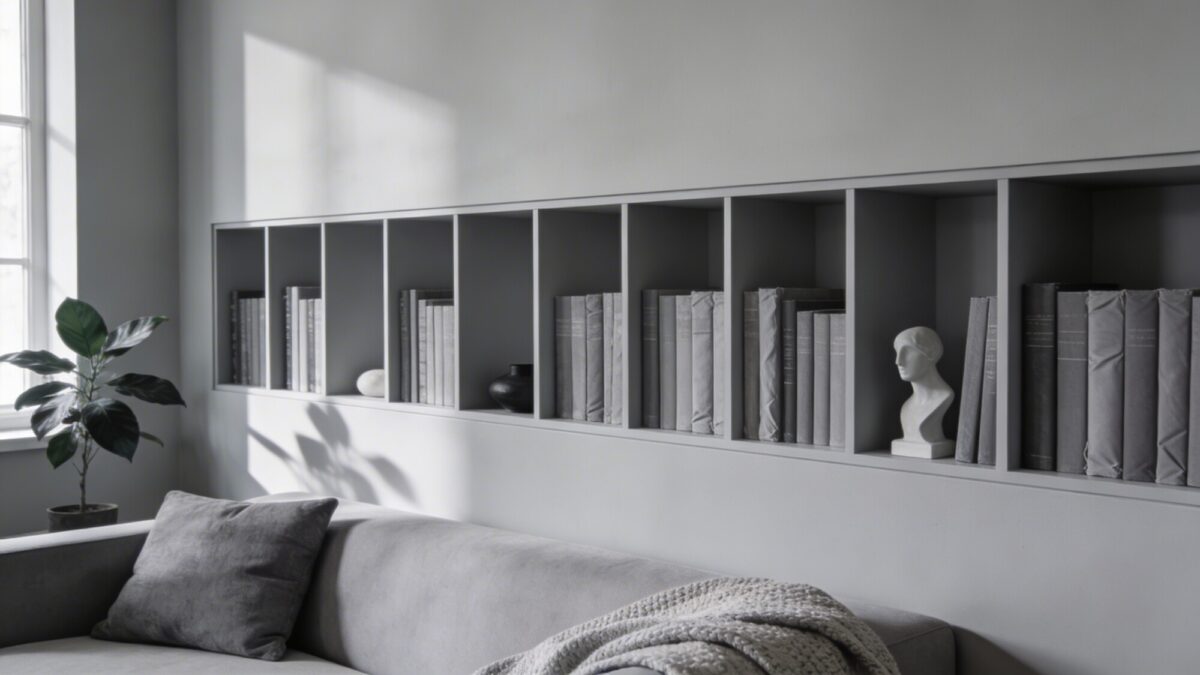
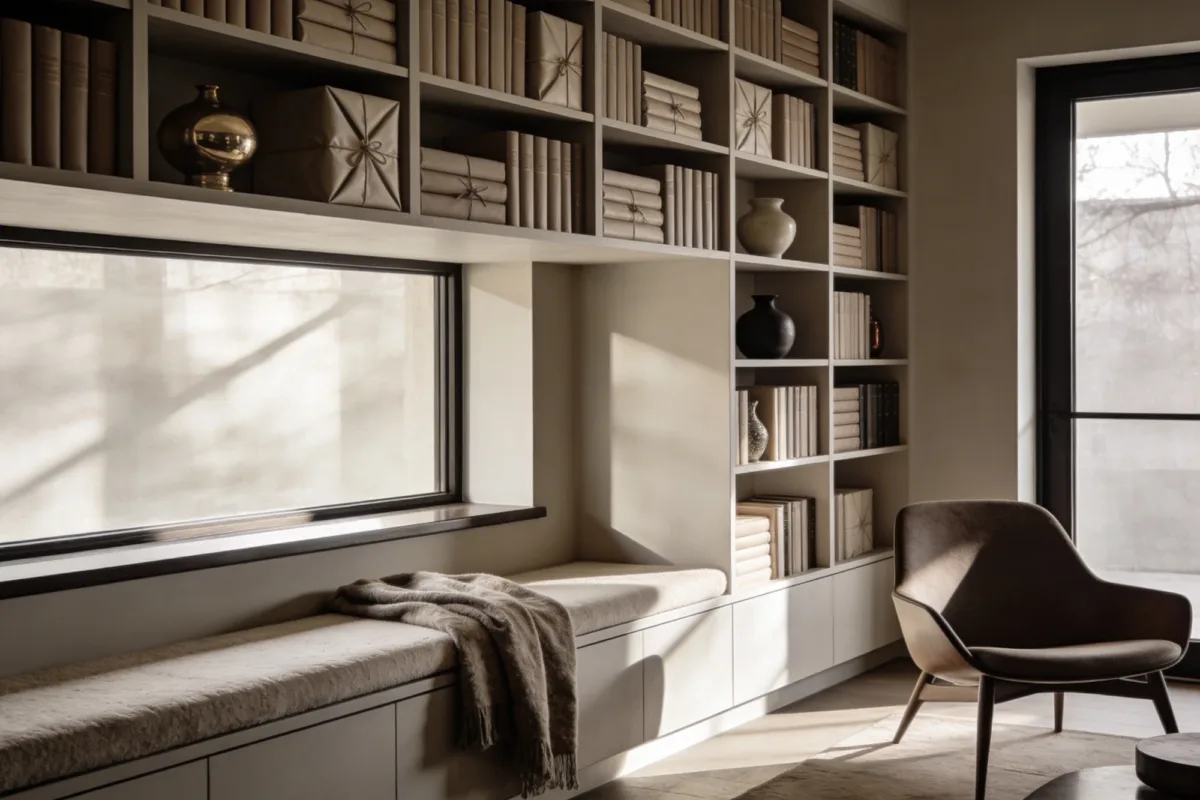
This is the approach that photographs best and takes the longest to actually finish. The idea is simple: pick one color family — dove gray, cream, or deep navy — and get every visible spine into that range, either by buying wrapped covers or turning books backward so only the page edges show. Once the shelf reads as one continuous surface, your eye stops cataloguing individual titles and starts noticing the room instead.

The part people skip is restraint on accessories. One plant, one small sculpture, one textured cushion nearby — that’s it. Add a fourth object and the “quiet” effect collapses back into clutter, just tidier clutter.

💡 Pro Tip: Don’t wrap every book. Leave 10–15% of spines in their original color, clustered rather than scattered — it reads as intentional variation instead of an unfinished project.

Key Elements

  • Open, uniform shelving in a matte finish
  • Same-palette book bindings or wrapped spines
  • One or two contrasting decor pieces — no more

2. Turn a Corner into a Real Library Nook

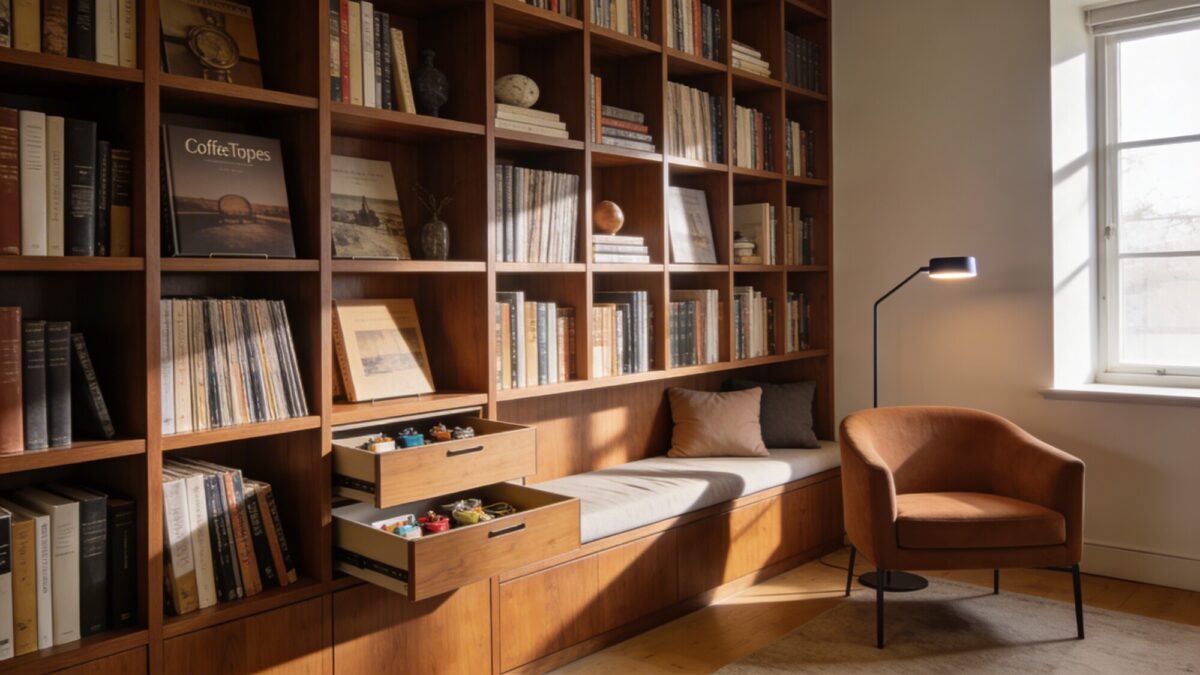
Not every home has a spare room for a library, but most living rooms have one dead corner — usually next to a window that nobody uses. Built-in shelving there, paired with a slim window seat or a single armchair and a task lamp, turns wasted square footage into the spot people actually gravitate to. This is the one idea on this list that involves carpentry rather than styling, so budget accordingly: a modest built-in unit with a cushioned bench typically runs into the low thousands depending on materials and whether you’re hiring a carpenter or building from a kit.

See also  6 Elegant Living Room Decor Luxury Modern: Luxe Makeover in Minutes

If you’re weighing this against a full room layout change, it’s worth checking a minimalist living room layout guide before committing — a library nook only works if the rest of the room has enough negative space to support it.

Tips for Success

  • Deep shelves (12+ inches) for oversized coffee-table books
  • A pull-out drawer or basket for reading glasses, bookmarks, remotes
  • Washable cushion covers — this spot gets used daily

3. Group Books into Themed Clusters

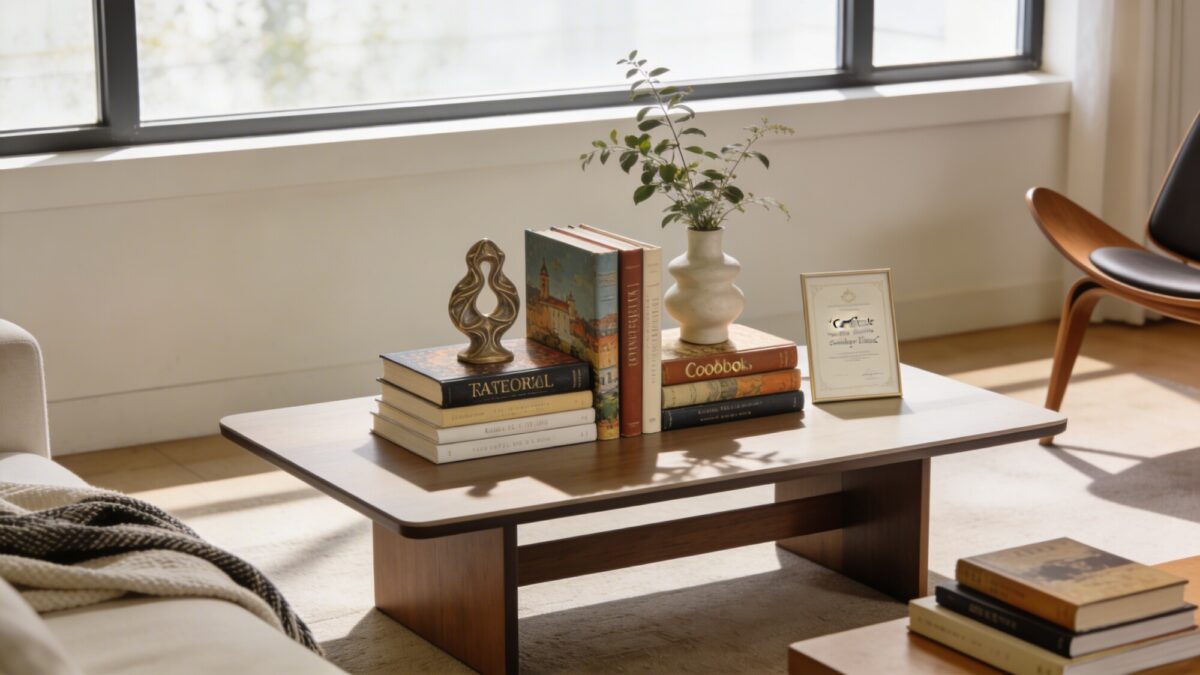
This is the lowest-effort idea here and often the one people get wrong first. A themed cluster — travel books, cookbooks, architecture — needs an anchor and negative space, not volume. Pick two or three statement covers, add one object (a small sculpture, a plant, a framed print leaned against the wall rather than hung), and stop. The most common mistake is piling in a fourth or fifth book because the arrangement “feels empty.” It doesn’t — it feels curated. Empty space around a cluster is doing real work.

💡 Pro Tip: Stack two books flat and stand one upright against them at an angle. That single asymmetry reads as styled; three books standing in a row reads as a shelf you haven’t finished unpacking.

What to Highlight

  • Two or three statement covers as anchors, not a full stack
  • One decorative object per cluster — sculpture, plant, or small vase
  • Deliberate blank space between clusters

4. Layer Texture and Lighting Around the Shelves

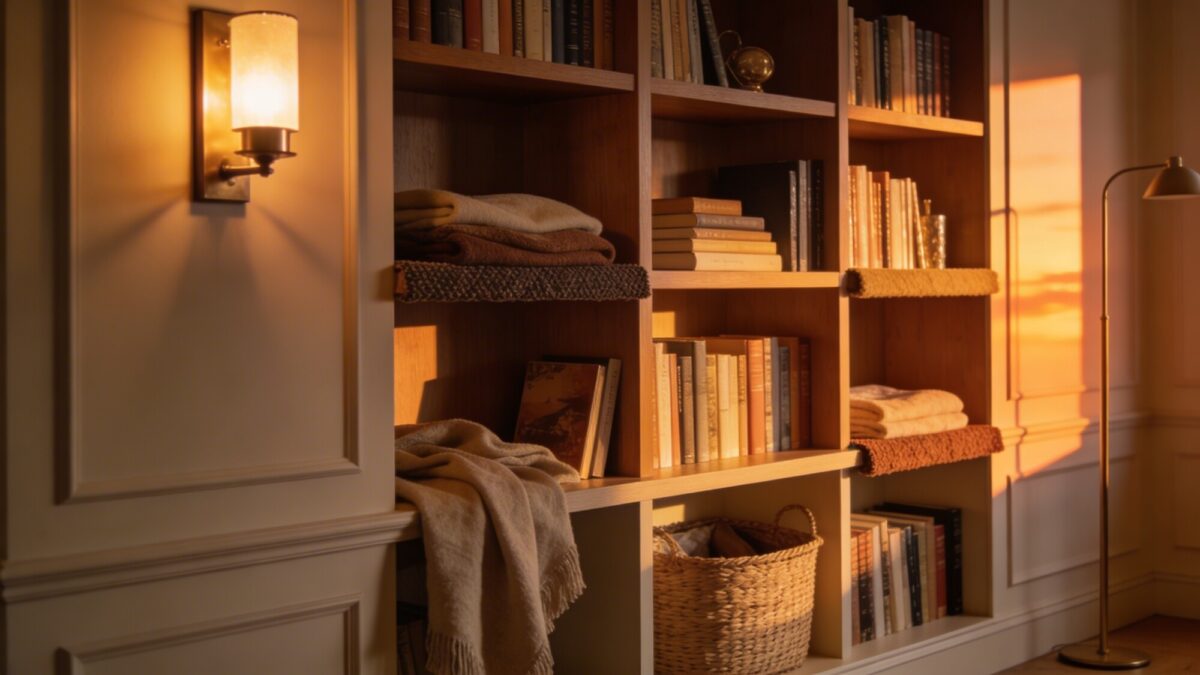
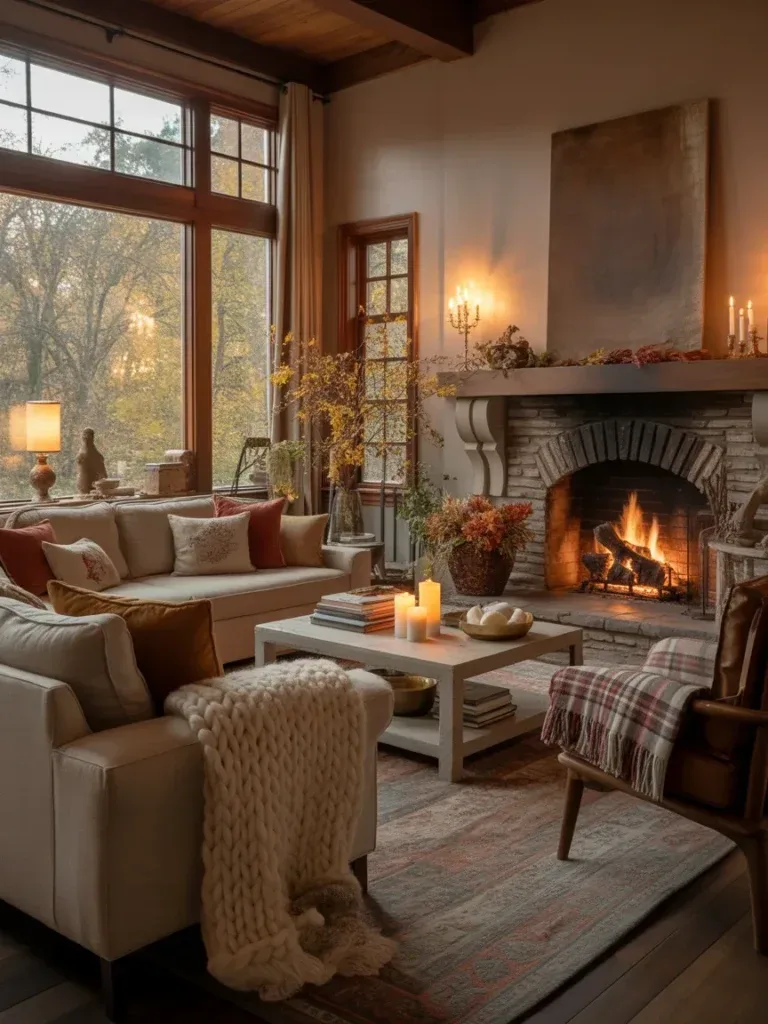
A shelf lit only by an overhead fixture looks flat no matter how good the books are. Two light sources at different heights — a wall sconce and a floor lamp, or a sconce and a small table lamp — create the shadow depth that makes a shelf photograph well and, more importantly, feel good to sit near in the evening. Pair that with a woven basket underneath for texture and a throw draped loosely (not folded square) over an adjacent chair.

See also  6 Elegant Marble Living Room Decor: Luxe Ideas for Any Space

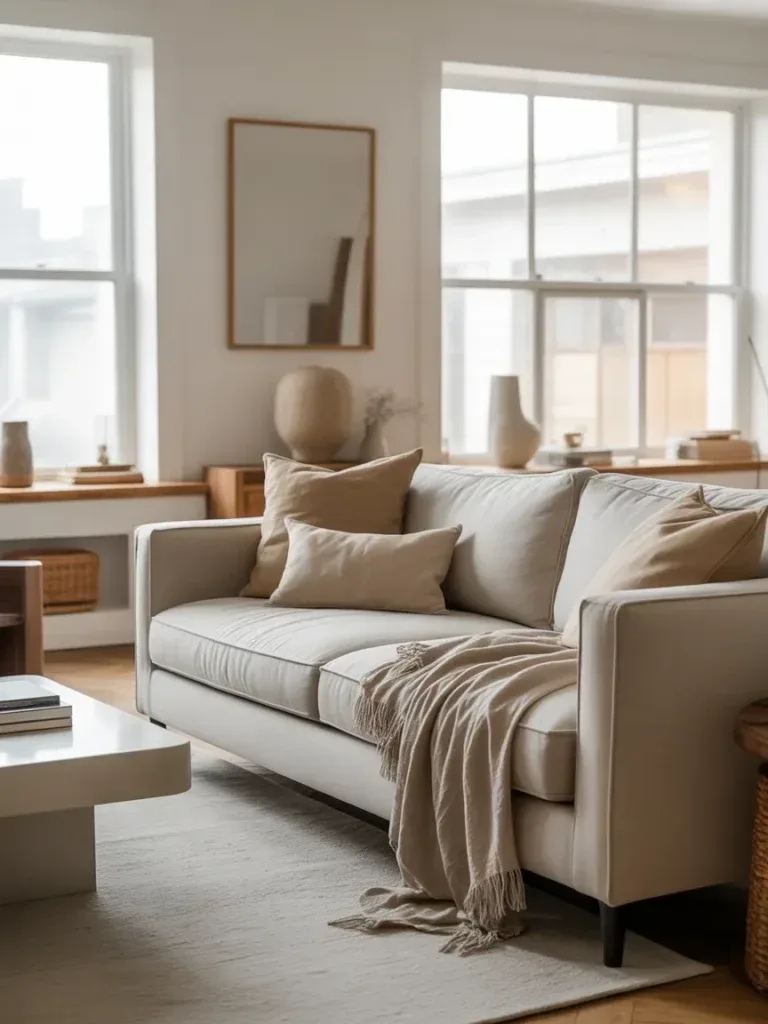
This is also where a warm gray sofa earns its keep — a neutral, slightly textured gray reads as elegant rather than cold under amber lighting, which is part of why it shows up so often in living room interior design that leans toward books and reading nooks specifically.

Tips to Nail It

  • Use a woven basket under a shelf for texture and hidden storage
  • Combine a wall sconce with a floor lamp for shadow depth
  • Swap a few book jackets for fabric-covered spines to break up the surface

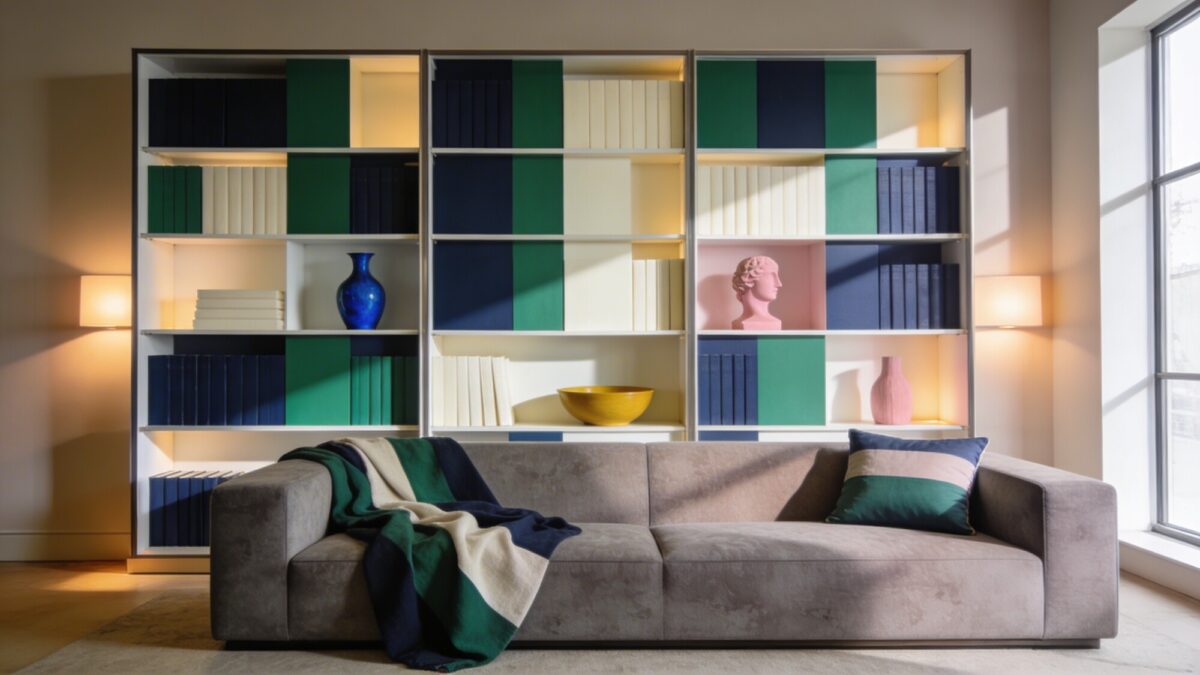
5. Use Color-Blocked Spines as an Accent

Grouping spines by color — navy, emerald, ivory — creates a bold visual line without touching the paint on your walls. It’s the highest-impact, lowest-cost idea on this list, and it’s also the easiest to overdo. The trade-off: color-blocking only reads as elegant living room decor luxury modern if the rest of the room stays neutral. Add a patterned rug and a bold accent chair to the same room and the shelf stops being a focal point and starts competing for attention.

If your room already leans toward bold color elsewhere, it’s worth browsing green and gold living room accent ideas before adding a third color source to the mix.

How to Plan

  • Group books by spine color to form visible blocks
  • Add one throw or pillow that echoes the color family
  • Keep surrounding furniture and walls neutral

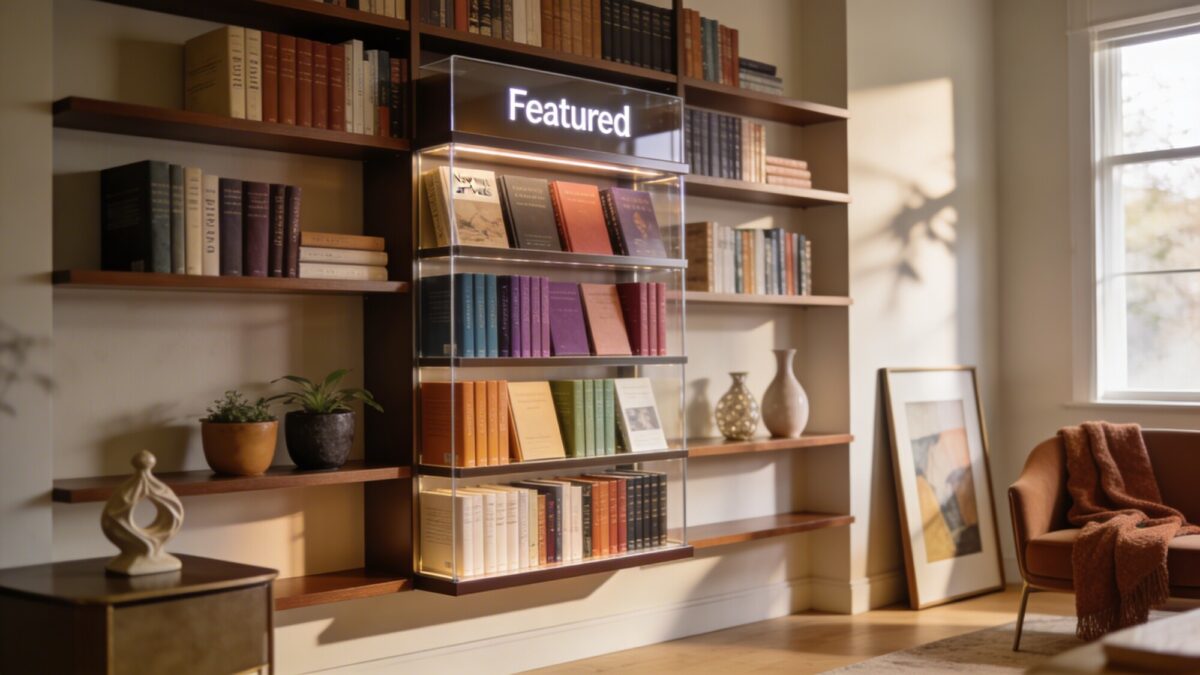
6. Rotate a “Featured Shelf” Seasonally

Pick one shelf — just one — and treat it as a rotating display: recent purchases, gifts, or seasonal favorites. Leave everything else on the wall fixed. This solves the real problem with static book decor, which is that it stops getting noticed after about a month. A rotating shelf gives you a reason to actually handle your books again instead of just dusting around them.

💡 Pro Tip: Rotate on a fixed schedule — the first weekend of each season — rather than “whenever.” An open-ended plan almost never happens; a calendar trigger does.

Structure to Follow

  • One shelf or section clearly designated as “featured”
  • Older favorites moved to less prominent shelves, not removed
  • New arrivals or gifts added in small batches

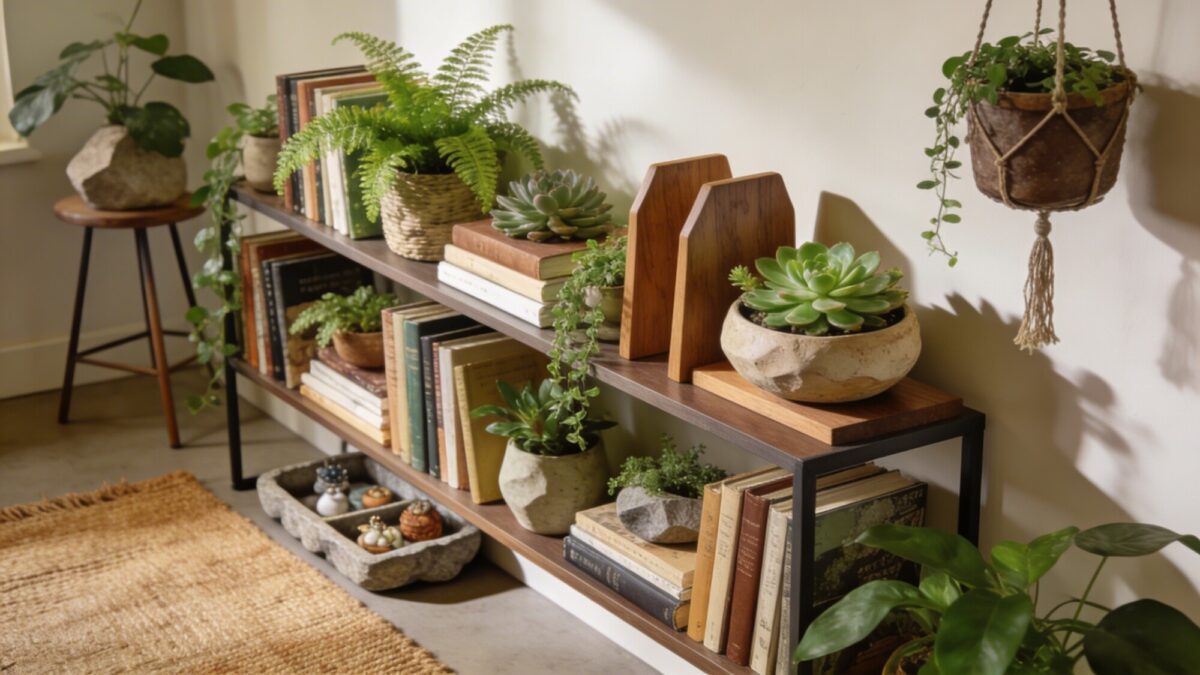
7. Pair Books with Plants and Natural Materials

Books and greenery solve opposite problems: books can make a room feel formal and static, plants soften that instantly. Succulents or a small fern nestled between stacks, wooden bookends instead of metal ones, and a jute or sisal rug nearby bring in enough organic texture that the shelf stops looking like a showroom display. This pairing also works especially well in a small elegant living room, where hard edges and glossy surfaces tend to make the space feel tighter than it is.

If you’re furnishing a smaller footprint and want more ideas built around scale, this small-space apartment living room guide covers layout tricks that pair well with this kind of shelf styling.

Practical Pairings

  • Succulents or ferns tucked between book stacks
  • Wooden bookends instead of metal or acrylic
  • A jute or sisal rug nearby to echo the natural materials

Pros and Cons at a Glance

ApproachProCon
Monochrome shelvingVery calm, photographs wellWrapping spines takes real time
Library nookGets daily use, not just decorativeRequires carpentry and budget
Themed clustersFast, cheap, easy to refreshEasy to overfill by accident
Color-blocked spinesHigh visual impact for zero costNeeds a neutral room to work

FAQ

Do I need to buy new books to make this work?
No. Every idea above works with books you already own — the changes are in sorting, spacing, and lighting, not inventory.

What’s the fastest idea to try this weekend?
Themed clusters or color-blocked spines. Both take an afternoon and no tools beyond what’s already on your shelf.

Will wrapping book spines damage the covers?
Not if you use a removable wrap or dust jacket cover rather than glue. Look for reusable fabric or paper wraps designed for this — they slide off cleanly when you want the original cover back.

How many books is too many for a themed cluster?
Past four or five in one grouping, it stops reading as curated and starts reading as a pile. Two or three anchors plus one object is the sweet spot.

Does this work in a rental where I can’t install built-ins?
Yes — everything except the library nook idea uses freestanding shelving or furniture you already have. The nook is the only approach here that assumes permanent construction.

Our Take

If you only try one thing from this list, make it the color-blocked spine grouping — it’s free, takes under an hour, and gives you the most visible payoff relative to effort. The built-in library nook is the better long-term investment if you actually read in your living room regularly, but it’s not a weekend project. Everything else here sits comfortably in between, and most of these ideas combine well: color-blocking plus a plant or two, for instance, costs nothing extra and looks more finished than either alone. For more direction on tying a full room together around these choices, this luxury living room decor guide is a reasonable next stop.

Share this post

Similar Posts

Leave a Reply

Your email address will not be published. Required fields are marked *