You face a small dining room and a low ceiling, but you can still make the space feel bright and balanced. Choose fixtures that sit close to the ceiling or use shallow pendants to keep headroom and spread light evenly across the table. Pick low-profile or semi-flush fixtures, or short pendant lights hung at the right height, to give you good light without crowding the room. This guide will show which fixture types work best, design tips to maximize space and light, and the safety and installation points to consider so you can update the room with confidence. Table of ContentsChoosing the Best Dining Room Light Fixtures for Low CeilingsAssessing Ceiling Height and Room SizeMatching Fixtures to Dining Room StylesDetermining Functional Lighting NeedsTypes of Light Fixtures Ideal for Low CeilingsFlush Mount Ceiling LightsSemi-Flush Mount FixturesRecessed LightingDesign Tips for Maximizing Light and SpaceEnhancing Ambient IlluminationUsing Reflective SurfacesLayering Light SourcesInstallation Considerations and SafetyCorrect Fixture PlacementElectrical Safety GuidelinesWorking with a Professional InstallerPopular Styles and Trends for Low Ceiling Dining RoomsModern Minimalist DesignsTransitional Lighting OptionsEco-Friendly and Smart Lighting Choosing the Best Dining Room Light Fixtures for Low Ceilings Pick fixtures that keep headroom, light the table evenly, and match the room’s size and style. Measure ceiling height and table dimensions first, then choose low-profile fixtures, layered lighting, and a style that fits the room’s decor. Assessing Ceiling Height and Room Size They should measure the ceiling height and the table height before shopping. For ceilings under 8 feet, choose flush mounts, semi-flush mounts, or shallow-profile pendants that sit close to the ceiling to avoid crowding the space. They should size the fixture to the table. As a quick rule, a fixture’s width should be about half to two-thirds the table width. For example, a 36-inch table works well with an 18–24 inch wide fixture or a group of smaller pendants totaling that width. They should keep clearance in mind. Hang a pendant low enough to light the table—about 30–36 inches above the tabletop—only if the ceiling allows. Otherwise, use fixtures that hug the ceiling and add table or wall lighting for extra illumination. 13 inch Flush Mount LED Ceiling Light Fixture, 2700K/3000K/3500K/… Sleek Modern Design: This contemporary flush mount ceiling light features a low-profile housing that sits neatly against… 5CCT Adjustable Color Temperature: Select from five preset color temperatures to suit any activity or mood—2700K (Warm W… High Efficiency & Bright Output: Delivering 1300 lumens of bright light while consuming only 20W, this LED light provide… $24.99 Buy on Amazon Matching Fixtures to Dining Room Styles They should pick a fixture that echoes existing finishes and shapes in the room. For modern rooms, choose geometric metal flush mounts or slim linear pendants. For farmhouse or traditional spaces, go with low-profile lanterns or shallow drum shades in warm finishes. They should balance scale and detail. A very ornate fixture can overwhelm a small room even if it’s low-profile. Instead, select simple lines or grouped small pendants to create visual interest without height. They should coordinate materials with other elements. Match metal tones to cabinet hardware or curtain rods. Use fabric shades or frosted glass to soften light in cozy, traditional dining rooms. Determining Functional Lighting Needs They should decide how the room will be used most: formal dinners, daily meals, or multiuse tasks. For daily use, aim for even, glare-free light over the table plus dimming ability for mood control. They should plan layered lighting. Combine a ceiling fixture with wall sconces, a floor lamp, or a pendant cluster to fill shadows and add depth. Use LED bulbs with a color temperature of about 2700–3000K for warm, inviting light. They should check lumen output. A dining area typically needs 300–500 lumens per square meter. If unsure, choose fixtures with adjustable output or add multiple light sources to meet brightness needs without relying on a single, tall fixture. 20”Hand Woven Rattan Chandelier Boho Pendant Light Adjustable Coa… Elegant Design: This exquisite woven rattan chandelier is crafted with intricate wicker weaving, delicately embedded wit… E12 Dimmable Socket: This woven rattan pendant lighting fixtures accommodates 6 x E12 bulbs (60w max, bulbs not included… Adjustable: The cord of this boho chandelier is adjustable from 1” to 38.33” (max) and will fit any height of the ceilin… $128.79 Buy on Amazon Types of Light Fixtures Ideal for Low Ceilings Low ceilings need fixtures that save headroom, spread light evenly, and match the room’s style. Choose fixtures that sit close to the ceiling, avoid long drops, and provide enough light for dining tasks and atmosphere. 13 inch Flush Mount LED Ceiling Light Fixture, 2700K/3000K/3500K/… Sleek Modern Design: This contemporary flush mount ceiling light features a low-profile housing that sits neatly against… 5CCT Adjustable Color Temperature: Select from five preset color temperatures to suit any activity or mood—2700K (Warm W… High Efficiency & Bright Output: Delivering 1300 lumens of bright light while consuming only 20W, this LED light provide… $24.99 Buy on Amazon Flush Mount Ceiling Lights Flush mount lights attach directly to the ceiling with no gap, keeping maximum headroom. They come in round, square, and decorative styles so they can suit modern, traditional, or rustic dining rooms. Choose LED models for bright, even light and lower energy use. Look for diffusers or frosted glass to cut glare and spread light across the table. For a 10×12 foot dining area, aim for 2,400–3,000 lumens total; one flush mount with integrated LED can deliver that. Install centered over the table or use two smaller fixtures in a row for longer tables. Pick a fixture diameter proportional to the table—about one-third of the table width works well. Metal or painted finishes keep a low profile while glass or fabric shades soften the light. Semi-Flush Mount Fixtures Semi-flush mounts hang slightly below the ceiling on a short stem, usually 3–8 inches, offering a bit of design flair without losing much headroom. They work well in rooms with 8-foot ceilings where a fully flush look feels flat. They give more layered lighting than flush mounts and can add ambiance with exposed bulbs or decorative shades. Choose models with adjustable height or a short chain if the room needs a tiny extra drop for scale. Match the fixture size to the table: a 14–20 inch diameter suits small tables; 20–30 inches fits medium tables. Use dimmable LEDs to control mood and brightness. Materials like brass, matte black, or glass help tie the fixture into the dining room’s decor. Recessed Lighting Recessed lights sit inside the ceiling, giving the clearest headroom and a clean, modern look. Space them evenly around the dining area to avoid dark spots and aim lights slightly toward the table for task illumination. Use 3–4 inch or 4–6 inch cans depending on bulb type and desired beam spread. LED recessed modules reduce heat and offer high lumens in a compact form. Install dimmers and combine with a small central fixture or wall sconces for layered light. Place fixtures 2–3 feet from the wall and 3–6 feet apart in a grid, adjusting for room size and beam angle. Add trims and baffles to control glare and choose warmer color temperatures (2700–3000K) for a cozy dining feel. Design Tips for Maximizing Light and Space Focus on fixtures that sit close to the ceiling, bright but diffused bulbs, and surfaces that bounce light back into the room. Combine ceiling fixtures with wall or table lighting and reflective materials to make the dining area feel taller and more open. Enhancing Ambient Illumination They should choose low-profile fixtures like flush mounts or semi-flush mounts centered over the table to provide even general light without losing headroom. Select LEDs with a high CRI (90+) and a color temperature between 2700K–3000K for warm, natural tones that flatter skin and food.Aim for 300–400 lumens per square meter for a dining room sized around 10–15 m²; increase output slightly for darker wall colors.Use dimmers to control brightness for meals and tasks. A dimmer also lets them lower the fixture while keeping the light soft, which preserves a cozy atmosphere without needing taller fixtures. Using Reflective Surfaces They should add glossy or semi-gloss paints on trim and a light, cool wall color to reflect more light. Place a mirror on a wall facing the light source to double the perceived brightness and visually expand the room.Choose a glass or lacquered dining table and metallic accents on chairs or fixtures to scatter light across the space.Avoid heavily textured or matte finishes on large surfaces, since these absorb light. Small reflective accessories, like a polished centerpiece or chrome hardware, boost brightness without crowding the ceiling. Layering Light Sources They should combine three layers: ambient, task, and accent lighting for depth and flexibility. Use wall sconces or picture lights to wash walls and reduce shadows from a low ceiling fixture.Add a small table lamp or a floor lamp in a corner for task lighting and to create zones during gatherings.If pendant lights are used, choose shallow-profile or low-hung linear pendants above a long table, and keep at least 30–36 inches between the fixture bottom and the tabletop to avoid glare.Mix warm bulb tones and dimming controls so they can change the mood without altering the layout. Installation Considerations and Safety Choose fixtures that keep at least 30–36 inches of clear space above the dining table and allow 7 feet of headroom where people walk. Match fixture size to table size and room scale, and always check the fixture’s weight and ceiling support before installation. Correct Fixture Placement Place a single fixture centered over the table length and width. For rectangular tables, center the fixture along the long axis. For multiple pendants, space them evenly—typically 12–18 inches apart—and align the center of the group with the table center. Set the bottom of the fixture 30–36 inches above the tabletop for a standard 30-inch-high table. If ceilings are under 8 feet, use low-profile or semi-flush fixtures and keep the lowest point at least 7 feet from the floor where people walk. Measure the room and table first. Mark the ceiling center, run a trial hang with a cord or string, and confirm sightlines from seated positions before final wiring. Electrical Safety Guidelines Turn off power at the circuit breaker before doing any wiring. Use a voltage tester to confirm power is off at the fixture box. Match the fixture’s wattage and bulb type to the rated ceiling box and circuit. Use dimmer-compatible bulbs if installing a dimmer, and check the dimmer’s load rating. Install proper grounding and connect neutral and hot wires to the correct fixture leads. If the fixture is heavier than the existing box rating, replace the box with a fan-rated or heavy-duty steel box that screws into a ceiling joist or uses a brace. Secure all wire connections with approved wire nuts and tuck wires neatly into the box. Follow local electrical codes and use grommets where wires pass through metal. Working with a Professional Installer Hire a licensed electrician for any new circuits, changes to wiring, or when the fixture weight exceeds the current box rating. A pro will pull permits if required and ensure work meets local code. Ask for an itemized quote that lists labor, parts, and permits. Confirm the installer carries liability insurance and checks for hidden issues like knob-and-tube wiring, asbestos, or weakened joists. Request a pre-install inspection and a post-installation walkthrough. The installer should show the shutoff location, demonstrate dimmers and switches, and provide a certificate of compliance if local rules require it. Popular Styles and Trends for Low Ceiling Dining Rooms Choose fixtures that save headroom, spread light evenly, and match the room’s finish and scale. Focus on slim profiles, layered lighting, and energy-efficient options that fit the table size and room width. Modern Minimalist Designs Modern minimalist fixtures use clean lines and low profiles to keep the room feeling open. Flush mounts and shallow semi-flush fixtures work well above dining tables when the ceiling is 7–8 feet high. They sit close to the ceiling but still provide broad, even light. Linear LED pendants with a slim bar shape can hang 10–12 inches below the ceiling over longer tables, offering task light without bulky visual weight. Choose matte black, white, or brushed metal finishes to match simple decor. Keep brightness around 300–400 lux at table level for dining tasks and choose dimmable LEDs to shift from meal prep to relaxed dining. Integrate a narrow diffuser to soften glare and avoid sharp shadows on faces and food. Transitional Lighting Options Transitional lighting blends modern function with classic shapes for flexible looks. Low-profile drum pendants and shallow chandeliers with compact arms provide style without large drop distances. They suit rooms with 8-foot ceilings when centered above the table and kept within a 12–16 inch drop. Mix a small central fixture with recessed cans or wall sconces to create layered light. Use matching finishes—warm brass or aged nickel—for cohesion across fixtures. Selecting a fixture scaled to the table width (about 12–18 inches narrower than the table on each side) keeps the proportion right. Opt for frosted glass or fabric shades to diffuse light and avoid harsh highlights on tableware. A three-way dimmer helps shift mood from bright meal prep to softer evening light. Eco-Friendly and Smart Lighting Eco-friendly fixtures combine LEDs, efficient drivers, and low-impact materials like recycled metal or FSC-certified wood. Choose integrated LED fixtures rated for 90+ CRI so colors on plates and food look natural. This improves meal presentation and reduces energy use. Smart lighting adds convenience and better scene control in low-ceiling spaces. Use tunable white LEDs to change color temperature from warm (2700K) to cool (3000–3500K) for different times of day. Set schedules or scenes—bright for cleaning, warm-dim for dinner—via a hub or direct Bluetooth control. Look for ENERGY STAR or DesignLights Consortium (DLC) listings to ensure efficiency. Combine smart dimmers that work with low-voltage LED loads to avoid flicker and maintain consistent output.
You face a small dining room and a low ceiling, but you can still make the space feel bright and balanced. Choose fixtures that sit close to the ceiling or use shallow pendants to keep headroom and spread light evenly across the table.
Pick low-profile or semi-flush fixtures, or short pendant lights hung at the right height, to give you good light without crowding the room. This guide will show which fixture types work best, design tips to maximize space and light, and the safety and installation points to consider so you can update the room with confidence.
Pick fixtures that keep headroom, light the table evenly, and match the room’s size and style. Measure ceiling height and table dimensions first, then choose low-profile fixtures, layered lighting, and a style that fits the room’s decor.
Assessing Ceiling Height and Room Size
They should measure the ceiling height and the table height before shopping. For ceilings under 8 feet, choose flush mounts, semi-flush mounts, or shallow-profile pendants that sit close to the ceiling to avoid crowding the space.
They should size the fixture to the table. As a quick rule, a fixture’s width should be about half to two-thirds the table width. For example, a 36-inch table works well with an 18–24 inch wide fixture or a group of smaller pendants totaling that width.
They should keep clearance in mind. Hang a pendant low enough to light the table—about 30–36 inches above the tabletop—only if the ceiling allows. Otherwise, use fixtures that hug the ceiling and add table or wall lighting for extra illumination.
They should pick a fixture that echoes existing finishes and shapes in the room. For modern rooms, choose geometric metal flush mounts or slim linear pendants. For farmhouse or traditional spaces, go with low-profile lanterns or shallow drum shades in warm finishes.
They should balance scale and detail. A very ornate fixture can overwhelm a small room even if it’s low-profile. Instead, select simple lines or grouped small pendants to create visual interest without height.
They should coordinate materials with other elements. Match metal tones to cabinet hardware or curtain rods. Use fabric shades or frosted glass to soften light in cozy, traditional dining rooms.
Determining Functional Lighting Needs
They should decide how the room will be used most: formal dinners, daily meals, or multiuse tasks. For daily use, aim for even, glare-free light over the table plus dimming ability for mood control.
They should plan layered lighting. Combine a ceiling fixture with wall sconces, a floor lamp, or a pendant cluster to fill shadows and add depth. Use LED bulbs with a color temperature of about 2700–3000K for warm, inviting light.
They should check lumen output. A dining area typically needs 300–500 lumens per square meter. If unsure, choose fixtures with adjustable output or add multiple light sources to meet brightness needs without relying on a single, tall fixture.
Low ceilings need fixtures that save headroom, spread light evenly, and match the room’s style. Choose fixtures that sit close to the ceiling, avoid long drops, and provide enough light for dining tasks and atmosphere.
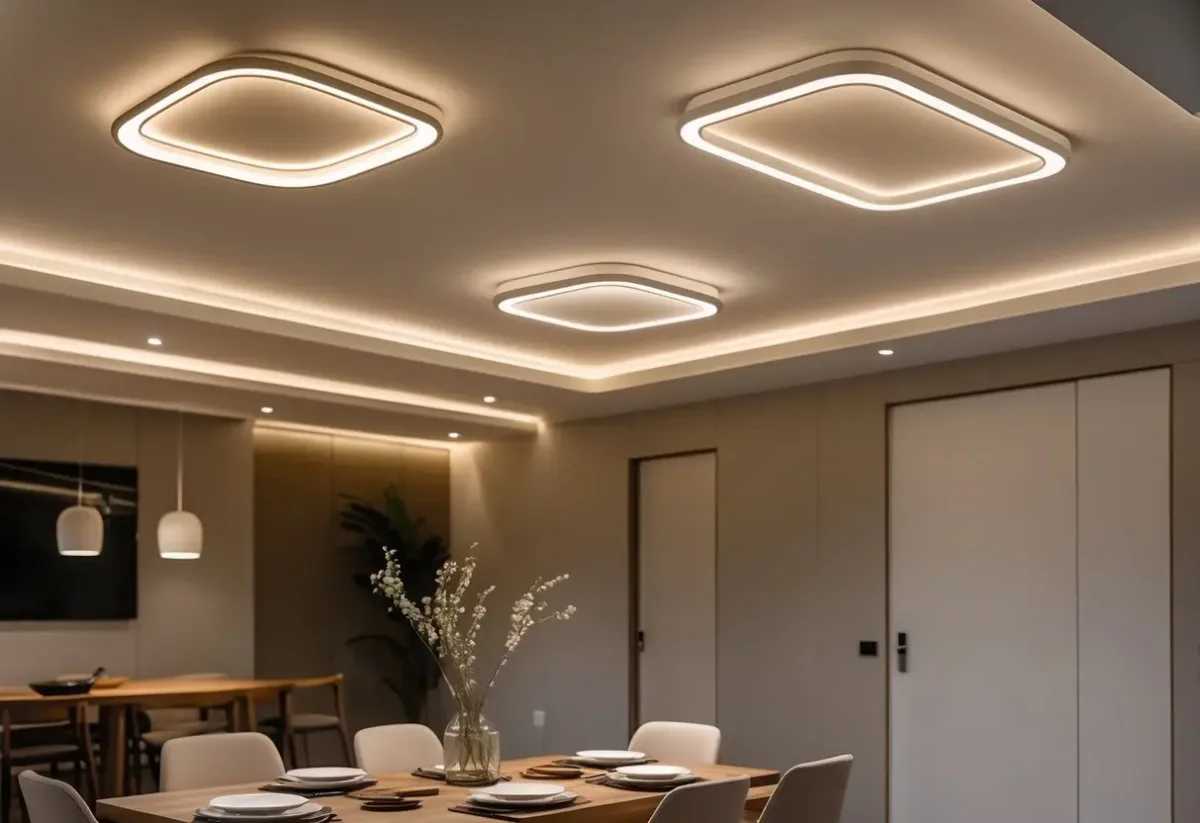
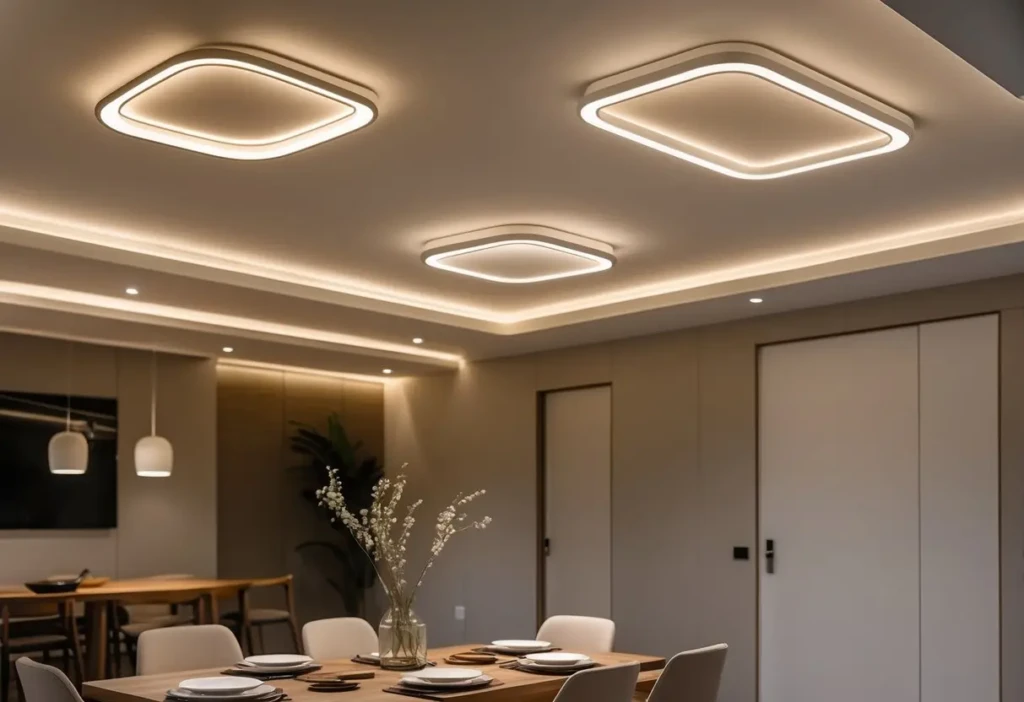
Flush mount lights attach directly to the ceiling with no gap, keeping maximum headroom. They come in round, square, and decorative styles so they can suit modern, traditional, or rustic dining rooms.
Choose LED models for bright, even light and lower energy use. Look for diffusers or frosted glass to cut glare and spread light across the table. For a 10×12 foot dining area, aim for 2,400–3,000 lumens total; one flush mount with integrated LED can deliver that.
Install centered over the table or use two smaller fixtures in a row for longer tables. Pick a fixture diameter proportional to the table—about one-third of the table width works well. Metal or painted finishes keep a low profile while glass or fabric shades soften the light.
Semi-Flush Mount Fixtures
Semi-flush mounts hang slightly below the ceiling on a short stem, usually 3–8 inches, offering a bit of design flair without losing much headroom. They work well in rooms with 8-foot ceilings where a fully flush look feels flat.
They give more layered lighting than flush mounts and can add ambiance with exposed bulbs or decorative shades. Choose models with adjustable height or a short chain if the room needs a tiny extra drop for scale.
Match the fixture size to the table: a 14–20 inch diameter suits small tables; 20–30 inches fits medium tables. Use dimmable LEDs to control mood and brightness. Materials like brass, matte black, or glass help tie the fixture into the dining room’s decor.
Recessed Lighting
Recessed lights sit inside the ceiling, giving the clearest headroom and a clean, modern look. Space them evenly around the dining area to avoid dark spots and aim lights slightly toward the table for task illumination.
Use 3–4 inch or 4–6 inch cans depending on bulb type and desired beam spread. LED recessed modules reduce heat and offer high lumens in a compact form. Install dimmers and combine with a small central fixture or wall sconces for layered light.
Place fixtures 2–3 feet from the wall and 3–6 feet apart in a grid, adjusting for room size and beam angle. Add trims and baffles to control glare and choose warmer color temperatures (2700–3000K) for a cozy dining feel.
Focus on fixtures that sit close to the ceiling, bright but diffused bulbs, and surfaces that bounce light back into the room. Combine ceiling fixtures with wall or table lighting and reflective materials to make the dining area feel taller and more open.
Enhancing Ambient Illumination
They should choose low-profile fixtures like flush mounts or semi-flush mounts centered over the table to provide even general light without losing headroom. Select LEDs with a high CRI (90+) and a color temperature between 2700K–3000K for warm, natural tones that flatter skin and food. Aim for 300–400 lumens per square meter for a dining room sized around 10–15 m²; increase output slightly for darker wall colors. Use dimmers to control brightness for meals and tasks. A dimmer also lets them lower the fixture while keeping the light soft, which preserves a cozy atmosphere without needing taller fixtures.
Using Reflective Surfaces
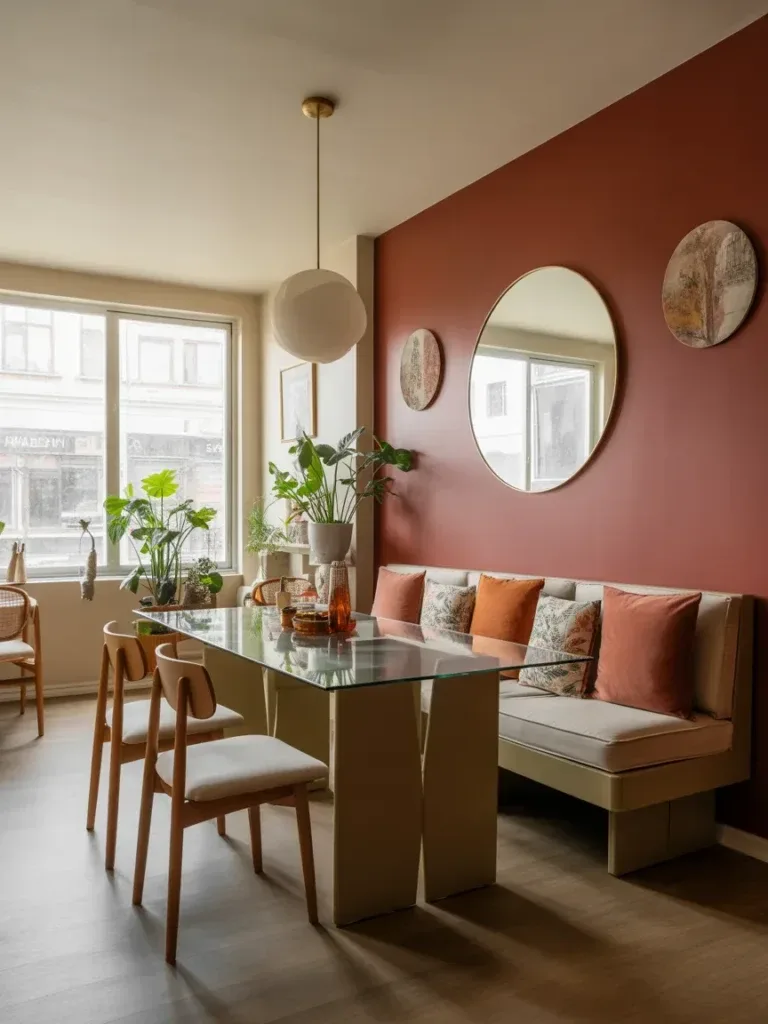
They should add glossy or semi-gloss paints on trim and a light, cool wall color to reflect more light. Place a mirror on a wall facing the light source to double the perceived brightness and visually expand the room. Choose a glass or lacquered dining table and metallic accents on chairs or fixtures to scatter light across the space. Avoid heavily textured or matte finishes on large surfaces, since these absorb light. Small reflective accessories, like a polished centerpiece or chrome hardware, boost brightness without crowding the ceiling.
Layering Light Sources
They should combine three layers: ambient, task, and accent lighting for depth and flexibility. Use wall sconces or picture lights to wash walls and reduce shadows from a low ceiling fixture. Add a small table lamp or a floor lamp in a corner for task lighting and to create zones during gatherings. If pendant lights are used, choose shallow-profile or low-hung linear pendants above a long table, and keep at least 30–36 inches between the fixture bottom and the tabletop to avoid glare. Mix warm bulb tones and dimming controls so they can change the mood without altering the layout.
Choose fixtures that keep at least 30–36 inches of clear space above the dining table and allow 7 feet of headroom where people walk. Match fixture size to table size and room scale, and always check the fixture’s weight and ceiling support before installation.
Correct Fixture Placement
Place a single fixture centered over the table length and width. For rectangular tables, center the fixture along the long axis. For multiple pendants, space them evenly—typically 12–18 inches apart—and align the center of the group with the table center.
Set the bottom of the fixture 30–36 inches above the tabletop for a standard 30-inch-high table. If ceilings are under 8 feet, use low-profile or semi-flush fixtures and keep the lowest point at least 7 feet from the floor where people walk.
Measure the room and table first. Mark the ceiling center, run a trial hang with a cord or string, and confirm sightlines from seated positions before final wiring.
Electrical Safety Guidelines
Turn off power at the circuit breaker before doing any wiring. Use a voltage tester to confirm power is off at the fixture box.
Match the fixture’s wattage and bulb type to the rated ceiling box and circuit. Use dimmer-compatible bulbs if installing a dimmer, and check the dimmer’s load rating. Install proper grounding and connect neutral and hot wires to the correct fixture leads.
If the fixture is heavier than the existing box rating, replace the box with a fan-rated or heavy-duty steel box that screws into a ceiling joist or uses a brace. Secure all wire connections with approved wire nuts and tuck wires neatly into the box. Follow local electrical codes and use grommets where wires pass through metal.
Working with a Professional Installer
Hire a licensed electrician for any new circuits, changes to wiring, or when the fixture weight exceeds the current box rating. A pro will pull permits if required and ensure work meets local code.
Ask for an itemized quote that lists labor, parts, and permits. Confirm the installer carries liability insurance and checks for hidden issues like knob-and-tube wiring, asbestos, or weakened joists.
Request a pre-install inspection and a post-installation walkthrough. The installer should show the shutoff location, demonstrate dimmers and switches, and provide a certificate of compliance if local rules require it.
Popular Styles and Trends for Low Ceiling Dining Rooms
Choose fixtures that save headroom, spread light evenly, and match the room’s finish and scale. Focus on slim profiles, layered lighting, and energy-efficient options that fit the table size and room width.
Modern Minimalist Designs
Modern minimalist fixtures use clean lines and low profiles to keep the room feeling open. Flush mounts and shallow semi-flush fixtures work well above dining tables when the ceiling is 7–8 feet high. They sit close to the ceiling but still provide broad, even light.
Linear LED pendants with a slim bar shape can hang 10–12 inches below the ceiling over longer tables, offering task light without bulky visual weight. Choose matte black, white, or brushed metal finishes to match simple decor.
Keep brightness around 300–400 lux at table level for dining tasks and choose dimmable LEDs to shift from meal prep to relaxed dining. Integrate a narrow diffuser to soften glare and avoid sharp shadows on faces and food.
Transitional Lighting Options
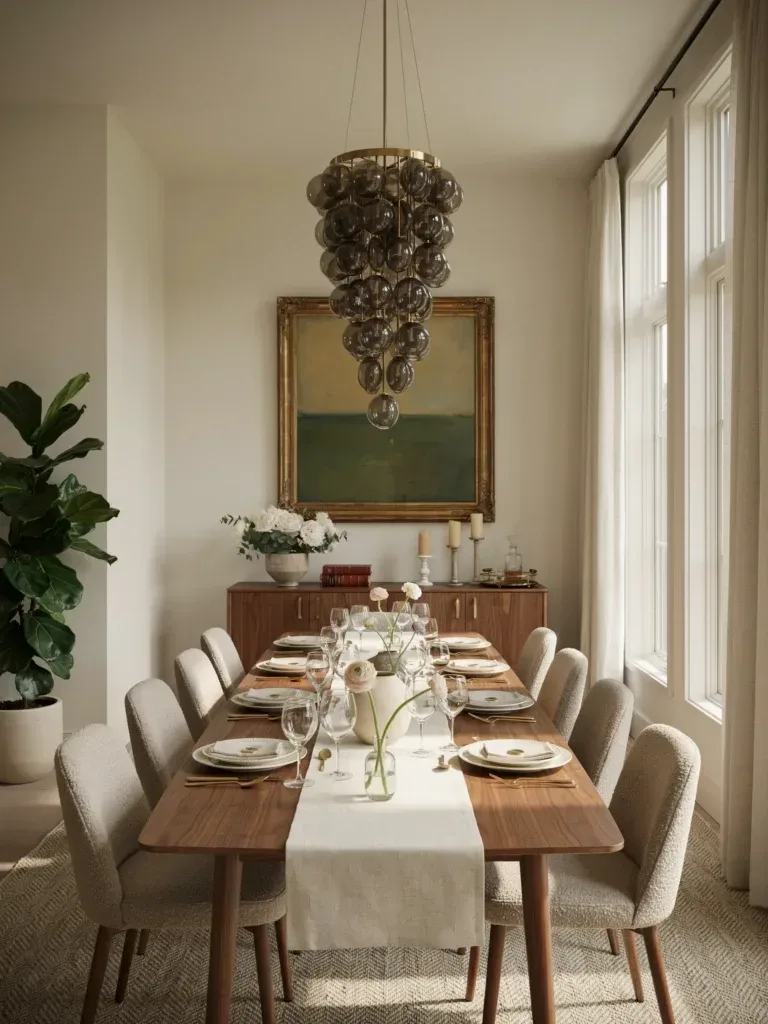
Transitional lighting blends modern function with classic shapes for flexible looks. Low-profile drum pendants and shallow chandeliers with compact arms provide style without large drop distances. They suit rooms with 8-foot ceilings when centered above the table and kept within a 12–16 inch drop.
Mix a small central fixture with recessed cans or wall sconces to create layered light. Use matching finishes—warm brass or aged nickel—for cohesion across fixtures. Selecting a fixture scaled to the table width (about 12–18 inches narrower than the table on each side) keeps the proportion right.
Opt for frosted glass or fabric shades to diffuse light and avoid harsh highlights on tableware. A three-way dimmer helps shift mood from bright meal prep to softer evening light.
Eco-Friendly and Smart Lighting
Eco-friendly fixtures combine LEDs, efficient drivers, and low-impact materials like recycled metal or FSC-certified wood. Choose integrated LED fixtures rated for 90+ CRI so colors on plates and food look natural. This improves meal presentation and reduces energy use.
Smart lighting adds convenience and better scene control in low-ceiling spaces. Use tunable white LEDs to change color temperature from warm (2700K) to cool (3000–3500K) for different times of day. Set schedules or scenes—bright for cleaning, warm-dim for dinner—via a hub or direct Bluetooth control.
Look for ENERGY STAR or DesignLights Consortium (DLC) listings to ensure efficiency. Combine smart dimmers that work with low-voltage LED loads to avoid flicker and maintain consistent output.
Listen to this article 10 10 0:00 / 0:00 Speed 0.75×1×1.25×1.5×2× Choosing the right dining room light fixture is essential for creating both the desired ambiance and a focal point in the space. The fixture sets the tone for the room, balancing style and functionality to enhance any meal or gathering. Seven dining room light fixture ideas…
Listen to this article 10 10 0:00 / 0:00 Speed 0.75×1×1.25×1.5×2× A dining room should do more than hold a table and chairs. It should invite people to sit down, stay a little longer, and enjoy good food and even better conversations. The right accent pieces can completely transform the room, adding personality, warmth, and…
Listen to this article 10 10 0:00 / 0:00 Speed 0.75×1×1.25×1.5×2× Tiny dining room? No problem. A round dining table can completely change how your space feels, and honestly, it’s one of those design tricks that works way harder than people give it credit for. No sharp corners, easier flow, and somehow everyone ends up…
Listen to this article 10 10 0:00 / 0:00 Speed 0.75×1×1.25×1.5×2× Floating shelves in a dining room can go one of two ways: effortlessly curated and designer-level chic… or “why is there random stuff stacked on the wall?” real fast. The trick is styling them with intention so they look polished instead of chaotic. If…
Listen to this article 10 10 0:00 / 0:00 Speed 0.75×1×1.25×1.5×2× You want lighting that fits your round table and sets the mood for every meal. Choose a fixture that centers over the table, hangs at the right height, and matches your room’s scale to ensure even light and a balanced look. This post will show how…
Listen to this article 10 10 0:00 / 0:00 Speed 0.75×1×1.25×1.5×2× Tiny dining room? No problem. The right design can turn even the smallest corner into a spot that feels intentional, stylish, and surprisingly spacious. You don’t need more square footage—you just need smarter ideas. These 24 designs prove that small dining rooms can absolutely…