7 Rustic Living Room Inspiration for Cozy Transformations
Most “rustic living room inspiration” boards show you the finished photo and skip the part where someone had to decide what to buy first. That’s the actual hard part. Rustic done well feels warm and collected over time; rustic done badly looks like a themed hotel lobby. The difference usually comes down to three or four decisions, not fifty. If you’re also weighing a modern farmhouse living room direction instead, the two styles overlap more than people expect — farmhouse just leans whiter and more matte, rustic leans darker and grainier.
Below are seven approaches that consistently work, in the order I’d actually tackle them if I were starting from a bare room. None of them require gutting anything.
Quick Takeaways
- Start with wood tone and one anchor material (stone, brick, or reclaimed wood) before buying anything else — everything else gets chosen to match those two.
- Layered lighting (floor lamp + table lamp + one overhead source, all on warm bulbs) matters more than any single furniture piece.
- A stone wall or fireplace is the single biggest character upgrade per square foot, but it only reads as “cozy rustic” if the rest of the room stays visually quiet.
- Textiles are the cheapest, lowest-risk way to test the style before committing to furniture.
- Mixing rugged materials with a few clean-lined pieces keeps a rustic room from feeling like a theme rather than a home.
1. Start With Weathered Wood and a Warm Color Story
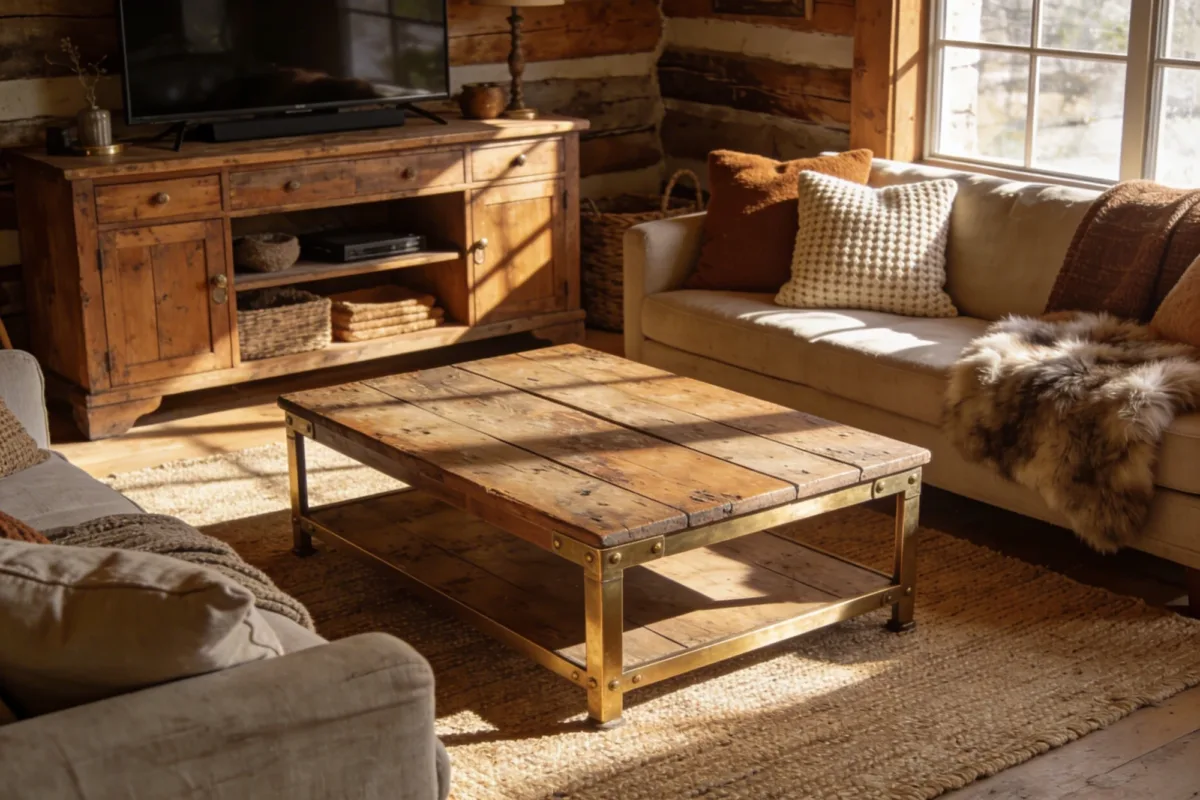
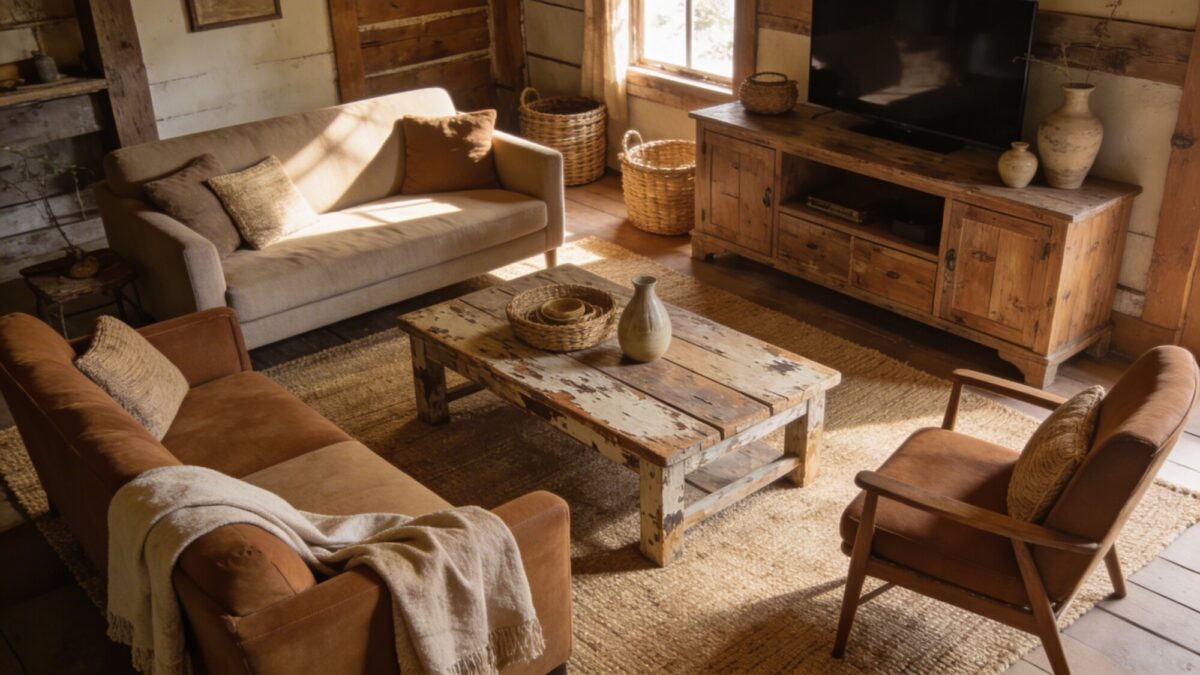
Rustic Living Room Inspiration almost always starts in the same place: wood tone. Not because it’s the most exciting choice, but because it’s the one every other decision gets measured against. A reclaimed coffee table, a distressed media console, or even just refinished floorboards sets an amber-to-chestnut baseline that your rug, sofa fabric, and wall color all need to sit comfortably next to.
This is also the fastest way to get a dark wood living room design without replacing every piece of furniture you own. Swap one large surface — the coffee table or the console — and the room’s temperature shifts noticeably, even if the sofa and walls stay exactly as they are.
What to Prioritize
- Reclaimed or distressed wood furniture in one or two key pieces, not every surface
- An amber, honey, or chestnut palette for upholstery and accessories
- A natural fiber rug (jute or sisal) to anchor the seating area
💡 Pro Tip: Match your metal hardware to the wood’s undertone, not the other way around. Warm reclaimed wood with orange or red undertones clashes with cool chrome or nickel — swap to brushed brass or matte black and the whole vignette suddenly looks intentional instead of mismatched.
The common mistake here is buying reclaimed wood pieces from three different sources and ending up with three different “weathered” finishes that don’t actually match. If you’re combining new furniture with an older piece you already own, bring a photo of it (or the piece itself) when shopping so you’re matching undertone, not just the general idea of “distressed wood.” A wood accent piece chosen specifically to bridge two mismatched tones can solve this without a full furniture swap.
2. Layer Textiles Before You Buy Any Furniture
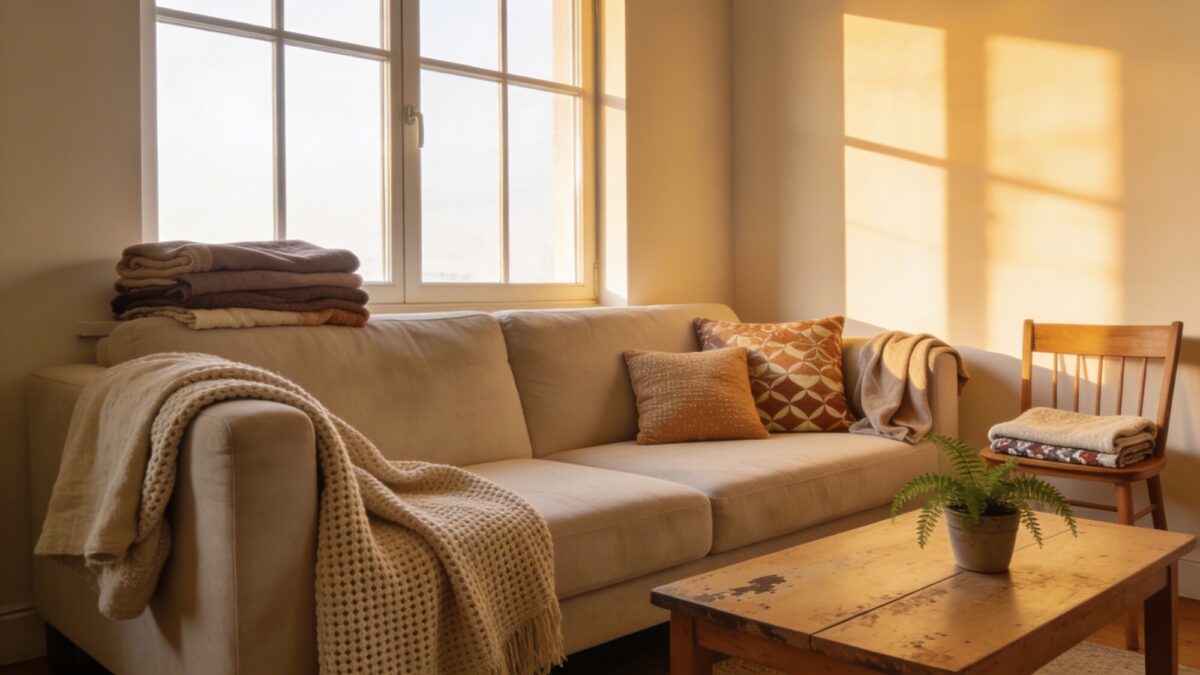
If you want to test whether rustic style actually suits how you live before committing to a coffee table, start here. Textiles are the cheapest way to build cozy living room inspiration into a space, and they’re the easiest thing to return or repurpose if the look doesn’t land.
The trick is variation in scale and weave, not quantity. One oversized waffle-knit throw, two smaller textured pillows, and one patterned lumbar pillow reads as curated. Six identical-sized pillows in slightly different beiges reads as a showroom display no one actually sits on.
Materials Worth Mixing
- Linen or cotton throws for a lighter, breathable layer
- Chunky waffle-knit or wool blankets for visual weight
- At least one textured or nubby cushion cover to break up smooth fabrics
If your current sofa is already a warm, earthy neutral, this step alone can get you 70% of the way to a rustic look without touching furniture. If it’s a cool gray or a bold pattern, textiles will help but won’t fully override it — that’s a case where the furniture itself needs to change eventually.
3. Stone and Fireplace Focal Points
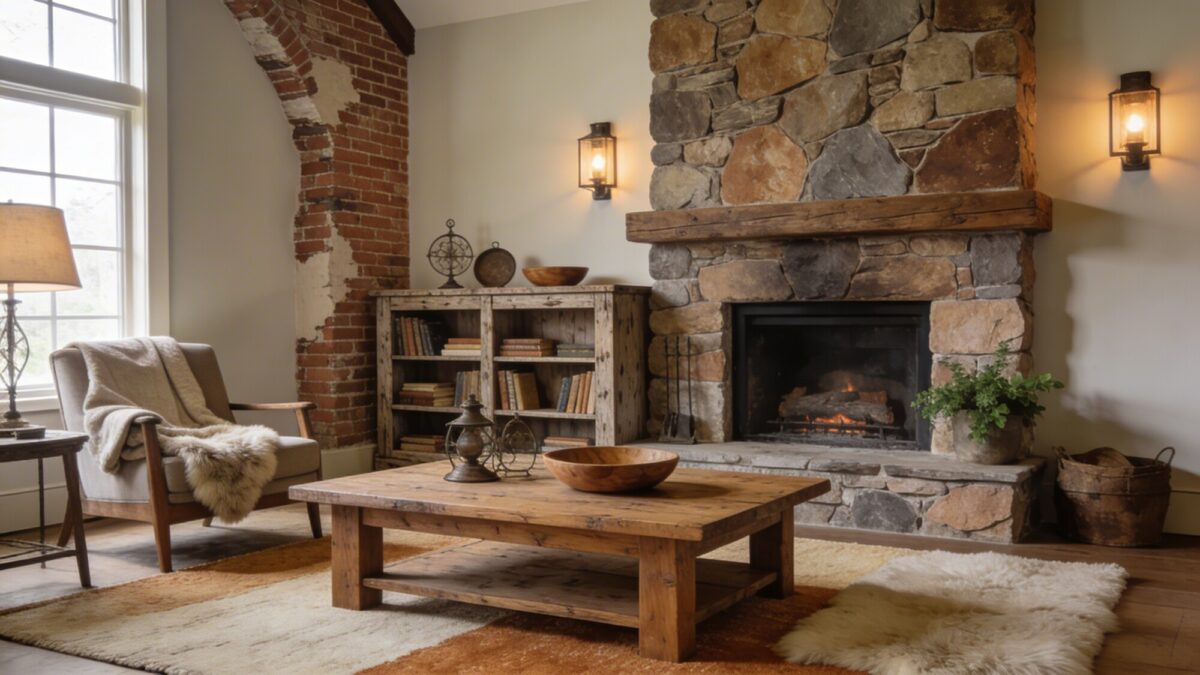
Of everything on this list, a stone wall living room idea does the most visual work for the least ongoing effort. A rustic living room with a stone fireplace doesn’t need much else around it — the material itself carries the room. This is also where modern rustic living room decor tends to diverge most clearly from pure farmhouse style: farmhouse leans toward painted brick and shiplap, while modern rustic living room with stone walls keeps the stone raw and unpainted, paired with cleaner-lined furniture.
How to Approach It
- Choose one wall — the fireplace wall is the obvious candidate — and commit the stone or brick treatment there only.
- Keep the remaining walls a single quiet neutral so the stone stays the visual anchor.
- Furnish around it with warm wood pieces rather than more stone, brick, or heavy texture elsewhere in the room.
- Add sconces or a single overhead fixture near the stone to cast shadow across the texture at night — flat overhead light flattens stone’s depth.
💡 Pro Tip: Faux stone panel and real stone veneer often cost similarly once you factor in installation, but faux panel goes up in a weekend without a mason. If you’re renting or not ready for a permanent change, that’s the lower-risk way to test whether you actually like a full stone wall before committing.
The mistake I see most with rustic living room ideas with fireplace: people add stone AND exposed brick AND heavy dark beams in the same room. Pick one dominant rugged material. Two competing textures fight for attention and the room stops feeling calm.
If your fireplace already has a plain mantel, that’s often the fastest fix before touching the stone or brick at all — a styled mantel can make a mediocre fireplace feel like the room’s centerpiece for the cost of a few accessories.
4. Get the Lighting Layered, Not Just Warm
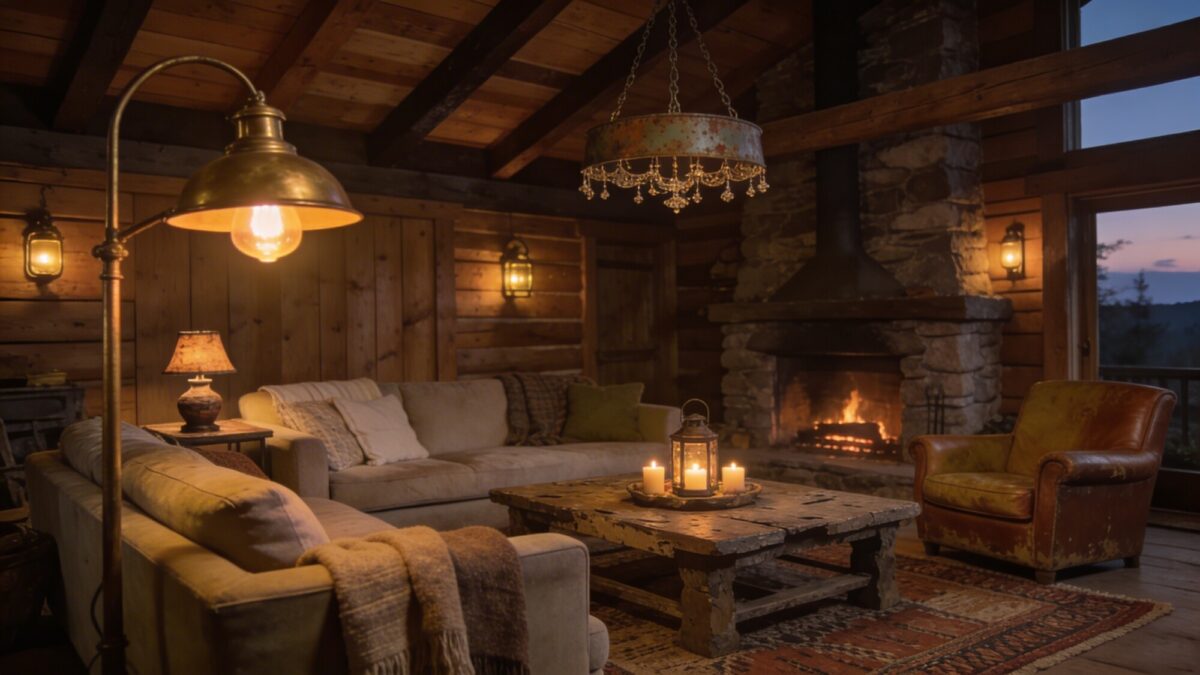
A single warm bulb in one ceiling fixture is not “cozy lighting” — it’s just dim. Real cozy rustic living room with stone wall or wood accents needs light coming from at least two, ideally three, different heights: something near the floor, something at table height, and something overhead or on the wall.
A Simple Way to Layer It
- Floor lamp with a warm 2700K bulb near the seating area
- Table lamp on a side table or console at eye level when seated
- One overhead fixture — a small pendant or chandelier works better than a flush-mount ceiling light for rustic style
- Optional: candles or a lantern on the coffee table for evenings
Put dimmers on whatever you can. The same lamp at full brightness feels utilitarian; dimmed to 40%, it feels like the room from the inspiration photo. If you’re chasing more of that cozy glow specifically, lighting temperature and layering will get you there faster than any single furniture purchase.
5. Add Greenery That Doesn’t Need Babysitting
Plants soften every hard edge a rustic room tends to accumulate — stone, reclaimed wood, iron hardware. But they only work as decor if they stay alive, so this is one place where picking the right plant matters more than picking the prettiest pot.
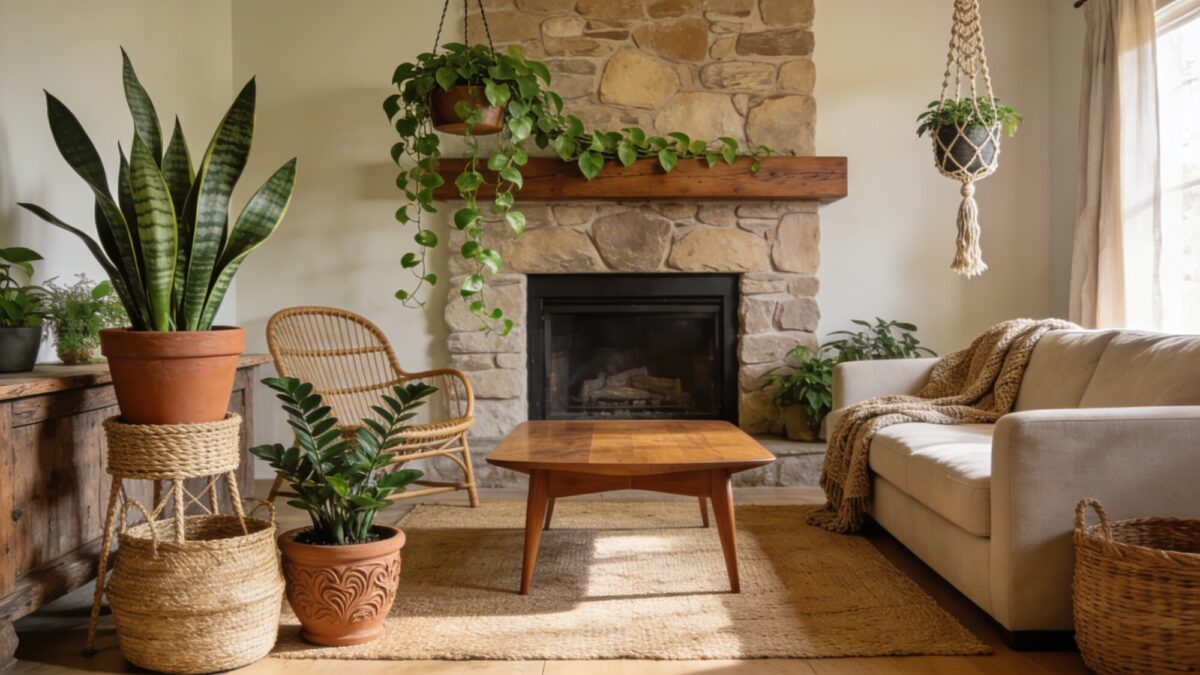
Low-Maintenance Options
- Snake plant — tolerates low light and irregular watering
- Pothos — good for a hanging planter, forgiving if you forget it for a week
- ZZ plant — thrives on neglect, near-impossible to overwater accidentally
Put plants in terracotta or a woven basket rather than glossy ceramic — the matte, textured pot reinforces the rustic feel more than the plant itself does. One larger floor plant plus one small hanging or shelf plant is usually enough; a dozen small pots scattered around starts to look cluttered rather than intentional.
6. Blend Rustic Texture With a Few Clean Lines
This is the step that separates modern rustic living room decor from a room that reads as a cabin theme. Pure rustic — all reclaimed wood, all rough texture, all warm tones — can start to feel heavy in a smaller space. Mixing in a few streamlined pieces keeps it livable.
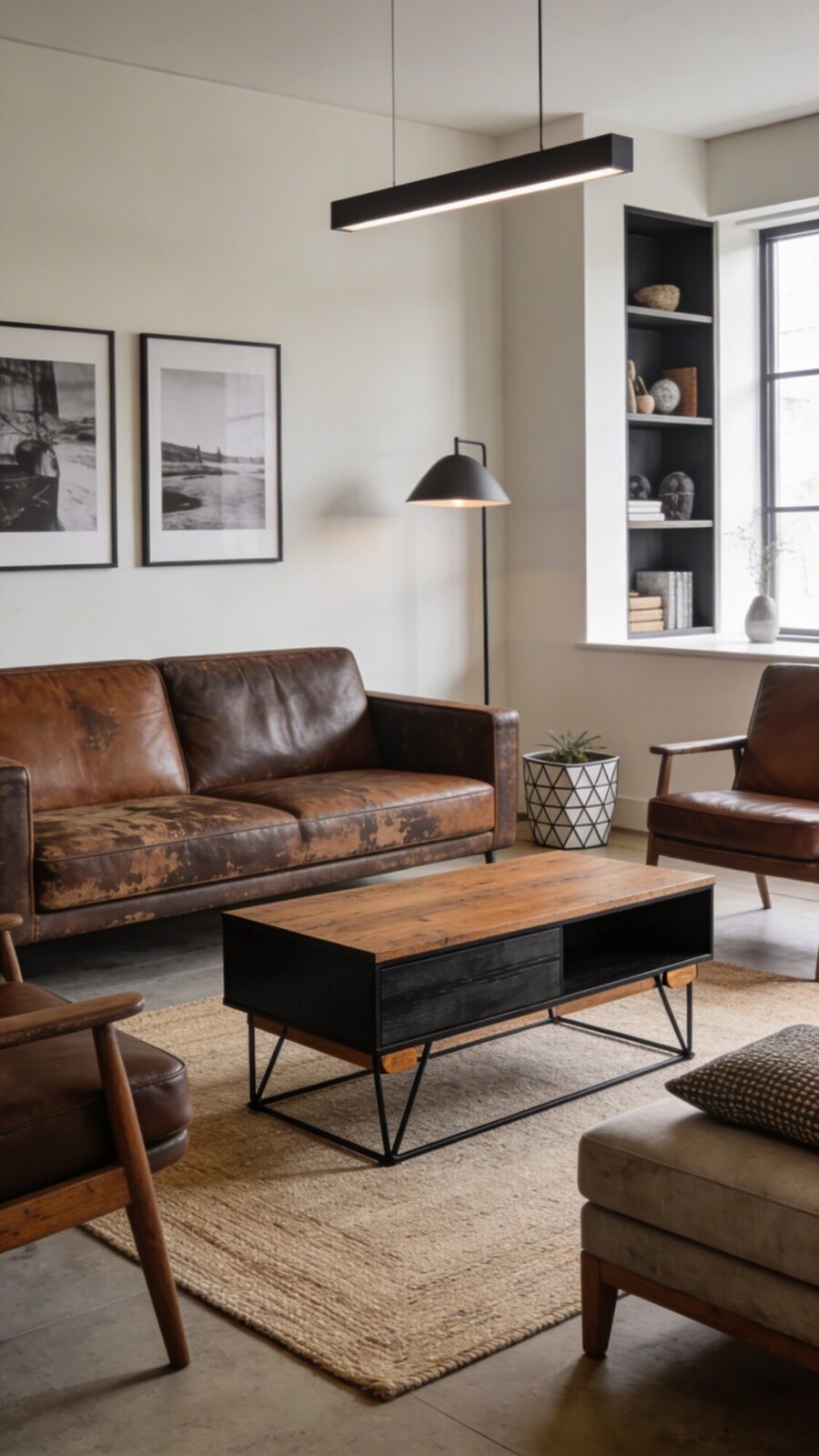
What to Blend
| Rustic Element | Modern Counterpart to Pair It With |
|---|---|
| Reclaimed wood coffee table | Metal-framed legs instead of a solid wood base |
| Leather sofa or armchair | A low-profile, minimalist silhouette rather than a tufted or rolled-arm style |
| Woven or natural fiber rug | Simple geometric pattern instead of an ornate traditional print |
| Wall decor | Black-and-white photography in slim frames instead of ornate gallery frames |
💡 Pro Tip: If you only change one thing to modernize a too-heavy rustic room, swap a solid wood coffee table base for one with slim metal legs. It’s a small piece visually, but it lightens the whole seating area because your eye reads “airy” at floor level even when everything above it stays rustic and warm.
If you’re drawn more to this cleaner-lined direction generally, it’s worth browsing contemporary living room inspiration alongside rustic references — a lot of the best modern rustic rooms are really contemporary layouts with rustic materials swapped in, not the other way around.
7. Add the Personal Layer Last
Everything above can be bought. This step is the one that actually makes a room feel like yours rather than a catalog page: heirloom pieces, travel finds, handmade items, family photos in simple frames. It’s also the step people skip because it can’t be shopped for in one trip.
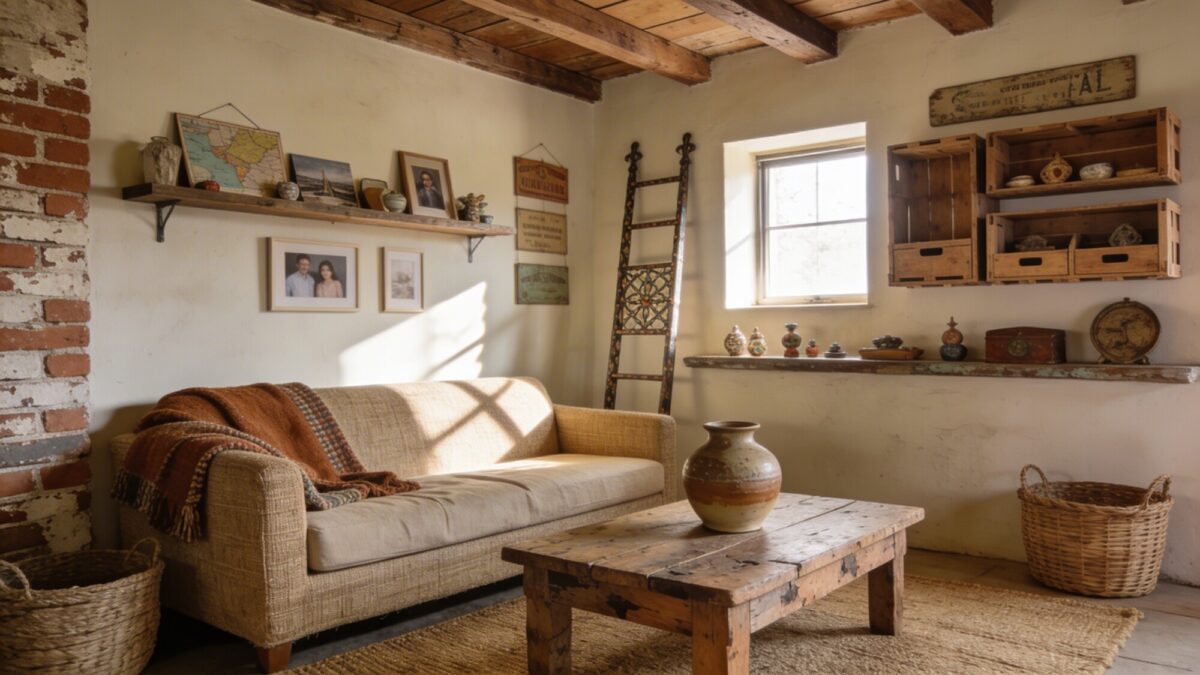
A rotating shelf works better than trying to display everything at once. Pick five or six meaningful pieces, swap in different ones every few months from a larger collection in storage. It keeps the display from feeling static and gives you a reason to actually look at the objects again instead of letting them fade into background clutter.
Modern Rustic vs. Farmhouse Rustic vs. Cabin Rustic
These three get lumped together constantly, but they pull from different palettes and materials. If you’re not sure which direction fits your space, this is roughly where they diverge:
| Style | Wood Tone | Stone/Brick Use | Best For |
|---|---|---|---|
| Modern Rustic | Dark, minimal distressing | Raw stone, unpainted, one accent wall | Open-plan living rooms, higher ceilings |
| Farmhouse Rustic | Lighter, whitewashed or painted | Shiplap or painted brick more than raw stone | Smaller or older homes, brighter rooms |
| Cabin Rustic | Heavy, dark, natural grain | Full stone fireplace surrounds, exposed beams | Homes with existing wood ceilings or beams |
Things to Check Before You Start Buying
- Does your current sofa color work with warm wood tones, or will it need to be recovered or replaced eventually?
- Is there one wall that makes sense as a stone or brick focal point, ideally the fireplace wall?
- Do you have at least two different light sources at different heights, or just one overhead fixture?
- Are your metal finishes (hinges, lamp bases, hardware) warm-toned or cool-toned — and do they match the wood you’re planning to bring in?
- Do you have low-light spots in the room where only a snake plant or ZZ plant will actually survive?
Pros and Cons of Going Rustic
- Pro: Ages well — unlike trend-driven styles, worn wood and stone look better, not dated, over time.
- Pro: Can be built in stages, starting with textiles and lighting before any furniture purchase.
- Con: Heavy, dark wood tones can make a small or low-light room feel closed in if not balanced with lighter walls or fabrics.
- Con: Real stone or reclaimed wood furniture costs more upfront than mass-market alternatives — faux and reclaimed-look options exist but require more careful sourcing to avoid looking obviously fake.
FAQ
Is rustic style going out of trend?
No — rustic elements like wood tone and stone have stayed consistent for years because they’re material-driven rather than color-driven. What shifts is how it’s paired: right now it’s leaning toward the modern rustic mix of clean lines and rugged materials rather than the heavier cabin look.
Can I do rustic style in a small living room?
Yes, but limit heavy dark wood to one or two pieces and keep walls a lighter neutral. A small room with dark wood on every surface will feel cramped regardless of how nice the individual pieces are.
Do I need a real stone wall, or does faux stone work?
Faux stone panel looks convincing from normal viewing distance and installs without a mason, which makes it the practical choice for renters or a first attempt at the look. Real stone veneer has more texture up close if you’re planning to keep the room long-term.
What’s the fastest way to start if I have zero budget right now?
Rearrange your existing lighting into layers (floor lamp, table lamp, one overhead source) and add one or two textiles you already own in warmer tones. Both are free or near-free and immediately shift the room’s feel before you buy anything.
What should I buy first if I’m starting from scratch?
One anchor wood piece — a coffee table or console — and layered lighting. Everything else (rug, textiles, greenery) gets easier to choose once those two are set, because they define the room’s tone and undertone.
Our Take
The rooms that actually work aren’t the ones with every idea on this list crammed in — they’re the ones built around one dominant material (usually wood or stone) with everything else chosen to support it. If you’re starting from nothing, layered lighting and textiles are the lowest-cost, lowest-risk places to begin. If you already have good bones — a fireplace, decent natural light, warm-toned furniture — a single stone accent wall will do more for the room than five smaller purchases combined.
Whichever piece you tackle first, keep the rest of the room quiet while it settles in. For more direction on getting the warmth and glow right specifically, this cozy living room inspiration guide is a good next stop.