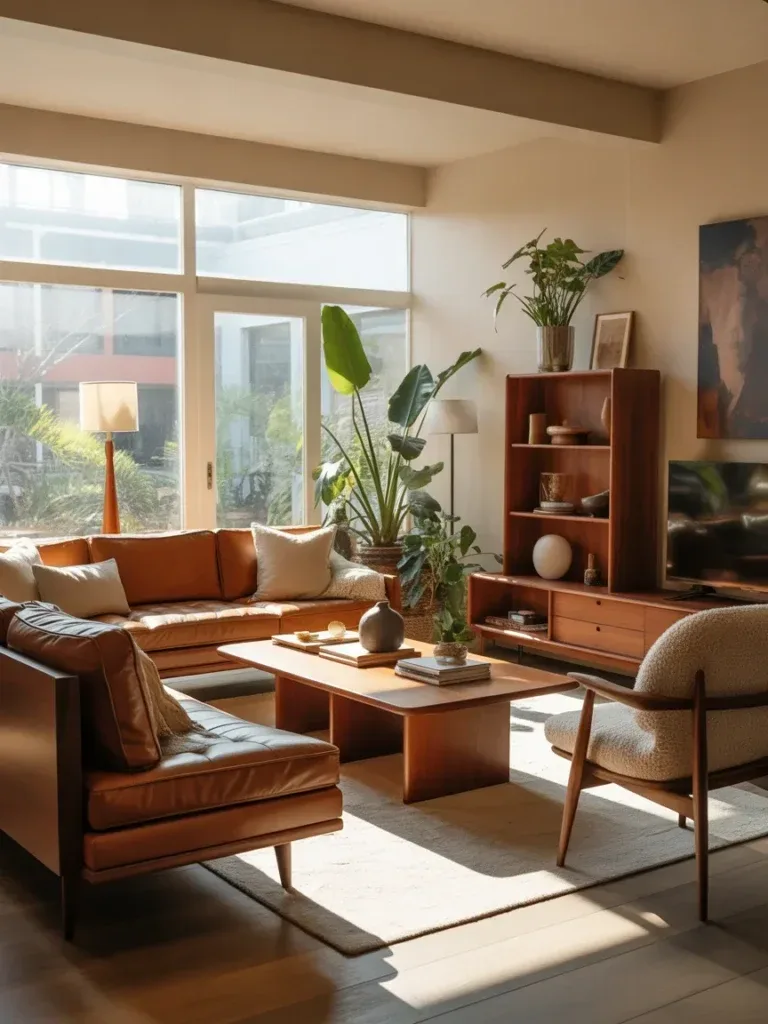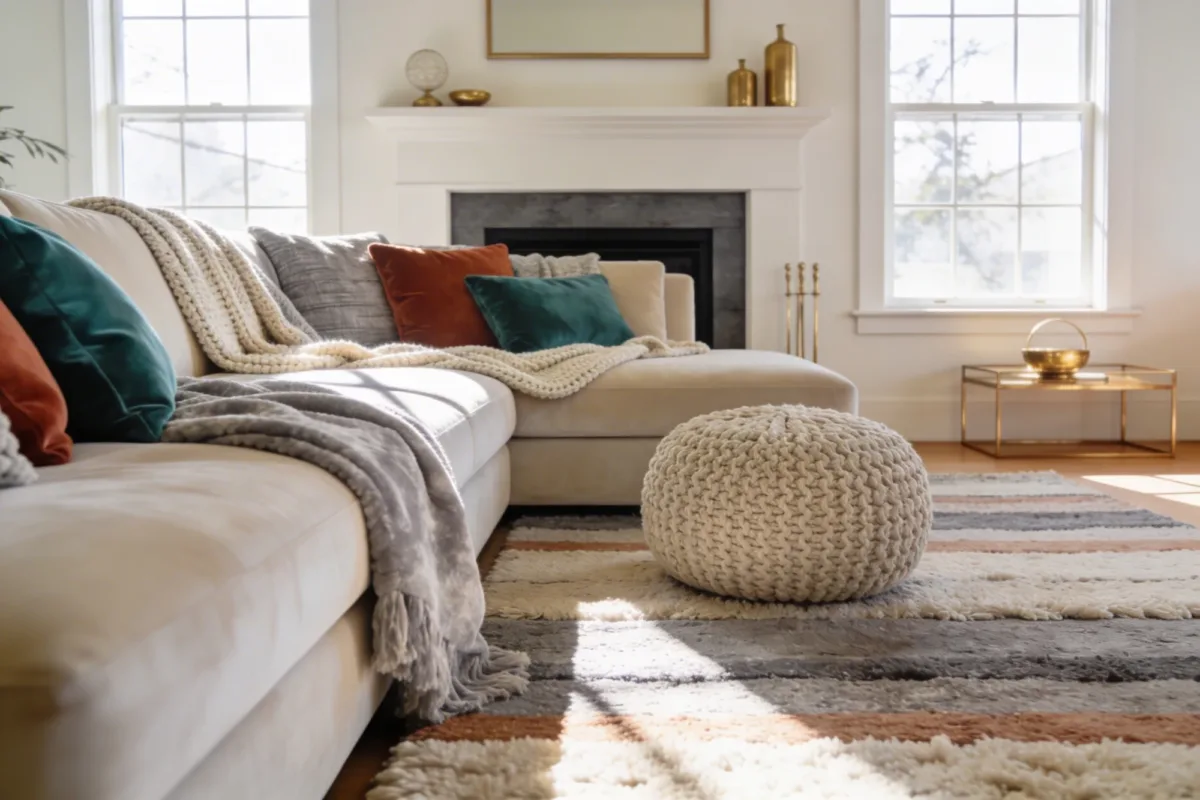
8 Cozy Living Room Inspiration: Cozy Vibes to Try Now
Cozy living room inspiration is easy to find and hard to translate into an actual room — most photos show a styled scene, not a room people actually live in every day. The difference usually comes down to layering: texture, light, and a couple of personal touches, not a full furniture overhaul. If your starting point is more “blank box” than “almost there,” our cozy living room designs guide is a good place to see full-room examples before you commit to any single change.
These eight ideas are ordered roughly by effort — texture and lighting first, since they’re the cheapest and fastest, then bigger commitments like seating and gallery walls further down.
Quick Takeaways
- Texture does more for a cozy feel than color choice does — a neutral room with three fabric textures reads warmer than a colorful room with only smooth, flat surfaces.
- Warm bulbs (2700K-3000K) matter more than the light fixture itself; a cheap lamp with the right bulb beats an expensive fixture with a cool-white one.
- One statement plant grounds a room better than several small scattered ones.
- A dedicated reading or unwinding corner works even in a small living room — it doesn’t need its own separate space.
1. Layer Textures Like a Pro
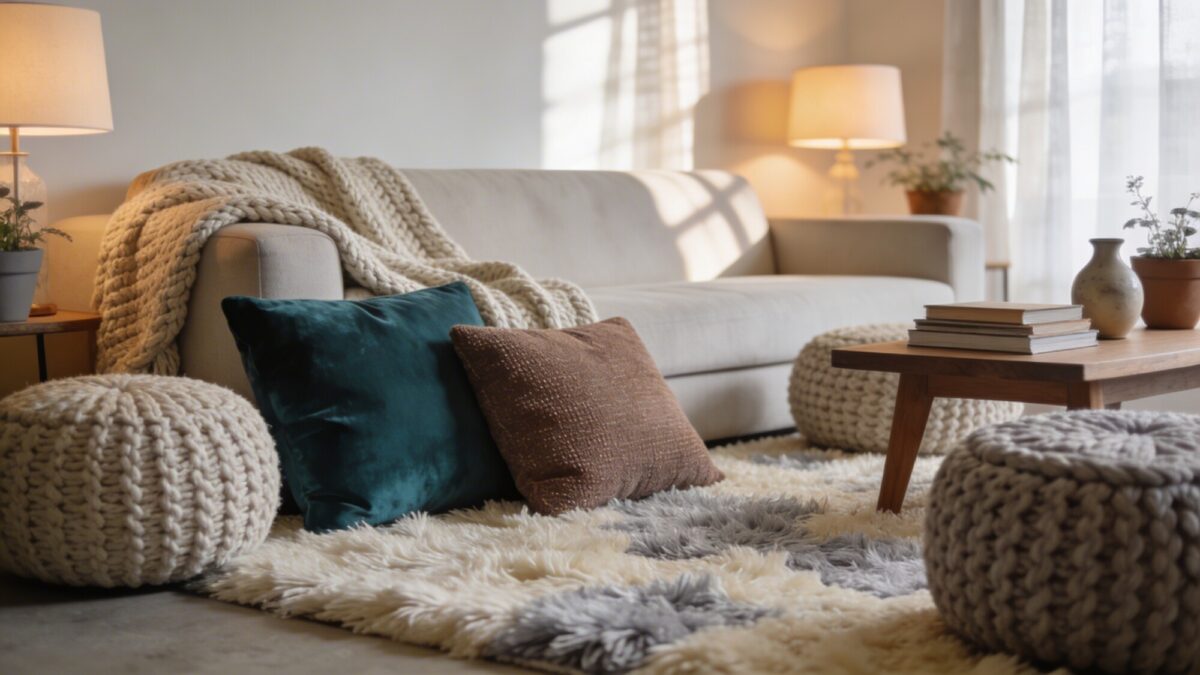
A room with one dominant fabric — say, an all-linen sofa with matching linen cushions — looks put together but rarely reads as cozy. What actually creates warmth is contrast: something knobby (chunky knit), something plush (velvet or chenille), and something soft underfoot (a shaggy or high-pile rug), all layered on top of a neutral base.
Start with your dominant neutral (the sofa, the rug base) and add two or three accent textures on top. More than that and the room starts to look cluttered instead of layered.
💡 Pro Tip: If you’re not sure where to start, buy two throw pillow covers in different textures (like a boucle and a velvet) before committing to a full pillow set — it’s the cheapest way to test whether a texture combination actually works in your lighting before buying more.
2. Warm Neutrals With a Playful Pop
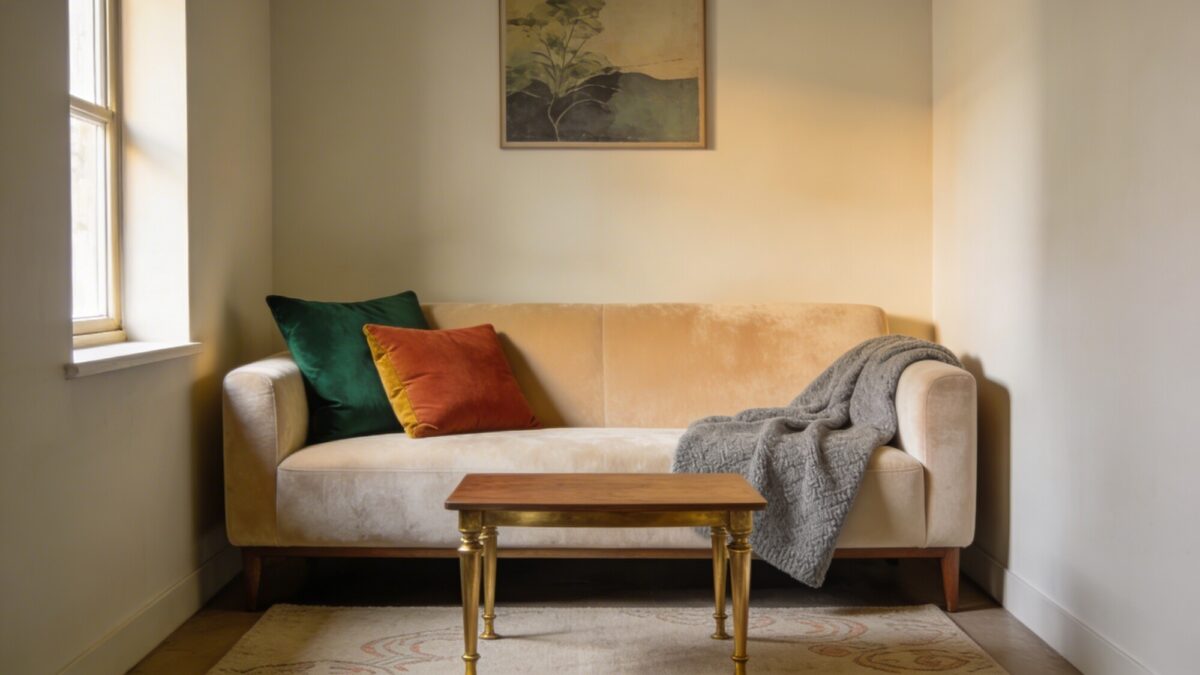
A base of sand, warm ivory, and soft gray gives the room a calm foundation, but an all-neutral room without any color accent can drift toward feeling unfinished rather than serene. One accent color — forest green, terracotta, or mustard — introduced through a cushion, a single chair, or a piece of art keeps the palette from going flat.
This combination works especially well in smaller rooms, where a full bold color scheme can feel overwhelming but a neutral base with a small accent still reads as intentional rather than boring.
3. A Fireplace-Inspired Focal Point, Without the Fireplace
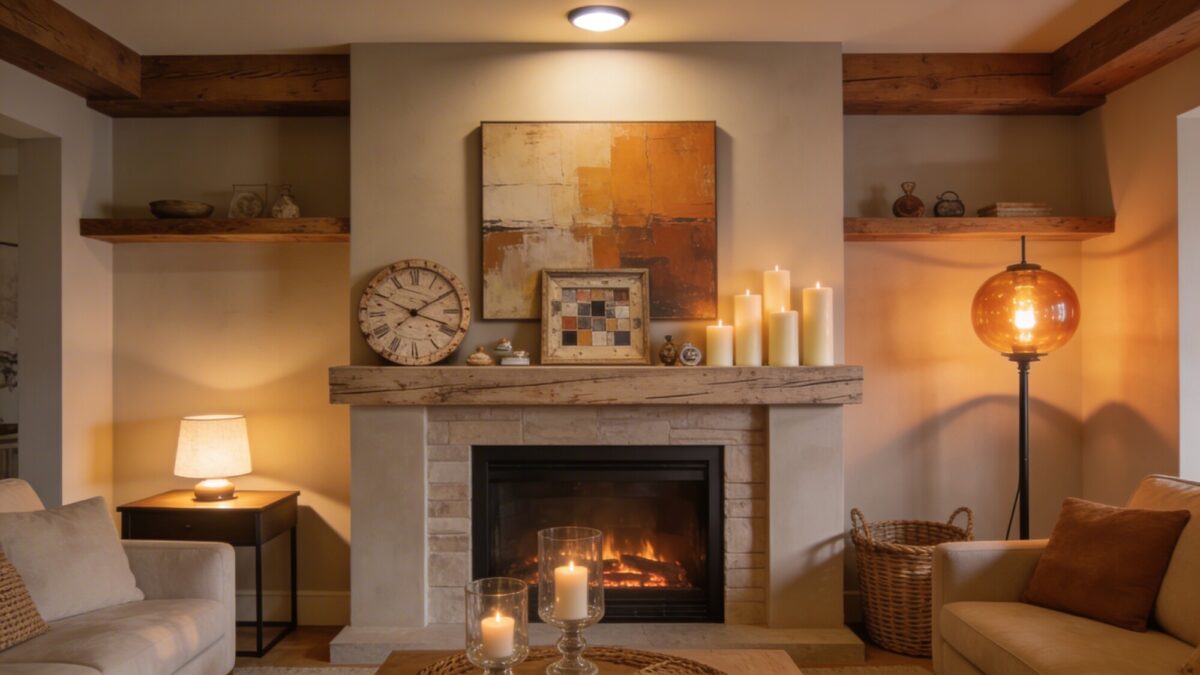
Not every home has a real fireplace, but the visual anchor a mantel provides can be recreated without one. A console or narrow shelf styled like a mantel — with a large piece of art or an oversized mirror above it, a cluster of candles at varying heights, and a couple of wood-toned objects — gives the room the same “gather around this” pull a fireplace normally provides.
The candles matter more than people expect here; a cluster of three to five at different heights does more visual work than a single large one.
4. Seating That Actually Invites Lounging
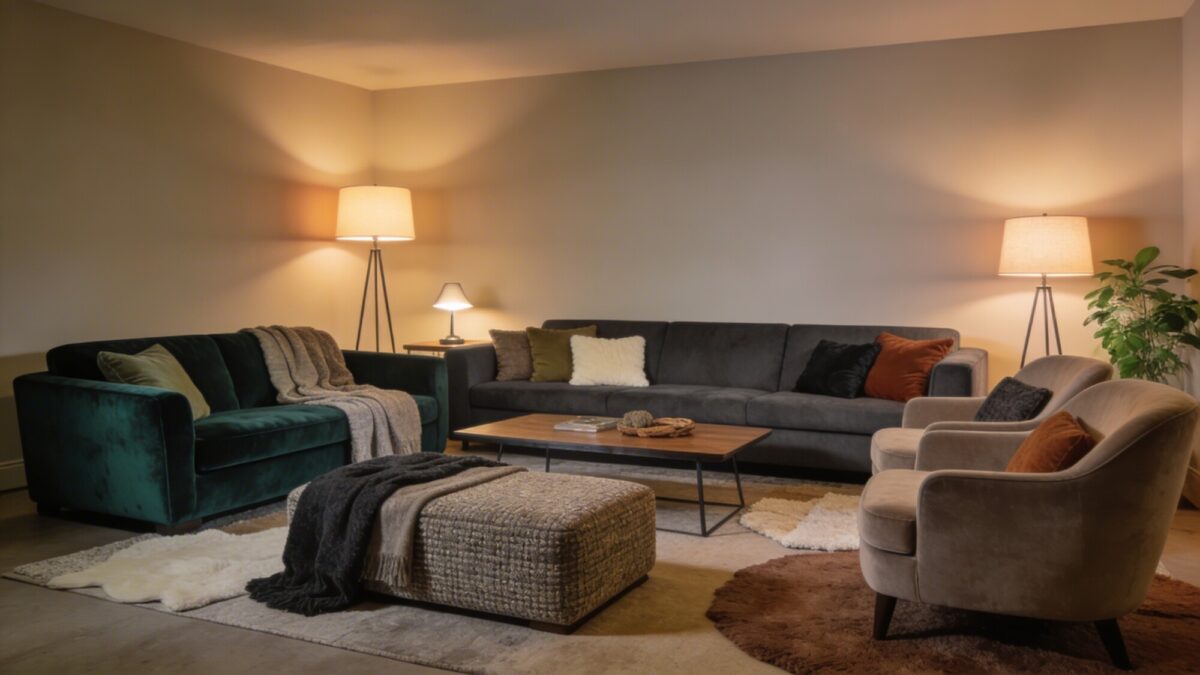
A room can have all the right textures and lighting and still feel unwelcoming if the seating itself isn’t comfortable to sit in for more than twenty minutes. This is the trade-off between a firm, structured sofa that looks sharp in photos and a deep, plush sectional that actually gets used for movie nights — pick based on how you’ll use the room, not how it photographs.
Arranging seating in a loose cluster, rather than lined up against walls, makes conversation easier and avoids the “waiting room” feel that boxed-in furniture arrangements tend to create.
5. Soft Lighting That Feels Like a Hug
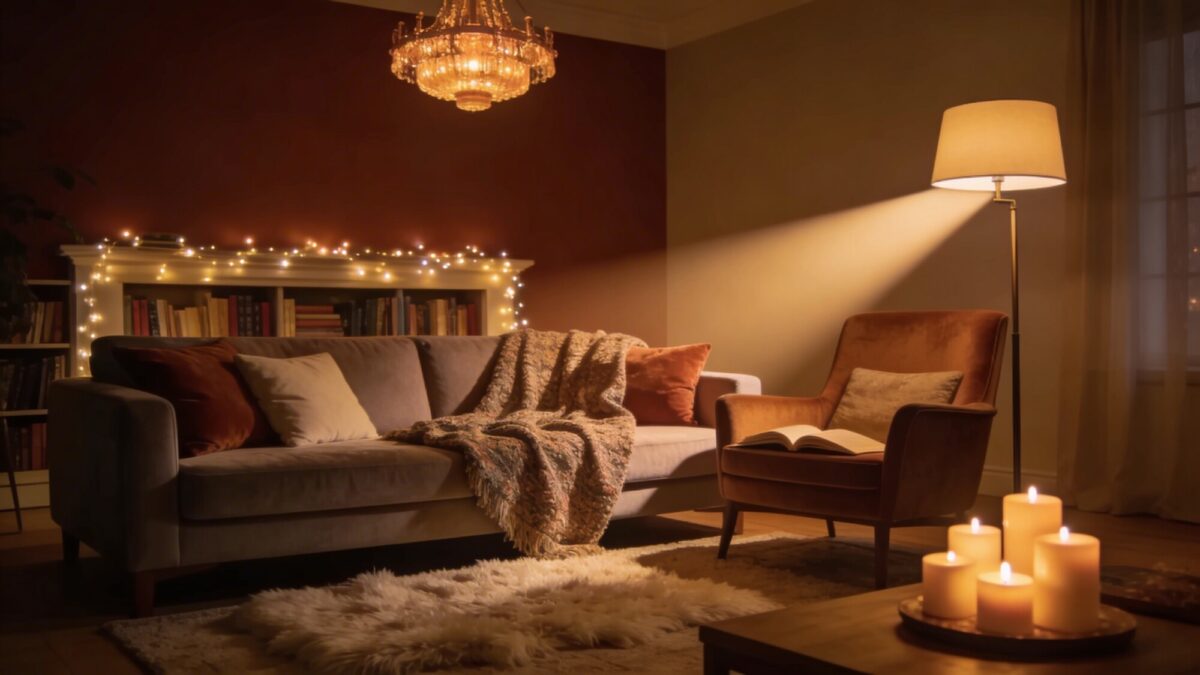
One overhead ceiling fixture, especially with a cool-white bulb, is the fastest way to make a well-decorated room feel clinical instead of cozy. Three lighting layers fix this: a dimmable ambient source (ceiling fixture or chandelier), a task lamp near where you’d actually read or work, and an accent layer — candles, string lights, or an uplight — for texture and warmth.
💡 Pro Tip: Swap your existing bulbs for warm white (2700K-3000K) before buying any new lamps. It’s the single cheapest fix on this list — usually under $10 per bulb — and changes the whole feel of a room without moving a single piece of furniture.
If you’re planning lighting for a room that also needs to work for movie nights specifically, our modern cozy living room ideas guide covers a few dimmer and fixture combinations worth considering.
6. Subtle Nature Touches That Ground the Space
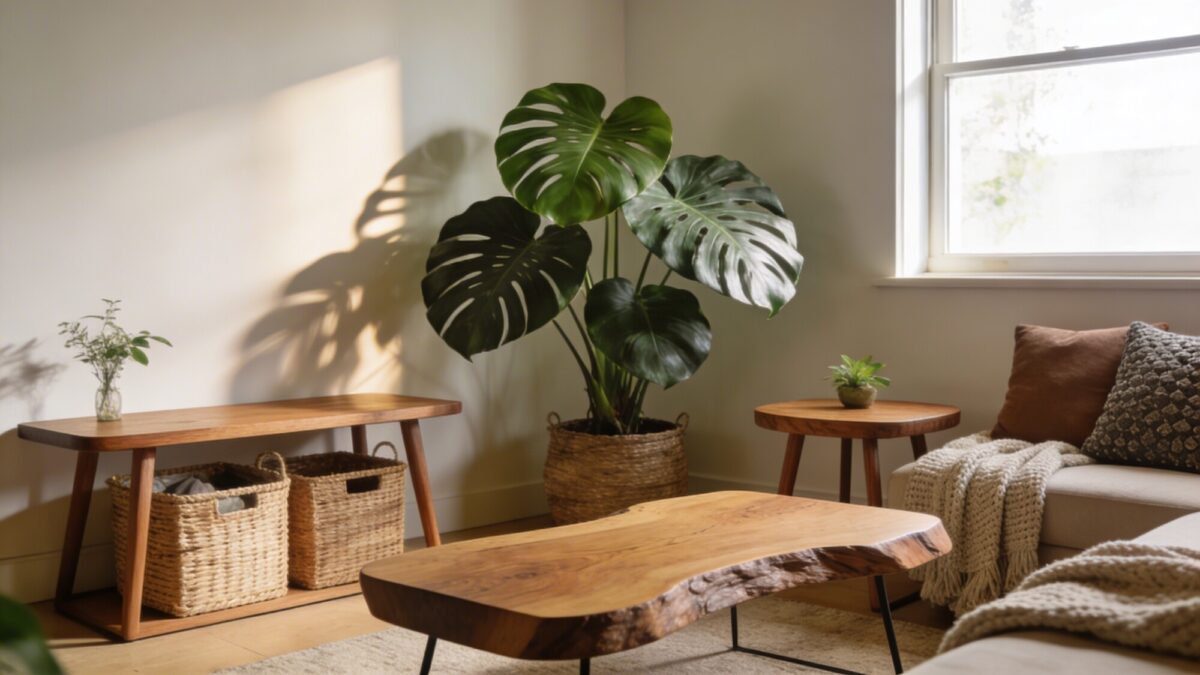
One large plant — a fiddle-leaf fig or monstera in a bright corner — does more for a room than five small plants scattered across shelves. It gives the eye a single anchor point instead of asking it to jump around the room.
Fiddle-leaf figs are particular about light and consistency; if your room doesn’t get strong indirect light, a monstera or a large snake plant is the more realistic choice, not a lesser substitute.
7. A Personal Gallery That Feels Like Your Best Friend’s Living Room
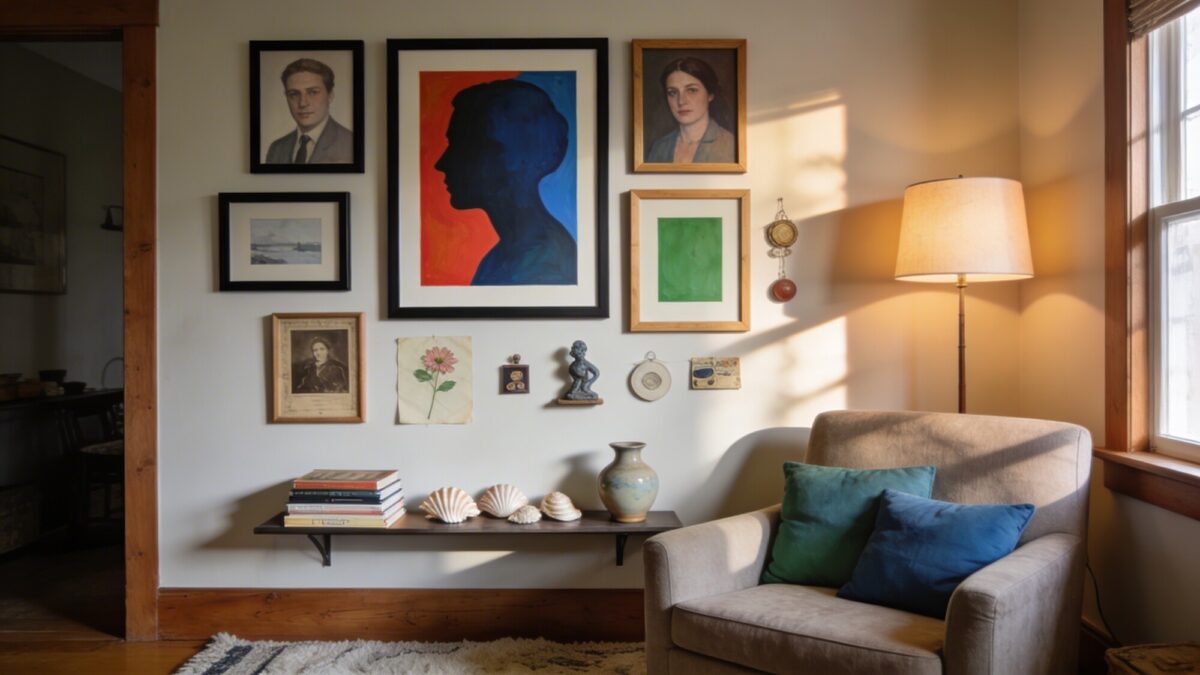
Generic art — the kind bought in a set to match a color scheme — fills wall space but doesn’t add much warmth. A gallery of pieces that actually mean something (a photo, a small sculpture, a pressed flower in a frame) gives guests something to ask about, which is a large part of what makes a room feel lived-in rather than staged.
Keep the frame finish consistent (all matte black, or all natural wood) even as the content varies — that’s what keeps an eclectic mix from looking messy.
8. A Cozy Corner That Hugs You Back
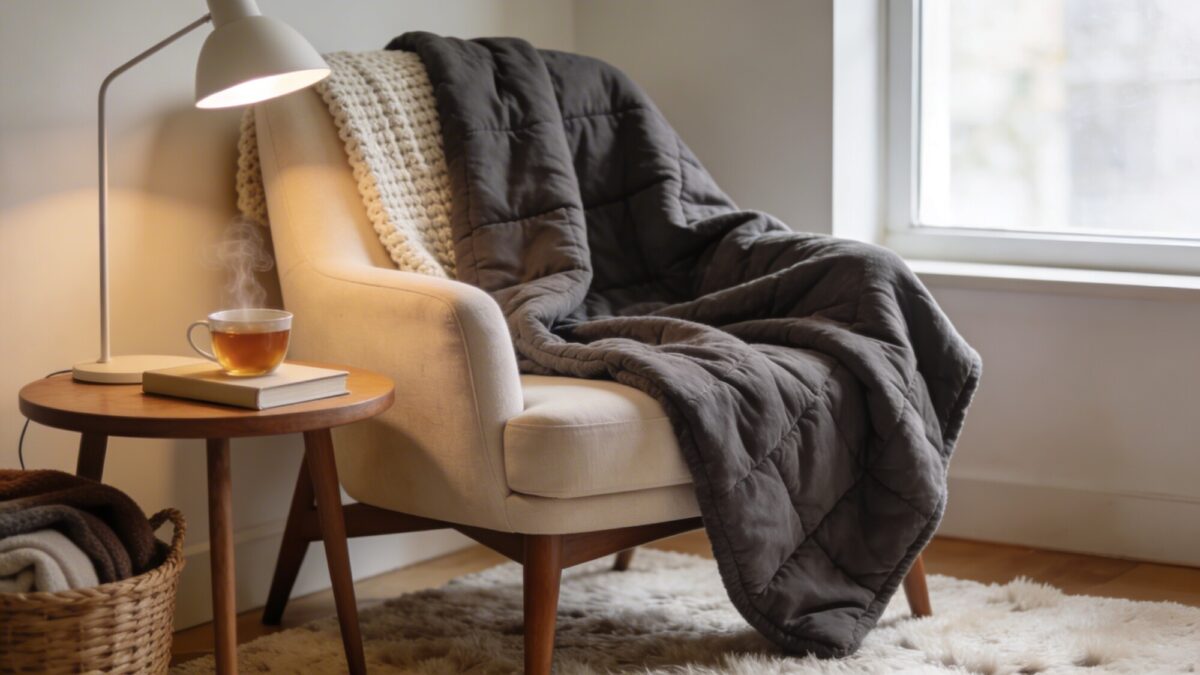
A single armchair, a heavy throw or weighted blanket, and a small side table for tea or a book create a dedicated unwinding spot without needing a separate room. This works even in a shared living space — the corner doesn’t need to be large, just consistently set up the same way so it reads as intentional.
Position it near a window if you can. Daylight is doing a lot of the “cozy” work in most inspiration photos, more than people give it credit for.
Comparison: Which Cozy Idea Gives the Best Return for the Effort?
| Approach | Cost to Try | Effort | Best For |
|---|---|---|---|
| Texture layering | $ | Low | Any room that looks “finished” but feels flat |
| Lighting layering | $-$$ | Low | Rooms that feel cold or clinical in the evening |
| Cozy corner | $-$$ | Low | Rooms without a dedicated relaxing spot |
| Seating upgrade | $$$ | High | Rooms where the current furniture isn’t comfortable enough to linger in |
| Gallery wall | $-$$ | Medium | Rooms that feel generic or hotel-like |
Things to Consider Before You Start
- Start with texture and lighting before furniture — they’re reversible, cheap, and tell you what the room actually needs before you commit to bigger purchases.
- Don’t mix more than three accent textures in one seating area; past that point it starts to look cluttered rather than layered.
- If natural light is limited, prioritize warm artificial lighting over any other change on this list.
- Rotate or refresh plants and gallery pieces occasionally — a room that never changes starts to feel static even if it was cozy on day one.
FAQ
What’s the fastest way to make a living room feel cozier without buying furniture?
Swap your bulbs to warm white (2700K-3000K) and add two or three textured throw pillows. Both changes are inexpensive and don’t require rearranging anything.
Do I need a fireplace for a cozy living room?
No. A styled mantel-style console with layered candles and art above it gives a similar focal-point effect without any construction.
How many textures is too many in one room?
Once you’re mixing more than three or four distinct textures in the same seating cluster, it usually starts to look busy rather than cozy. Pick a dominant neutral and layer in two or three accents.
Is a small living room able to pull off a “cozy corner”?
Yes — it just needs one chair, a throw, and a small table, and it can occupy a single corner of an already-multipurpose room.
What plant works best for someone who forgets to water?
A snake plant is the more forgiving option compared to a fiddle-leaf fig, which needs consistent light and watering to avoid dropping leaves.
Our Take
Texture and lighting are the two changes worth making first — they’re cheap, reversible, and tell you a lot about what the room actually needs before you spend on furniture. The cozy corner is a close third if the room doesn’t already have a spot for reading or unwinding. Save the seating upgrade and gallery wall for once you’ve tested the smaller changes and know the direction the room is heading.
If your space is on the smaller side and you want ideas built specifically around square footage limits, our cozy living room ideas for apartments guide is a useful next stop.