Tiny-Space Charm: 6 Cozy Living Room Ideas for Small Spaces
A small footprint doesn’t have to mean a small amount of warmth. These cozy living room ideas focus on texture, hidden storage, and light — the three things that do the most to make a compact space feel like a genuine retreat rather than a cramped afterthought. Small spaces aren’t a limitation; they’re a canvas for deliberate, comfy design.
Quick Takeaways
- Texture adds visual depth without using any actual floor space.
- Hidden storage keeps clutter — the real enemy of coziness — out of sight.
- Vertical elements and mirrors both trick the eye into perceiving more space.
- Layered lighting at different heights does more for atmosphere than a single overhead fixture.
1. Layer Textures Like a Pro
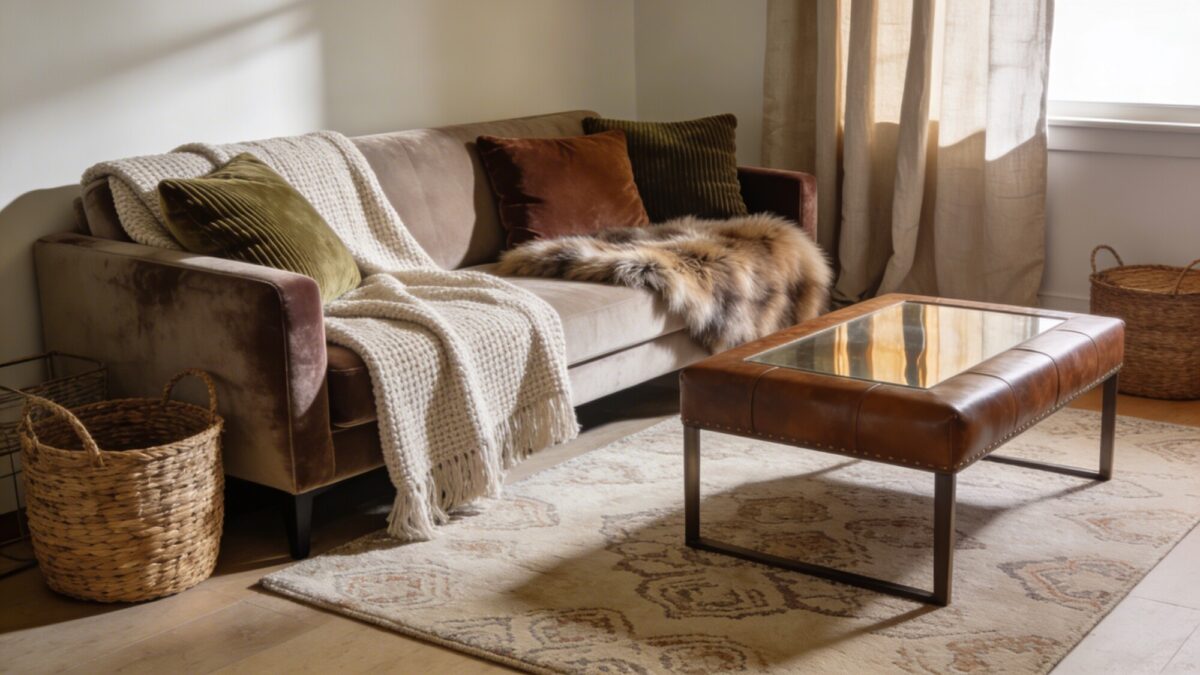
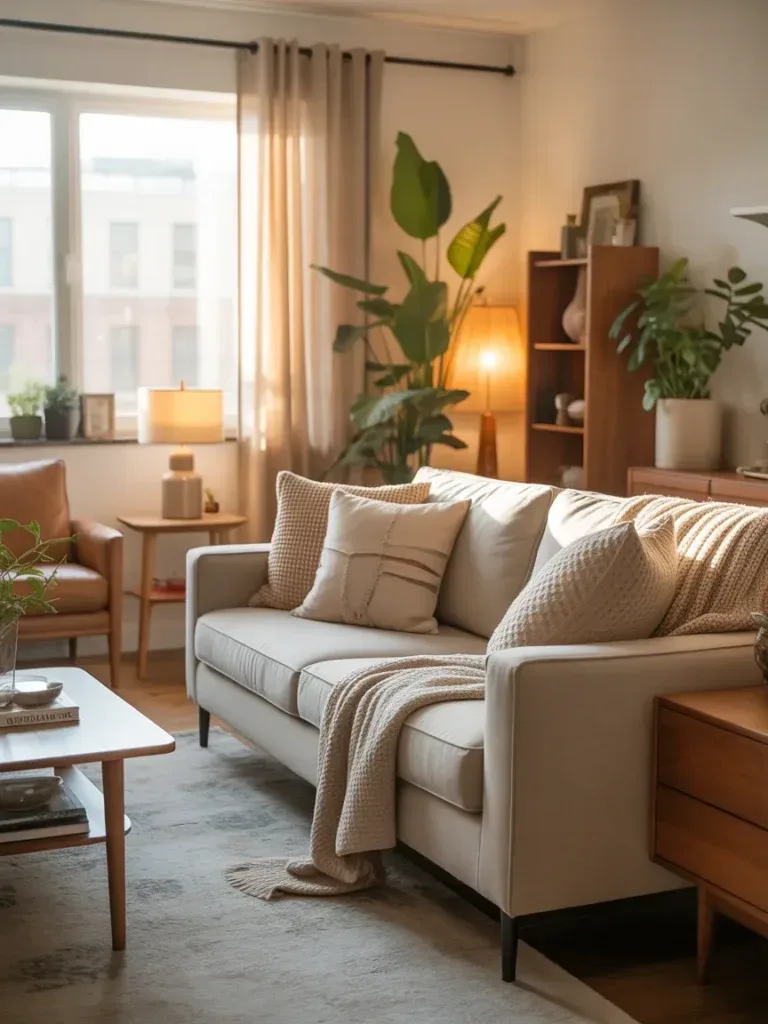
Texture is one of the most efficient tools in small-space design because it adds depth and warmth without claiming any square footage. Mixing soft textiles with a few rugged accents creates a cozy living room aesthetic comfy enough to sink into, while keeping the room visually light.
- Textured throw blankets in knit or faux fur
- A patterned area rug to anchor the seating area
- Velvet or corduroy cushions for contrast
Tactile variation makes a room feel larger because it draws the eye around the space instead of down into clutter. Keep the color palette cohesive even as you vary the textures — that consistency is what keeps a layered room from feeling busy.
2. Create Secret Storage Zones
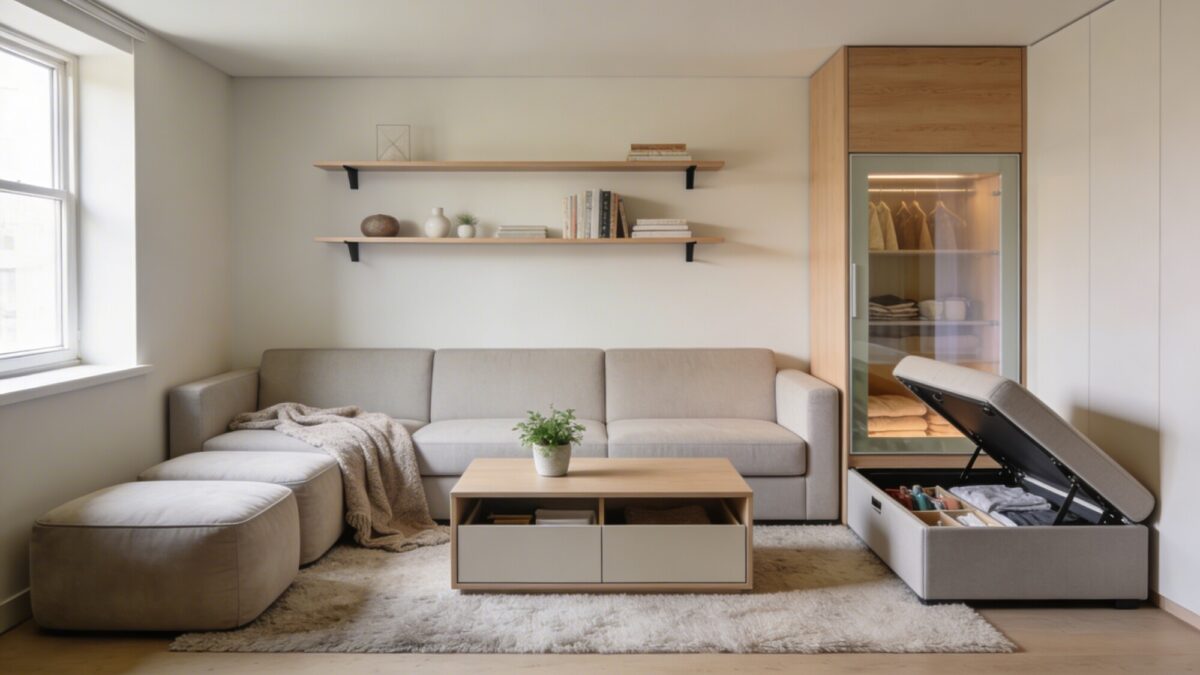
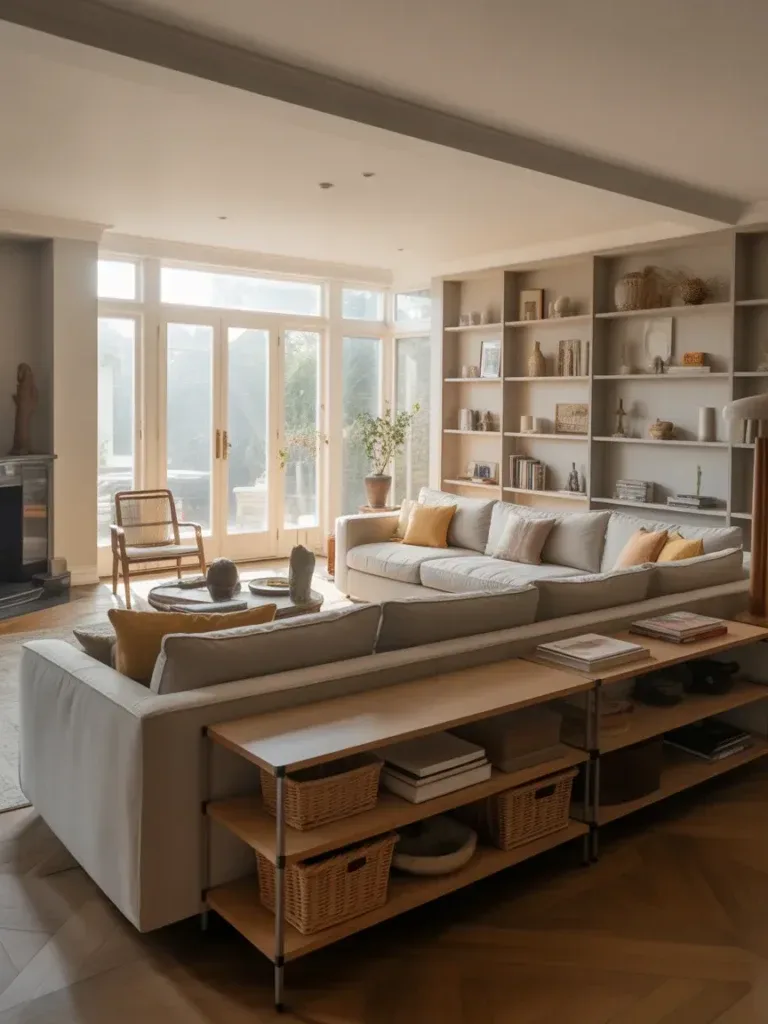
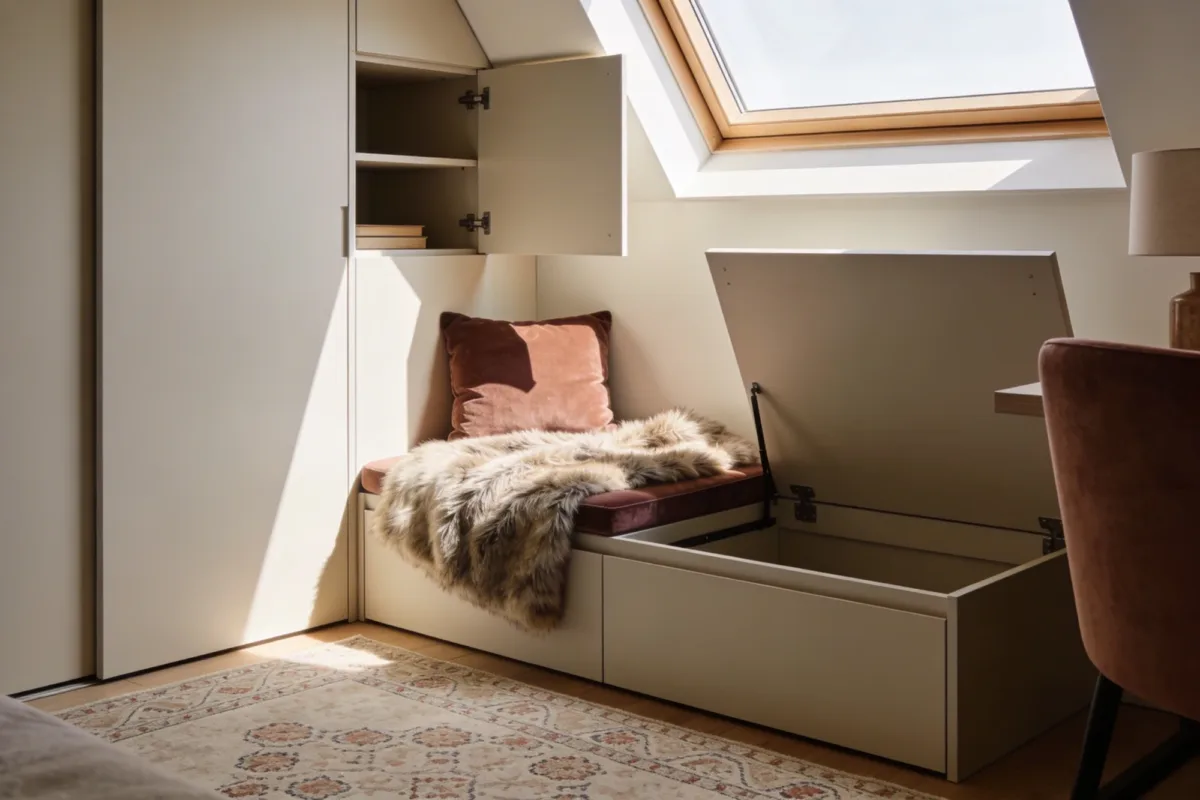
Small spaces need smart storage, and hidden solutions don’t have to feel like furniture doing double duty out of necessity. An ottoman with lift-top storage, floating shelves that sit nearly flush with the wall, and storage poufs that double as extra seating all keep essentials close without adding visual weight.
- Ottomans with lift-top storage for blankets and remotes
- Floating shelves above the sofa instead of a bulky bookcase
- Storage poufs that double as extra seating when guests come over
Clutter is what creates the illusion of a smaller room. Hide it, and the space breathes on its own. Measure before buying storage pieces so you can still comfortably reach everything once it’s in place.
3. Choose Multi-Functional Furniture That Flows
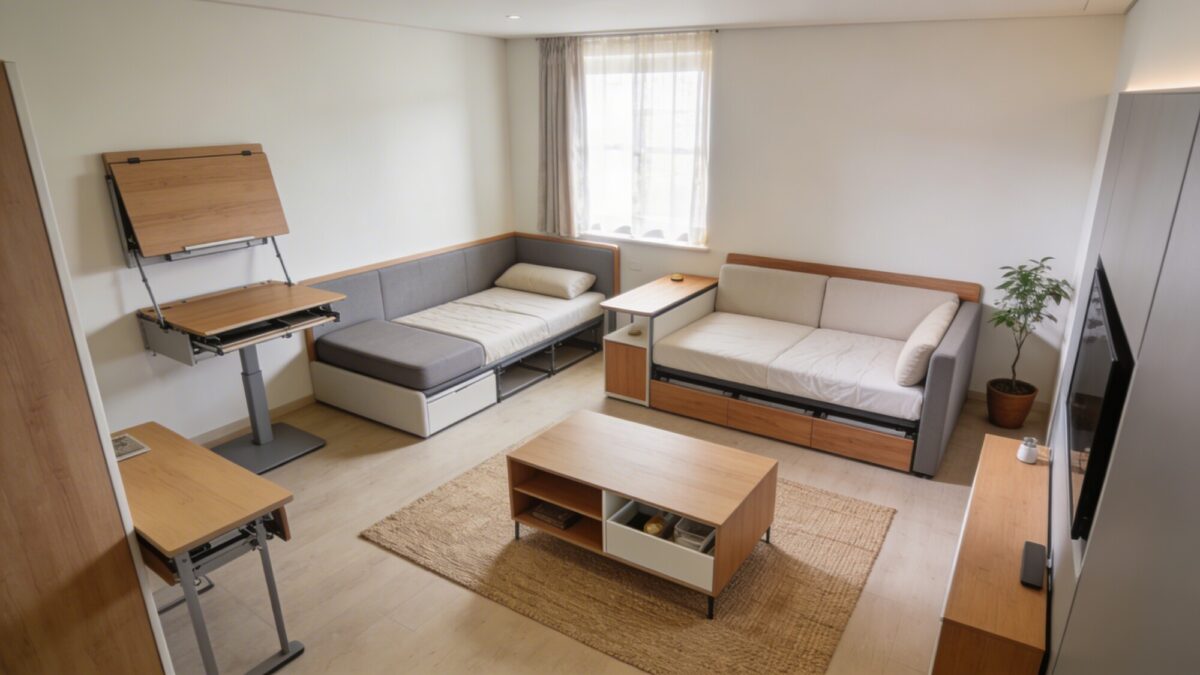
Multi-functional furniture reduces the total number of items a small room needs, which keeps it feeling open. A sectional with a built-in chaise, a wall-mounted drop-leaf desk that tucks away when not needed, and nested tables that pull out only when useful all maximize purpose per square foot.
- Sectional with a built-in chaise for lounging or overnight guests
- Wall-mounted drop-leaf desk for a workspace that disappears
- Nested tables that expand only when you actually need the surface
Place primary seating against the longest wall to create a natural traffic path — it makes the room feel bigger even when the dimensions haven’t changed. For more layout-specific ideas, see our guide to cozy living room ideas for apartments.
4. Go Vertical with Color and Accents
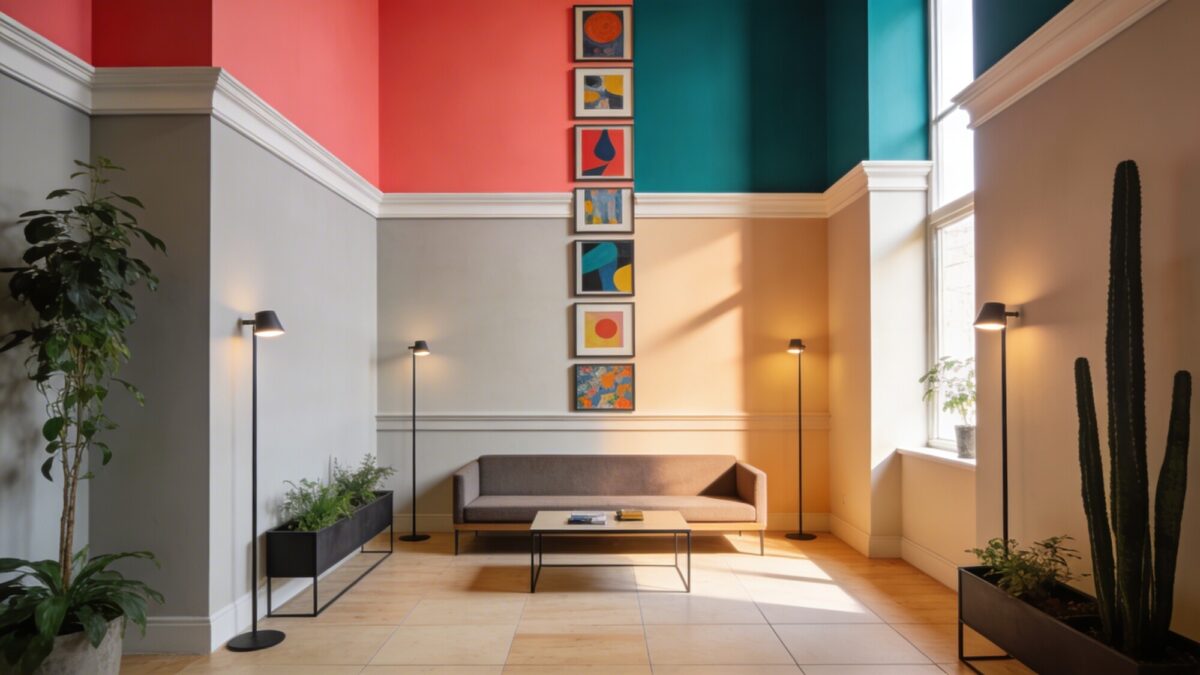
Vertical design draws the eye upward, which makes ceilings feel higher and the whole room feel more expansive. A bold accent color placed up high, tall plants or slim floor lamps along the walls, and a gallery wall that starts near the crown molding and builds upward all contribute to this effect without adding bulky decor.
- Paint an accent block above eye level rather than at standard height
- Position tall plants or slim floor lamps along the walls
- Build a gallery wall that starts high and extends upward
This approach works especially well in rooms with low ceilings, where it can create a noticeable sense of lift without adding any additional furniture.
5. Mirror Your Way to More Space
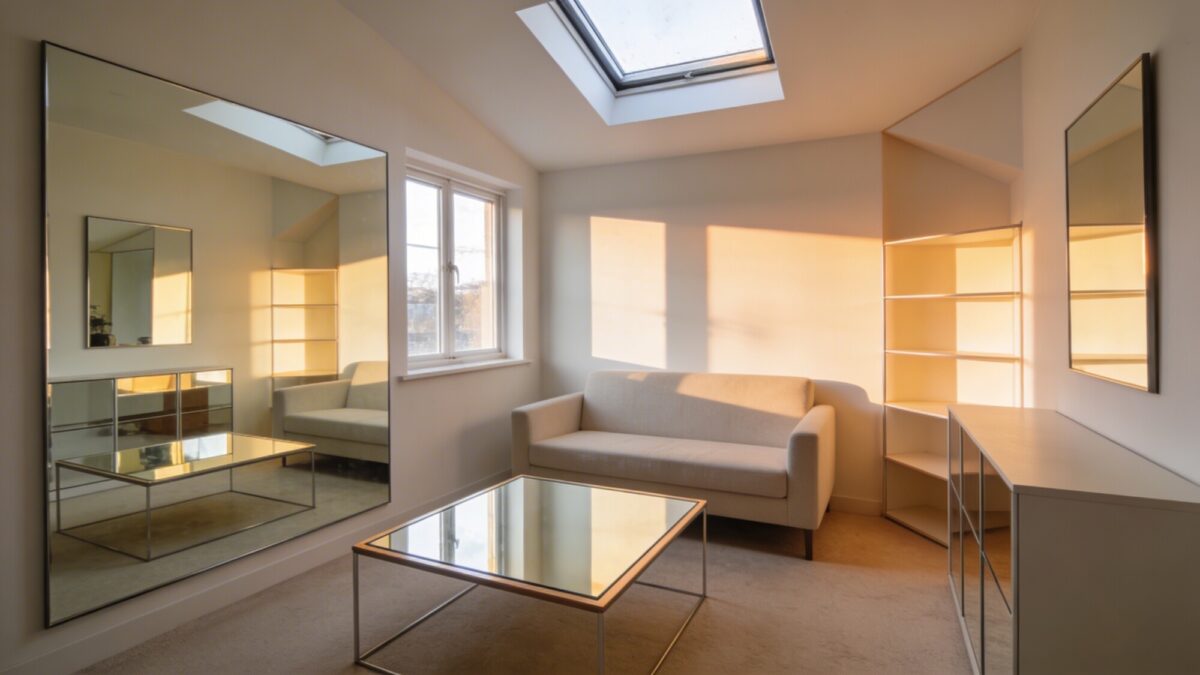
Mirrors do more than double-check your outfit — they reflect light and visually expand a room without adding any actual bulk. Positioning a mirror opposite a window is the single most effective placement, since it bounces natural daylight back across the space.
- An oversized wall mirror placed opposite a window
- A mirrored coffee table or slim mirrored panels built into furniture
- A corner mirror positioned to bounce light around a darker area
Frame mirrors with slim, minimalist borders so the effect reads as modern rather than busy. It’s a small detail, but it noticeably changes how polished the final result feels.
6. Lighting That Feels Lux, Not Loud
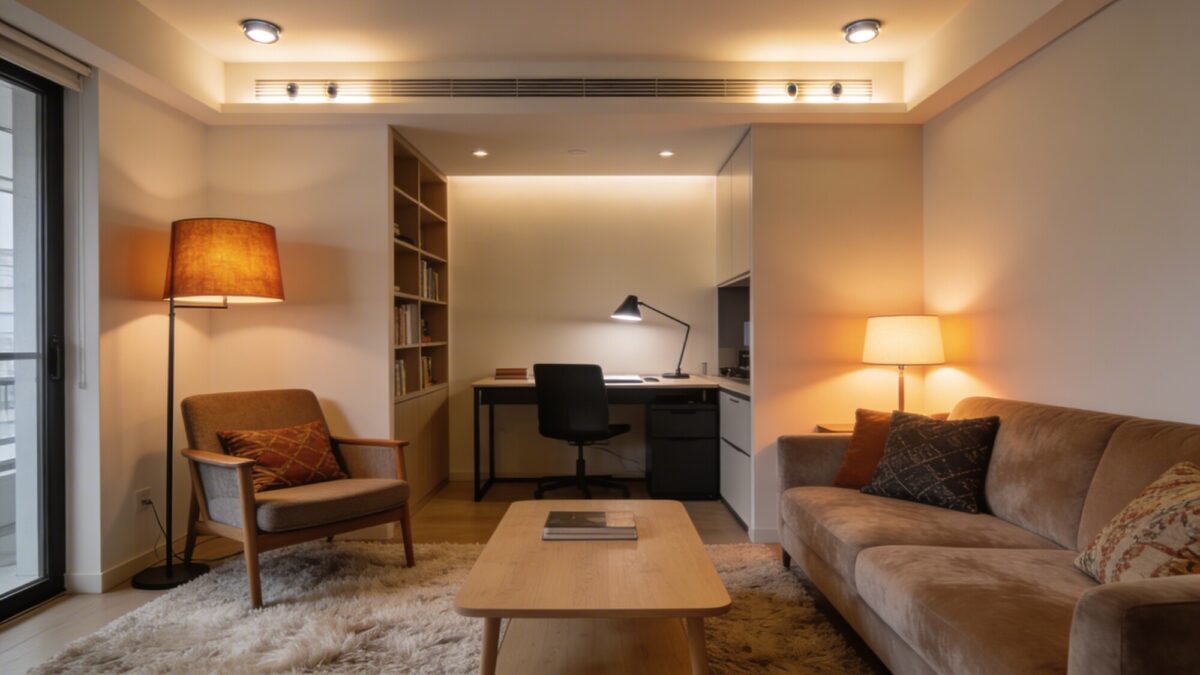
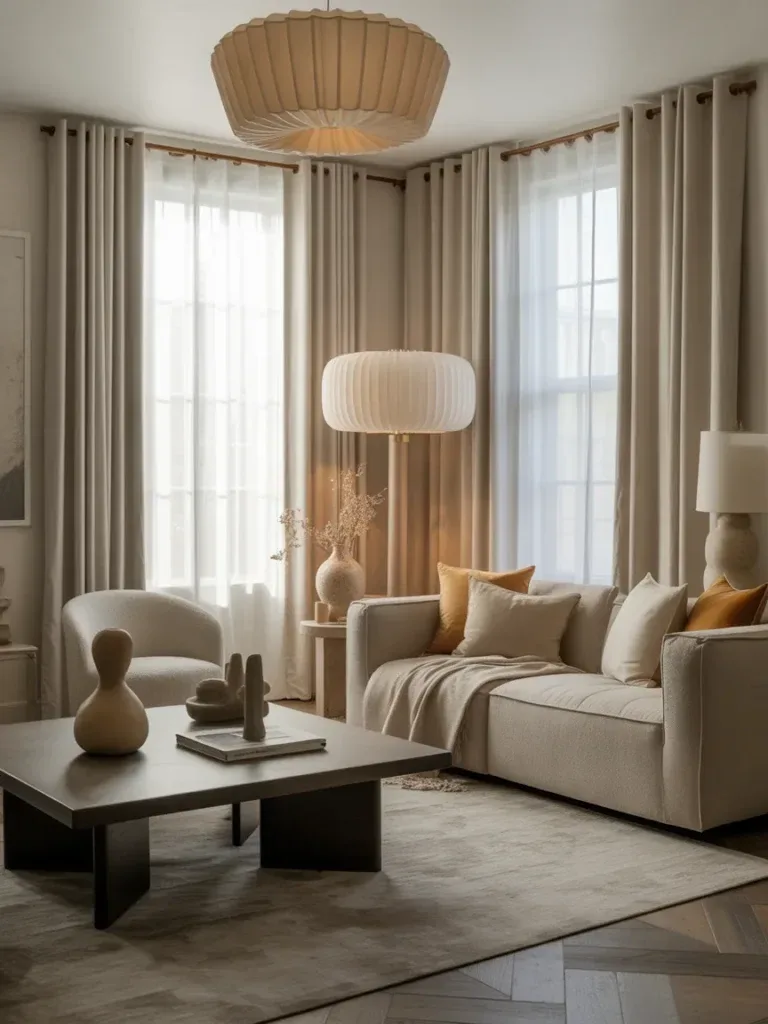
Good lighting changes a room’s entire personality. Layered lighting — sources at multiple heights rather than one central fixture — creates warmth, defines zones, and adds a sense of depth without needing extra furniture to do it.
| Light Source | Role in the Room | Placement |
|---|---|---|
| Ambient ceiling light with dimmer | Overall base brightness, adjustable to mood | Centered overhead |
| Floor lamp | Warm task lighting for a reading chair or corner | Beside a chair or in an underused corner |
| Accent lamp | Soft ambient glow near primary seating | End table beside the sofa |
Aim for a warm color temperature, roughly 2700K–3000K, for that classic cozy glow. A well-placed set of lamps at different heights will carve out distinct zones for work, reading, or movie night without a single wall in sight.
Pros and Cons of Designing for a Small Living Room
- Pro: Fewer square feet means design choices are cheaper to test and change.
- Pro: Constraints force a more curated, cozy house aesthetic interior instead of a room full of filler furniture.
- Con: Storage requires more planning than in a larger space.
- Con: Oversized statement pieces can overwhelm the room quickly if not scaled carefully.
Small Space vs. Cozy Big Living Room: What Changes
A lot of these same principles — texture layering, warm lighting, a defined focal point — apply just as well to a cozy big living room. The difference is mainly one of restraint: a small room needs every piece to earn its place, while a larger room has more room for a dedicated reading nook or an oversized sectional without losing the cozy feeling. If your space leans larger, our guide to modern cozy living room ideas covers how to scale these same ideas up.
Checklist: Before You Start a Small Living Room Refresh
- Have you picked at least two different textures to layer, rather than one flat surface throughout?
- Is there a piece of furniture that could be swapped for a multi-functional version?
- Do you have a mirror placed to reflect natural light from a window?
- Are you relying on a single ceiling light, or do you have at least two additional light sources?
- Is anything sitting out that could be moved into hidden storage?
Frequently Asked Questions
What’s the easiest cozy living room idea to try first in a small space?
Layering textures is usually the fastest win — a new throw blanket, a textured rug, and a couple of cushions can shift the whole feel of a room in an afternoon, without moving any furniture.
Do mirrors actually make a small living room feel bigger?
Yes. A mirror placed opposite a window reflects natural light back into the room and creates a sense of visual depth, which reads as more space even though the actual square footage hasn’t changed.
What color temperature should I use for cozy lighting?
Aim for warm white light in the 2700K–3000K range. Cooler, bluer light tends to feel clinical rather than cozy, even in a well-decorated room.
How do I add storage in a small living room without it looking cluttered?
Choose furniture that hides storage inside its structure — lift-top ottomans, closed console cabinets, and floating shelves — rather than adding visible bins and boxes on top of existing furniture.
Our Verdict
These six cozy living room ideas work because they solve the same three problems every small space runs into: not enough texture, not enough hidden storage, and flat, single-source lighting. Start with texture and lighting, since both are inexpensive to test, then layer in storage and mirrors once you know which pieces the room actually needs.
For more inspiration once you’ve got the basics in place, see our roundup of cozy living room ideas for instant warmth or our list of living room curtain ideas that make a space feel expensive.