
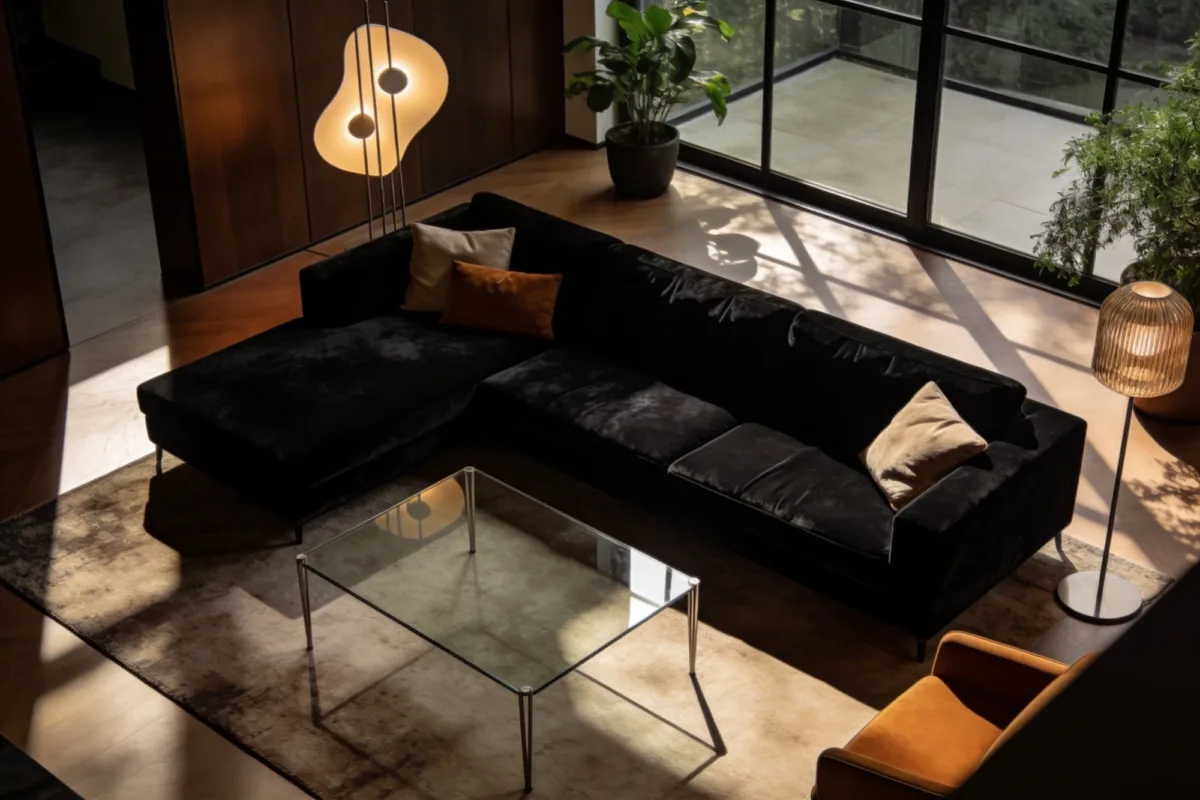
6 Living Room Inspiration Black Couch: Chic Ideas for Your Space
A black couch has a reputation for being risky — too formal, too heavy, too hard to style around. In practice, it’s one of the easier anchor pieces to build a room around, because it pairs cleanly with almost anything you put next to it. The real work isn’t picking the couch. It’s picking what goes around it, and that’s where most living room inspiration around a black couch falls apart: people copy the photo without understanding why the pairing worked in that specific room. If you want a broader set of reference points before committing to one direction, our roundup of black living rooms across different styles is worth a look first.
Below are six pairings that actually hold up past the first photo — what each one gets right, where it tends to go wrong, and who it’s actually for.
Quick Takeaways
- Black hides wear better than almost any other upholstery color — a real advantage if you have kids, pets, or just use your couch daily.
- The couch isn’t the hard part. Getting the surrounding materials (wood tone, metal finish, textile weight) to agree with each other is.
- Warm pairings (wood, brown, cream) read as lived-in; cool pairings (white, grey, chrome) read as curated. Neither is better — they’re different goals.
- A black couch without enough contrast around it can make a small room feel like a cave. Light walls or a light rug fix this fast.
1. Velvet and Clean Lines
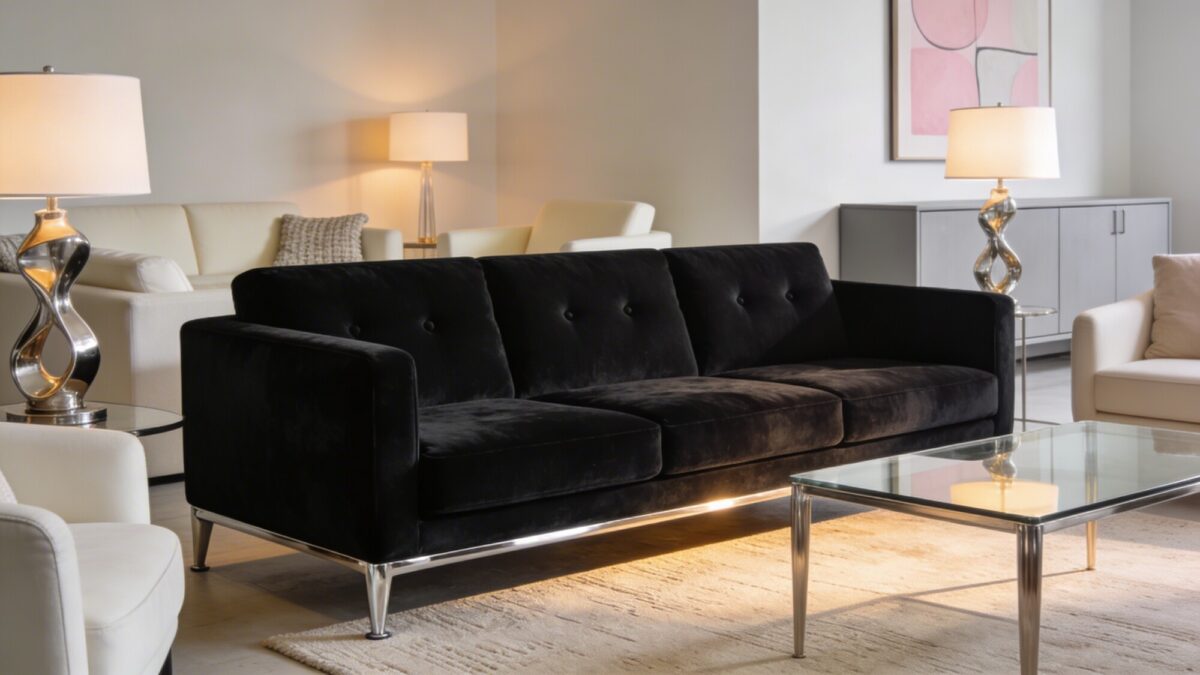
Velvet reads as formal, but the fabric itself is doing something practical, too: it catches light differently depending on the angle, so a plain black shape doesn’t go flat the way a matte cotton sofa can. Pair it with a glass coffee table and slim metal legs (chrome or brushed nickel, not both — pick one metal tone and stay consistent) and the room feels considered instead of staged. This is close to the mood you’d get from a luxe lounge-style living room, if that’s the direction you’re already leaning.
Keep everything else in the room light. Not white necessarily — cream, oatmeal, pale grey all work — but nothing else in the room should be dark enough to compete with the couch for attention.
💡 Pro Tip: Velvet shows vacuum lines and pressure marks more than other fabrics — it’s not damage, just the pile lying differently. If that bothers you, look for a crushed or textured velvet instead of a smooth one; the irregular pile hides this instead of showing it.
2. Black With Natural Wood
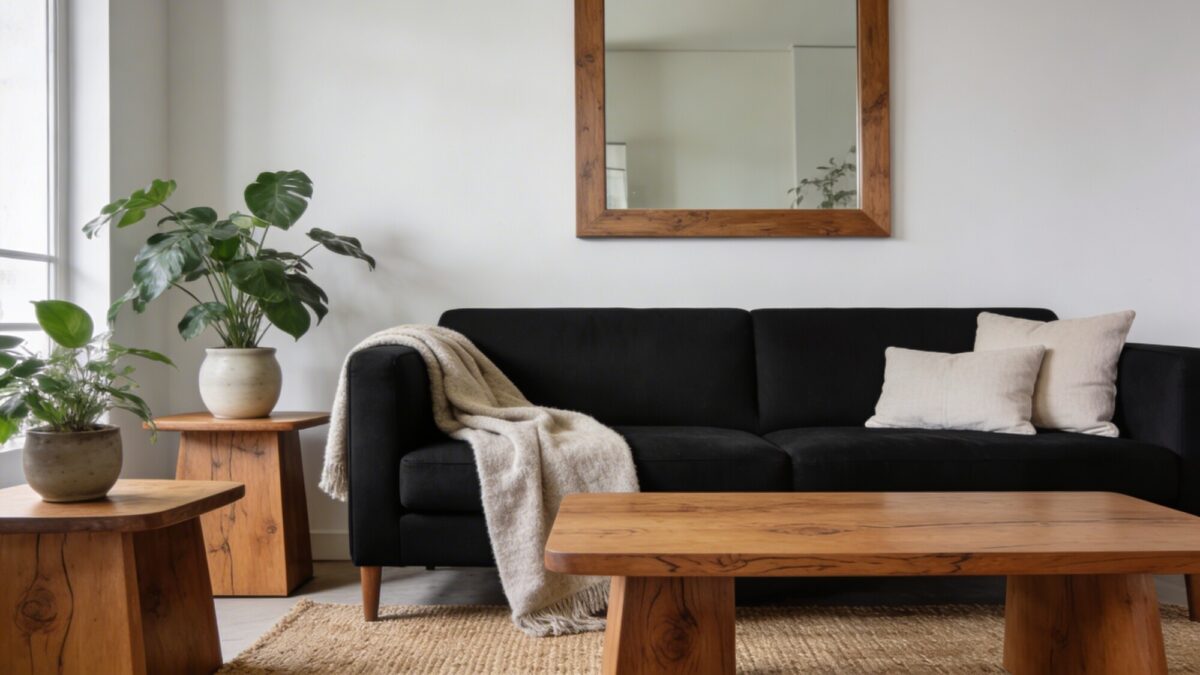
Black and natural wood living room pairings work because wood grain gives the eye something to travel across, where flat black alone would just sit there. Oak or ash coffee and side tables, a jute rug for texture underfoot, and a wood-framed mirror somewhere in the room pull the whole look together without needing much else.
The trade-off worth naming: if you go heavy on wood tones that don’t match each other — a warm honey oak table next to a cooler grey-toned side table — the room starts to look unplanned rather than layered. Pick one wood family and stick with it, even if the pieces come from different stores.
💡 Pro Tip: If you’re mixing wood pieces bought at different times, hold a scrap of each finish (or a photo, taken in the same light) next to the others before buying anything new. Wood tones that look fine individually often clash side by side.
3. A Bold Accent Wall
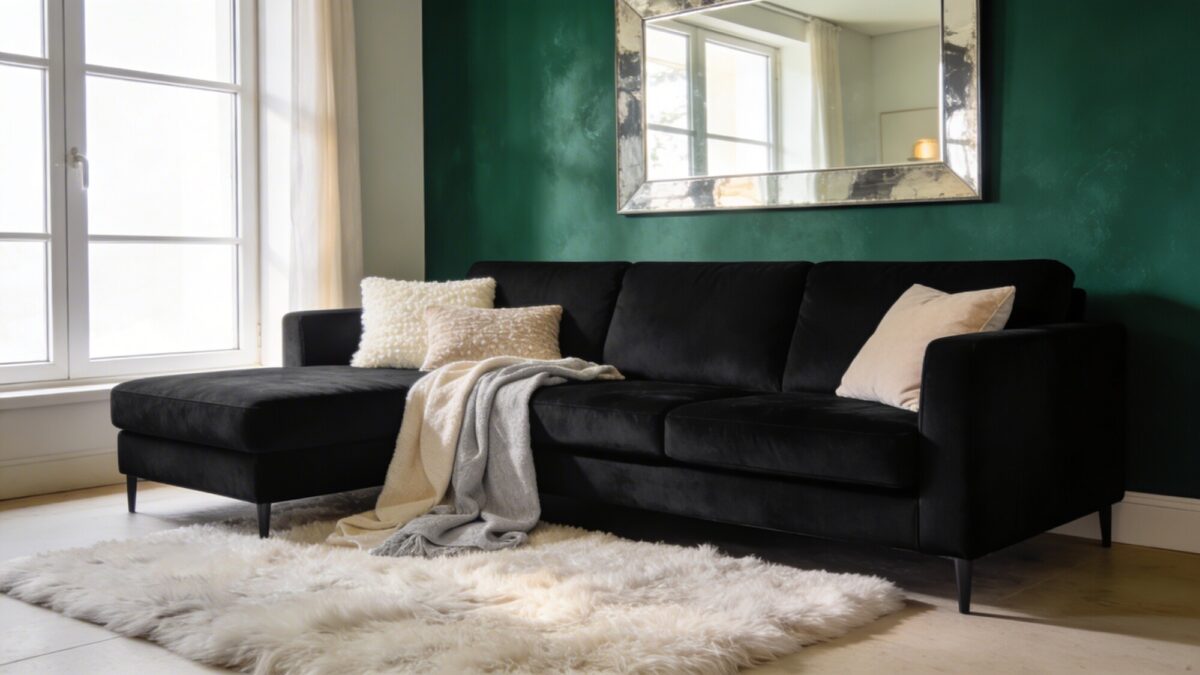
Black couches can handle a saturated wall color better than most furniture, because the couch itself already reads as neutral. Deep emerald, charcoal, or a warm terracotta all work — the real test is checking the color in your room’s actual light, not the swatch under store lighting. Paint a section directly on the wall and look at it morning and evening before committing to a full wall.
Once the wall’s in, keep the rest of the palette light — cream or beige textiles, a plush neutral rug — so the room doesn’t read as a cave. A single large mirror or one striking art piece on that wall does more visual work than several smaller pieces scattered around it. For more direction on this specific move, our guide to bold, gallery-ready wall ideas covers the placement side of this in more depth.
💡 Pro Tip: Satin or eggshell finish on an accent wall reflects more light than flat matte, which matters more than the color choice itself in a room that doesn’t get much natural daylight.
4. Monochrome With Mixed Textures
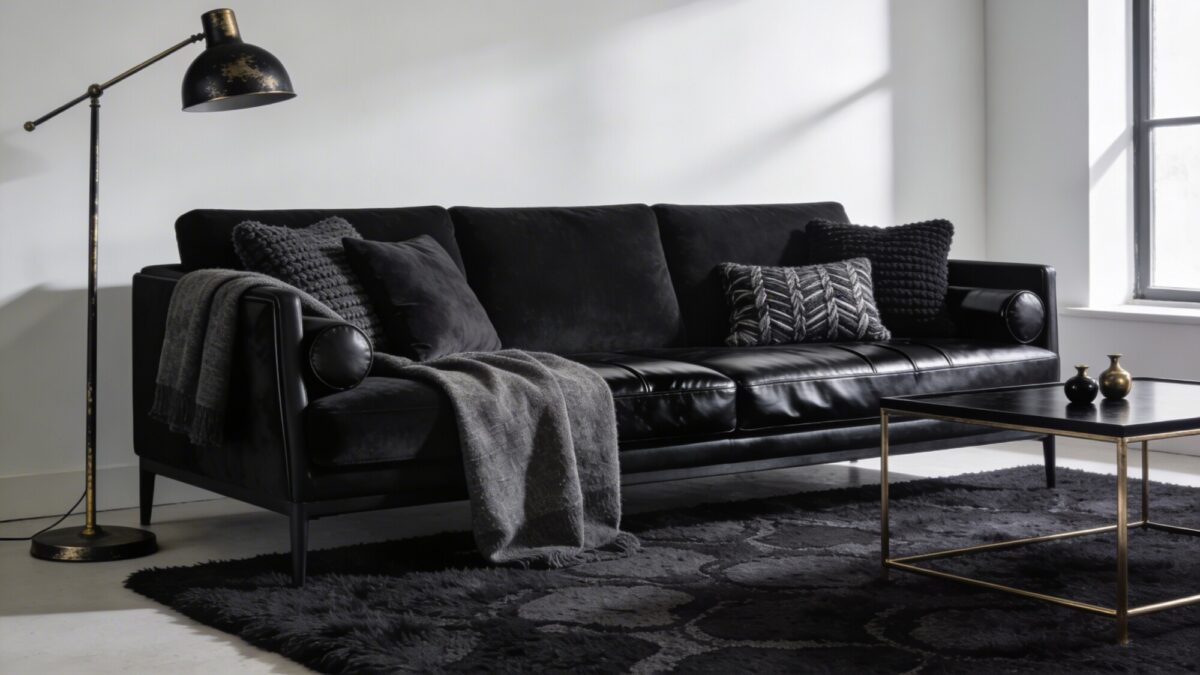
A room that’s technically all one color family (black, charcoal, graphite) doesn’t have to look flat, as long as the materials vary. Suede cushions next to a wool throw next to a low-pile rug with a subtle pattern gives the eye enough variation to read as intentional rather than boring. Blackened or aged brass accents — a lamp base, a picture frame — add just enough shine to keep the room from feeling like it’s missing something.
This is a genuinely low-maintenance direction: it hides everyday mess better than almost any lighter palette, and it’s easy to update seasonally by swapping one or two textiles instead of repainting or rebuying furniture.
5. Gallery Wall as the Real Focal Point
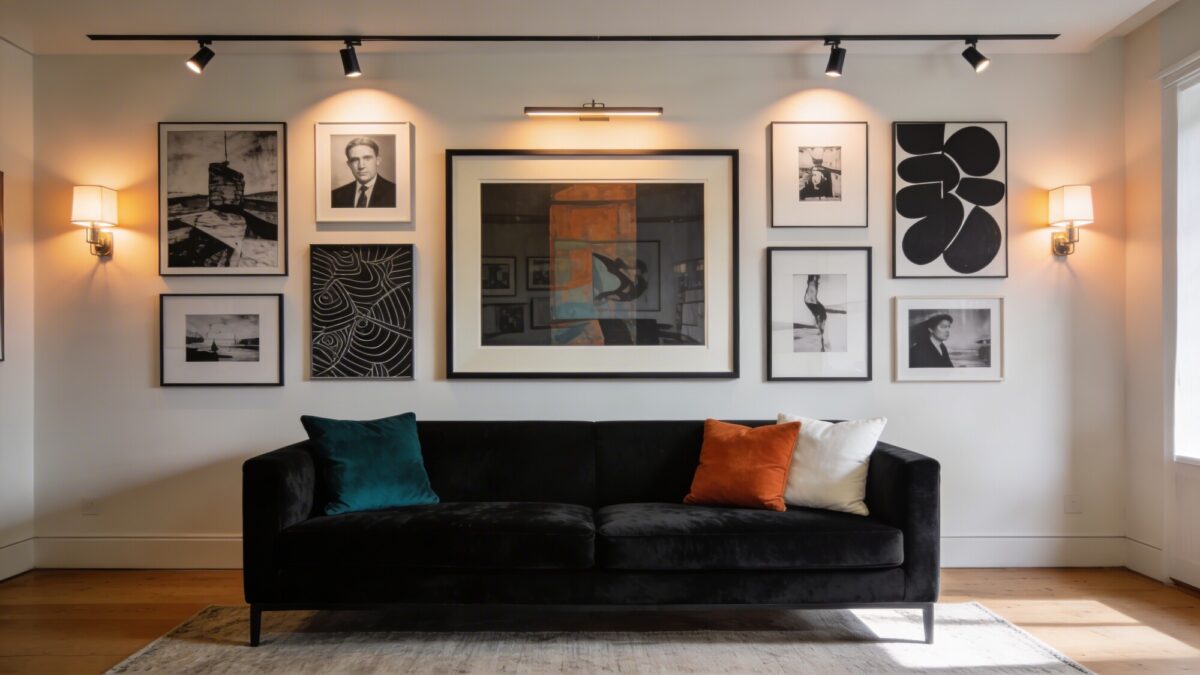
Here the couch is deliberately the quiet part of the room. One large piece of art above the sofa, surrounded by smaller framed photos or prints, turns the wall into the actual focal point while the black couch just grounds the composition. Wall sconces or discreet track lighting aimed at the art matters more here than in any of the other five directions, because without it the gallery reads as a wall of frames instead of a curated display.
A few cushions in a contrasting color — burnt orange, deep emerald, ivory — tie the seating back to whatever’s happening on the wall. Keep everything else in the room simple; this is the one pairing where the room actively wants fewer competing elements, not more.
6. Soft Edges and Warm Tech
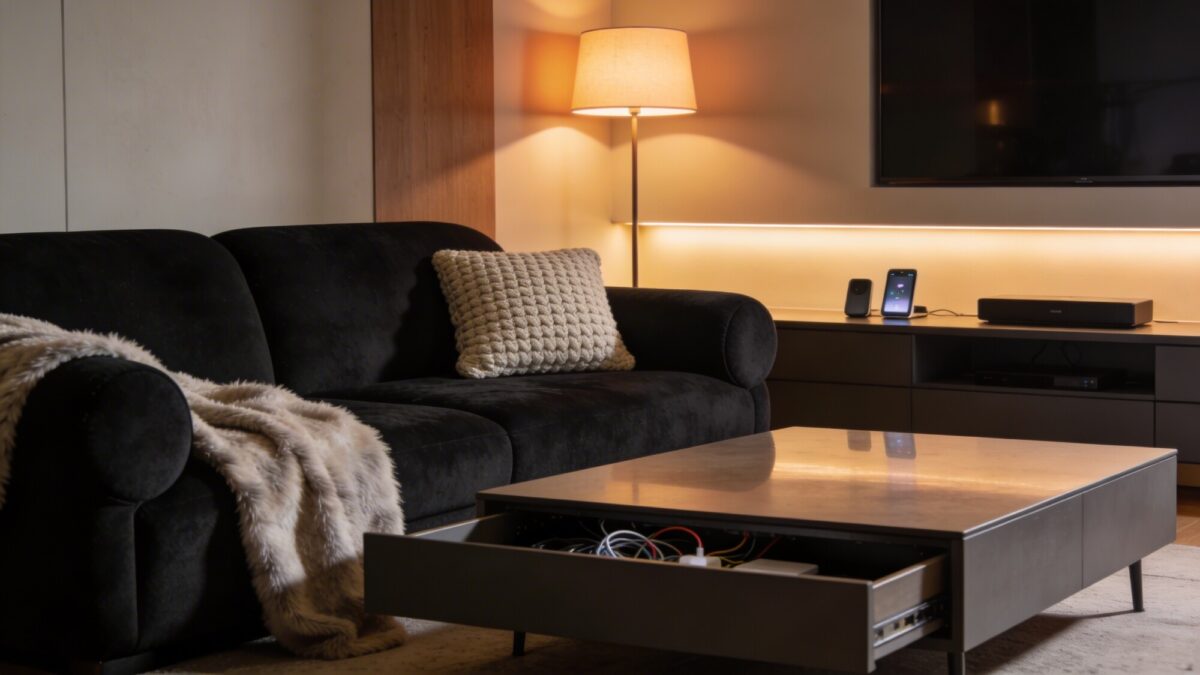
If the room doubles as a media space, a black sofa with rounded rather than sharp-edged cushions softens the overall look next to whatever hardware is in the room. A low-profile coffee table with hidden storage keeps remotes and cables out of sight, and warm LED lighting on a dimmer does more to make the space feel like a retreat than any single piece of furniture will.
The common mistake here is over-lighting the electronics themselves — a bright ring light behind a TV or a visible LED strip under a media console reads as “screen room” rather than “living room.” Keep accent lighting warm and low, and let lamps do the actual light-level work.
💡 Pro Tip: Route cables along the back of furniture legs with adhesive clips instead of a cable box on the floor — it’s a five-minute fix that removes most of the visual clutter people blame on “not enough storage.”
Which Pairing Fits Your Room?
| Pairing | Vibe | Best For | Watch Out For |
|---|---|---|---|
| Black and white | Graphic, high-contrast, modern | Rooms with strong natural light | Can feel stark without a warm textile somewhere |
| Black and brown | Warm, grounded, low-contrast | Rooms you want to feel settled, not sharp | Too many similar browns reads as monotone — see the guide to brown couch pairings for how the reverse combination handles this |
| Black and gold | Glam, formal | Evening-lit rooms, dining-adjacent living spaces | Overdoing brass or gold accents dates fast |
| Black and cream | Soft contrast, versatile | Almost any room — the safest default | Can feel flat without texture layering |
| Black and natural wood | Warm-cool mix, grounded | Rooms that want texture without color | Mismatched wood tones compete rather than complement |
If you’re deciding between a black couch and a different anchor color entirely, it’s worth seeing how a grey couch handles the same layering — the logic is similar, but grey forgives slightly more color experimentation since it reads as a true neutral rather than a bold choice.
FAQ
Does a black couch make a small room feel smaller?
Not on its own — what shrinks a small room is a black couch paired with dark walls and a dark rug. Keep the floor and walls light, and the couch reads as one grounded element rather than a wall of dark furniture.
What rug color goes best with a black couch?
Light neutrals (cream, oatmeal, pale grey) are the safest starting point because they create contrast without introducing a second bold color decision. A patterned rug works too, as long as the pattern’s background stays light.
Do black couches show dust and pet hair more than other colors?
Lint and pet hair show up more visibly on black than on a mid-tone grey or brown, though black hides stains and general wear better than almost anything lighter. It’s a trade-off between two different kinds of maintenance, not a clear win either way.
What wall color works if I don’t want to commit to a bold accent wall?
A warm off-white or light greige is the lowest-risk option and still lets the couch read as the room’s anchor. Save bold wall color for later if you decide the room needs more contrast.
Can I mix metals — like chrome and brass — in the same room as a black couch?
You can, but pick one as dominant and use the second sparingly (one lamp, one frame) rather than splitting the room evenly between them. Splitting it evenly is what makes a mixed-metal room look unplanned instead of intentional.
Our Take
If you’re not sure which of these six to start with, go with black and natural wood or black and cream — both are the most forgiving if you change your mind about accent colors later, and neither requires committing to bold paint or a specific style era the way the accent-wall or gallery-wall directions do. Once the base pairing is working, the budget-friendly swaps in our guide to refreshing a living room without buying new furniture are the next logical step for refining it.


