Ralph Lauren Living Room Inspiration: Timeless Chic for Any Space
“Ralph Lauren living room” isn’t a specific product line — it’s shorthand for a look: worn leather, dark wood, brass that’s been touched enough to lose its shine, and a color palette that never strays far from cream, navy, and forest green. You don’t need the brand’s actual furniture to get there. You need to understand which three or four decisions carry the whole look, because the rest is detail work. If you want the fuller design-principles version of this before picking furniture, our piece on Ralph Lauren interior design you can actually pull off is the better starting point.
This aesthetic reads as “old money” not because anything in it is actually old, but because everything looks like it’s been used and kept, not just bought. That distinction is the whole game, and it’s where most attempts at this style go wrong — new leather that’s too shiny, brass that’s too polished, a rug with no wear pattern at all.
Quick Takeaways
- Pick one hero piece — a leather sofa or a substantial wood console — and build the rest of the room around it.
- Patina isn’t a flaw to hide. Worn leather, aged brass, and a slightly faded rug are doing the work here, not fighting against it.
- Keep the palette to 2–3 neutrals plus one saturated color (navy, forest green, or charcoal). More than that and it stops reading as curated.
- Leather vs. fabric is a real trade-off, not a style preference — leather hides wear better long-term but costs more upfront and needs occasional conditioning.
Anchor Pieces: Start With What the Room Is Built Around
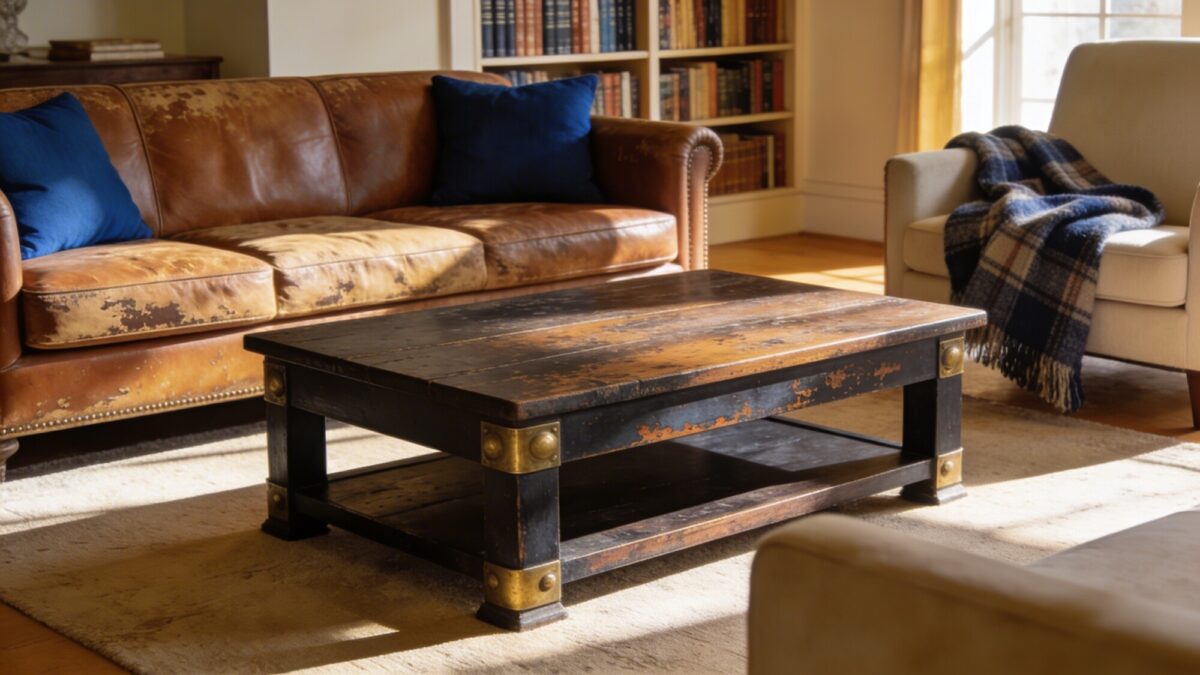
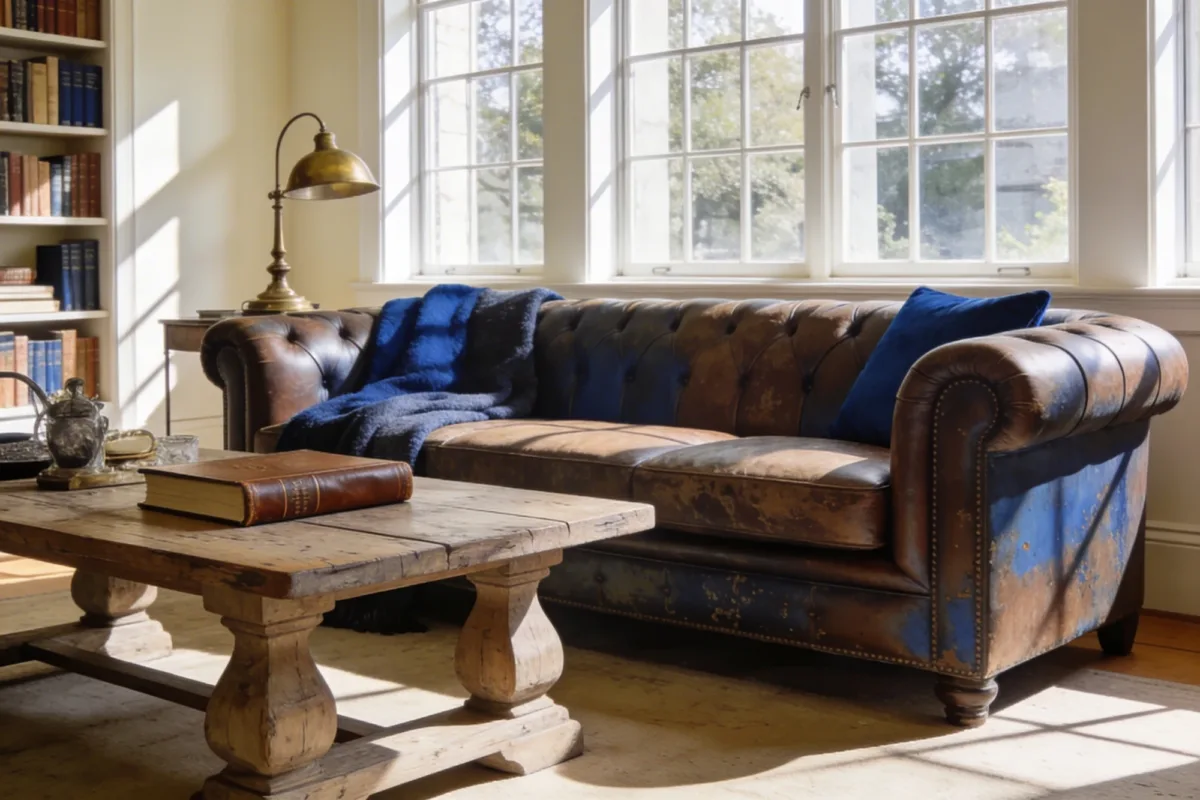
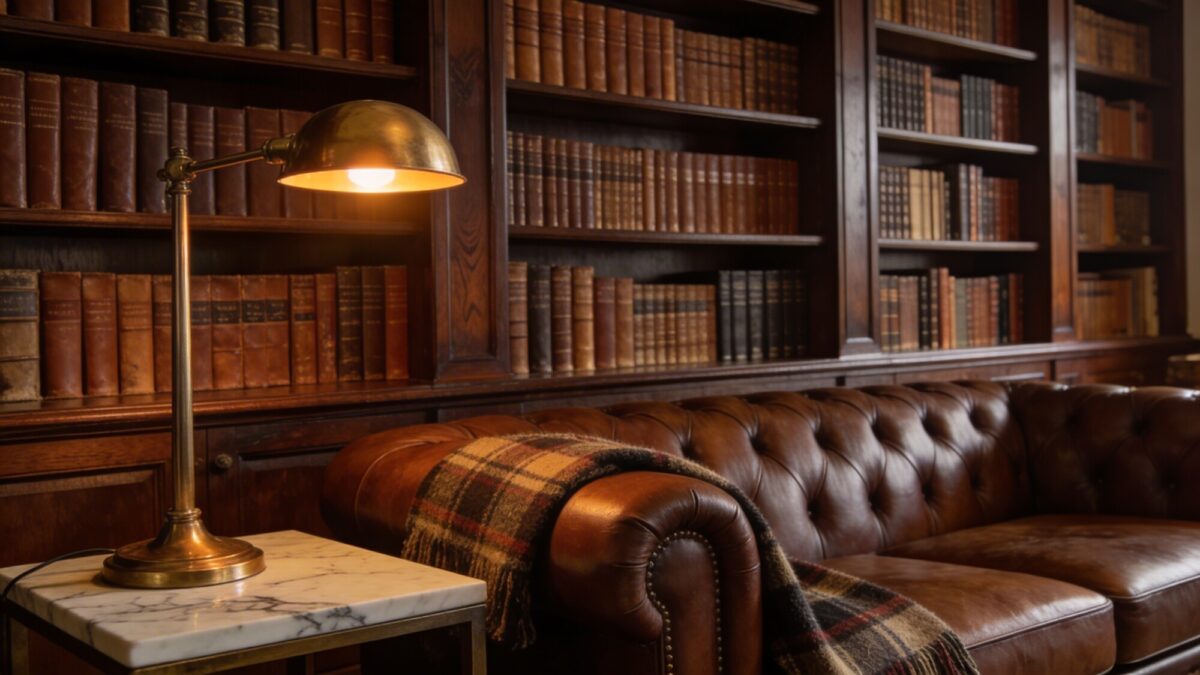
A leather Chesterfield or a substantial neoclassical lounge sofa is the piece everything else answers to. It doesn’t need to be new — a genuinely good leather sofa gets better-looking with age, which is the opposite of how most furniture works. Pair it with a washed or weathered wood coffee table with real heft to it; a delicate, spindly table undercuts the whole point of the style.
Walls stay quiet here on purpose — cream, taupe, or greige — so the texture and color decisions happening in the furniture and textiles have somewhere calm to land.
💡 Pro Tip: If you’re buying new leather and want it to look broken-in faster, look for full-grain aniline leather rather than a corrected-grain finish. Aniline leather takes on creases and a worn look naturally within months; corrected-grain leather has a sealed surface that stays stiff and shiny for years.
Texture and Layering: Where Most Rooms Actually Fall Apart
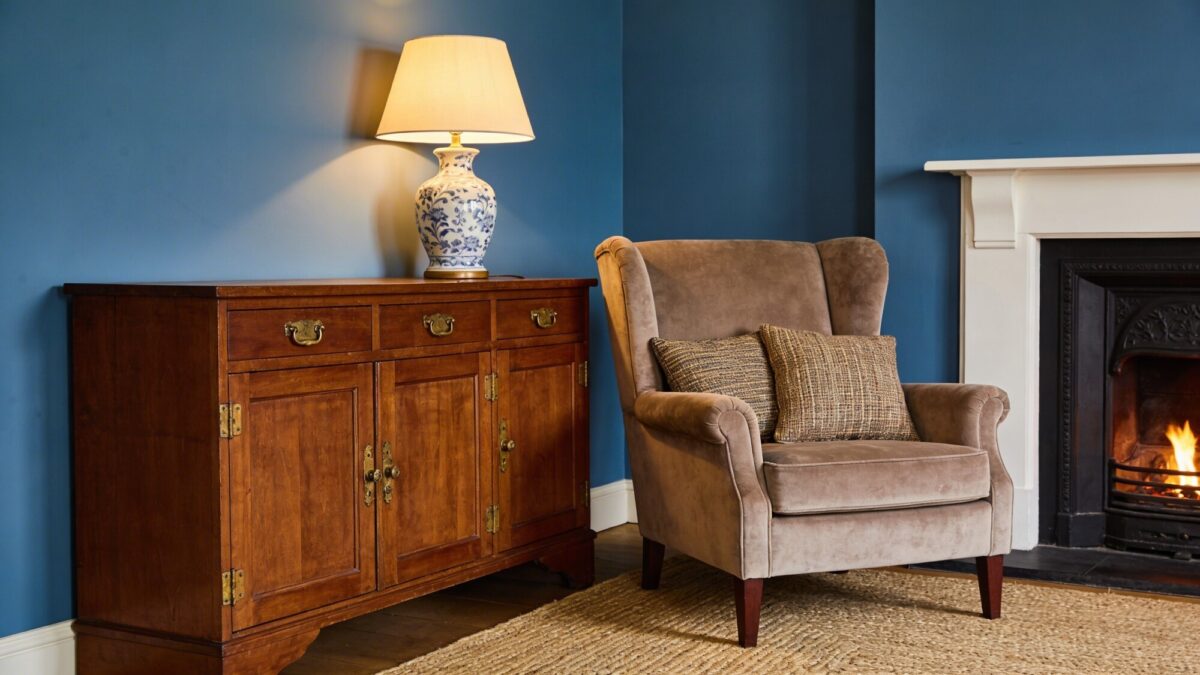
The common mistake in this style is treating every surface as a chance to add another texture — suede here, tweed there, a jute rug, a linen throw, a velvet pillow, all in the same room. Pick two or three materials total and repeat each of them at least twice. A single leather chair reads as random; a leather chair plus leather-bound books on the shelf plus a leather ottoman reads as intentional, even though it’s the same material doing the repeating.
Brushed cotton and linen upholstery, weathered wood, aged brass, and a woven sisal or jute rug are the actual materials worth building around. This kind of layered, textured approach shows up in a slightly different form in Arhaus-style textured living rooms, if you want a second reference point for how much texture is enough before it tips into clutter.
💡 Pro Tip: Drape a throw over the back or arm of a chair rather than folding it on the seat cushion. Folded throws read as staged; draped ones read as something someone actually reaches for on a cold evening.
Color: Warm Neutrals, One Real Accent
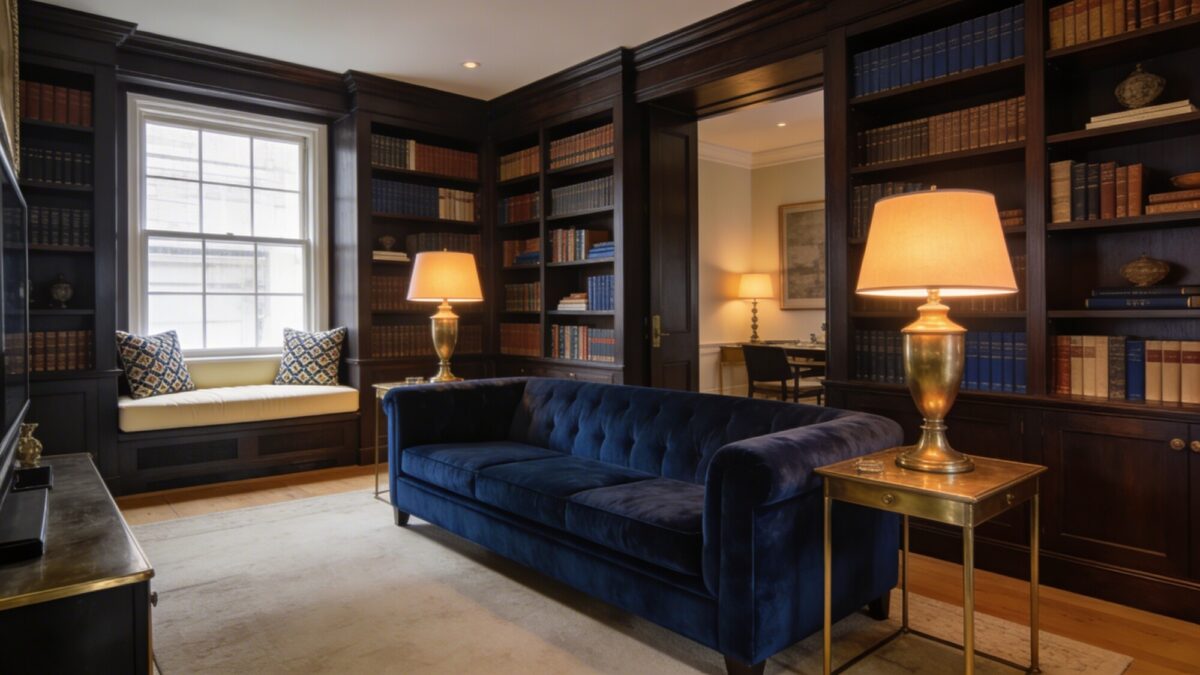
Alabaster, oatmeal, or a whisper of greige on the walls, with navy, charcoal, or forest green doing the actual color work in upholstery or a single statement chair. Brushed brass or antique bronze hardware ties the metals together — the trade-off worth knowing is that mixing polished chrome into this palette breaks the mood immediately, because chrome reads as modern and cold against everything else here reading as warm and aged.
One saturated piece — a single ottoman, a single accent chair — carries more weight than people expect. Adding a second bold color almost always competes with it instead of supporting it.
Furniture Layout: Built for Conversation, Not Display
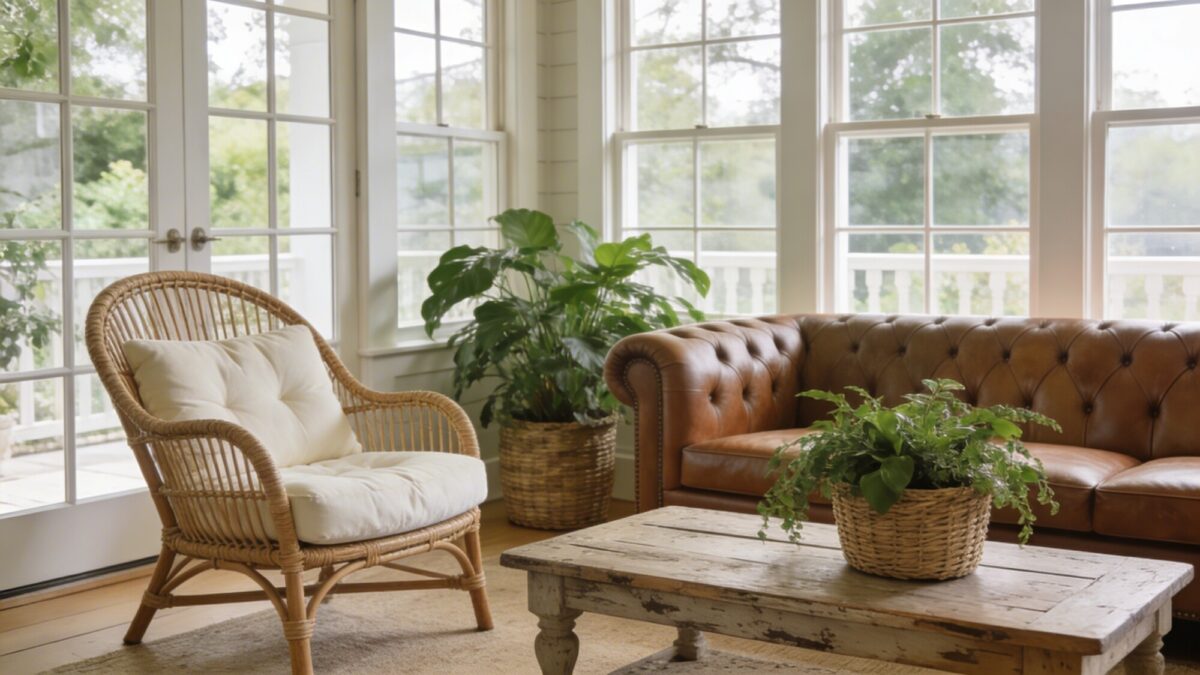
Group seating around a real focal point — a fireplace, a piece of art, or at minimum a substantial coffee table — rather than lining furniture against the walls. Sightlines matter more than most layout advice mentions: an oversized piece blocking a window undoes a lot of the warmth this style depends on, since natural light is doing a good portion of the work that makes worn leather and wood look inviting instead of just old.
A circular or oval rug softens a seating group that would otherwise feel like four chairs facing off against each other. If the room needs to feel more composed than casual, our guide to formal living rooms that don’t feel stiff covers the layout side of that balance in more depth.
💡 Pro Tip: Leave at least 30 inches of walking space between the coffee table and the surrounding seating. Less than that and the room feels tight no matter how good the furniture is; more than that and the seating group stops reading as one conversation area.
Statement Elements: Art, Lighting, and the Things That Make It Memorable
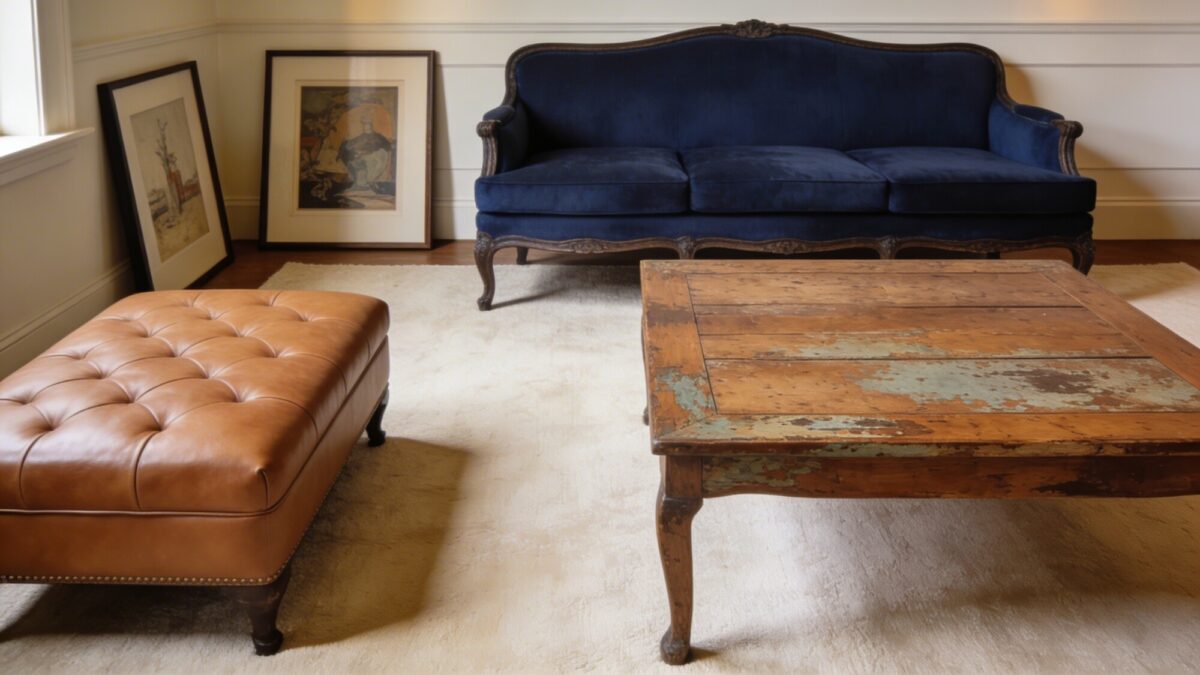
Simple landscapes, vintage photography, or equestrian-themed art in a substantial frame do more here than an abstract print would — the style leans toward pieces that look collected over time rather than bought as a set. A mix of bronze sconces and one statement fixture (a chandelier, if the ceiling height supports it) with warm bulbs matters more than any single decor object.
Scale is the detail that separates a considered room from a cramped or empty-feeling one. An oversized sofa needs leaner chairs around it, not more heavy pieces; a room with high ceilings needs at least one tall element (a floor lamp, a tall bookcase) or the furniture below reads as too small for the space.
Rugs: The Piece That Grounds Everything Else
A natural fiber rug — sisal, jute, or a flat-weave — with a muted damask or herringbone pattern does the grounding work a plain solid rug can’t. Size matters more than pattern: the rug needs to fit under the front legs of every major piece of furniture in the seating group, or the room reads as though the rug and the furniture were chosen separately, which they usually were.
Layering a smaller, softer rug on top of a larger, rougher one adds warmth without losing the grounded look, and it’s a genuinely useful trick if you’re pairing leather with any textile that already has a lot of visual weight.
Leather vs. Fabric: The Actual Trade-Off
| Factor | Leather | Fabric |
|---|---|---|
| Upfront cost | Higher, especially full-grain | Lower, wide range of price points |
| Wear over time | Develops patina, hides scuffs and everyday marks | Shows wear as fading or pilling, harder to disguise |
| Kids and pets | Wipes clean, resists claw snags better than most fabrics | Absorbs spills, can stain if not treated |
| Feel and season | Can feel cool or sticky in humid climates | More temperature-neutral year-round |
| Fit with this style | Core to the look | Works if paired with enough leather elsewhere (books, ottoman, straps) |
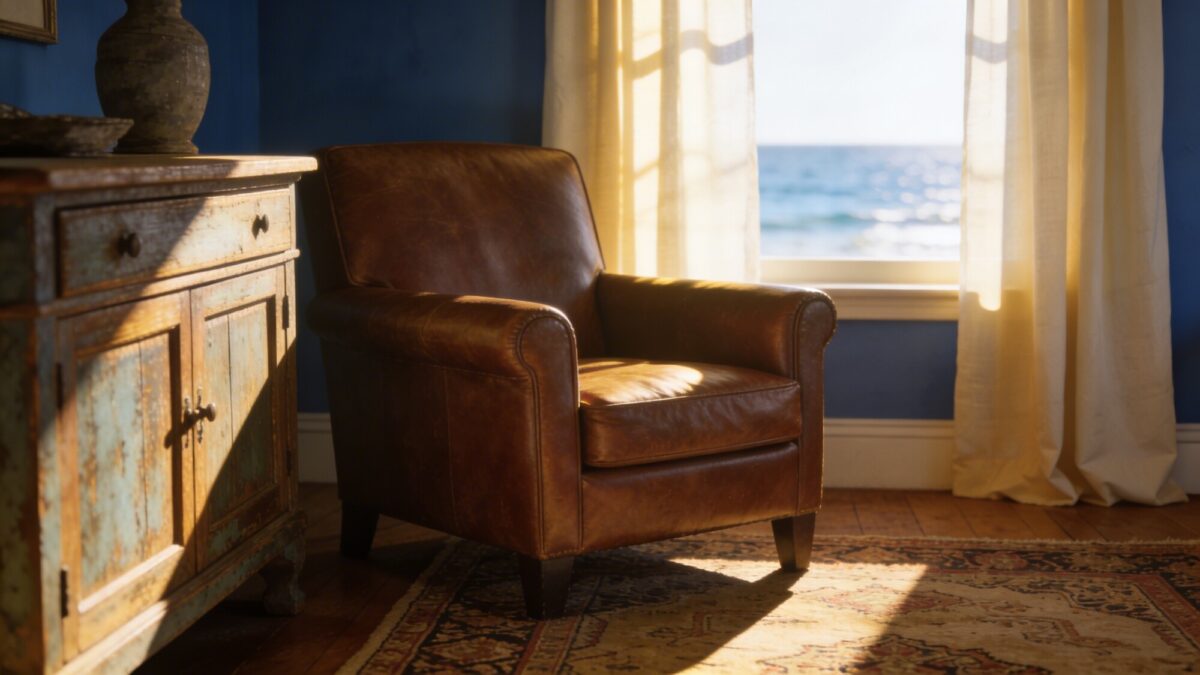
If you’re set on leather but budget doesn’t stretch to a full sofa yet, a single leather armchair or ottoman still anchors the room — you don’t need every seat to match. If leather doesn’t work for your household at all, our look at brown couch styling covers how to get a similar warm, grounded feel with fabric instead.
Keeping It Fresh Without Losing the Look
This style holds up across seasons better than most trends because the changes are small: swap pillow covers and throws for heavier textures in fall, bring in lighter fabrics and brighter art in spring, and store anything bulky when it’s not in season so the room doesn’t feel crowded. None of that touches the anchor pieces, which is the point — they’re not meant to change.
FAQ
What’s the single most important element for this look?
One real anchor piece — a leather sofa or a substantial wood console — that the rest of the room is visibly built around. Without it, everything else just reads as separate decisions.
Can this work in a small apartment, or does it need a big room?
It works in small spaces if you keep the walls light and choose one strong anchor piece rather than several medium ones. A single leather armchair and a good rug do more in a small room than a full leather sectional would.
What colors actually belong in this palette?
Warm neutrals (cream, oatmeal, greige) as the base, with navy, charcoal, or forest green as the one accent color, and brushed brass or antique bronze for hardware and lighting.
How do I mix vintage and new pieces without it looking mismatched?
Repeat one material or color family across both — if the vintage piece is wood, put wood somewhere else new; if it’s leather, echo that leather in a smaller accessory. A shared thread is what makes mixed eras look chosen rather than accidental.
Do I need a fireplace for this to work?
No — a fireplace is a natural focal point for this style, but a large piece of art or a substantial console does the same job of anchoring the seating layout if there isn’t one.
Our Take
Start with the sofa, not the accessories. A worn or genuinely well-made leather piece (or a fabric sofa in a deep, warm tone if leather’s not practical for your household) sets the tone for every other decision in the room, and it’s the one thing on this list actually worth spending real money on. Everything else — the rug, the art, the brass — is cheaper to get wrong and easier to fix later. For more direction on what “worth spending on” looks like at the higher end of this style, our guide to luxe lounge-style living rooms is a reasonable next stop.