8 Luxury Living Room Inspiration: Luxe Lounge Edition
Most luxury living room inspiration boards show you the finished hotel-lobby look without explaining what actually makes it read as expensive versus just expensive-looking-but-cheap. It’s rarely one big splurge item. It’s usually three or four smaller decisions — fabric choice, light temperature, how much restraint you show with color — stacked together. The eight ideas below break down what’s actually doing the work in each of these luxurious living room aesthetics, so you can pick the ones that fit your space instead of copying the whole look.
If your living room also needs to function as a media room, it’s worth cross-referencing this with a guide on elegant modern living room looks, since a luxury tv wall has its own set of trade-offs that a pure styling guide won’t cover.
Quick Takeaways
- Velvet reads luxurious because it catches light softly, not because it’s expensive fabric — a mid-range velvet in the right color does the same visual job as a designer one.
- Layered lighting (ambient, task, accent) matters more to a “luxe” feel than any single furniture piece.
- Monochrome palettes with one restrained accent color photograph as more expensive than busy, multi-color rooms — restraint is the trick, not more decor.
- A single statement piece (sofa, sculpture, or fireplace) earns more visual credit than five smaller “nice” items spread around the room.
- Faux stone and warm wood both deliver the “elevated” look for less than real marble or solid hardwood, with different maintenance trade-offs.
1. Velvet Soiree: Rich Textures, Richer Mood
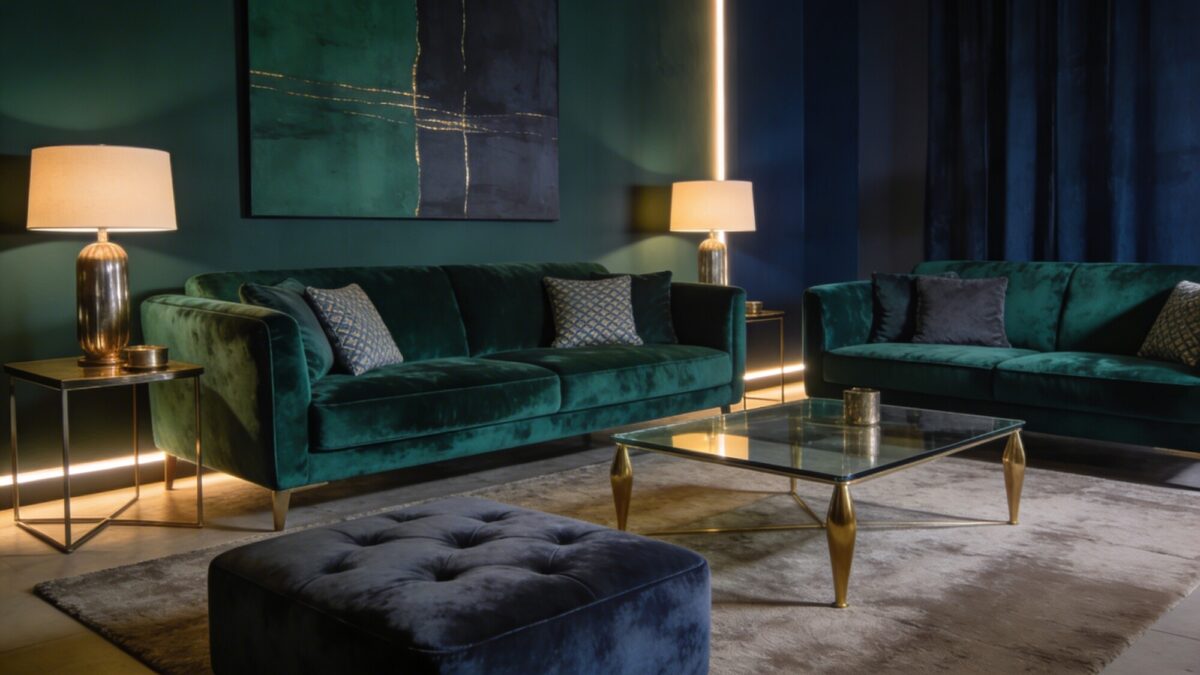
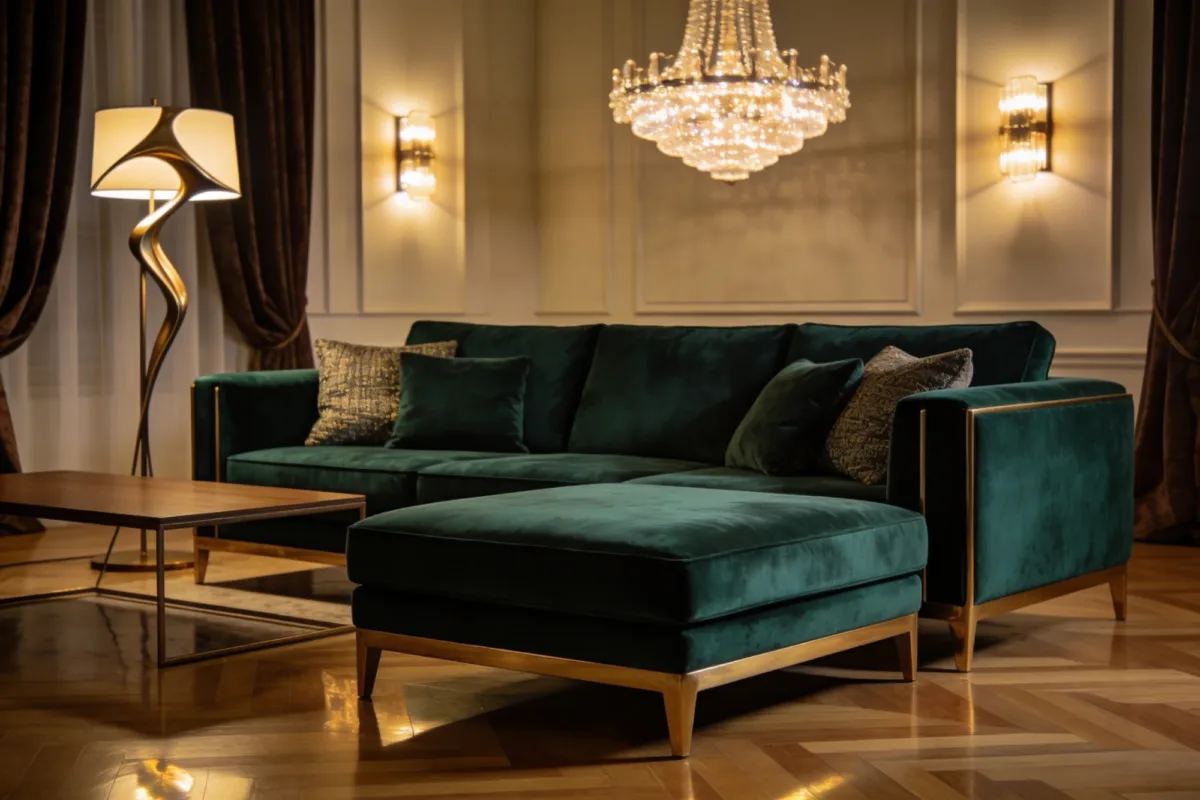
Velvet is the fastest single fabric swap for making a room look more expensive than it cost. The reason isn’t the fabric’s price tag — it’s how velvet interacts with light. Its short pile scatters light softly instead of reflecting it flatly, which is why a velvet sofa photographs with more depth than a linen one even at the same price point.
Deep, saturated colors — emerald, midnight blue, charcoal — do more for velvet than pale ones. A pale velvet sofa can look tired fast, since every crush mark and shadow shows up against a light color. Darker velvet hides the same wear far better, which matters if you have kids, pets, or just sit on your sofa daily.
Key Elements
- A velvet sofa or loveseat in emerald, midnight blue, or charcoal rather than a pale shade
- Textured throw pillows with subtle patterns, not competing bold prints
- Brass or brushed gold accents to echo the fabric’s sheen without matching it exactly
💡 Pro Tip: Pair velvet with a matte-finish coffee table, not a glossy one. Two shiny surfaces next to each other (velvet’s sheen plus a lacquered table) flatten the contrast that makes velvet look rich in the first place. Clean velvet with a soft brush or gentle vacuum attachment, and keep it out of direct sun — UV exposure fades saturated velvet noticeably faster than it fades a printed cotton.
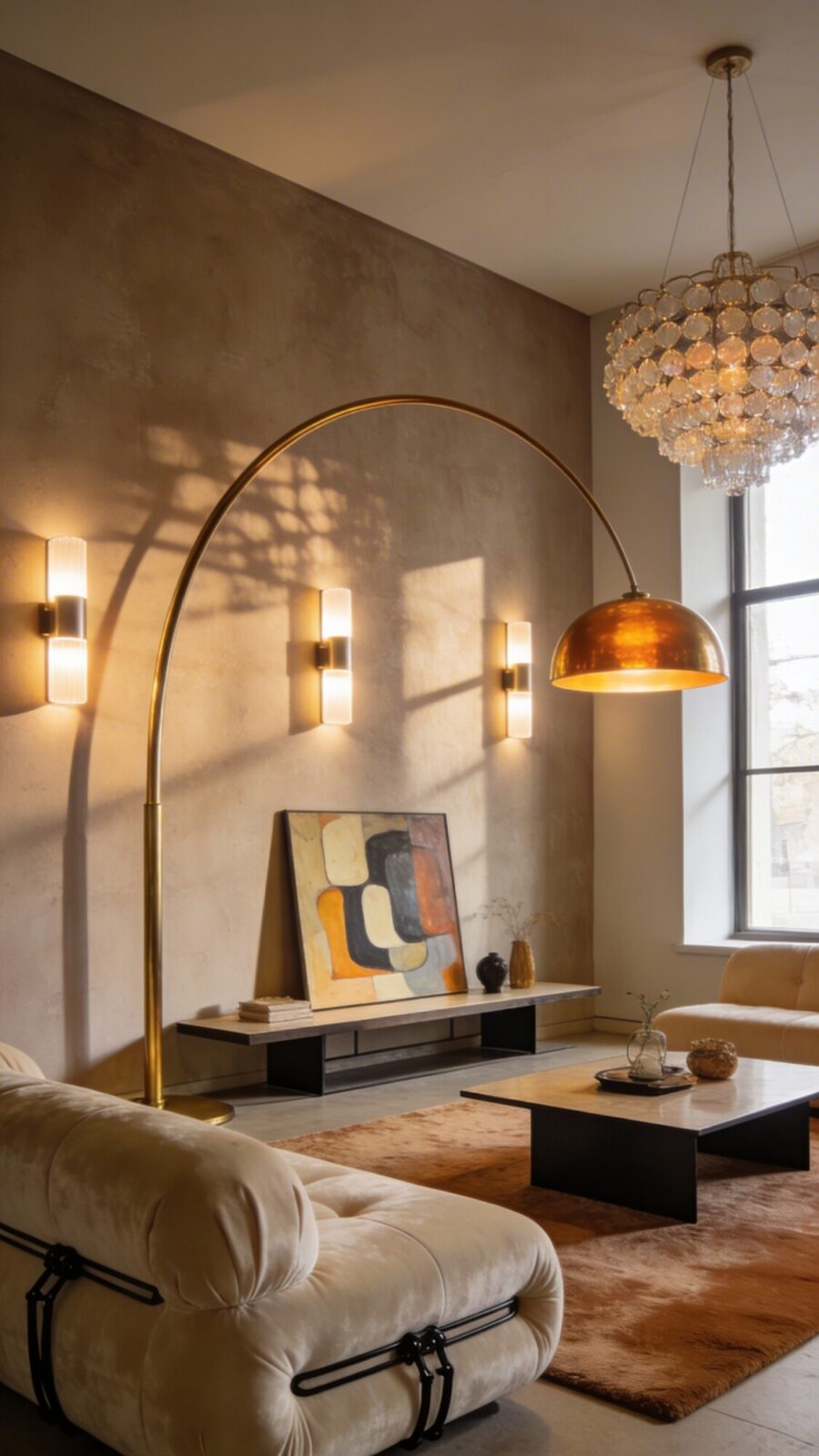
2. Artful Lighting: Layered Glow, No Flat Rooms
A room lit by one overhead fixture is the single biggest tell that a “luxury living room” is actually just a regular room with expensive furniture in it. Genuinely upscale spaces almost never rely on one light source — they layer at least three, each doing a different job.
A sculptural floor lamp handles ambient fill. Wall sconces add a softer, indirect wash along a textured wall. A pendant or chandelier over the coffee table becomes the visual anchor point — the piece your eye returns to. Stick to warm bulbs in the 2700K–3000K range throughout; anything cooler reads as office lighting, not lounge lighting, no matter how nice the fixture is.
In the Mix
- Dimmer switches on every main light source, not just one
- Warm bulbs (2700K–3000K) across the whole room for consistency
- A statement pendant positioned over the coffee table, not centered on the whole room
💡 Pro Tip: Mixing bulb temperatures is the most common lighting mistake in otherwise well-decorated rooms. A 3000K floor lamp next to a 4000K ceiling fixture creates a visible color clash that reads as unfinished, even if both fixtures individually look expensive. Buy bulbs in one temperature and stick to it across the whole room.
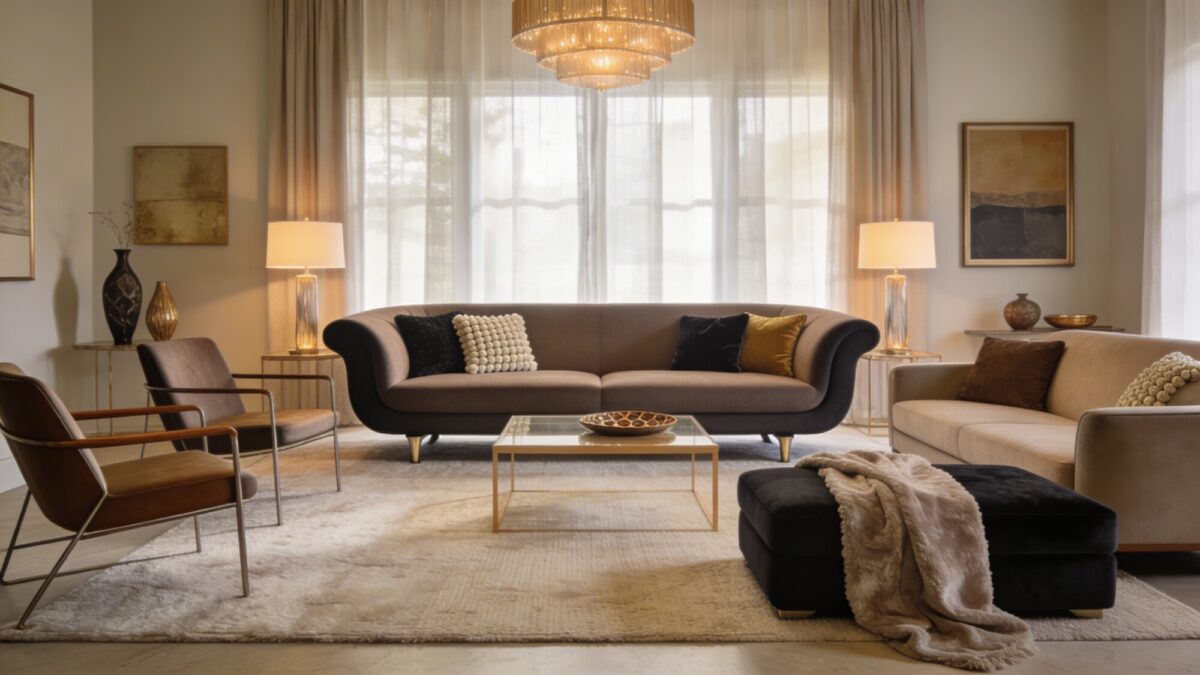
3. Grand Yet Intimate: Scale With a Statement Sofa
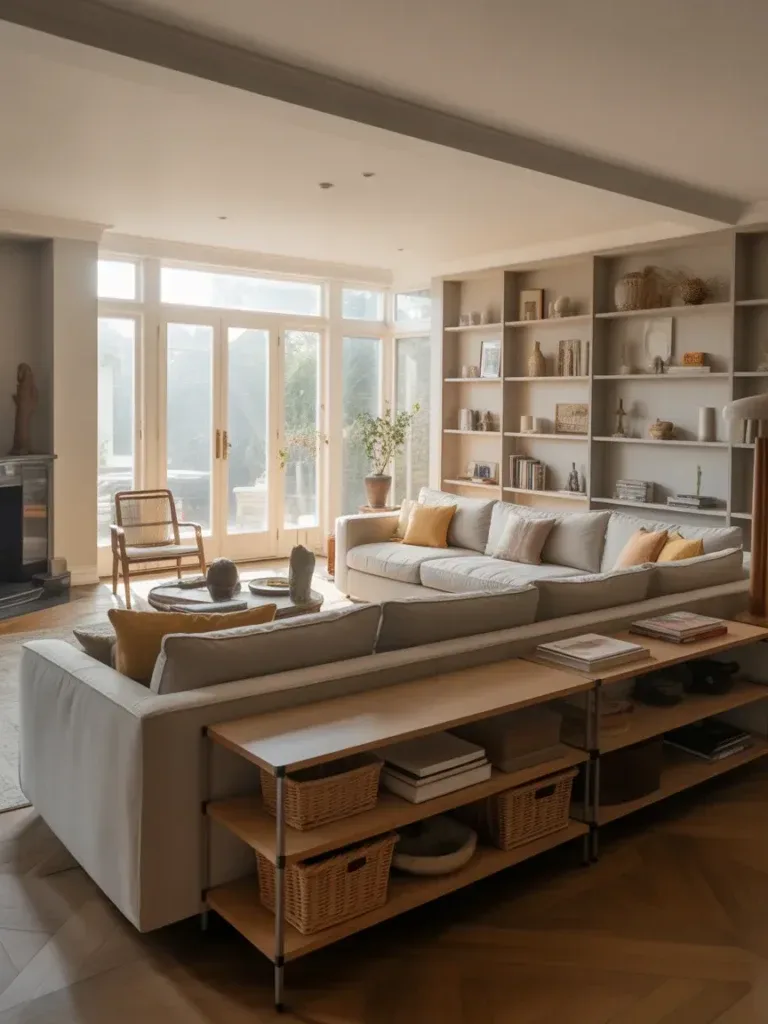
One oversized, well-tailored sofa does more for a room’s sense of scale than three smaller matching pieces. It’s the same logic hotels use in their lobby lounges — a single generous seating piece signals confidence, where a room full of matched loveseats signals “starter furniture set.”
If you have pets or kids, ask about performance weave fabric before you fall for a showroom velvet or linen — it’s woven to resist snags and stains without looking like outdoor furniture, and it’s become common enough that most higher-end sofa brands offer it as a standard option rather than a special order.
What to Consider
- Silhouette — clean tailored lines for a more contemporary living room feel, plush curves for a softer, traditional one
- Fabric — performance weave if the sofa will see daily wear from kids or pets
- Supporting seating — two slim-framed accent chairs rather than a matching second sofa, so nothing competes with the main piece
💡 Pro Tip: Keep every supporting piece at a lower visual height than the statement sofa — a shorter accent chair, a low-profile ottoman. If the surrounding furniture matches the sofa’s height, the room stops reading as “one grand piece with support” and starts reading as “matching furniture set,” which undercuts the whole point of this idea.
4. Marbleless Marvel: Subtle Stone Looks Without the Stone
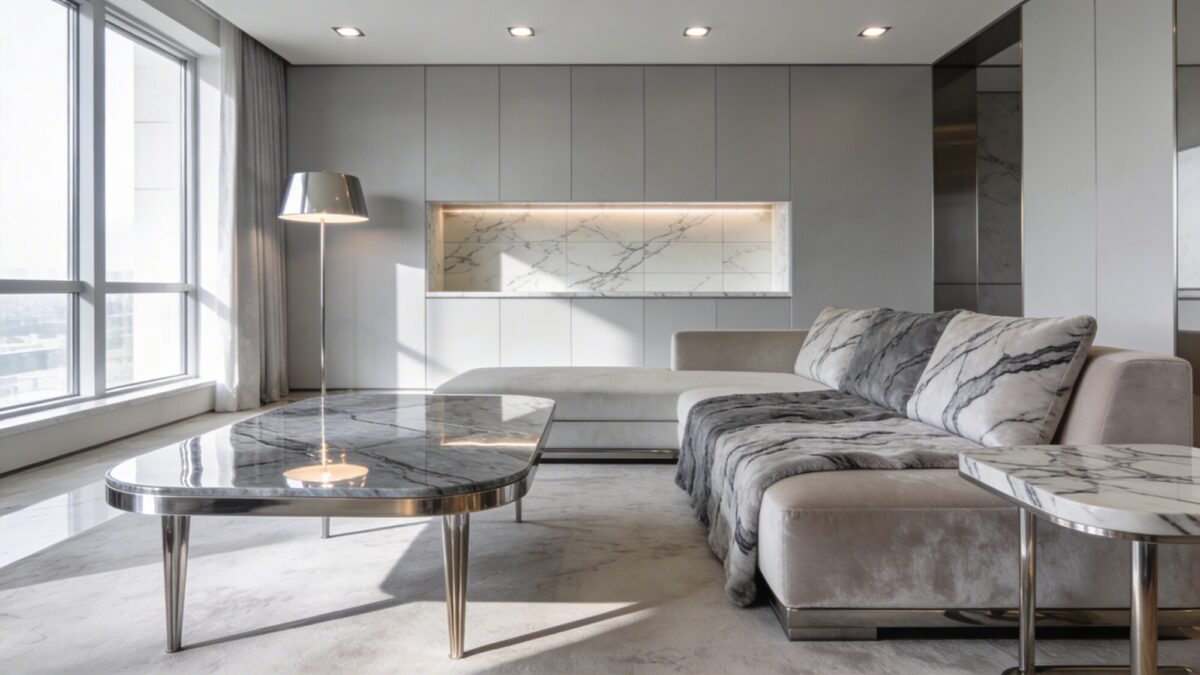
Real marble is beautiful and genuinely high-maintenance — it stains from wine, oil, and even citrus if left unsealed, and it needs periodic resealing to keep that stain resistance. Faux marble surfaces (engineered stone, quartz composites, or well-printed laminate) give you the same veined visual drama with none of the sealing schedule.
The trade-off is durability under heat and scratching — genuine stone handles a hot mug or a dragged glass better than most faux surfaces. For a coffee table that mostly holds books and drinks with coasters, faux marble is the more practical call. For a surface that’ll take direct heat regularly, real stone or a heat-resistant composite is worth the extra cost.
Simple Ways to Integrate
- A faux marble coffee table or side table with cool gray veining
- Veined-pattern cushions or a table runner instead of solid neutrals
- Veined tile or porcelain on a small backsplash or niche where the living space meets a kitchen
If your layout has the living room bleeding into a dining or kitchen area, this idea pairs well with broader guidance on elegant living room decor for a fast luxe makeover, since open-plan spaces need the material choices to feel consistent across zones.
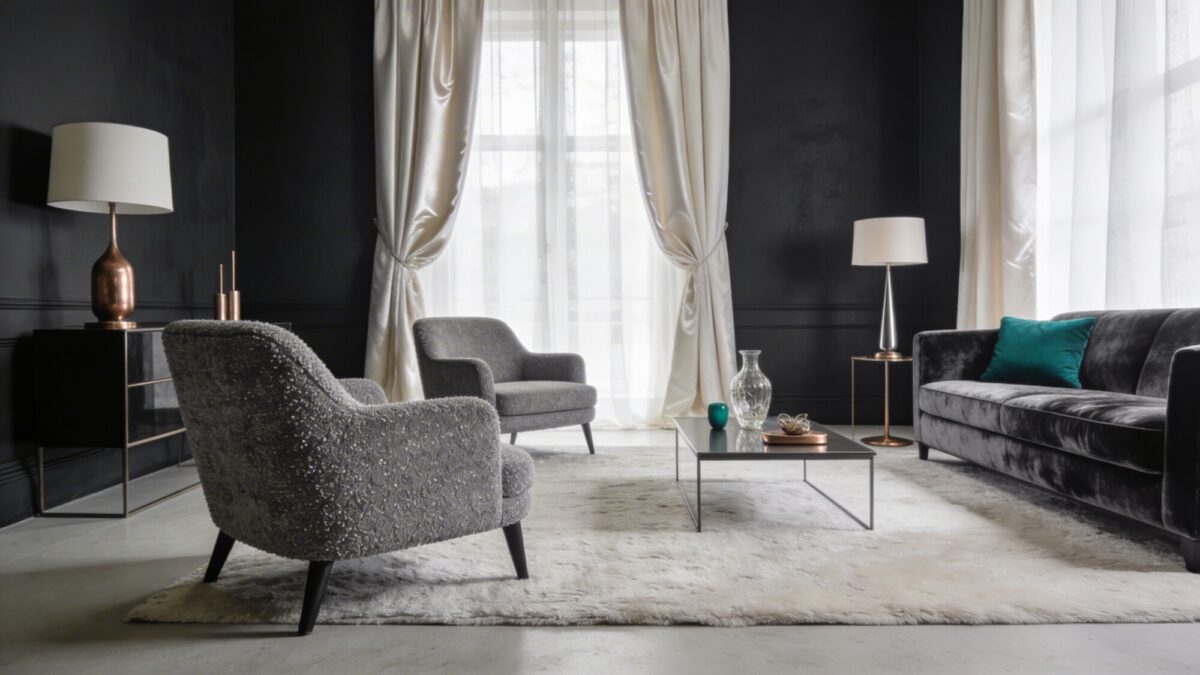
5. Monochrome Magic With a Pop
A room built on one restrained neutral palette — charcoal, cream, soft gray — reads as considerably more expensive than a room with five different colors competing for attention, even when the actual furniture cost is similar. Monochrome is a discipline more than a shopping list: the skill is in staying restrained, not in finding the “right” gray.
Pick exactly one accent color and use it in genuinely small doses — a single throw pillow, a glass vase, one console accessory. The moment the accent color shows up in three or more places, the room stops being monochrome-with-a-pop and starts being a two-tone room, which reads differently and loses the effect.
How to Build It
- Base: charcoal, cream, or soft gray across walls and large upholstery
- Texture variety within the neutral base — wool, silk, and boucle so the room doesn’t feel flat
- One accent color (emerald, ochre, or sapphire), limited to one or two small objects total
💡 Pro Tip: If you want to refresh a monochrome room seasonally, swap only the accent color — not the neutral base. Changing one emerald vase to a rust-orange one costs almost nothing and completely shifts the room’s mood, whereas repainting or reupholstering the neutral base is a much bigger commitment for a smaller visual return.
6. Natural Luxe: Warm Woods and Earthy Palettes
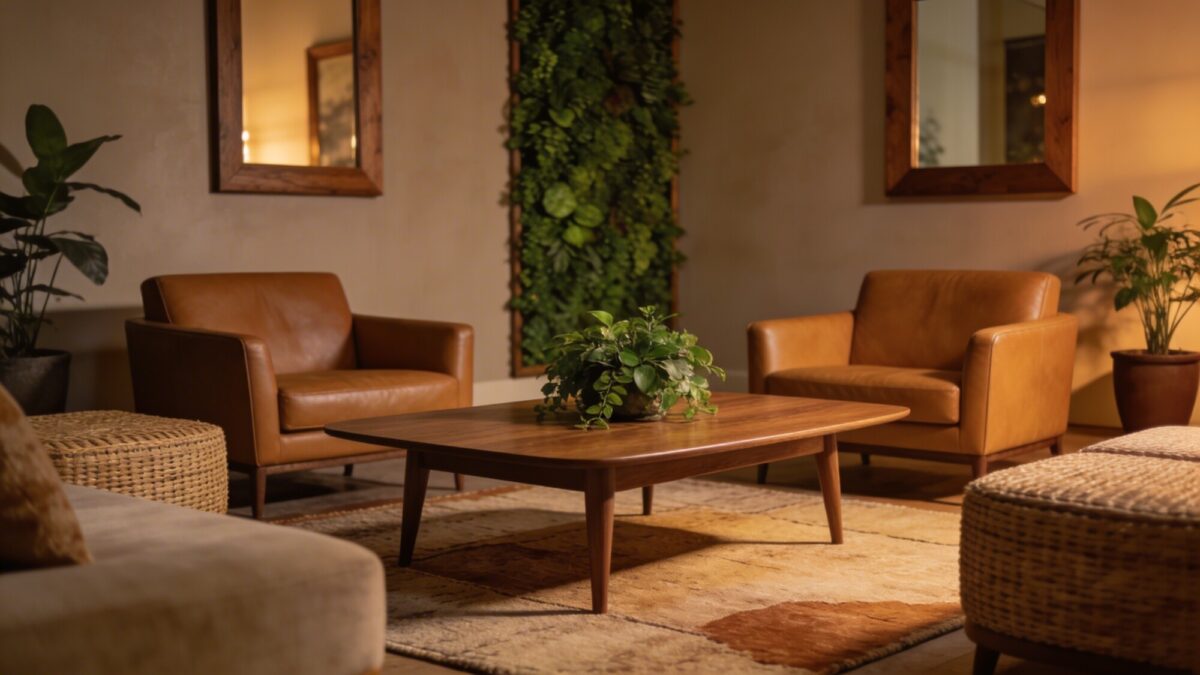
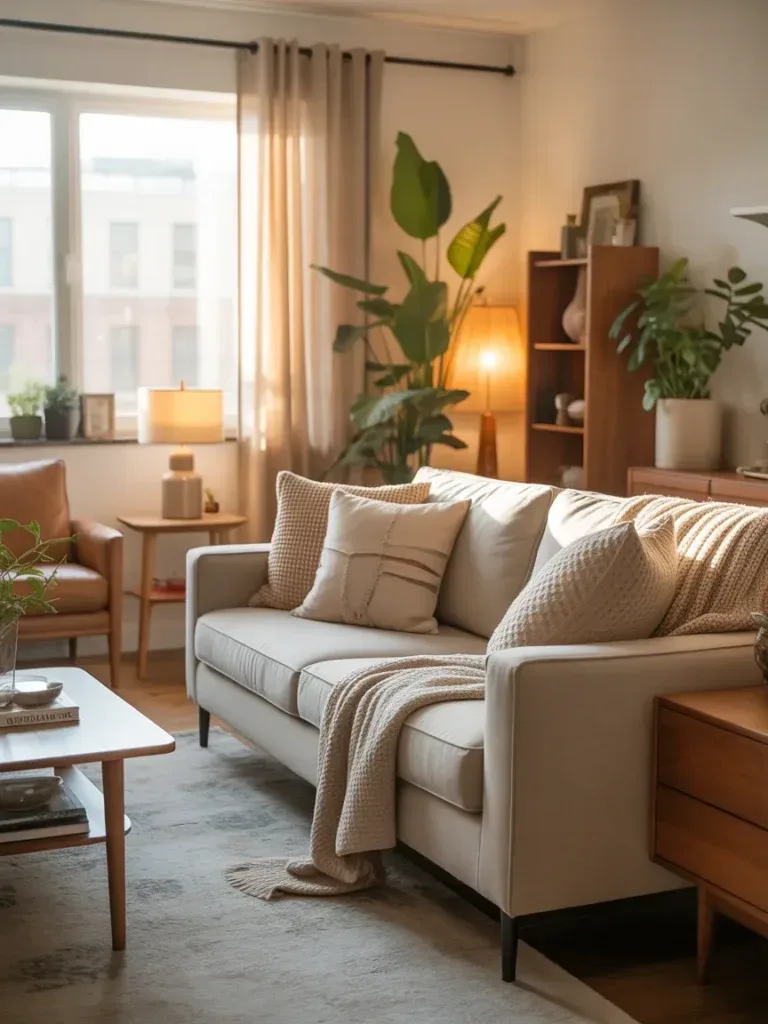
Warm wood tones soften a luxury room so it doesn’t tip into cold or showroom-sterile. A walnut or oak coffee table with clean mid-century lines, paired with tan leather or woven-texture seating, gets you an “understated opulence” look that ages better than trend-driven finishes — wood grain doesn’t go out of style the way a specific paint color can.
The trade-off worth knowing here is durability versus warmth: real walnut and oak show water rings and scratches more visibly than a lacquered or glass surface, so this look asks for coasters and a bit more day-to-day care in exchange for the warmth it adds.
Key Elements
- A walnut or oak coffee table with simple, clean lines
- Tan leather chairs or woven-texture seating for contrast against the wood
- Greenery — a single large plant or a small cluster — to keep the earthy palette from feeling flat
7. Sculptural Statements: Art That Commands the Room
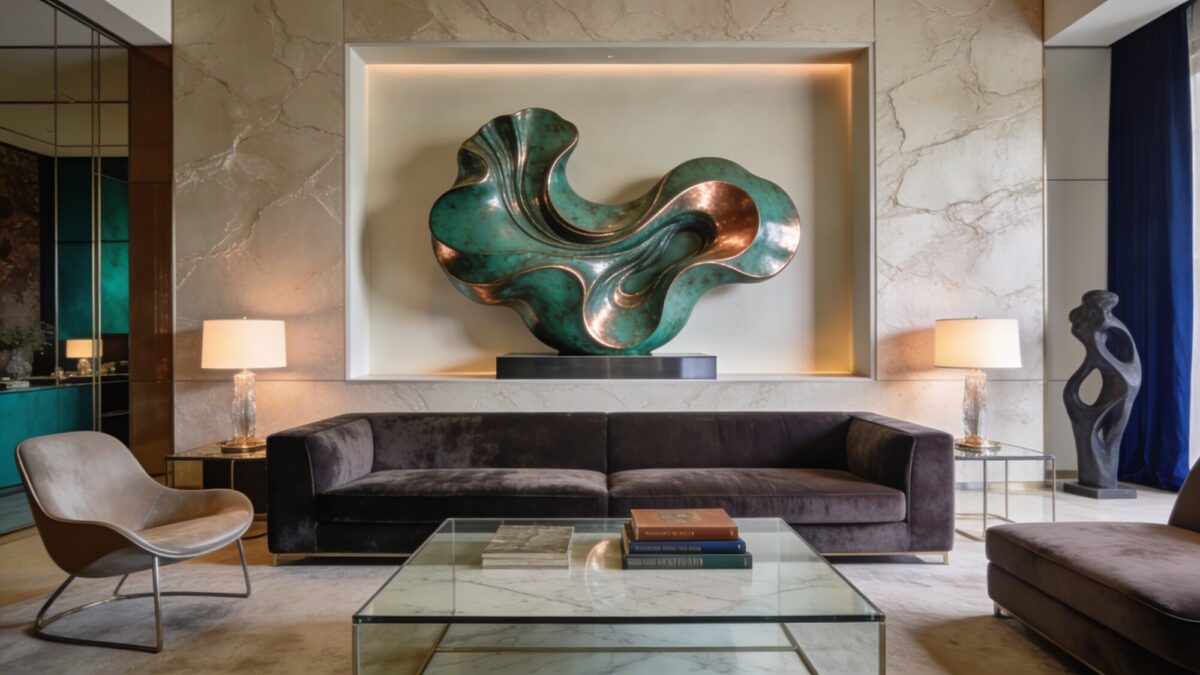
A single bold sculptural piece can define a room’s identity faster than any amount of coordinated furniture. This is the idea most people skip because it feels intimidating to shop for, but it doesn’t require a gallery budget — it requires one uncluttered wall and a piece with real presence, even if that piece is a single large-scale object rather than a “collection.”
The common mistake is under-scaling the piece for the wall — a small sculpture on a large blank wall looks lost rather than intentional. If you’re not sure, size up rather than down; a piece that feels slightly too big for the space usually reads better than one that feels too small.
Tips for Choosing
- Scale the piece to the wall — larger for an open expanse, more compact only for a genuinely intimate nook
- Choose a piece with a color that ties back into your existing palette rather than clashing with it
- Place it above the sofa for a focal point, or opposite the main seating so it’s visible from where people actually sit
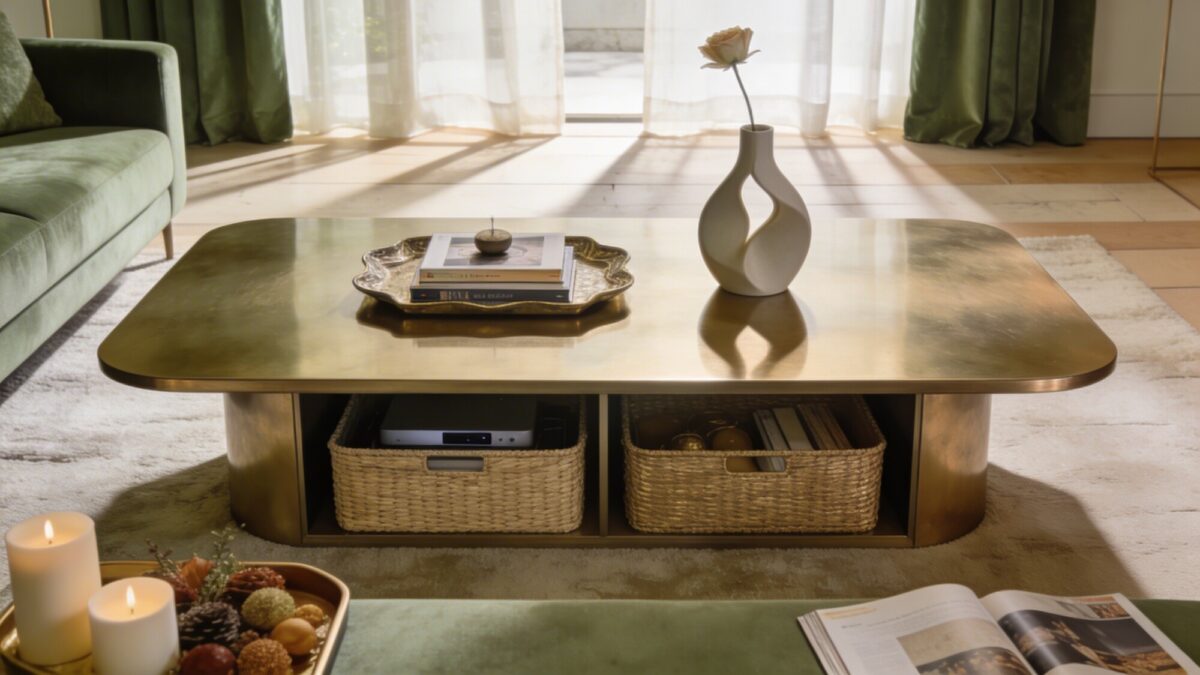
8. Coffee Table Chronicles: The Centerstage of the Living Room
The coffee table gets more daily visual attention than almost any other surface in the room, which is exactly why an overstyled one undoes a lot of the work done elsewhere. The goal is curated, not full: a small stack of design books, one sculptural object, maybe a single bloom — and stop there.
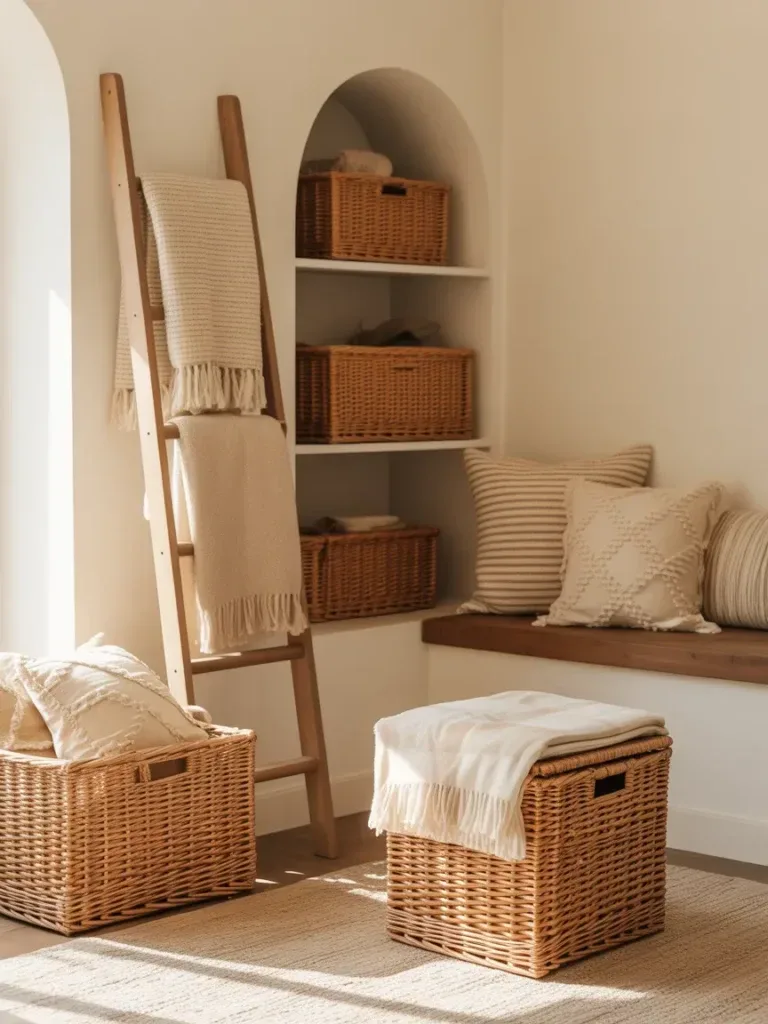
Remote controls, chargers, and coasters are the actual daily-use items that ruin a styled table fastest. Tuck them into a woven basket or a drawer-equipped side table instead of leaving them on the table itself — it’s a small habit change that keeps the “styled” look intact between guests instead of only on photo day.
What to Include
- A small tray with two or three well-chosen books, not a stack of five or more
- One sculptural vase or minimal centerpiece object
- Everyday tech and remotes stored out of sight in a basket or drawer
Things to Consider Before You Start
- Pick one statement move (sofa, sculpture, or a fireplace focal point) rather than trying all eight ideas at once — layering too many “statement” pieces cancels out the effect each one is supposed to have
- Decide on your bulb temperature (2700K–3000K) before buying any new lighting, so fixtures purchased separately still match
- If you have pets or kids, prioritize performance fabric on the sofa over the exact color you’d otherwise choose — it’s the decision that determines whether the room still looks good in a year
- Check whether your space is more suited to natural luxe (wood, earth tones) or monochrome-with-a-pop before shopping — mixing both palettes in one small room tends to look indecisive rather than layered
FAQ
What’s the single cheapest way to make a living room look more luxurious?
Fix the lighting temperature. Swapping mismatched bulbs for a consistent 2700K–3000K warm white across every fixture costs very little and changes the room’s mood more than most furniture purchases.
Do I need real marble for a luxury living room?
No — faux marble surfaces give you the same veined visual drama without the sealing maintenance real stone requires. Real marble is worth it mainly if the surface will take regular heat or heavy daily use.
Is velvet hard to maintain?
It’s manageable with two habits: keep it out of direct sunlight to prevent fading, and clean it with a soft brush or gentle vacuum attachment rather than scrubbing. Darker colors also hide everyday wear better than pale ones.
How do I add a luxury tv wall without it dominating the room?
Treat the wall around the TV the way you’d treat a piece of art — frame it with a textured or painted accent wall, and keep the console beneath it low-profile so the TV doesn’t become the room’s only focal point.
What’s the most common mistake people make chasing a luxury look?
Adding too many “statement” elements at once — a bold sofa, a sculpture, a chandelier, and a marble table all in one room compete with each other instead of supporting one clear focal point. Pick one hero piece per room.
Our Verdict
If you’re starting from a plain rental living room, lighting and one statement piece (sofa or sculpture) give you the most visible change for the least money — both are reversible if you move, unlike paint or built-ins. Faux marble and monochrome styling are the next layer once the bones are right, not the starting point.
Start with one idea, live with it for a couple of weeks, then add the next. For more direction on stretching this look across a full apartment on a tighter budget, see this guide to budget-friendly decor that looks high-end.