6 Living Room Rug Inspiration: Vibrant Vibes for Any Space
A rug does more work in a living room than most people give it credit for — it’s often the single item that decides whether a room reads as “finished” or “still in progress.” If you’re not sure how big a rug you actually need before picking a style, our living room rug size guide is worth checking first, since size mistakes are harder to fix after the fact than color or pattern regrets.
These six directions cover most of the ground people search for — layered texture, bold color, natural fiber, oversized solids, pattern, and durability for kids or pets. Pick the one that matches how the room is actually used, not just how it photographs.
Quick Takeaways
- Layering two rugs works best with one plain, one patterned or textured — two bold patterns together usually compete rather than complement.
- A rug should generally extend under the front legs of your seating, not sit as an island in the middle of the room.
- Natural fiber rugs (jute, sisal) age well and hide dirt, but they’re rougher underfoot than wool or synthetic pile — plan accordingly if you sit on the floor often.
- Low-pile synthetic blends are the more realistic choice over high-pile wool if kids, pets, or heavy foot traffic are part of daily life.
1. Layer Textures Like a Pro
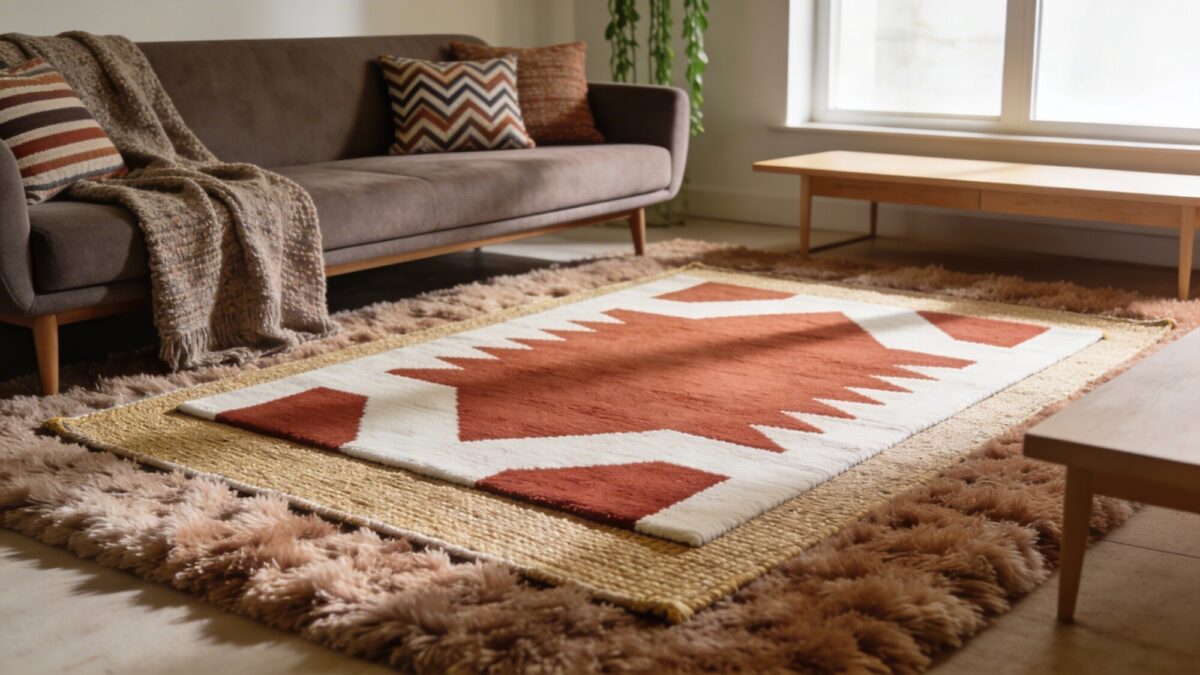
Layering a plush rug under a smaller flat-weave or patterned one is one of the easiest ways to make a living room rug feel considered rather than default. The trade-off people run into: layering two heavily patterned rugs together usually looks chaotic, not curated. The combination that actually works is one plain, textural base (a shag or a jute) with one patterned or geometric piece on top.
A jute or sisal underlay peeking out at the edges adds a natural, grounded look and gives you a size buffer if your main rug runs a little small for the seating area.
💡 Pro Tip: If you’re not confident mixing patterns, start by layering a solid neutral rug with one graphic runner or accent rug instead of two full-size rugs — it’s a lower-risk way to test the layered look before committing to a second full rug purchase.
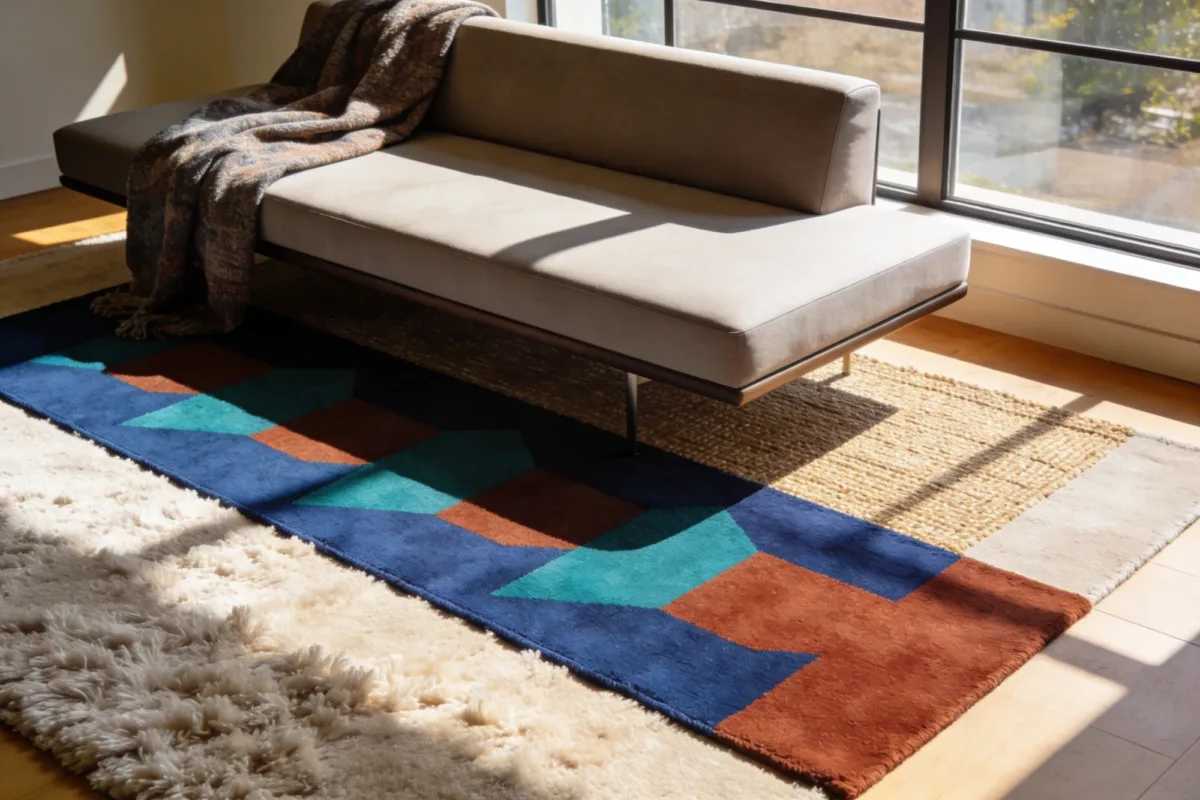
2. Go Bold With Color Blocking
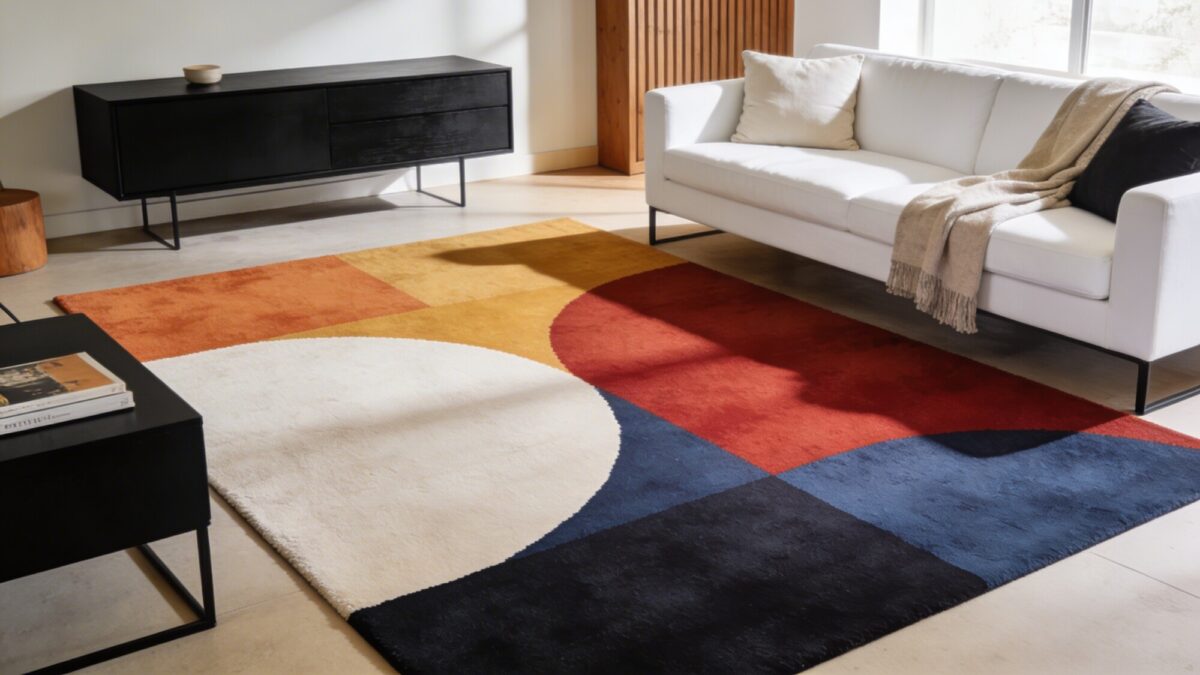
A rug in two or three saturated, complementary colors changes the mood of a room faster than almost any other single purchase, especially if your furniture is neutral — white, black, or wood-toned. The room does the anchoring; the rug does the personality.
This works best with light, neutral walls so the colors read as intentional rather than overwhelming. If your walls are already a strong color, a bold rug on top can push the room past what most people find comfortable to live with day to day.
3. Go Natural With Jute or Seagrass
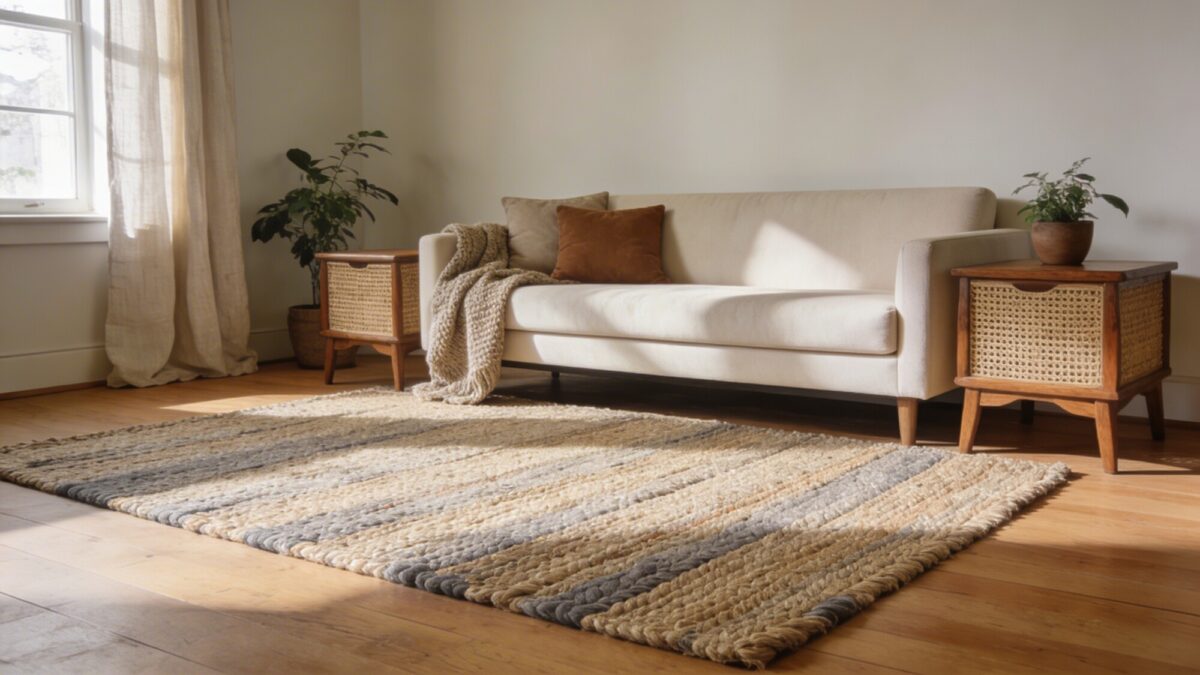
Jute and seagrass rugs hold up well under daily foot traffic and hide dirt better than lighter wool rugs, which is part of why they show up so often in living room rug inspiration for high-traffic homes. They’re also genuinely affordable compared to hand-knotted wool options.
The honest trade-off: natural fiber rugs are coarser underfoot than wool or synthetic pile. If your household sits on the floor a lot — kids playing, movie nights on cushions — a jute rug under a smaller, softer accent rug in the seating zone solves this without giving up the natural-fiber look entirely.
For more on pairing natural texture with different sofa styles, see our jute rug living room ideas.
4. Oversized Solids for a Calm Canvas
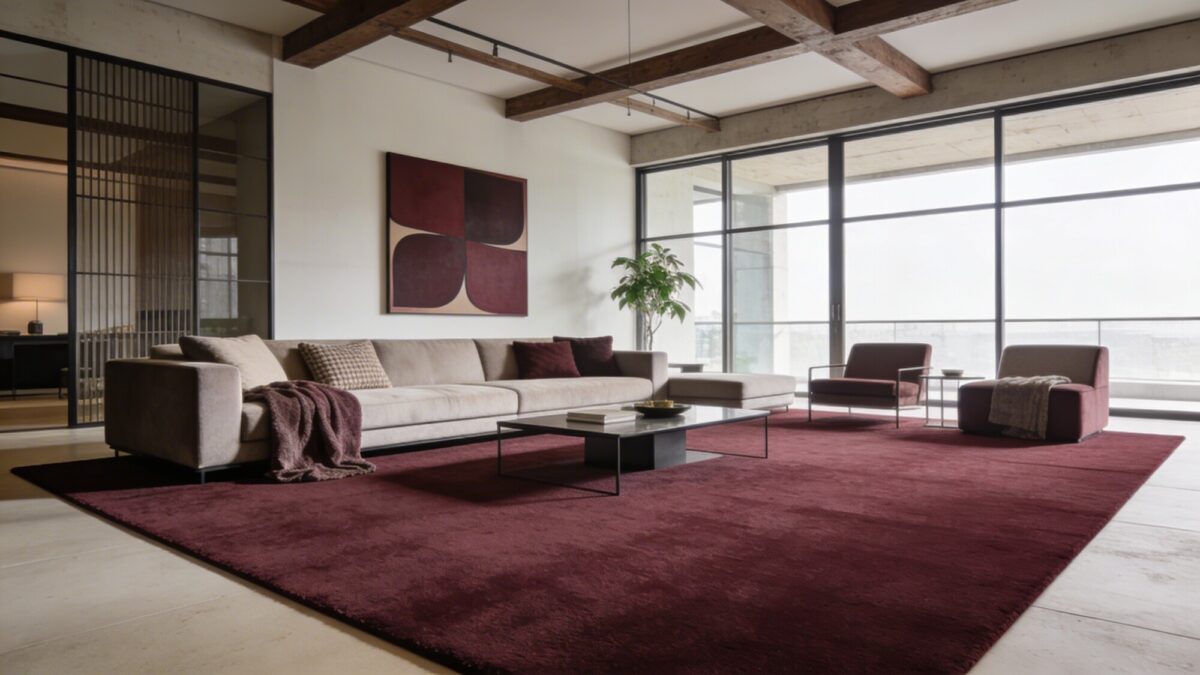
A solid rug sized generously — wider than the sofa on each side, not just barely covering the seating group — gives a room a settled, finished look without adding any visual noise. This is the direction to take if the room already has a lot going on: a gallery wall, patterned cushions, or a bold piece of art.
Sizing matters more here than color. A too-small solid rug looks like an afterthought; sized correctly, it reads as the calm foundation the rest of the room is built on.
💡 Pro Tip: As a rough rule, aim for at least 6-10 inches of rug showing beyond each side of your sofa. A rug that stops right at the edge of the furniture tends to look undersized even if it technically “fits” the seating area.
5. Pattern Play With Moroccan and Trellis Rugs
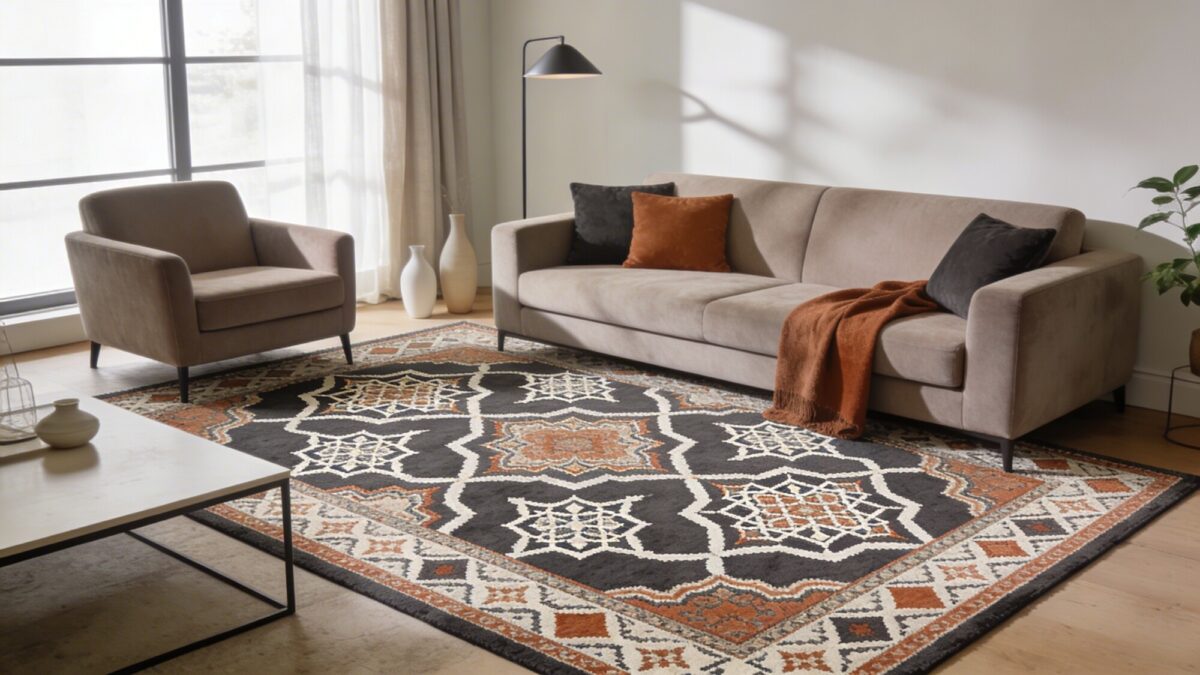
A patterned rug — Moroccan, trellis, or damask-style — is one of the fastest ways to unify furniture that doesn’t quite match. If your sofa, chairs, and side tables were bought at different times and don’t share a clear style, a patterned rug pulling one shared color across all of them does more visual work than replacing any single piece.
Match pattern scale to room size: a large, bold pattern reads well in a bigger open room, while a smaller, tighter pattern suits a compact space better without overwhelming it.
6. Playful, Kid- and Pet-Friendly Options
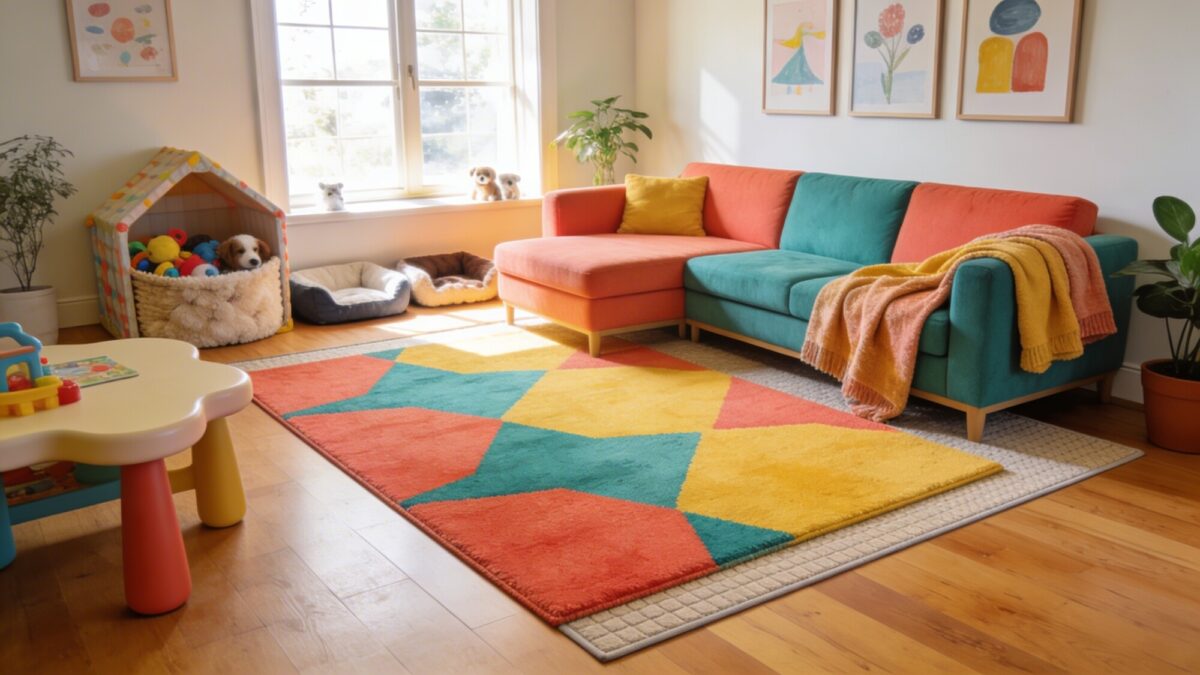
Style and durability aren’t actually a trade-off anymore — low-pile synthetic blends now come in patterns and colors that hold their own against higher-maintenance wool options. The real difference shows up in cleaning: low-pile synthetics handle spills and stains far better than high-pile wool, which tends to trap dirt and takes longer to dry after a proper cleaning.
A rug pad underneath isn’t optional in a busy household — it stops the rug from sliding and adds a bit of cushioning, which matters more once kids or pets are using the floor as much as the furniture.
Comparison: Which Rug Style Fits Your Room?
| Approach | Cost | Maintenance | Best For |
|---|---|---|---|
| Layered rugs | $$-$$$ | Medium | Rooms that need more visual depth |
| Bold color block | $$ | Low-Medium | Neutral rooms needing personality |
| Natural fiber (jute/seagrass) | $-$$ | Low | High-traffic rooms, earthy or coastal styles |
| Oversized solid | $$$ | Medium | Rooms with busy walls or existing patterns |
| Patterned (Moroccan/trellis) | $$-$$$ | Medium | Rooms with mismatched furniture needing a unifying element |
| Low-pile synthetic (kid/pet) | $-$$ | Low | Households with kids, pets, or heavy daily use |
Things to Consider Before You Buy
- Measure your seating area before shopping — a rug that’s too small is the most common and most noticeable rug mistake.
- Decide on cleaning tolerance honestly: wool and shag look great but need more upkeep than low-pile synthetic blends.
- Always budget for a rug pad; it prevents slipping and extends the rug’s life regardless of which style you choose.
- If layering two rugs, keep one of them solid — two competing patterns rarely settle into a cohesive look.
FAQ
How big should a living room rug be?
Big enough that at least the front legs of your sofa and chairs sit on it — ideally all four legs if the room allows. A rug that floats in the middle with all furniture around the edges reads as undersized.
Are jute rugs comfortable enough for everyday use?
They’re durable and low-maintenance, but coarser underfoot than wool. Many people layer a smaller soft rug on top in the spot where they actually sit or lie down.
Can I layer two patterned rugs?
You can, but it’s harder to pull off than layering a patterned rug over a solid one. If you want to try it, keep the two patterns in the same color family so they read as coordinated rather than clashing.
What rug type holds up best with pets?
Low-pile synthetic blends are the most forgiving — they resist staining better and are easier to clean than high-pile wool or shag.
Do I need a rug pad under every rug?
Yes, especially on hardwood or tile. It prevents slipping, which is a safety issue as much as a practical one, and it also reduces wear on the rug’s backing.
Our Take
If you’re only changing one thing, size is the detail to get right before color or pattern — an undersized rug undercuts every other choice in the room. Beyond that, let the room’s actual use decide the direction: natural fiber or low-pile synthetic for high-traffic, kid- or pet-heavy spaces, and reserve wool, shag, or heavily patterned rugs for calmer rooms that see lighter daily wear.
Once you’ve settled on a style, our rug placement guide covers positioning relative to furniture in more detail than we could fit here.