9 Apartment Inspiration Living Room: Tiny-Space Makeover Magic
Most apartment inspiration living room boards are full of rooms that don’t exist anywhere but a photo studio — 400 square feet of “airy minimalism” with no TV, no cables, and somehow no clutter. That’s not useful if you’re staring down a 12×14 rental with one awkward outlet and a radiator you can’t move. The nine ideas below are built around actual constraints: small footprints, rental rules, and a budget that doesn’t include custom built-ins.
If your space is genuinely tiny rather than just cluttered, it’s worth reading through some cozy living room ideas for apartments alongside this list, since layout and comfort usually need to be solved together, not separately.
Quick Takeaways
- Texture does more work than color in a small room — aim for three tactile layers max (rug, throw, cushions) so it reads as cozy, not cluttered.
- One accent wall beats four matching ones for making a small room feel intentional rather than empty.
- Furniture that hides its second job (a bed, storage, a media unit) saves more floor space than furniture that’s simply “small.”
- Lighting in three layers — ambient, task, accent — changes a room’s mood more than any single piece of decor.
- Personal objects, displayed sparingly, are what actually make a rental feel like home.
1. Layer Textures Like a Pro
Texture is what separates a living room that looks styled from one that looks bought all at once from the same catalog. A chunky knit throw over the arm of the sofa, a faux fur layer folded at the foot, a woven rug underneath — that’s already three textures before you’ve touched the wall.
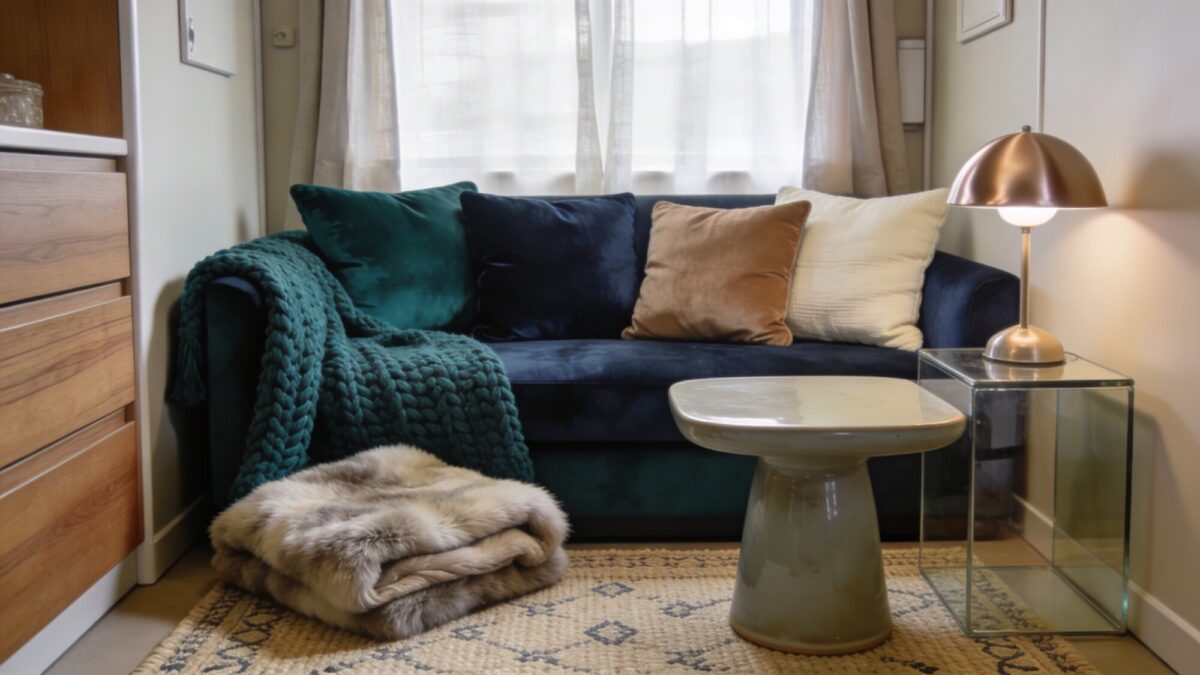
Mix a couple of matte surfaces (ceramic coffee table, linen cushions) against one or two shinier ones (a lacquered side table, a satin-finish lamp base). The contrast is what reads as “designed” instead of “matched.”
Key Elements
- A chunky knit throw and a softer faux fur layer, used separately rather than piled together
- A woven rug with a subtle pattern, not a bold one that competes with everything else
- Cushions in two contrasting finishes — velvet against linen works well
💡 Pro Tip: Stop at three textures per surface. A sofa with a knit throw, a fur throw, and six patterned cushions stops looking layered and starts looking like a linen closet exploded. Pick a texture hierarchy — one dominant, two supporting — and stick to it.
2. Create a Focal Wall That Wows
A small room without a focal point tends to look indecisive — the eye doesn’t know where to land, so everything reads as background. One wall doing something different fixes that instantly, and it’s one of the cheaper apartment living room inspiration moves you can make, since it doesn’t require touching furniture at all.
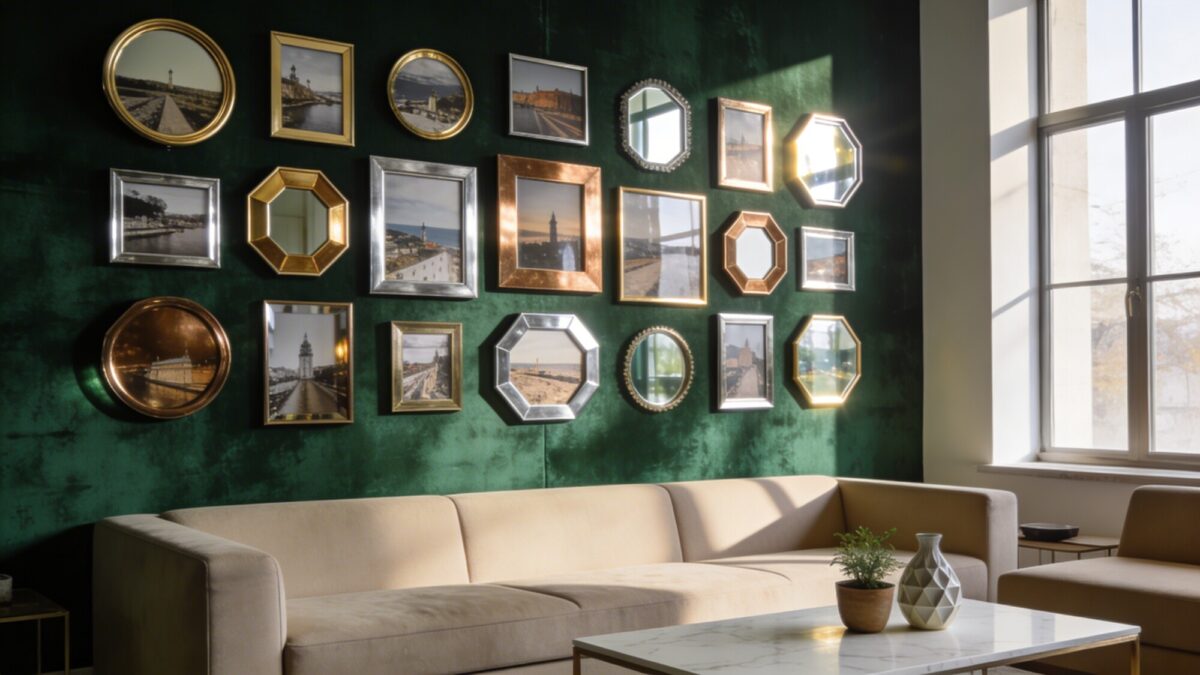
You’ve got three realistic options for a rental: paint (if allowed), removable wallpaper, or a gallery wall. Paint gives the most drama for the least money. Removable wallpaper is the safest bet if your lease is strict about walls. A gallery wall is the option that costs nothing extra if you already own the photos and frames — you’re just arranging what you have.
For layout ideas that work with an odd-shaped or narrow apartment footprint, this rundown of small living room layouts that work pairs well with a focal-wall approach, since where you place the sofa affects which wall should carry the statement.
Suggestions
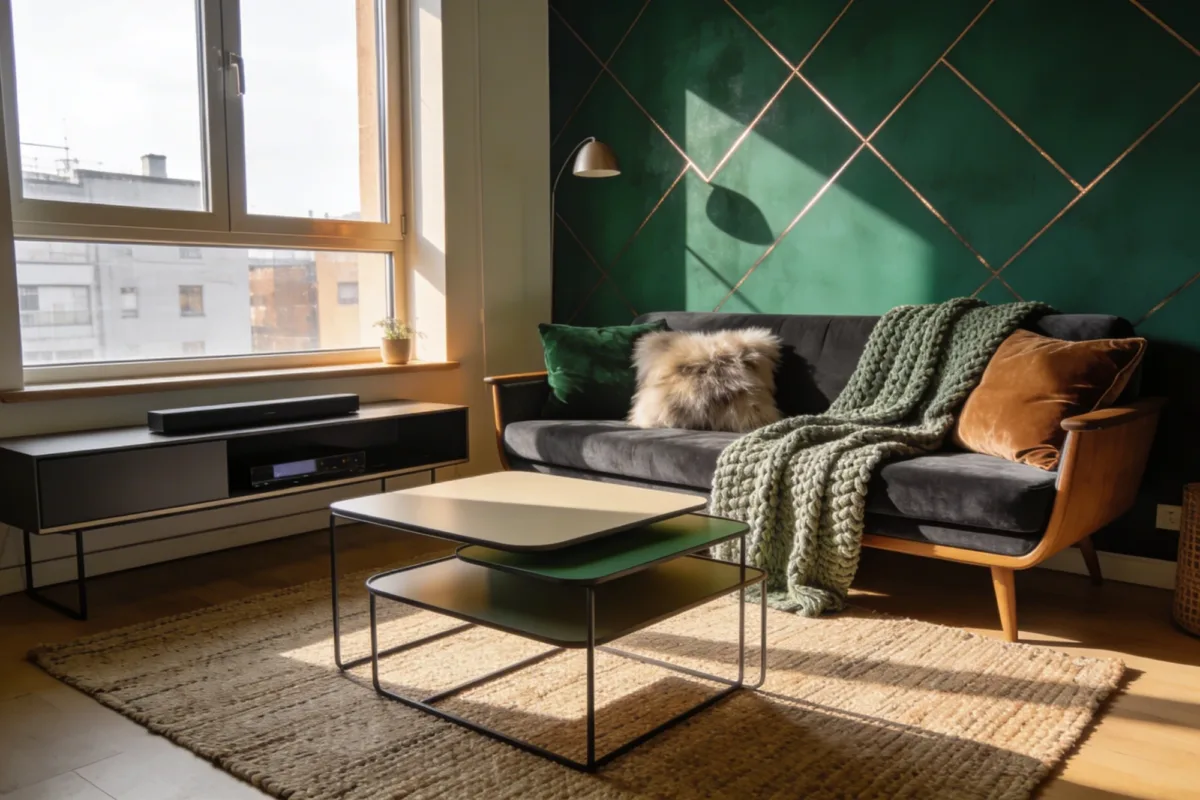
- A deep emerald or charcoal accent wall behind the sofa, not beside a window where light will wash it out
- Geometric wallpaper with a slight metallic sheen for more shine without more color
- A gallery wall mixing frame sizes and finishes rather than one uniform set
3. Space-Smart Multi-Function Furniture (and Where the TV Fits)
In a small apartment, the furniture that earns its floor space does two jobs, not one. A sofa bed for guests, a storage ottoman that’s also a coffee table, a console that hides cables — that’s the difference between a room that feels open and one that feels like a warehouse of single-purpose objects.
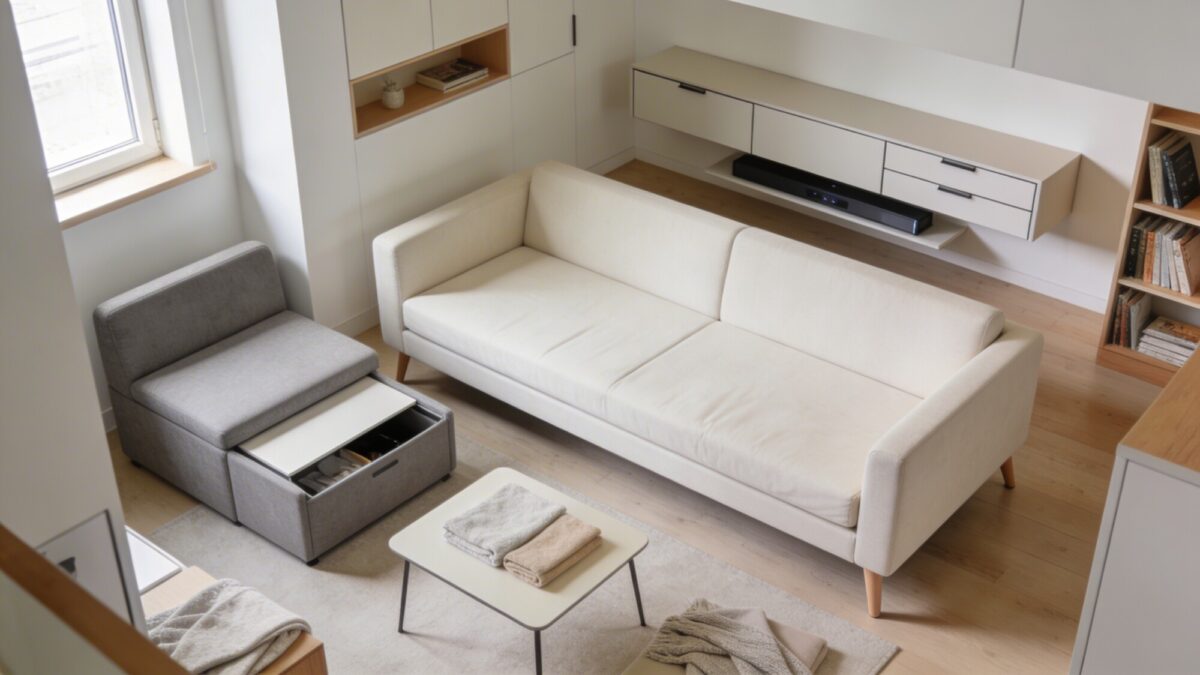
This is also where TV placement usually goes wrong. People default to a heavy media console against the longest wall, which eats the one stretch of floor a small room actually has to spare. A slimmer alternative — a wall-mounted TV over a floating console, or a hall tv unit design that’s really just a shallow shelf with drawers — keeps the floor visually clear even though the same amount of storage is there.
| Piece | Best For | Trade-off to Know |
|---|---|---|
| Sofa bed | Studios and one-room apartments hosting overnight guests | Bulkier frame than a standard sofa; measure your door frame before buying, not after delivery |
| Storage ottoman | Rooms needing extra seating and hidden storage without a second piece | Loses the “coffee table” look if you pile décor on top instead of leaving the lid clear |
| Wall-mounted TV + floating console | Narrow rooms where floor space matters more than storage depth | Requires drilling into the wall — check your lease before mounting anything |
💡 Pro Tip: Before buying any sofa bed or sectional, measure your narrowest doorway and stairwell, not just the room itself. It’s the single most common furniture return reason in small apartments — the piece fits the room but never made it through the hallway.
Smart Picks
- A storage ottoman that doubles as extra seating when you have people over
- A floating console with hidden drawers, mounted a few inches off the floor so the room reads as more open
- A leggy, light-framed sofa bed rather than a boxy one, so it doesn’t visually dominate the room
4. Lighting That Tells a Story
A living room lit by a single overhead fixture looks the same at 7pm as it does at noon, which is part of why so many small apartments feel flat despite decent furniture. Lighting is the layer people skip because it’s less visually obvious than a rug or a wall color, but it changes the mood of a room more than either.
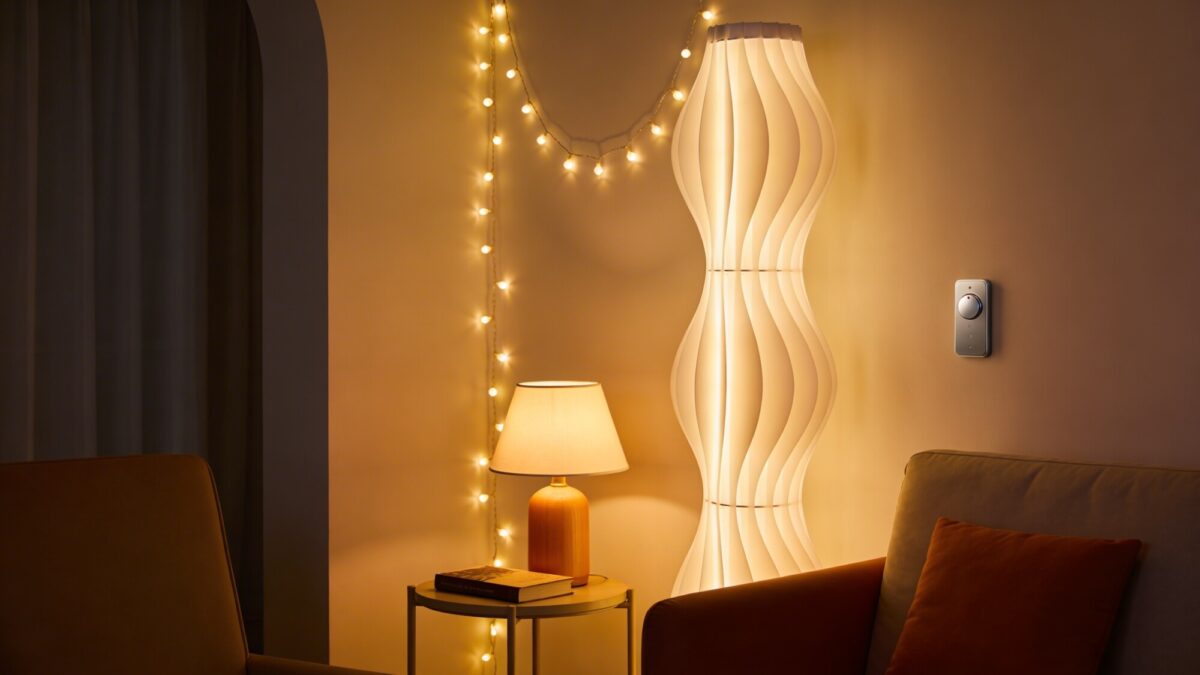
Aim for three light sources doing different jobs: an ambient source (a floor lamp with a soft, diffused shade), a task source (a table lamp by a reading chair), and an accent source (warm string lights along a shelf or window frame). None of these need to be expensive — the layering matters more than the price tag.
Lighting Kit
- A sculptural floor lamp for ambient light
- Warm white string lights along a shelf edge, not draped over furniture where they’ll get knocked
- A table lamp with a warm bulb near any reading or work spot
A dimmer switch on your main lamp is a small, inexpensive upgrade — often just a plug-in inline dimmer, no rewiring — and it’s the fastest way to shift a room from “daytime bright” to “evening cozy” without buying anything new.
5. Greenery That Breathes Life
Plants do two things a throw pillow can’t: they add a living, slightly unpredictable texture, and they make a rented, unpersonalized space feel inhabited faster than almost anything else you can buy.
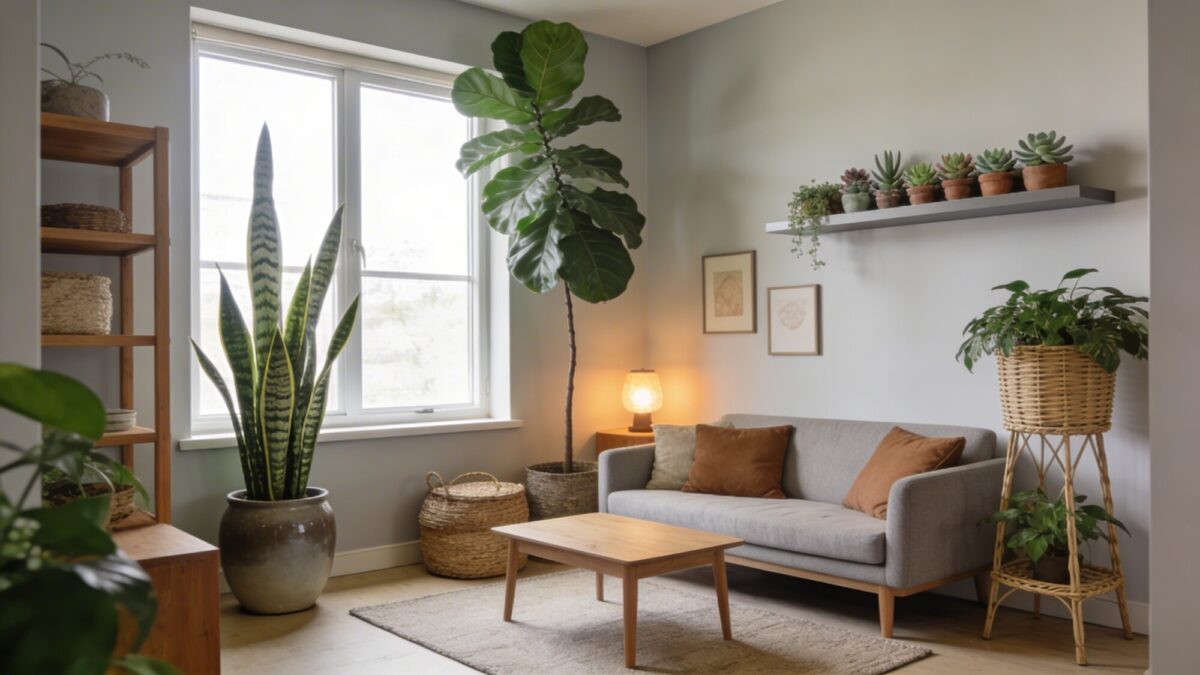
Start with plants that forgive neglect — snake plants and pothos are the two most commonly recommended for a reason, since both tolerate irregular watering and low-to-medium light. A fiddle leaf fig looks great in photos but needs more consistent light and humidity than most apartments naturally offer, so treat it as a “once you’re confident” plant rather than a starter one.
💡 Pro Tip: The most common way people kill an easy-care plant isn’t underwatering — it’s leaving it sitting in a saucer of water after each watering. Empty the drainage tray within an hour of watering, especially for snake plants, which rot from soggy roots far faster than they wilt from dryness.
Plant Picks
- Snake plant or pothos for low-maintenance starts
- A fiddle leaf fig once you’ve got a steady watering habit and decent natural light
- A cluster of small succulents on a shelf where taller plants would block a window
6. Color Stories That Don’t Break the Bank
A cohesive color story is what makes a room feel finished even when the furniture is a mix of hand-me-downs and budget buys. Pick one dominant neutral base — cream, taupe, or a warm gray — and no more than two accent hues, and apply them consistently through cushions, art, and small decor rather than big furniture purchases.
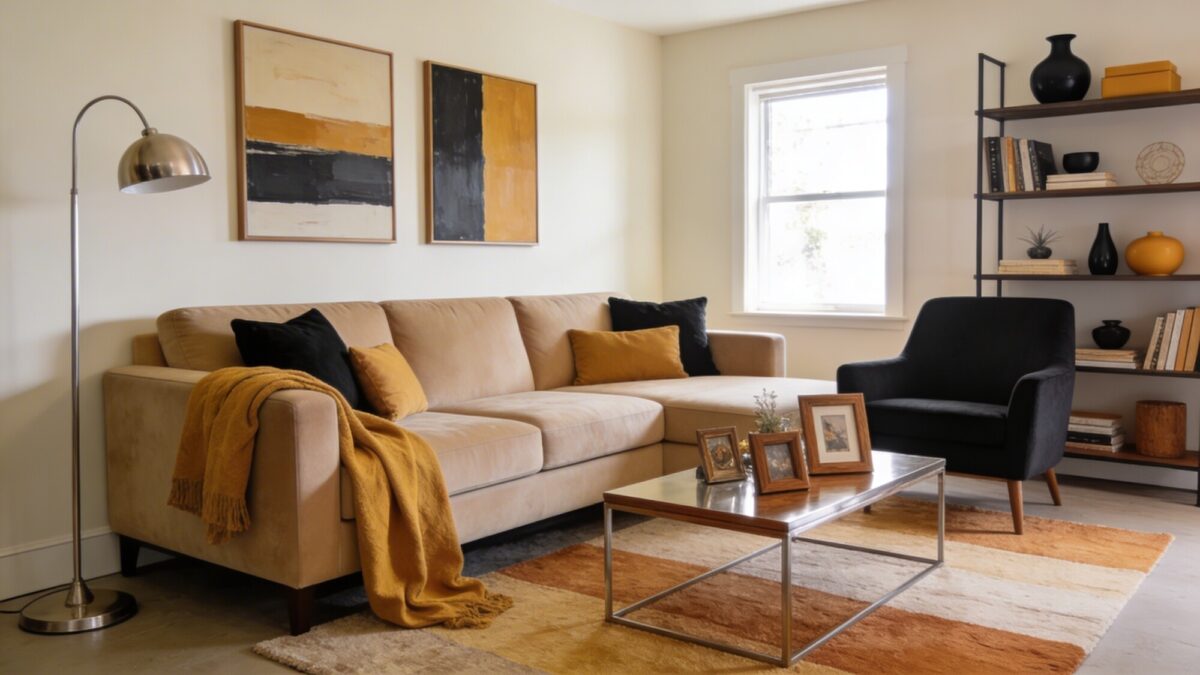
This is also where style direction matters. A minimalist cozy living room apartment leans on restraint — fewer objects, more negative space, textures doing the visual work instead of pattern. A boho aesthetic living room goes the other way, layering pattern, mismatched textiles, and collected objects rather than curating them down. Neither is more “correct” — the trade-off is that minimalist rooms photograph cleaner but take more discipline to keep looking intentional, while boho living room decor forgives a little visual clutter as part of the style.
If you’re drawn to the layered, collected-over-time look rather than a stripped-back palette, it’s worth browsing eclectic apartment living room design tips for how to keep a pattern-heavy room from tipping into chaos.
Quick Palette Guide
- Base: warm neutrals — cream, taupe, or warm gray on walls and the largest furniture piece
- Accent: charcoal and mustard, or charcoal and blush, kept to cushions, throws, and small art
- Accent texture: metallics for a more minimalist feel, or wood and rattan for a warmer, boho lean
7. Minimalist Reading Nook or Gaming Corner
Not every square foot of a small living room needs to serve the main seating group. A single low-profile chair, a small side table, and a lamp positioned away from the main sofa arrangement gives the room a second “mode” — good for reading, gaming, or just sitting somewhere that isn’t the couch.
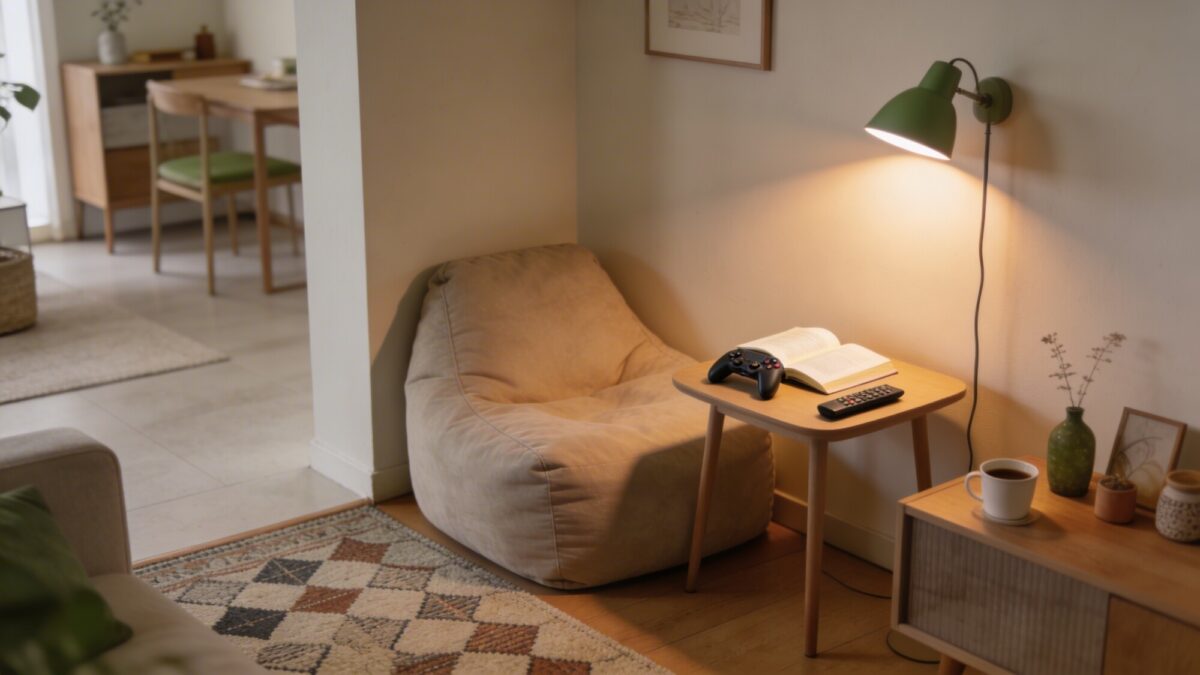
Keep this corner genuinely minimalist — a cozy minimalist living room simple in feel works better here than a busy one, since the whole point of the nook is that it reads as calmer than the rest of the room. A rug scoped just to that corner is usually enough to define it without adding walls or furniture you don’t have room for.
Setup Guide
- A low-profile chair or floor cushion that invites sitting down, not just looking nice empty
- A small side table sized for a mug and a controller or book — nothing bigger
- One warm light source aimed at the corner, separate from the room’s main lighting
8. Personal Touches That Spark Joy
The fastest way to tell a showroom photo from someone’s actual apartment is the personal layer — framed photos, a shelf of objects that mean something, a mirror angled to catch window light rather than placed for symmetry.
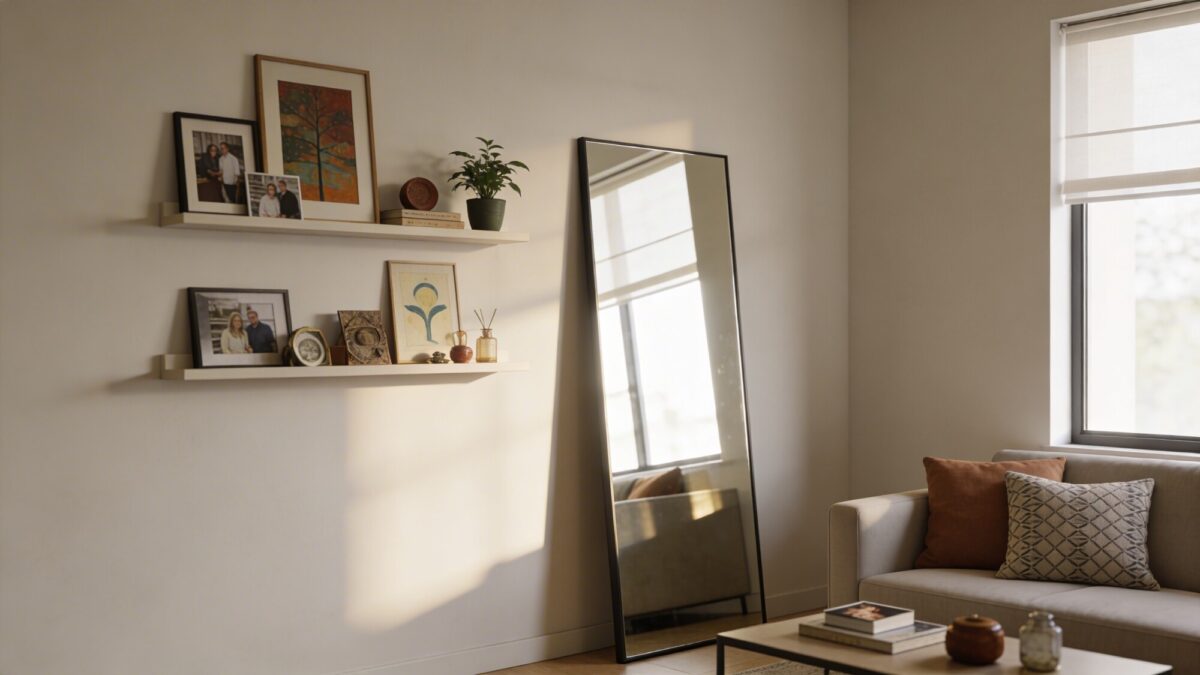
The mistake most people make here is treating “personal” as “more.” One well-arranged shelf of things you actually chose beats ten scattered mementos across every surface. If you’re not sure what to keep out, pick the objects you’d grab first in a fire — that’s usually the short list worth displaying.
Tips
- Rotate a handful of favorite pieces seasonally instead of keeping everything out year-round
- Pair framed art with one larger mirror to bounce light and add visual depth
- Keep the display’s colors tied to your existing palette so it reads as curated, not random
9. The Secret to Cozy Like a Pro
Cozy isn’t a texture count or a lighting trick on its own — it’s what happens when nothing in the room is fighting for attention and there’s a clear path to sit down. A room can have every “cozy” ingredient on a checklist and still feel busy if the surfaces are cluttered.
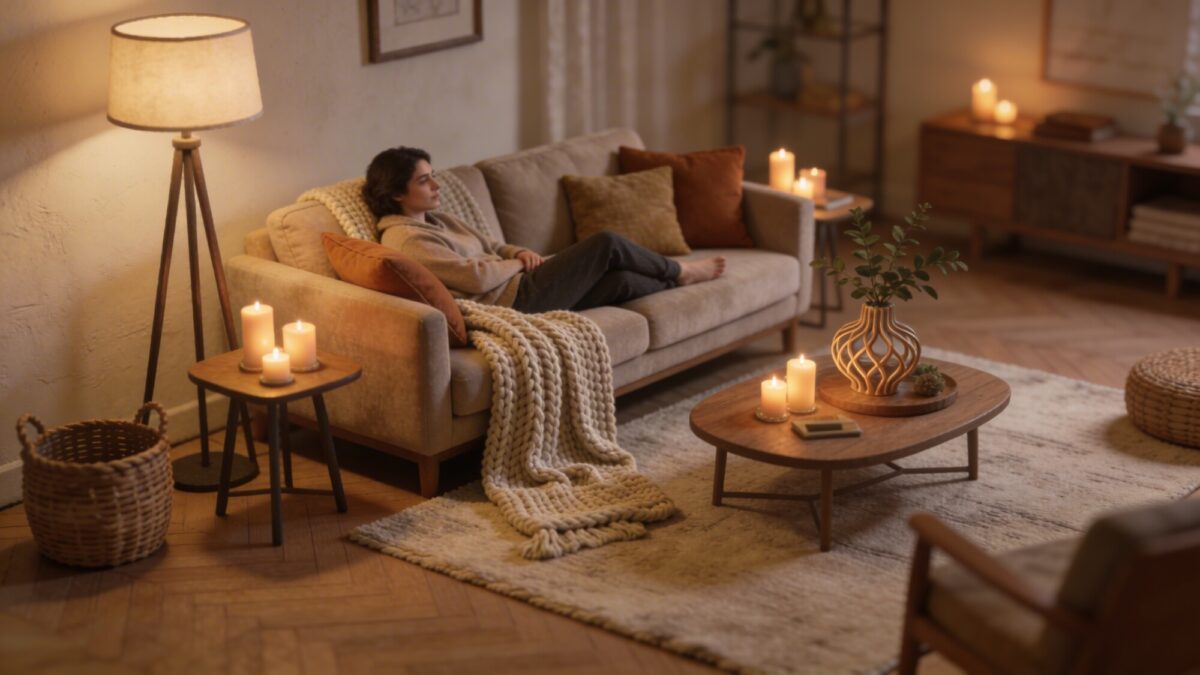
Clear the coffee table down to one or two objects, keep a single throw and a couple of cushions rather than eight, and let the lighting layer from section four do the mood work instead of adding more decor to compensate.
💡 Pro Tip: If a room still feels “off” after you’ve done the textures, lighting, and color work, check the walking path first. A cozy room needs a clear, direct route from the doorway to the seating — furniture blocking that path reads as cluttered no matter how nice each individual piece is.
Cozy Checklist
- Layered textiles — one rug, one throw, two to three cushions, not more
- Warm lighting from at least two sources, ideally one on a dimmer
- A clear coffee table with room for a drink and a book, nothing else
- An unobstructed path from the door to the seating area
Things to Consider Before You Start
- Check your lease for restrictions on paint, wall-mounted TVs, and drilling before committing to a focal wall or console mount
- Measure doorways and stairwells before buying any sofa bed, sectional, or oversized ottoman
- Decide on your dominant style direction — minimalist or boho — before shopping, since the two pull in opposite directions on how much visual pattern the room can hold
- Set a texture and color limit up front (three textures, one base plus two accents) so you don’t end up adding items until the room feels “finished,” which rarely has a natural stopping point
FAQ
What’s the cheapest way to change the whole feel of a small living room?
Swap cushions, a throw, and one piece of wall art to match a new accent color pair. It’s the smallest financial commitment on this list and it’s fully reversible if you don’t love it.
Can I do a focal wall if I’m not allowed to paint?
Yes — removable wallpaper or a gallery wall both avoid the paint question entirely, and a gallery wall costs nothing extra if you’re using photos and frames you already own.
How many plants is too many for a small apartment living room?
There’s no fixed number, but if you’re struggling to remember each plant’s watering needs, you have more than you can currently care for. Start with two easy-care varieties and add slowly.
Should I mount my TV or use a console?
Mount it if your lease allows drilling and floor space is tight — it keeps the room visually open. Use a slim floating console if you’re not allowed to drill or want the flexibility to rearrange later.
Is a boho living room harder to keep looking intentional than a minimalist one?
Generally yes, since boho decor relies on layering pattern and collected objects, which drifts into clutter faster than a minimalist room’s restraint. The trade-off is that a boho room forgives imperfection in a way a minimalist one doesn’t.
Our Verdict
If you only do two things from this list, do texture and lighting — they’re the cheapest changes and they affect how the room feels every single day, not just how it photographs. Furniture and focal walls matter, but they’re one-time decisions; texture and lighting are things you’ll notice and adjust constantly, so getting them right pays off longer.
Pick one or two ideas to test this week rather than trying to overhaul the whole room at once — a living room built in a weekend tends to look like it was built in a weekend. For more direction on stretching a small budget across a full room refresh, this guide to budget-friendly living room inspiration is a reasonable next stop.