7 Living Room Inspiration Cozy: Cozy Room Glow
Cozy is easy to want and surprisingly easy to overshoot. Pile on too many throws and candles and a room stops feeling warm and starts feeling like a display at a home goods store. The living room inspiration cozy ideas below are less about buying more and more about layering the few things you have — texture, light, color — so the room reads as lived-in rather than staged. If you’re starting from a completely blank room, our cozy living room on a budget guide is a good companion piece for the bigger furniture decisions.
None of these seven ideas require a renovation. Most of them are about what you already own — a lamp, a throw, a shelf of books — and how deliberately you arrange it.
💡 Pro Tip: Pick one “cozy anchor” first — a sofa color, a fireplace, a favorite chair — before touching lighting or accessories. Everything else in the room should support that one anchor, not compete with it.
Quick-Reference: The Cozy Checklist
- Texture — mix 2–3 tactile materials (knit, velvet, wool) without overdoing it.
- Lighting — layer floor, table, and ambient light instead of relying on one overhead fixture.
- Focal point — one thing the room is “about,” not five competing ones.
- Color — warm neutrals as a base, one or two accent colors, nothing more.
- Personal touches — curated, not cluttered; edit down to what actually matters to you.
1. Build Warmth Through Texture, Not Just Color
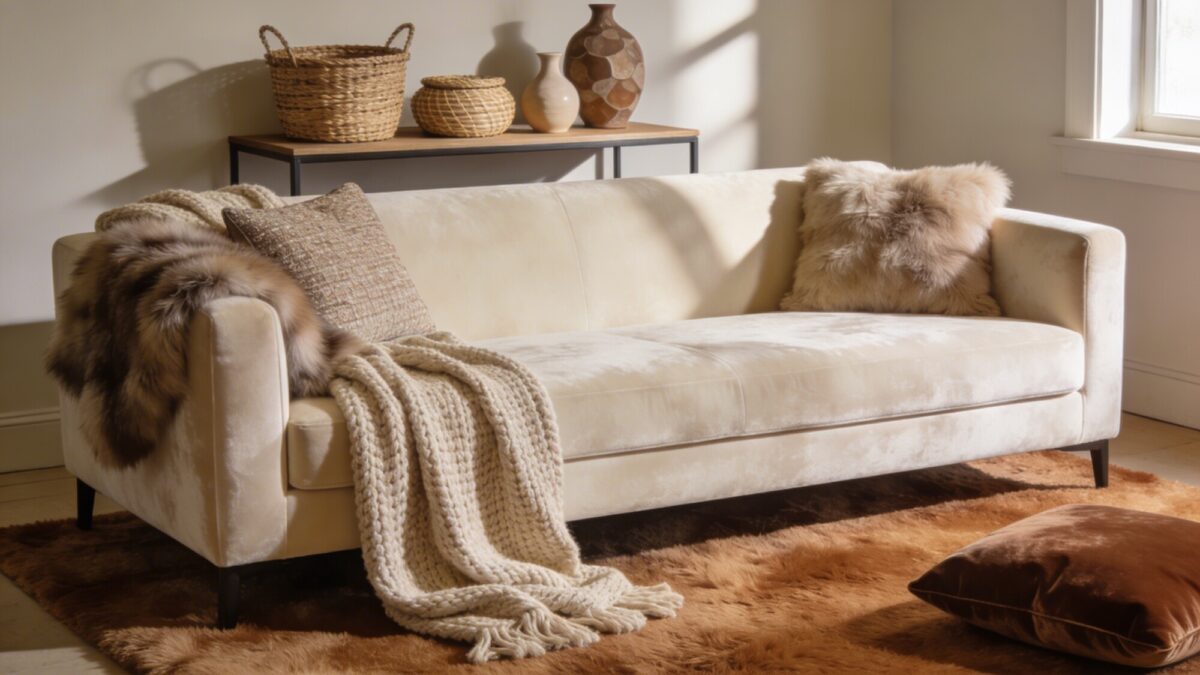
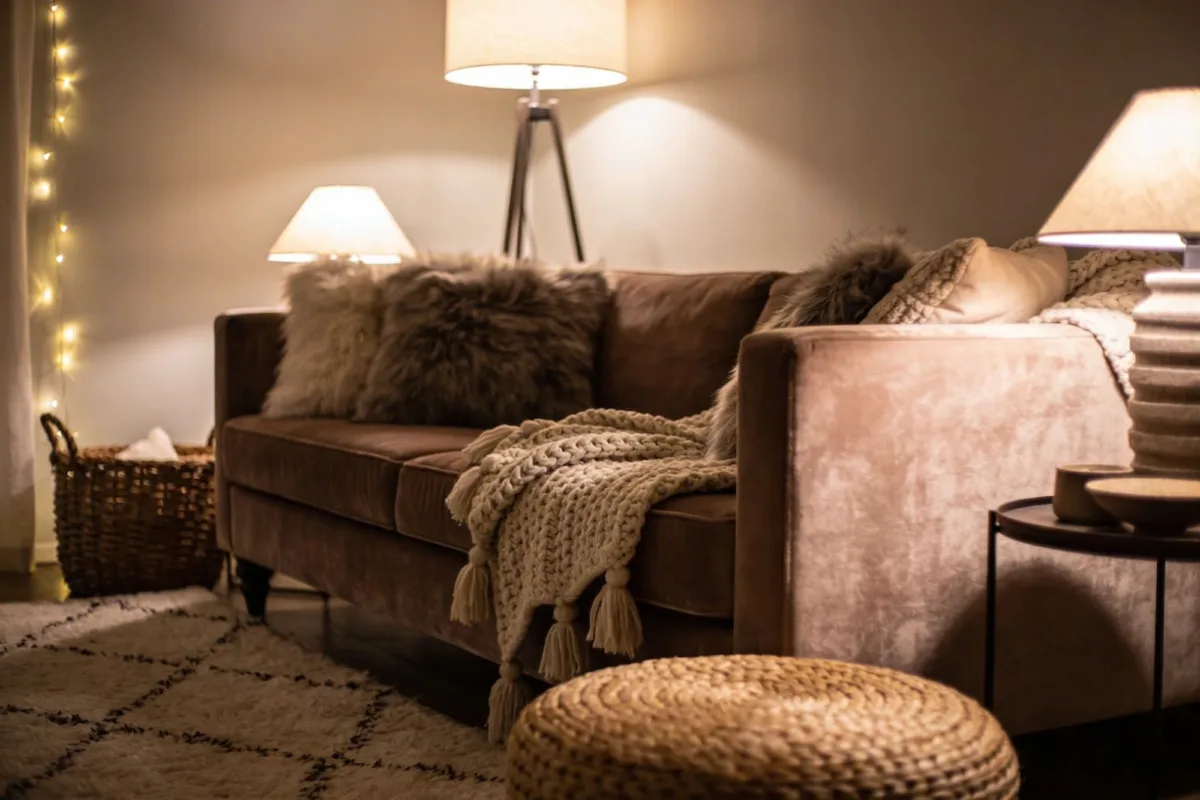
Color gets most of the attention in cozy living room ideas, but texture is doing more of the actual work. A room painted in warm beige with a smooth leather sofa and bare hardwood floors can still feel cold, because nothing in it invites touch. A chunky knit throw, a woven basket, a velvet cushion — these are what make a space feel warm before you’ve even sat down.
The mistake people make here is piling on every texture they own at once. Three or four textures per seating area is plenty — a knit throw, a woven rug, one velvet or boucle cushion. Beyond that, it starts looking busy instead of layered.
2. Get Cozy Lighting Right
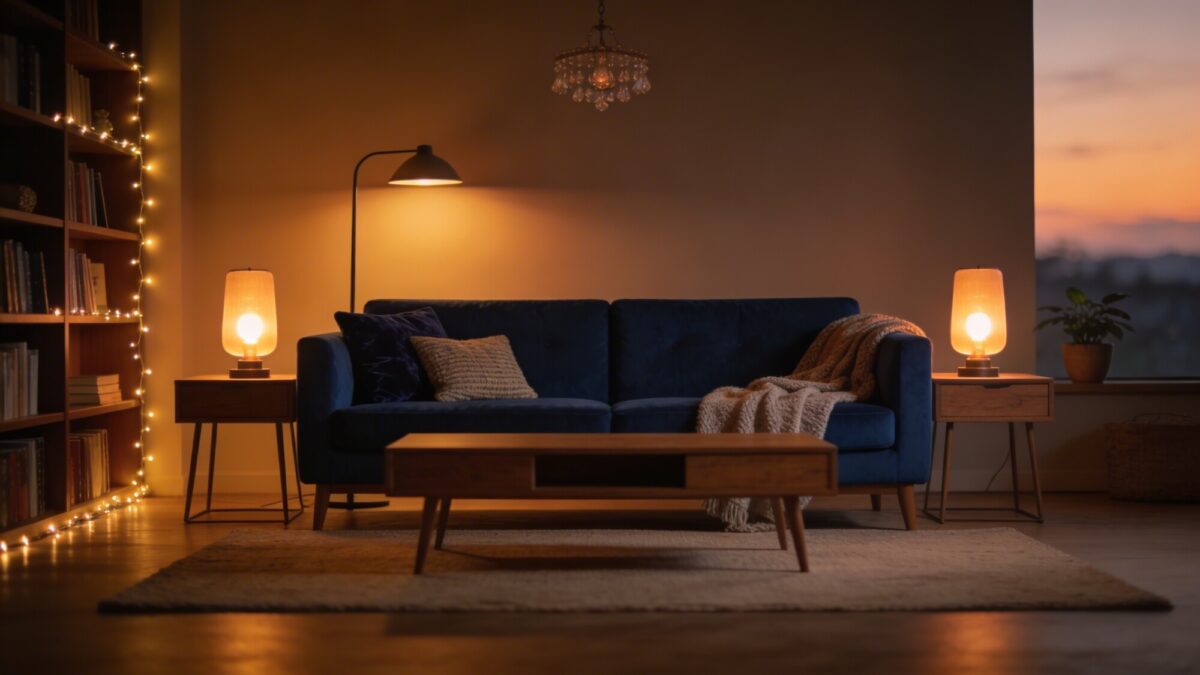
A single overhead ceiling light is the fastest way to kill a cozy mood — it’s flat, it’s often too bright, and it lights the whole room evenly instead of creating anywhere for the eye to settle. Real cozy lighting ideas come from layering: a floor lamp behind the sofa, a table lamp or two at seating height, and something soft like string lights or a small pendant for atmosphere.
Warm-white bulbs (around 2700K) make a bigger difference here than most people expect — daylight-toned bulbs (5000K+) read as clinical no matter how good the furniture is. If your fixtures take dimmable bulbs, a simple dimmer switch or plug-in dimmer is one of the cheaper upgrades that changes how a room feels at night.
💡 Pro Tip: Turn off the overhead light entirely one evening and rely only on lamps. Most living rooms feel noticeably cozier immediately — it’s often the single fastest fix in this whole list.
3. Choose One Focal Point and Let the Room Support It
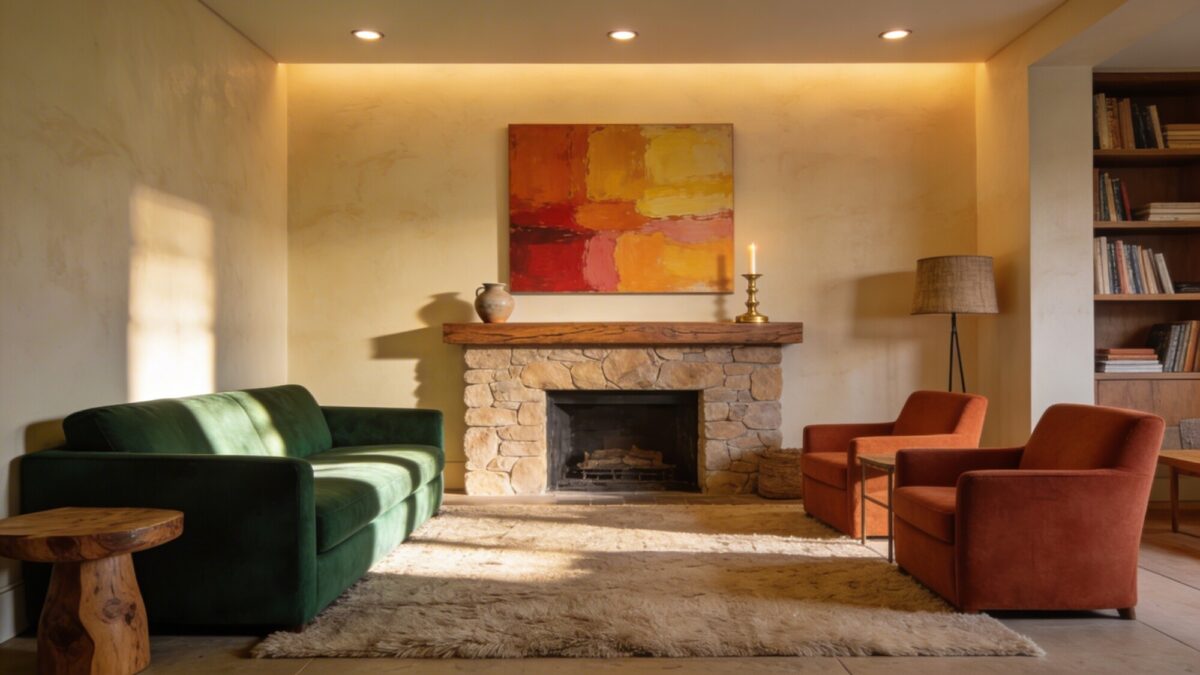
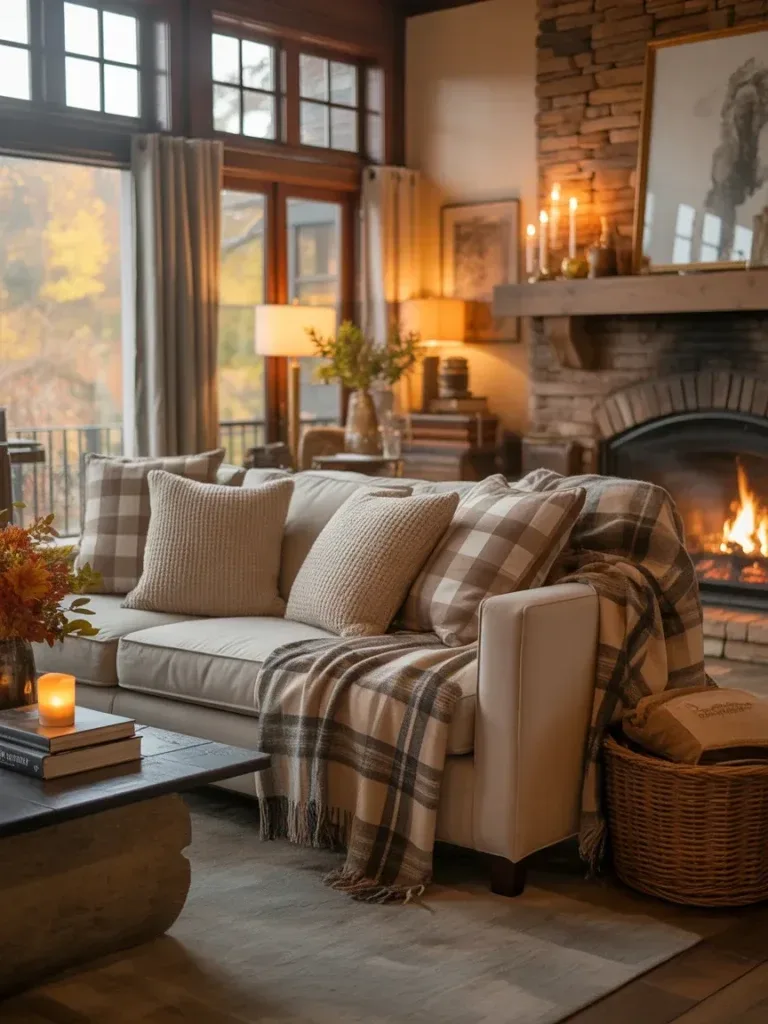
A room with three or four things competing for attention — a bold rug, a loud art piece, a bright sofa, patterned curtains — ends up feeling busy rather than warm. Pick one: a fireplace, a statement sofa color, a single striking art piece. Let everything else in the room stay quieter so that one thing actually reads as a focal point instead of getting lost in the noise.
This is a genuine trade-off worth naming: a bold focal point means the rest of your furniture and textiles need to hold back on pattern and saturation. If you want more freedom to mix bold pieces throughout, you’ll need to skip the “one hero object” approach and lean into a more maximalist palette instead — that’s a different look, not a worse one, just a different set of rules.
4. Treat the Sofa as Your Cozy Command Center
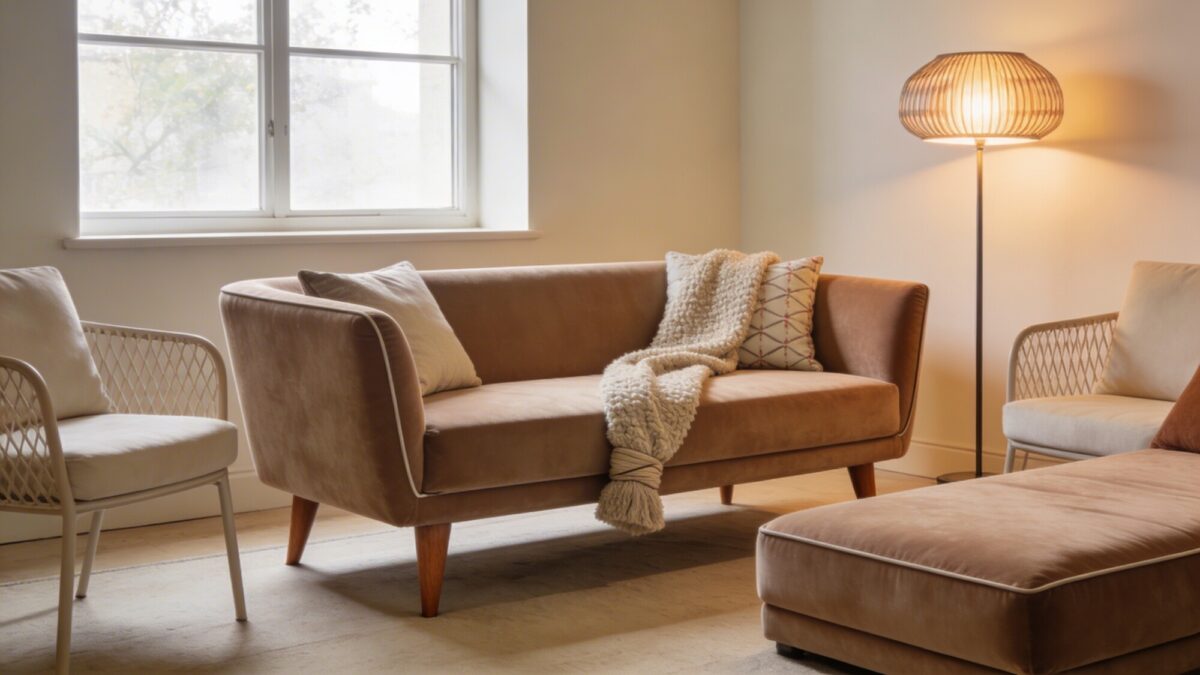
Everything in a cozy living room design radiates outward from the seating, so the sofa is worth getting right before anything else. Depth matters more than most buyers realize — a seat depth of at least 22 to 24 inches is what actually allows for lounging rather than just sitting upright. Fabric matters too: performance velvet and boucle both hold up to daily use and pets far better than a delicate natural linen does.
Legs that show, rather than a fully skirted base, keep a large sofa from visually swallowing a small room. If your living room is on the smaller side, that detail alone can be the difference between a sofa that feels cozy and one that feels like it’s taking over — our small living room inspiration guide covers scale decisions like this in more depth.
5. Pick a Calm, Warm Color Palette
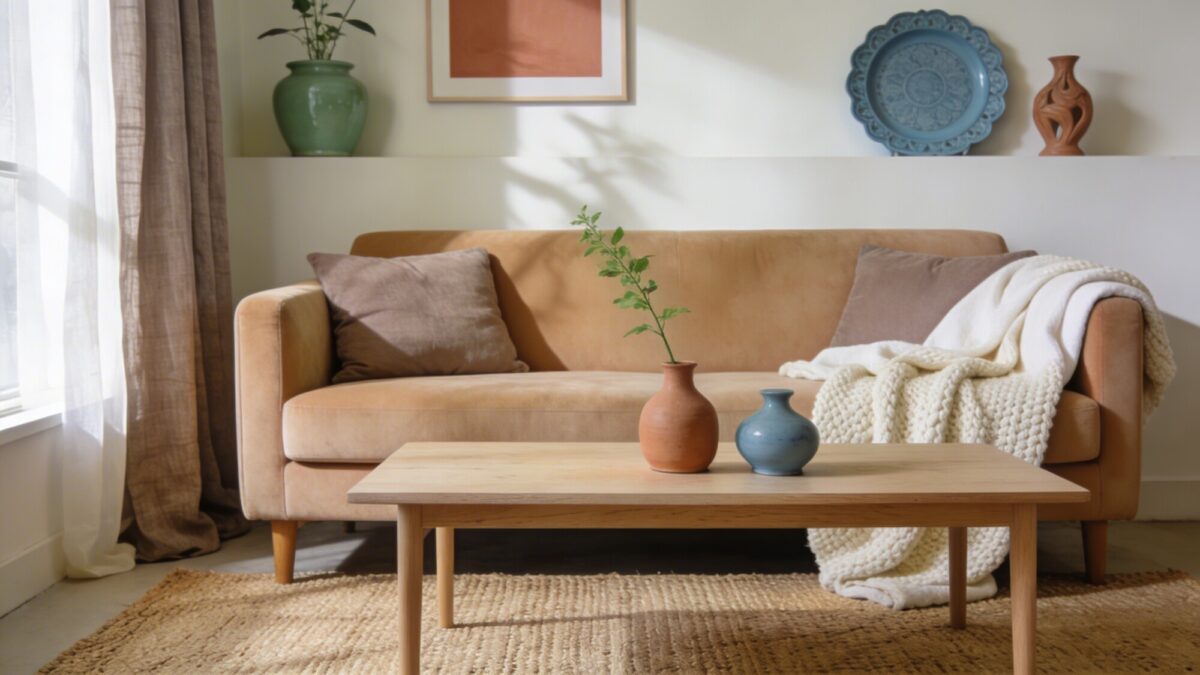
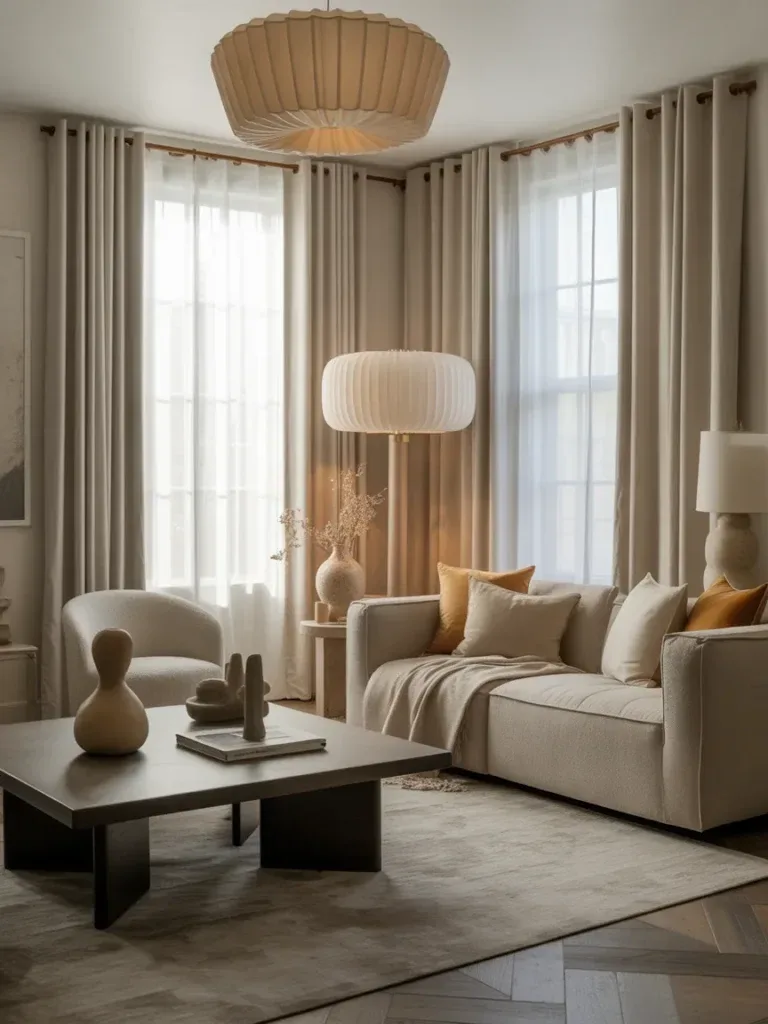
Warm neutrals — beige, taupe, creamy white — do more for a cozy feel than any single accent color choice. They work as a base precisely because they don’t compete with anything: not the light outside, not the wood tones in your furniture, not whatever accent color you add later.
Add one or two accents in small doses — terracotta, sage green, a muted blue — through a throw, a vase, or a single art print. Resist adding a third or fourth accent color; it’s the same principle as the focal-point rule above, and it’s the thing that most often tips a warm-neutral room into looking scattered.
6. Add Greenery That Survives Your Actual Living Room
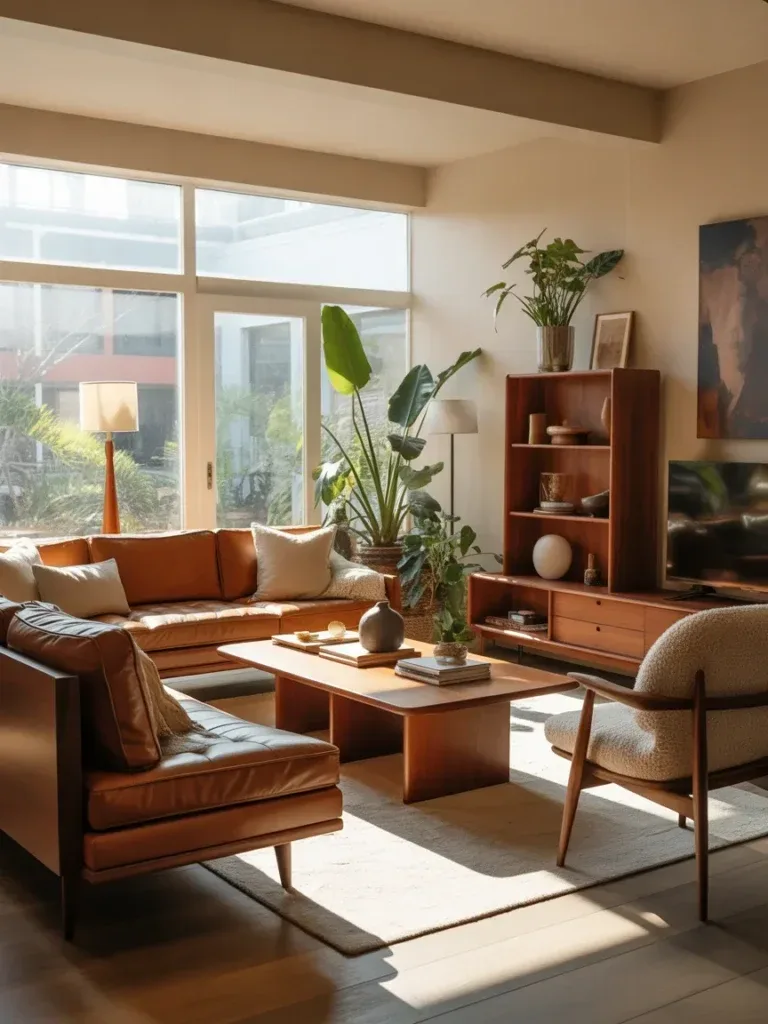
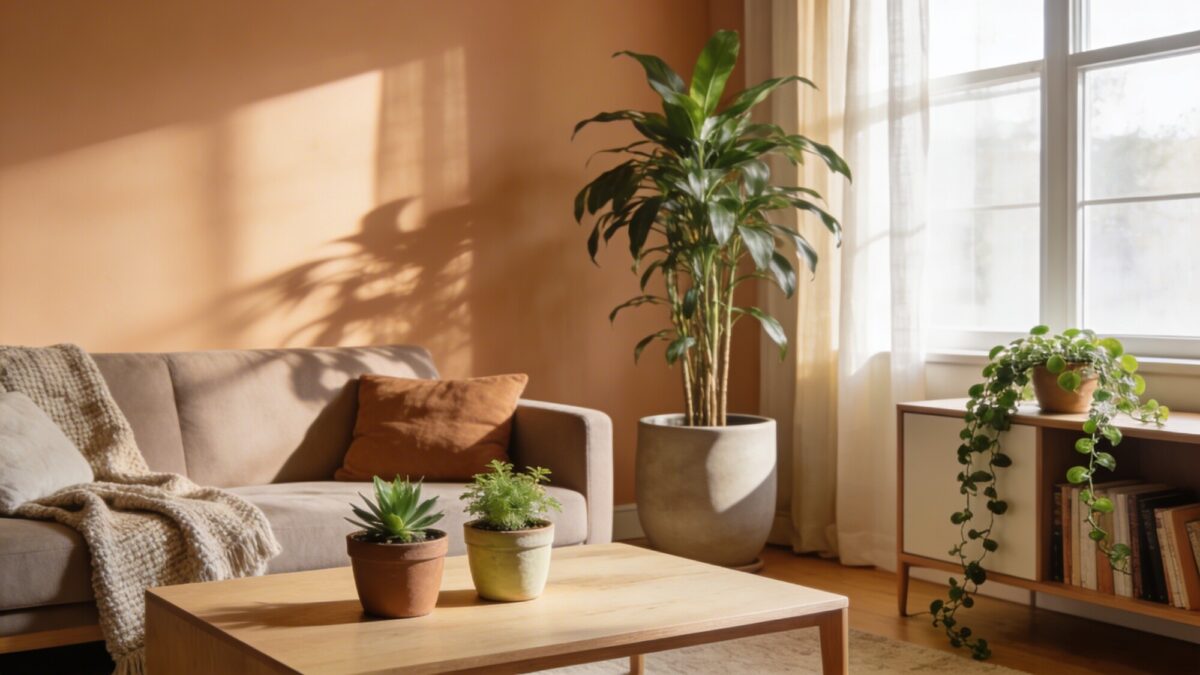
Plants add life to a cozy space, but a dying plant undercuts the whole effect faster than an empty corner would. Match the plant to the room’s real light, not the room you wish you had — a north-facing living room with small windows needs a pothos or a ZZ plant, not a fiddle leaf fig that wants bright, indirect light most of the day.
One tall plant behind the sofa or in a bare corner does more visual work than five small pots scattered around. If you do want smaller pots, group two or three on a coffee table or shelf rather than spreading single plants around the room — the same grouping logic that works for decor objects works for plants too.
7. Let Personal Touches Do the Final Layer of Work
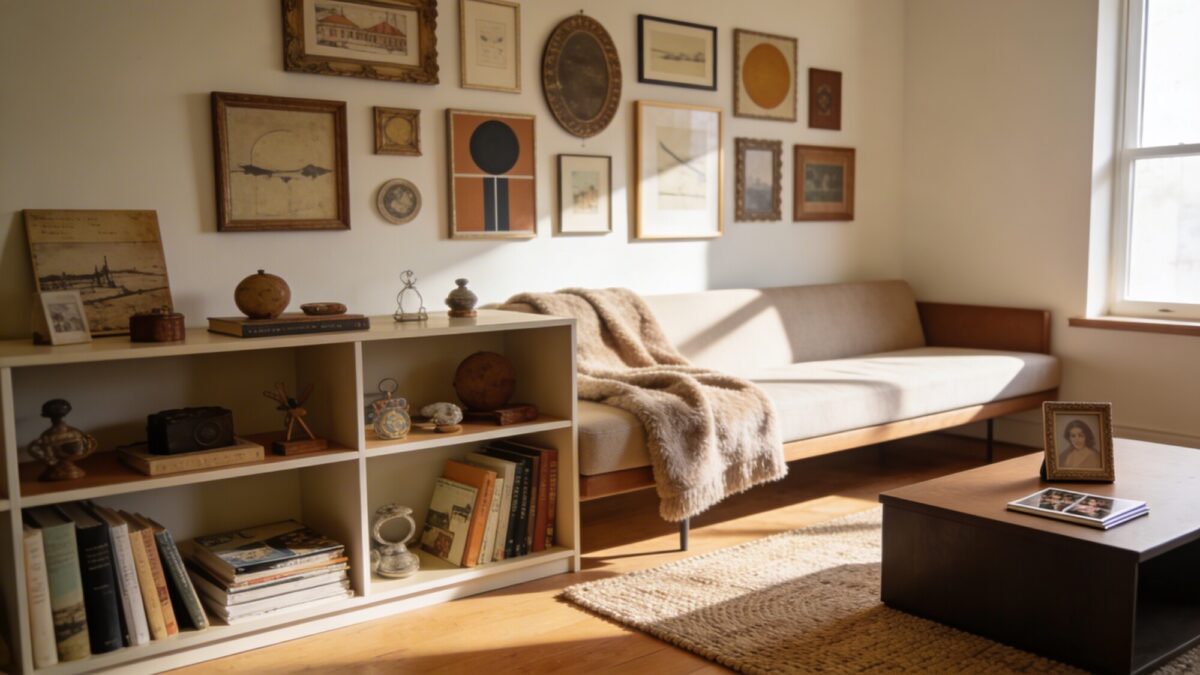
This is the step that separates a genuinely cozy living room from a well-decorated showroom: things that mean something to you. Travel photos, a mismatched frame from a flea market, a shelf with actual books you’ve read rather than ones bought by the yard — these are what make a space feel like yours rather than a catalog spread. If your open shelving needs a refresh to hold these pieces well, our living room inspiration with texture and greenery guide pairs well with this step.
The trade-off to manage is curation versus clutter. A gallery wall with eight mismatched frames feels intentional; a coffee table with every souvenir you own feels chaotic. Edit down to the pieces that actually matter and rotate the rest in and out seasonally rather than displaying everything at once.
Cozy Living Room Styles Compared
| Style Direction | Best For | Key Materials | Watch Out For |
|---|---|---|---|
| Warm neutral (this guide’s base approach) | Most living rooms, especially smaller ones | Beige, taupe, boucle, warm wood | Can feel flat without texture layering |
| Cozy fall / seasonal | Rooms redecorated seasonally | Rust, mustard, deep green, chunky knits | Can feel dated if left up year-round |
| Nordic-cozy (hygge-influenced) | Minimalist households wanting warmth without clutter | Light wood, sheepskin, white/cream textiles | Needs strong texture since color is minimal |
| Rustic cozy | Homes with existing exposed wood or stone | Reclaimed wood, wool, leather, wrought iron | Can feel heavy in a small or low-ceiling room |
Things to Consider Before You Start
- What does your room’s actual light level look like at 7pm in winter? That answers most of your lighting-layer decisions.
- Is there already a natural focal point (fireplace, big window, built-in shelving) you should be working with instead of against?
- How much of your current furniture is neutral versus bold? That tells you how many accent colors you can safely add.
- Do you actually use this room daily, or is it more of a formal space? That changes how much “lived-in” personalization makes sense.
Frequently Asked Questions
What’s the fastest way to make a living room feel cozier without spending money?
Turn off the overhead light and use only lamps for an evening. Rearranging what you already have — pulling seating closer together, adding a throw you already own to the sofa — comes next.
Is a warm color palette necessary for a cozy feel, or can cool tones work?
Cool tones can still feel cozy if the texture and lighting layers are strong — a gray sofa with warm-white lighting and heavy knit textures reads warm despite the cool base color. Warm neutrals just make it easier to get there.
How many textures is too many in one room?
Once you can’t identify a “dominant” texture in a seating area — when everything is fighting for attention — you’ve gone too far. Three to four per seating group is a safe ceiling.
Do I need a fireplace for a cozy living room?
No. A fireplace is one option for a focal point, not a requirement. A bold sofa color, a large piece of art, or a well-styled bookshelf can do the same job.
What’s the biggest mistake people make chasing “cozy”?
Buying more decor instead of editing what’s already there. Cozy comes from layering a few well-chosen things — not from filling every surface.
Our Take
Lighting and texture are the two moves worth doing first, because they cost the least and change the room the fastest — a lamp and a throw blanket will do more for “cozy” than a new sofa will. Pick your one focal point, build a warm-neutral base, then add personal pieces slowly instead of all at once. If you’re working with a genuinely small footprint, start with our apartment living room inspiration guide before adding the extra layers covered here — scale decisions come first in a tight space, styling second.