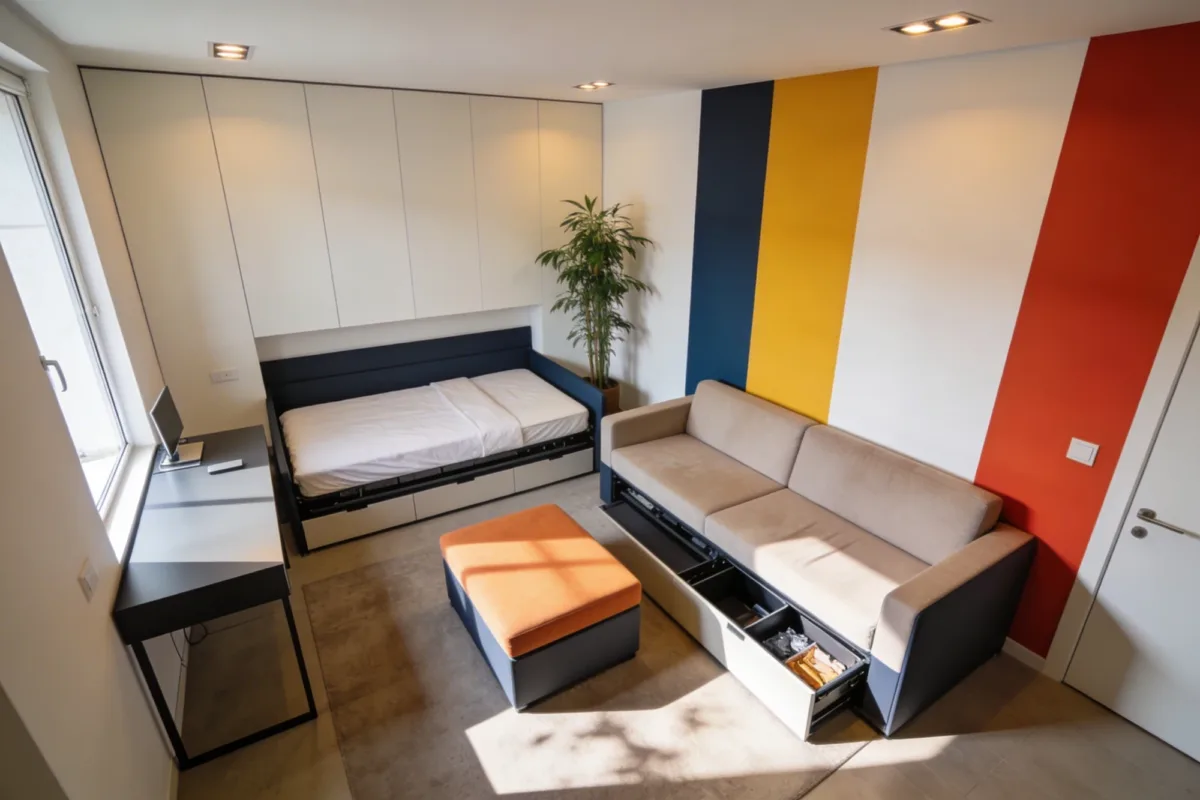
9 Small Living Room Inspiration: Tiny Space, Big Style
Most small living room inspiration boards show you the finished photo and skip the part where someone measured a doorway three times before buying a sofa. A small room punishes guesswork faster than a large one does — there’s no spare corner to hide a mistake in. If you want a starting point that holds up once the furniture is actually in the room, this small living room layout plan is worth reading alongside these nine ideas, because layout decides more than any single piece of decor does.
None of what follows requires knocking down a wall. It’s furniture choices, sightlines, and a few habits that separate a room that reads as “small” from one that reads as “efficient.”
Quick Takeaways
- Multi-functional furniture only works if the convertible mechanism is genuinely easy to use daily — test it before you buy, don’t just admire the spec sheet.
- Vertical lines (paint, wallpaper, tall furniture) do more for perceived height than adding more floor-level decor.
- Mirrors help most when placed opposite a window or light source, not just anywhere there’s wall space.
- Floating furniture keeps the floor plane visible, which reads as more square footage even when it isn’t.
- One rug, sized to fit the whole seating group, does more zoning work than a rug plus a runner plus a jute layer.
1. Multi-Functional Furniture Earns Its Keep
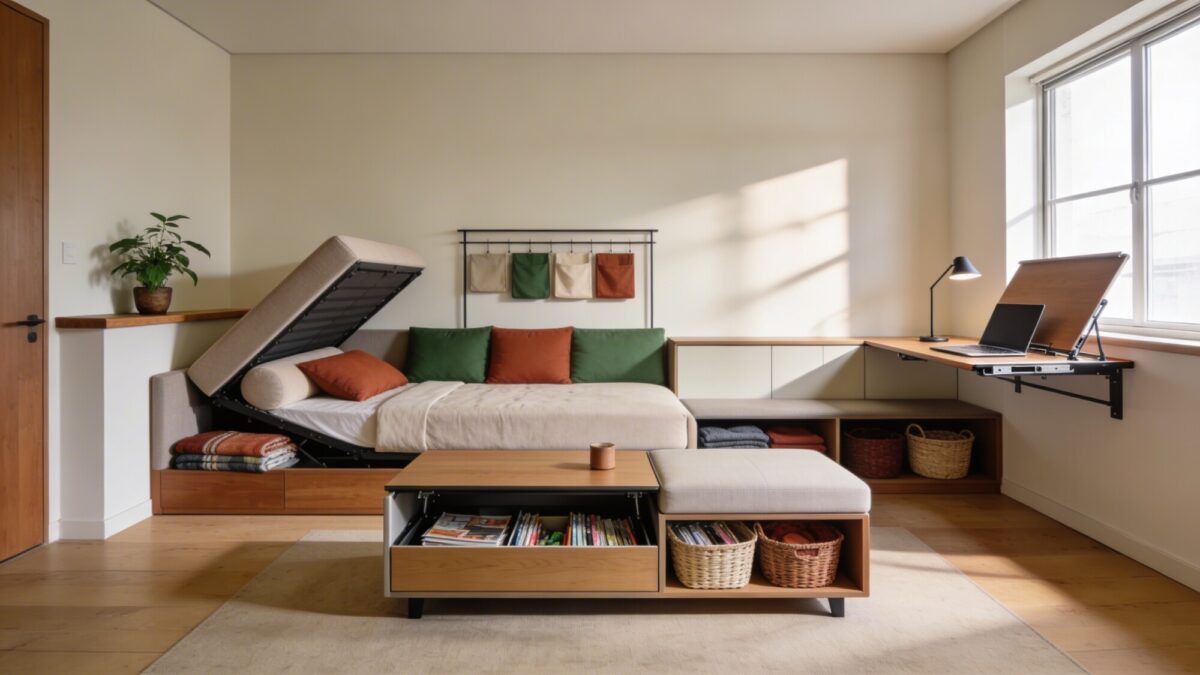
A sofa bed or a lift-top ottoman only helps if you’ll actually use the mechanism. That sounds obvious, but it’s the single most common mistake in small living room shopping: buying the convertible version of something because it photographs well, then never folding it out because the process is annoying. Before buying, unfold the display model yourself in the showroom. If it takes two hands, a knee, and a moment of frustration, it’ll sit closed forever.
Ottomans with hidden storage are the lower-risk pick — there’s no learning curve, just lift the lid. A coffee table that extends into a small desk works well if you actually work from home; if you don’t, skip it and put that budget toward seating comfort instead.
💡 Pro Tip: Measure the fully-unfolded dimensions of a sofa bed against your actual floor space before buying — not just the closed dimensions on the product page. A lot of sofa beds need 12–18 inches of clearance in front to open fully, which some small rooms simply don’t have.
If storage is the real bottleneck rather than seating, it’s worth comparing built-in options against furniture-based storage — our small living room layout ideas guide breaks down where built-ins outperform freestanding pieces and where they don’t.
2. Vertical Color Blocks Change How Tall the Room Feels
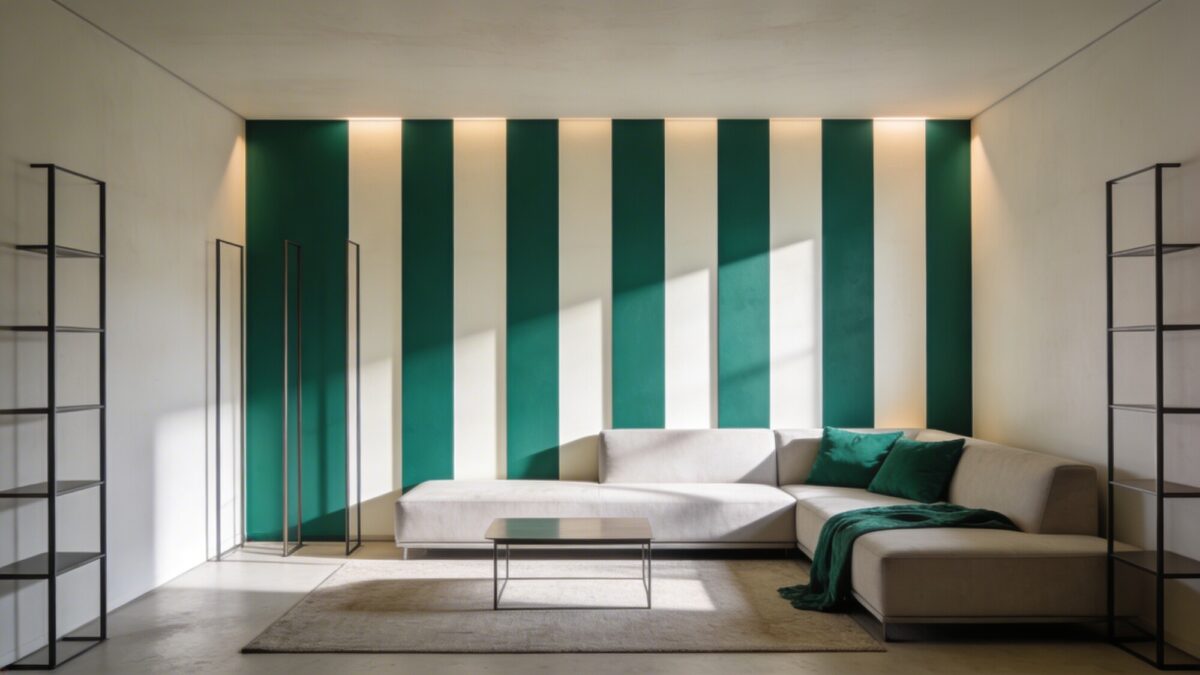
Wide horizontal furniture and low ceilings both push a small room’s proportions the wrong way. A vertical stripe, a narrow painted column, or wallpaper with a vertical pattern counters that by pulling the eye up instead of across. You don’t need a full accent wall — a single 18–24 inch painted stripe behind the sofa does most of the work.
Keep the ceiling lighter than the stripe color. A dark ceiling paired with a bold vertical accent can flip the effect and make the room feel like it’s closing in rather than opening up.
3. Mirrors Do More Than Decorate
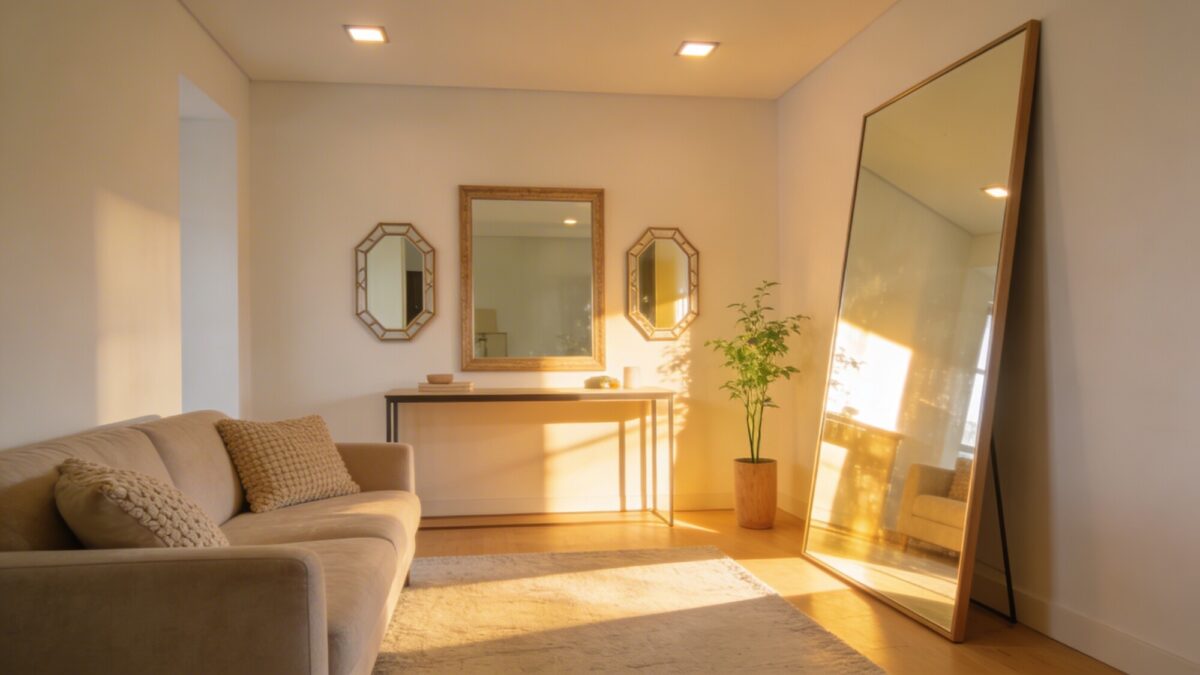
Placement matters more than size here. A mirror hung opposite a window catches and redistributes daylight across the room; the same mirror on an adjacent wall mostly just reflects another wall. If you only buy one mirror for the room, put it directly across from your main light source, even if that means it isn’t centered over the console table.
💡 Pro Tip: A leaning floor mirror (rather than a wall-mounted one) is easier to reposition if you rearrange furniture later, and it adds height to a room the way a wall mirror can’t.
For more on working with natural light and layout together, see our small living room designs roundup — a few of those examples use mirror placement as the main design move.
4. Floating Furniture Keeps the Floor Visible
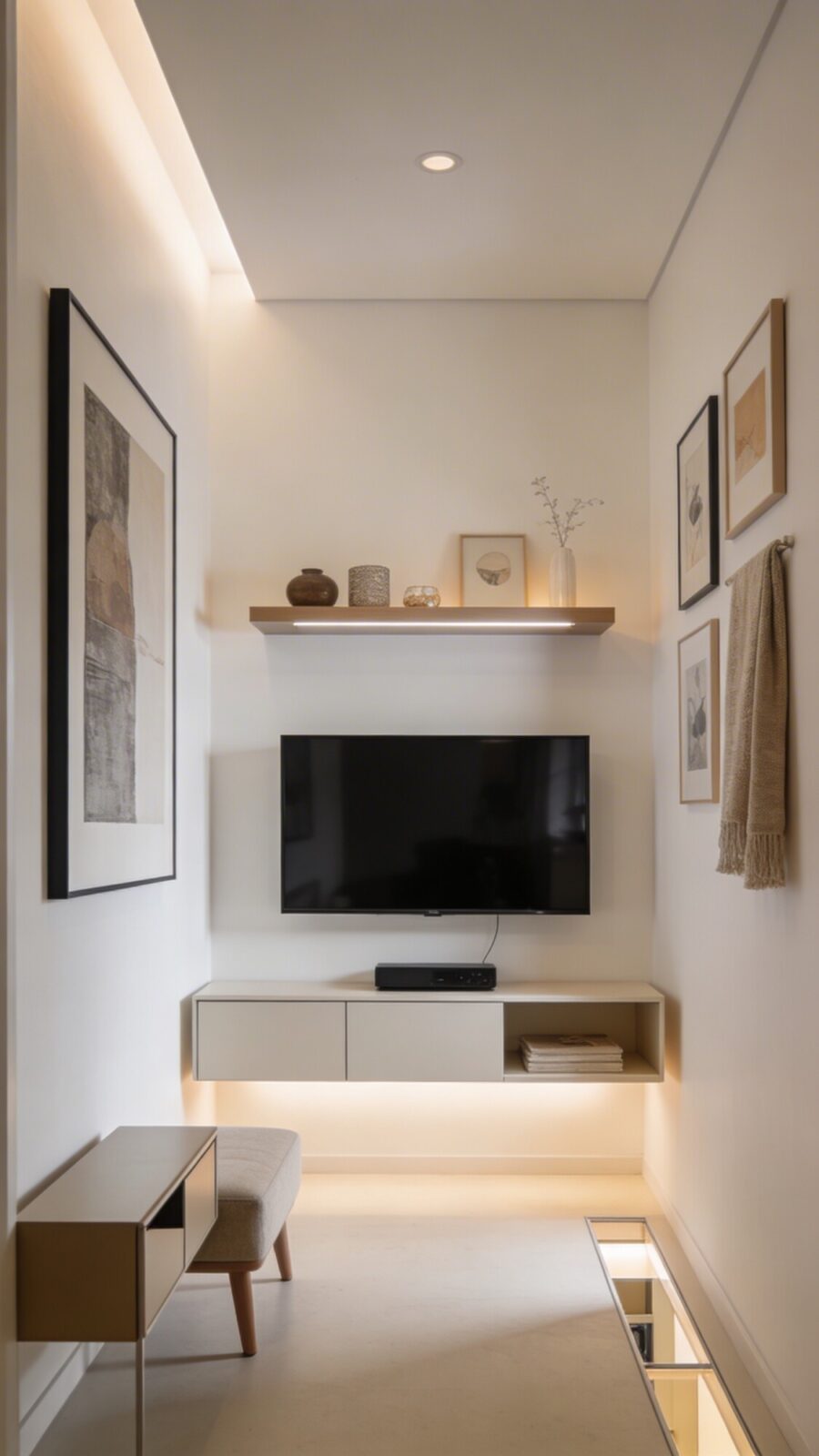
Wall-mounted TVs, floating shelves, and slim consoles all share one trait: they don’t touch the floor. A room where you can see continuous flooring under most of the furniture reads as more open than one with the same square footage full of floor-standing pieces, even if the total volume of “stuff” is identical.
This is where a lot of small-room styling goes wrong — people add a floating shelf but then set floor lamps, plant stands, and baskets underneath it, which cancels out the benefit. If you’re floating furniture, commit to keeping the floor beneath it clear.
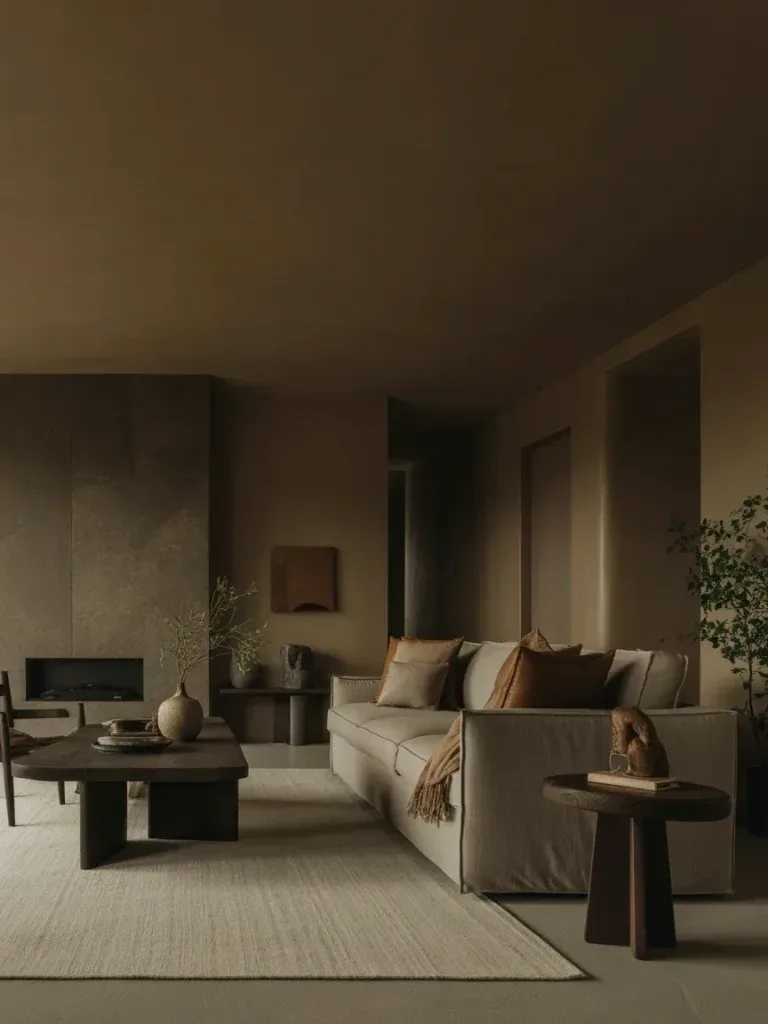
5. Monochrome With One Deliberate Accent
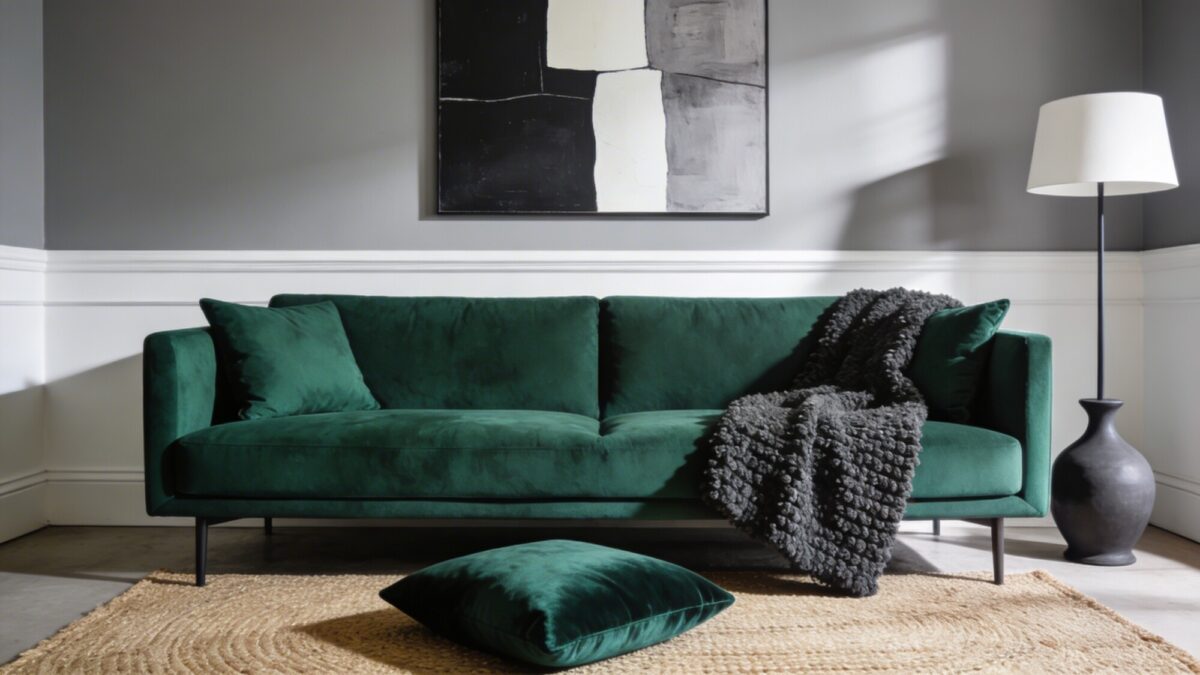
A tight palette — two neutrals plus one accent color — avoids the visual noise that makes small rooms feel cluttered even when they’re tidy. The trade-off: monochrome only reads as intentional if the textures vary. Flat monochrome (same fabric, same finish, same sheen throughout) reads as unfinished, not calm.
Mix at least three textures — something woven, something soft like boucle or velvet, and something hard like ceramic or matte wood — even within a tight color range.
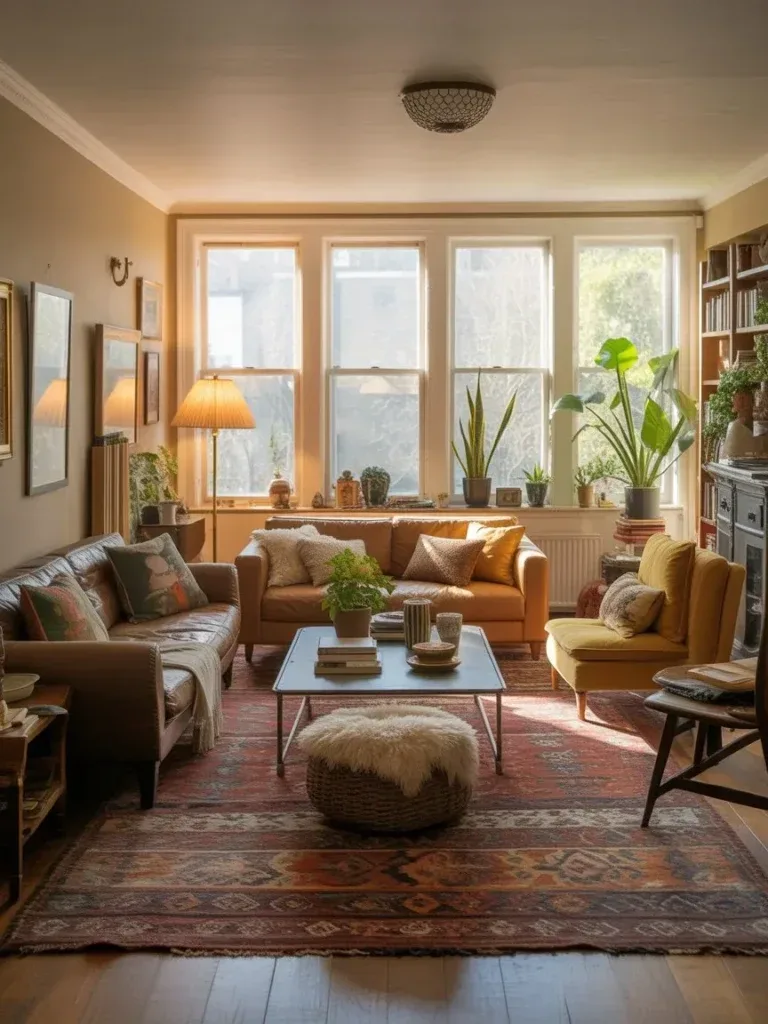
6. Rug Zoning Instead of Walls
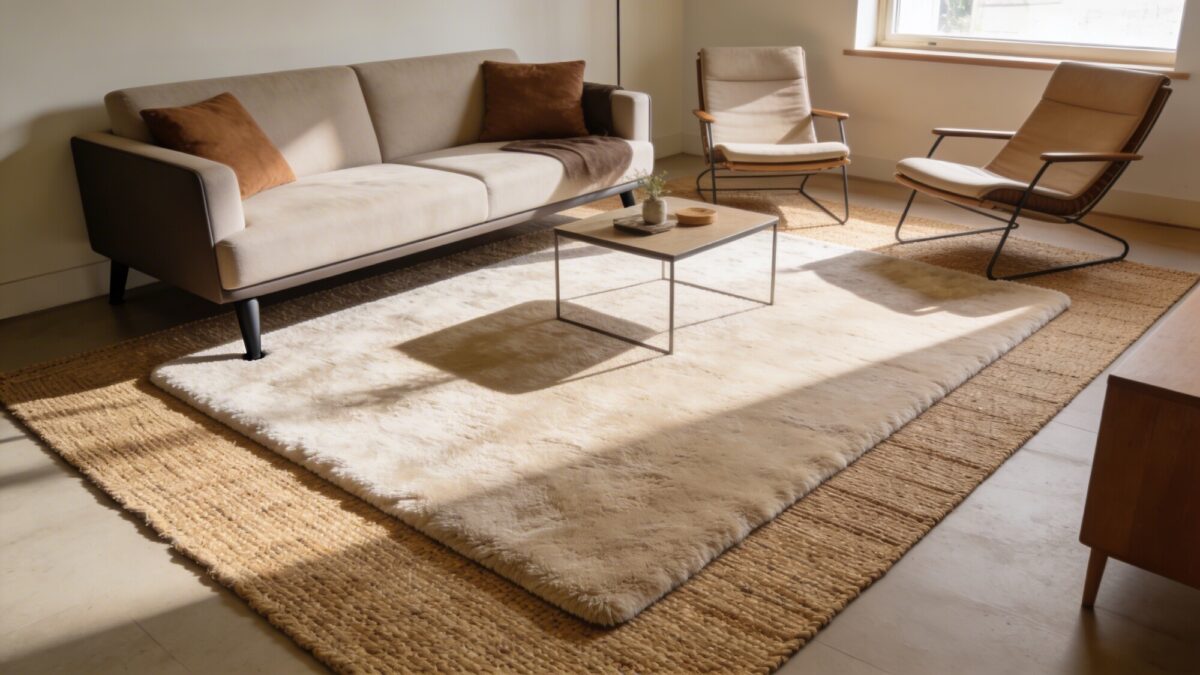
In an open-plan or single-room layout, a rug is the cheapest way to define a seating area without adding a partition. The rule that matters most: size it so the front legs of every seating piece rest on the rug. A too-small rug — one where furniture surrounds it rather than sits on it — is one of the more common small-room mistakes, and it makes the space look smaller, not bigger, because it visually shrinks the floor.
💡 Pro Tip: When in doubt between two rug sizes, size up. An oversized rug reads as intentional; an undersized one reads like a mistake, even in a well-decorated room.
7. Layered Lighting Instead of One Overhead Fixture
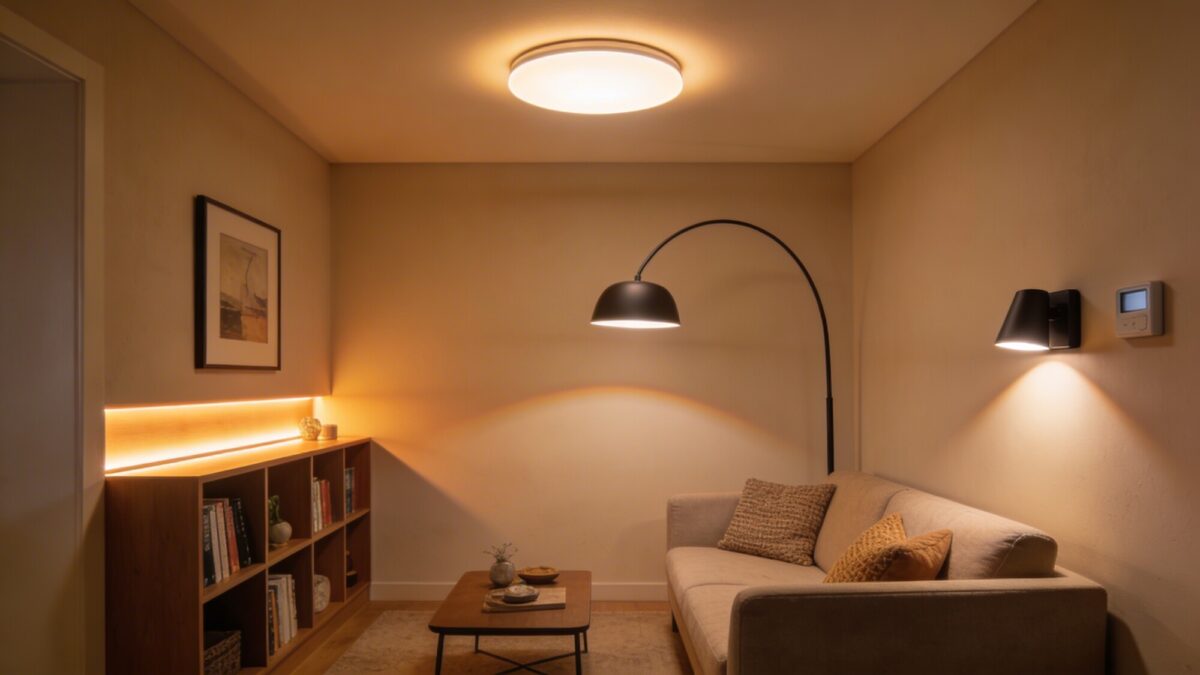
One ceiling fixture lighting an entire small room flattens it — everything gets the same flat wash of light, and the room loses depth. Three layers fix this: ambient (ceiling or wall fixtures), task (a reading lamp by the seating), and accent (LED strips behind a shelf or artwork). You don’t need all three to be elaborate; a $20 warm LED strip behind a bookshelf does most of the accent-lighting work on its own.
Warm white bulbs (around 2700K–3000K) suit small living rooms better than cool white; cool light tends to make compact spaces feel clinical rather than cozy.
8. Greenery That Fills Awkward Corners

Every small living room has at least one dead corner — too narrow for furniture, too awkward to leave completely bare. A tall plant solves that better than almost anything else, because it adds height and life without taking up floor real estate the way a side table would. Pair it with a low plant near the seating area for a mix of heights rather than a single row of same-size pots.
Low-maintenance picks like snake plant or pothos are worth choosing over anything finicky — a dying plant in a small room is more noticeable than one tucked into a large one.
9. Personal Artwork as the Focal Point
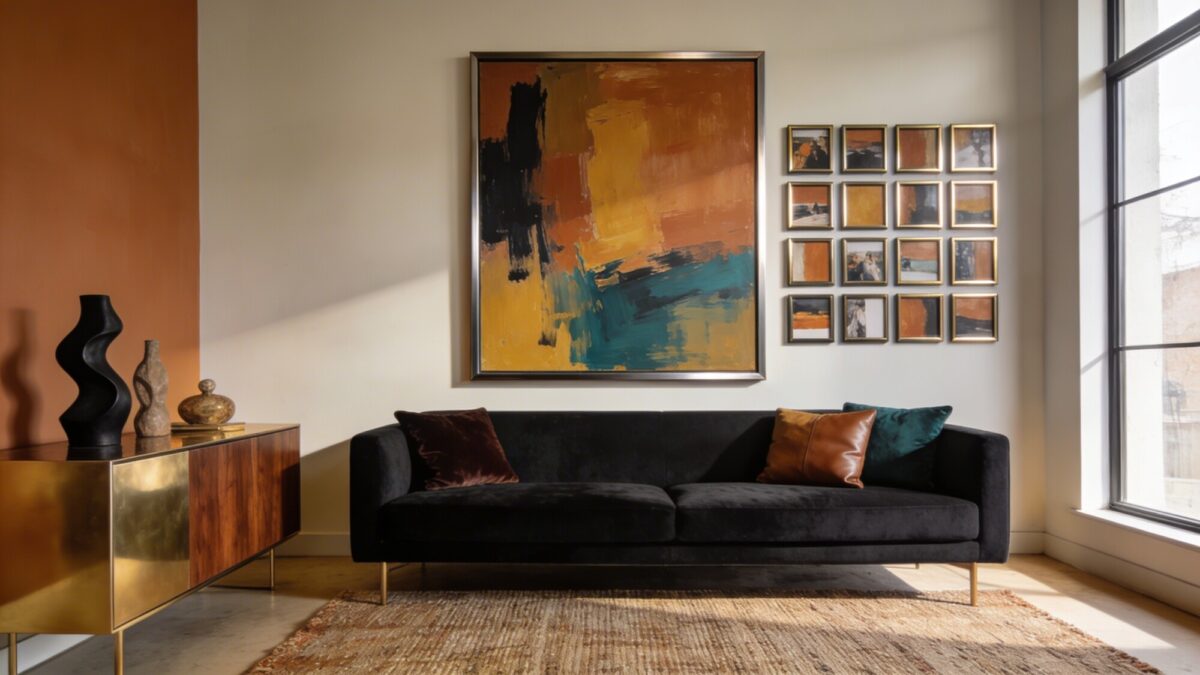
An oversized piece on a bare wall does more for a small room than a gallery wall of small frames, counterintuitively. Small rooms have less wall space overall, so a cluster of small frames tends to look busy rather than curated. One large, confident piece gives the eye a single place to land.
Match the frame finish to your existing metal accents (brass, black, chrome) so the artwork feels connected to the room rather than dropped in from elsewhere.
Comparison: Which Small-Room Fix Should You Start With?
| Approach | Cost to Try | Effort | Best For |
|---|---|---|---|
| Multi-functional furniture | $$-$$$ | Medium (requires buying new pieces) | Rooms that also need to function as a guest space or home office |
| Vertical color blocking | $ | Low (paint or wallpaper) | Rooms with low or standard ceiling height |
| Mirror placement | $-$$ | Low | Rooms with one strong natural light source |
| Rug zoning | $$ | Low | Open-plan spaces with no walls to define the seating area |
| Layered lighting | $-$$ | Low-Medium | Rooms that feel flat or under-lit in the evening |
Things to Consider Before You Start
- Measure doorways and hallways before buying a sofa bed or sectional — return shipping on oversized furniture is expensive and slow.
- Decide whether the room needs to double as a guest room or office before choosing furniture; that answer changes almost every decision on this list.
- Test paint colors in the room at different times of day — a stripe that looks great at noon can look muddy under evening lamp light.
- Prioritize one or two ideas from this list rather than all nine at once; a room styled with restraint reads as more intentional than one with every trick applied simultaneously.
FAQ
Do small living rooms need light-colored walls?
No — light walls help but aren’t required. A well-lit room with good contrast can carry a darker wall color just fine. What actually matters more is keeping the ceiling lighter than the walls.
Is a large rug really better than a small one in a tight room?
Yes, in almost every case. A rug that’s too small makes furniture look like it’s floating around the edge of it, which visually shrinks the room. Size up whenever you’re between two options.
Should I avoid dark furniture in a small living room?
Not necessarily. One dark anchor piece — a sofa or a large chair — can work well against lighter walls. The mistake is using dark furniture and dark walls together, which removes contrast and makes the room’s edges harder to read.
How many plants are too many in a small living room?
There’s no fixed number, but if plants start blocking walkways or window light, that’s the signal to stop. Two or three well-placed plants at different heights usually outperform a dense cluster.
What’s the single highest-impact change on this list?
For most rooms, it’s lighting layering — it’s low-cost, doesn’t require new furniture, and changes how the room feels within an evening.
Our Take
Not every idea here suits every room, and trying all nine at once usually backfires — the room ends up busy instead of bigger-feeling. If you’re only picking one or two to start, lighting layering and correct rug sizing give the most visible change for the least cost and effort. Furniture-based fixes (multi-functional pieces, floating consoles) matter more if the room needs to do double duty as a guest space or workspace. Start there, live with it for a couple of weeks, then decide if the room needs a second pass.
If you’re rethinking the whole layout rather than just the styling, our small living room apartment ideas and small living room decor on a budget guides are good next stops, especially if furniture budget is the main constraint.