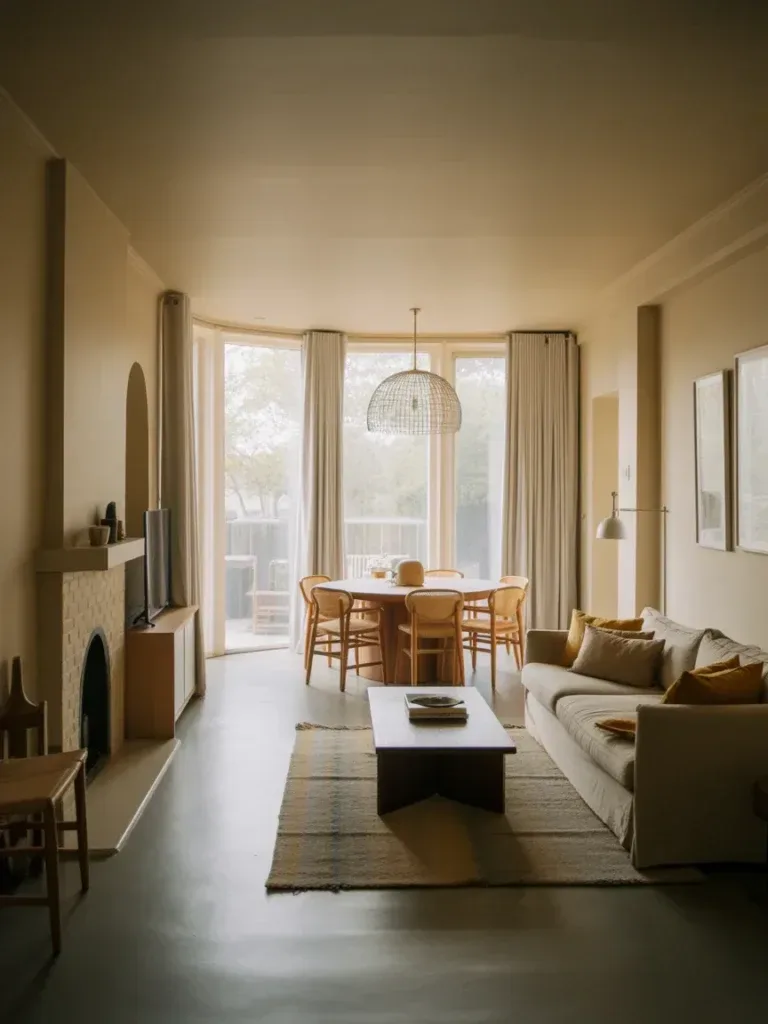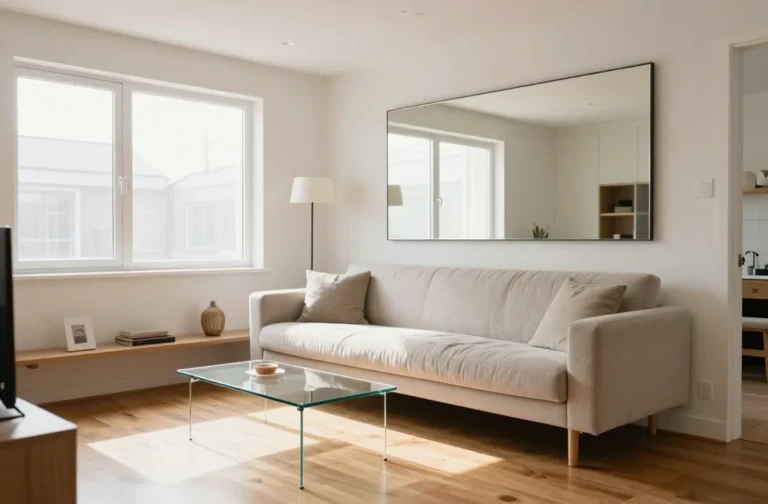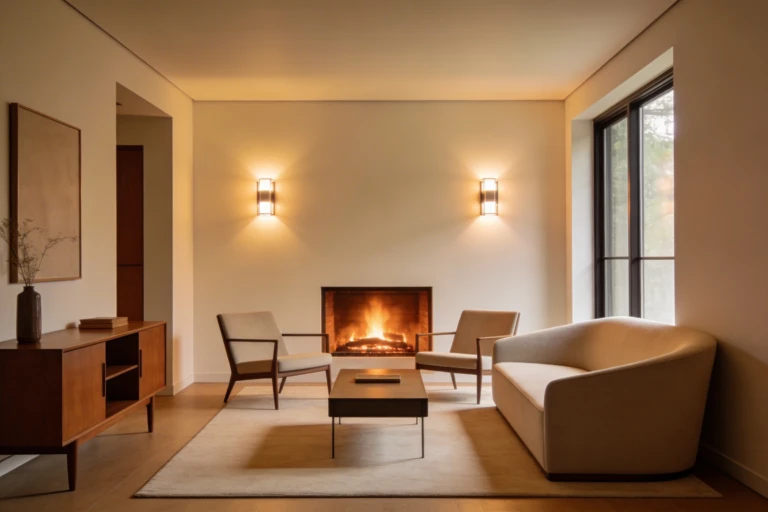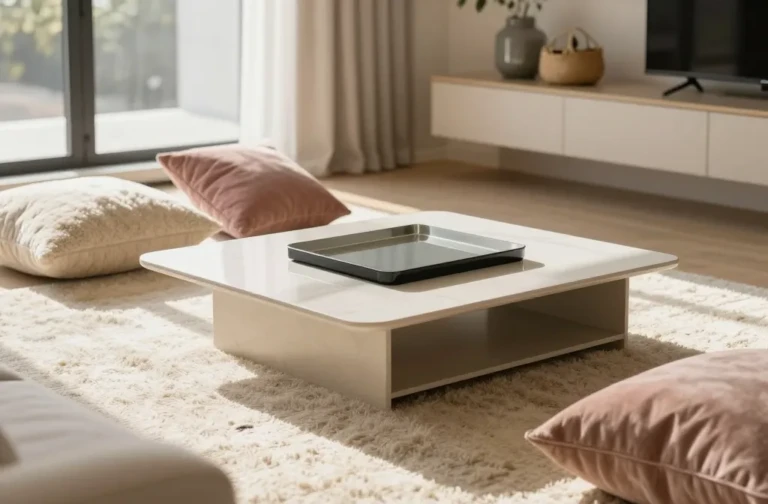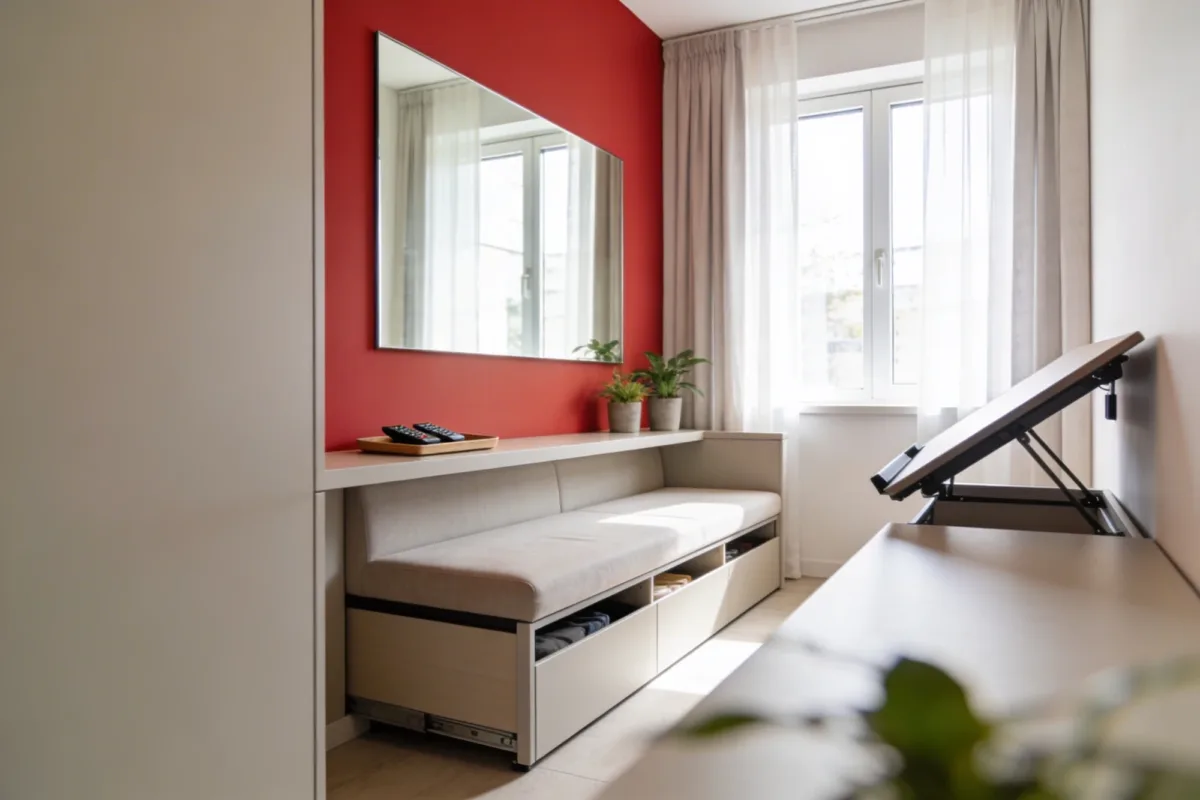
Small Living Room Designs Modern: Chic and Space-Smart
Good small living room designs modern homeowners actually want to live in start with two things: a layout that doesn’t fight the room’s size, and a style direction that keeps the space feeling calm instead of cluttered. You don’t need a big footprint to get both — you need the right combination of furniture placement and finish choices.
Below you’ll find six proven layout strategies for small spaces, a look at popular modern style directions (including grey, minimalist, and Turkish- or Arab-inspired interiors), a comparison table to help you choose an approach, and answers to common questions.
Quick Takeaways
- Layout matters more than square footage — smart furniture placement can make a small room live larger.
- Corners and walls are underused real estate in most small living rooms.
- A wall-mounted TV frees up floor space that a bulky console would otherwise eat.
- Grey and other neutral palettes are a defining feature of modern minimalist living room small spaces.
- Multi-function furniture (ottomans, fold-away desks) helps a small modern living room do more with less.
1. Boundary-Free Lounge: Seamless Zones Within One Room
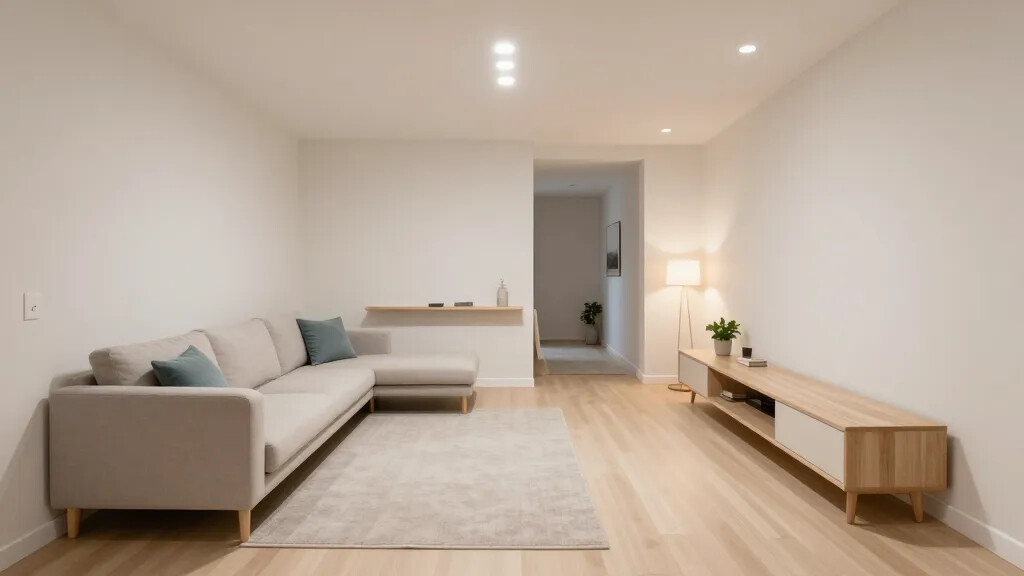
Instead of walling off your living room into sections, let furniture do the dividing. A low-profile sofa arranged in a gentle curve visually separates a lounging area from a reading or media nook without adding a single wall — a hallmark of modern minimalist living room small spaces.
Key elements:
- A low-profile sofa facing a compact entertainment area
- A slim console or open bookshelf acting as a soft visual divider
- Two rugs — one per zone — in coordinating, light tones
Keep the palette airy (soft whites, warm beiges, light wood) so the eye moves smoothly across the room instead of stopping at hard edges.
2. The Corner Convertible: Turn Every Inch Into a Feature
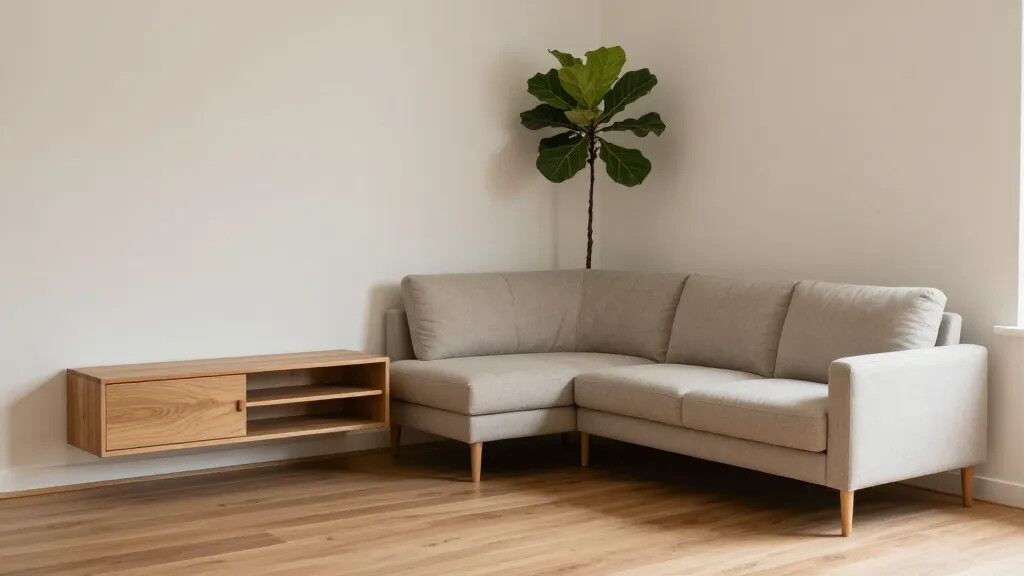
Corners are the most commonly wasted space in a small living room. A compact sectional that hugs the corner, paired with a slim floating or wall-mounted TV stand, turns dead space into your main seating and viewing area — a smart pick if you’re working out small living room with tv ideas.
Key elements:
- A compact sectional tucked into a corner
- A slim, wall-mounted media unit to keep the floor clear
- Corner shelving or a tall plant to draw the eye upward
If an empty corner has been bugging you elsewhere in the house too, our guide to turning awkward empty corners into usable space covers more angles on this.
3. Floating Focus: A Seat-Free Perimeter for a Bigger Feel
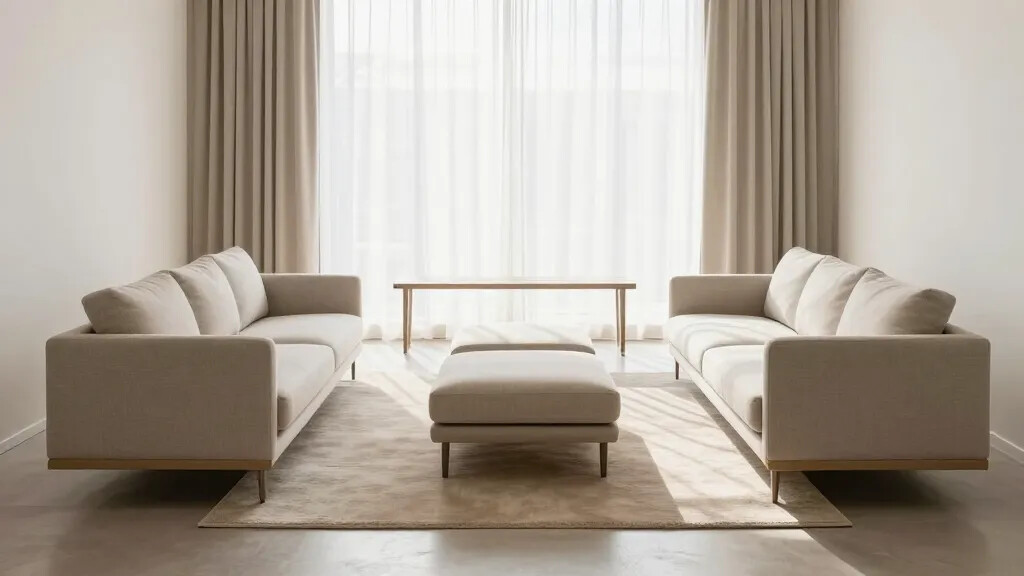
Swapping a heavy coffee table for a pair of lightweight ottomans or a slim tray “floats” the center of the room, leaving open air where a bulky piece would normally sit. Two slim sofas or chairs facing each other, anchored by a long, thin rug, still give you a full conversation area.
What to do:
- Replace a heavy coffee table with ottomans or a lightweight tray
- Let seating face inward, with a slim console behind one side
- Add a long, narrow rug to ground the layout without visually anchoring it
The room reads as more expansive because nothing bulky sits in the middle, and it’s easy to reconfigure for guests or movie night.
4. The Wall-Pivot Plan: Reversible Seating for Small Spaces
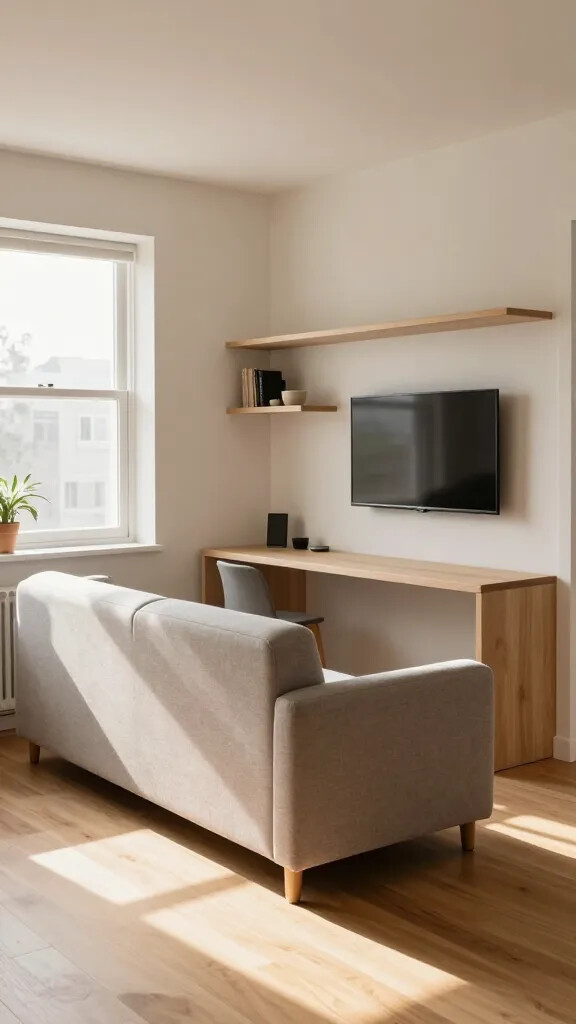
A reversible setup gives you two layouts in one footprint. A modular sofa that can reconfigure, paired with wall-mounted shelving that doubles as a soft divider, lets you shift the whole room’s orientation depending on the time of day.
Implementation tips:
- Use wall-mounted shelves near the seating for storage and subtle separation
- Choose a modular sofa that reconfigures into different shapes
- Add a compact desk or console against the wall for multi-use days
Face the seating toward a window for morning light, then pivot toward the TV wall for movie night — no heavy furniture moving required.
5. The Centerpiece Pivot: One Bold Item That Sets the Mood
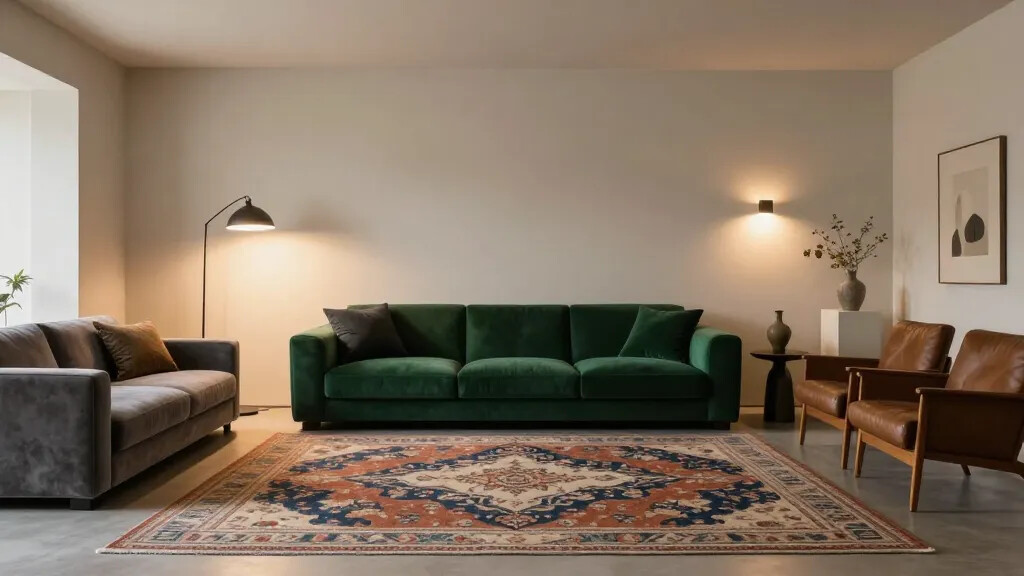
One standout piece — like a rich, dark grey couch or a bold patterned rug — can anchor the entire layout and reduce decision fatigue. This is one of the easiest ways to bring living room ideas dark grey couch fans have been searching for into a small footprint without overcrowding it.
Key elements:
- One statement sofa or eye-catching rug as the visual hero
- Minimal supporting furniture in cohesive, neutral tones
- Focused lighting — a floor lamp or sconce — aimed at the focal point
Building the rest of the room around a single centerpiece also makes future shopping decisions easier, since every new piece just needs to echo one or two existing tones or textures. A simple sofa design for small living room spaces like this keeps the silhouette low and unfussy so the color does the talking.
6. The Multi-Function Nook: Small Space, Big Capabilities
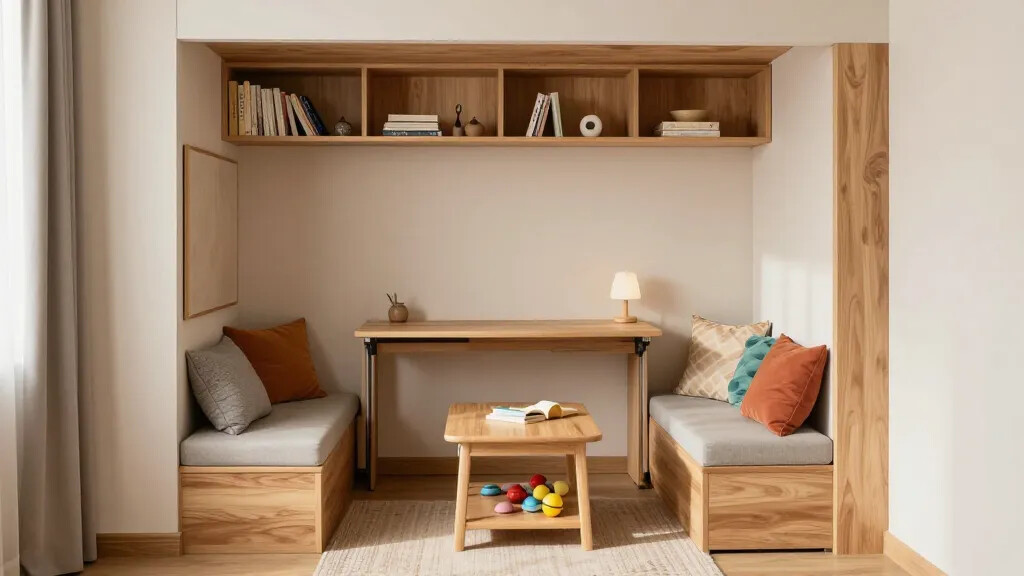
Small rooms benefit most from furniture that does double duty. A fold-away wall desk, a storage ottoman that also works as a coffee table, and built-in shelving let one nook function as a workspace, reading corner, or play area depending on the hour — especially useful in a small living room with kitchen ideas where every zone has to earn its space.
Smart add-ons:
- A compact wall desk that folds flat when not in use
- A storage ottoman that doubles as seating or a coffee table
- Built-in shelving, or a fold-down bed for micro-apartments
Keep the center of the room clear and push the smart storage to the edges — for more on staying organized, see our organized living room ideas for staying clutter-free.
Modern Style Directions for Small Living Rooms
Once your layout is solid, style is what makes a small modern living room feel finished. A few directions stand out right now:
- Grey apartment living rooms. A grey living room apartment palette — charcoal walls or a dark grey couch against lighter neutrals — reads as modern and grown-up without needing a large footprint to feel intentional. It’s one of the most requested looks in living room decor apartment modern grey searches.
- Minimalist modern. Clean lines, hidden storage, and a restrained color palette define modern minimalist living room small spaces — fewer, better pieces instead of a room full of small furniture.
- Turkish-inspired. A modern Turkish living room design often layers rich textiles, warm brass accents, and low seating over a neutral base — a way to add pattern and warmth without visual clutter.
- Arab-inspired decor. Arab decor living room styling frequently favors low, generous seating (majlis-style arrangements), warm wood tones, and geometric detailing, which can pair naturally with the low-profile, corner-hugging layouts above.
If organic textures and natural materials appeal to you more than a strict color scheme, our guide to organic modern living room ideas is a good next stop.
Which Small Living Room Layout Fits Your Design Goals?
| Layout Idea | Best Style Pairing | Floor Space Needed | Effort to Set Up |
|---|---|---|---|
| Boundary-Free Lounge | Minimalist, neutral | Medium | Low — mostly rearranging |
| Corner Convertible | Modern minimalist, grey | Low | Low to Medium |
| Floating Focus | Minimalist, Turkish-inspired | Low | Low |
| Wall-Pivot Plan | Modern, multi-use spaces | Medium | Medium — modular furniture needed |
| Centerpiece Pivot | Dark grey couch, Arab-inspired | Medium | Medium — depends on centerpiece |
| Multi-Function Nook | Modern minimalist, small living room with kitchen | Low | Medium to High |
Things to Consider Before You Redesign
- Decide on a layout before shopping for style pieces — furniture placement should drive color and texture choices, not the other way around.
- Measure walkways first — aim to keep at least 30 inches clear for main traffic paths.
- If you love a dark grey couch, balance it with lighter walls and rugs so the room doesn’t feel heavier than it is.
- Test a layout with painter’s tape on the floor before moving heavy furniture.
- Prioritize multi-function pieces if the room needs to double as a workspace, dining area, or kitchen-adjacent space.
FAQ: Small Living Room Designs Modern
What defines a modern small living room design?
Clean lines, a restrained color palette, multi-function furniture, and a layout that avoids bulky centerpieces are the core traits of modern small living room design.
Does a dark grey couch work in a small living room?
Yes — a dark grey couch can work well as a centerpiece if you balance it with lighter walls, rugs, and lighting so the room doesn’t feel visually heavy.
What’s the best sofa style for a small living room?
A simple sofa design for small living room spaces — low-profile, slim arms, raised legs — tends to work best, since it keeps sight lines open and the room feeling larger.
Can Arab or Turkish decor styles work in a small space?
Yes — both styles favor low seating and warm textures, which pair naturally with small-space layouts that already prioritize low-profile furniture and open sight lines.
How do I design a small living room that’s open to the kitchen?
Use a rug or lighting to visually separate the two zones, and lean on multi-function furniture so the living area doesn’t feel like an overflow of the kitchen.
Our Verdict
The best small living room designs modern homeowners actually enjoy living in start with layout, not decor. Pick one of the six layouts above based on how you use the room, then layer in a style direction — grey and minimalist, Turkish-inspired, or Arab-inspired — that fits your taste. For more style inspiration once your layout is set, check out our modern boho living room ideas.