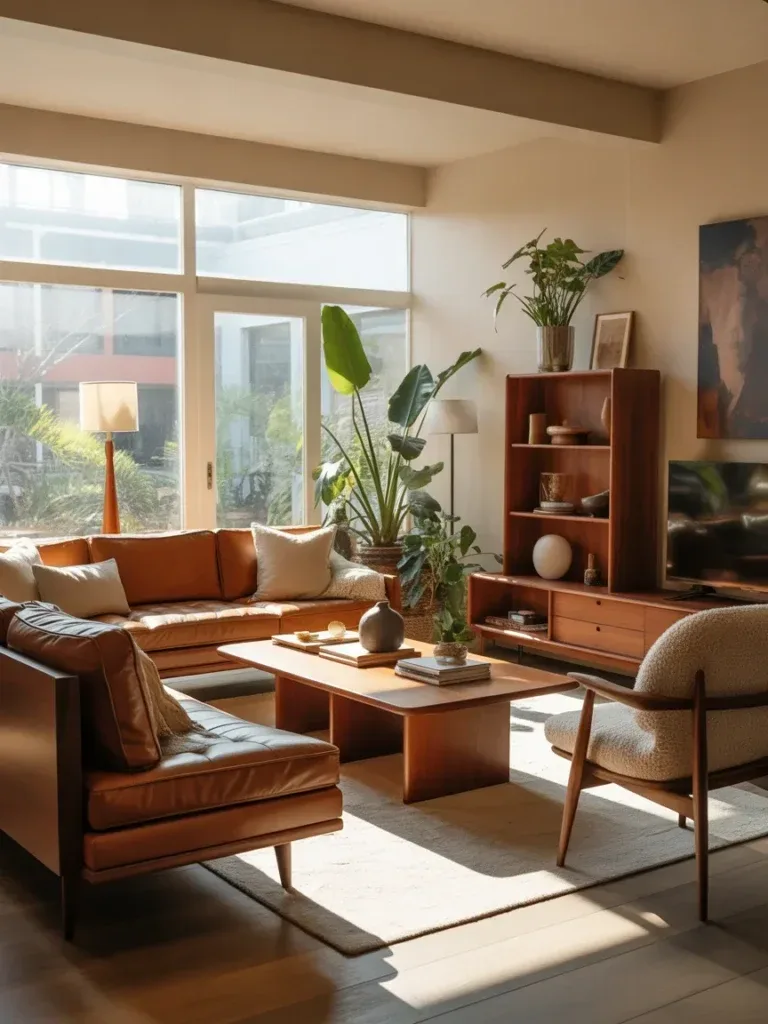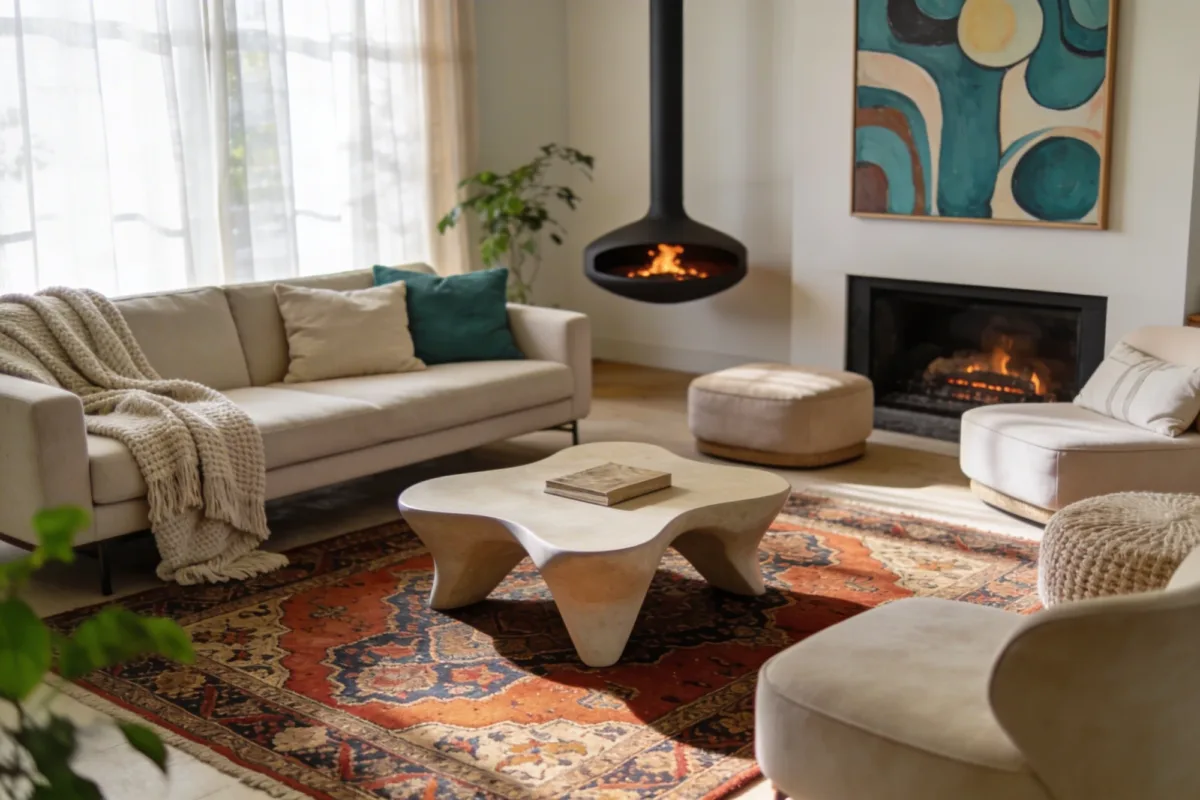
Living Room Inspiration: Cozy, Chic, on a Budget
Most living room inspiration you find online is really just a photo with no explanation of why it works. A sofa is styled a certain way, a rug is placed at an angle, and you’re left guessing which part actually matters and which part is just how the stylist happened to arrange the throw pillows. If you’re after living room inspiration you can actually use — not just look at — the difference usually comes down to a handful of decisions: palette, one anchor piece, layout, and lighting. Everything else is detail work. If your space is on the smaller side, it’s worth reading this alongside our guide to building a cohesive aesthetic from scratch, since a lot of what “works” in a photo depends on the room’s proportions to begin with.
This isn’t a moodboard. It’s the actual order of operations — what to decide first, what to skip, and where people usually waste money.
Quick Takeaways
- Pick 2–3 colors and one anchor piece before buying anything else. More colors than that reads as busy, not “curated.”
- Furniture doesn’t need to touch the walls. Floating it toward the center of the room almost always feels more intentional.
- Slipcovers and reupholstered cushions solve 80% of “my furniture looks tired” problems for a fraction of replacement cost.
- Warm bulbs (2700–3000K) plus a dimmer do more for “cozy” than any accessory you can buy.
- A mirror hung correctly does more for a small room than a smaller sofa does.
Where Living Room Inspiration Actually Starts: The Palette and the Anchor
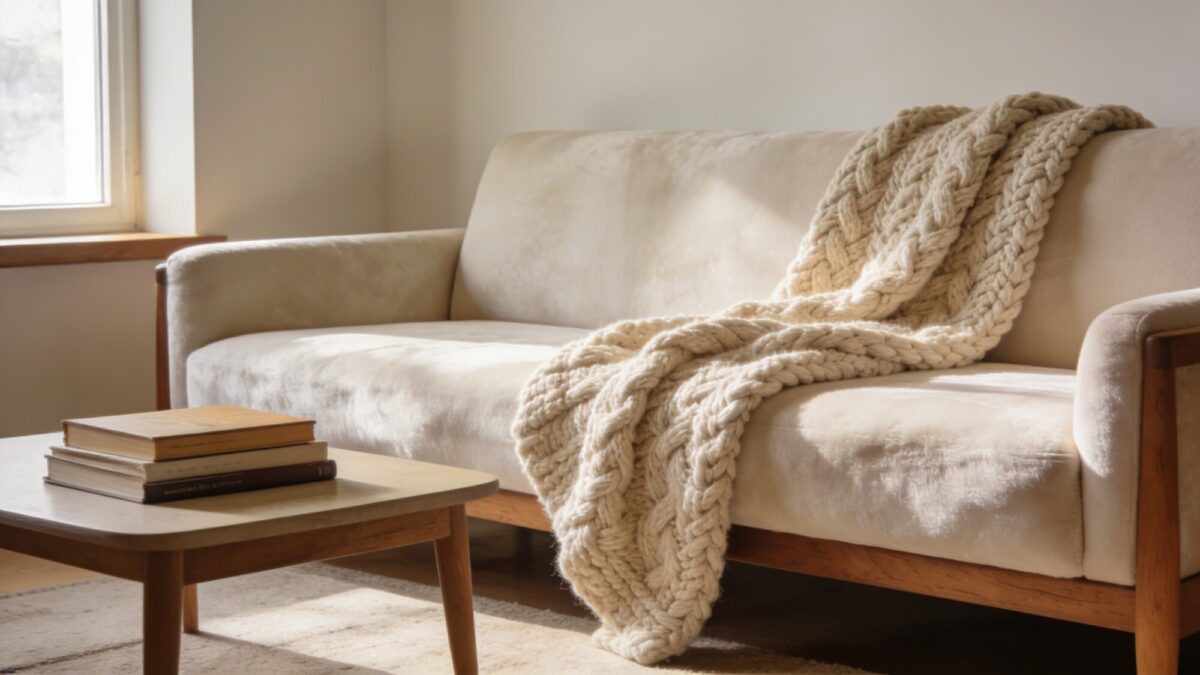
Before you touch furniture, settle on two or three colors — that’s it. A cream, a warm taupe, and one accent (rust, deep green, charcoal) is enough to carry an entire room. The mistake most people make isn’t picking bad colors; it’s picking good colors and then adding a fourth and fifth “just because it matched something at the store.” Once you’re past three, the room stops reading as calm and starts reading as decorated-by-committee.
Then pick one thing the room is built around. It doesn’t have to be expensive — it has to be singular. A bold sofa, one oversized art print, or a rug with real presence all work. Everything else in the room should be quieter than that piece, not competing with it.
Pick One Statement Piece, Not Five
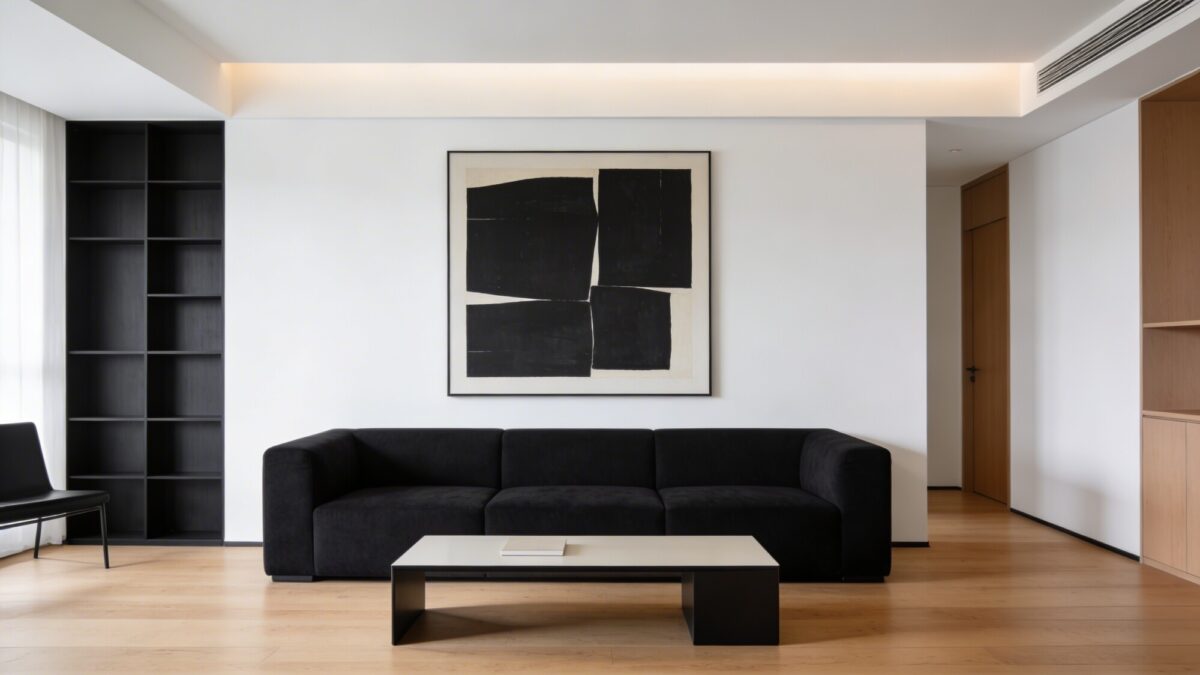
A deep charcoal sofa with one large abstract print above it does more work than five smaller accent pieces scattered around the room. The print doesn’t need to match the sofa’s exact shade — it needs to share the same temperature (warm vs. cool) so nothing clashes. If you like the calmer end of modern styling, our rundown of modern living rooms that stay bold without feeling cold shows a few more ways to do this without the space feeling like a showroom.
Keep the coffee table streamlined here — a heavy, ornate table fights the clean lines of a statement sofa. Scale matters more than most people expect: a tiny sofa paired with an oversized coffee table (or the reverse) is one of the fastest ways to make a room feel off, even if every individual piece is nice.
Budget-Friendly Swaps That Actually Move the Needle
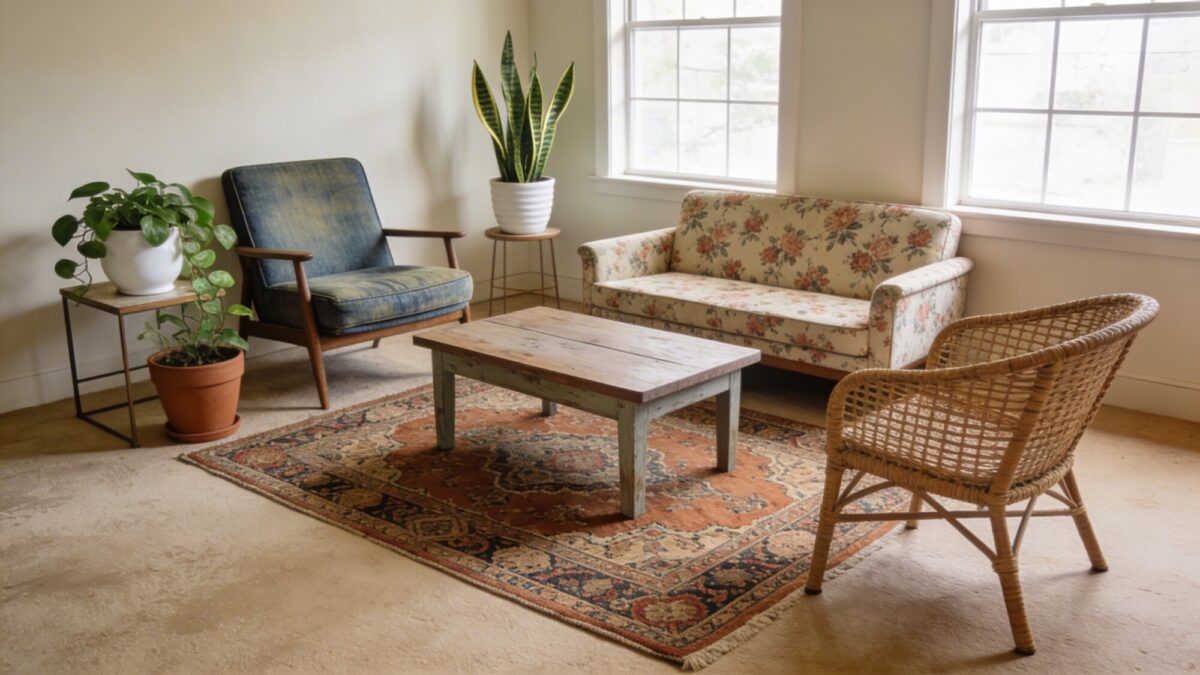
You don’t need new furniture to fix a room that feels tired. Here’s the honest order of what to try, cheapest first:
| Approach | Typical Cost | Best For | Trade-Off |
|---|---|---|---|
| Slipcover | Low ($50–$200) | Sofas/chairs in decent structural shape, wrong color or fabric | Fit is never as tailored as the original upholstery |
| Reupholster cushions only | Medium | A frame you love but fabric that’s worn or dated | Doesn’t fix sagging support or a broken frame |
| Full reupholster | High | A well-built frame (solid wood, good bones) worth saving | Often costs close to a mid-range new piece |
| Replace | Varies widely | A frame that’s actually falling apart, not just ugly | The only option with zero risk of “should’ve just bought new” |
Swap out cushion covers for varied textures — a boucle pillow next to a linen one next to something with a subtle pattern — and you get visual depth without buying a single new piece of furniture.
💡 Pro Tip: Before paying for a full reupholster, sit on the piece and check the frame for wobble or creak. If the frame’s solid, cushion-only reupholstery gets you 90% of the refresh for a third of the cost — most people skip this check and pay for more than they need.
Layer Texture Instead of Adding More Objects
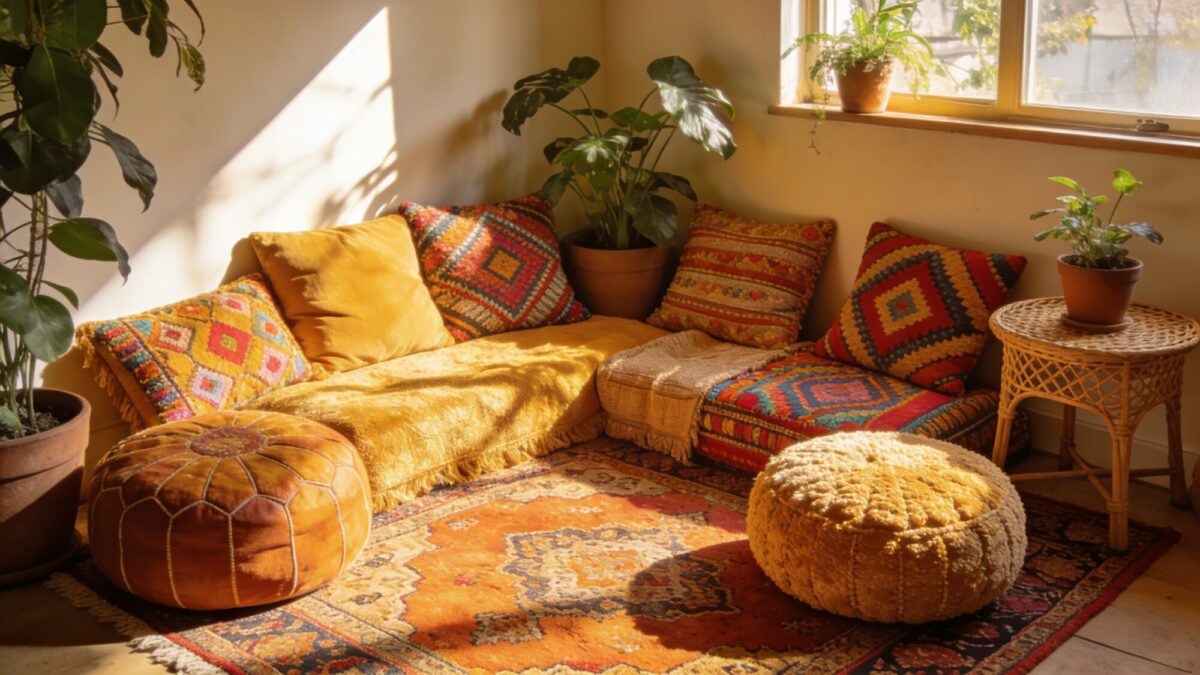
If you have an open floor plan, layering a smaller patterned rug over a larger neutral one is a fast way to define a seating zone without building a wall. Mixing matte and glossy surfaces — a matte ceramic lamp base next to a glossy lacquered side table — keeps a neutral room from feeling flat, even when the color palette itself is restrained.
A tactile throw or a fuzzy rug isn’t decoration for its own sake — it’s the thing that makes someone actually want to sit down. Rooms that photograph well but feel unused are usually missing this step entirely.
💡 Pro Tip: Vintage and secondhand rugs often have a stiff, flattened backing from years of foot traffic. Flip it and check before buying — a rug that won’t lie flat will bubble in the middle no matter how well you style around it.
Small-Space Tricks That Aren’t Just “Buy a Smaller Sofa”
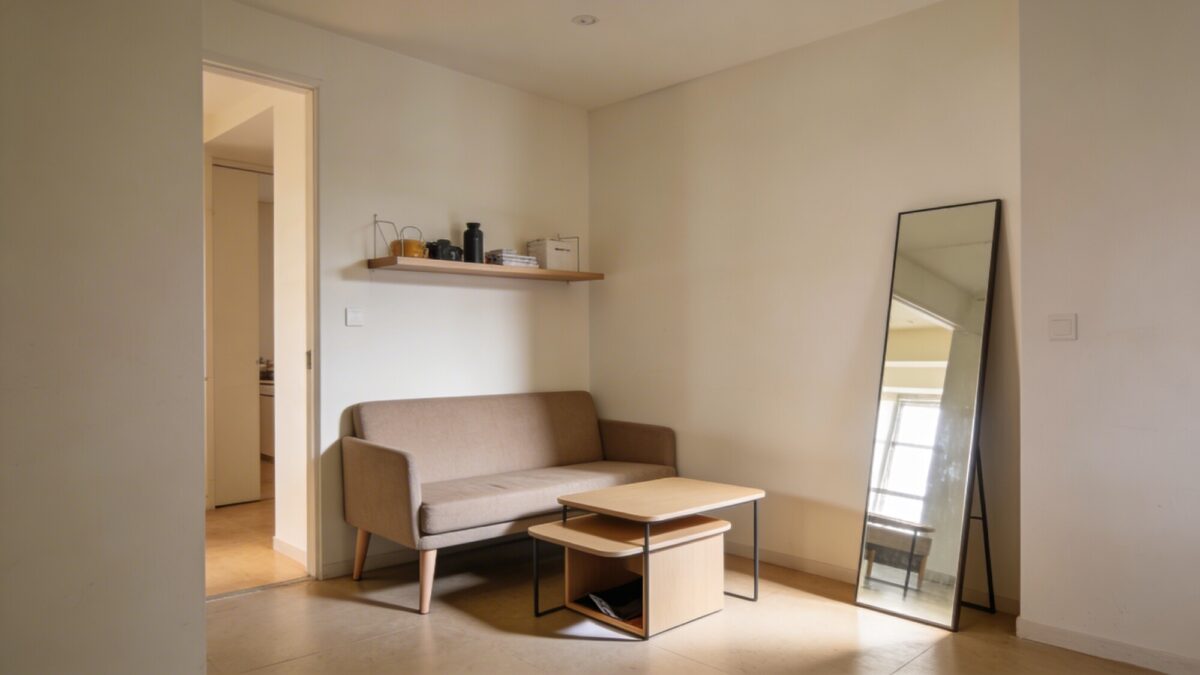
A compact sofa with slim, visible legs reads as lighter than a boxy one with a skirted base, even at the same footprint — the eye registers the floor space underneath as part of the room. Nesting coffee tables solve the “I need surface area sometimes but not always” problem better than one large table that eats the walking path. If your whole apartment is tight, it’s worth reading our dedicated piece on small living room layouts that punch above their square footage — a lot of the same logic applies room by room, not just to the main seating area.
A floating shelf clears floor space a side table would otherwise take up, and a large mirror does more than “make the room look bigger” in the vague sense people usually mean — it reflects whatever light source is already in the room, effectively doubling it without adding a single lamp.
💡 Pro Tip: Hang the mirror on a wall perpendicular to the window, not directly across from it. Facing it straight at the window usually just reflects a wall back at you; perpendicular placement bounces daylight across the room instead.
Lighting for More Than One Mood
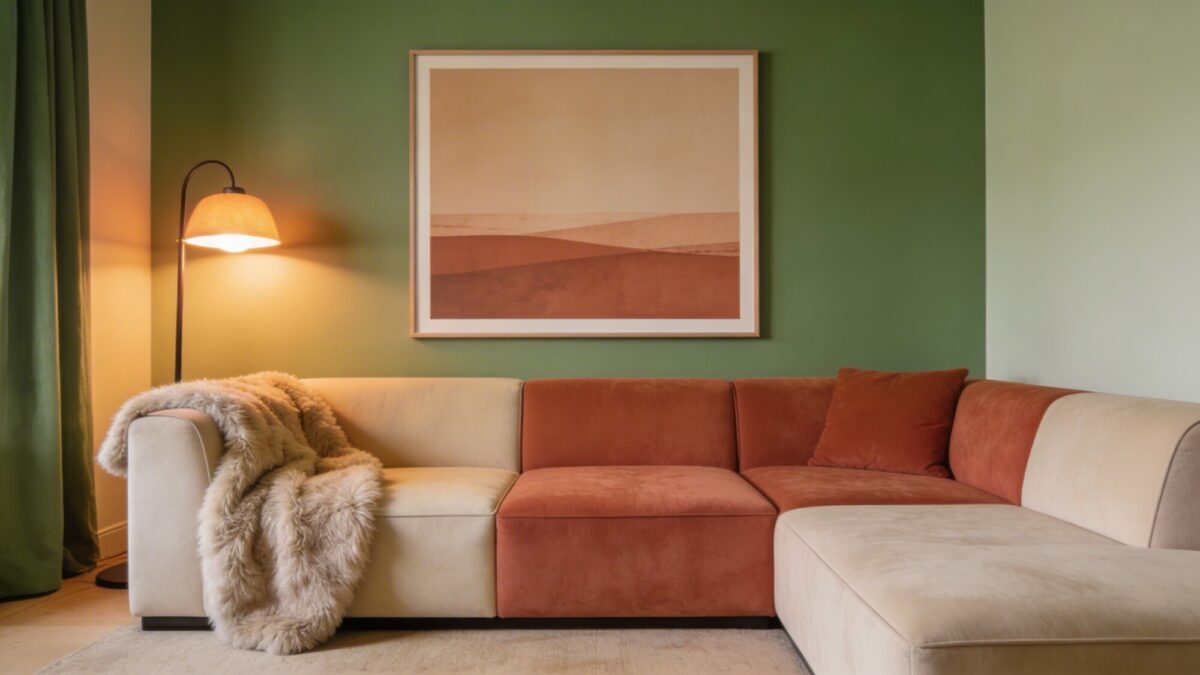
One overhead light isn’t a lighting plan — it’s a single mood, and usually the wrong one for evenings. Combining overhead, a floor lamp, and at least one table lamp lets you shift the room from “reading” to “hosting” to “movie night” without moving a single piece of furniture. Bulb temperature matters as much as fixture placement: 2700–3000K reads as warm and welcoming, while anything closer to daylight-white will make a cozy room feel closer to a waiting room.
Window treatments affect this more than most people account for — how much light a curtain lets in (or blocks) at night changes how every other light source in the room reads. We cover that in more depth in our guide to curtain choices for living rooms, if that’s the piece you haven’t nailed down yet.
💡 Pro Tip: A $15 dimmer switch does more for “movie night” ambiance than a $150 lamp. If you only upgrade one thing in your lighting setup, make it dimmable overhead lighting, not another lamp.
Cozy Minimalist: Fewer Pieces, Not Cheaper Ones
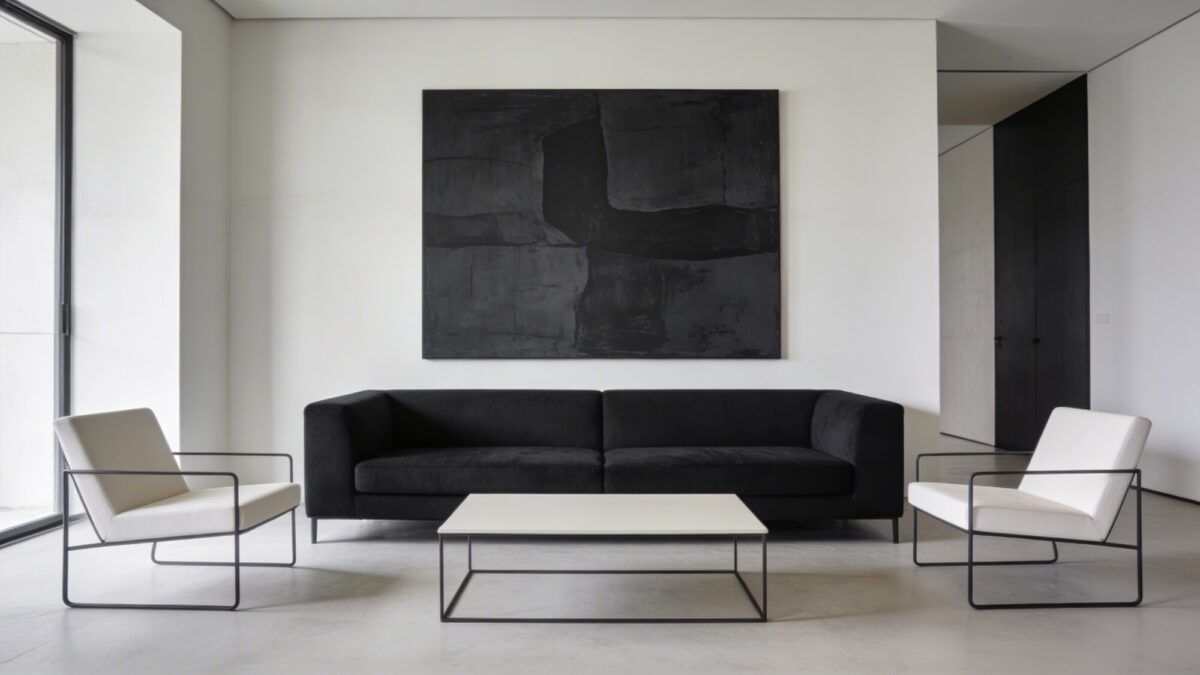
A cozy minimalist living room apartment isn’t a bare one — it’s one where every piece is doing a job. Two primary colors (say, charcoal and ivory), one statement piece, and low-profile seating kept intentionally slim is enough. This aesthetic living room approach works especially well in apartments where you can’t add much square footage but still want the room to feel calm rather than sparse. If restraint is the direction you’re going for, our look at Nordic-style living rooms built on the same principle has a few more reference points for how far to take it before “minimal” tips into “empty.”
The trade-off worth knowing: a genuinely minimalist room shows every flaw. Scuffed floors, mismatched cord colors, and dust are far more visible with less to distract from them. If you don’t want the maintenance, a slightly warmer, more layered room (see the texture section above) hides more day-to-day imperfection.
Living Rooms That Have to Work Hard: Kids, Pets, and Daily Wear
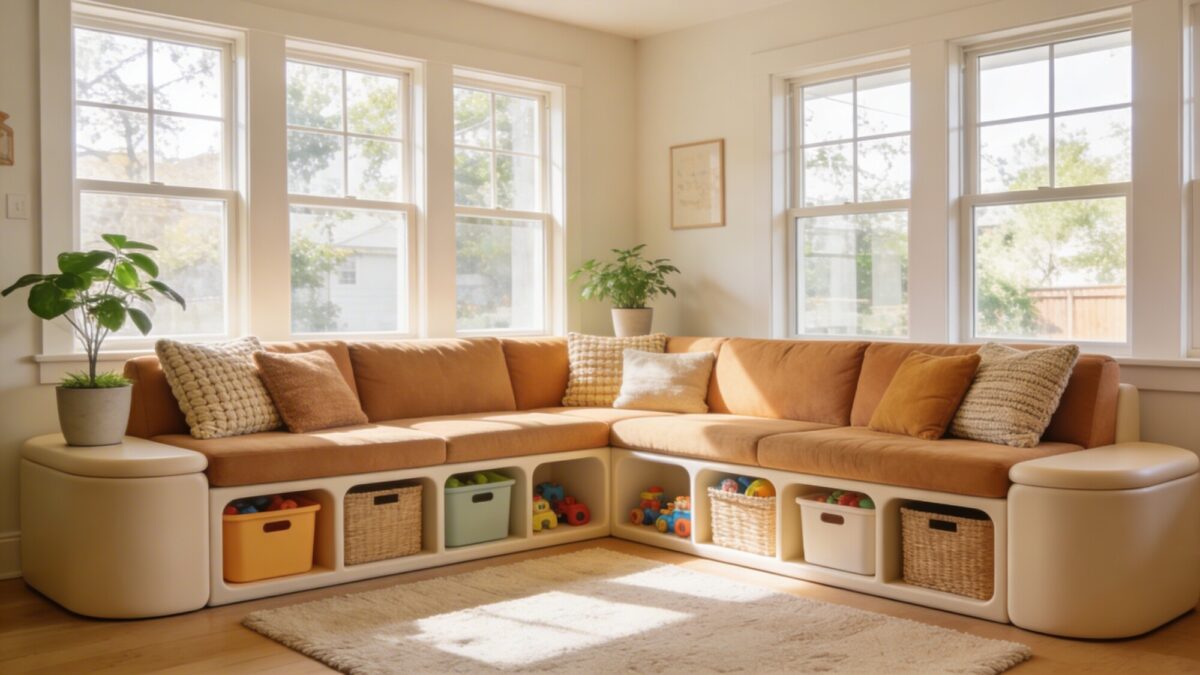
A lot of “aspirational” living room inspiration quietly assumes no one’s eating on the sofa. If that’s not your household, prioritize durable, cleanable upholstery over anything precious, and pick a sectional over separate pieces — fewer gaps means fewer spots for things to get lost or stuck. Low-maintenance greenery (a snake plant, a pothos) gets you the same visual softness as a fussier plant without the upkeep.
Things to Consider Before You Start
- Budget ceiling: decide this before you fall in love with a sofa you can’t actually justify.
- What’s structurally fine vs. just outdated: check frames before assuming everything needs replacing.
- How the room is actually used: movie nights, working from the sofa, kids, pets — style around real use, not the photo you’re chasing.
- Natural light direction: this determines whether you need warmer or cooler-toned finishes to avoid a flat or overly yellow room.
- What you’re keeping: pick your unifying palette around your one non-negotiable piece, not the other way around.
FAQ
What’s the quickest way to refresh a living room on a budget?
Slipcovers plus new cushion covers, in that order. Both are reversible, neither requires tools, and together they change the room’s color story more than almost any other single move.
How do I choose a color palette that lasts?
Stick to neutrals or muted tones for anything large and expensive (sofa, rug), and put trend colors into things that are cheap to swap later — pillows, a throw, a single vase.
Is it okay to mix trends with timeless pieces?
Yes, as long as the trend piece is small and cheap to replace. A trendy lamp is low-risk. A trendy sofa is a bet you might regret in two years.
How can I make a small living room feel bigger?
A mirror placed perpendicular to a window, furniture with visible legs instead of skirted bases, and nesting or multi-use tables instead of one large piece — all covered in more detail above.
What’s the best lighting setup for movie nights?
Warm bulbs (2700–3000K), a dimmer on the main overhead source, and at least one lamp you can leave on low instead of going fully dark.
Where should I start if I hate my current layout?
Float the furniture off the walls first and orient it around one focal point — that alone fixes more layouts than buying anything new.
Our Take
If you only do three things from this list: pick a palette of three colors max, float your furniture off the walls, and put your lighting on a dimmer. Those three changes cost the least and affect the room’s feel the most — everything else is refinement on top of a layout that already works. For a next step, our guide to modern farmhouse living room upgrades is a good place to look if you want to see this same approach applied to a warmer, more textured direction.