
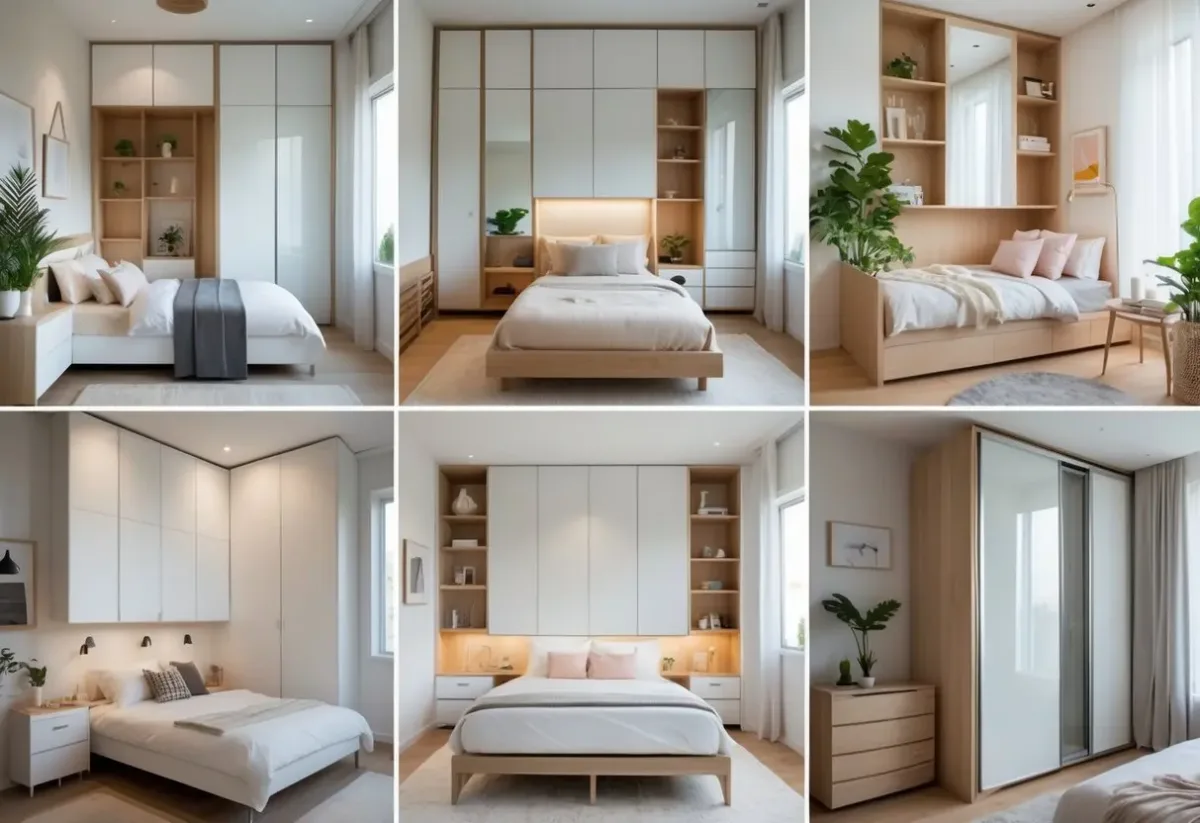
7 Small Bedroom Ideas With Wardrobe: Space-Saving Layouts, Storage Hacks, and Stylish Finishes
Finding the right small bedroom ideas with wardrobe storage in mind can be the difference between a room that feels cramped and one that feels calm and functional. When floor space is limited, the wardrobe you choose and where you put it does more work than almost any other piece of furniture in the room. This guide walks through seven proven approaches, plus placement rules, door-type comparisons, and a practical checklist so you can plan with confidence.
Quick Takeaways
- Vertical, floor-to-ceiling wardrobes use height instead of floor area, which matters most in tight rooms.
- Sliding and pocket doors remove the need for swing clearance, freeing up circulation space.
- Mirror-fronted doors reflect light and add a sense of depth without changing the room’s footprint.
- Placement along the longest uninterrupted wall generally preserves the most usable floor space.
- Internal organization (adjustable shelves, rods, drawers) matters as much as the wardrobe’s exterior size.
1) Built-In Wardrobes to Maximize Vertical Space

Built-in wardrobes stretch from floor to ceiling, giving you more storage without taking up any extra floor area. Because they use the full height of the room, you can comfortably fit long garments on lower rails, stack seasonal bins overhead, and still keep everyday items within easy reach.
Mixing hanging rails, deep drawers, and open shelving inside a single built-in unit keeps the layout flexible. Vertical designs also tend to make a small bedroom feel taller when the doors sit flush with the wall and the finish stays simple and unfussy.
If swing clearance is tight, pair a built-in frame with sliding or pocket doors instead of hinged ones. Adding lighting inside and above the unit improves visibility and makes the wardrobe feel like part of the architecture rather than a bulky add-on. For a deeper walkthrough of planning a built-in layout room by room, see this guide to planning a small bedroom wardrobe interior that maximizes every inch.
2) Sliding Door Wardrobes for Space-Saving Access

A sliding door wardrobe removes the need for clearance space in front of the unit, which means you can push a bed or a desk closer to the closet wall. That makes it one of the most practical small bedroom ideas with wardrobe storage when floor area is genuinely tight.
Mirrored or light-reflective door panels increase perceived brightness and depth without changing the room’s actual footprint, and they double as a full-length mirror so you don’t need a separate one. Inside, pull-out drawers, adjustable rails, and shoe racks keep everything accessible through the sliding opening.
Track quality matters more than people expect. A smooth, soft-close mechanism makes daily use feel effortless, while a slim or frameless profile keeps the overall look minimal. If you’re comparing sliding-door styles and finishes, this guide to choosing a modern sliding door wardrobe design breaks down the options.
3) Mirror-Fronted Wardrobes to Enhance Light and Depth

A mirror-fronted wardrobe reflects existing light and surfaces, which instantly increases how spacious a room feels. Placing it opposite or adjacent to a window bounces daylight around the space and can reduce how much you rely on lamps during the day.
Because the doors double as a dressing mirror, you save the floor space a standalone mirror would otherwise take. Full-length panels give an uninterrupted reflection, while inset mirrors offer a more framed, traditional look while still adding depth.
Sliding mirror doors work especially well when floor clearance is limited, since they skip the swing radius altogether. If you go with hinged doors instead, leave enough of a clear path that the mirrors stay functional and don’t collect fingerprints from awkward angles.
4) Customizable Shelves and Rods for Personalized Storage

Adjustable shelves and movable rods let your wardrobe adapt as your needs change. Bulky sweaters, long dresses, and folded basics all need different amounts of space, and a fixed layout rarely accommodates all of them well.
Mixing open shelving with enclosed drawers keeps everyday items visible while tucking away pieces you use less often. Narrow, vertical units make the most of wall space while preserving floor clearance, and modular components let you reconfigure storage over time instead of replacing the whole unit.
Double rods for shirts and a single rod for long garments create more hanging capacity without expanding the wardrobe’s footprint. For a full breakdown of interior configurations, this guide on planning a functional and stylish wardrobe interior is worth a look.
5) Organizing by Outfit Type for Efficient Daily Use

Grouping clothes by complete outfits, rather than by individual item type, cuts down on morning decision-making. When tops, bottoms, and accessories for a look sit together, you can grab a ready set in seconds.
Labeled sections or bins for work, casual, and active outfits keep similar looks grouped, and rotating them seasonally means whatever you wear most stays at eye level. Hang the outfits you reach for often where you can see them, and fold less-used sets onto shelves.
Keep the number of complete outfits stored this way realistic — matching what you actually wear in a given week rather than everything you own. That discipline keeps a small wardrobe functional instead of overcrowded.
6) Using Sliding Wardrobes to Keep the Room Airy

Sliding wardrobes are worth prioritizing when you can’t afford to lose floor space to a swinging door. Because the doors glide instead of swinging outward, circulation paths stay clear and furniture can sit closer to the unit.
Mirror-front or light-reflective finishes boost natural light and add a sense of depth, serving a practical and visual purpose at once. Inside, pull-out drawers, hanging zones, and adjustable shelves prevent overflow that would otherwise clutter the room once the doors are closed.
A low-profile or frameless door design reduces visual weight, so the wardrobe competes less with the rest of the room’s styling. If your budget allows, LED strip lighting inside the unit improves visibility and helps you avoid opening the doors wider than necessary under poor light.
7) Incorporating Wardrobe Units With Minimal Footprint

Matching the wardrobe’s scale to your room keeps circulation clear and visual clutter low. Slim, shallow-depth cabinets still provide hanging space and shelving without pushing into walkways.
Built-in or recessed units, where the layout allows, tuck storage into wall cavities and preserve floor area. Sliding or pocket doors avoid the swing radius of hinged doors entirely, freeing up more usable space in an already tight room.
Tall, narrow wardrobes take advantage of vertical space with minimal floor intrusion, and adjustable shelves with pull-out accessories let you customize storage without adding extra furniture. Light finishes and mirrored fronts reflect light and help the room feel more open overall.
Maximizing Space With Wardrobe Placement

Where you place the wardrobe affects traffic flow and how efficiently the room’s wall length gets used. Prioritizing sightlines, door swing, and natural light helps the wardrobe read as built-in storage rather than furniture crowding the room.
Optimal Layouts for Small Bedrooms
Placing wardrobes along the longest uninterrupted wall frees up circulation and makes the room feel wider. If the bedroom door opens inward, avoid positioning the wardrobe directly opposite it — placing it to the side keeps the doorway sightline open. Sliding or pocket doors are especially useful when the wall width is under roughly 2.2 meters, since they eliminate the need for clearance space.
In very narrow rooms, a shallow wardrobe (around 40–45 cm deep) with hanging space for short items and pull-out shelves for folded clothes tends to work well. In square rooms, centering the wardrobe on one wall and balancing it with low furniture on the opposite side helps maintain proportion.
If there’s at least 30–40 cm of dead space above a typical wardrobe, extending the unit to the ceiling adds storage without using any additional floor area — a small step stool keeps the top shelves accessible.
Integrating Wardrobes With Other Furniture
Combining the wardrobe with a bedhead or shelving unit creates a continuous storage run that reduces visual clutter. Open bedside shelves adjoining the wardrobe frame, for example, can add meaningful storage without introducing a separate standalone piece.
Multi-function furniture — a wardrobe with built-in drawers or a fold-down desk — frees up space that a separate dresser or desk would otherwise occupy. If you’re placing the wardrobe near a window, consider whether mirrored doors will create glare; if so, position mirrored fronts on a perpendicular wall instead.
Keep circulation paths at least 60–75 cm wide between the wardrobe and any opposing furniture so the room stays comfortable to move through. For more layout-focused strategies, see these clever space-saving layout hacks for small bedrooms.
Design Considerations for Wardrobe Selection

Door type, internal fittings, and how the wardrobe’s footprint interacts with your daily routine all matter more than style alone. Getting these right means the wardrobe supports the room instead of working against it.
Sliding vs. Hinged Doors: Which Should You Choose?
| Factor | Sliding Doors | Hinged Doors |
|---|---|---|
| Floor clearance needed | None — doors glide along a track | 70–90 cm of swing space required |
| Best for | Narrow rooms, beds or furniture placed close by | Rooms with room to spare, frequent full-wardrobe access |
| Access | Partial — one section visible at a time | Full interior visible at once |
| Maintenance | Track and rollers need occasional care | Hinges and catches need periodic checking |
| Mirror option | Common and space-efficient | Possible via inset or back-of-door mirrors |
Sliding doors make sense when the wardrobe sits opposite a bed or next to a narrow walkway, since they don’t require swing space. A quality track and soft-close mechanism prevent the misalignment issues that cheaper hardware tends to develop over time.
Hinged doors give full interior access at once, which helps if you sort outfits often or use deep drawers regularly. If you go this route, plan for at least 70–90 cm of clearance in front of the unit, and use full-height hinges with magnetic catches to keep wooden or MDF doors aligned.
Custom Storage Features Worth Planning For
Design the interior around what you actually own rather than a generic template. As a starting point, many small wardrobes allocate roughly 90–120 cm of hanging space for dresses and coats, 40–60 cm of single hanging for shirts, and 30–40 cm of shelving for folded items — though your own proportions should be adjusted based on your wardrobe.
Dedicated compartments for shoes (slanted shelves or pull-out racks) and small accessories (dividers, shallow drawers) keep everything findable. Full-extension drawer runners let you see contents at a glance, and soft-close mechanisms prevent slamming in a small room.
Vertical storage for seldom-used items — top shelves or a shallow overhead compartment — makes use of space you’d otherwise waste. If you store seasonal clothing, pull-down hanging rails or labeled boxes keep it accessible without taking up prime real estate, and LED strips or motion-activated lighting help you avoid misplacing items in dim corners.
Things to Consider Before You Choose a Wardrobe
- Room dimensions: Measure wall length and depth before shopping, including any door swing or radiator clearances.
- Door type: Decide between sliding, hinged, or bifold based on available clearance and how often you need full access.
- Ceiling height: Check for dead space above standard units that could be used for extended vertical storage.
- Light and mirrors: Consider whether mirrored fronts would help or create unwanted glare near a window.
- Internal layout: Match rod and shelf configurations to what you actually wear and store, not a generic setup.
- Budget for hardware: Quality tracks, hinges, and runners affect how the wardrobe performs years down the line.
Frequently Asked Questions
What is the best wardrobe style for a very small bedroom?
Sliding or pocket-door wardrobes tend to work best in very small bedrooms because they eliminate the need for clearance space in front of the unit, letting you place other furniture closer to the wall.
How deep should a wardrobe be in a small bedroom?
A shallow wardrobe around 40–45 cm deep can still accommodate hanging clothes and pull-out shelving while leaving more floor space free, which is especially useful in narrow rooms.
Do mirrored wardrobe doors actually make a room look bigger?
Yes — mirrored fronts reflect existing light and room surfaces, which increases the perceived sense of space and depth without changing the room’s actual footprint.
Should I extend my wardrobe to the ceiling?
If you have at least 30–40 cm of dead space above a standard wardrobe, extending it to the ceiling adds usable storage without taking up any additional floor area.
How much clearance do hinged wardrobe doors need?
Plan for roughly 70–90 cm of open space in front of the wardrobe so hinged doors can swing fully and you can comfortably access the interior.
What’s the easiest way to keep a small wardrobe organized?
Grouping clothes by complete outfits, rather than by individual item type, and keeping frequently worn pieces at eye level tends to be the simplest system to maintain day to day.
Our Verdict
There’s no single “best” wardrobe for every small bedroom — the right choice depends on your room’s shape, wall length, and how you actually get dressed each day. That said, a few principles hold up consistently: use vertical space wherever possible, choose sliding or pocket doors when floor clearance is tight, and invest in an internal layout that matches what you own rather than a generic template. Get those three things right, and even a modest bedroom can feel organized, open, and genuinely functional. If you’re still mapping out your overall layout, this collection of small bedroom ideas with wardrobe designs built for storage and style is a useful next stop.