You can create a calm, stylish living room that feels both functional and inviting without overwhelming the space. This article shows six practical minimalist ideas that help you choose colors, textures, furniture, layout, and lighting so your living room looks intentional and lives better. Follow straightforward guidance to simplify choices and build a cohesive space that reflects your taste. Expect tips on neutral palettes, natural materials, clean-lined furniture, purposeful decor, open layouts, and layered lighting to guide each decision. 1) Use a neutral color palette with soft beiges, grays, and whites Choose a base of soft beiges, warm grays, and clean whites to create an open, calm backdrop for your living room. These tones reflect light and make the space feel larger without calling attention to themselves. Layer different neutrals to add depth—pair a warm beige wall with a cool gray sofa and white trim, for example. Texture becomes more important when color is restrained, so introduce woven rugs, linen cushions, and matte ceramics to keep the room from feeling flat. Keep contrast moderate to preserve minimalism: limit bold accents and let form and proportion carry the design. If you want a focal point, pick one muted accent—like a charcoal throw or a wood coffee table—so your eye has a place to rest without breaking the serene palette. EARTHALL Woven Area Rug 4×6 Ft Washable Rugs for Entryway Non Sli… Product Details: Size: 4′ x 6′ (48″x72″); Thickness: Rug: 0.19 in; Edge: 0.38 in; . Note: Please ensure door clearance i… Color: Orange/Tan/Brown. A warm mix of orange, tan, and brown tones, creating a cozy, earthy feel that complements moder… Hand-Cut Detail: Each rug is individually cut, and small differences in dimensions or edge straightness may appear. This… $40.49 Buy on Amazon 2) Incorporate natural textures like wood, linen, and wool for warmth Bring in wood elements through a coffee table, shelving, or slim-framed side tables to introduce subtle warmth without clutter. Choose pieces with simple lines and visible grain to keep the minimalist feel while adding visual interest. Use linen for curtains, cushion covers, or slipcovers to soften the room and filter light gently. Its slightly wrinkled look reads relaxed and intentional, which complements clean, pared-back furniture. Layer a wool rug or a wool throw to add tactile depth underfoot and at seating areas. Wool holds shape and insulates, so it feels cozy without needing extra accessories. Mix a few natural textures rather than matching everything; pair a wooden table with linen upholstery and a wool rug for balance. Keep colors neutral and textures distinct to maintain calm and cohesion while still delivering warmth. 2 Panels Set Cream Linen Curtains 108 inches Long for Living Room… 30% Linen, 70% Polyester READY MADE: 2 Linen Curtain Panels per package.Each panel measures 52 inches wide by 108 inches long. Top design of Back… LINEN BLEND FABRIC: Crafted from rich flax linen fabric blended with polyester featuring a neutral linen shade, those pa… $26.98 Buy on Amazon 3) Choose modern furniture with clean lines and minimal ornamentation Choose furniture that emphasizes shape and function over decoration. Simple silhouettes—straight or gently curved—keep visual focus on form and proportion, which helps the room feel organized and calm. Prioritize pieces with exposed legs and low profiles to maintain sightlines and a sense of openness. Furniture that sits slightly off the floor makes the space appear lighter and easier to navigate. Select high-quality materials and finishes that age well, such as solid wood, metal, or tightly woven upholstery. A restrained palette and subtle textures add interest without creating clutter. Limit decorative details to one or two thoughtful elements per piece, like a single seam or a tapered arm. This restraint lets each item contribute to a cohesive look and reduces visual noise in your living room. Hosley Antique Bronze French Bucket Vase with Handles 6″ Dia x 15… Versatile Design: This 15-inch high Antique Bronze French bucket is perfect for a variety of uses, including as a tablew… Durable Construction: Crafted from high-quality Antique Bronze metal with sturdy handles for easy carrying, this bucket … Perfect for Events: Ideal for weddings, parties, country picnics, and other celebrations. Use it as a decorative centerp… $21.98 Buy on Amazon 4) Keep decor purposeful and limit accessories to reduce clutter Decide what each decorative item does for the room before you place it. Choose pieces that add function, texture, or a clear visual anchor rather than filling empty space for its own sake. Edit regularly: keep a small rotation of favorites and store or donate the rest. You’ll avoid accumulation and make each object feel intentional. Group smaller items into a single curated vignette instead of scattering many lone objects. A single tray, bowl, or framed print can deliver more impact with less visual noise. Prioritize surfaces that stay mostly clear—coffee tables, consoles, and shelves should have breathing room. That makes cleaning easier and preserves the calming effect of minimalist design. 5) Embrace open floor plans to create an airy, spacious feel Open floor plans reduce visual barriers, letting light travel across your living, dining, and kitchen areas. That creates a sense of continuity and makes smaller footprints feel larger. Keep furnishings low-profile and choose a restrained color palette to maintain the minimalist intent. Use area rugs or a single shelving unit to define zones without adding walls. Maximize natural light with unobstructed windows and minimal window treatments. If privacy or noise is a concern, introduce fabric panels or a slim room divider that can be moved when needed. Balance openness with a few purposeful storage solutions so surfaces stay clear. Closed cabinetry, built-ins, or tall storage units tucked against a wall preserve the airy feel while keeping clutter out of sight. 6) Add subtle layered lighting for a cozy, inviting atmosphere Layered lighting balances function and mood through ambient, task, and accent sources. Start with a soft ambient fixture—dimmable ceiling lights or a pendant—to set an overall brightness you can lower in the evening. Place task lights where you read or work, such as a slim floor lamp or an adjustable table lamp. Keep designs minimal and finishes neutral so the fixtures blend with your room’s clean lines. Use accent lighting sparingly to highlight texture or a piece of art; a low-wattage spotlight or LED strip behind a shelf works well. Warm-color bulbs (2700–3000K) create a gentle glow that feels inviting without overpowering the space. Control is key: install dimmers or smart bulbs so you can easily shift the scene from bright and practical to calm and intimate. Subtle placement and restrained fixtures preserve a minimalist aesthetic while making your living room feel welcoming. Key Principles Of Minimalist Living Rooms Focus on purposeful choices and open sightlines. Prioritize furniture that serves daily needs and keep visual clutter to a minimum. Balancing Functionality And Aesthetics Choose furniture that performs clearly defined tasks: a sofa sized to your seating needs, a coffee table with storage if you need it, and lighting that supports reading and ambient use. Select materials and finishes that age well—solid wood, matte metal, or tightly woven textiles—so pieces remain useful and attractive over time. Limit decorative items to a few intentional accents. Keep one focal wall or object and remove duplicates or single-use knickknacks. Use a simple color palette (two to three neutral tones with one accent) to unify the room and make functional items feel deliberate rather than cluttered. Arrange items to support daily flow. Position seating for conversation and sightlines to windows or media, and place storage near where you drop keys, remotes, or blankets. If you add plants or art, choose items that also serve a purpose: an air-purifying plant or a piece of art that hides a thermostat. Emphasizing Open Space Keep circulation paths clear by leaving at least 30–36 inches (75–90 cm) between major furniture pieces. That spacing allows movement and prevents the room from feeling crowded even with modest square footage. Reduce visual noise by concealing small items in closed storage—media consoles, low-profile cabinets, or baskets tucked under tables. Use blind or minimal window treatments to let in natural light, which enlarges the perceived space and highlights texture rather than ornament. Create layered depth rather than filling the floor. Use vertical storage, a single large rug instead of multiple small ones, and one statement light fixture to draw the eye upward. These choices preserve floor area and keep the room feeling open while still feeling complete. Choosing The Right Minimalist Color Palettes Select colors that control mood and light, simplify decision-making, and let key elements—furniture, art, texture—stand out without competing for attention. Neutral Tones For Tranquility Neutral palettes center on whites, warm greiges, soft taupes, and muted creams. Use a dominant wall color in a single neutral and vary depth through textiles—a linen sofa, wool rug, cotton throws—to create layers without clutter. Keep trim and ceilings one shade lighter to increase perceived height and reflect light. Limit visible materials to two or three neutrals to avoid a washed-out look. Add subtle contrast with matte and satin finishes: matte paint, satin wood, and a brushed-metal lamp. For flooring, choose natural wood tones or neutral porcelain tile; match baseboard tones to the floor for a seamless transition. Practical tip: test swatches at different times of day on the largest wall to see how natural light shifts undertones. Accent Colors For Visual Interest Introduce a single accent color to anchor the room—navy, forest green, or a muted terracotta work well. Apply it deliberately: an accent wall, one sofa, or three coordinated accessories (throw, cushion, vase) creates cohesion without overwhelming the minimalist framework. Keep the accent saturation moderate to preserve calm. Balance the accent by repeating its hue in small doses across the room. Use natural materials—oak, rattan, wool—in neutral finishes to temper the color and maintain warmth. For a high-contrast scheme, pair deep navy with crisp white; for softer contrast, choose desaturated blue-gray with warm beige. Quick checklist: Pick one dominant neutral + one accent. Place the accent in no more than three focal spots. Test intensity with fabric swatches under your lighting conditions.
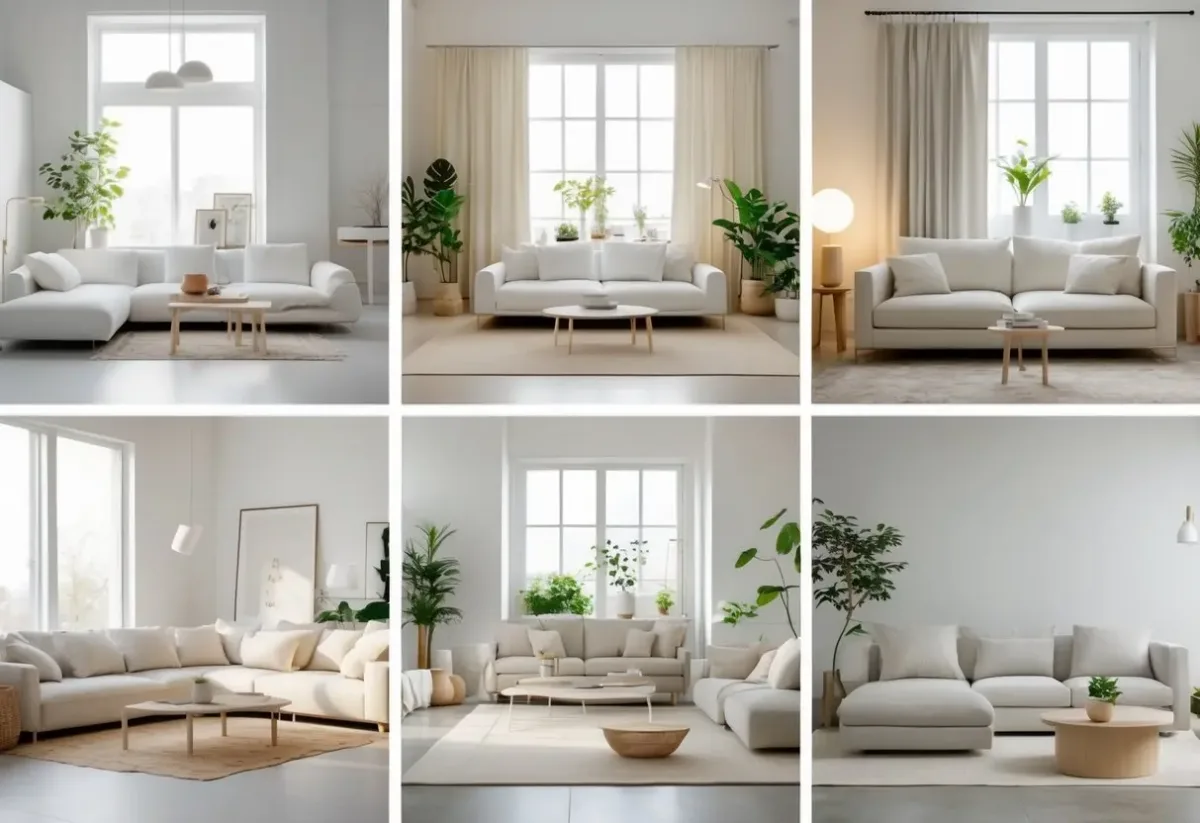
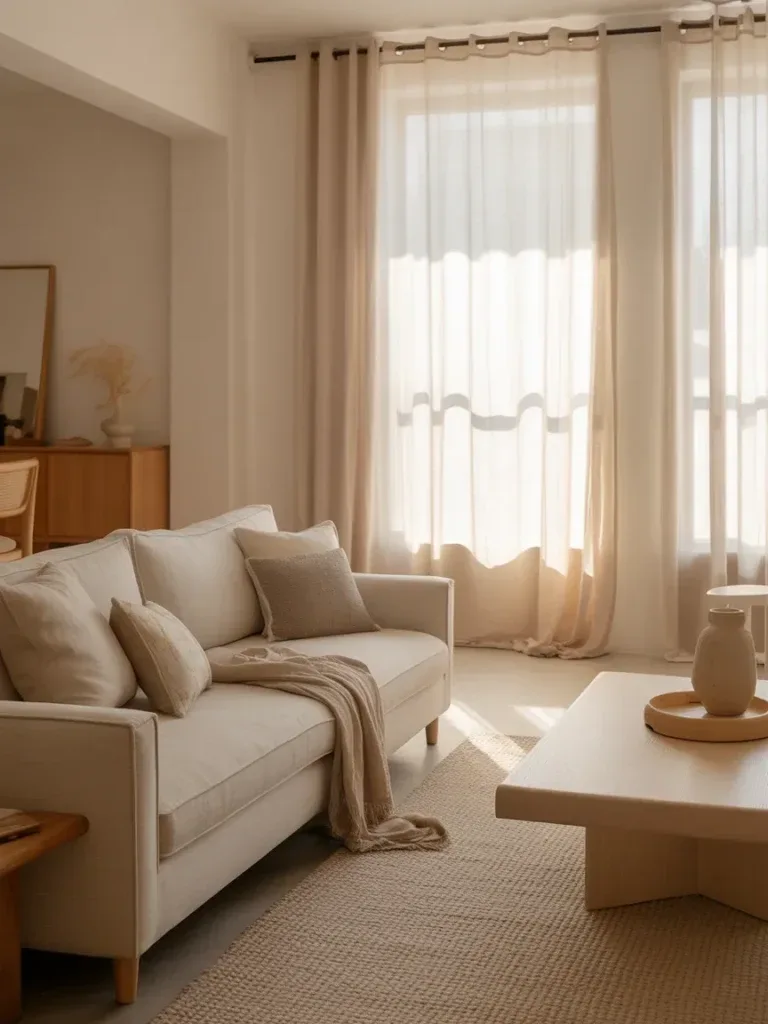
You can create a calm, stylish living room that feels both functional and inviting without overwhelming the space. This article shows six practical minimalist ideas that help you choose colors, textures, furniture, layout, and lighting so your living room looks intentional and lives better.
Follow straightforward guidance to simplify choices and build a cohesive space that reflects your taste. Expect tips on neutral palettes, natural materials, clean-lined furniture, purposeful decor, open layouts, and layered lighting to guide each decision.
1) Use a neutral color palette with soft beiges, grays, and whites
Choose a base of soft beiges, warm grays, and clean whites to create an open, calm backdrop for your living room. These tones reflect light and make the space feel larger without calling attention to themselves.
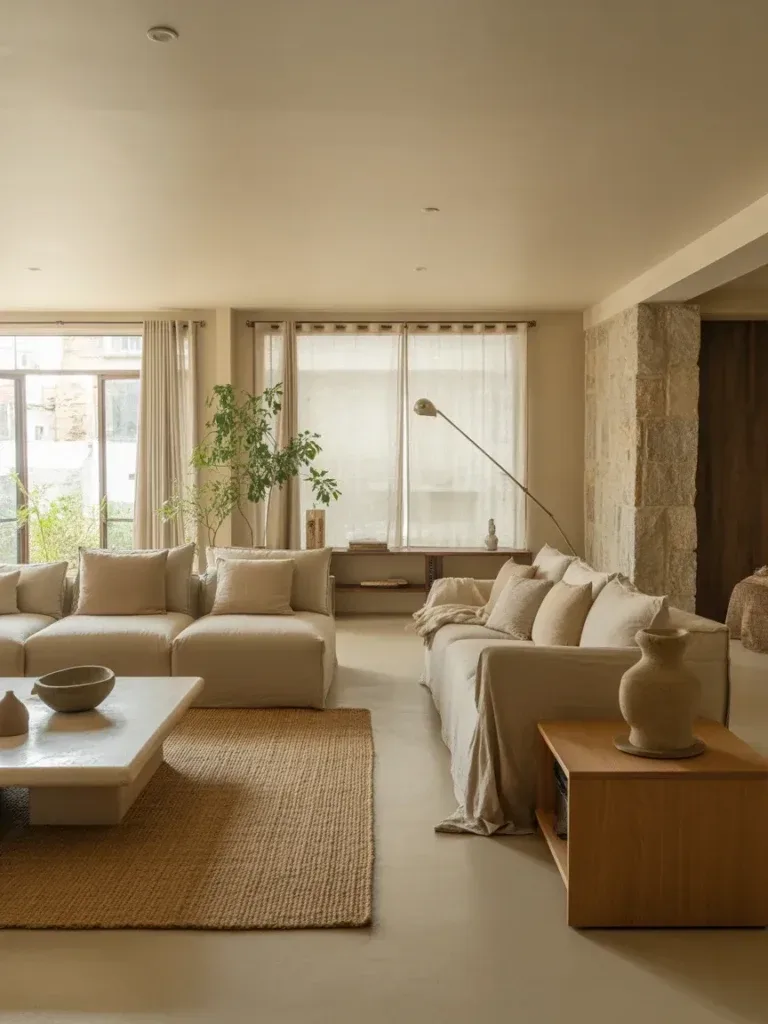
Layer different neutrals to add depth—pair a warm beige wall with a cool gray sofa and white trim, for example. Texture becomes more important when color is restrained, so introduce woven rugs, linen cushions, and matte ceramics to keep the room from feeling flat.
Keep contrast moderate to preserve minimalism: limit bold accents and let form and proportion carry the design. If you want a focal point, pick one muted accent—like a charcoal throw or a wood coffee table—so your eye has a place to rest without breaking the serene palette.
Bring in wood elements through a coffee table, shelving, or slim-framed side tables to introduce subtle warmth without clutter. Choose pieces with simple lines and visible grain to keep the minimalist feel while adding visual interest.
Use linen for curtains, cushion covers, or slipcovers to soften the room and filter light gently. Its slightly wrinkled look reads relaxed and intentional, which complements clean, pared-back furniture.
Layer a wool rug or a wool throw to add tactile depth underfoot and at seating areas. Wool holds shape and insulates, so it feels cozy without needing extra accessories.
Mix a few natural textures rather than matching everything; pair a wooden table with linen upholstery and a wool rug for balance. Keep colors neutral and textures distinct to maintain calm and cohesion while still delivering warmth.
Choose furniture that emphasizes shape and function over decoration. Simple silhouettes—straight or gently curved—keep visual focus on form and proportion, which helps the room feel organized and calm.
Prioritize pieces with exposed legs and low profiles to maintain sightlines and a sense of openness. Furniture that sits slightly off the floor makes the space appear lighter and easier to navigate.
Select high-quality materials and finishes that age well, such as solid wood, metal, or tightly woven upholstery. A restrained palette and subtle textures add interest without creating clutter.
Limit decorative details to one or two thoughtful elements per piece, like a single seam or a tapered arm. This restraint lets each item contribute to a cohesive look and reduces visual noise in your living room.
Decide what each decorative item does for the room before you place it. Choose pieces that add function, texture, or a clear visual anchor rather than filling empty space for its own sake.
Edit regularly: keep a small rotation of favorites and store or donate the rest. You’ll avoid accumulation and make each object feel intentional.
Group smaller items into a single curated vignette instead of scattering many lone objects. A single tray, bowl, or framed print can deliver more impact with less visual noise.
Prioritize surfaces that stay mostly clear—coffee tables, consoles, and shelves should have breathing room. That makes cleaning easier and preserves the calming effect of minimalist design.
5) Embrace open floor plans to create an airy, spacious feel
Open floor plans reduce visual barriers, letting light travel across your living, dining, and kitchen areas. That creates a sense of continuity and makes smaller footprints feel larger.
Keep furnishings low-profile and choose a restrained color palette to maintain the minimalist intent. Use area rugs or a single shelving unit to define zones without adding walls.
Maximize natural light with unobstructed windows and minimal window treatments. If privacy or noise is a concern, introduce fabric panels or a slim room divider that can be moved when needed.
Balance openness with a few purposeful storage solutions so surfaces stay clear. Closed cabinetry, built-ins, or tall storage units tucked against a wall preserve the airy feel while keeping clutter out of sight.
6) Add subtle layered lighting for a cozy, inviting atmosphere
Layered lighting balances function and mood through ambient, task, and accent sources. Start with a soft ambient fixture—dimmable ceiling lights or a pendant—to set an overall brightness you can lower in the evening.
Place task lights where you read or work, such as a slim floor lamp or an adjustable table lamp. Keep designs minimal and finishes neutral so the fixtures blend with your room’s clean lines.
Use accent lighting sparingly to highlight texture or a piece of art; a low-wattage spotlight or LED strip behind a shelf works well. Warm-color bulbs (2700–3000K) create a gentle glow that feels inviting without overpowering the space.
Control is key: install dimmers or smart bulbs so you can easily shift the scene from bright and practical to calm and intimate. Subtle placement and restrained fixtures preserve a minimalist aesthetic while making your living room feel welcoming.
Key Principles Of Minimalist Living Rooms
Focus on purposeful choices and open sightlines. Prioritize furniture that serves daily needs and keep visual clutter to a minimum.
Balancing Functionality And Aesthetics
Choose furniture that performs clearly defined tasks: a sofa sized to your seating needs, a coffee table with storage if you need it, and lighting that supports reading and ambient use. Select materials and finishes that age well—solid wood, matte metal, or tightly woven textiles—so pieces remain useful and attractive over time.
Limit decorative items to a few intentional accents. Keep one focal wall or object and remove duplicates or single-use knickknacks. Use a simple color palette (two to three neutral tones with one accent) to unify the room and make functional items feel deliberate rather than cluttered.
Arrange items to support daily flow. Position seating for conversation and sightlines to windows or media, and place storage near where you drop keys, remotes, or blankets. If you add plants or art, choose items that also serve a purpose: an air-purifying plant or a piece of art that hides a thermostat.
Emphasizing Open Space
Keep circulation paths clear by leaving at least 30–36 inches (75–90 cm) between major furniture pieces. That spacing allows movement and prevents the room from feeling crowded even with modest square footage.
Reduce visual noise by concealing small items in closed storage—media consoles, low-profile cabinets, or baskets tucked under tables. Use blind or minimal window treatments to let in natural light, which enlarges the perceived space and highlights texture rather than ornament.
Create layered depth rather than filling the floor. Use vertical storage, a single large rug instead of multiple small ones, and one statement light fixture to draw the eye upward. These choices preserve floor area and keep the room feeling open while still feeling complete.
Choosing The Right Minimalist Color Palettes
Select colors that control mood and light, simplify decision-making, and let key elements—furniture, art, texture—stand out without competing for attention.
Neutral Tones For Tranquility
Neutral palettes center on whites, warm greiges, soft taupes, and muted creams. Use a dominant wall color in a single neutral and vary depth through textiles—a linen sofa, wool rug, cotton throws—to create layers without clutter. Keep trim and ceilings one shade lighter to increase perceived height and reflect light.
Limit visible materials to two or three neutrals to avoid a washed-out look. Add subtle contrast with matte and satin finishes: matte paint, satin wood, and a brushed-metal lamp. For flooring, choose natural wood tones or neutral porcelain tile; match baseboard tones to the floor for a seamless transition.
Practical tip: test swatches at different times of day on the largest wall to see how natural light shifts undertones.
Accent Colors For Visual Interest
Introduce a single accent color to anchor the room—navy, forest green, or a muted terracotta work well. Apply it deliberately: an accent wall, one sofa, or three coordinated accessories (throw, cushion, vase) creates cohesion without overwhelming the minimalist framework. Keep the accent saturation moderate to preserve calm.
Balance the accent by repeating its hue in small doses across the room. Use natural materials—oak, rattan, wool—in neutral finishes to temper the color and maintain warmth. For a high-contrast scheme, pair deep navy with crisp white; for softer contrast, choose desaturated blue-gray with warm beige.
Quick checklist:
Pick one dominant neutral + one accent.
Place the accent in no more than three focal spots.
Test intensity with fabric swatches under your lighting conditions.
Listen to this article 10 10 0:00 / 0:00 Speed 0.75×1×1.25×1.5×2× Elegant Moroccan living room decor has a narrow line to walk — go too far and the room reads as a themed rental rather than a home; hold back too much and you lose the warmth that makes the style worth doing in the…
Listen to this article 10 10 0:00 / 0:00 Speed 0.75×1×1.25×1.5×2× You know that feeling when a space just breathes? That’s organic modern done right. It’s clean without being cold, natural without looking like you live in a forest hut. If your living room feels a little too sterile or way too cluttered, these ideas…
Listen to this article 10 10 0:00 / 0:00 Speed 0.75×1×1.25×1.5×2× You can spend a fortune on a living room and still have it feel flat, or spend almost nothing and have it feel considered. The difference usually comes down to a handful of decisions — texture, lighting, and what’s on the walls — rather…
Listen to this article 10 10 0:00 / 0:00 Speed 0.75×1×1.25×1.5×2× Getting an elegant home decor luxury living room right is less about spending big and more about knowing which few things actually read as “expensive” versus which just look busy. Texture, lighting, one strong focal piece, and restraint everywhere else — that’s most of…
Listen to this article 10 10 0:00 / 0:00 Speed 0.75×1×1.25×1.5×2× Elegant Christmas living room decor has a specific failure mode: a room that looks like a seasonal retail display rather than someone’s actual home. The fix is treating the holiday layer as an addition to a room that already works, not a full takeover….
Listen to this article 10 10 0:00 / 0:00 Speed 0.75×1×1.25×1.5×2× Your living room shouldn’t feel like visual noise. It should feel like a deep exhale after a long day—clean, calm, and effortlessly stylish. Minimalist design isn’t about emptiness; it’s about intention, balance, and choosing what actually matters. Ready to create a space that looks…