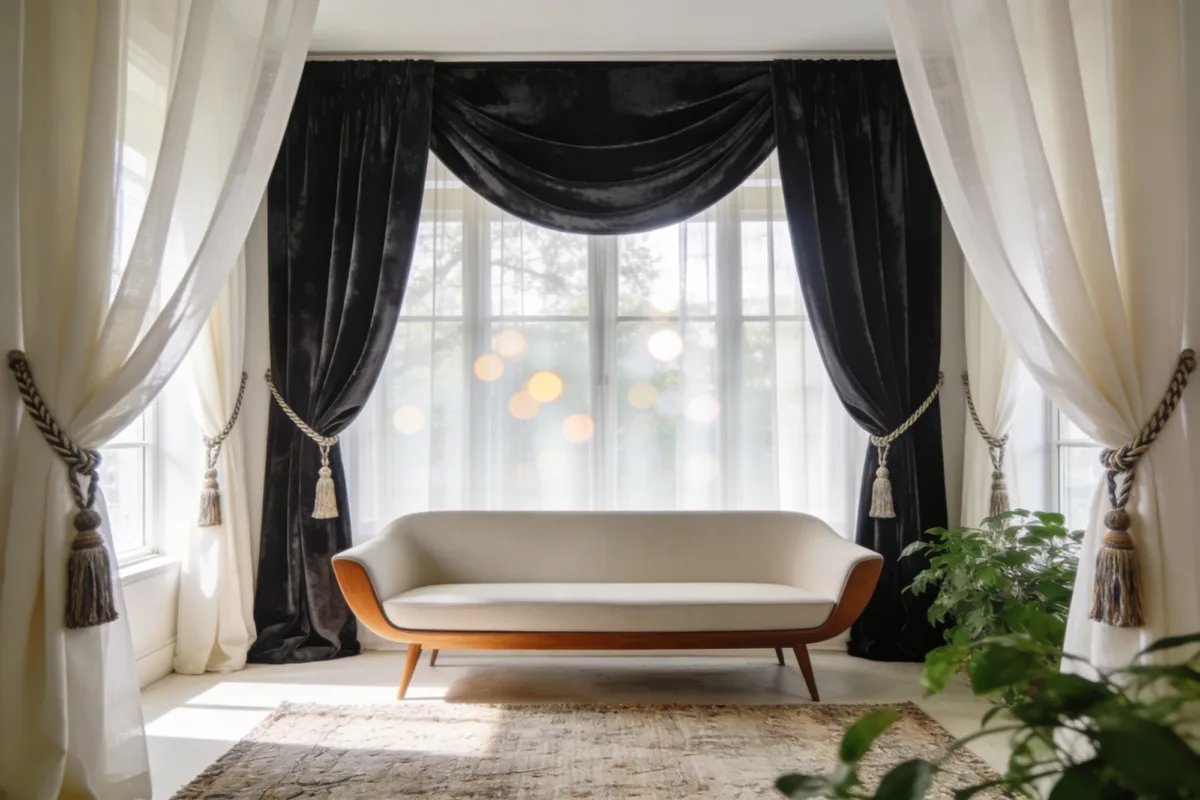
9 Curtain Inspiration Living Room: Elevate Your Space Now
Curtains are one of the few living room changes that can shift the whole mood of a space without moving a single piece of furniture. But most curtain inspiration living room searches turn up photos with no context — no sense of fabric weight, hanging height, or what actually holds up after a year of sun exposure and daily use. Before you buy anything, it helps to see how a full designer-style curtain selection process actually narrows down fabric, color, and length together instead of picking each in isolation.
The nine directions below aren’t ranked — they’re organized by what problem they solve, from height and light to noise and privacy. Pick the one that matches your actual window and room, not just the photo you liked.
1. Layer Texture Instead of Picking One Fabric

A single curtain panel, no matter how nice the fabric, tends to read as flat. Pairing a heavier drape — velvet, cotton twill, a mid-weight linen — with a sheer layer behind it gives you two things a single panel can’t: a way to control light and privacy independently, and visual depth that a flat panel just doesn’t have.
The trade-off is cost and complexity. Layered curtains need double the hardware — either a double rod or a combination track — and double the fabric. If your budget only stretches to one layer, go with the sheer first for daytime and add the heavier layer later; you’ll get more daily use out of the sheer since it’s what filters the light every morning.
💡 Pro Tip: If you’re layering, hang the sheer on the rod closest to the glass and the heavier drape on an outer rod. Reversing this makes the sheer bunch awkwardly when you draw the heavier curtain, and it’s the most common mistake people make with double rods.
Key Elements
- A heavier drape (velvet, twill, mid-weight linen) for structure and warmth
- A sheer panel behind it for daytime light control
- Fabric tiebacks or tassels to finish the look without extra hardware
2. Hang Floor-to-Ceiling for Instant Height
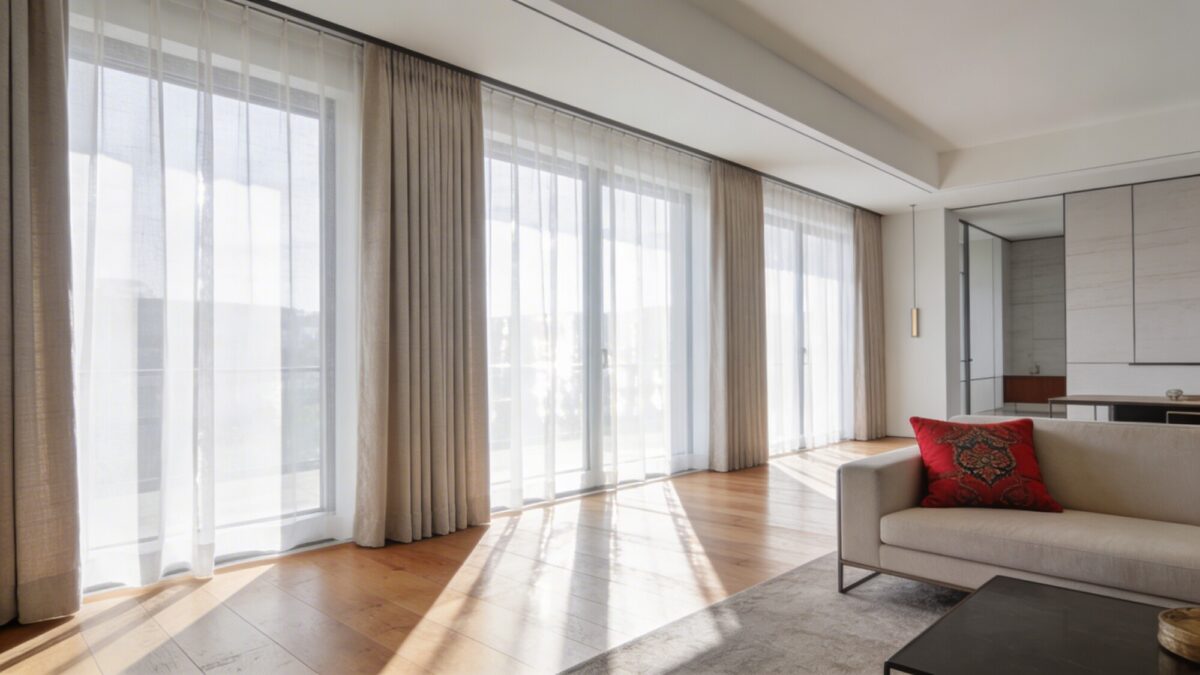
This is the single cheapest change that makes a living room look bigger, and it works whether your ceilings are 8 feet or 10. Mount the rod as close to the ceiling as your crown molding allows — even 4 to 6 inches above the window frame makes a visible difference — and let the panels run down to just above the floor, not stopping at the windowsill.
For living room curtains in a room with genuinely short windows, this trick is doing double duty: it’s not just about height, it’s disguising where the window actually ends. A light cornice or valance at the top keeps the illusion consistent instead of exposing the gap between the rod and the real window frame.
How to Do It
- Install the rod just below the ceiling line, not directly above the window frame
- Use light-reflective, lighter-toned fabric to maximize how much daylight actually gets in
- Add a cornice or valance if your windows are noticeably shorter than the wall
3. Use One Bold Color, Keep the Walls Neutral
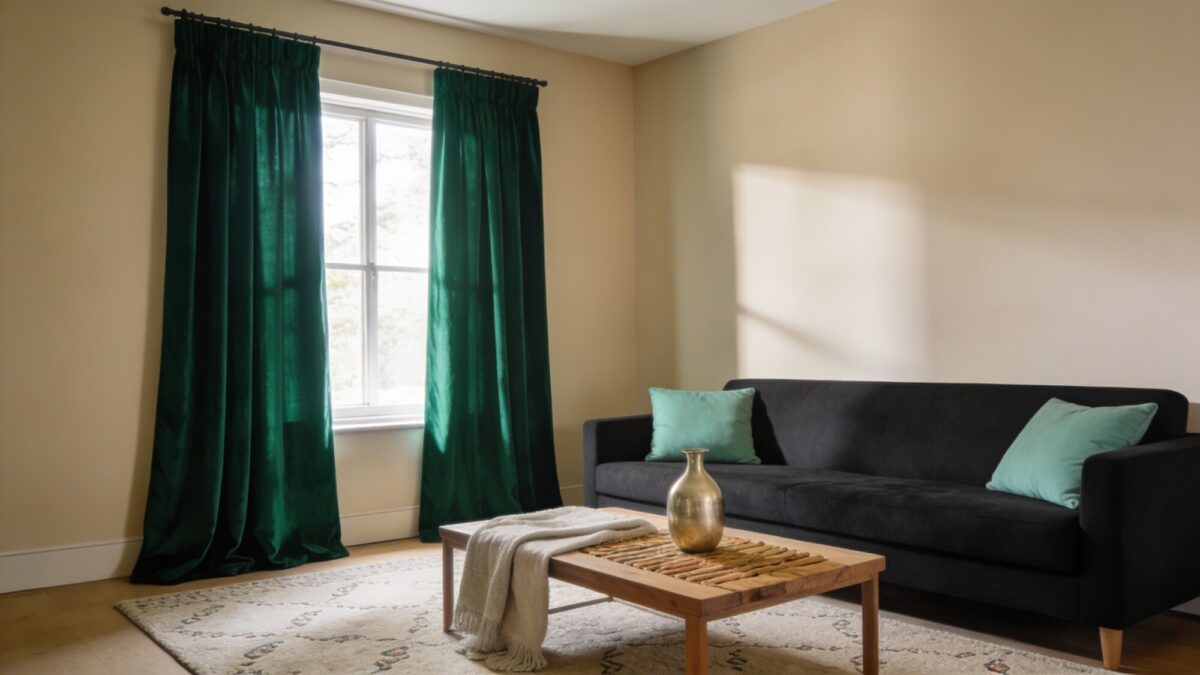
A saturated curtain color — deep emerald, dusty rose, a warm saffron — gives a room a focal point without repainting or committing to new furniture. This works because curtains are large enough to register as a real design statement but reversible enough that you can swap them out in a weekend if you change your mind.
What trips people up is layering the bold color everywhere at once — matching throw pillows, a matching rug, and matching curtains all in the same hue turns a confident accent into a matched set that looks dated fast. Pick one bold curtain color, echo it in one small accent elsewhere (a vase, a single pillow), and leave the rest of the room neutral.
Color Strategy
- Pick one bold hue that complements your existing sofa or rug, not a brand-new color story
- Keep walls and large furniture neutral so the curtains carry the color
- Echo the curtain color in just one small accent piece, not several
4. Go Minimalist With Whisper-Thin Drapes
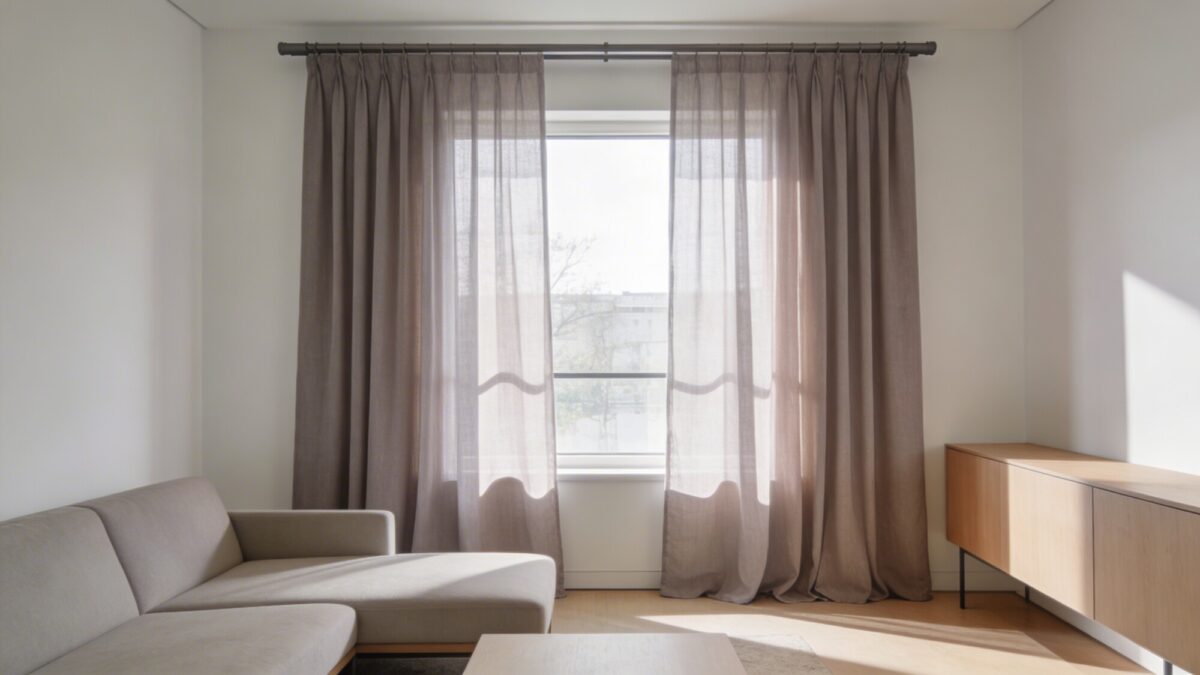
For a curtain design for living room spaces with good architecture and a view worth keeping, sometimes the right move is curtains that barely announce themselves. Ultra-thin cotton or linen-blend panels in a solid neutral let the window and the room’s own lines do the talking, with hardware kept as flat and unobtrusive as possible — no visible grommets, no oversized rod.
This isn’t the right call for every room. If your view is a parking lot or a neighbor’s wall, minimalist sheers just make that more visible during the day. They work best when there’s genuinely something worth seeing outside, or when the room’s architecture is strong enough to be the star on its own.
Best Practices
- Cotton or linen blends for a soft, natural drape
- Matte finishes over anything glossy, which shows glare and dust more
- Sleek, low-profile hardware with hidden or minimal brackets
5. Layer Sheers With a Subtle Pattern

Two sheer layers — a plain voile or chiffon base with a second, lightly patterned sheer in front — give you daytime privacy without blocking light the way a solid curtain would. The pattern should be subtle enough that it doesn’t compete with anything else in the room; a faint geometric or botanical print reads as texture from across the room rather than as a print you’d notice up close.
💡 Pro Tip: Hold both sheer fabrics up against your window in daylight before buying either one. Two patterns that look fine separately in a fabric store can create a distracting moiré or clash once layered and backlit by real sunlight — something swatches under store lighting won’t show you.
What to Look For
- A plain sheer base in voile or chiffon
- A second sheer layer with a subtle geometric or botanical print
- Enough contrast between the two layers that the pattern doesn’t blur into visual clutter
6. Consider Motorized Curtains for Daily Convenience
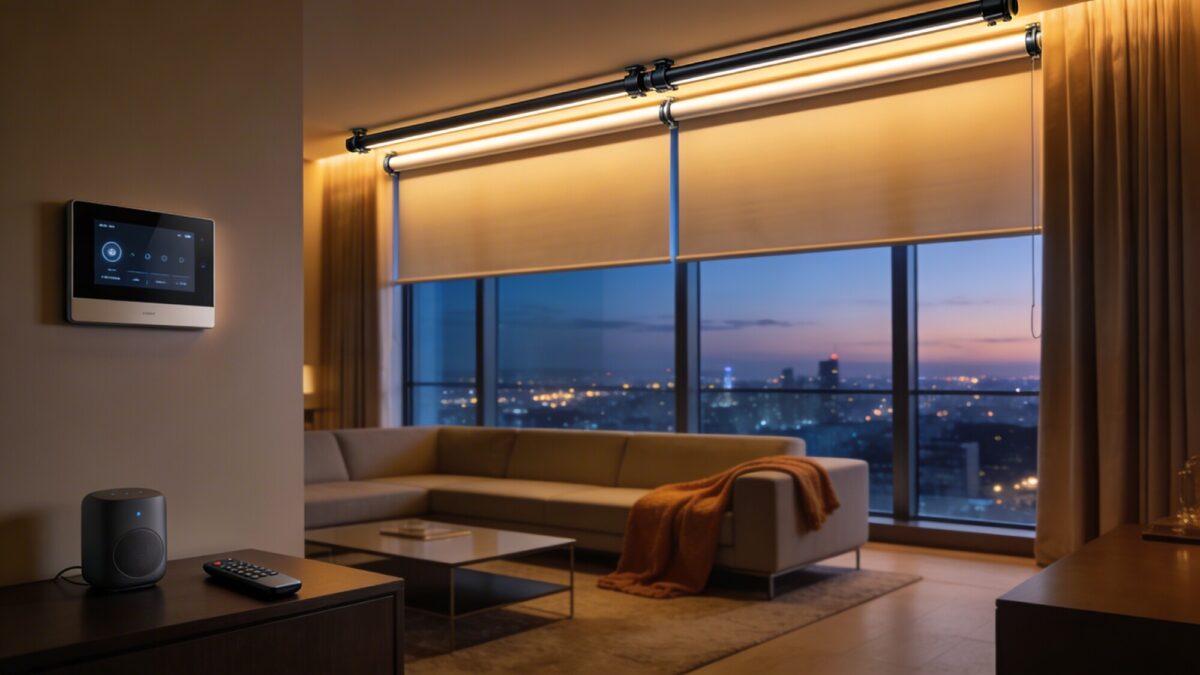
Motorized tracks make the most sense for windows you actually adjust throughout the day — a west-facing living room that gets harsh afternoon glare, or a media room where you want the lights down for movie night without walking across the room. If you’re only opening and closing curtains once a day, the cost usually isn’t worth it.
Retrofitting an existing curtain with a battery-powered motorized track is generally more realistic than replacing the whole rod system, and it avoids rewiring. Most systems pair with a basic remote and, if you want it, voice control through Alexa or Google Assistant.
Simple Setup Ideas
- Battery-powered motorized tracks for easy retrofitting onto existing curtains
- Basic remote control for windows you adjust more than once a day
- Smart home integration only if you already use that ecosystem for other devices
7. Use Blackout Fabric Without Making the Room Feel Gloomy
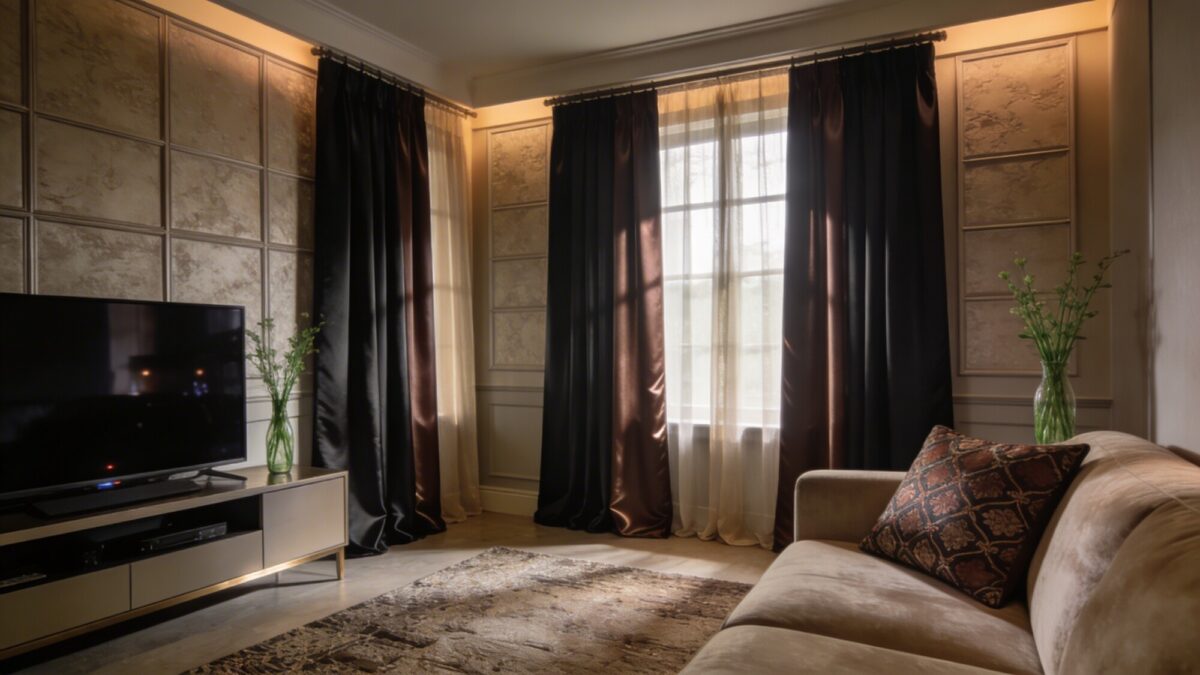
Blackout curtains for living room windows solve a real problem: harsh afternoon glare on a TV screen, or an early sunrise that lights up the room before anyone’s ready for it. The trick to keeping them from feeling like a cave is fabric choice — a blackout panel with a subtle sheen (satin-backed, not matte) reflects some light back into the room instead of just absorbing it, and pairing it with a sheer behind it softens the effect when the blackout layer is open.
Deep charcoal or espresso tones photograph well but can genuinely darken a room during the day if you use them on every window. Consider blackout only on the window that actually needs it — usually the one facing the TV or the one that gets direct morning sun — and lighter curtains elsewhere.
Tips for Balance
- Pair blackout fabric with a lighter sheer behind it for daytime flexibility
- Choose a subtle sheen finish over completely matte to avoid a flat, heavy look
- Reserve blackout for the window that actually needs light or glare control, not every window in the room
8. Try Farmhouse Texture With Linen and Burlap
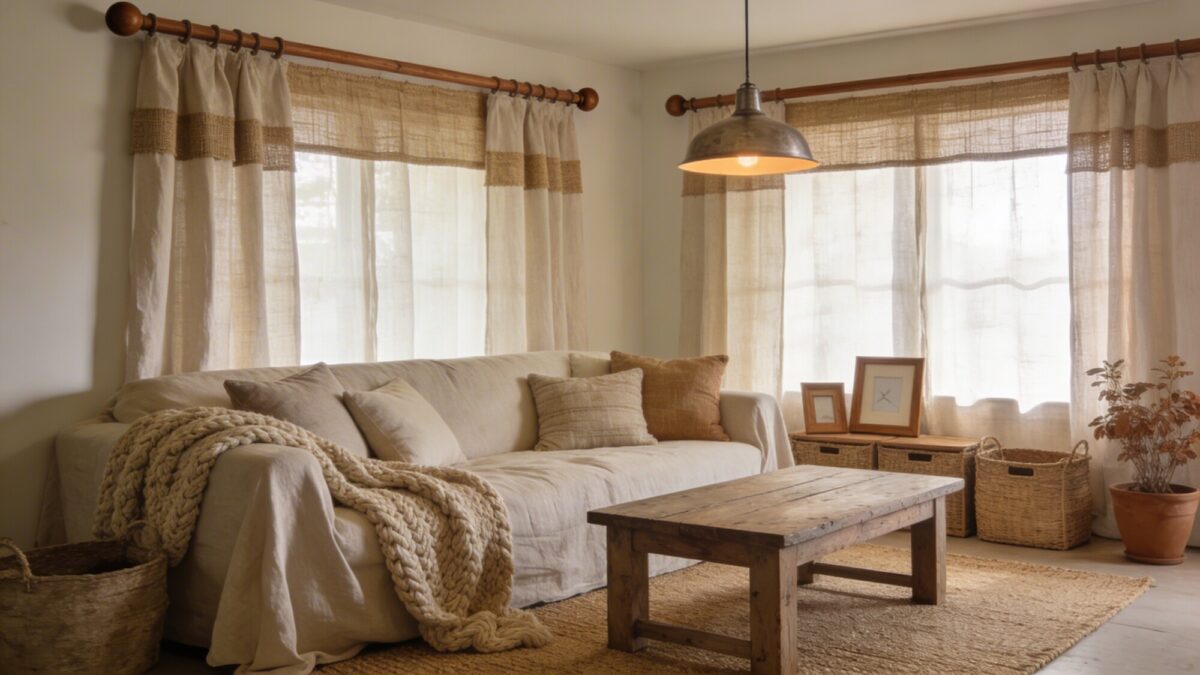
Natural flax linen panels, paired with burlap or jute liner accents and simple wooden rods, give a room a lived-in warmth that’s hard to fake with synthetic fabrics. This look leans on texture more than color — beiges, taupes, and soft creams throughout — so it works best in rooms that already lean toward natural materials: wood floors, a jute rug, unlacquered wood furniture.
Pure linen wrinkles and can look inconsistent panel to panel, which some people love for the casual feel and others find frustrating. If you want the look without the maintenance, a linen-cotton blend holds a straighter line while keeping most of the texture.
Materials to Consider
- Flax or linen panels, or a linen-cotton blend for easier upkeep
- Burlap or jute liner accents for contrast
- Simple wooden rods with understated finials rather than ornate hardware
9. Let the Hardware Do Some of the Work
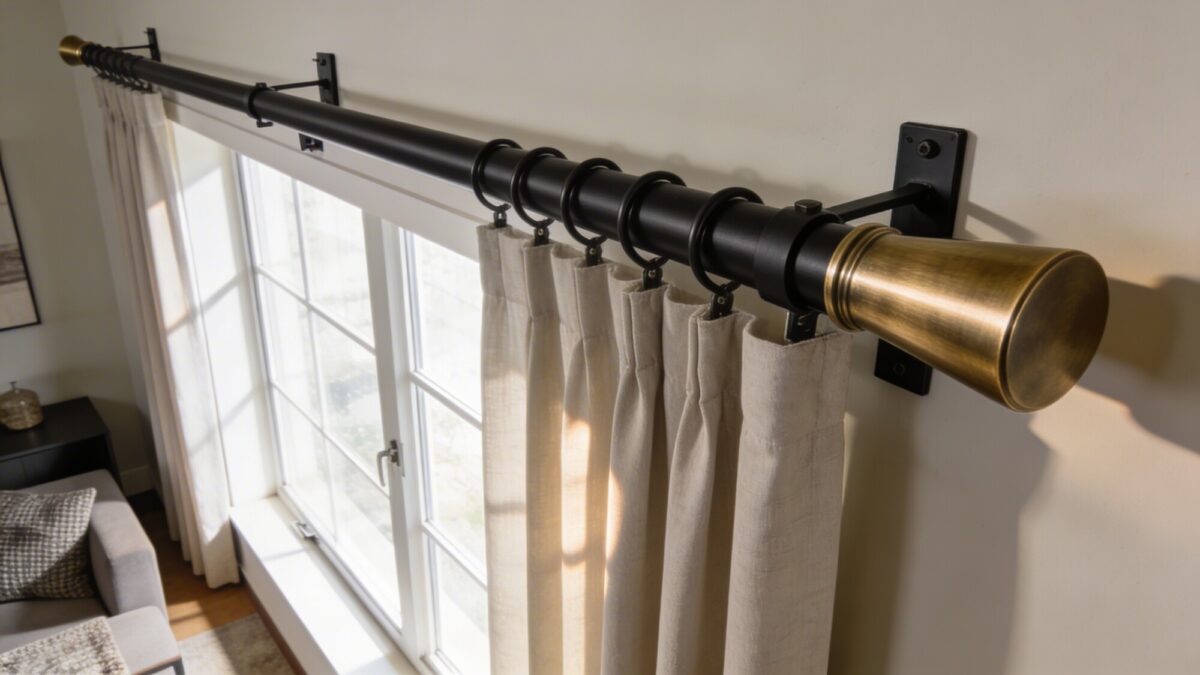
A statement rod — matte black with long brushed brass finials, or any hardware that echoes the metal finishes already in your room — can make even a simple fabric panel look intentional. This is the fastest and cheapest curtain upgrade there is, since you’re not touching the fabric at all.
Scale matters more than people expect. An oversized rod on a small window looks like it’s wearing someone else’s clothes; measure your window width and pick a rod diameter that’s proportional, not just whatever looked dramatic online.
Hardware Hacks
- Matte black or brushed brass rods that echo other metal finishes in the room
- Long, sleek finials for a designer-style finish
- Hidden brackets to keep the mounting hardware itself out of view
Fabric Comparison: Which Curtain Style Fits Your Window
| Fabric Type | Best For | Trade-Off |
|---|---|---|
| Velvet | Drama, insulation, sound dampening | Heavy, can feel dark in small rooms, needs sturdy hardware |
| Sheer voile/chiffon | Daylight, airiness, softening a room | No privacy at night unless layered with a heavier curtain |
| Linen/linen-blend | Natural texture, farmhouse or minimalist looks | Pure linen wrinkles; blends hold a cleaner line |
| Blackout | Glare control, media rooms, early morning sun | Can darken the room; best used selectively, not everywhere |
For a closer look at how two of the most common choices actually compare in daily use, this velvet vs. linen curtain comparison goes deeper into upkeep and cost than a quick table can.
Things to Consider Before You Buy Curtains for Your Living Room
- Measure your actual window width and height before shopping — rod width should extend 4–8 inches past the window frame on each side so panels can fully clear the glass when open
- Decide whether you need privacy at night, light control during the day, or both — that determines whether you need one layer or two
- Check your wall space above the window for mounting a rod near the ceiling if you’re going for the floor-to-ceiling look
- Factor in sun exposure — a west- or south-facing window will fade cheaper fabrics faster than a north-facing one
- If you’re torn between two fabric weights, a blackout vs. sheer comparison can help you decide based on how you actually use the room, not just how it photographs
Curtain Inspiration Living Room: Frequently Asked Questions
What length should living room curtains be?
Floor-length, ending just above the floor or with a slight break, reads as more intentional than curtains that stop short at the windowsill. Puddling fabric on the floor looks elegant in photos but collects dust fast in daily use.
Do I need to match my curtains to my walls?
No — matching creates a flat, monochrome look. A curtain color that complements the wall without matching it exactly (a few shades warmer or cooler) usually reads better.
Are blackout curtains only for bedrooms?
No, they work well in living rooms with harsh afternoon sun or a TV that gets glare. Reserve them for the window that actually needs it rather than the whole room.
How do I choose curtains for a small living room without making it feel smaller?
Lighter, more translucent fabrics and floor-to-ceiling hanging both help. Heavy, dark fabric on a small window tends to shrink the perceived space.
Our Verdict
The curtain choice that makes the biggest visible difference for the least effort is almost always height — mounting the rod near the ceiling and letting panels run to the floor. Fabric and color matter, but they’re secondary to that one structural decision. If you only change one thing from this list, change that.
Once you’ve settled on the basic approach, this roundup of living room curtain ideas that look expensive is a good next stop for seeing the same principles applied across a wider range of room styles.