8 Living Room Inspiration Small Space: Tiny Room, Big Style
A small living room doesn’t need a renovation budget to stop feeling like a hallway with a couch shoved in it. Most of the fix is in what you take out, where you put light, and how honest you are about what the room can actually hold. If you’ve already tried rearranging the same three pieces of furniture five different ways and it still feels tight, the problem usually isn’t your layout — it’s one of the eight things below. For more layout-specific fixes once you’ve got the basics down, our small living room layout guide goes deeper into floor plans for awkward room shapes.
This is a working list, not a mood board. Each idea below includes what it actually does for the room, where people tend to overdo it, and a quick way to tell if it’ll work in your space before you buy anything.
Quick Takeaways
- Mirrors and floating furniture do the most visible work for the least money — start there if your budget is tight.
- Storage that’s built into seating (ottomans, plinth bases) beats separate storage furniture in a room under 150 sq ft.
- One bold accent color reads as intentional; three or more reads as clutter, even in a tidy room.
- Vintage and thrifted pieces work best for one-off statement items — not for matched sets, which rarely turn up secondhand.
- A dropped or false ceiling can help define a space, but only if the room already has decent ceiling height to spare.
1. Mirror Placement: The Cheapest Way to Add Depth
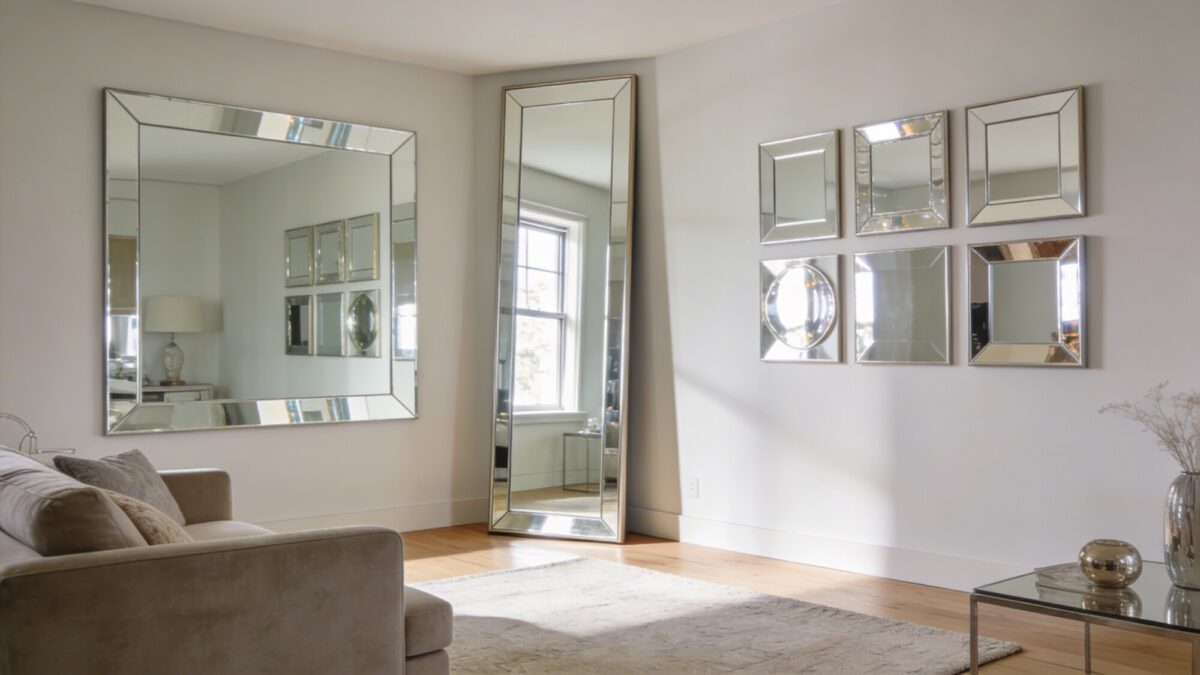
A mirror doesn’t make a room bigger — it makes your eye think there’s more room than there is, because it doubles whatever light and depth the mirror is facing. That distinction matters for where you put it. A mirror facing a blank wall just reflects a blank wall back at you. A mirror facing a window, a lamp, or an open doorway reflects light and sightlines, which is the part that actually reads as “spacious.”
The size matters more than people expect. A small decorative mirror over a console table looks nice but does almost nothing for the sense of scale. You want one mirror that’s genuinely large — floor-to-half-wall in a corner, or one that spans most of the width above a console — rather than three small ones scattered around.
- Hang it directly opposite your main window, not at an angle to it
- A tall, slim floor mirror in a corner adds more perceived depth than a wide one on a flat wall
- If you’re doing a gallery wall, swap one or two frames for mirrored ones instead of adding a separate mirror elsewhere
Stick to a frameless or thin-framed mirror. A heavy, ornate frame draws attention to the object itself instead of what it’s reflecting, which works against the point.
💡 Pro Tip: Before you hang anything, hold the mirror up at different spots for a day and check what it reflects at both morning and evening light — a mirror that looks great at 2pm can face a dark hallway by 7pm and undo the effect at night.
2. Sofa-Side Storage That You’ll Actually Use
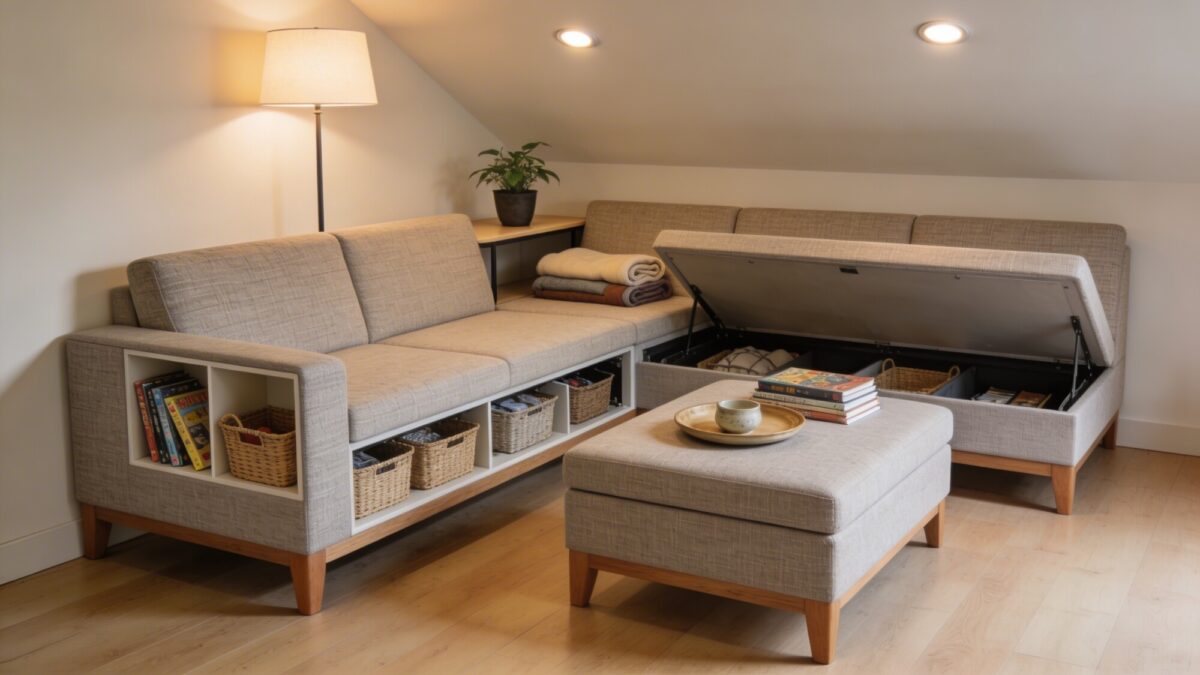
The failure mode with small-space storage is buying a piece that’s technically “storage furniture” but is really just another surface that collects clutter — a basket that sits empty because it’s awkward to open, or an ottoman lid that’s heavy enough that nobody bothers lifting it after week two. The storage that survives long-term is the kind that’s easier to use than not using.
Three setups hold up in daily use:
- Storage ottoman as coffee table — works well if the lid lifts with one hand and the inside is divided, not one deep bin you have to dig through
- Sectional with built-in cubbies — best if you’re buying new anyway; retrofitting a sectional you already own isn’t usually worth it
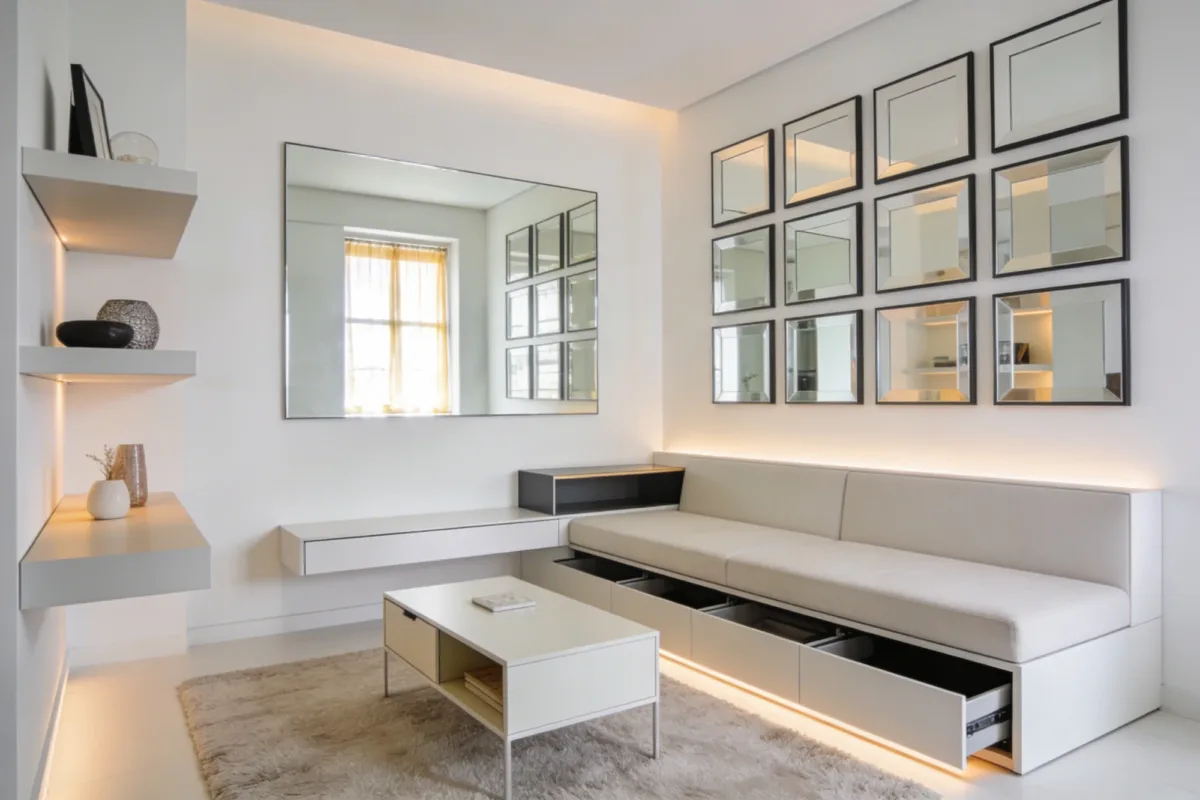
- Low sofa with a recessed plinth — good for flat items (throws, board games) but awkward for anything tall
If you’re not ready to replace furniture, a slim console table tucked directly behind the sofa (if it’s floating, not against a wall) gets you most of the benefit for the price of one piece.
3. Vintage and Thrifted Finds That Don’t Look Random
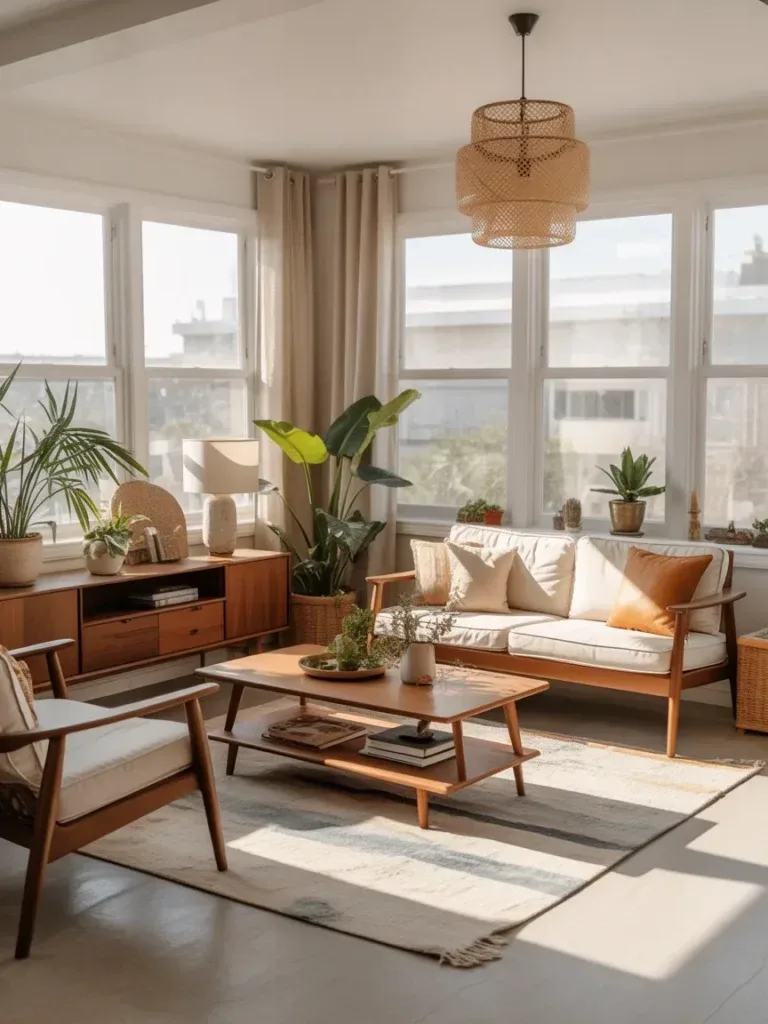
Living room inspiration built entirely around vintage pieces has a real advantage in a small space: secondhand furniture often runs smaller and lower-profile than what’s sold new, because older manufacturing standards weren’t built around today’s oversized sectionals. A 1970s armchair or a mid-century console tends to take up noticeably less floor space than its modern equivalent.
The mistake people make with thrifted living room furniture is trying to build a whole matched set from secondhand pieces. That almost never works — vintage sets get split up over decades, and chasing a full matching suite usually means settling on something that doesn’t fit or waiting months for pieces that don’t show up. It works much better as one or two statement pieces against a simpler, newer base: a vintage couch decor idea that’s actually practical is one bold thrifted sofa or chair paired with plain, current-day side tables and a neutral rug, not a room full of secondhand everything.
- Look for one anchor piece — a couch, a credenza, or an armchair — rather than a full set
- Reupholstering a thrifted sofa frame is usually cheaper than buying new if the frame itself is solid; a bad frame is not worth saving even at a low price
- Pair vintage wood tones with one repeated modern material (black metal, glass, or a matching paint color) so the room reads as curated, not accidental
💡 Pro Tip: Check the underside and frame joints of any secondhand sofa before buying — reupholstery fixes fabric and cushions, but a wobbly or cracked frame usually isn’t worth the labor cost to repair.
4. Floating Furniture for Open Sightlines
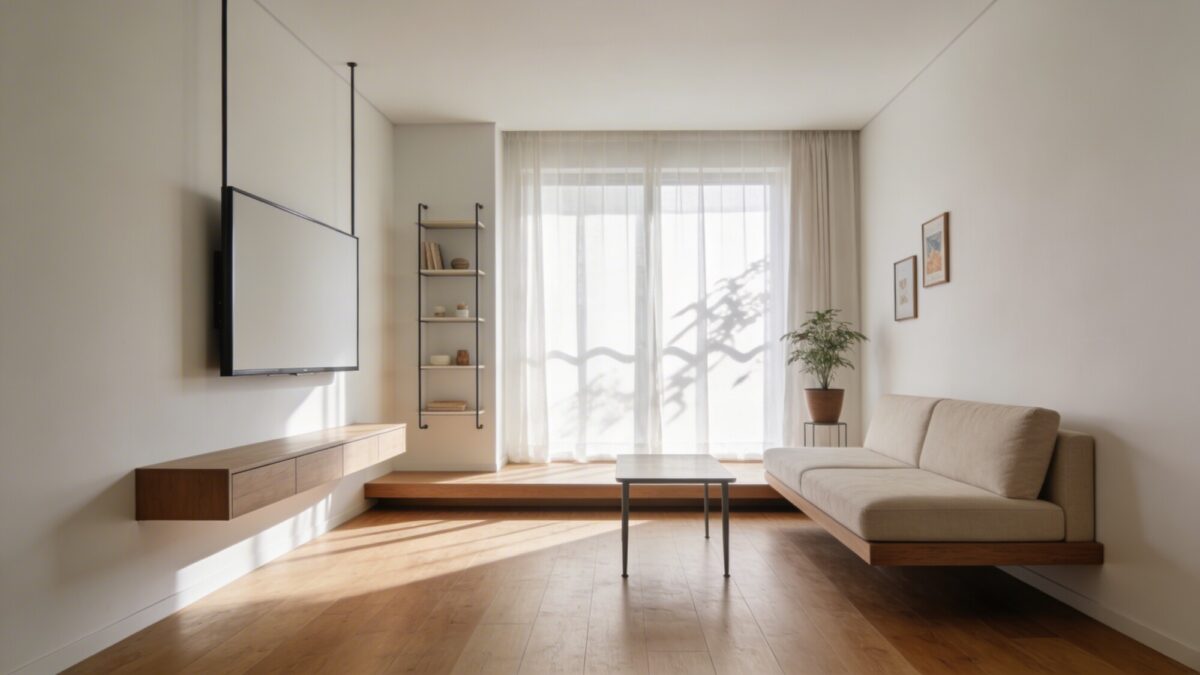
Furniture that touches the floor with a solid base — think a heavy media cabinet or a boxy TV stand — visually “stops” the eye at that height. Wall-mounted or slim-legged pieces let your eye travel under and past them, which is most of why a room with floating furniture reads as bigger even when the square footage hasn’t changed.
- A wall-mounted TV frees up the floor space a stand would have taken, plus everything below it
- Choose consoles and shelving with visible legs rather than a solid plinth base
- Keep at least 18 inches of clear floor space around main seating so walking paths don’t get swallowed by furniture
This is also the easiest category to overdo — if every single piece floats, the room can start to feel unfinished rather than airy. One or two grounded pieces (a rug, a low coffee table) actually help by giving the eye somewhere to land.
5. A Calm Base With One Real Accent Color
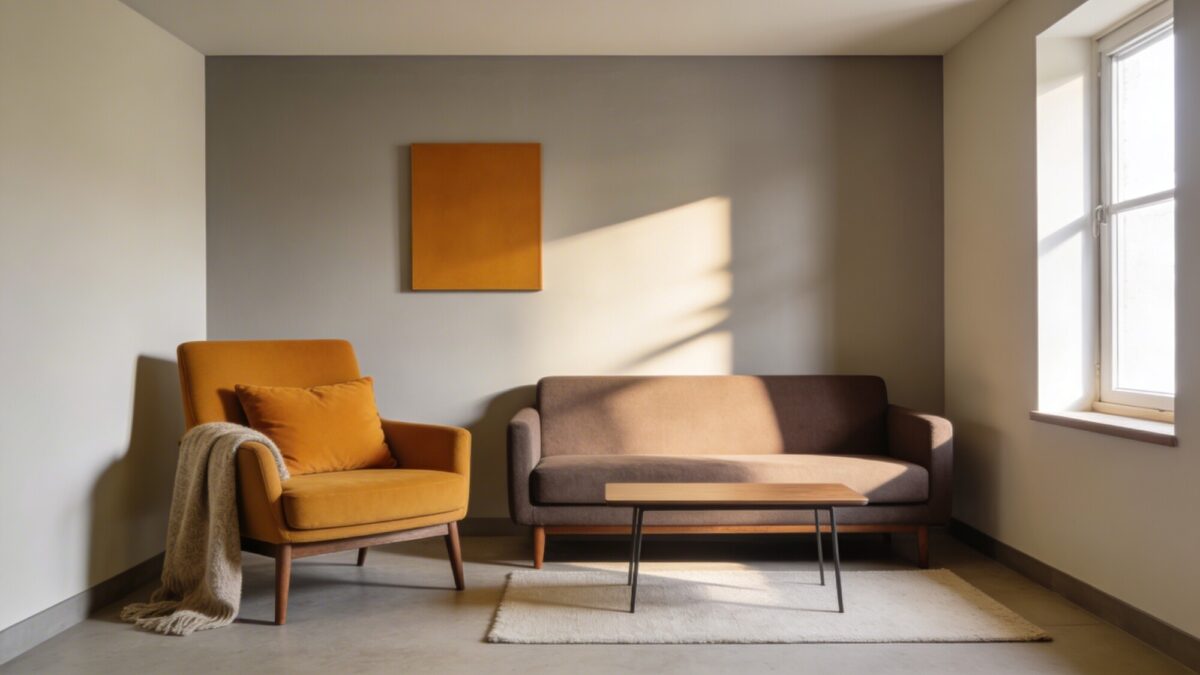
The reason a lot of small-space color advice defaults to “keep it neutral” isn’t that color makes a room smaller — it’s that most people who add color add too much of it at once, and a room with five accent colors in 200 square feet reads as busy no matter how well-lit it is. One well-placed bold color, on the other hand, gives the eye a focal point and reads as confident, not cramped.
- Base: warm greys, creams, or taupes on walls and larger furniture
- Accent: one punch color — a chair, a set of cushions, or a single piece of art
- Repetition, not variety: echo that one accent color in two or three spots max (a cushion and a vase, for example), rather than adding a second unrelated color
A mustard armchair or a single emerald throw does more for a small room than a rainbow of smaller accents scattered across it.
6. Layered Lighting Instead of One Overhead Fixture
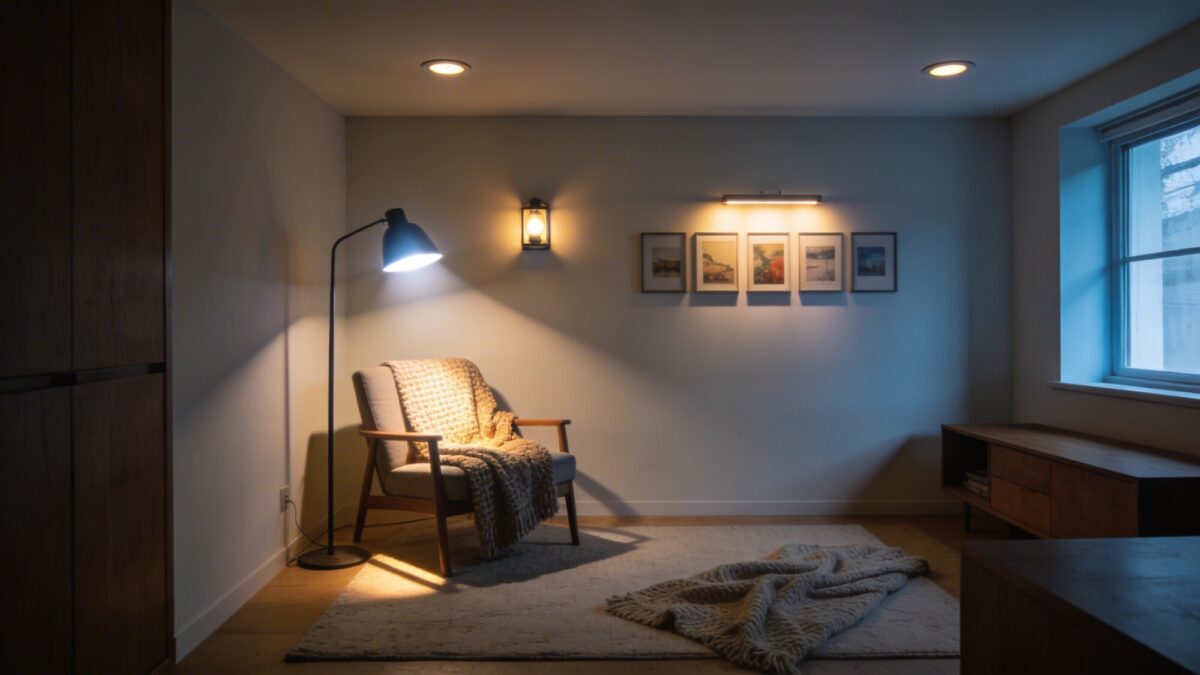
A single ceiling fixture lights the middle of a room and leaves the corners in shadow, and shadowed corners in a small space read as smaller, not cozier. Layering three types of light fixes this without adding any floor space: ambient light for even coverage, task light where you actually read or work, and a small accent light (a sconce or picture light) to pull attention to a wall instead of just the floor.
- Ambient: a ceiling fixture or recessed lights for overall coverage
- Task: a floor lamp positioned next to your reading chair or sofa end
- Accent: a small wall sconce or a picture light over art
Smart bulbs make this easy to adjust without buying multiple lamps for multiple moods — one bulb can go from bright work light to a dimmer evening setting.
7. A False Ceiling Design That Actually Helps (and When It Doesn’t)
Small living room false ceiling design gets recommended a lot in decor content, and it can genuinely help — but only under specific conditions, which most articles skip over. A dropped or coffered ceiling section works when the room already has ceiling height to spare (roughly 9 feet or more), because it lets you define the living area with a change in plane without making the room feel low. In a standard 8-foot room, the same treatment usually backfires — it eats the one dimension a small room can’t afford to lose, and the space feels more cramped, not more designed.
- Measure your actual ceiling height before considering this — under 8’6″, skip it
- A partial false ceiling (just over a seating nook, not the whole room) is safer than a full drop
- Cove lighting built into the edge of a false ceiling section can add the layered-light effect from the section above without a separate floor lamp
If your ceiling height is on the lower end, a painted ceiling in a lighter tone than your walls does more of the “feels taller” work than a structural false ceiling ever will, for a fraction of the cost.
8. Multi-Functional Nooks: One Spot, Two or Three Jobs
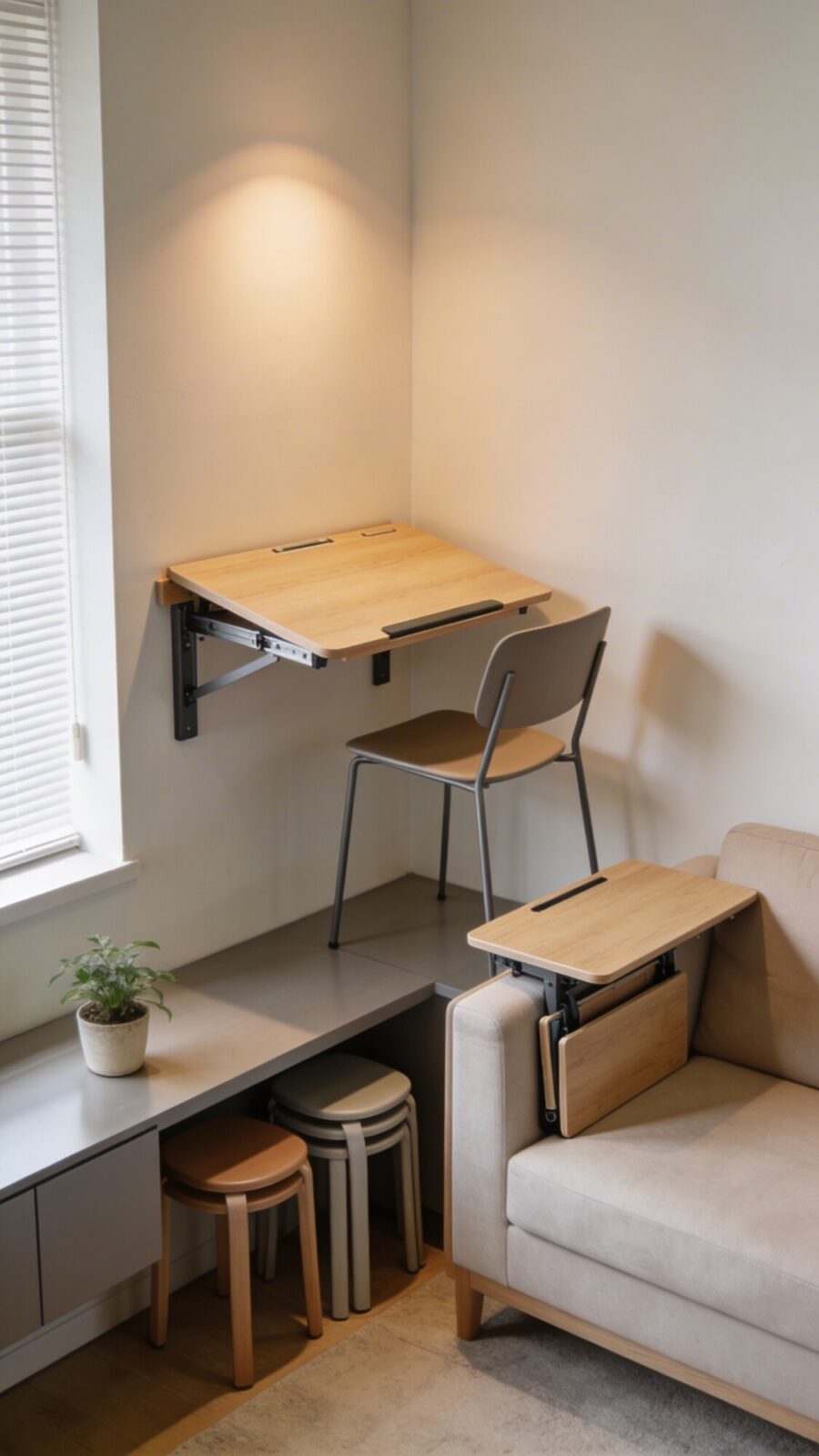
In a small living room, a piece of furniture that only does one job is a luxury you often can’t afford. A wall-mounted drop-leaf table can fold down flat against the wall most of the time and open up for dinner or a laptop when you need it. It’s a bigger commitment to install than most of the ideas above, but it solves a problem (where does anyone eat or work?) that a lot of small living rooms never actually address.
- A drop-leaf table with a slim chair