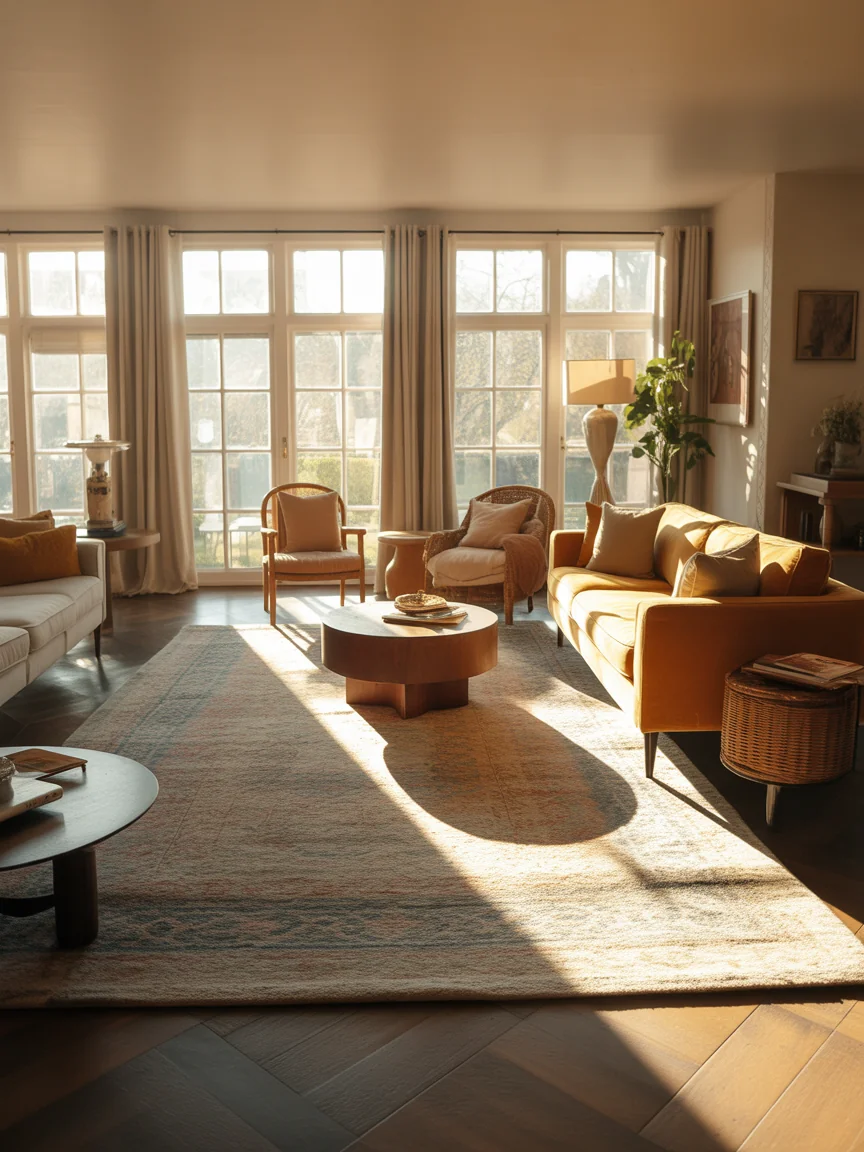
Living Room Rug Placement: The Rules Designers Swear By That Actually Work
Let’s be honest—rug placement can make or break your entire living room. You can have the nicest sofa, perfect lighting, even Pinterest-worthy decor… and still end up with a space that feels off. Why? Because your rug is either too small, awkwardly placed, or just doing its own thing.
Good news: fixing it isn’t complicated. Designers follow a few simple rules that instantly elevate a room. And once you know them, you’ll never look at rugs the same way again.
The Golden Rule: Bigger Is (Almost Always) Better
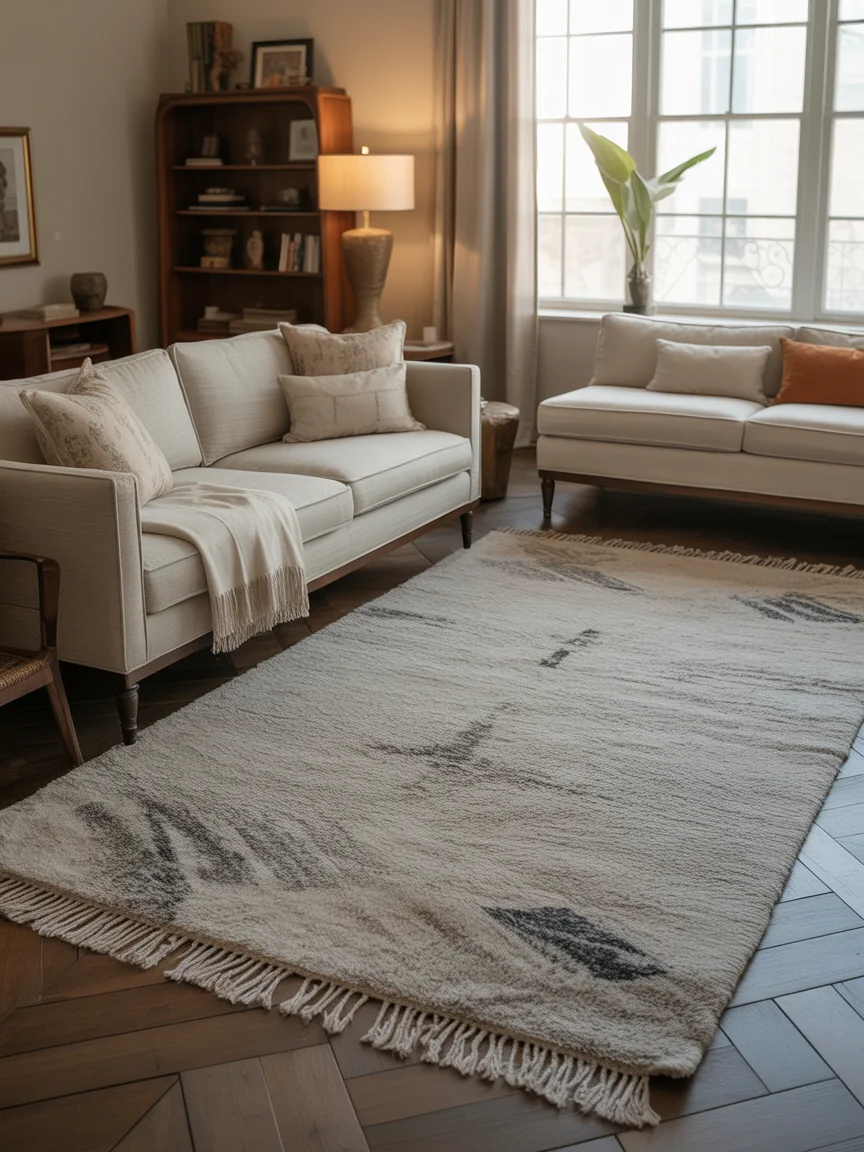
If there’s one rule designers repeat like a mantra, it’s this: your rug is probably too small.
A tiny rug floating in the middle of your seating area makes everything feel disconnected. It’s like wearing shoes two sizes too small—technically functional, but uncomfortable and weird.
Here’s what works instead:
- Choose a rug large enough to anchor all major furniture
- Aim for at least the front legs of sofas and chairs to sit on the rug
- When in doubt, size up—not down
IMO, a slightly oversized rug looks intentional and luxurious. A small one? It just looks like you gave up halfway.
All Legs On vs. Front Legs Only
This is where things get a little nuanced—but also more fun.
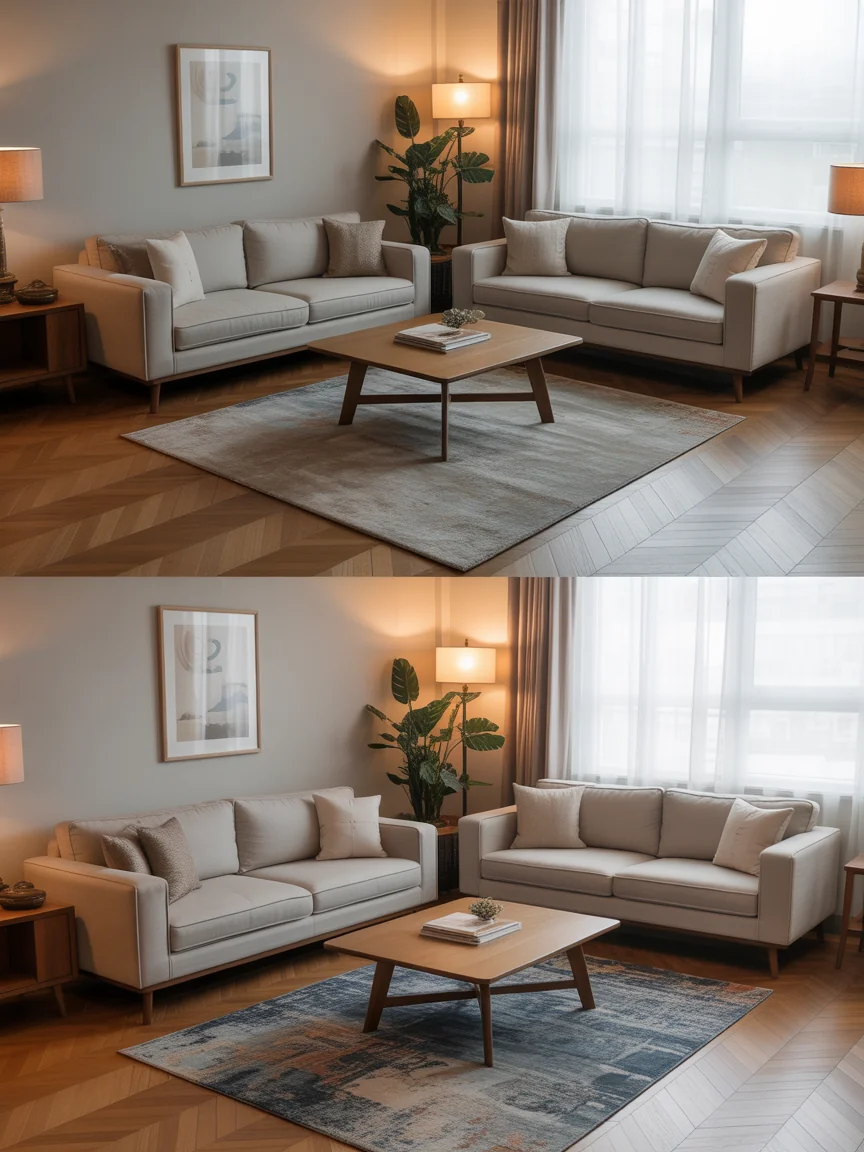
All Legs On (The Luxe Look)
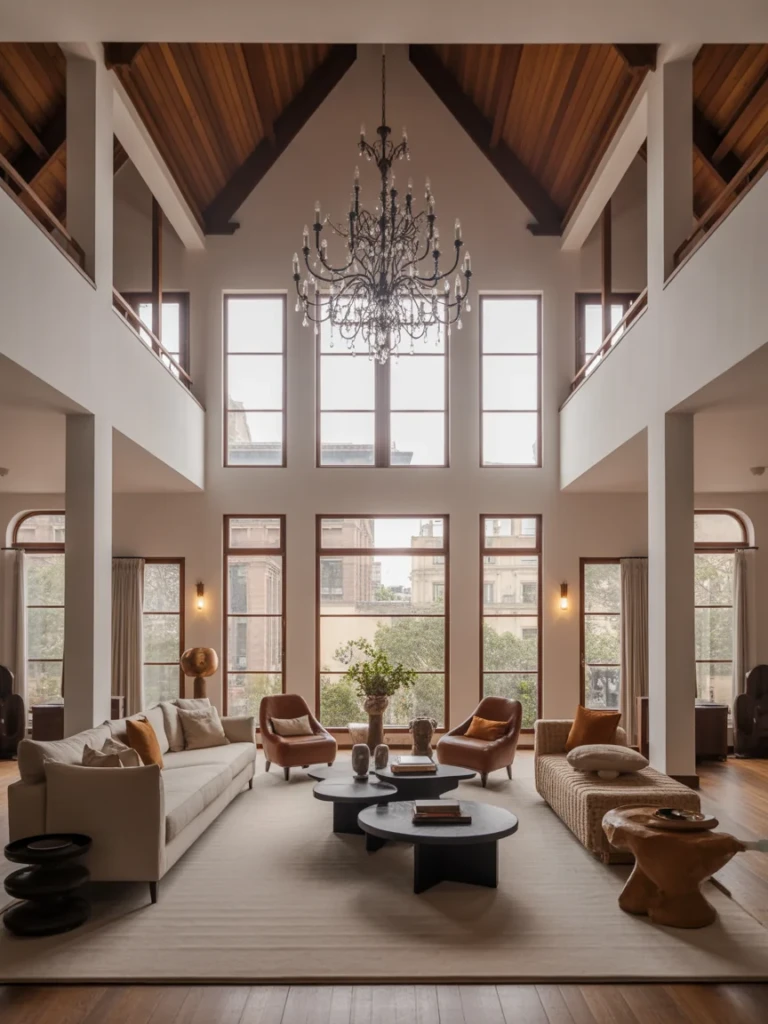
Want that high-end, magazine-style vibe? Go for the all legs on setup.
- Sofa + chairs fully sit on the rug
- Works best in larger living rooms
- Creates a cohesive, grounded layout
This layout feels polished and put together. It tells people, “Yes, I planned this.”
Front Legs Only (The Safe Default)
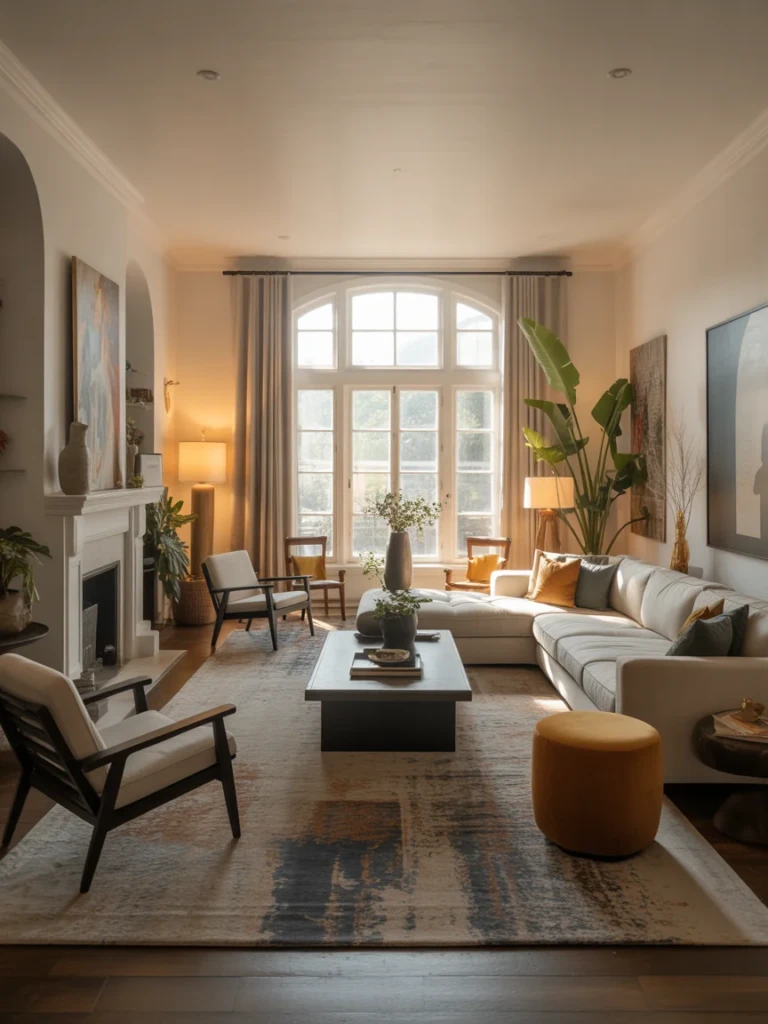
This is the most common designer-approved setup.
- Only the front legs of furniture sit on the rug
- Back legs stay off
- Works in small to medium spaces
It still ties everything together without needing a massive rug. If you’re unsure, start here—you really can’t mess it up.
Leave Breathing Room Around the Edges
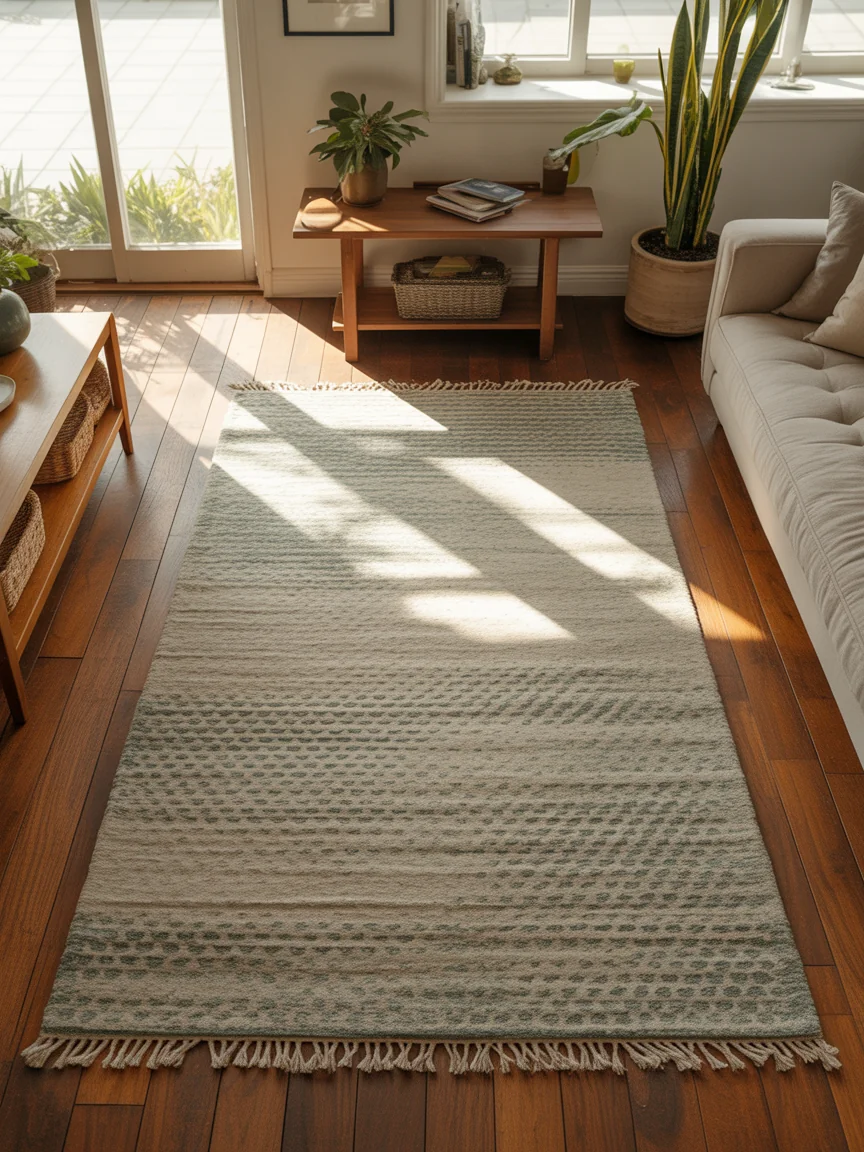
Rugs need space. Yes, even rugs deserve boundaries.
You don’t want your rug pressed wall-to-wall unless you’re intentionally going for a carpeted look. Designers usually leave 8–12 inches of floor space around the rug’s edges.
Why it matters:
- It frames the rug like artwork
- Prevents the room from feeling cramped
- Makes the space look more intentional
Think of it like margins in a document—without them, everything feels chaotic.
Match the Rug to Your Layout, Not Just the Room
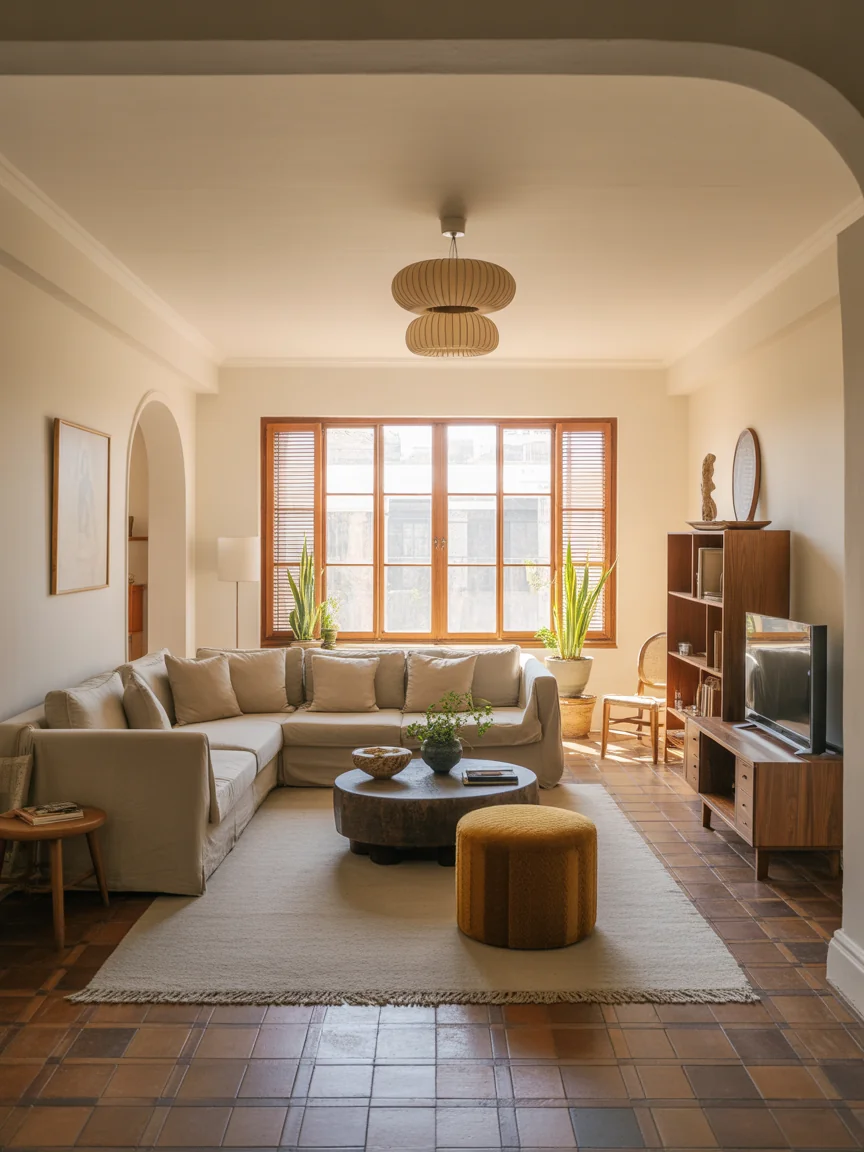
A common mistake? People size rugs based on the room dimensions alone. But designers focus on the furniture layout first.
Your rug should define your seating zone, not just fill empty floor space.
Ask yourself:
- Where does conversation happen?
- Where do people naturally gather?
- What furniture pieces belong together?
Then place your rug under that zone—not randomly in the center of the room like it’s trying to find purpose.
Coffee Table Placement Matters More Than You Think
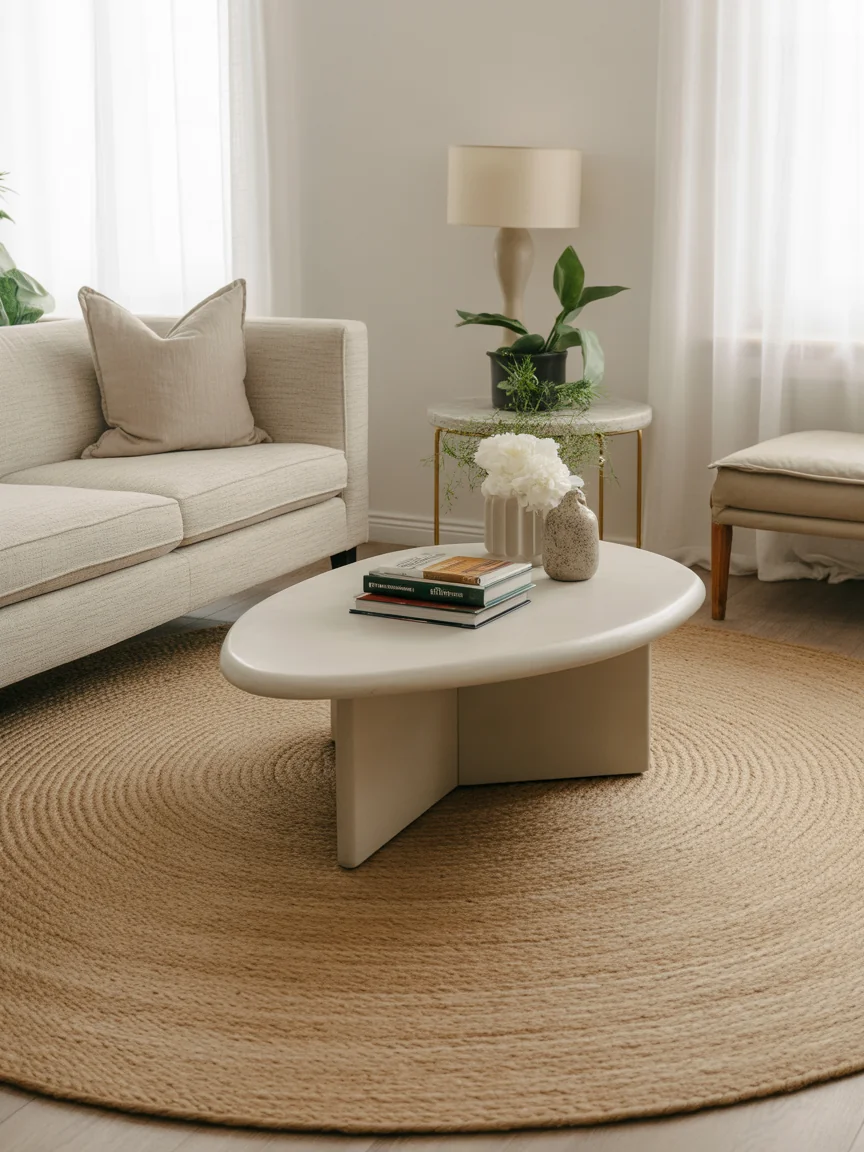
Your coffee table and rug? They’re a package deal.
Here’s how to get it right:
- The coffee table should sit fully on the rug
- Leave about 16–18 inches between sofa and table
- Make sure the rug extends beyond the table on all sides
If your rug barely fits under the coffee table, it’s too small. No debate.
Pro Tip: Round Rugs = Softer Layouts
Got a lot of sharp edges in your room? A round rug can soften things up.
- Works great under round coffee tables
- Adds visual contrast in boxy spaces
- Perfect for smaller seating areas
It’s a subtle move, but it changes the entire vibe.
Layering Rugs Like a Designer (Without Overthinking It)
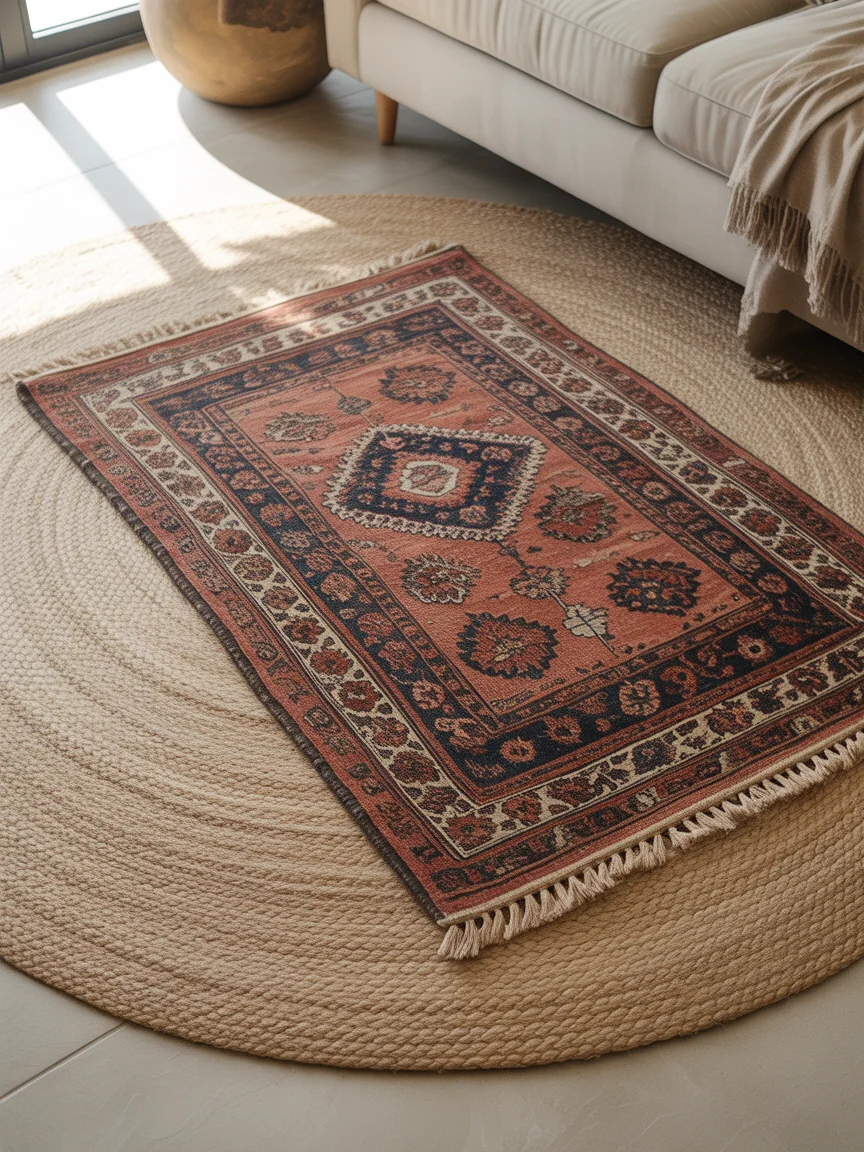
Layering rugs sounds fancy, but it’s surprisingly easy.
Start with a large neutral base rug, then add a smaller statement rug on top.
Why designers love this:
- Adds texture and depth
- Lets you experiment without committing
- Makes the room feel curated, not cookie-cutter
Easy Layering Combos
- Jute rug + patterned vintage rug
- Neutral wool rug + bold geometric accent
- Flatweave base + plush top layer
Just don’t go overboard. You’re layering, not building a rug sandwich.
Don’t Ignore Shape and Proportion
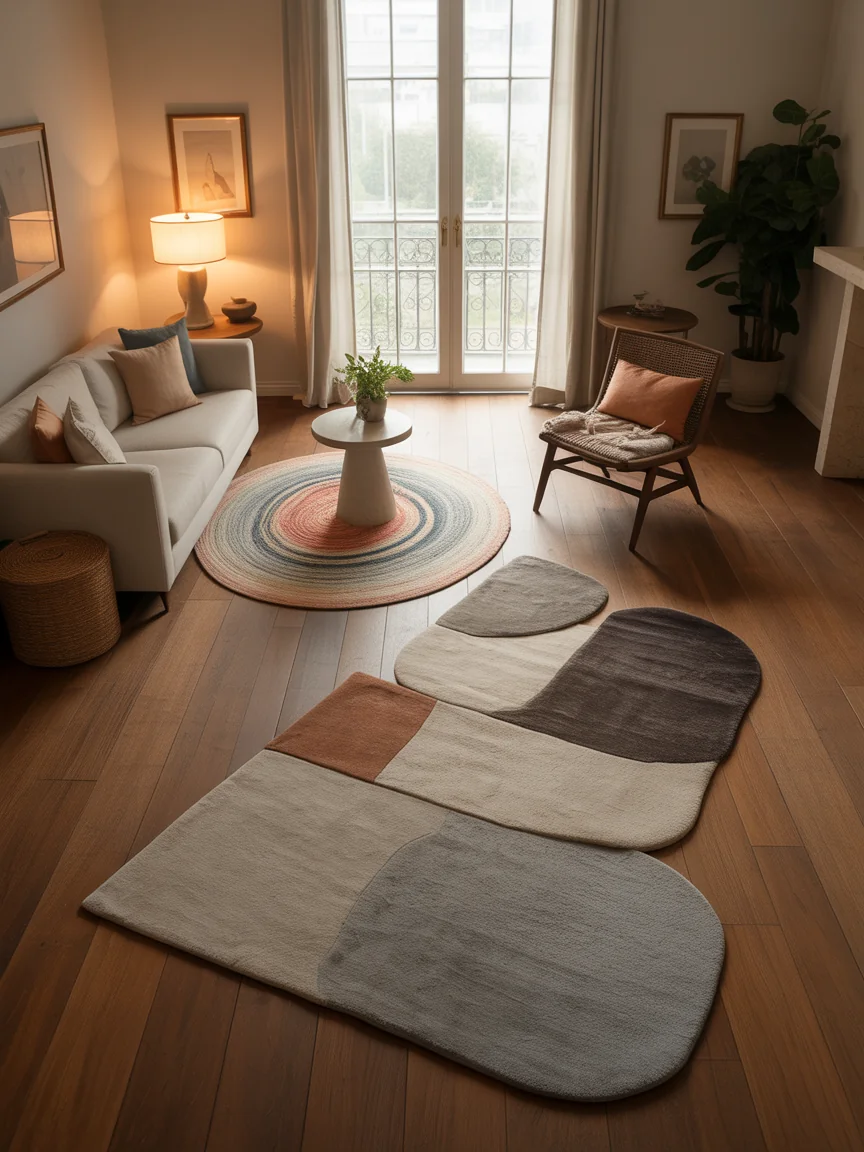
Rectangular rugs dominate living rooms—but they’re not your only option.
Sometimes the room calls for something different.
- Square rugs work well in symmetrical layouts
- Round rugs soften tight or awkward spaces
- Runner rugs can define narrow seating areas
The key? Match the rug shape to your furniture arrangement—not the other way around.
FAQ
How far should a rug go under a sofa?
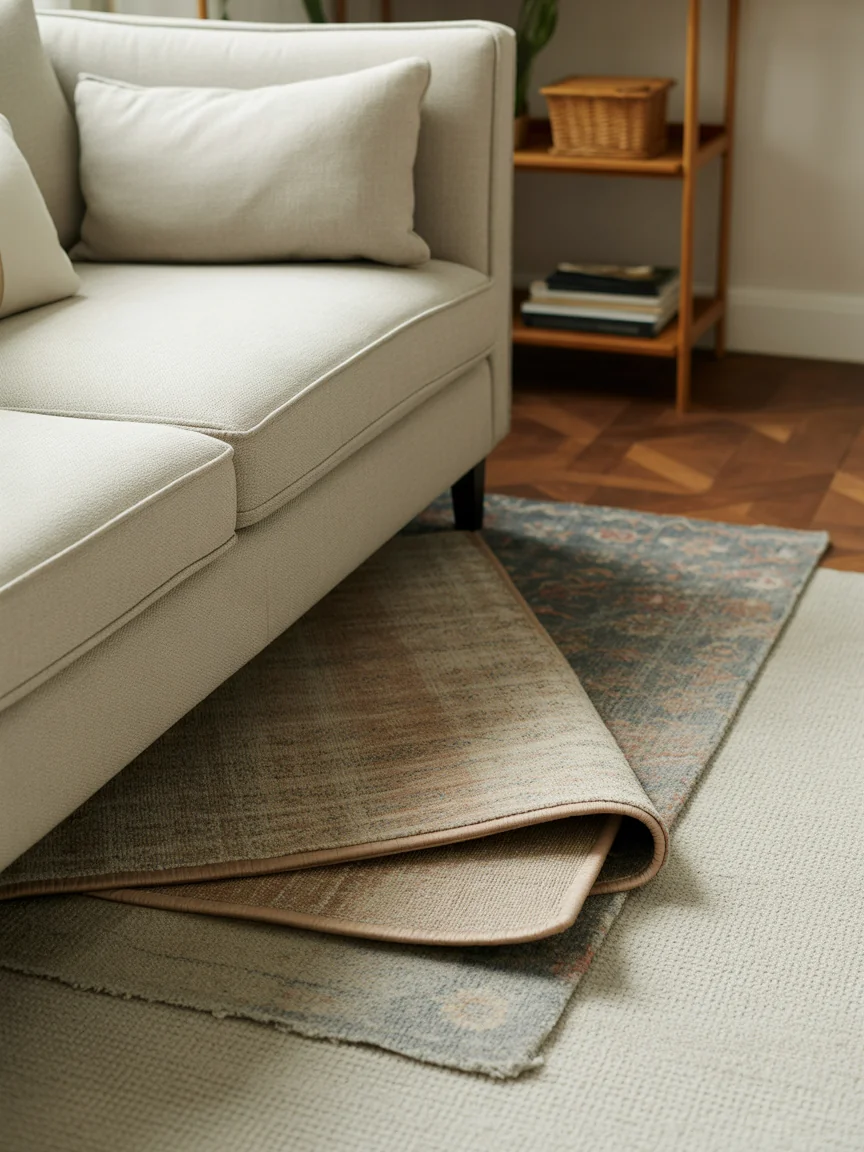
Ideally, the rug should go under at least the front legs of the sofa. If you have space and budget, placing the entire sofa on the rug creates a more cohesive look.
Can a rug be too big?
Rarely. A rug can feel too big if it touches every wall edge, but generally, bigger rugs make rooms feel more expansive and luxurious.
Should my rug match my couch?
Not exactly. Your rug should complement, not match. Contrast often looks better and adds personality.
What’s the best rug size for a small living room?
Aim for a rug that still fits under the front legs of all seating furniture. Even in small spaces, avoid tiny rugs—they make the room feel smaller.
Can I put a rug over carpet?
Yes, and it actually looks great when done right. Use a low-pile rug over carpet to add texture and define zones.
How do I stop my rug from sliding?
Use a rug pad underneath. It keeps everything in place and adds a bit of cushioning—win-win.
Conclusion
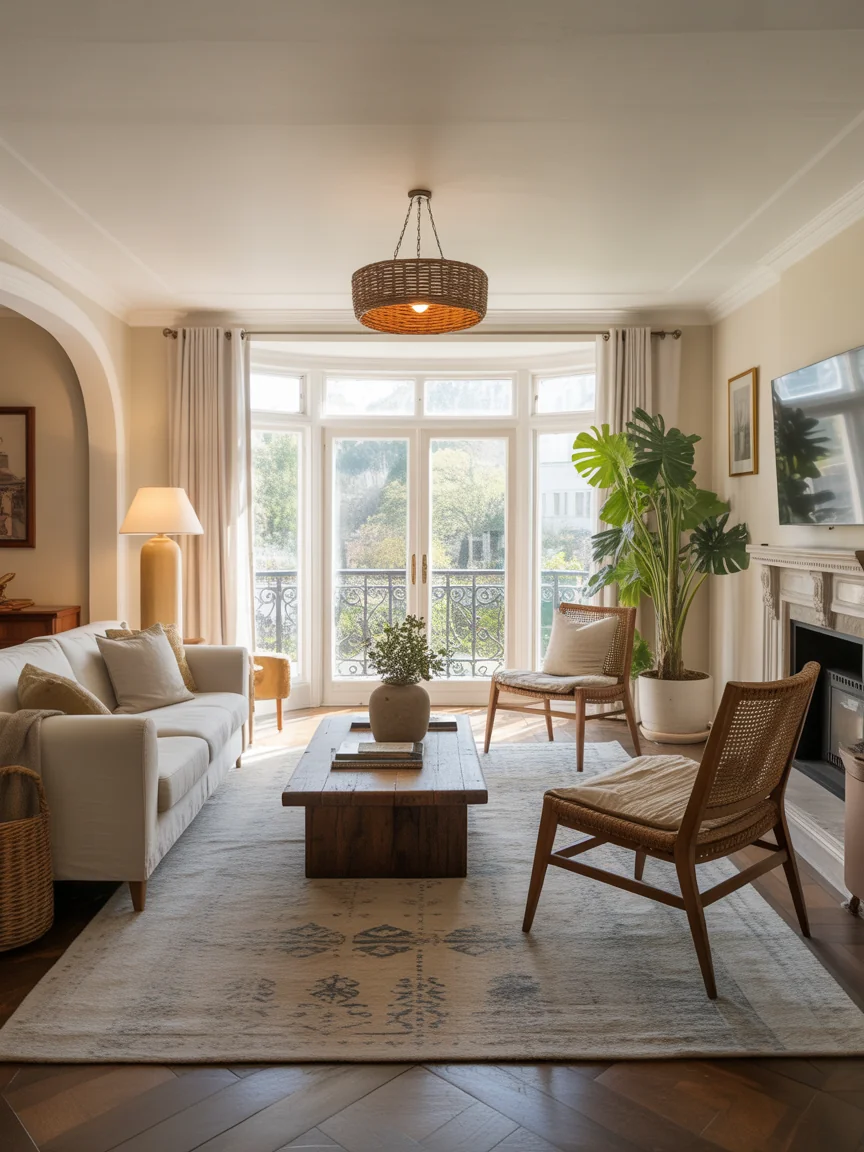
At the end of the day, rug placement isn’t about strict rules—it’s about balance. But these designer-approved guidelines give you a solid starting point.
Go bigger than you think, anchor your furniture, and give your rug room to breathe. Once you nail those basics, your living room will instantly feel more polished, more intentional, and way more “put together.”
And hey—if something feels off, it probably is. Trust your eye. Or at least trust your rug.