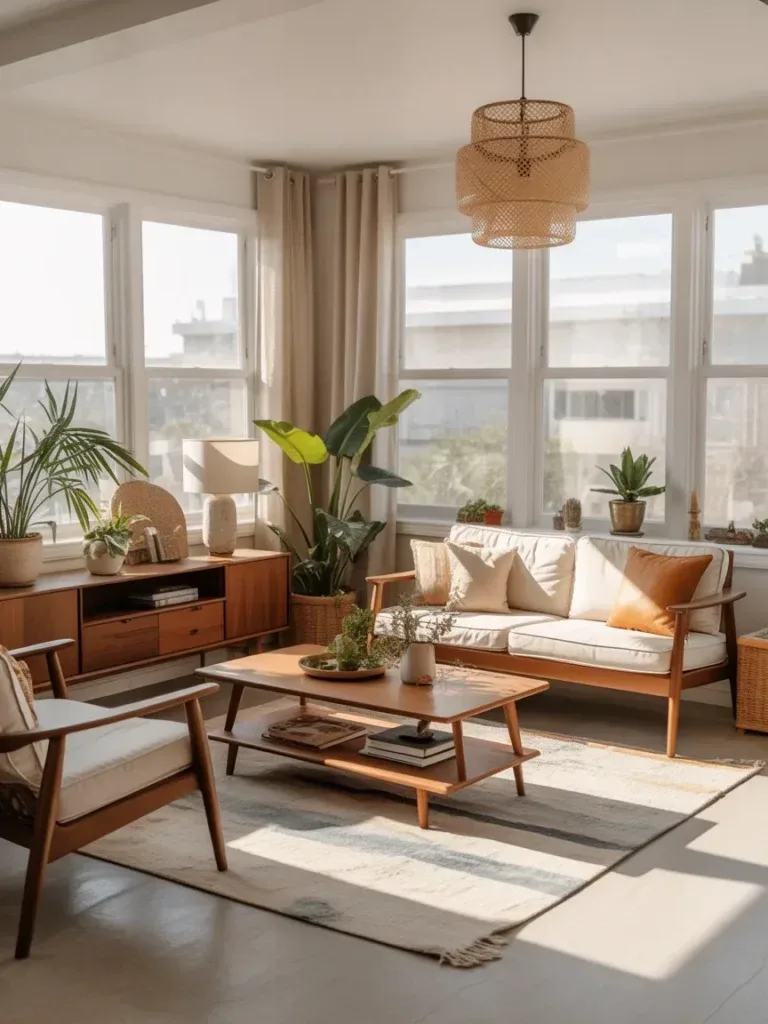
The best mid century modern living room ideas share one goal: a space that feels warm and considered without looking staged. This style leans on tapered wood, low-profile seating, and a restrained color palette, so a room reads as calm even when it includes a bold accent chair or a patterned rug. This guide walks through core furniture and decor moves, breaks down the materials, colors, and layout principles behind them, and adds a fabric comparison, a step-by-step planning process, and answers to the questions people ask most before starting a refresh. Table of ContentsQuick Takeaways1. Incorporate Tapered Wood Furniture With Walnut Finishes2. Choose a Sculptural Sofa in Warm Caramel or Olive Tones3. Use Geometric Patterned Rugs for Visual Interest4. Add Layered Lighting With Brass Floor Lamps5. Incorporate Textured Boucle Accent Chairs6. Embrace Accent Colors: Teal, Mustard Yellow, and Burnt Orange7. Use Clean Lines and Simple Shapes in Furniture DesignKey Elements of Mid Century Modern Living Room DesignDefining CharacteristicsMaterial SelectionColor Palette ChoicesComparing Upholstery Fabrics for Mid-Century PiecesMid Century Modern Ideas for a Living Room ApartmentHow to Plan a Mid Century Modern Update Step by StepBalancing Vintage and Contemporary PiecesPreserving Furniture QualityThings to Consider Before You StartFrequently Asked QuestionsWhat colors work best in a mid century modern living room?Is mid-century modern still in style?Can I mix mid-century modern with other styles?What's the difference between walnut and teak furniture?How do I update a small apartment living room to this style without buying all new furniture?Our Verdict Quick Takeaways Anchor the room with one or two solid wood pieces — walnut, teak, or oak — rather than matching every item. Keep upholstery in warm, muted tones like caramel or olive, and save bright color for pillows, art, or a single chair. Layer lighting with a brass floor lamp, an overhead source, and a small accent lamp instead of relying on one fixture. Use texture (boucle, linen, leather) to add depth when the color palette stays simple. Choose a geometric rug sized so at least the front legs of your seating sit on it. 1. Incorporate Tapered Wood Furniture With Walnut Finishes Furniture with tapered legs and warm walnut tones is one of the fastest ways to establish a mid-century feel. The angled legs lift pieces off the floor, which keeps sightlines open and makes even a small room feel less packed. Start with a single anchor piece — a sofa base, a coffee table, or a media console — that shows visible wood grain. From there, build out with pieces that share the same tone rather than trying to match every item exactly; slight variation in wood color often reads as more authentic than a uniform set. If you’re drawn to mid century modern teak furniture specifically, it pairs especially well with lighter, neutral upholstery, since teak’s reddish-brown tone can otherwise compete with darker fabrics. Keep the rest of the room simple so the wood stays the visual focus. 2. Choose a Sculptural Sofa in Warm Caramel or Olive Tones A sofa with rounded arms and a low, sculptural frame does double duty: it’s comfortable, and its shape signals mid-century design without needing extra decoration. Caramel and deep olive upholstery are reliable starting points because they sit comfortably next to wood tones and won’t fight with an accent color you add later. Both shades also tend to hide everyday wear better than very light neutrals, which matters in a room that gets daily use. Keep the legs tapered and finished in walnut or teak so the sofa ties back to the rest of your mid century modern living room decor ideas. A low profile and subtle tufting add period character without pushing the piece into “costume” territory. 3. Use Geometric Patterned Rugs for Visual Interest A geometric rug is often the easiest way to introduce pattern into a room that otherwise leans neutral. Bold, high-contrast shapes make a stronger statement, while a subtle repeat pattern adds texture without competing for attention. Placement matters more than most people expect. For the room to feel intentional, position the rug so at least the front legs of your main seating rest on it — a rug that floats disconnected from the furniture tends to make a layout feel unplanned. If you already have a color scheme in mind, pull the rug’s palette from an existing accent — a cushion, a piece of art, or your upholstery — rather than introducing a new color family. This mid century modern living room rug buying guide covers proportion rules in more depth. 4. Add Layered Lighting With Brass Floor Lamps A single overhead fixture rarely does justice to a mid-century room. Layered lighting — combining ambient, task, and accent sources — gives you more control over mood and makes the space feel finished at night, not just during the day. A brass floor lamp with a slim arc or tripod base is a natural starting point. Placed near seating, it adds warmth and creates a defined reading spot, while its metal finish echoes the hardware and legs found throughout mid-century furniture. Warm-toned bulbs keep brass looking rich rather than cool or clinical. A dimmer switch, or a lamp with adjustable brightness, makes it easier to shift from bright daytime light to a softer evening glow without changing fixtures. For a closer look at fixture types and placement, see this mid century modern living room lighting guide. 5. Incorporate Textured Boucle Accent Chairs Boucle’s looped, nubby texture adds tactile interest to a room that might otherwise feel flat, especially if your color palette stays neutral. It reads as both cozy and current, which is why it has become a go-to fabric for mid-century-inspired accent pieces. Curved, barrel-style chairs suit the style best. A cream or oatmeal boucle keeps the piece flexible if you like to change accent colors seasonally, while a deeper hue — rust, forest green, or navy — can work as a standalone focal point. Place the chair near a lamp or beside the sofa to create a small, usable reading nook rather than leaving it as an isolated accent. Look for solid legs and dense padding, since boucle’s texture shows wear differently than smooth fabrics and benefits from a well-built frame underneath. 6. Embrace Accent Colors: Teal, Mustard Yellow, and Burnt Orange Mid-century palettes tend to pair neutral bases with a small number of saturated accent colors. Teal, mustard yellow, and burnt orange are classic choices because they were common in original mid-century textiles and still read as warm rather than dated. The key to good mid century modern living room colors is restraint: introduce these tones through pillows, a rug, artwork, or one upholstered chair rather than painting walls or buying multiple large pieces in the same shade. This keeps the room from feeling like a themed set. Pair one bold accent with quieter supporting tones — teal accessories against warm neutrals, or a single mustard cushion against charcoal upholstery. If you like to refresh the room seasonally, swapping cushion covers or a throw blanket is a low-cost way to rotate accent colors without a full redesign. 7. Use Clean Lines and Simple Shapes in Furniture Design Straight or gently curved lines, with minimal ornamentation, are what keep a mid-century room feeling open rather than busy. Low-profile sofas, tapered-leg chairs, and thin-top tables all support this — they let wood grain and fabric texture do the visual work instead of decorative trim. Limit heavy carving, ornate hardware, or bulky silhouettes, since these read as more traditional or transitional than mid-century. A single bold accessory — a sculptural lamp, an abstract print, or a patterned rug — is usually enough personality for the whole room. Keeping furniture at a similar visual weight throughout the space also matters. When pieces share proportions, even a mix of vintage and new furniture reads as intentional rather than mismatched. Key Elements of Mid Century Modern Living Room Design Beyond individual furniture choices, a few underlying principles hold the whole look together. Understanding these makes it easier to shop with confidence and avoid pieces that clash with the rest of the room. Defining Characteristics Mid-century modern favors simple, functional forms: tapered legs, low silhouettes, and a mix of straight and organic lines. Sofas typically sit low with narrow arms and an exposed wooden base. Lighting often acts as a design feature rather than a background element — sculptural floor or pendant lamps in metal or brass finishes are common focal points. Windows are usually left uncovered or dressed simply, keeping sightlines and natural light open. Material Selection Wood is central to the look, with walnut, teak, and oak providing warmth and authenticity. These pair naturally with matte black or brass metal accents on legs, lamp stems, and hardware. Upholstery tends to be durable and textured — wool blends, boucle, and tightly woven cotton all feel period-appropriate, while leather suits occasional chairs or ottomans well. Color Palette Choices A restrained neutral base — beige, warm gray, or soft white — is standard for walls, with richer wood tones and one or two deep accent colors layered in through textiles and accessories. Balancing a bold color choice, like a colored sofa or a large patterned rug, with muted supporting pieces keeps the overall palette calm rather than busy. This approach also applies well beyond the living room, making it a useful reference point for broader modern living room projects elsewhere in the house. Comparing Upholstery Fabrics for Mid-Century Pieces Fabric choice affects both look and upkeep. This comparison covers the options that come up most often when shopping for mid-century sofas and accent chairs. FabricLook & FeelDurabilityBest UseBoucleLooped, nubby texture; cozy and tactileModerate — shows wear differently than smooth fabricsAccent chairs, statement piecesWool BlendStructured, slightly textured, period-authenticHigh — resists pilling and everyday wear wellSofas, larger upholstered piecesLinenRelaxed, breathable, matte finishLower — wrinkles and shows stains more easilyLow-traffic seating, occasional chairsLeatherSmooth, warm patina that develops over timeHigh — very durable with proper careAccent chairs, ottomans, occasional seatingTightly Woven CottonCrisp, clean, versatileModerate to high depending on weave densitySofas, cushions, everyday-use pieces Mid Century Modern Ideas for a Living Room Apartment A mid century modern living room apartment setup usually works with less square footage, so scale and multi-purpose pieces matter more than in a larger space. Choose a smaller-scale sofa with slim arms, and look for a coffee table that also offers storage, since apartment living rooms often double as a workspace or a spot for guests. Tapered legs help even more in tighter layouts, since they keep the floor visible and prevent furniture from visually “blocking” the room. A single well-placed floor lamp can also stand in for both ambient and task lighting when there isn’t room for multiple fixtures. Wall-mounted shelving in walnut or oak can replace a bulky media console, freeing up floor space while still bringing in the warm wood tone the style depends on. How to Plan a Mid Century Modern Update Step by Step If you’re working through a mid century modern update gradually rather than all at once, a clear order of operations helps you avoid buying pieces that don’t end up working together. Choose your anchor piece first — usually the sofa or a large wood item like a media console. Decide on your base wood tone (walnut, teak, or oak) and stick with it for major furniture purchases. Select one or two accent colors you’ll repeat through pillows, art, and small accessories. Add a rug sized to your seating layout, pulling its palette from your chosen accent colors. Layer in lighting — an overhead source, a floor lamp, and a small accent lamp. Finish with texture: a boucle chair, a woven throw, or a textured cushion cover. Balancing Vintage and Contemporary Pieces Many mid-century rooms mix a genuine vintage find — a teak credenza or an original lounge chair — with newer, more affordable pieces. Anchoring the room around that one vintage item and building outward with contemporary furniture of a similar scale and color keeps the balance believable rather than mismatched. Repeating small details across the room helps tie everything together: a wood tone echoed in shelving, a brass finish repeated in lighting, or an upholstery color picked up again in a cushion. Limiting pattern to just one or two spots, like a rug and a set of pillows, keeps the overall room feeling calm rather than cluttered. If you’re deciding between a more eclectic mix or a purer mid-century look, this comparison of boho versus mid century modern living room styles is a useful next step. Preserving Furniture Quality Mid-century furniture is an investment worth maintaining. Dust wooden surfaces weekly with a soft cloth, and use coasters to prevent water rings on exposed wood tops. For solid wood pieces, a thin coat of wax or oil once or twice a year helps maintain the finish and prevent drying or cracking. For upholstery, vacuum with an upholstery attachment every one to two weeks, and treat spills immediately with a blotting motion and a cleaner approved for that fabric type. Rotating cushions monthly helps prevent uneven wear and sun fading. It’s also worth checking joints and screws annually — small tightening now can prevent a costly repair later, particularly on vintage pieces with delicate veneers that should stay out of direct sunlight. Things to Consider Before You Start Do you want a full furniture overhaul, or a lighter refresh using color and accessories? What’s your primary wood tone — walnut, teak, or oak — and does your current flooring or trim work with it? Is your space large enough for a low-profile sculptural sofa, or would a smaller-scale piece suit the room better? Which one or two accent colors do you want to repeat throughout the room? Do you have (or want to source) a genuine vintage piece to anchor the design? Frequently Asked Questions What colors work best in a mid century modern living room? Warm neutrals like beige, warm gray, or soft white work well as a base, paired with one or two deeper accent colors such as mustard, olive, teal, or burnt orange used sparingly through textiles and accessories. Is mid-century modern still in style? Yes — the style’s emphasis on simple forms, natural materials, and functional layouts has kept it popular well beyond its original era, and it continues to influence a wide range of contemporary furniture design. Can I mix mid-century modern with other styles? Yes. Many living rooms blend mid-century pieces with boho textiles, organic modern materials, or contemporary furniture, as long as scale, wood tone, or color is repeated somewhere to tie the mix together. For pairing ideas, this collection of organic modern living room ideas works well alongside a mid-century base. What’s the difference between walnut and teak furniture? Walnut tends to have a darker, richer brown tone, while teak often leans slightly more golden or reddish. Both are common in mid-century pieces, and the choice usually comes down to which tone complements your existing flooring and furniture. How do I update a small apartment living room to this style without buying all new furniture? Start with smaller changes — a rug, a floor lamp, and a few accent pillows in a chosen color palette — before committing to a large furniture purchase. This lets you test the look before investing in bigger pieces. Our Verdict Mid century modern living room ideas work best when you resist the urge to do everything at once. Choosing one anchor piece, a consistent wood tone, and a couple of repeated accent colors will get you further than buying an entire matching set. Start with the anchor, build outward with texture and color, and let the room take shape over time rather than all in one purchase.
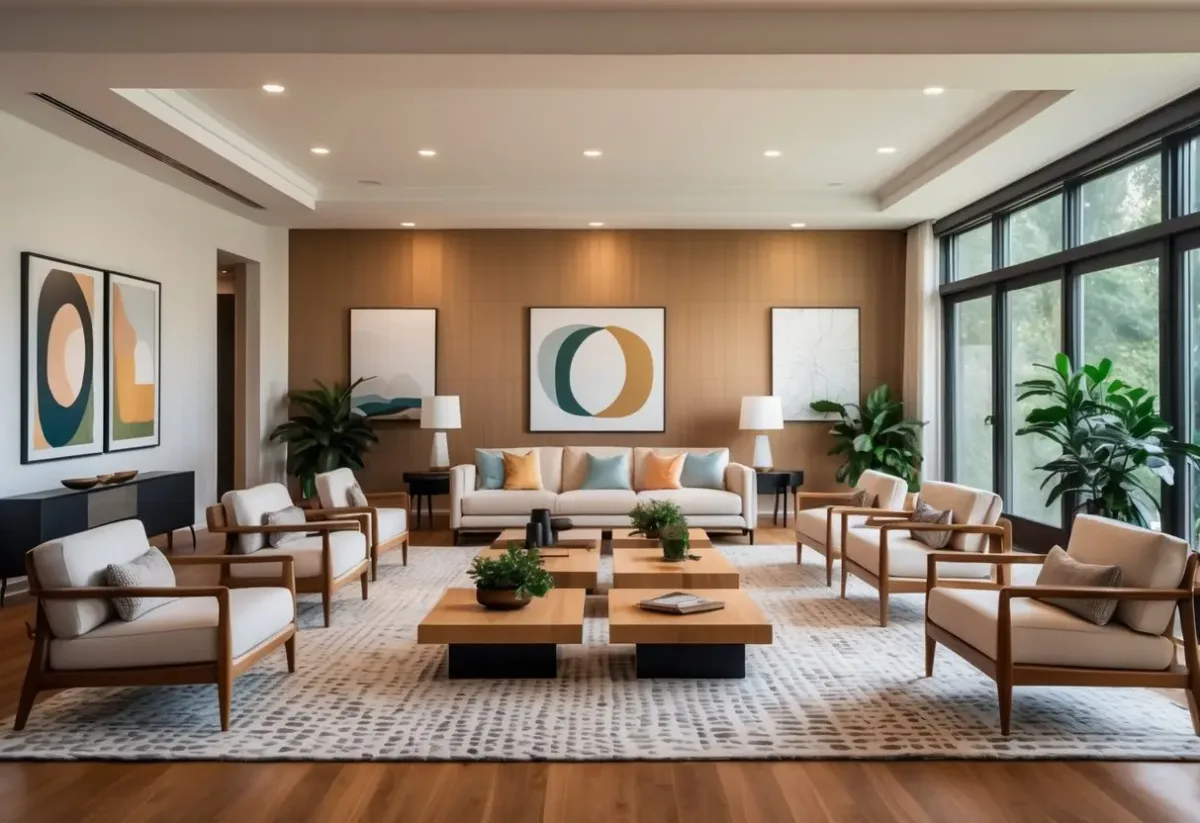
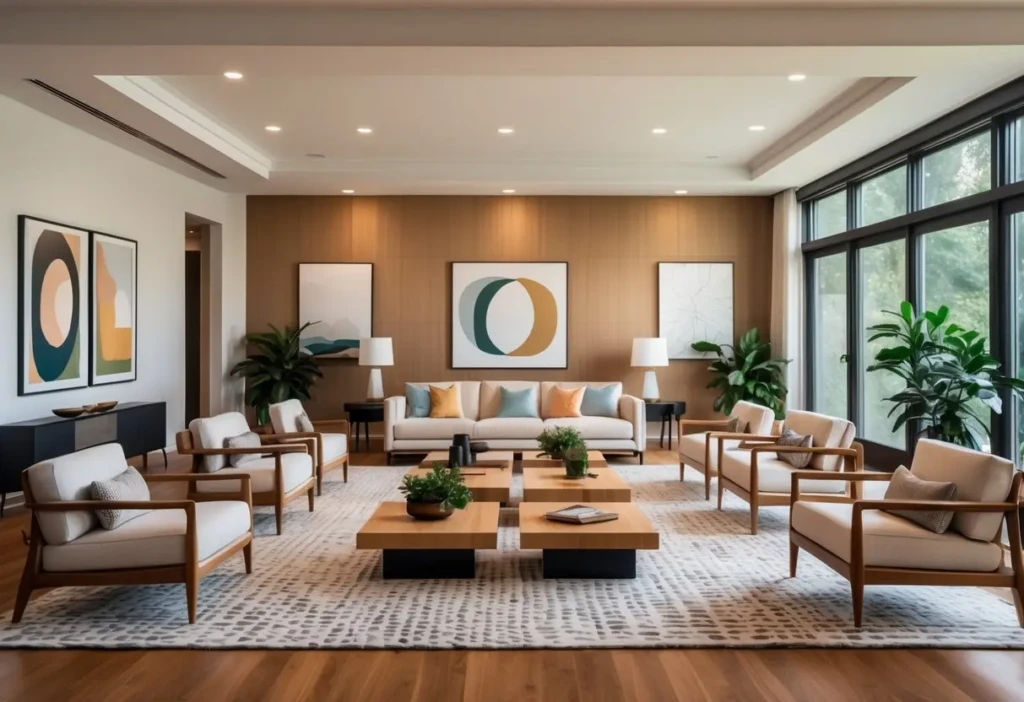
The best mid century modern living room ideas share one goal: a space that feels warm and considered without looking staged. This style leans on tapered wood, low-profile seating, and a restrained color palette, so a room reads as calm even when it includes a bold accent chair or a patterned rug.
This guide walks through core furniture and decor moves, breaks down the materials, colors, and layout principles behind them, and adds a fabric comparison, a step-by-step planning process, and answers to the questions people ask most before starting a refresh.
1. Incorporate Tapered Wood Furniture With Walnut Finishes
Furniture with tapered legs and warm walnut tones is one of the fastest ways to establish a mid-century feel. The angled legs lift pieces off the floor, which keeps sightlines open and makes even a small room feel less packed.
Start with a single anchor piece — a sofa base, a coffee table, or a media console — that shows visible wood grain. From there, build out with pieces that share the same tone rather than trying to match every item exactly; slight variation in wood color often reads as more authentic than a uniform set.
If you’re drawn to mid century modern teak furniture specifically, it pairs especially well with lighter, neutral upholstery, since teak’s reddish-brown tone can otherwise compete with darker fabrics. Keep the rest of the room simple so the wood stays the visual focus.
2. Choose a Sculptural Sofa in Warm Caramel or Olive Tones
A sofa with rounded arms and a low, sculptural frame does double duty: it’s comfortable, and its shape signals mid-century design without needing extra decoration.
Caramel and deep olive upholstery are reliable starting points because they sit comfortably next to wood tones and won’t fight with an accent color you add later. Both shades also tend to hide everyday wear better than very light neutrals, which matters in a room that gets daily use.
Keep the legs tapered and finished in walnut or teak so the sofa ties back to the rest of your mid century modern living room decor ideas. A low profile and subtle tufting add period character without pushing the piece into “costume” territory.
3. Use Geometric Patterned Rugs for Visual Interest
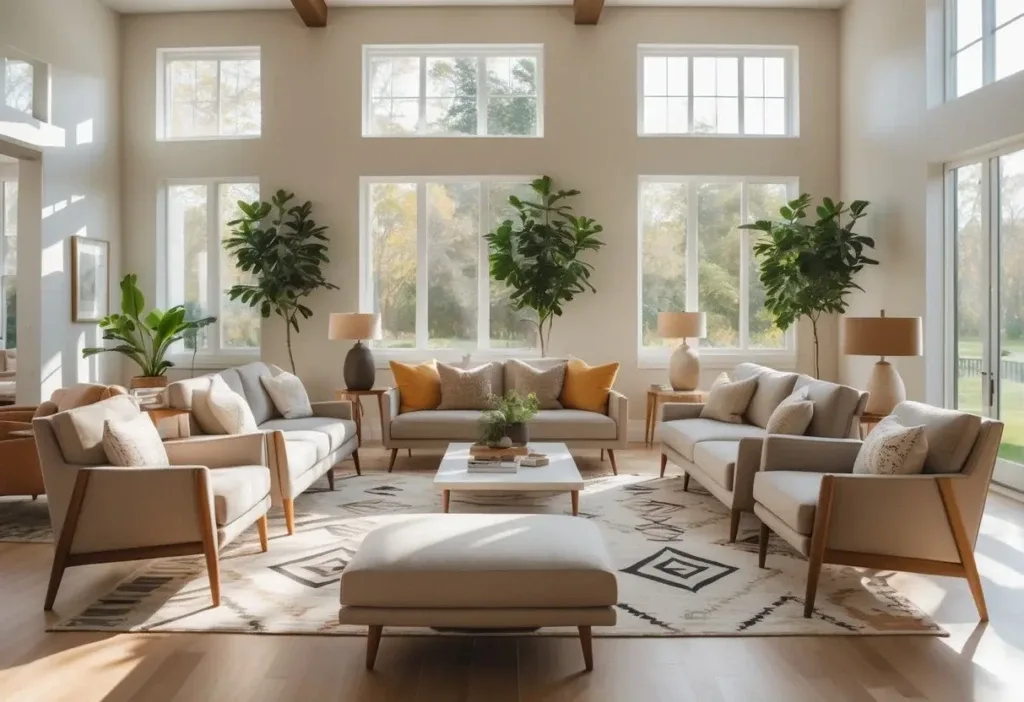
A geometric rug is often the easiest way to introduce pattern into a room that otherwise leans neutral. Bold, high-contrast shapes make a stronger statement, while a subtle repeat pattern adds texture without competing for attention.
Placement matters more than most people expect. For the room to feel intentional, position the rug so at least the front legs of your main seating rest on it — a rug that floats disconnected from the furniture tends to make a layout feel unplanned.
If you already have a color scheme in mind, pull the rug’s palette from an existing accent — a cushion, a piece of art, or your upholstery — rather than introducing a new color family. This mid century modern living room rug buying guide covers proportion rules in more depth.
A single overhead fixture rarely does justice to a mid-century room. Layered lighting — combining ambient, task, and accent sources — gives you more control over mood and makes the space feel finished at night, not just during the day.
A brass floor lamp with a slim arc or tripod base is a natural starting point. Placed near seating, it adds warmth and creates a defined reading spot, while its metal finish echoes the hardware and legs found throughout mid-century furniture.
Warm-toned bulbs keep brass looking rich rather than cool or clinical. A dimmer switch, or a lamp with adjustable brightness, makes it easier to shift from bright daytime light to a softer evening glow without changing fixtures. For a closer look at fixture types and placement, see this mid century modern living room lighting guide.
Boucle’s looped, nubby texture adds tactile interest to a room that might otherwise feel flat, especially if your color palette stays neutral. It reads as both cozy and current, which is why it has become a go-to fabric for mid-century-inspired accent pieces.
Curved, barrel-style chairs suit the style best. A cream or oatmeal boucle keeps the piece flexible if you like to change accent colors seasonally, while a deeper hue — rust, forest green, or navy — can work as a standalone focal point.
Place the chair near a lamp or beside the sofa to create a small, usable reading nook rather than leaving it as an isolated accent. Look for solid legs and dense padding, since boucle’s texture shows wear differently than smooth fabrics and benefits from a well-built frame underneath.
6. Embrace Accent Colors: Teal, Mustard Yellow, and Burnt Orange
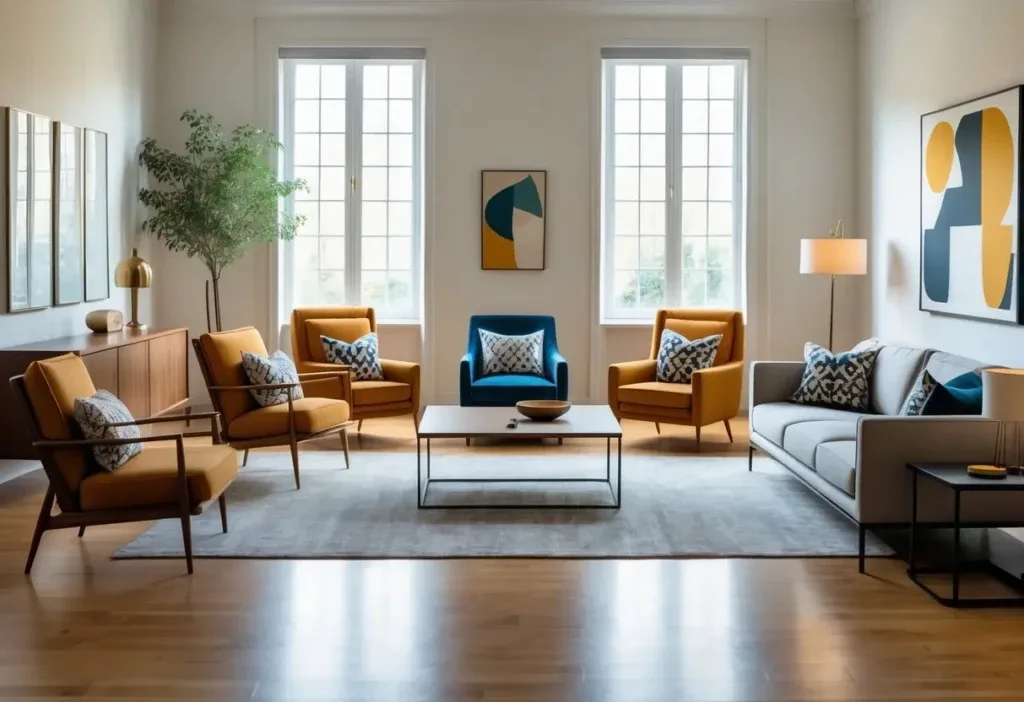
Mid-century palettes tend to pair neutral bases with a small number of saturated accent colors. Teal, mustard yellow, and burnt orange are classic choices because they were common in original mid-century textiles and still read as warm rather than dated.
The key to good mid century modern living room colors is restraint: introduce these tones through pillows, a rug, artwork, or one upholstered chair rather than painting walls or buying multiple large pieces in the same shade. This keeps the room from feeling like a themed set.
Pair one bold accent with quieter supporting tones — teal accessories against warm neutrals, or a single mustard cushion against charcoal upholstery. If you like to refresh the room seasonally, swapping cushion covers or a throw blanket is a low-cost way to rotate accent colors without a full redesign.
7. Use Clean Lines and Simple Shapes in Furniture Design
Straight or gently curved lines, with minimal ornamentation, are what keep a mid-century room feeling open rather than busy. Low-profile sofas, tapered-leg chairs, and thin-top tables all support this — they let wood grain and fabric texture do the visual work instead of decorative trim.
Limit heavy carving, ornate hardware, or bulky silhouettes, since these read as more traditional or transitional than mid-century. A single bold accessory — a sculptural lamp, an abstract print, or a patterned rug — is usually enough personality for the whole room.
Keeping furniture at a similar visual weight throughout the space also matters. When pieces share proportions, even a mix of vintage and new furniture reads as intentional rather than mismatched.
Key Elements of Mid Century Modern Living Room Design
Beyond individual furniture choices, a few underlying principles hold the whole look together. Understanding these makes it easier to shop with confidence and avoid pieces that clash with the rest of the room.
Defining Characteristics
Mid-century modern favors simple, functional forms: tapered legs, low silhouettes, and a mix of straight and organic lines. Sofas typically sit low with narrow arms and an exposed wooden base. Lighting often acts as a design feature rather than a background element — sculptural floor or pendant lamps in metal or brass finishes are common focal points. Windows are usually left uncovered or dressed simply, keeping sightlines and natural light open.
Material Selection
Wood is central to the look, with walnut, teak, and oak providing warmth and authenticity. These pair naturally with matte black or brass metal accents on legs, lamp stems, and hardware. Upholstery tends to be durable and textured — wool blends, boucle, and tightly woven cotton all feel period-appropriate, while leather suits occasional chairs or ottomans well.
Color Palette Choices
A restrained neutral base — beige, warm gray, or soft white — is standard for walls, with richer wood tones and one or two deep accent colors layered in through textiles and accessories. Balancing a bold color choice, like a colored sofa or a large patterned rug, with muted supporting pieces keeps the overall palette calm rather than busy. This approach also applies well beyond the living room, making it a useful reference point for broader modern living room projects elsewhere in the house.
Comparing Upholstery Fabrics for Mid-Century Pieces
Fabric choice affects both look and upkeep. This comparison covers the options that come up most often when shopping for mid-century sofas and accent chairs.
Fabric
Look & Feel
Durability
Best Use
Boucle
Looped, nubby texture; cozy and tactile
Moderate — shows wear differently than smooth fabrics
Accent chairs, statement pieces
Wool Blend
Structured, slightly textured, period-authentic
High — resists pilling and everyday wear well
Sofas, larger upholstered pieces
Linen
Relaxed, breathable, matte finish
Lower — wrinkles and shows stains more easily
Low-traffic seating, occasional chairs
Leather
Smooth, warm patina that develops over time
High — very durable with proper care
Accent chairs, ottomans, occasional seating
Tightly Woven Cotton
Crisp, clean, versatile
Moderate to high depending on weave density
Sofas, cushions, everyday-use pieces
Mid Century Modern Ideas for a Living Room Apartment
A mid century modern living room apartment setup usually works with less square footage, so scale and multi-purpose pieces matter more than in a larger space. Choose a smaller-scale sofa with slim arms, and look for a coffee table that also offers storage, since apartment living rooms often double as a workspace or a spot for guests.
Tapered legs help even more in tighter layouts, since they keep the floor visible and prevent furniture from visually “blocking” the room. A single well-placed floor lamp can also stand in for both ambient and task lighting when there isn’t room for multiple fixtures.
Wall-mounted shelving in walnut or oak can replace a bulky media console, freeing up floor space while still bringing in the warm wood tone the style depends on.
How to Plan a Mid Century Modern Update Step by Step
If you’re working through a mid century modern update gradually rather than all at once, a clear order of operations helps you avoid buying pieces that don’t end up working together.
Choose your anchor piece first — usually the sofa or a large wood item like a media console.
Decide on your base wood tone (walnut, teak, or oak) and stick with it for major furniture purchases.
Select one or two accent colors you’ll repeat through pillows, art, and small accessories.
Add a rug sized to your seating layout, pulling its palette from your chosen accent colors.
Layer in lighting — an overhead source, a floor lamp, and a small accent lamp.
Finish with texture: a boucle chair, a woven throw, or a textured cushion cover.
Balancing Vintage and Contemporary Pieces
Many mid-century rooms mix a genuine vintage find — a teak credenza or an original lounge chair — with newer, more affordable pieces. Anchoring the room around that one vintage item and building outward with contemporary furniture of a similar scale and color keeps the balance believable rather than mismatched.
Repeating small details across the room helps tie everything together: a wood tone echoed in shelving, a brass finish repeated in lighting, or an upholstery color picked up again in a cushion. Limiting pattern to just one or two spots, like a rug and a set of pillows, keeps the overall room feeling calm rather than cluttered. If you’re deciding between a more eclectic mix or a purer mid-century look, this comparison of boho versus mid century modern living room styles is a useful next step.
Mid-century furniture is an investment worth maintaining. Dust wooden surfaces weekly with a soft cloth, and use coasters to prevent water rings on exposed wood tops. For solid wood pieces, a thin coat of wax or oil once or twice a year helps maintain the finish and prevent drying or cracking.
For upholstery, vacuum with an upholstery attachment every one to two weeks, and treat spills immediately with a blotting motion and a cleaner approved for that fabric type. Rotating cushions monthly helps prevent uneven wear and sun fading. It’s also worth checking joints and screws annually — small tightening now can prevent a costly repair later, particularly on vintage pieces with delicate veneers that should stay out of direct sunlight.
Do you want a full furniture overhaul, or a lighter refresh using color and accessories?
What’s your primary wood tone — walnut, teak, or oak — and does your current flooring or trim work with it?
Is your space large enough for a low-profile sculptural sofa, or would a smaller-scale piece suit the room better?
Which one or two accent colors do you want to repeat throughout the room?
Do you have (or want to source) a genuine vintage piece to anchor the design?
Frequently Asked Questions
What colors work best in a mid century modern living room?
Warm neutrals like beige, warm gray, or soft white work well as a base, paired with one or two deeper accent colors such as mustard, olive, teal, or burnt orange used sparingly through textiles and accessories.
Is mid-century modern still in style?
Yes — the style’s emphasis on simple forms, natural materials, and functional layouts has kept it popular well beyond its original era, and it continues to influence a wide range of contemporary furniture design.
Can I mix mid-century modern with other styles?
Yes. Many living rooms blend mid-century pieces with boho textiles, organic modern materials, or contemporary furniture, as long as scale, wood tone, or color is repeated somewhere to tie the mix together. For pairing ideas, this collection of organic modern living room ideas works well alongside a mid-century base.
What’s the difference between walnut and teak furniture?
Walnut tends to have a darker, richer brown tone, while teak often leans slightly more golden or reddish. Both are common in mid-century pieces, and the choice usually comes down to which tone complements your existing flooring and furniture.
How do I update a small apartment living room to this style without buying all new furniture?
Start with smaller changes — a rug, a floor lamp, and a few accent pillows in a chosen color palette — before committing to a large furniture purchase. This lets you test the look before investing in bigger pieces.
Our Verdict
Mid century modern living room ideas work best when you resist the urge to do everything at once. Choosing one anchor piece, a consistent wood tone, and a couple of repeated accent colors will get you further than buying an entire matching set. Start with the anchor, build outward with texture and color, and let the room take shape over time rather than all in one purchase.
Listen to this article 10 10 0:00 / 0:00 Speed 0.75×1×1.25×1.5×2× The failure mode of Nordic design isn’t clutter — it’s the opposite. Strip a room down to white walls, a light sofa, and one plant, and you end up with something that photographs well and feels like nobody actually lives there. The Nordic living…
Listen to this article 10 10 0:00 / 0:00 Speed 0.75×1×1.25×1.5×2× A lot of “contemporary” living rooms end up looking like a furniture showroom — clean, expensive-looking, and a little cold. That’s usually not a materials problem. It’s a sequencing problem: people buy the big statement pieces first and try to soften the room afterward,…
Listen to this article 10 10 0:00 / 0:00 Speed 0.75×1×1.25×1.5×2× An empty wall in a living room is one of the cheapest problems to fix and one of the most avoided. People will reupholster a sofa before they’ll commit to a wall, mostly because a bad paint choice feels permanent in a way that…
Listen to this article 10 10 0:00 / 0:00 Speed 0.75×1×1.25×1.5×2× There’s a version of “elegant modern” that looks great in a photo and terrible to actually live in — all hard edges, no texture, nowhere comfortable to put your feet up. Real elegant modern living room inspiration should hold up under normal use: a…
Listen to this article 10 10 0:00 / 0:00 Speed 0.75×1×1.25×1.5×2× A brown couch gets an unfair reputation as the boring default — the thing you buy because it hides stains and goes with everything, not because it’s exciting. That’s actually its strength. A brown sofa is a neutral in disguise, which means the room…
Listen to this article 10 10 0:00 / 0:00 Speed 0.75×1×1.25×1.5×2× If you’ve ever felt torn between clean-lined mid-century pieces and the carefree chaos of boho style, you’re not alone. The good news? You don’t have to choose. These two aesthetics actually vibe together way better than you’d expect. Get ready to steal some seriously…