7 Cozy Small Library Room: Snug Nooks You Can Match Anywhere

7 Cozy Small Library Room: Snug Nooks You Can Match Anywhere

Listen to this article
0:00 / 0:00

You don’t need a spare room to build a real cozy small library room — you need about 15 to 25 square feet used well. A window nook, a closet, an awkward corner, or the dead space under a staircase can all hold a working reading spot, and in a lot of cases the small footprint makes it easier to get the lighting and seating right than it would be in a full room. If you’ve already got a shelf you’re happy with elsewhere in the house, our cozy floating shelf styling guide pairs well with any of the setups below.

The seven approaches here range from a simple bench-and-shelf combo to a full closet conversion. None of them require knocking down a wall. What they do require is picking one — a common mistake is trying to build a library that does everything (seating, storage, display, workspace) in four square feet, when the strongest small libraries usually commit to one clear function and do it well.

See also  6 Interior Design Living Room Modern: Fresh & Addictive Ideas

Quick Takeaways

  • Pick a primary function first — seated reading, display, or a hidden study nook — before choosing shelving, since trying to do all three in a small footprint usually means none of them work well.
  • Layered light beats a single overhead fixture every time: one ambient source plus one task light (a reading lamp or LED strip) is the baseline for any nook.
  • Vertical space is your biggest asset in a small library — floor-to-ceiling shelving uses square footage a low bookcase never will.
  • A closed door (closet conversions) trades visibility for total noise and clutter control — worth it if you actually use the space daily, wasted if the door stays shut and unused.
  • Under 20 books doesn’t need a dedicated library — this only makes sense once your collection outgrows a single small bookcase.

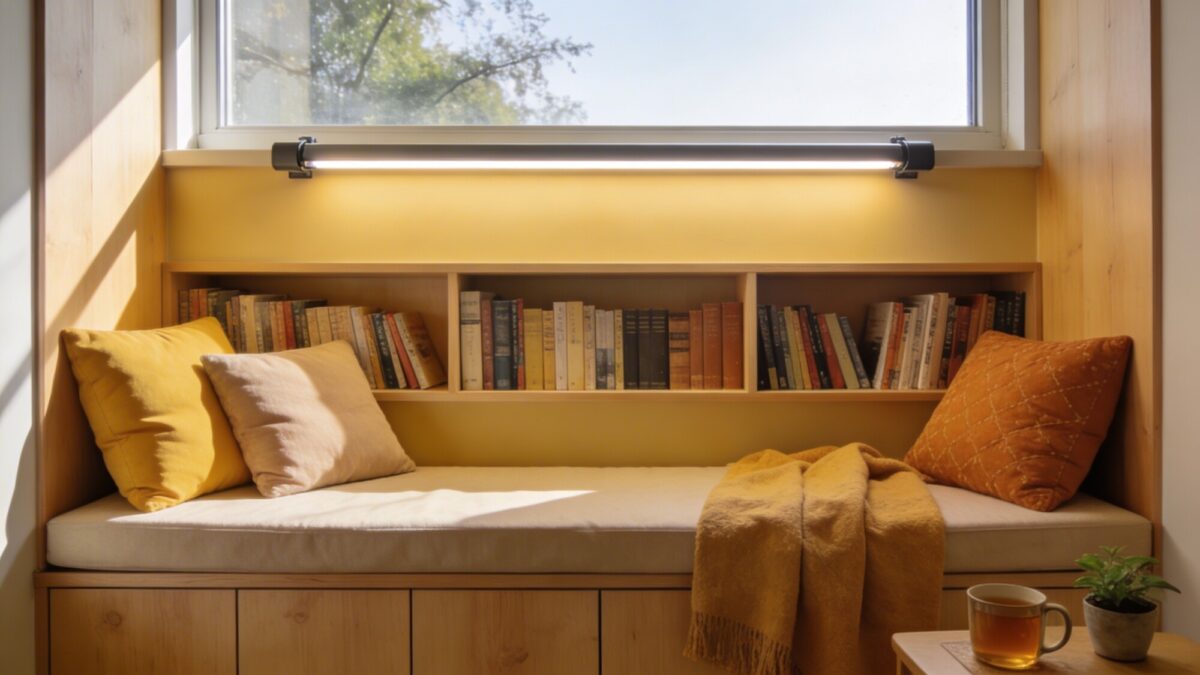
1. Snug Window Nook Library

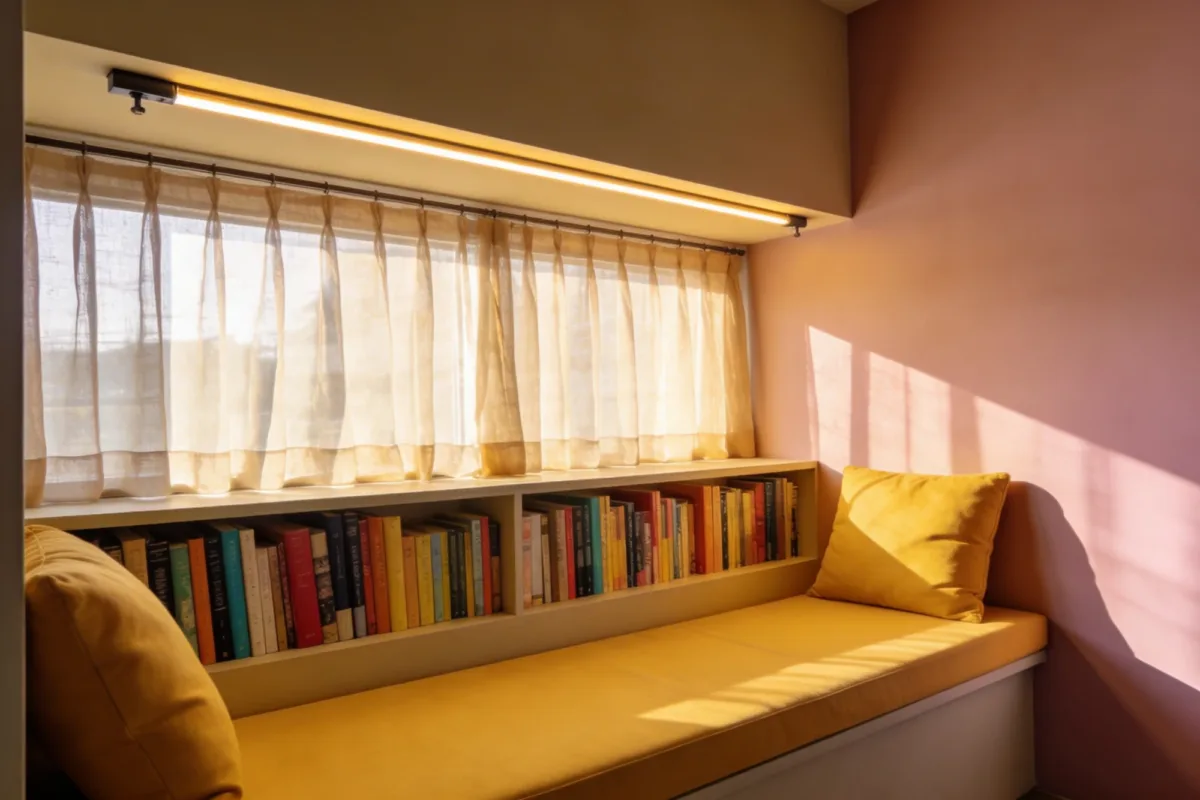
A window nook works because it solves lighting for free during the day — you’re not fighting a dim corner or relying on a lamp until sunset. A low bench with built-in storage underneath gives you seating and a place to stash overflow books at the same time, which matters in a small space where a separate bookcase might not fit.

The detail people skip is task lighting for after dark. Daylight is great until 6 p.m. in winter, and a nook that only works for four hours a day isn’t pulling its weight. A slim LED track or magnetic strip along the window frame fixes this without adding a floor lamp that eats into the limited space.

  • Low bench seat with built-in storage underneath
  • Washable cushions — nooks near windows get more sun fading and dust than interior corners
  • Slim LED track or strip lighting for evening reading

💡 Pro Tip: Check which direction the window faces before committing cushion colors — south- and west-facing nooks get enough direct sun to visibly fade fabric within a year or two, so darker or UV-resistant fabric holds up better than pale linen in those spots.

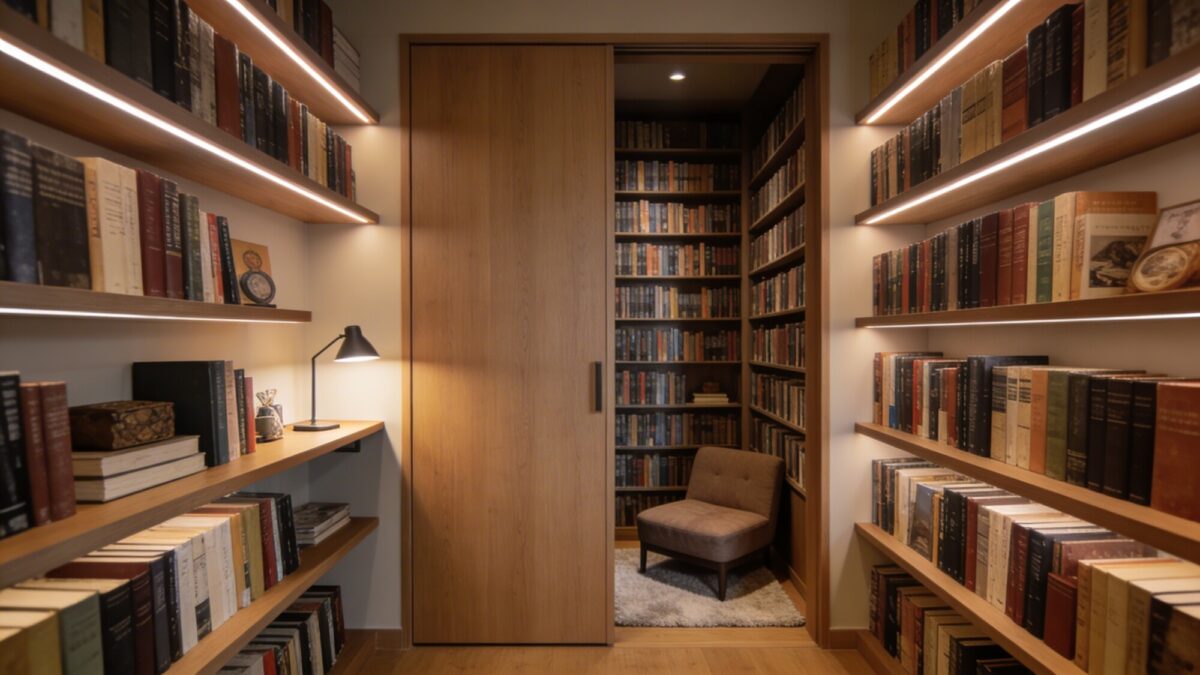
2. Closet-Converted Mini Library

This is the option for anyone who actually needs to shut a door on distractions. A spare closet gives you floor-to-ceiling shelving without giving up any room footprint elsewhere in the house, since you’re repurposing space that was already enclosed.

See also  18 Dark Painted Ceiling Ideas That Add Drama, Depth, and Designer Style to Any Room

The trade-off is real, though: a closed door means no natural light unless you add it, and it means the space is genuinely out of sight, which is either the whole appeal or the reason it gets ignored after the first month. If you know you’re someone who needs a visual reminder to use a space, a closet library is a harder sell than an open nook.

  • Floating shelves from floor to door frame for maximum vertical storage
  • A compact chair or ottoman — anything larger won’t leave room to close the door
  • Ambient LED strip lighting plus a small desk lamp for reading

💡 Pro Tip: Label two or three broad sections on the shelf edges (fiction, reference, to-read) rather than alphabetizing everything — in a closet-sized space you’ll find things faster by rough category than by hunting for exact author order in dim light.

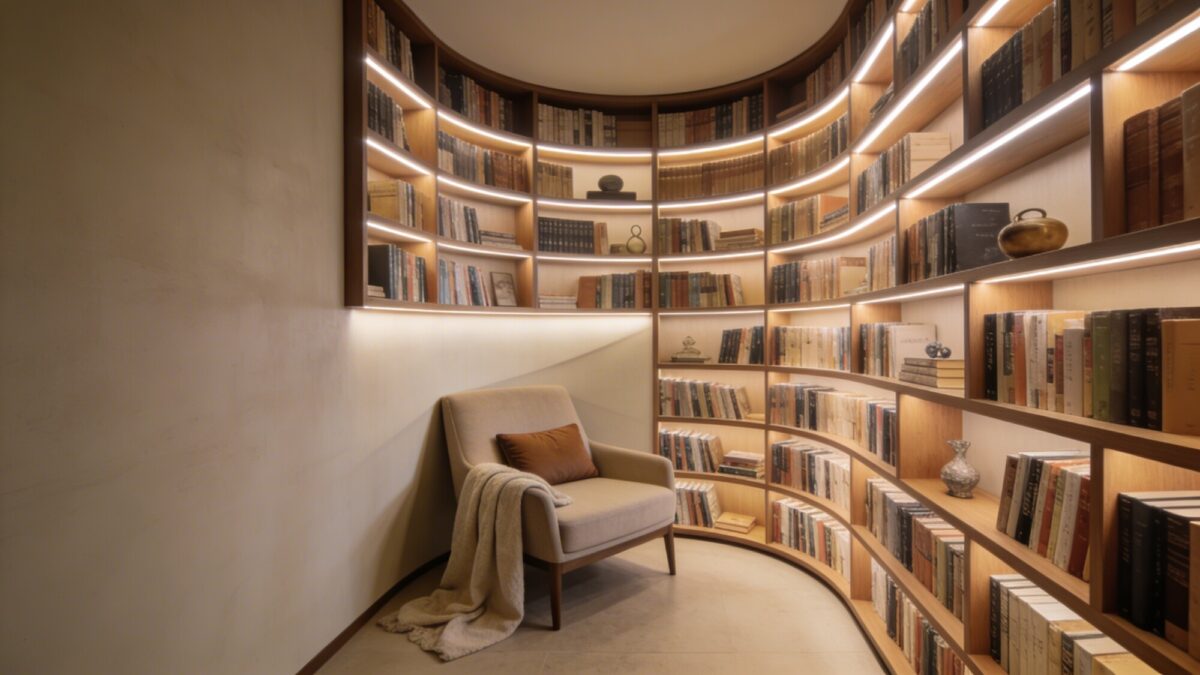
3. Wall-Mounted Corner Shelf Nook

A floor-to-ceiling bookcase that wraps around a corner is the closest a small space gets to that bookstore feeling, and it’s genuinely one of the better uses for a corner that’s too awkward for furniture. The shelving itself does double duty as both storage and a kind of built-in wall treatment.

Keep the palette restrained here — soft beiges, warm taupes, muted wood. A shelf this tall and this close to a seating area amplifies color the same way a full accent wall would, so a bold paint or stain choice reads louder than it would on a lower shelf.

  • Shallow shelves that curve or angle around the corner
  • A corner chair with a small lumbar cushion
  • Warm LED strip lighting along the shelf edges rather than a single overhead fixture

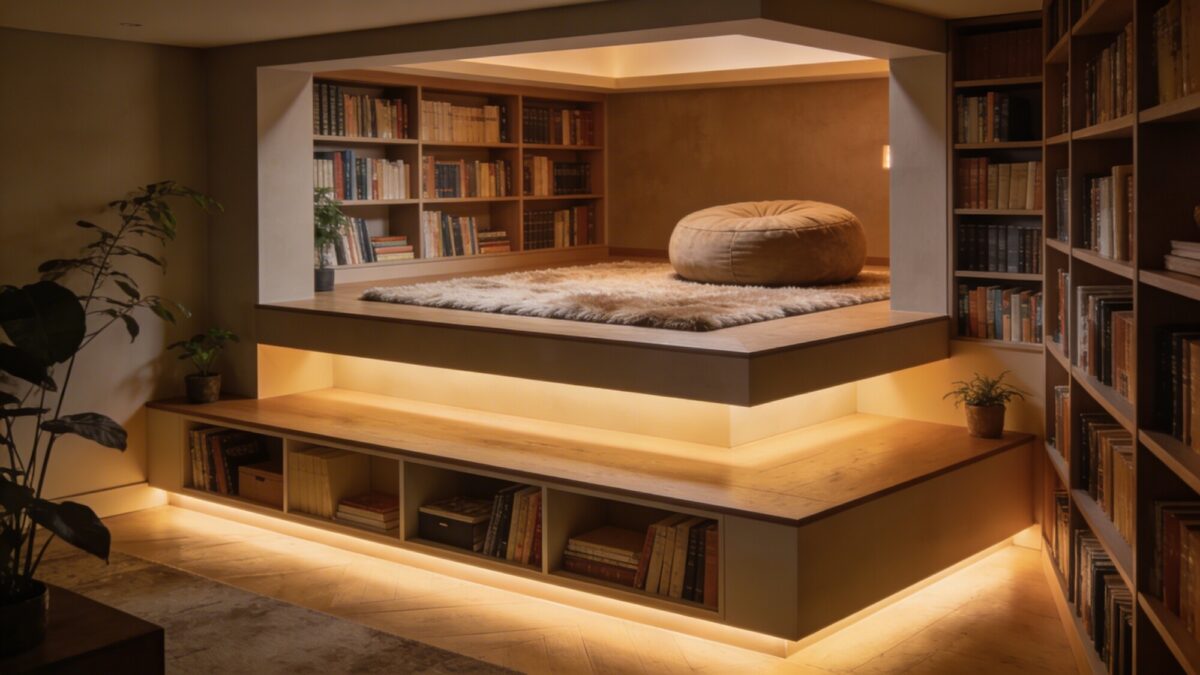
4. Floating Platform Retreat

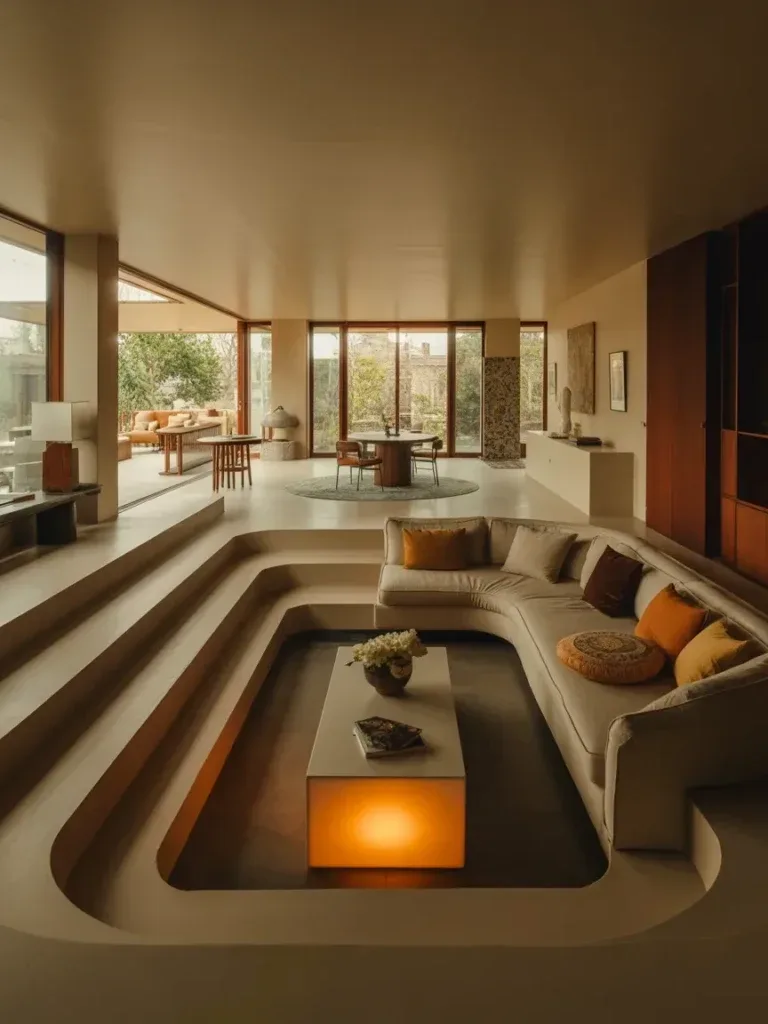
This is the most involved build of the seven, but it’s not out of reach for a reasonably confident DIYer — a two-stage platform with a hidden storage layer underneath, topped with a rug and a floor cushion. The elevation is what sells it: even six to eight inches of height change signals “this is a distinct zone” in a way that flat flooring never quite does.

See also  14 Modern Lighting Chandeliers That Instantly Elevate Contemporary Home Interiors

Build the storage layer before you worry about the rug and cushion — it’s the part that’s actually load-bearing and functional, and it’s much harder to retrofit once the platform is finished and styled.

  • A two-stage platform with concealed storage underneath
  • A large round floor cushion — more forgiving of odd platform shapes than a rectangular one
  • Warm, low-toned lighting to soften the raised edges

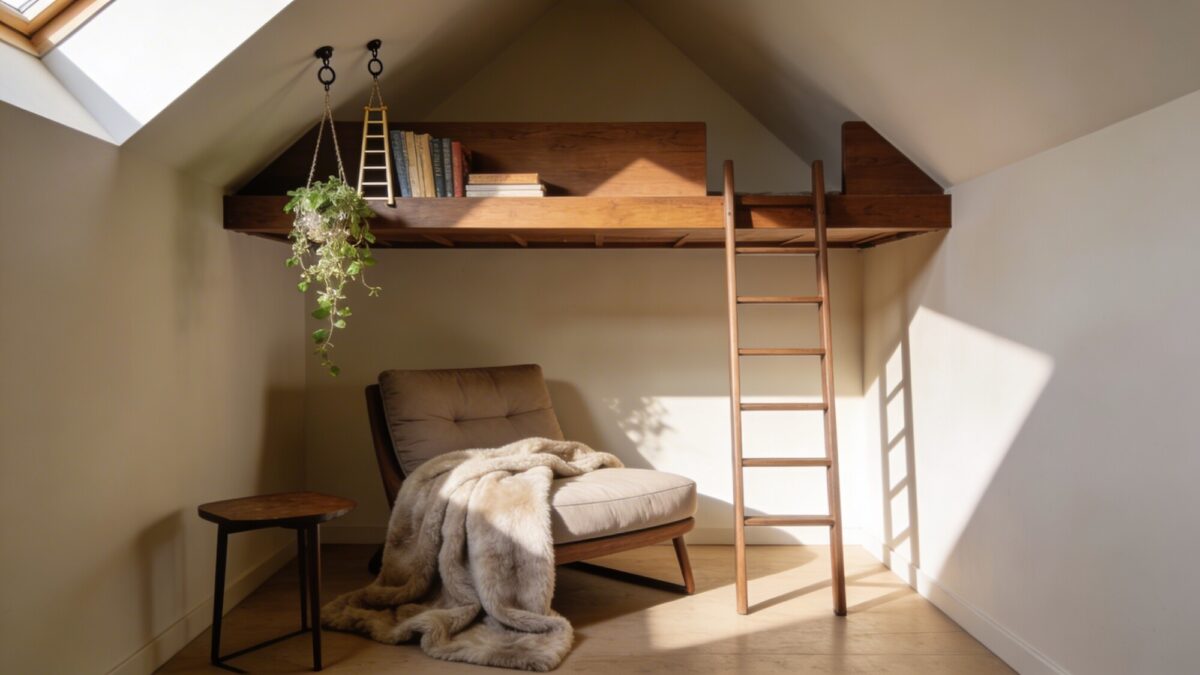
5. Cozy Loft-Library Corner

Mounting a shelf up near the ceiling above a low chair borrows the visual trick lofts use — it makes a small room read taller than it is, because your eye travels up to the books instead of stopping at eye level. A small ladder leaning against the shelf isn’t just practical for reaching the top row; it reinforces the “library” feeling more than almost any other single object on this list.

One real consideration: a high shelf needs to be secured into studs, not just drywall anchors, especially once it’s loaded with books. This isn’t a spot to cut corners on hardware given what’s directly above a seated reader.

  • A ladder-accessible shelf mounted higher on the wall
  • A low-profile chair with a thick cushion directly below
  • A soft throw and small side table within arm’s reach

💡 Pro Tip: Keep your most-reached-for books on the lower two shelves and treat the top shelf as more display than daily rotation — nobody actually wants to climb a ladder every time they want a different book.

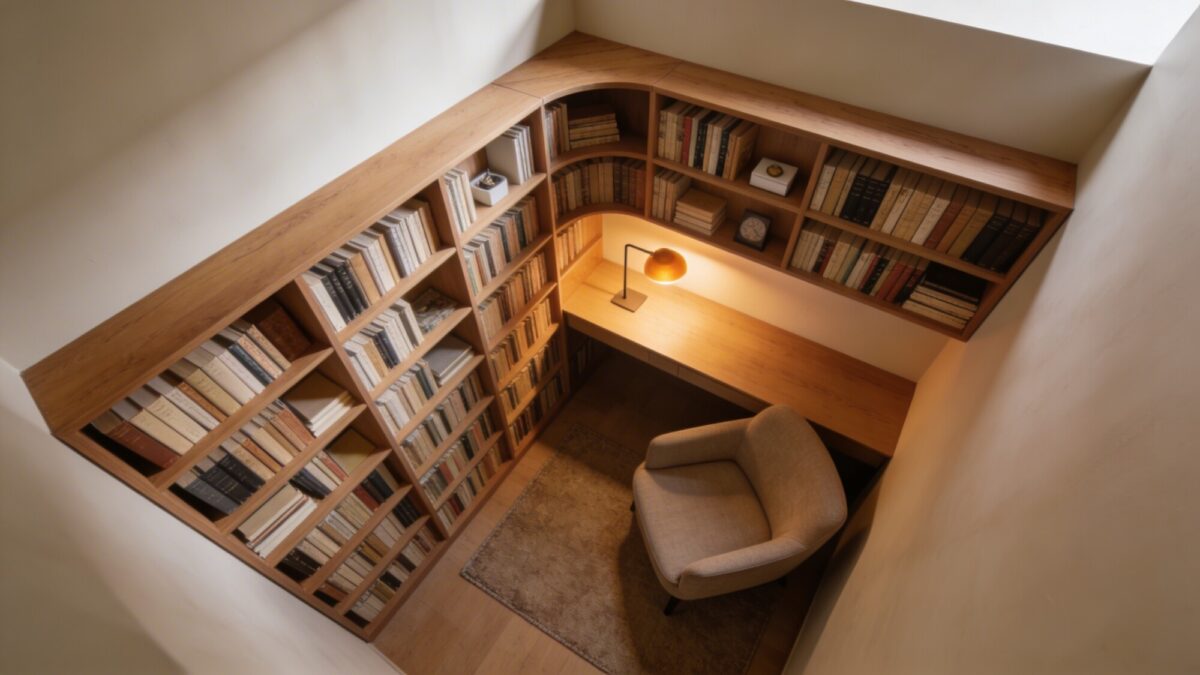
6. Corner Angled Mini Library

An L-shaped bookcase built to match the actual angle of a corner uses space a straight shelf simply can’t reach. This is the version to reach for if you also want a small work surface — a slim desk tucked into the same corner turns the spot into a reading-and-writing nook rather than reading-only.

Restraint matters more here than in any of the other six. Because the shelving hugs two walls at once, extra decor objects crowd the space fast — the images and setups that work best in this style keep decor minimal and let the angled shelving itself be the visual interest.

  • An angled or L-shaped bookcase fitted to the corner
  • A compact accent chair sized to the available floor space
  • A small desk lamp with warm light rather than a bright overhead fixture

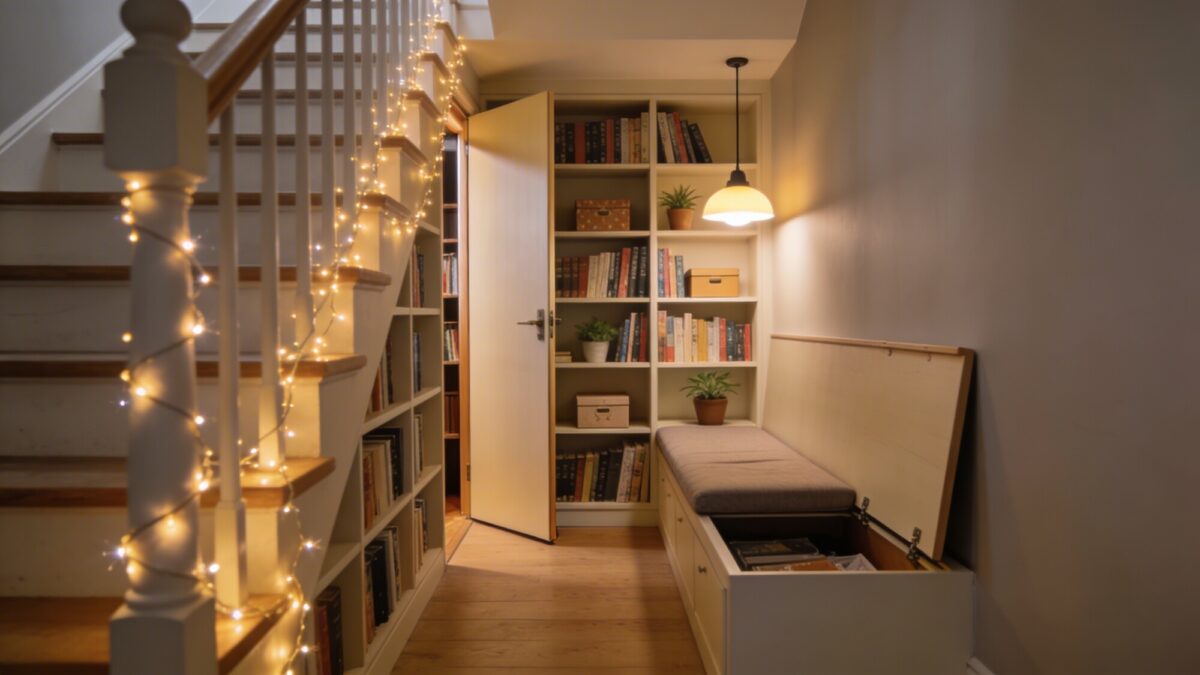
7. Under-Stair Hidden Library

The space under a staircase is dead space in most homes — usually storage overflow or nothing at all. Recessed shelving built into that triangular gap turns it into genuine square footage, and because the ceiling height tapers, it naturally suits a seated setup rather than a standing one.

A storage bench along the taller end of the space handles both seating and the awkward, harder-to-shelve items (oversized books, boxed sets) that don’t fit neatly on a shelf. Keep the finish consistent with the rest of your hallway or entry — this space is usually visible in passing even when it’s not actively in use, unlike a closet you can shut.

  • Recessed shelves built into the sloped ceiling area
  • A cushioned storage bench for seating and overflow storage
  • Fairy lights or a small pendant for warmth rather than a bright fixture

Which Setup Fits Your Space?

SetupBest ForBuild DifficultyWatch Out For
Window Nook (Idea 1)Rooms with an underused window wallLowFabric fading in direct sun
Closet Conversion (Idea 2)Anyone needing a distraction-free spotLow–MediumSpace going unused once the door’s shut
Floating Platform (Idea 4)DIYers wanting a distinct, elevated zoneHighStorage layer needs to be solid before styling
Loft Shelf (Idea 5)Low-ceiling rooms needing height illusionMediumMust anchor into studs, not just drywall
Under-Stair (Idea 7)Homes with unused stair dead spaceMedium–HighSloped ceiling limits standing room

Things to Consider Before You Build

  • Book count: if you’re under roughly 20–30 books, a small wall shelf will do more for you than a dedicated nook — save the bigger builds for a growing collection.
  • Natural vs. artificial light: a nook with no window needs two light sources minimum (ambient and task) since a single overhead bulb creates harsh shadows for reading.
  • Weight loads: floor-to-ceiling or corner shelving holding real book weight needs anchoring into studs — this isn’t optional once you’re past a shelf or two of books.
  • Daily use vs. occasional use: closed-off spaces (closets, under-stair) work best for daily habits; open nooks work better if the space also needs to look finished when you’re not using it.

Frequently Asked Questions

How small can a space be and still work as a reading nook?
A window seat or corner as narrow as 3 feet wide can work if you’re using a low bench or single chair rather than a full armchair. The limiting factor is usually seating width, not shelf space.

Do I need a window for a small library to feel cozy?
No — closet and under-stair conversions in this list have no natural light at all and still work, as long as you add layered artificial lighting (ambient plus a task lamp) rather than relying on one overhead bulb.

What’s the easiest of these seven to try first?
A window nook or a simple corner shelf, since both use existing structure rather than requiring a build like the floating platform or under-stair conversion. Start there before attempting anything that involves new construction.

Is it worth converting a closet if I’ll use it daily?
Yes — that’s the scenario where the trade-off (losing storage space, no natural light) pays off. If you’re not sure you’ll use it daily, an open nook is the safer bet since it stays visually part of the room either way.

Our Take

Start with whichever of these matches a space you already have, rather than picking your favorite photo and forcing your room to match it. A window nook or corner shelf is the lowest-risk starting point — low cost, no major build, and if it doesn’t get used the way you hoped, it’s easy to repurpose. Save the floating platform and under-stair builds for once you know you’ll actually use a dedicated reading spot regularly.

If you’re pairing a nook like this with a bigger seating plan, our small-space living room ideas guide covers how to fit a reading corner into a tight room without crowding the rest of the furniture, and the minimalist living room ideas roundup has more on keeping a small space calm and functional if that’s the direction you’re leaning.

Share this post

Similar Posts

Leave a Reply

Your email address will not be published. Required fields are marked *