9 Minimalist Shelf Styling: Calm, Chic, Clutter-Free
Minimalist shelf styling has a specific failure mode that “less is more” advice doesn’t warn you about: strip too much away and the shelf just looks unfinished, not calm. The gap between “empty” and “intentionally spare” comes down to a handful of specific moves — texture, scale, and negative space used deliberately rather than just absence. If you’re working with floating shelf decor specifically, the same principles apply, with the added consideration of how the shelf itself reads against the wall.
These nine techniques apply whether you’re working with minimalist bookshelves, a single wall shelf, or a full built-in — the goal throughout is a shelf that looks edited, not empty.
Quick Takeaways
- Minimalist doesn’t mean monochrome or sparse for its own sake — it means every object on the shelf earns its place.
- Negative space is a design choice, not leftover room. If a shelf feels unfinished, the fix is usually better height variation, not more objects.
- 2–3 repeated materials (wood, ceramic, one metal) hold a minimalist shelf together better than a wider mix.
- One hero object per shelf section is enough — more than that and nothing gets to be the focal point.
1. Layer Texture, Not Objects

The instinct when a minimalist shelf feels flat is to add more. Usually the actual fix is fewer objects with more textural contrast between them — a matte ceramic vase, a woven basket, one sleek metal piece. Two or three materials repeated is more effective than five objects that all share the same glossy or matte finish.
A shallow wooden box as a base, with a ceramic vase resting on its edge and a small metal or stone object tucked behind, gives you depth from three items instead of ten.
2. Play With Scale Instead of Adding Clutter

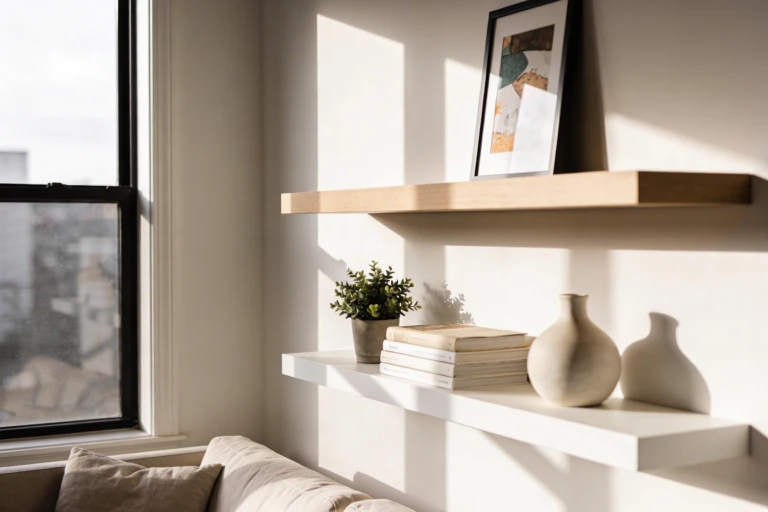
A shelf of same-size objects reads as a row, not a display, even at three items. Pairing a tall, slender vase with a squat book stack and one small compact piece creates the height variation that actually holds visual interest in aesthetic shelves decor — without needing to add anything else.
💡 Pro Tip: Stick to odd-numbered groupings — three or five items — rather than even numbers. Even groupings tend to split visually into pairs, which reads as less intentional than an odd grouping the eye has to actually scan.
3. Anchor the Shelf With a Restrained Color Palette

Two base colors and one accent — say, warm white, matte black, and natural wood — is the palette that makes minimalist shelf decor neutral tones actually feel calm instead of cold. Matching your metal finishes (all matte black, or all brushed nickel, not a mix) does more for cohesion than most people expect from something that small.
Solid-toned pieces over patterned ones, most of the time. A single patterned object can work as an accent, but two or more start to compete with the calm the rest of the styling is aiming for.
4. Use Negative Space Like a Design Tool

This is the technique most people skip because it feels like doing less work, and it’s the one that separates a genuinely minimalist wall shelf decor setup from one that just looks unfinished. Give each object real breathing room — not touching, not crowded — and the space around it becomes part of the composition.
💡 Pro Tip: If a shelf still feels crowded after you’ve spaced things out, the fix is usually to remove one item entirely rather than rearrange what’s left. Minimalist styling almost always resolves by subtraction, not repositioning.
5. Add Greenery That Doesn’t Need Constant Attention

A ZZ plant or a spider plant tolerates inconsistent watering better than most houseplants, which matters on a shelf that’s easy to walk past and forget for a week. A single trailing pothos, allowed to drape rather than be trimmed tight, softens the hard lines that define most minimalist floating shelf styling.
Rotate the pot a quarter turn every couple of weeks if it’s near a window. One-directional light causes lopsided growth that becomes obvious fast on a shelf, where the plant has nowhere to hide its uneven side.
6. Choose One Hero Object, Not Several

A sculptural vase, an unusual clock, or a bold ceramic bowl works as a focal point only if it’s the single standout piece on that shelf. Surround it with calm, quiet supporting objects — a shallow bowl, a couple of books laid flat — that share its material language without competing for attention.
The common mistake here is picking two hero pieces on the same shelf. Even if both are beautiful individually, they cancel each other out — the eye doesn’t know which one to land on.
7. Treat Books as Shapes, Not Just Text

Turning a few books spine-in rather than spine-out removes visual noise from busy book covers, which matters more in minimalist styling than in a more eclectic look. Stack three books as a block for visual weight, then set a small object — a smooth stone, a tiny ceramic piece — on top to add height without adding clutter.
Mix vertical and horizontal stacks rather than lining every book upright — a single horizontal stack breaks the rhythm in a way that reads as intentional rather than accidental.
8. Repeat a Small Set of Materials

Matte ceramic, warm wood, and one metal finish, repeated two or three times across the shelf, reads as a coherent story rather than a random assortment — the same principle behind modern minimalist decor on wooden shelf setups that feel put-together rather than assembled piece by piece. A single glass object that catches light can serve as the one point of sparkle without breaking the material story.
Adding a fourth or fifth material usually dilutes this rather than enriching it. Materials are one place where minimalist storage ideas benefit from real restraint.
9. Refresh Seasonally Instead of Redoing Completely

A minimalist shelf still needs occasional updating, or it starts to look neglected rather than calm. Swapping one textile — a small folded throw in a seasonal tone like terracotta or sage — or rotating a single decor piece keeps the shelf feeling current without touching the rest of the arrangement.
Keep the swap to one or two items. A full seasonal overhaul defeats the purpose of a minimalist setup that’s supposed to require low ongoing effort.
Minimalist vs. Maximalist Shelf Styling
| Aspect | Minimalist Approach | Maximalist Approach |
|---|---|---|
| Object count per shelf | 3–5, with visible negative space | 8+, densely arranged |
| Color palette | 2 base tones + 1 accent | Multiple colors, layered freely |
| Materials | 2–3 repeated materials | Wide mix, intentionally varied |
| Maintenance | Low — occasional single-item swaps | Higher — more items to dust and rearrange |
Things to Consider Before You Style
- Decide your 2–3 materials before buying any new decor — this prevents impulse pieces that don’t fit the palette.
- Count your objects per shelf section; if you’re consistently past 5–6 items, you’re likely drifting from minimalist toward maximalist.
- Pick one plant that matches your actual light conditions rather than the one that looks best in photos — a ZZ plant in a dark corner will outlast a fiddle-leaf fig every time.
- Set a seasonal reminder (every 3 months is reasonable) to do a one- or two-item swap rather than letting the shelf sit static for a year.
Frequently Asked Questions
How many items should a minimalist shelf have?
Usually 3–5 per shelf section, grouped with visible negative space, rather than a fixed number — the test is whether each piece has room to be noticed on its own.
Does minimalist shelf styling mean no color?
No. It means a restrained palette — two base tones and one accent color, generally — not the absence of color entirely.
What’s the biggest mistake people make with minimalist shelves?
Removing too much without adding height variation or texture to compensate, which leaves the shelf looking unfinished rather than calm.
Is minimalist shelf styling the same as Japandi shelf decor?
They overlap heavily — both favor negative space, natural materials, and muted palettes — but japandi specifically leans on a warmer, more organic material mix (raw wood, linen, stoneware) than a strictly monochrome minimalist approach might use.
Our Take
Start with negative space and scale variation before buying anything new — most minimalist shelves that feel “off” are solved by rearranging what’s already there, not by adding pieces. Once the bones are right, layer in one or two new textural pieces at most. For more on applying this to a full wall setup, see our guide to open shelf styling.