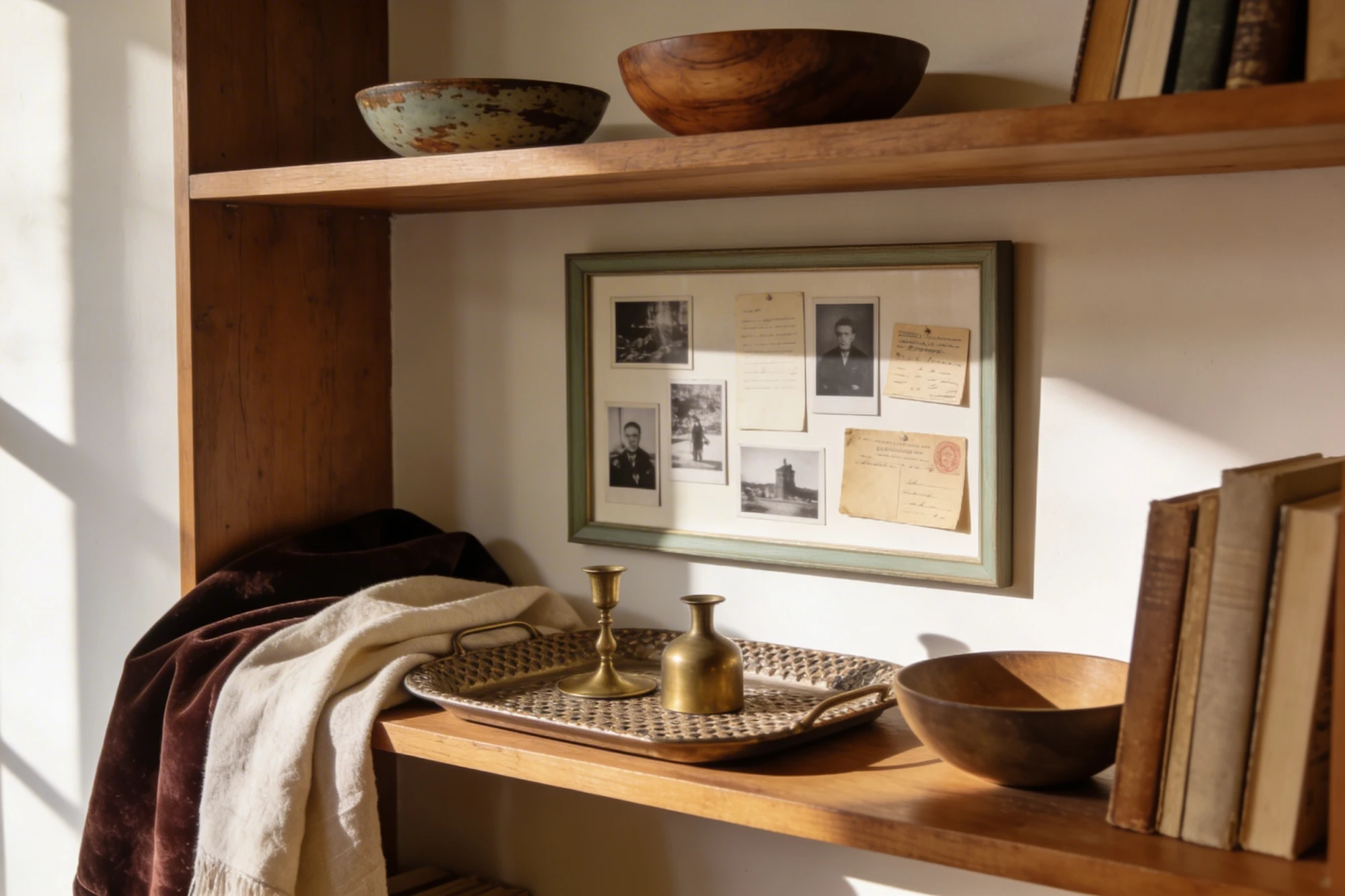
9 Vintage Shelf Styling: Tiny, Big Charm Unlocked
Vintage shelf styling has one specific failure mode that modern shelf styling doesn’t: it can tip into looking like a museum case instead of a lived-in home. The line between “collected over time” and “displayed behind glass” comes down to texture, warmth, and a little imperfection — not how old or rare each individual piece is. If you’re pairing shelf decor with a broader wall display, these floating shelf and wall decor ideas cover how shelves and gallery wall art work together in the same room.
The nine ideas below build on each other — texture first, then composition, then the maintenance habit (rotation) that keeps a vintage shelf from going stale. You don’t need all nine on one shelf at once; pick the ones that fit your actual collection.
Quick-Reference: The Nine Ideas at a Glance
- Texture is what separates “warm and collected” from “dusty” — mix wood, fabric, and metal rather than relying on a single material.
- A tiny gallery wall of vintage photos and postcards works especially well tucked into a shelf, not just hung on open wall.
- Books styled by cover color and stacked at alternating angles function as architecture, not just reading material.
- One anchor piece per shelf section (a clock, a mirror, a large vase) keeps the eye from bouncing between competing focal points.
- Rotate one or two pieces monthly — vintage shelves that never change start reading as static decor rather than a living collection.
Layer Textures Like a Pro
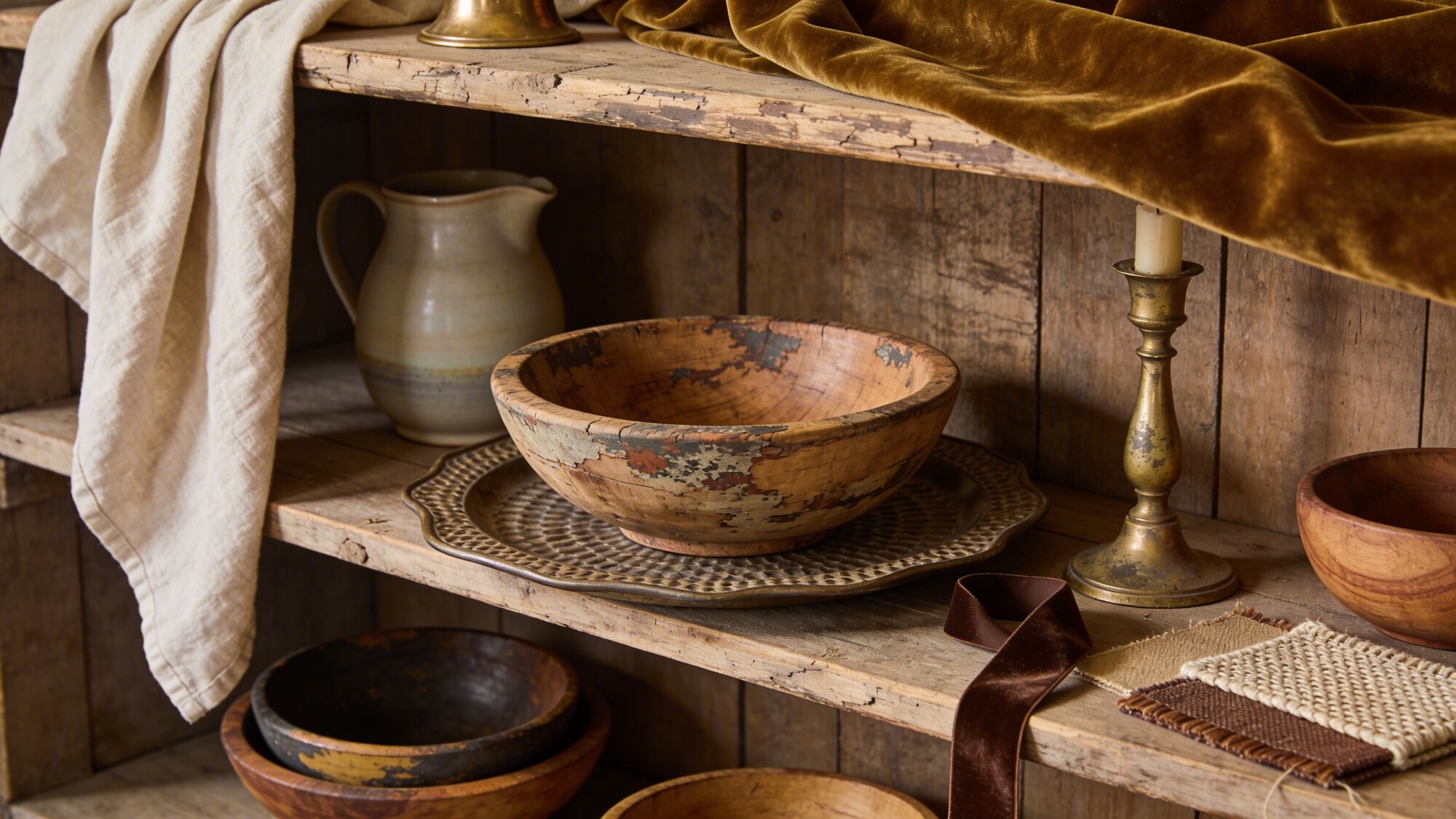
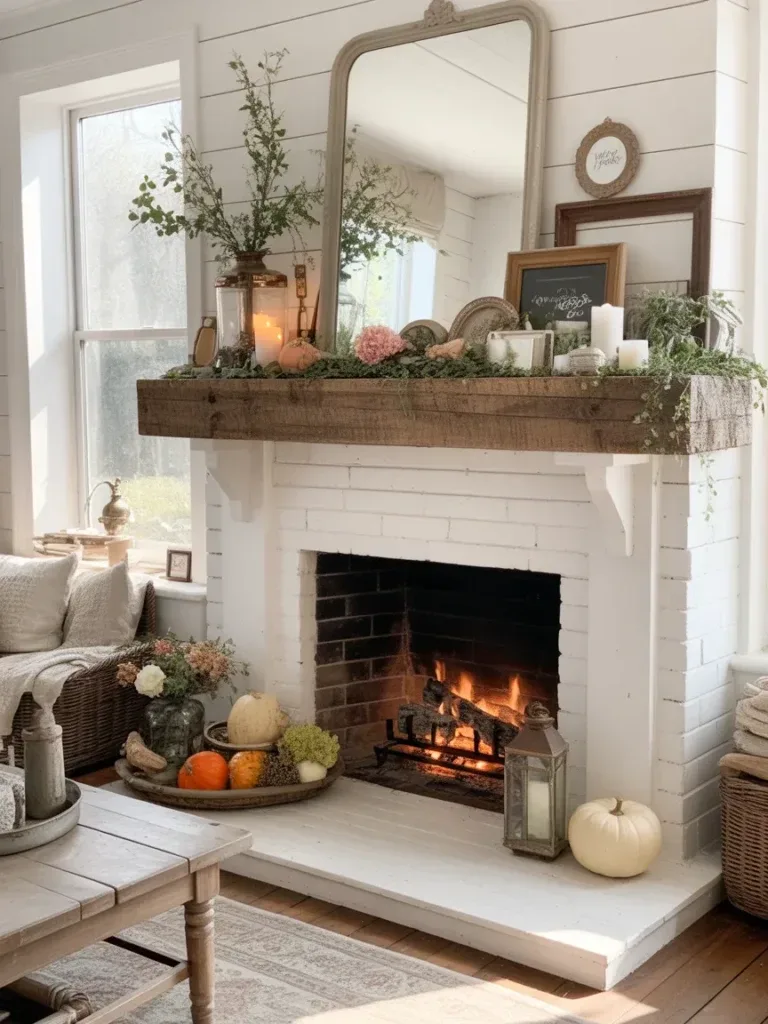
A weathered wooden bowl, a soft linen or velvet textile draped partially over the shelf edge, and a warm brass or copper accent piece together do more to establish a vintage bookshelf decor mood than any single “vintage-looking” object could on its own. The combination of rough (wood patina), soft (fabric), and warm metal is what reads as collected rather than curated from a single store trip.
Start with a textured tray as your anchor and build outward from it — it gives the eye a clear starting point and keeps the rest of the arrangement from feeling scattered.
💡 Pro Tip: Real patina and genuine wear read differently than distressed-finish reproductions under close inspection — if you’re buying new “aged” pieces to mix with real vintage finds, keep the reproductions to accent roles (a candlestick, a small tray) rather than the anchor piece, where the difference in texture quality is most visible.
Curate a Tiny Gallery Wall on the Shelf
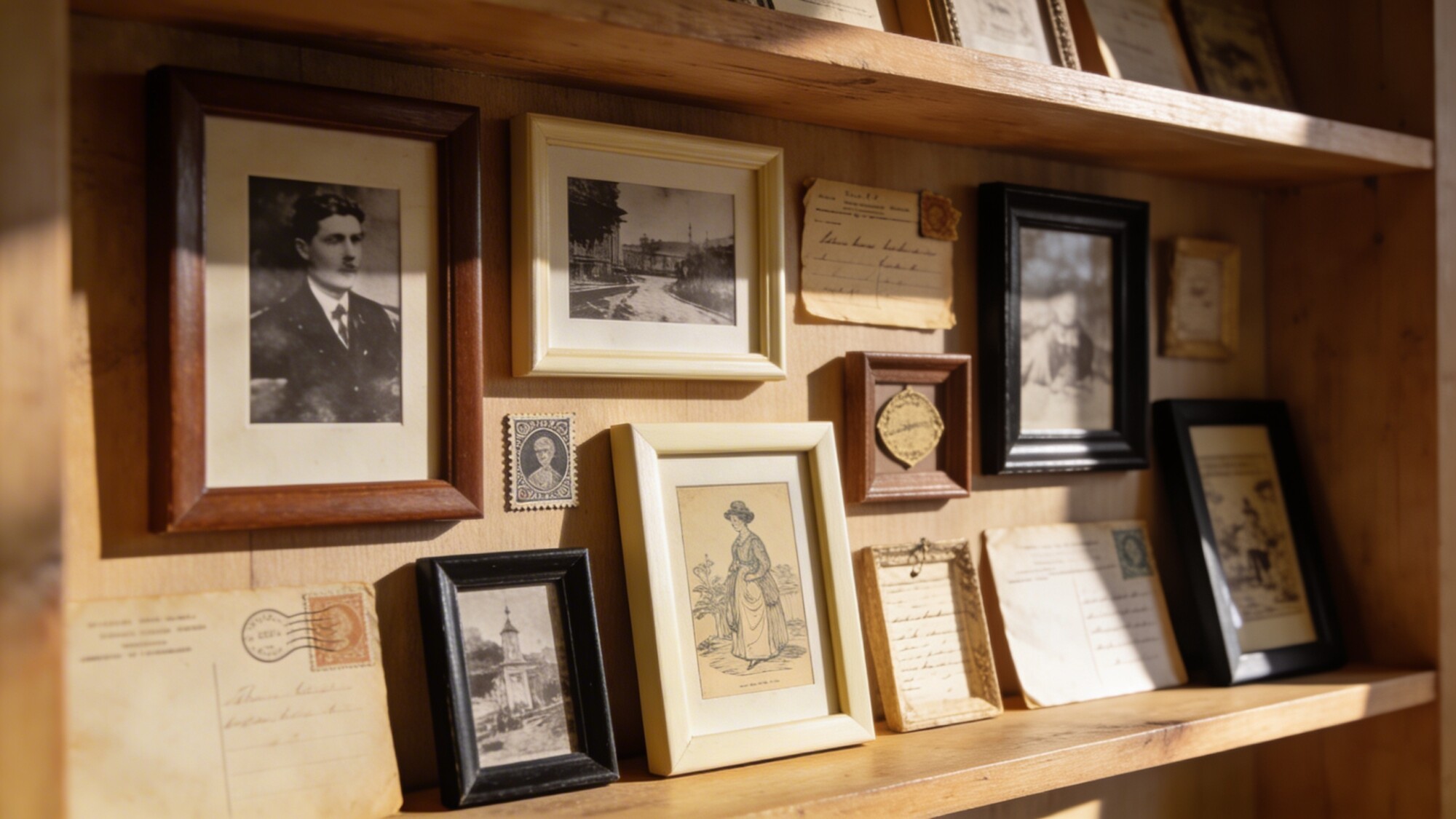
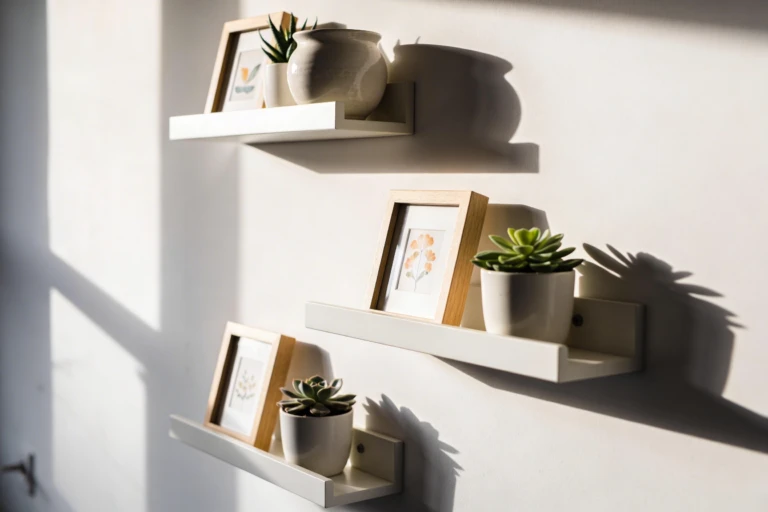
Leaning a handful of tonally consistent frames — browns, creams, blacks — against the back of a shelf, mixed with black-and-white photos, aged postcards, and small ephemera like old stamps or letters, turns a flat shelf section into a mini gallery wall art moment without needing wall space. The frames don’t need to match; tonal consistency across the frame colors does the unifying work that identical frames would otherwise do.
Rotate two or three pieces every few months rather than the whole arrangement — enough to keep it feeling attended to, without redoing the composition from scratch.
Show Off Books the Right Way
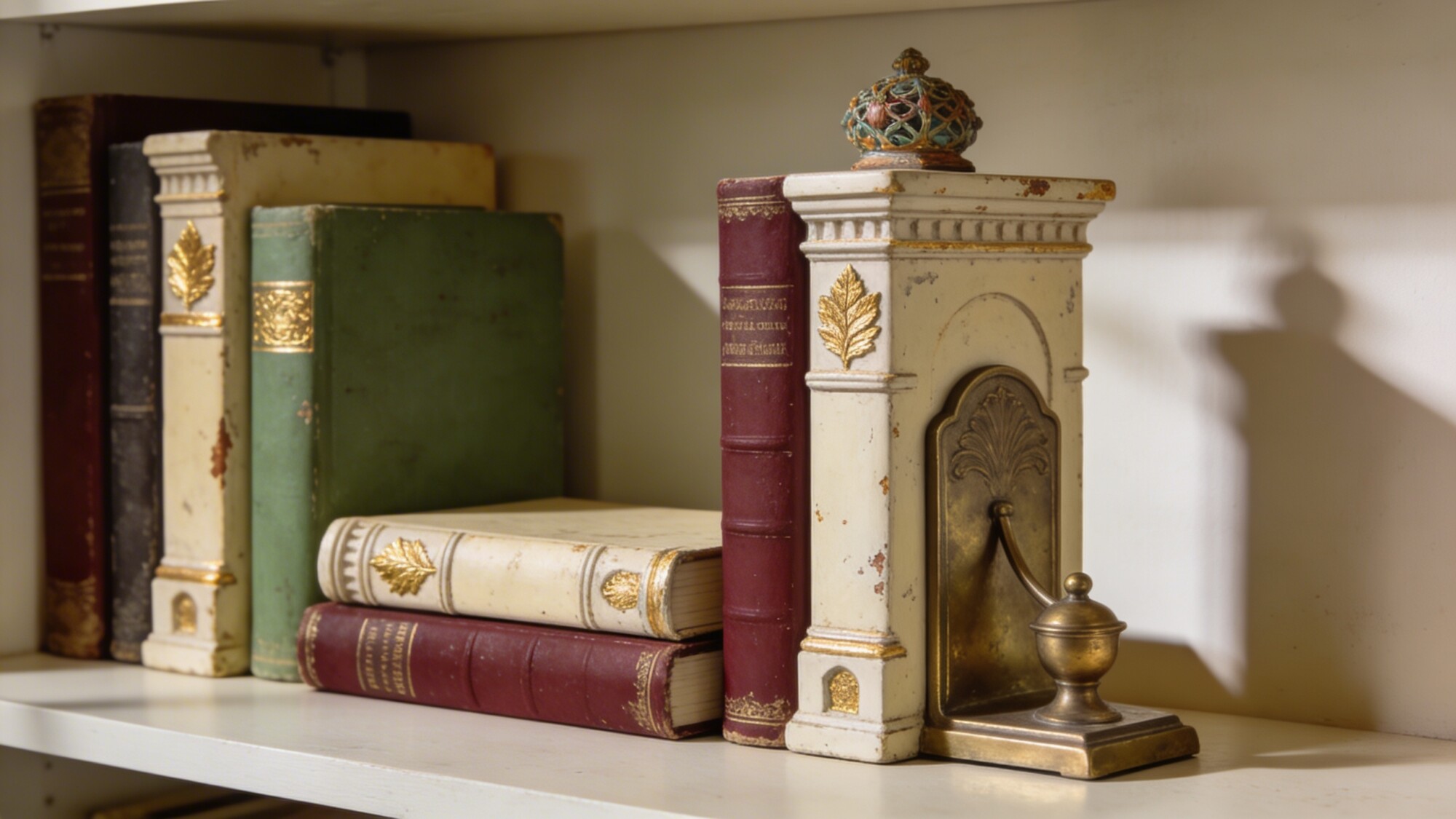
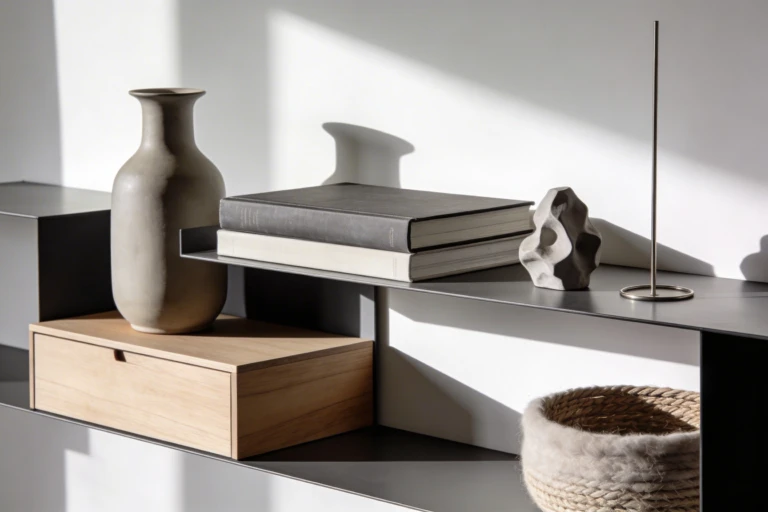
Vintage books function as architecture on a shelf — worn spines and gold-leaf edges add color and texture the way a piece of art would, and a stack with a small object perched on top (a shell, a miniature frame) reads as intentional rather than left there. Alternating upright spines with a horizontal stack breaks up the visual line and is one of the simplest bookshelf styling ideas that consistently works regardless of which era or genre the books actually are.
A small brass bookend does more for the “classic” feel than people expect — it’s a small, inexpensive addition that signals intentional styling rather than books just leaning against each other.
The Plant Counterpart: Greenery With Character
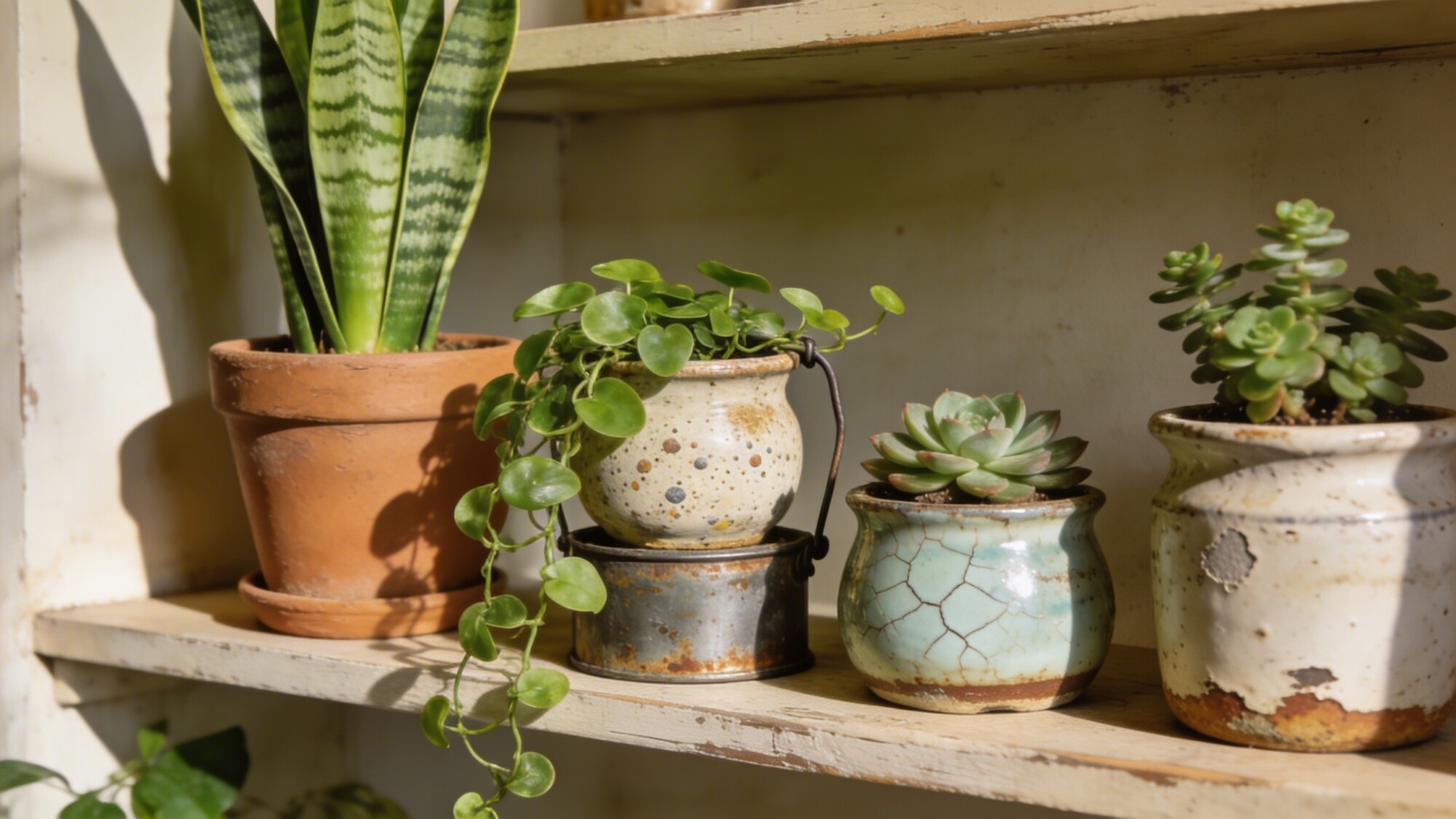
Plants are the fastest way to keep a vintage shelf from tipping into museum-case territory — living, slightly irregular greenery contrasts with the fixed, static quality of old objects. Look for planters with real patina or ceramic texture rather than a plain plastic nursery pot; a cracked-glaze pot or a distressed tin holding a trailing pothos does double duty as both planter and vintage object.
A snake plant works well as a taller anchor in a clay pot; succulents in small distressed planters fill in lower, denser spots. Both need minimal care, which matters if the shelf is somewhere you won’t remember to water often.
Use Found Treasures as Anchor Pieces
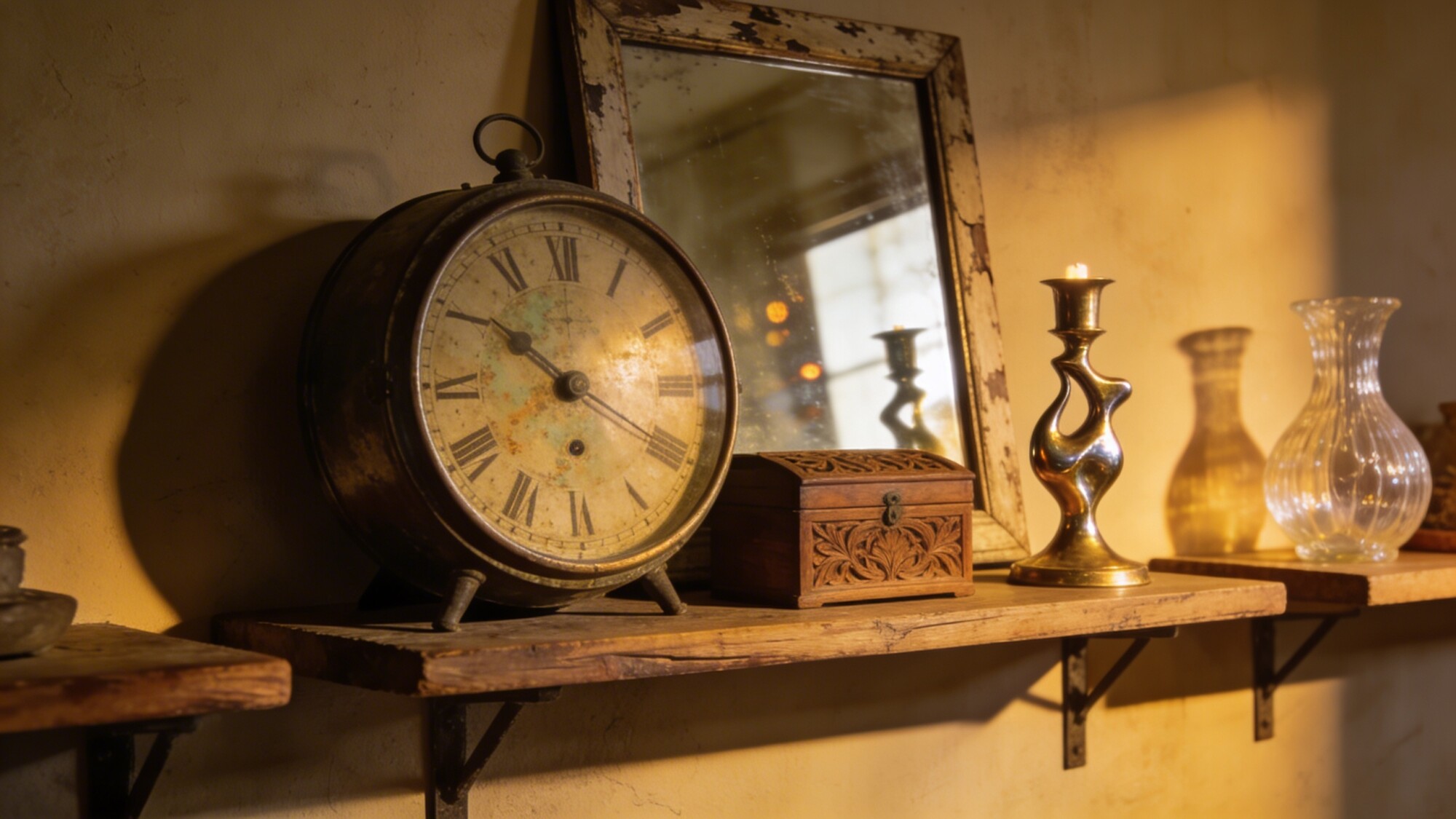
A large vintage clock, a weathered mirror leaned against the back wall, or a carved wooden box that also functions as storage — these are the pieces that give a shelf a story and something for the eye to land on first. Pick one true anchor per shelf section; everything else should be secondary in scale and visual weight.
💡 Pro Tip: A mirror leaned rather than hung does two jobs at once on a vintage shelf — it adds visual depth and reflects light back into the display, which matters if the shelf isn’t directly under a window.
Create Color Pauses With Palettes From the Past
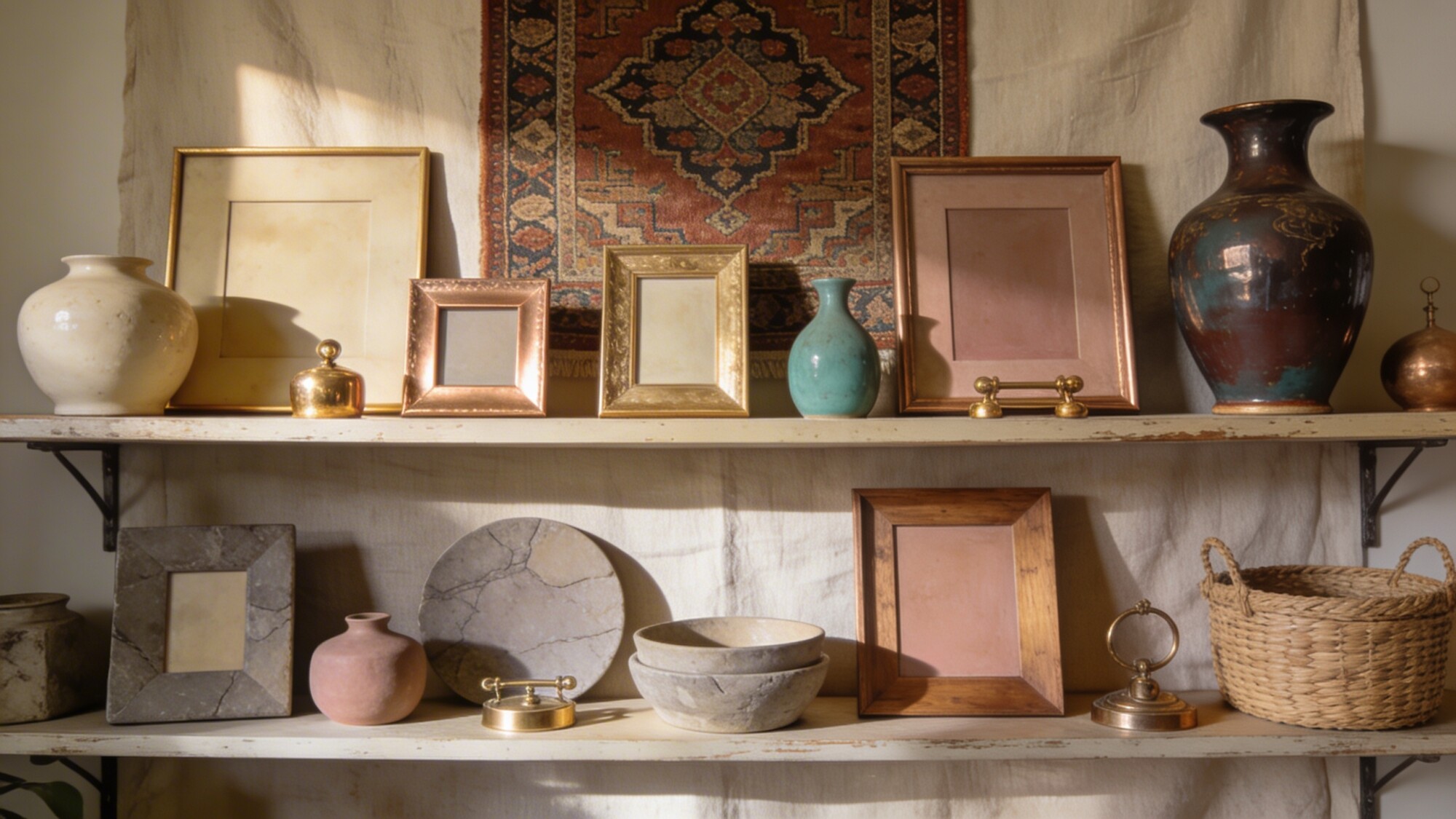
Vintage palettes work best restrained — two or three aged hues (warm neutrals with a single accent like dusty rose or muted teal) repeated across frames, ceramics, and textiles, rather than a wide spread of colors competing for attention. Keep metallic accents to one finish family (gold, brass, or copper, not all three) so the hardware and small objects read as coordinated rather than accumulated at random.
Let one statement piece — a patterned tapestry, a bold ceramic vase — carry the color story, and keep everything else more subdued around it. Two loud pieces on the same shelf compete instead of complementing each other.
Lighting That Makes Everything Shine
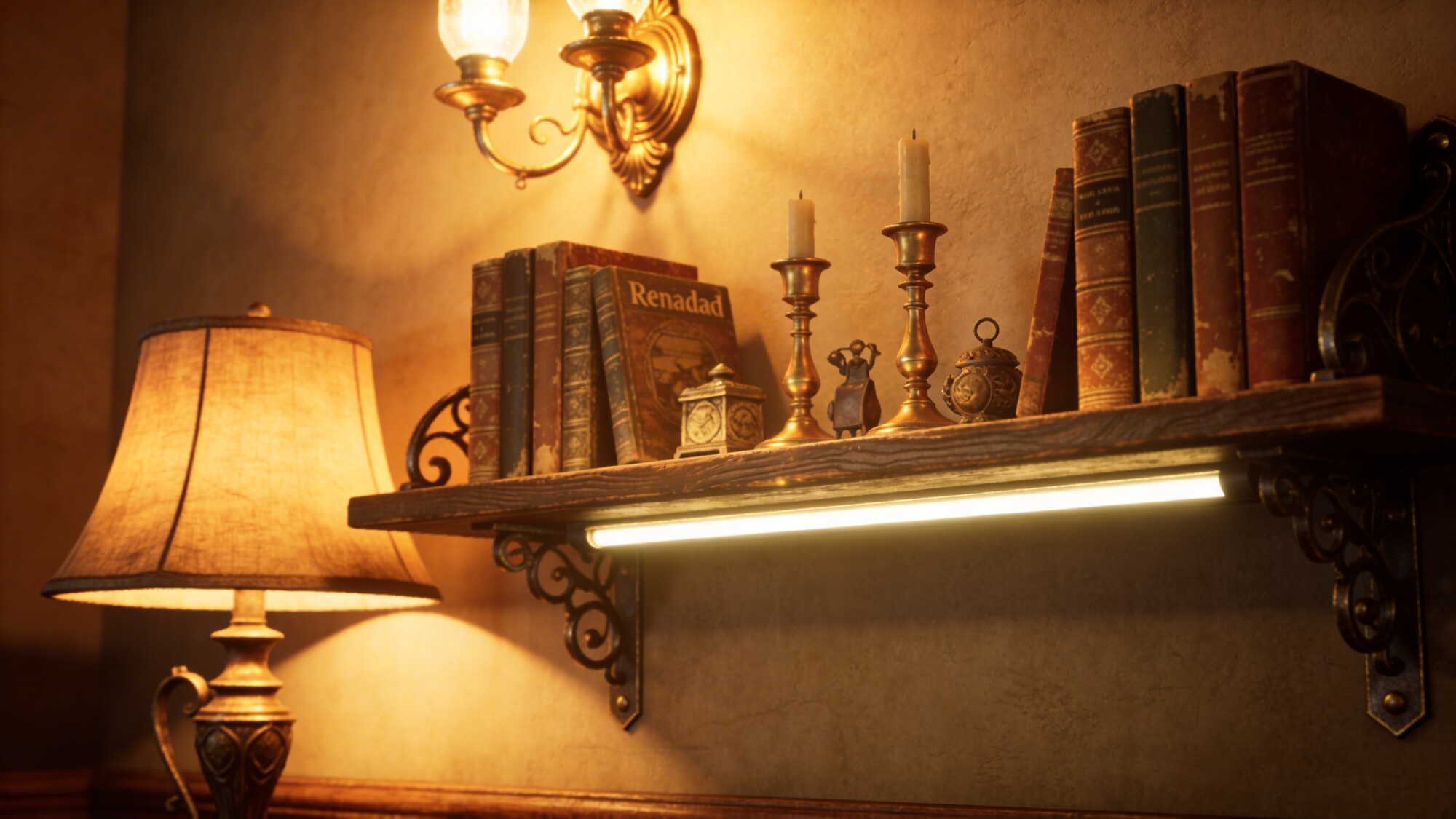
Small brass sconces mounted above the shelf, or an LED strip tucked behind the back edge to throw a subtle halo, do more for vintage decor than bright, even overhead light. Warm light (in the same 2700K–3000K range that works for cozy interiors generally) flatters aged wood and metal patina in a way cooler white light doesn’t — cool light tends to make genuine wear look dingy rather than characterful.
Play With Scale for Visual Drama
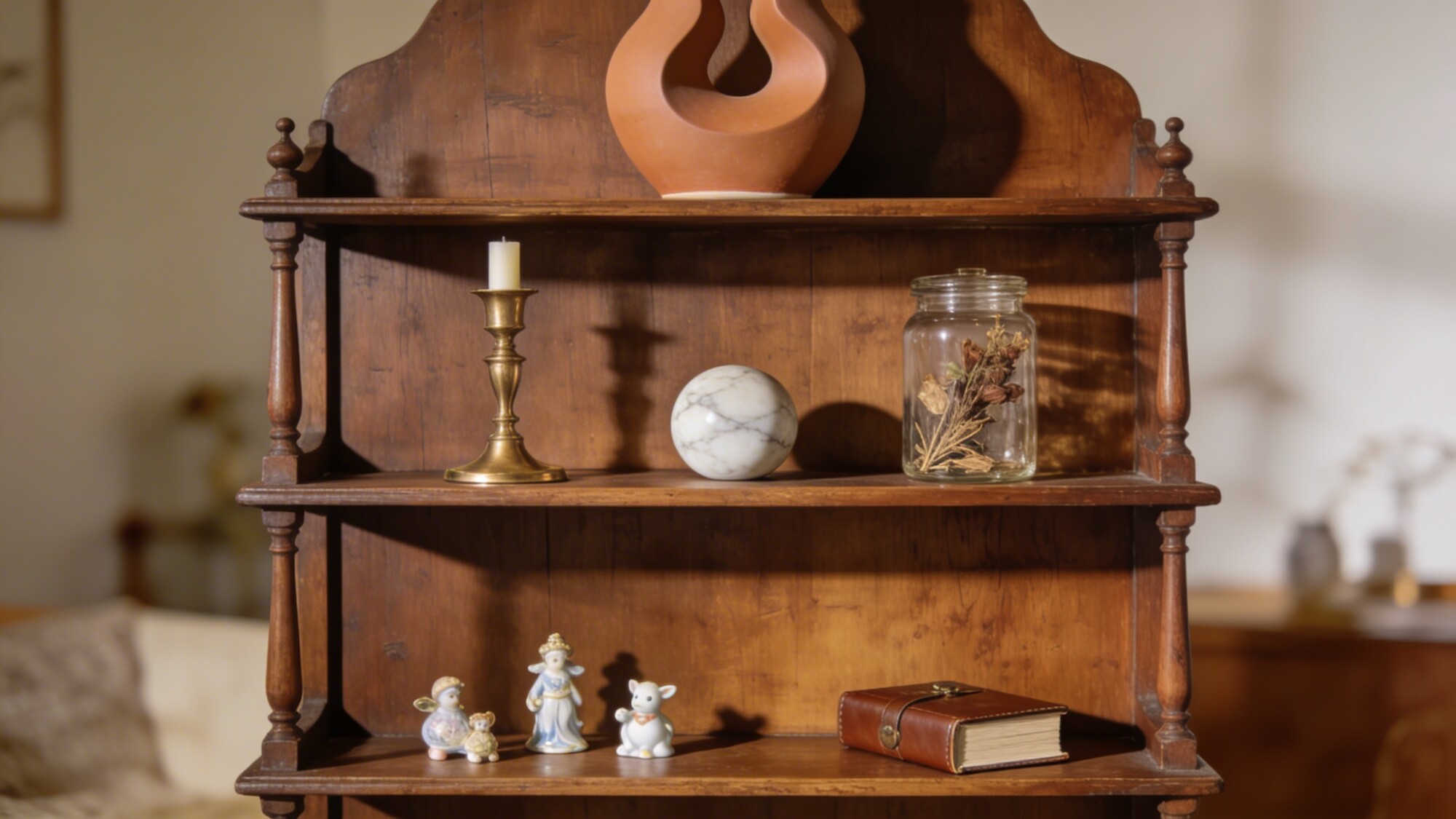
One oversized piece on the top row, mid-sized objects filling the middle, and small trinkets toward the ends creates a rhythm that keeps the eye moving instead of settling flat. This is the rule most vintage shelves get wrong by accident — collections built up over years tend to accumulate similarly-sized small objects, and without a deliberate large piece, the whole shelf can end up visually flat regardless of how interesting the individual items are.
Rotate and Refresh: The Living System
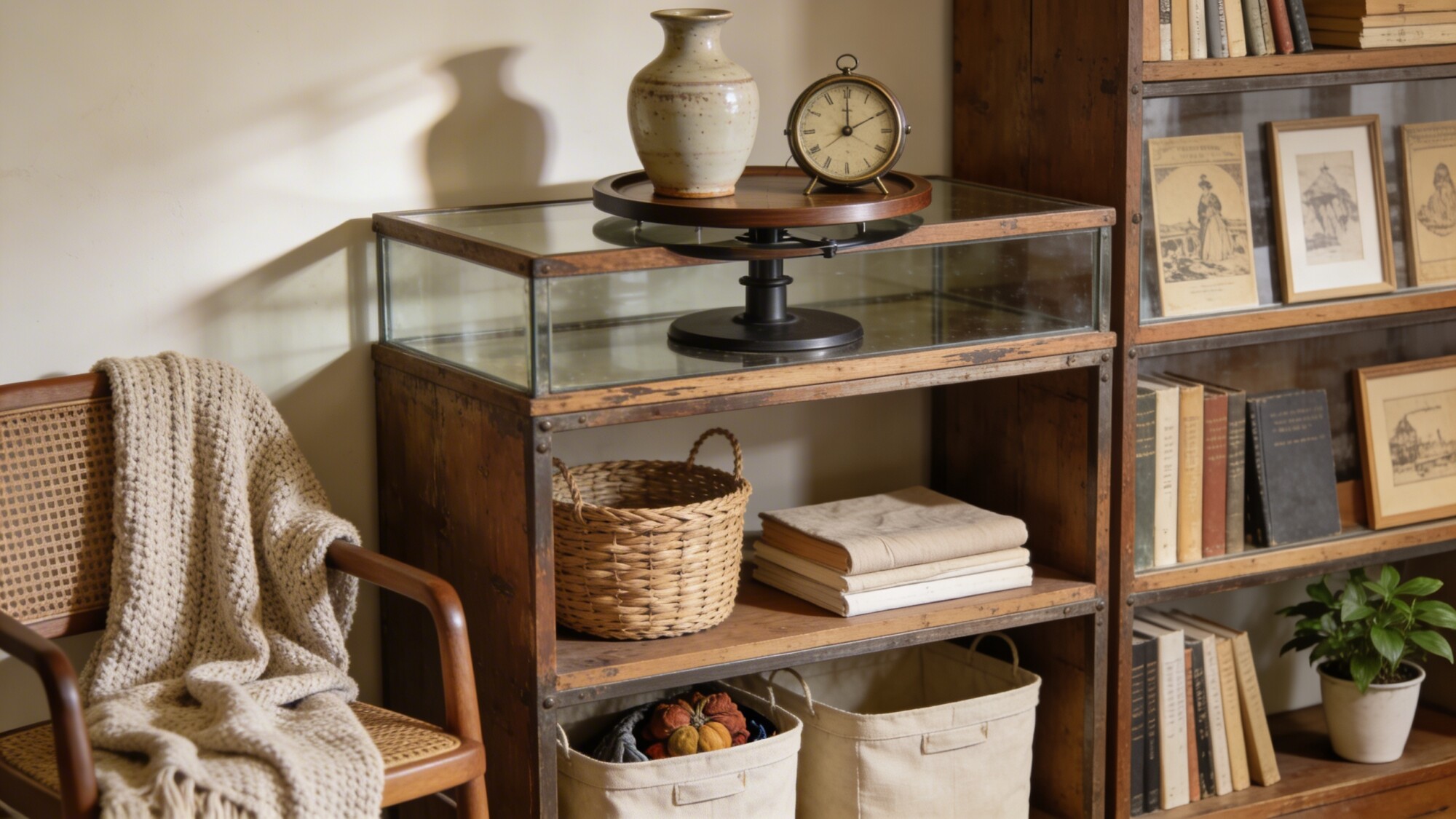
Vintage styling is not a finished state — swap one or two focal pieces monthly, and store your “next up” items in labeled baskets so a swap takes minutes rather than becoming its own project. This is the habit that keeps a vintage shelf reading as a living collection you’re still adding to, rather than a fixed display that was finished once and left alone.
Things to Check Before You Call the Shelf Finished
- Confirm you have one genuine anchor piece per shelf section, not two competing for attention.
- Check that your metal finishes (brass, gold, copper) are consistent across the display, not mixed.
- Make sure at least one living element (a plant) is present to offset the static quality of aged objects.
- Look at the shelf under evening lighting — warm light matters more for vintage patina than for modern glossy finishes.
- Set a real reminder to rotate one or two pieces monthly, rather than relying on remembering to do it.
FAQ
How do I keep a vintage shelf from looking like a museum display?
Mix in texture and something living — a plant, a draped textile — and avoid arranging everything in perfectly even rows. Genuine wear and slight asymmetry are what make it read as collected rather than curated behind glass.
Can I mix reproduction “vintage-style” pieces with real vintage finds?
Yes, but keep the reproductions in accent roles rather than as your anchor piece — the texture difference between real patina and a distressed finish is most noticeable up close on a focal object.
How often should I rotate a vintage shelf display?
Monthly is a reasonable rhythm for one or two pieces. A full redo isn’t necessary and works against the “collected over time” feeling vintage styling is going for.
What’s the fastest way to add vintage character to a plain shelf?
A textured tray as an anchor, one warm metal accent (brass or copper), and a stack of worn-spine books. All three are inexpensive and don’t require sourcing rare finds.
Our Take
If you’re starting a vintage shelf from scratch, prioritize texture and one real anchor piece before worrying about color palette or lighting — those two decisions do the most to keep the display from reading as sterile or overly matched. Add the rotation habit early rather than treating it as an afterthought; a vintage shelf that never changes eventually just looks like static decor, which defeats the point of a collected look.
For more on pairing shelf styling with a broader wall display, this guide to floating shelf decor for a living room is a good next stop.