Transform Your Bathroom Interior: Bold, Bright, Beautiful
A bathroom interior gets more daily wear than almost any other room in the house — steam, water, cleaning products, and someone rushing through it twice a day. That means the choices that look great in a showroom don’t always hold up once the room is in real use. If you’re weighing a full renovation versus smaller updates, our bathroom remodel ideas for small spaces is a good place to compare scope before committing to anything below.
This guide walks through the decisions that matter most — layout, materials, lighting, and storage — along with a few things people get wrong the first time around.
Quick Takeaways
- Matte porcelain or ceramic tile beats glossy for floors — the finish matters more for slip resistance than the material itself.
- Layered lighting (ceiling, task, and a backlit mirror) does more for how a bathroom interior feels than any single fixture upgrade.
- A floating vanity opens up floor space in a small bathroom and makes cleaning underneath far easier — the trade-off is it needs solid blocking in the wall to support the weight.
- Fresh caulk and grout is the single cheapest upgrade that changes how a bathroom looks and smells.
- Ventilation isn’t optional — a bathroom fan that’s undersized or rarely used is the most common reason mold shows up in corners nobody checks.
Why Bathroom Interior Choices Matter More Than People Expect
Most rooms in a house get redecorated for looks. A bathroom gets redone because something’s actually failing — grout is cracking, the vanity is water-damaged, the layout doesn’t work for two people getting ready at once. That means bathroom interior decisions carry more functional weight than aesthetic ones in most other rooms, even when the end result is meant to look striking.
Foundations: Color, Light, and Layout
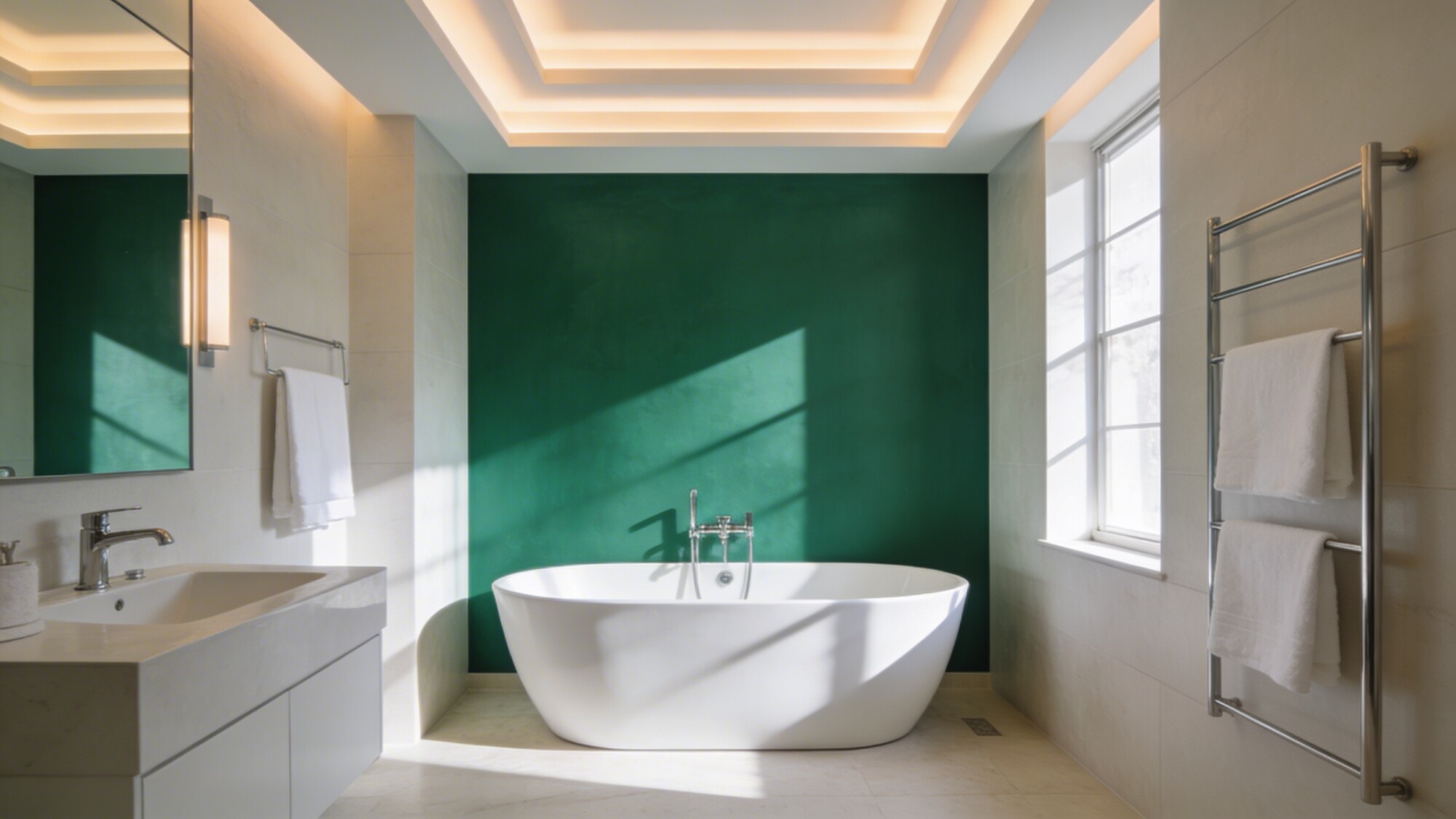
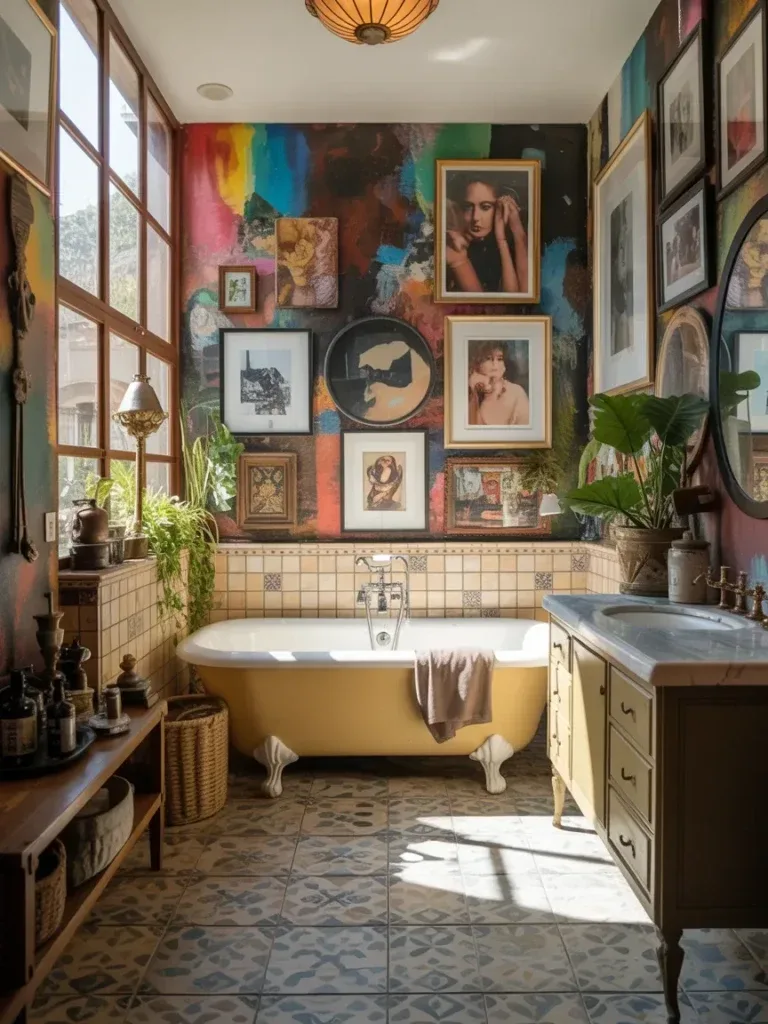
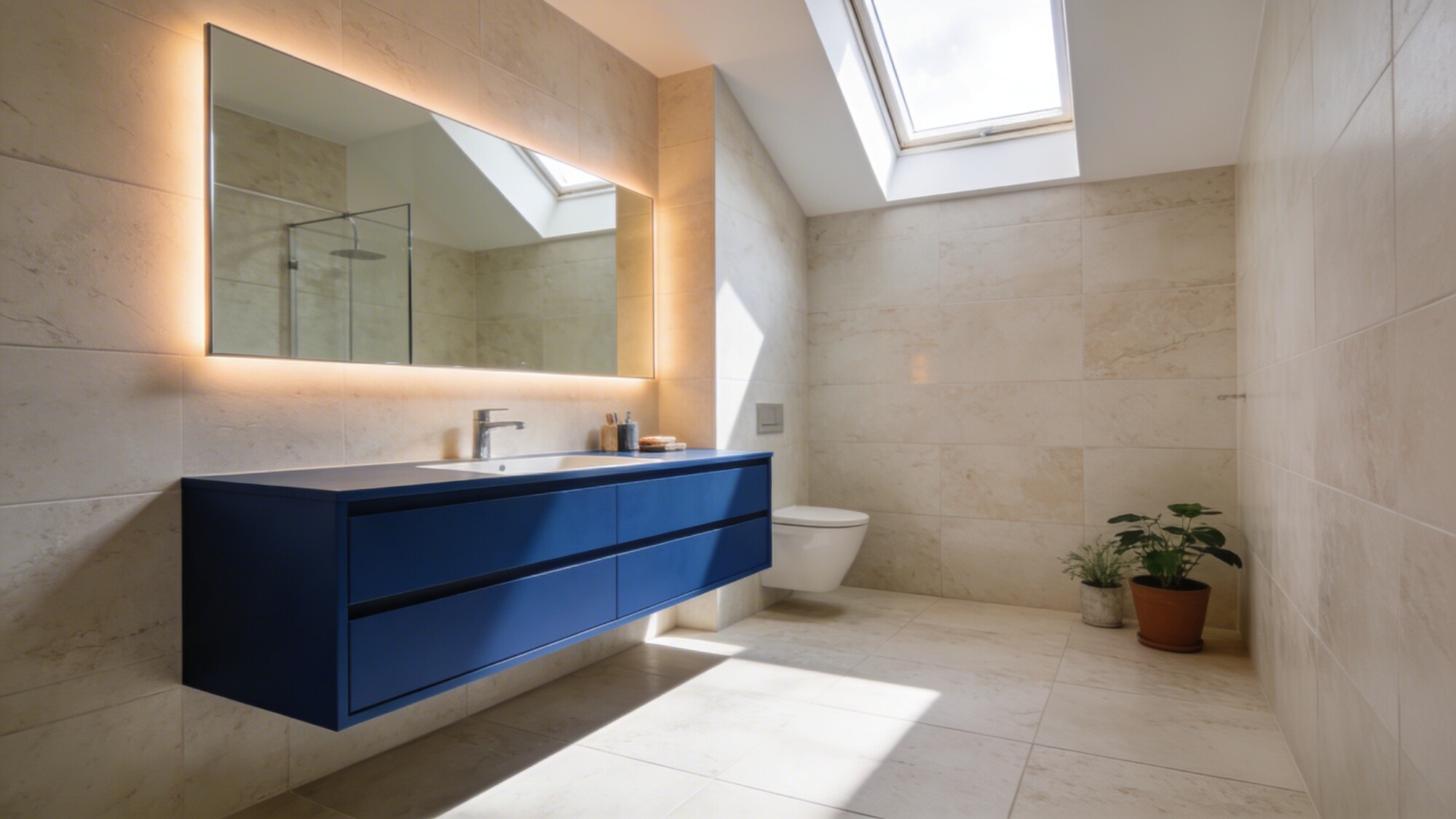
Color in a small bathroom works best as one bold decision, not several. An emerald accent wall against a neutral palette, or a single cobalt vanity against pale stone tile, gives the room a focal point without every surface competing for attention. Layout matters just as much: a bathroom that puts the shower, sink, and toilet in a triangle rather than a straight line tends to feel more open even at the same square footage.
Lighting Hacks You’ll Actually Use
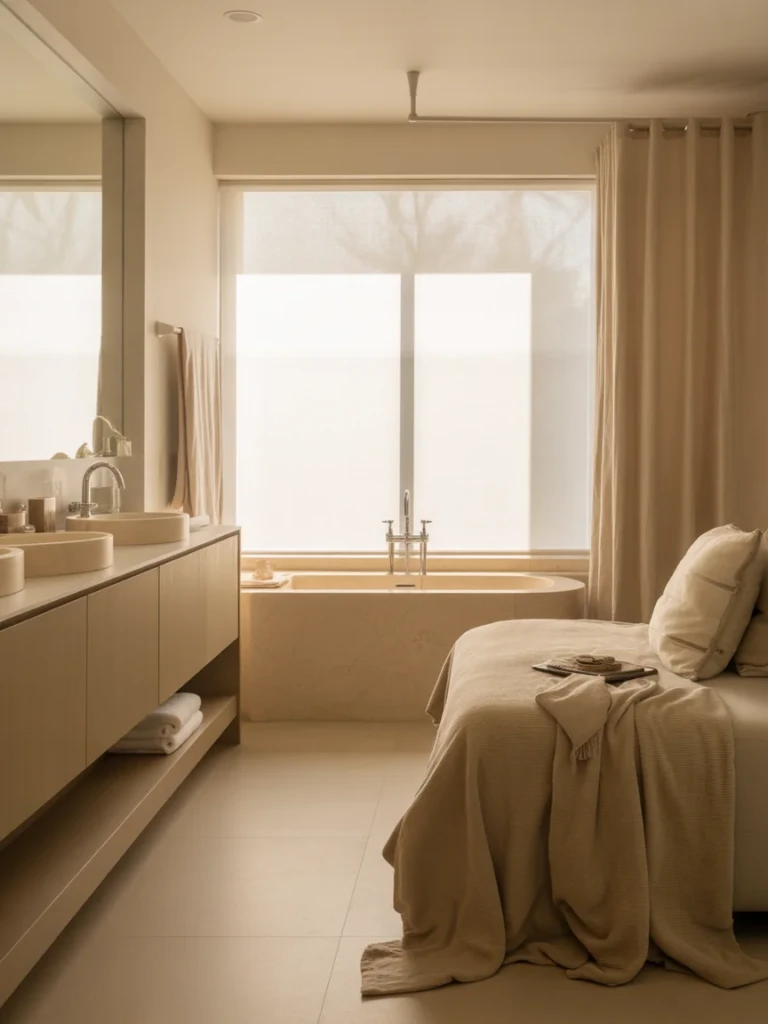
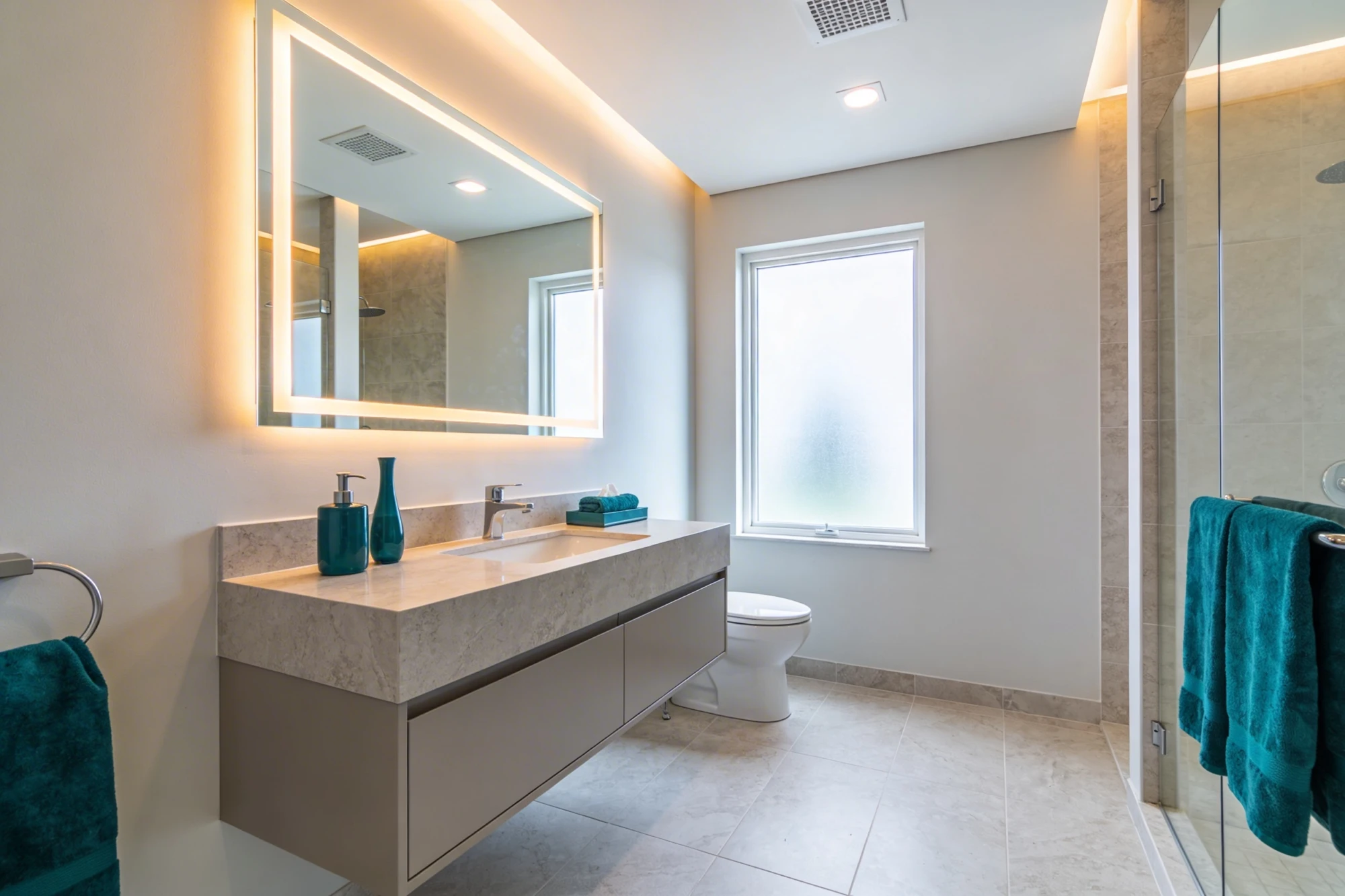
Layer your lighting instead of relying on one overhead fixture. A backlit mirror handles task lighting at the sink, a ceiling fixture covers general light, and a warm accent light — a sconce or cove lighting — softens the room enough that it doesn’t feel clinical at night. Warm-white bulbs (2700–3000K) read more like a spa; cool-white bulbs read more like a hospital bathroom, which isn’t usually the goal.
💡 Pro Tip: Put your vanity task lighting on either side of the mirror at face height, not just above it. Overhead-only lighting casts shadows under the eyes and chin — the same problem stage lighting designers avoid for a reason.
Materials That Stay Clean Without Extra Effort
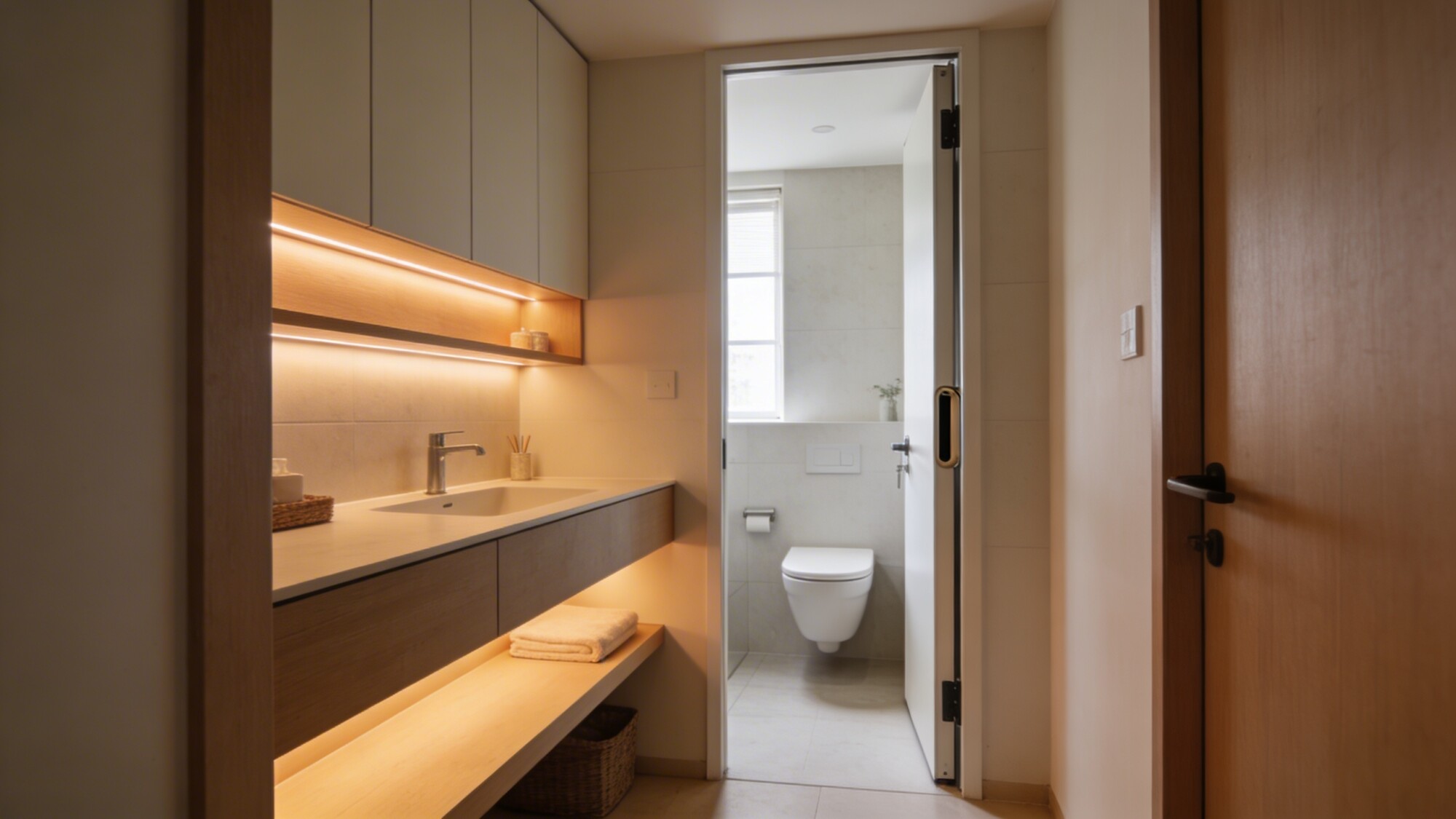
The material decisions that matter most are the ones you touch daily: the vanity top, the shower walls with tiles, and the floor. A floating vanity, paired with a wall-mounted toilet, makes a compact bathroom easier to clean since there’s nothing sitting on the floor to mop around — but it does require the wall behind it to have real blocking installed, which isn’t a retrofit you want to skip to save time.
Flooring That Won’t Be a Nightmare
- Matte-finish porcelain or ceramic tile for slip resistance — glossy tile looks sharp but gets dangerously slick when wet
- Waterproof vinyl plank as a budget-friendly stand-in for tile, especially in a rental or a fast turnaround remodel
- Cork or bamboo only where humidity stays consistently low — both swell and warp faster than tile in a steamy, poorly-ventilated bathroom
💡 Pro Tip: Test a tile sample’s slip resistance yourself before committing — wet the sample and walk on it in socks. A showroom floor with good traction under shoes can still be slick under bare feet, which is how most people actually use their bathroom floor.
Fixtures: Faucets, Showers, and Shower Area Design
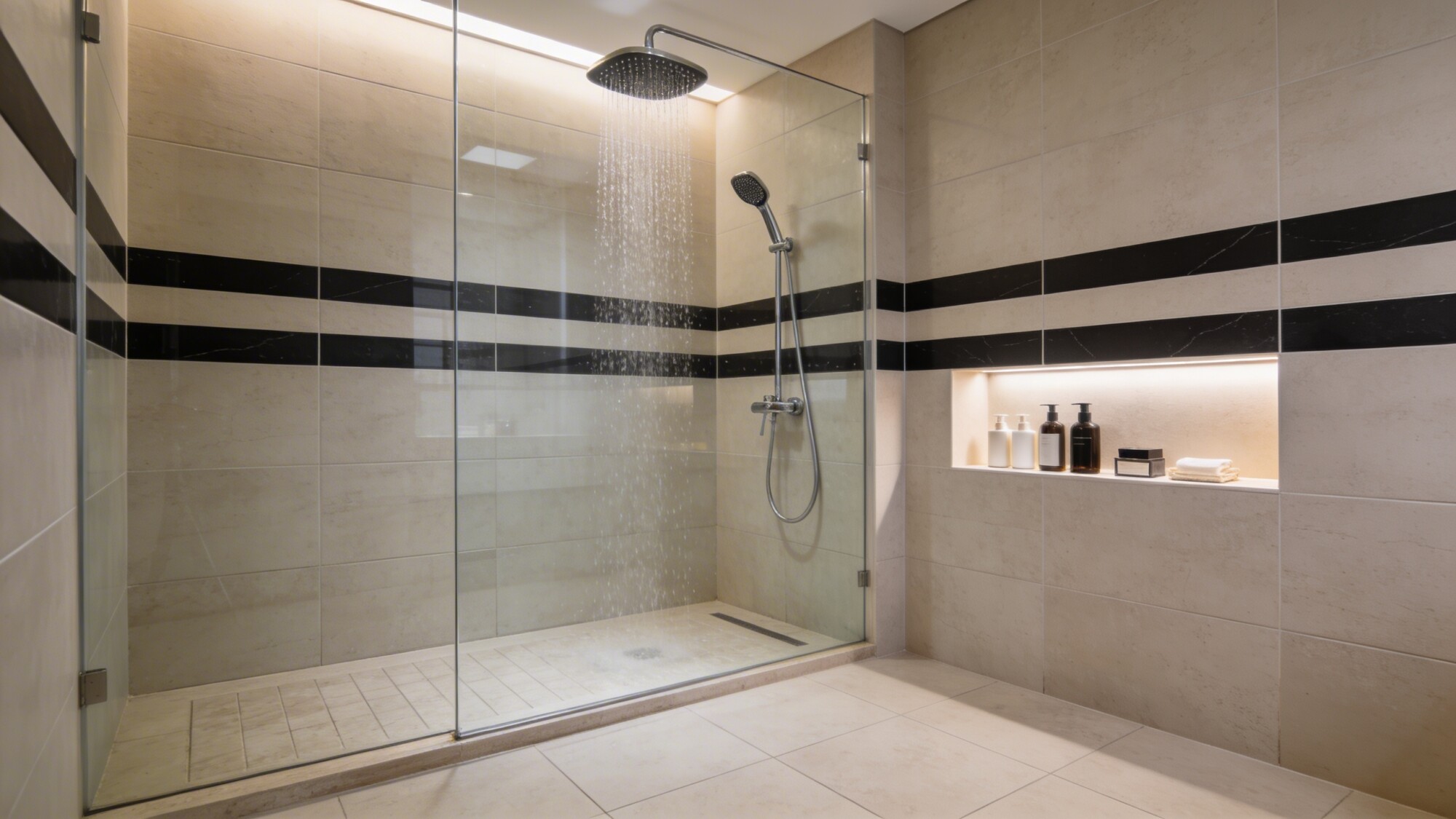
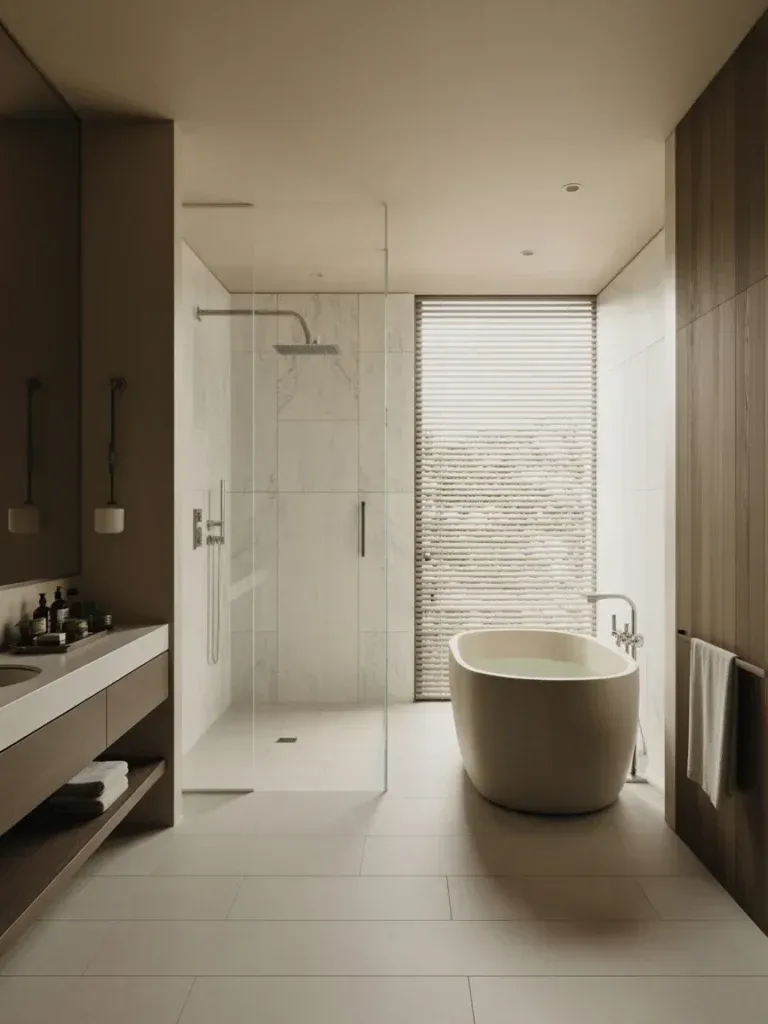
A modern bathroom shower design usually comes down to three decisions: enclosure type, showerhead setup, and storage. A clear glass enclosure makes even a small shower area feel bigger since there’s no visual barrier breaking up the room. Pairing a rainfall showerhead with a handheld unit on a slide bar covers both the daily rinse and things like washing a dog or a toddler without redesigning the space.
A built-in niche beats a wire shower caddy for storage — it doesn’t rust, doesn’t need replacing, and keeps bottles out of the way of the water stream. If you’re planning the whole shower area from scratch, our master bathroom design ideas covers layout options for a full spa-style remodel.
Shower Upgrades: Where to Spend?
If the budget only stretches to one shower upgrade, put it into the enclosure and niche rather than the showerhead. A framed, cloudy glass door dates a bathroom faster than an average showerhead does, and a built-in niche is far more disruptive to add after tile work is finished than to plan for up front.
Storage Without the Clutter Trap
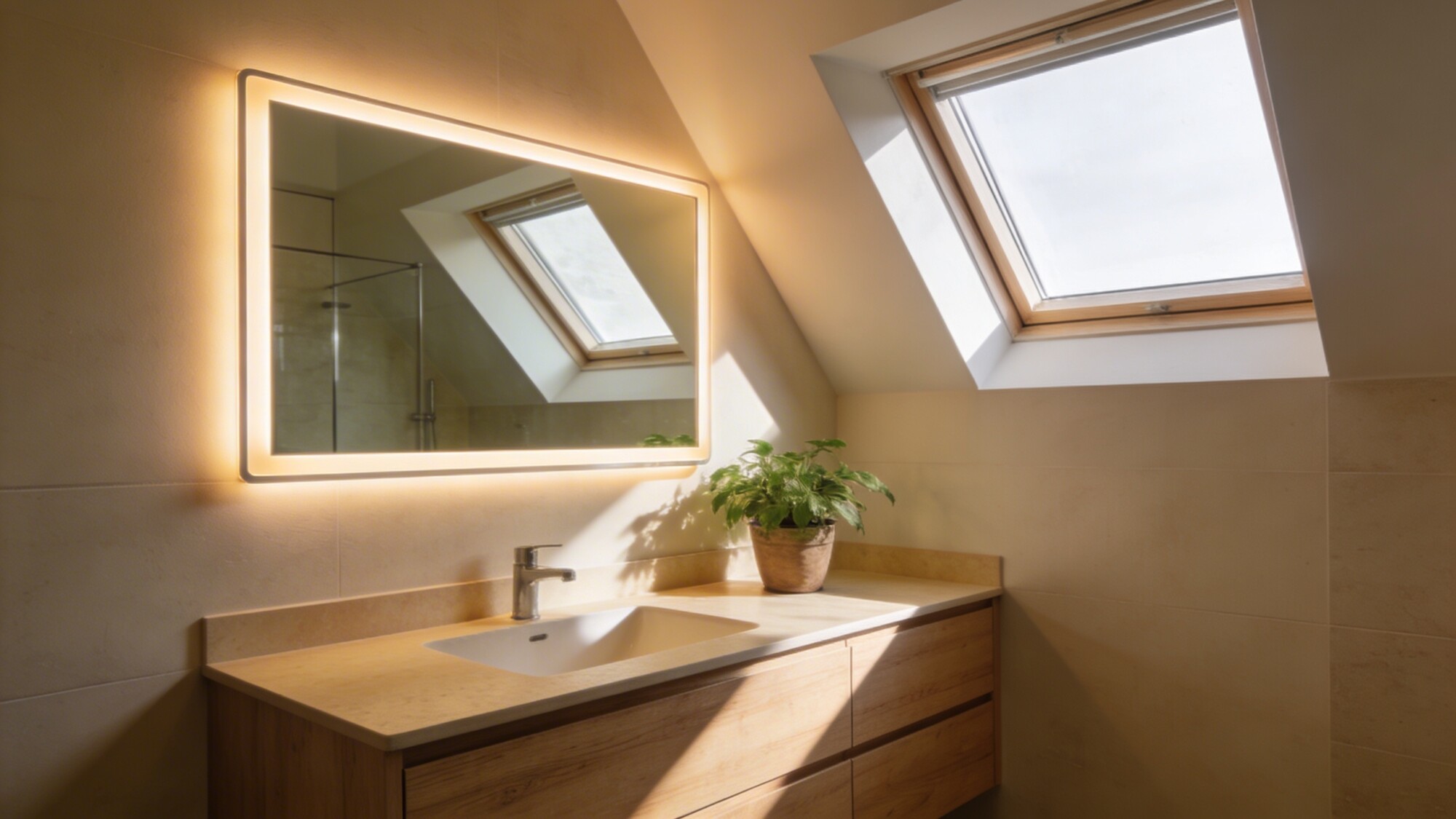
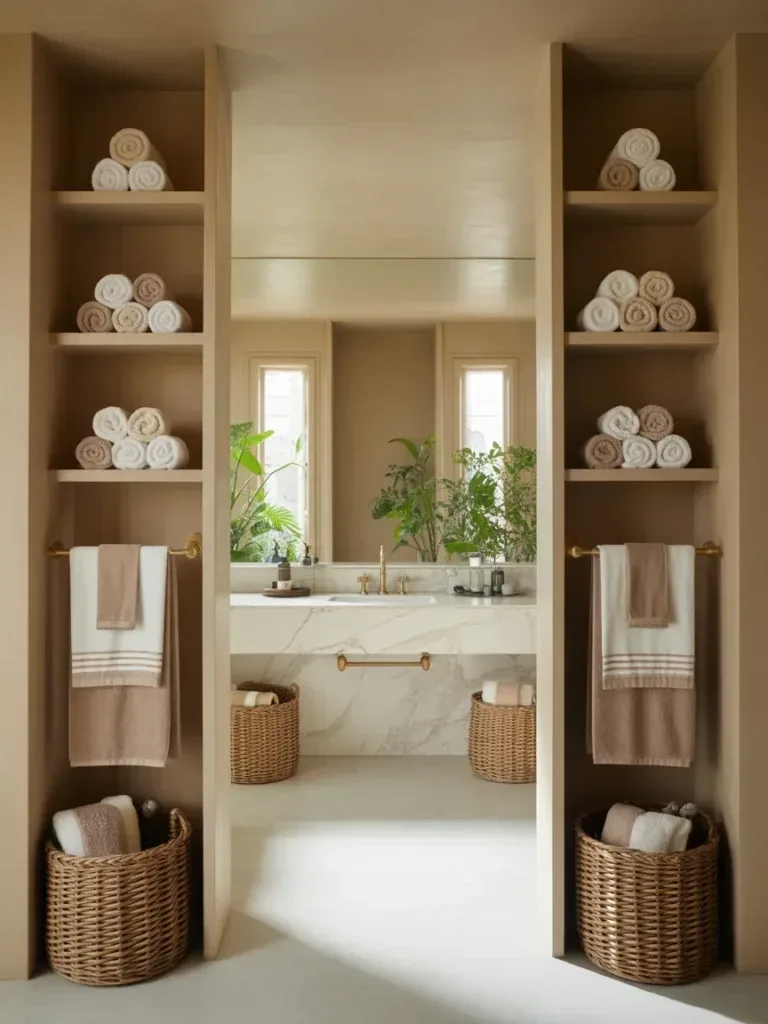
Storage in a bathroom interior fails for one of two reasons: there isn’t enough of it, or there’s plenty but it’s all in one spot people don’t use. Splitting storage into zones — a drawer for daily grooming items near the sink, a cabinet for towels near the shower, a small shelf for backup supplies — keeps each zone shallow enough that things don’t get lost behind each other.
Smart Zones to Consider
- A shallow drawer at the vanity for daily-use items you reach for without thinking
- A dedicated towel zone near the shower, not across the room
- A high shelf or cabinet for backup supplies (extra toilet paper, cleaning products) kept out of daily sightlines
Personal Touches: From Spa to Studio
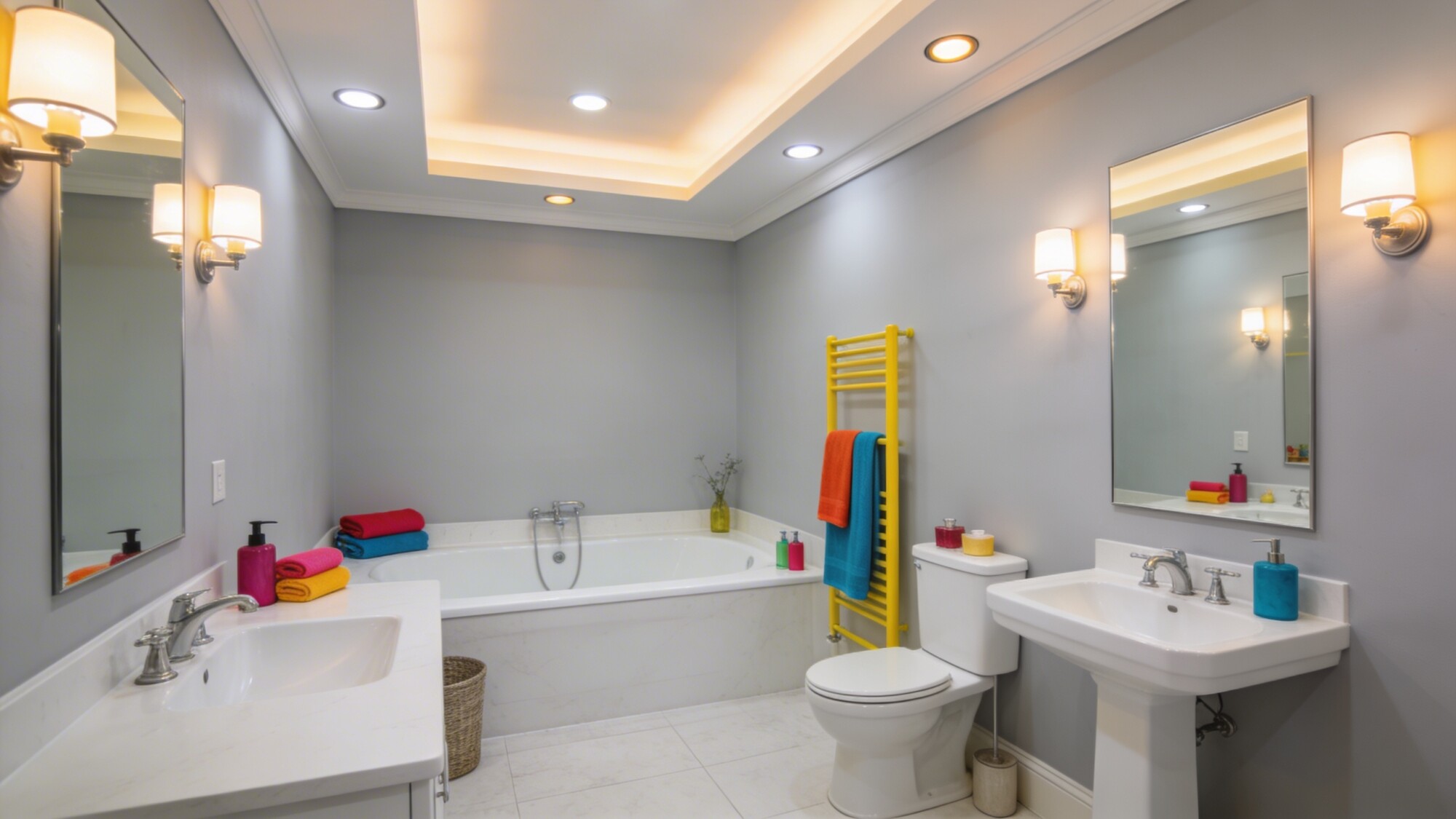
A bold color pop — a bright towel rack, patterned accessories, a single piece of art — is the fastest way to make an otherwise neutral bathroom feel intentional rather than default. Layered lighting (recessed, sconce, and a softer ambient cove light) does more to shift the mood from “functional” to “spa” than most decor purchases do.
Plants That Handle Humidity
Not every plant survives a steamy bathroom. Pothos, snake plants, and ferns tolerate humidity and lower light better than most houseplants, which is why they show up in bathroom photos so often — it’s not just styling, it’s that they’re genuinely some of the few plants that don’t struggle in that environment.
Budget-Friendly Ways to Make a Real Difference
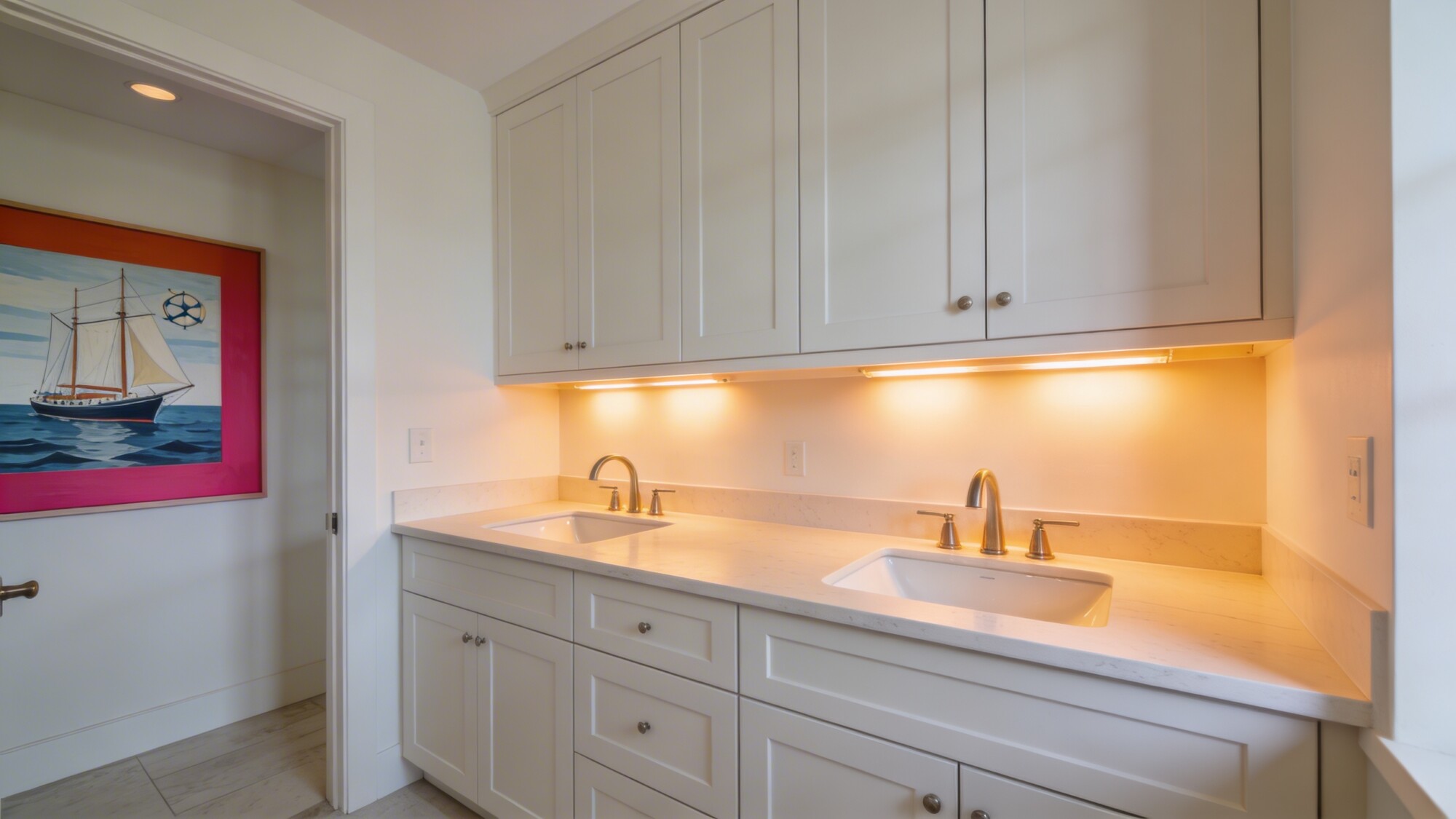
- Fresh caulk and grout — this alone removes the moldy-corner look that makes an otherwise fine bathroom feel neglected
- New hardware: drawer pulls, towel bars, and towel rings, which change the room’s finish without touching plumbing
- A high-impact mirror or a runner rug to anchor the space and give it a focal point
DIY Upgrades That Pay Off
Regrouting and recaulking are realistic weekend DIY projects for most homeowners — the tools are inexpensive and the technique is forgiving if you go slow. Swapping hardware is even easier. Where DIY gets riskier is anything touching plumbing or electrical behind the wall; that’s the point where a mistake costs more to fix than it would have cost to hire out from the start.
Practical Tips for Real-Life Bathrooms
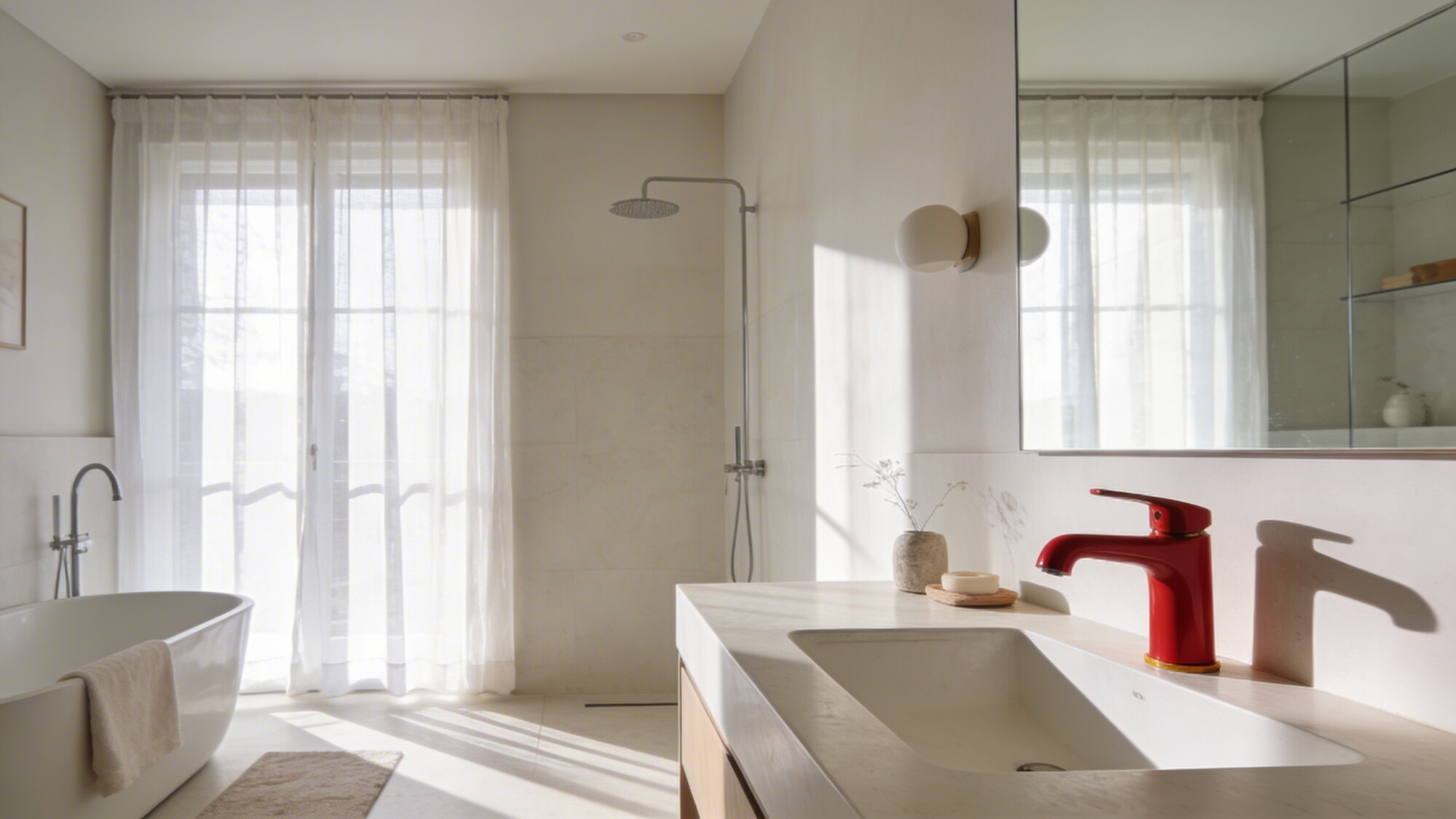
- Ventilation is non-negotiable — mold grows in the corners you don’t check regularly, and an undersized or rarely-run fan is the most common cause
- Waterproofing tape and sealants around the shower and tub save far more time and money than the few minutes they take to apply
- Keep a small cleaning caddy in the bathroom itself, not under the kitchen sink — you’re far more likely to actually use it if it’s not a trip away
💡 Pro Tip: Run the bathroom fan for 15–20 minutes after every shower, not just during it. Most of the moisture that causes mold settles into grout and corners after the water’s already off, while everyone’s already left the room.
Make It Kid-Ready (Without Dumbing It Down)
A kid-friendly bathroom doesn’t need cartoon tile or bright primary colors to work for a family. A lower hook for towels, a step stool tucked under the vanity, and slip-resistant flooring cover the practical needs without forcing you to redecorate around a theme you’ll want to change in a few years.
Frequently Asked Questions
How do I choose colors for a small bathroom?
Pick one bold color for a single feature — an accent wall, a vanity, or a faucet — and keep everything else neutral. Several bold colors competing in a small space makes the room feel smaller, not more vibrant.
What’s the easiest upgrade that looks expensive?
Fresh caulk and grout, paired with new cabinet hardware. Neither requires special skills, and both remove the most visible signs of an aging bathroom.
How can I improve bathroom ventilation?
Run the exhaust fan during and for 15–20 minutes after every shower. If mold keeps returning despite that, the fan itself may be undersized for the room’s square footage and worth having checked.
What are some durable materials for high-humidity bathrooms?
Porcelain and ceramic tile hold up best against constant moisture. Cork and bamboo can work but only in bathrooms with strong, consistent ventilation — otherwise they warp faster than most people expect.
Is DIY renovation realistic for most bathrooms?
For surface-level work — caulking, grouting, hardware, paint — yes, most homeowners can handle it with basic tools and some patience. For anything touching plumbing, electrical, or wall structure (like adding a floating vanity), it’s worth bringing in a professional, since mistakes there are expensive to undo.
Our Verdict
If you’re prioritizing where to spend on a bathroom interior update, put the money into ventilation, layered lighting, and a well-planned shower area before decor. Those three hold up daily wear and actually change how the room functions, while decor choices are easy to swap out later without touching plumbing or electrical. For a next step once the foundations are settled, our floating shelf decor bathroom hacks guide covers the styling layer that finishes the room off.