Master Rug Living Room Placement Magic
A great rug can transform a living room, but placement is where the real magic happens. Whether you’re working with a small apartment or an open-concept great room, learning to master rug living room placement means understanding how to anchor your furniture, guide traffic, and build a layout that feels intentional rather than accidental. You don’t need a design degree to get it right — just a handful of proven principles and the confidence to apply them.
Quick-Reference Summary: Key Takeaways
- Size your rug so at least the front legs of your main seating pieces touch or sit on it.
- Leave roughly 18 inches of bare floor between the rug’s edge and the walls for visual breathing room.
- Choose rug shape to complement your seating arrangement — rectangles for linear layouts, rounds for softening square rooms.
- Match material to lifestyle: wool and indoor-outdoor blends hold up best in high-traffic living rooms.
- Layer a smaller accent rug over a neutral base rug to add depth without a full redesign.
- Rotate your rug every few months to even out wear and sun fading.
Find Your Focal Point — and Build Around It
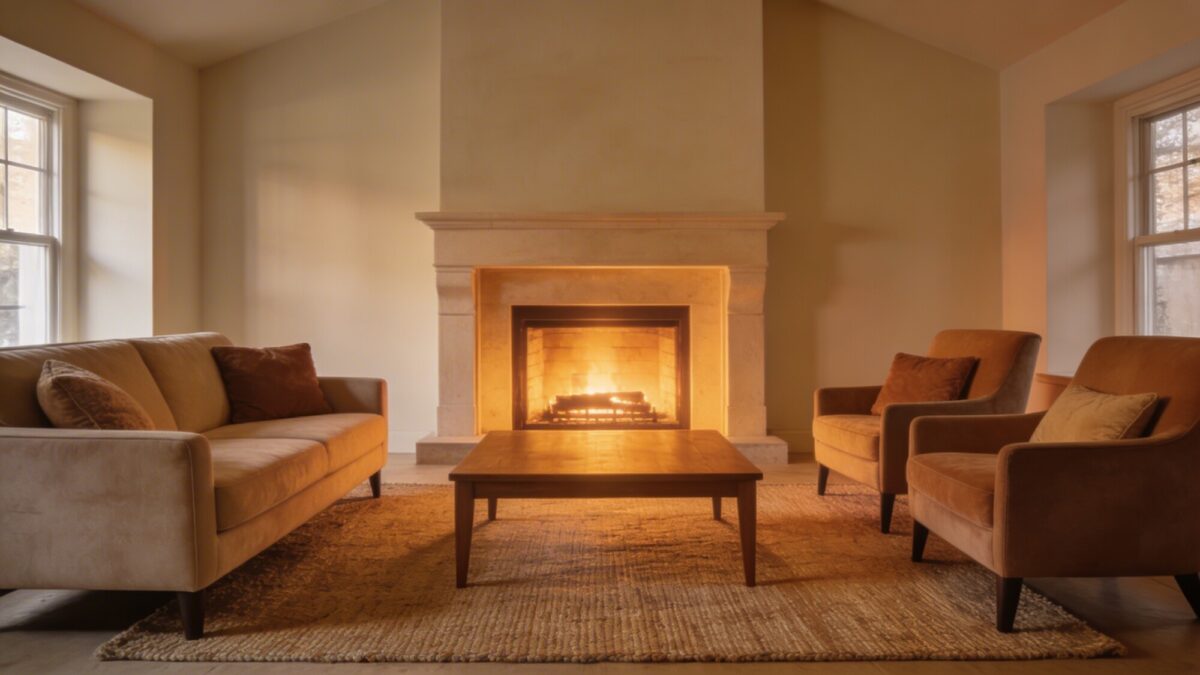
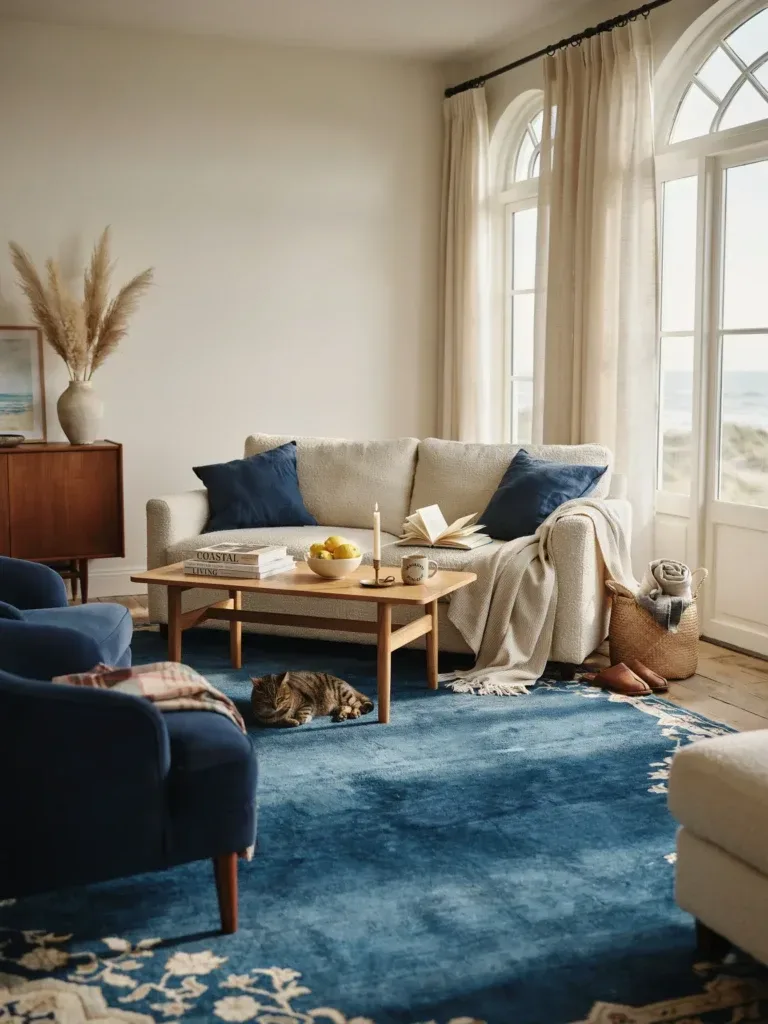
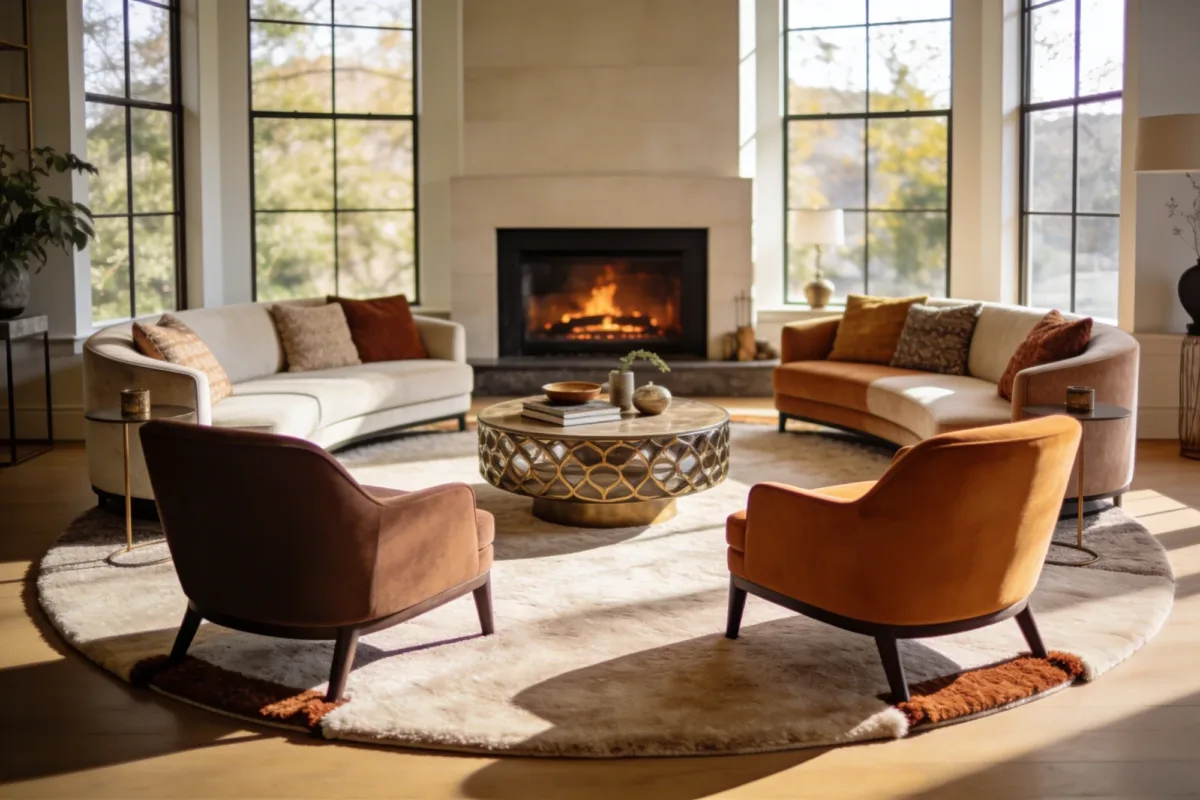
Every well-planned living room rug starts with a focal point. That might be a fireplace, a media wall, or a striking coffee table. Once you’ve identified it, size your rug to draw the seating together around that point, rather than letting it float aimlessly beneath a single piece of furniture.
A rug that only reaches under half your sofa creates an awkward visual break, and you’ll notice it every time you sit down. The goal is cohesion: one continuous surface that ties the whole seating area together.
How to Size a Rug for a Living Room
- For a standard sofa-and-chairs layout, choose a rug large enough for the front legs of all seating to rest on it.
- In a more generous lounge, a rug sized to fit the entire seating group makes the room feel unified.
- If budget limits you to a smaller rug, layer it in the center of the seating area and add texture with a runner along a walkway. For more detailed sizing math, see this guide to picking the right rug size for your space.
Seating Layout: Cozy Circles Over Straight Lines
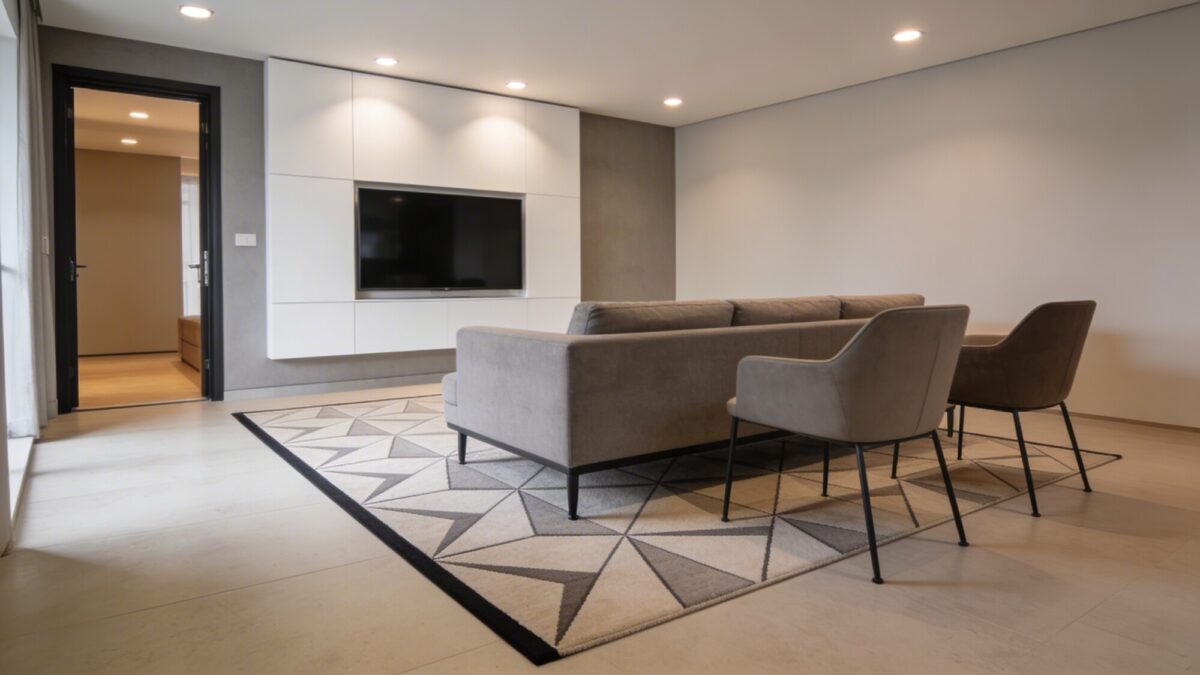
People naturally gather in circles, and your rug should reinforce that instinct. Arrange your main seating so the front legs of each piece touch the rug’s edge. This visually ties the space together and keeps the rug from reading like an isolated mat in the middle of the floor.
Tips for Sofa-and-Chair Combinations
- Position the sofa parallel to the rug’s longest edge to emphasize flow through the room.
- Angle a chair slightly inward to keep conversation areas feeling intimate.
- For sectionals, let the rug underline the entire block for a grounded, polished look. This is one of the core rug living room layout principles designers rely on for larger seating groups.
Traffic Patterns: Work With the Flow, Not Against It
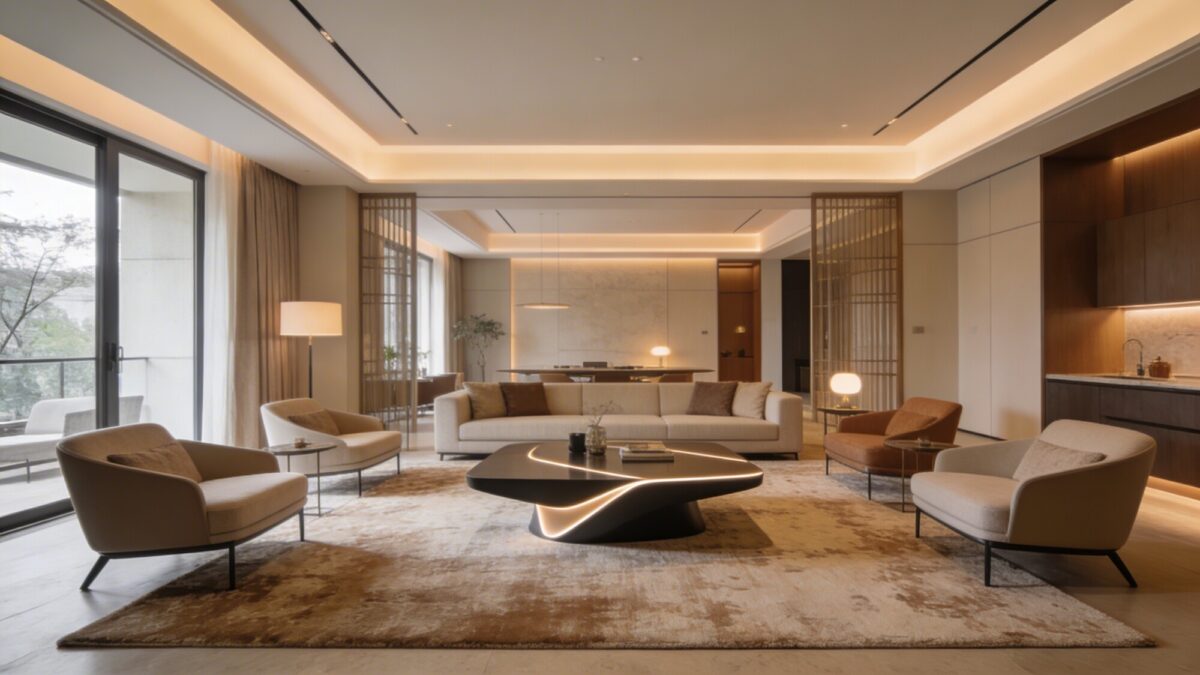
Think of your rug as a guide for movement, not a barrier. People should be able to walk from room to room without dodging corners or stepping onto cold flooring mid-stride.
What to Watch For
- Avoid placing a rug so it creates a pinch point at doorways or hallway entrances.
- Leave roughly 18 inches of bare floor around the rug’s perimeter for smooth transitions between surfaces.
- If a door swings open into the room, double-check the rug won’t bunch, snag, or create a trip hazard.
Texture, Color, and Material: Setting the Room’s Mood
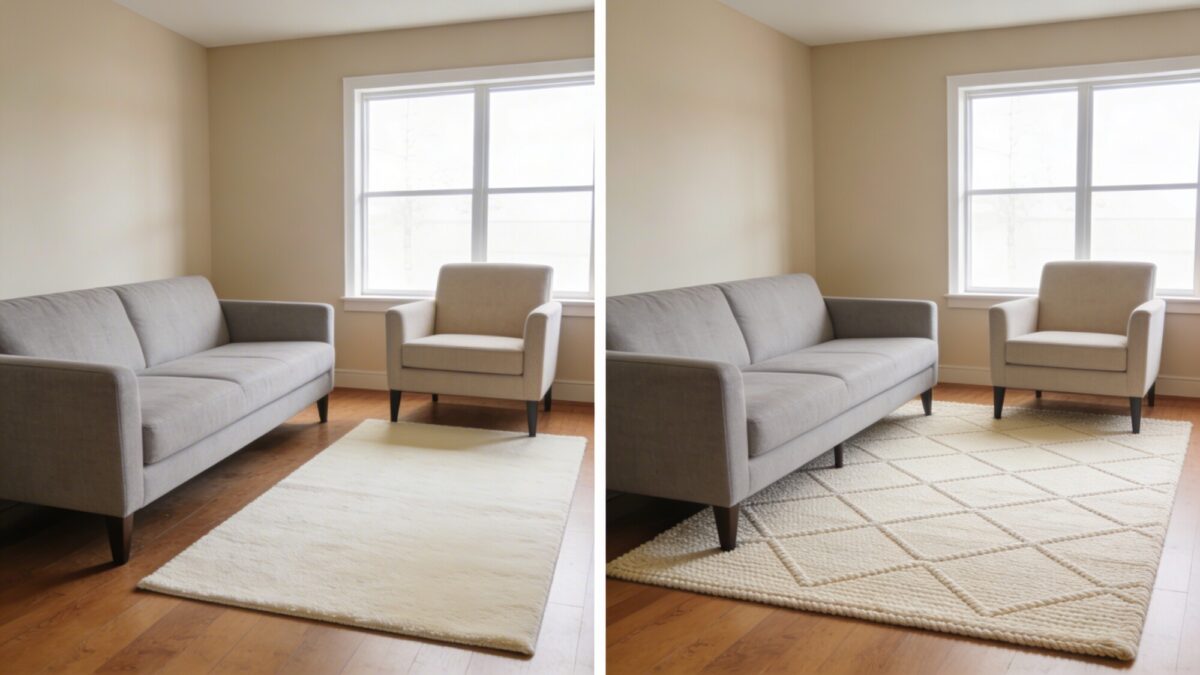
Your rug sets the tone of a room faster than almost any other single element. Texture and color can either soften a space or energize it, so it’s worth thinking through both before you buy. As a general rule, bold patterns work best against more subdued furniture, while a tonal or textured rug pairs well with busy prints elsewhere in the room.
Comparing Common Rug Materials
| Material | Best For | Feel Underfoot | Upkeep |
|---|---|---|---|
| Wool | High-traffic living rooms | Soft, resilient | Moderate — occasional professional cleaning |
| Cotton | Casual, everyday spaces | Light, easy to fold and wash | Low — machine washable in many cases |
| Jute or Sisal | Earthy, natural-toned rooms | Coarser, best with a rug pad | Low, but avoid excess moisture |
| Indoor-Outdoor Blend | Homes with kids, pets, or spills | Durable, slightly firmer | Very low — often hose-washable |
Pattern Pairing
- If your sofa is a solid color, a patterned rug can anchor the room with personality.
- If your sofa already has a bold print, a solid or muted rug keeps the space balanced.
- Layer in throw pillows, curtains, and a textured throw blanket to tie the palette together. If you’re working with a neutral sofa, this guide on styling living room rugs with a beige couch has more direction on pairing tones.
Rug Shape and Size: Don’t Be Afraid to Break the Grid
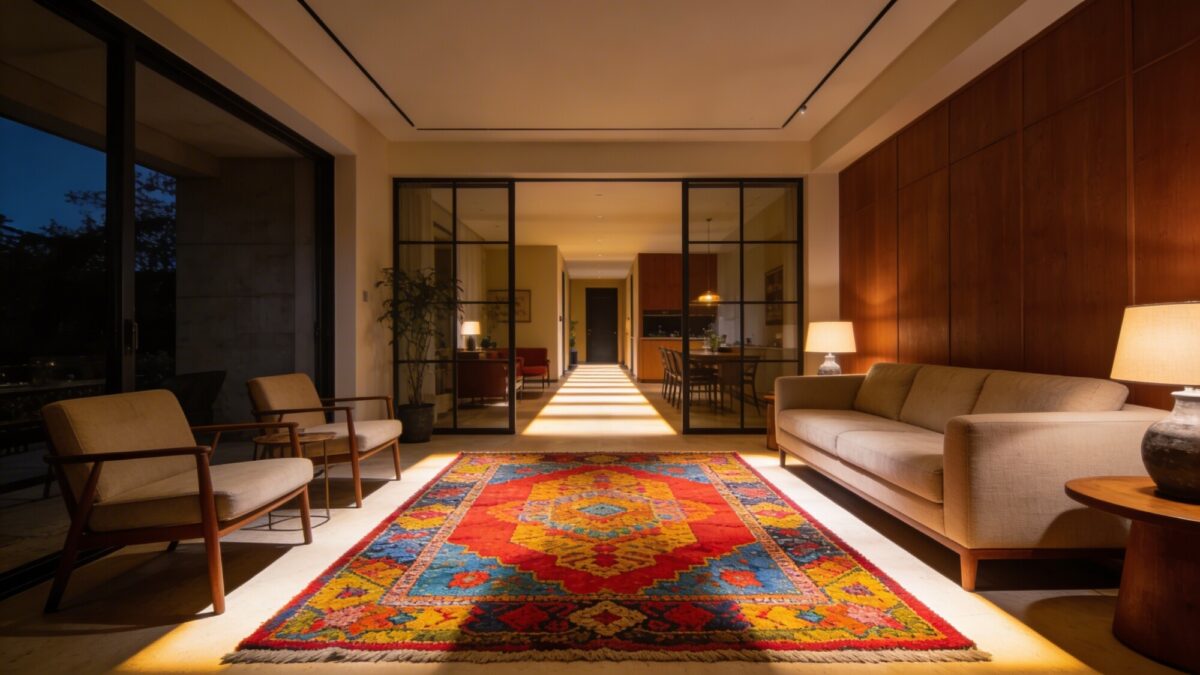
An unexpected rug shape can add personality while still keeping the room balanced. Rectangles are the timeless, safe choice, but circles and squares deserve consideration if they suit your floor plan.
Shape Pairing Ideas
- Rectangular rugs work naturally with long sofas and media walls.
- Round rugs soften square rooms and create a strong social focal point at the center of a seating group.
- Square rugs anchor a corner seating arrangement for a crisp, modern look.
Layering Rugs: Texture, Depth, and Drama
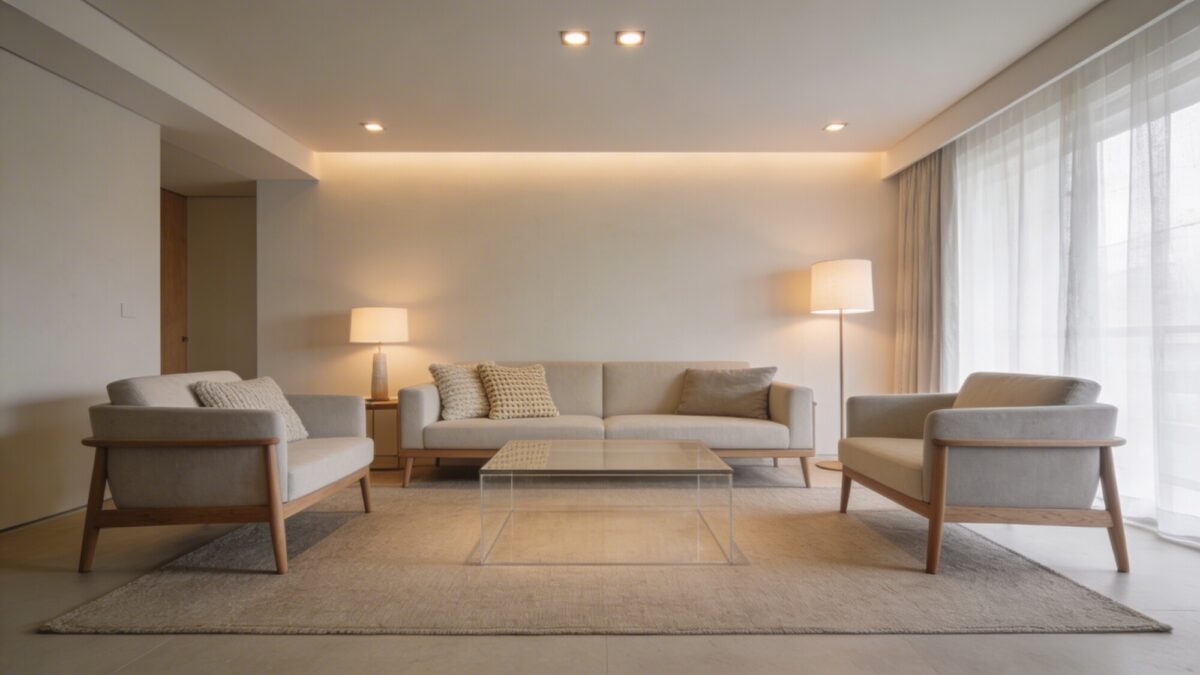
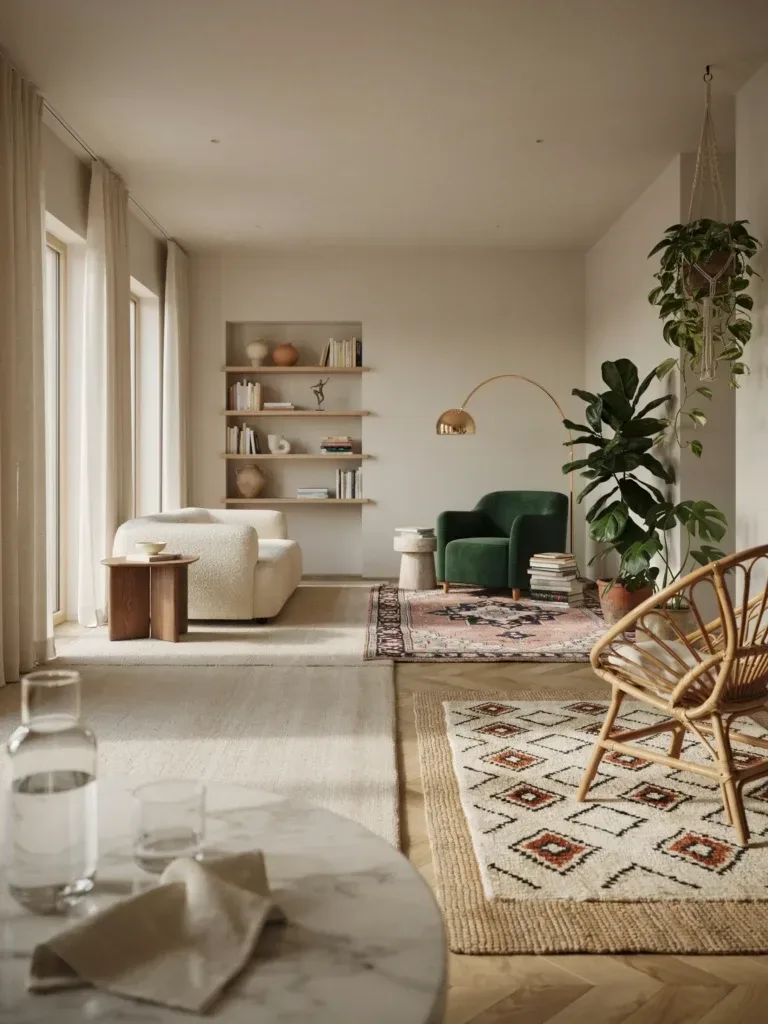
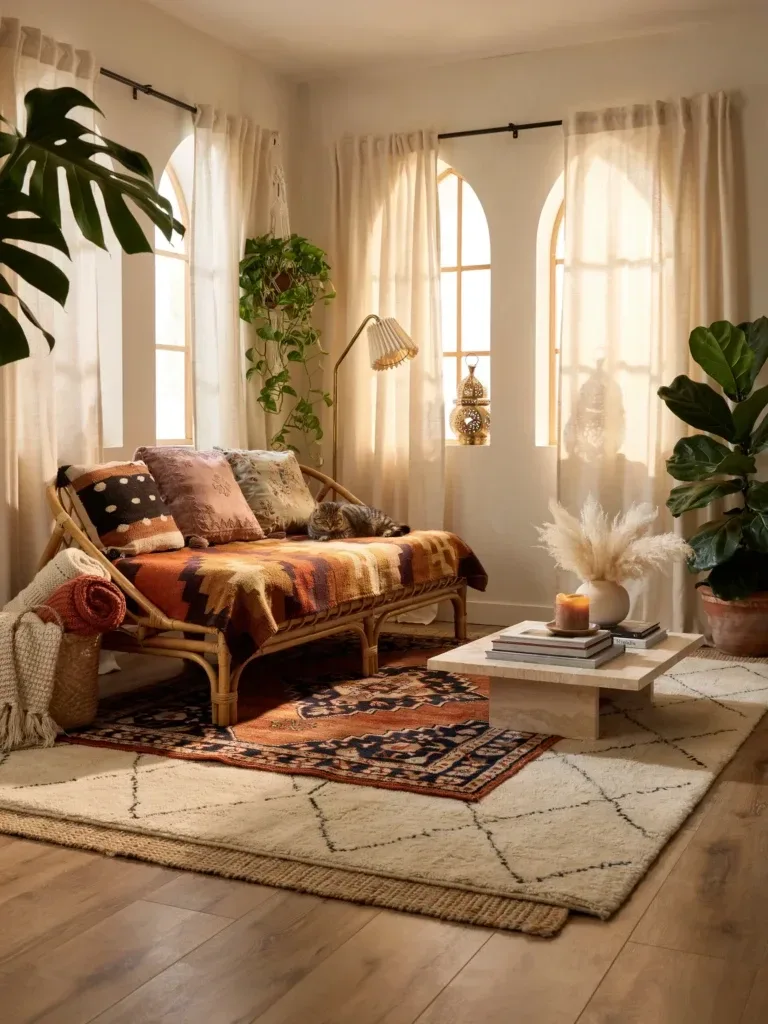
Layering is essentially jewelry for your floor. Start with a larger, neutral base rug, then add a smaller, patterned or textured rug on top to build depth. This technique also conveniently hides minor imperfections in an older rug without requiring a full replacement.
How to Layer Without It Looking Cluttered
- Keep the top rug 4 to 12 inches smaller than the base rug on each side.
- Align one edge with the sofa or coffee table for a cleaner, more intentional line.
- Choose a top rug with a different texture than the base to add tactile contrast.
These same layering rules apply beyond the living room — if you’re chasing a similarly cozy look for a master bedroom rug, the base-plus-accent approach translates well to that space too.
Things to Consider Before You Buy a Living Room Rug
- Measure your seating area first, then shop for size — not the other way around.
- Decide whether the rug needs to handle pets, kids, or heavy foot traffic before choosing material.
- Check your flooring type; a rug pad is often essential on hardwood or tile to prevent slipping.
- Consider how natural light in the room will affect the rug’s color throughout the day.
- Order a sample swatch when possible — color can look different at home than in a product photo.
Maintenance Hacks: Keeping It Fresh Without the Headache
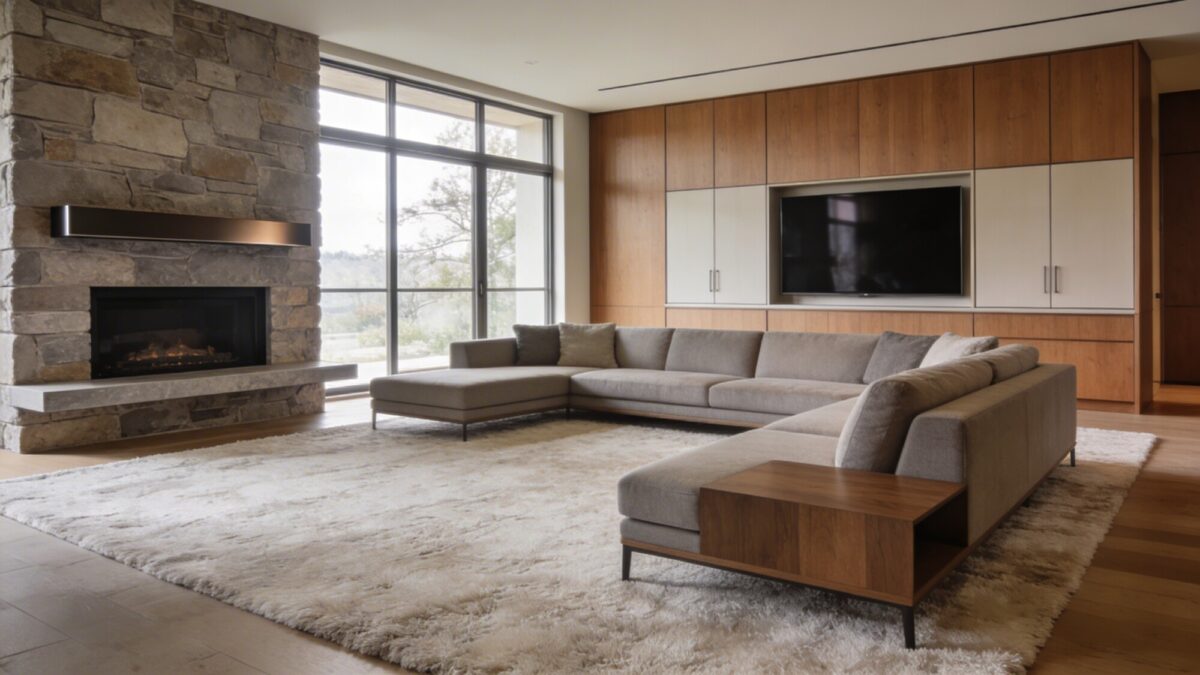
Rugs and daily life go hand in hand, spills included. A few consistent habits will keep your setup looking sharp without turning you into a full-time cleaner.
- Invest in a quality rug pad to prevent slipping and extend the rug’s lifespan.
- Rotate the rug every few months to even out wear patterns and sun fading.
- Spot-clean spills immediately and schedule periodic deep cleans.
- Use a vacuum on high-pile rugs carefully — some pads cushion the suction and reduce fiber pull.
Color Story and Lighting: Sunlit Comfort
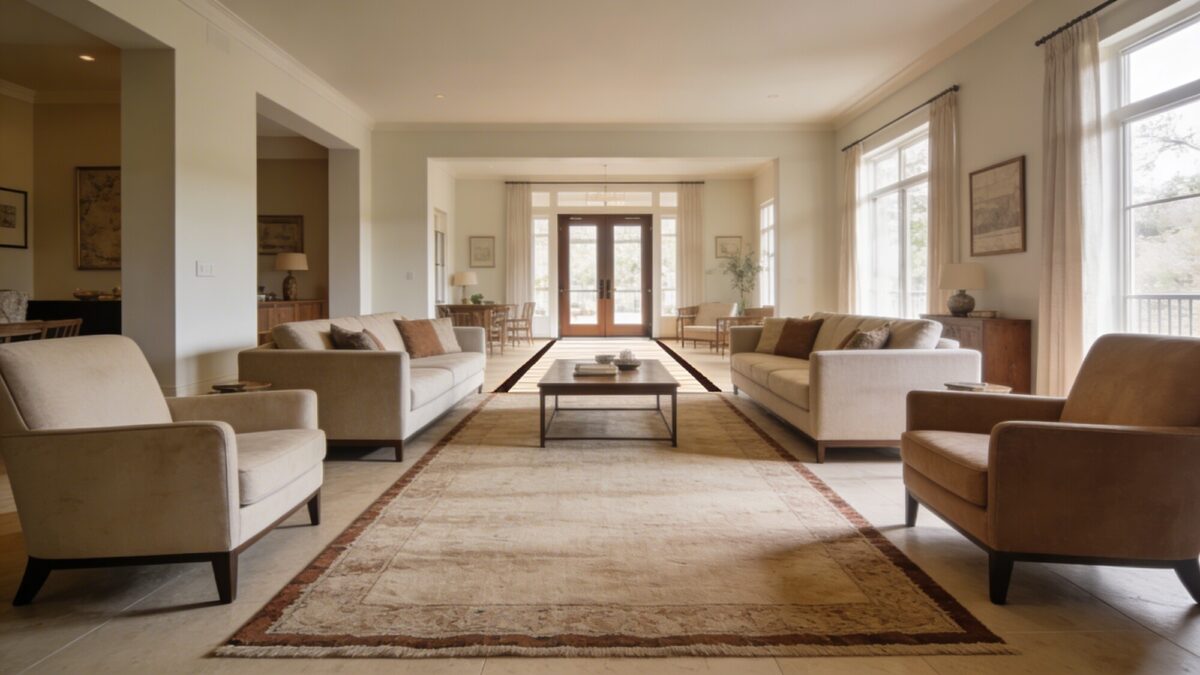
Your rug’s color shifts as natural light moves through the room over the course of a day. It’s worth considering how both daylight and your evening lighting setup will affect its appearance before you commit.
Why Lighting Matters
- Warm lighting makes a neutral rug feel cozier and more inviting in the evening.
- Cool lighting tends to sharpen contrast on bold or graphic rug patterns.
- Layering floor lamps and table lamps helps sculpt shadow and depth across the rug’s surface.
Frequently Asked Questions
What’s the best rug size for a small living room?
A good rule of thumb is choosing a rug that fits under the front legs of all your seating. This visually unites the space without overwhelming a smaller footprint. If that’s not possible, opt for a slightly larger rug that still leaves a clear border around the furniture.
Can I use a rug under a coffee table if I already have a sofa?
Yes. Just make sure the rug extends beyond the coffee table and reaches the front legs of the sofa, so the whole seating area feels anchored together rather than split into separate zones.
How do I layer rugs without it looking chaotic?
Start with a large, neutral base rug, then add a smaller patterned or textured rug on top that contrasts but still complements it. Keeping one shared color between the two helps tie the layers together and prevents visual clash.
What about non-traditional rug shapes?
Non-traditional shapes can work beautifully, especially in open-plan layouts. Round or oval rugs pair nicely with seating arrangements that aren’t perfectly rectangular, as long as the shape still supports easy movement and visual balance.
How do I maintain a shaggy or high-pile rug?
Use a vacuum with a beater bar set to a gentle setting, or a brush attachment to lift the fibers without damaging them. Shake out smaller rugs or air-dust regularly, and place a sturdy rug pad underneath to reduce wear and slipping.
Should my living room rug match my curtains or throw pillows exactly?
Not exactly — aim for coordination rather than an exact match. Pulling one or two colors from the rug into pillows, curtains, or a throw blanket creates a cohesive look without feeling overly matched or flat.
Our Verdict
Getting rug living room placement right comes down to a few repeatable principles: anchor the space to a focal point, size the rug to unite your seating, and let traffic flow guide the boundaries. From there, texture, color, and layering are where you get to have fun and make the room feel like yours. For more layout inspiration, browse these designer-approved living room rug placement rules to fine-tune your next arrangement.