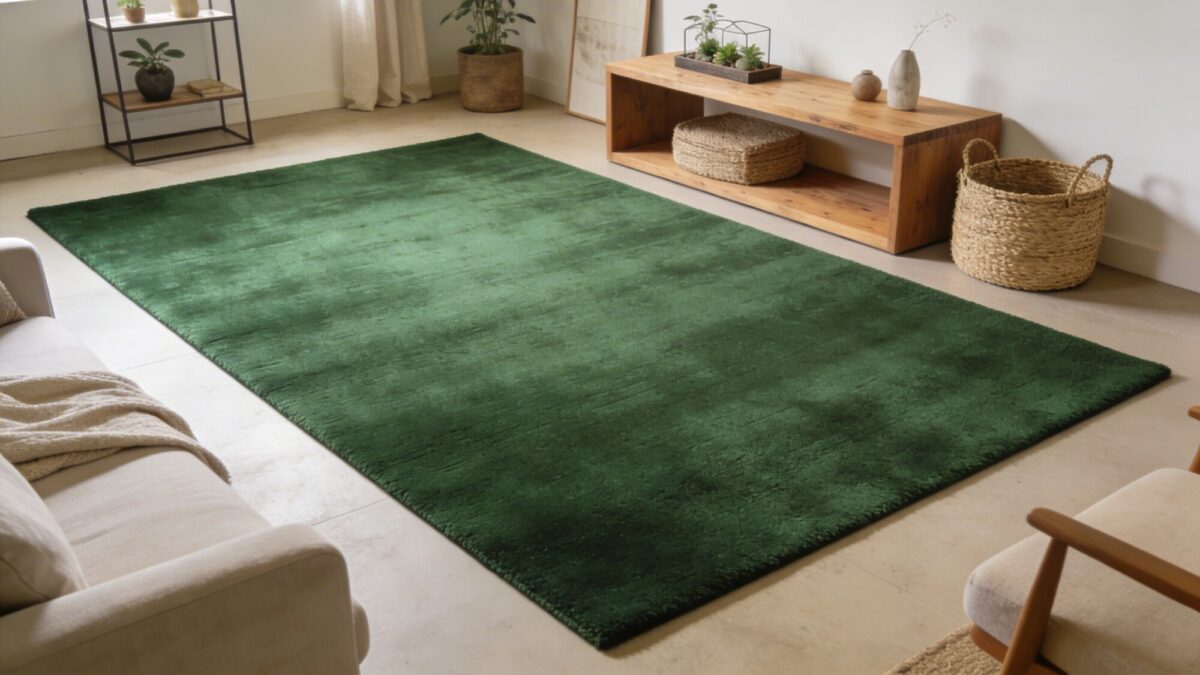
A green rug living room is one of the easiest ways to bring warmth, texture, and a sense of the outdoors into your home without repainting a single wall. Green sits comfortably between bold and neutral — it grounds a space the way beige does, but with far more personality. Whether you’re drawn to a deep emerald statement piece or a soft sage that fades into the background, there’s a shade and style to match almost any living room. This guide walks through nine distinct approaches to using green area rugs in a living room, along with the practical details — material, pattern, and placement — that actually make a rug work long-term rather than just looking good in a single photo. Quick Takeaways Deep, saturated greens (emerald, forest) read as bold and dramatic; muted greens (sage, olive) feel calm and blend easily with existing furniture. Texture matters as much as color — a green rug living room combo built from mixed materials (wool, jute, shag) feels layered instead of flat. A green rug should generally extend beyond the front legs of your sofa and chairs to properly anchor the seating area. Patterned green rugs work best when the rest of the room’s furniture stays solid and neutral. Eco-conscious shoppers should look for wool, jute, or recycled-fiber rugs with recognized certifications like GOTS or OEKO-TEX. 1. Layer Textures Like a Pro Texture is the easiest way to make a green living room rug feel rich rather than flat. A plush velvet or shag rug layered over a natural jute or sisal base immediately adds depth, and pairing it with a sleek leather sofa or a woven accent chair keeps the eye moving around the room instead of locking onto one block of color. Photo by Joe Holland on Unsplash How to Layer a Green Rug Successfully Start with a flat-weave jute or sisal rug as your base layer, sized to sit under the full seating arrangement. Center a smaller, plush green area rug on top — deep emerald or moss tones work particularly well here. Introduce one leather or woven texture piece (a sofa, chair, or ottoman) to contrast the softness of the rug. Finish with a mix of matte and slightly glossy accents — a matte coffee table, a hint of brushed metal in the lighting — so nothing feels too flat or too shiny. 2. Go Bold With a Maxi Green Rug If you want the rug to be the star of the room, size up. A large, bold green rug living room layout works because the rug becomes the anchor for the entire seating arrangement, giving you room to keep the sofa, chairs, and walls neutral while the floor does the talking. For sizing guidance, it helps to work backward from your living room rug size and proportions rather than guessing — an undersized rug is the most common reason a “statement” rug ends up looking like an afterthought instead of an anchor. Tips for a Bold Green Rug Choose a rug large enough that the front legs of your sofa and chairs sit on it. Keep the rest of the furniture in neutral tones so the rug reads as the focal point, not one of several competing colors. Add a touch of brass or brushed gold in lighting or accessories to warm up the green. 3. Embrace Sage for a Calmer, Softer Look Sage is the most forgiving shade in the green rug living room family. It’s muted enough to pair with almost any wall color and warm enough to avoid feeling cold or clinical — which is why it’s such a popular choice for anyone easing into a green rug bedroom or living room for the first time. Photo by Clay Banks on Unsplash A mid-tone sage rug pairs naturally with creamy whites, light woods, and linen textures. Houseplants reinforce the green palette without adding another strong color to balance. 4. Try a Patterned Green Rug for Added Personality A patterned green rug — botanical, geometric, or a subtle two-tone weave — adds personality without overwhelming the room, provided the surrounding furniture stays simple. Think of it the way you’d think of a patterned shirt: it works best paired with plain, solid pieces around it, not more pattern. If you’re drawn to layered pattern and texture more broadly, it’s worth browsing boho area rug ideas for the living room, which lean heavily on this same “bold rug, calm furniture” principle. Photo by Clay Banks on Unsplash Notes on Choosing a Pattern Stick to two green tones plus one neutral in the pattern itself, to avoid visual clutter. Keep sofas and chairs solid-colored. Rotate accent pillows seasonally to keep the look feeling fresh without buying a new rug. 5. Pair Green With Warm Wood and Cool Metal Accents Green rugs and warm wood floors are a reliable pairing — the natural warmth of oak or walnut balances the coolness of green, creating a look that feels organic rather than staged. Adding brushed metal accents (a slim-legged coffee table, a minimalist floor lamp) sharpens the look without fighting the wood tones. If you’re furnishing around a specific style, a mid-century modern rug buying guide can help you match rug texture and shape to the right wood furniture silhouettes. 6. Go Moody With Deep Emerald For a more dramatic, modern feel, a deep emerald rug against crisp white or charcoal furniture creates high contrast without feeling loud. Keeping the walls light lets the rug carry the visual weight of the room, while a monochrome backdrop of whites, grays, and blacks makes the green pop rather than compete. Photo by Clay Banks on Unsplash 7. Try Bright Lime for a Playful, Energetic Space Lime green is the most energetic entry in the green rug living room lineup. It works particularly well in smaller spaces, where a splash of bright color can do a lot of work without overwhelming the room. Pair it with white or pale gray walls, light window treatments, and a few lime accents (cushions, art) to tie the color together without repeating it everywhere. 8. Choose Eco-Friendly Materials for Everyday Luxury If sustainability matters to you, look for green rugs made from natural wool, jute, or recycled fibers. These materials tend to hold up well in high-traffic living rooms and often improve in texture as they wear in. Wool in particular is worth a closer look if durability and comfort underfoot are priorities — see this guide to styling wool rugs in the living room for material-specific care and styling tips. Photo by MKMHomes Craft on Unsplash What to Look For Certifications such as GOTS or OEKO-TEX, which indicate responsibly sourced materials and safer dyes. Natural dyes, which tend to age and fade more gracefully than synthetic ones. Dense, tight weaves for rooms with heavy foot traffic. 9. Rotate Green Rugs Seasonally You don’t have to commit to one green rug forever. Rotating between a warmer forest green for fall, a cooler sage for spring, and a lighter mint for summer is a low-effort way to refresh the room throughout the year without buying new furniture. How to Rotate Rugs Without the Hassle Store off-season rugs rolled (not folded) in a breathable fabric bag to prevent creasing and moisture buildup. Swap a few cushions or throws to match the new rug tone. Use a lightweight rug pad or underlay each time to protect flooring and keep the rug from shifting. Comparing the Most Popular Green Rug Shades ShadeBest ForPairs Well WithRoom FeelDeep EmeraldStatement pieces, modern spacesWhite, charcoal, brass accentsBold, dramaticSageFirst-time green rug buyers, calm spacesCream, light wood, linenSoft, spa-likeForest GreenCozy, traditional living roomsWarm woods, leatherGrounded, earthyLime / Bright GreenSmall spaces, playful aestheticsWhite, pale grayEnergetic, freshOliveEclectic or vintage-inspired roomsMustard, terracotta, rattanWarm, vintage Things to Consider Before You Buy a Green Rug Size: Undersized rugs are the most common styling mistake — the rug should generally extend under at least the front legs of your main seating pieces. Material: Wool and natural fibers wear better long-term than synthetic options, especially in high-traffic living rooms. Undertone: Cool greens (blue-based) pair best with gray and charcoal; warm greens (yellow-based, like olive) pair best with wood tones and warm neutrals. Maintenance: If you have kids or pets, a green washable rug can offer the same aesthetic with far less maintenance stress. Placement: Rug placement affects how large a room feels — for a deeper dive, see this guide on living room rug placement. FAQ: Green Rug Living Room Ideas What color furniture goes best with a green rug in the living room? Neutral furniture — white, cream, charcoal, or natural wood tones — tends to work best, since it lets the green rug act as the room’s main color statement rather than competing with it. Is a green rug too bold for a small living room? Not necessarily. Lighter shades like sage or a soft mint tend to open up smaller spaces, while very deep or bright greens work best as a bold, singular accent when floor space is limited. What’s the difference between a green Persian rug and a plain green rug for a living room? A green Persian rug typically features intricate traditional patterns and a mix of tones within the green family, giving a more ornate, layered look. A plain green rug offers a simpler, more modern base that’s easier to style around. Can I use a green rug in a bedroom instead of a living room? Yes — a green rug bedroom follows many of the same principles as a living room: sage and muted tones tend to feel most restful, while bolder emerald or forest greens can add a cozier, more grounded feel underfoot. How do I keep a green rug looking good long-term? Rotate the rug periodically to even out wear, vacuum regularly on a low-pile setting, and address spills immediately. Wool and natural-fiber rugs generally age better than synthetic options. Our Verdict A green rug living room doesn’t require a full redesign — it just requires picking the right shade for the mood you’re after. Sage and olive tones offer an easy, low-risk entry point, while emerald and lime are better suited to rooms where you want the rug to genuinely lead the design. Whichever direction you choose, prioritizing the right size, material, and placement will matter more to the finished look than the exact shade of green you pick.
A green rug living room is one of the easiest ways to bring warmth, texture, and a sense of the outdoors into your home without repainting a single wall. Green sits comfortably between bold and neutral — it grounds a space the way beige does, but with far more personality. Whether you’re drawn to a deep emerald statement piece or a soft sage that fades into the background, there’s a shade and style to match almost any living room.
This guide walks through nine distinct approaches to using green area rugs in a living room, along with the practical details — material, pattern, and placement — that actually make a rug work long-term rather than just looking good in a single photo.
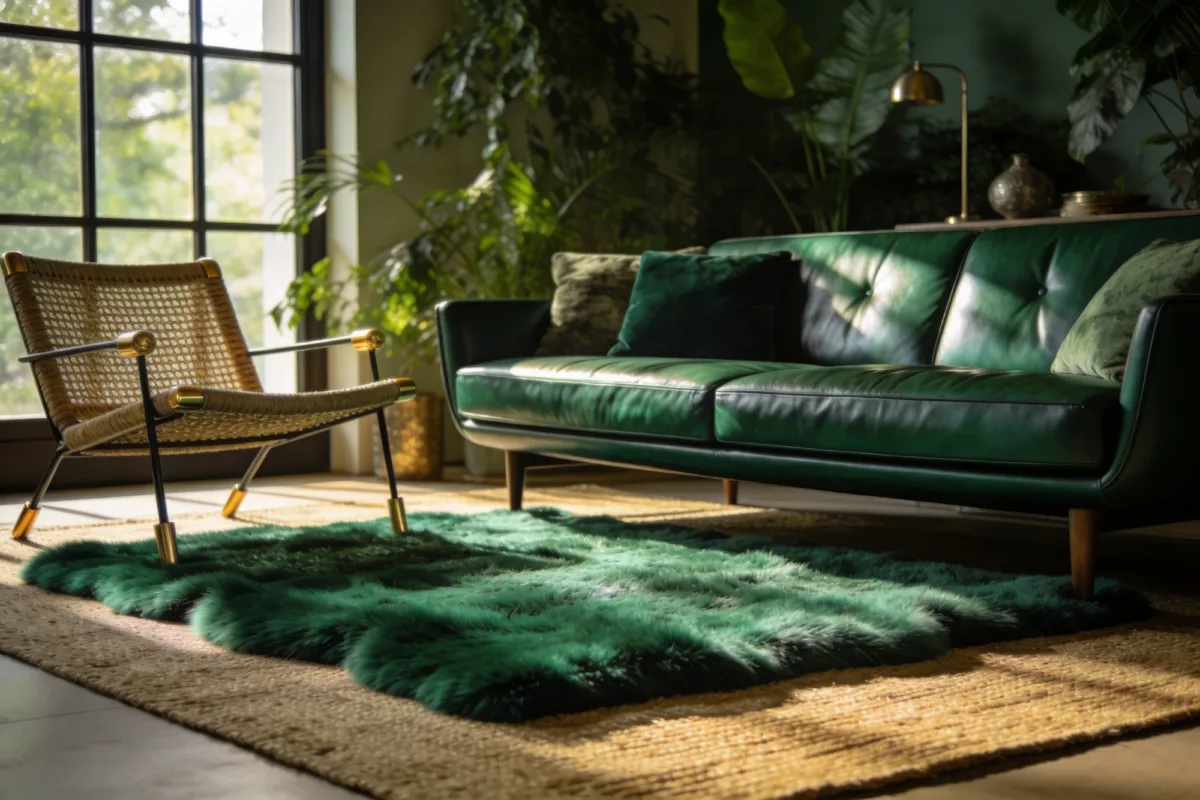
Texture is the easiest way to make a green living room rug feel rich rather than flat. A plush velvet or shag rug layered over a natural jute or sisal base immediately adds depth, and pairing it with a sleek leather sofa or a woven accent chair keeps the eye moving around the room instead of locking onto one block of color.
Start with a flat-weave jute or sisal rug as your base layer, sized to sit under the full seating arrangement.
Center a smaller, plush green area rug on top — deep emerald or moss tones work particularly well here.
Introduce one leather or woven texture piece (a sofa, chair, or ottoman) to contrast the softness of the rug.
Finish with a mix of matte and slightly glossy accents — a matte coffee table, a hint of brushed metal in the lighting — so nothing feels too flat or too shiny.
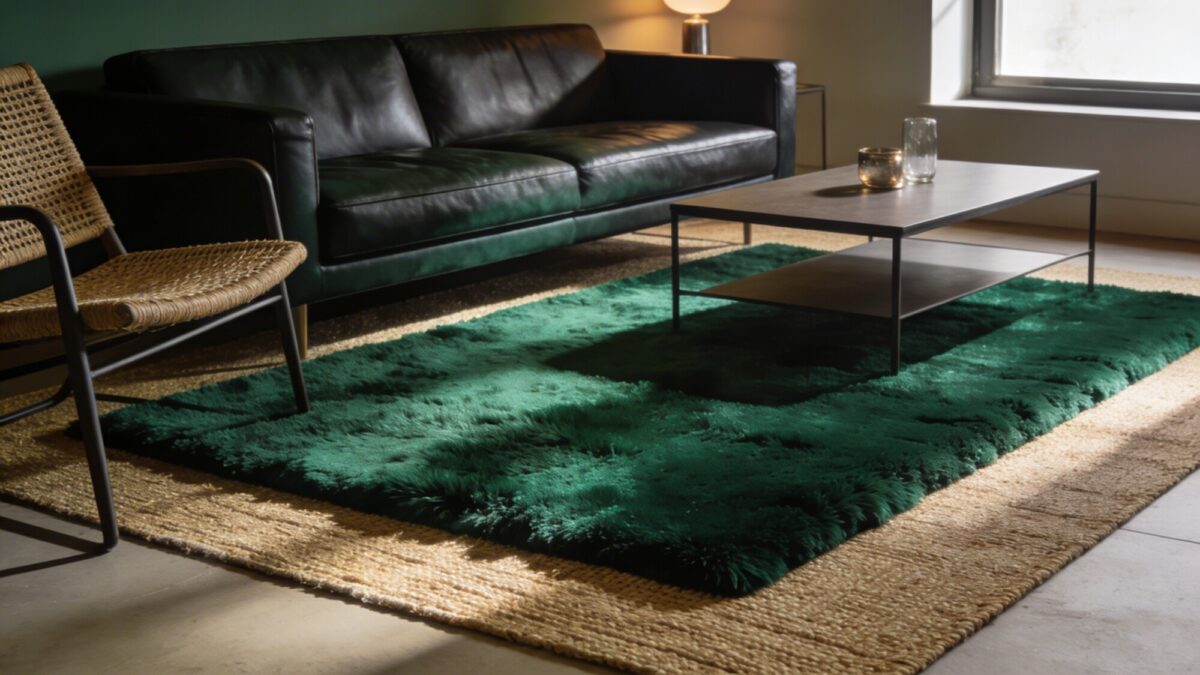
If you want the rug to be the star of the room, size up. A large, bold green rug living room layout works because the rug becomes the anchor for the entire seating arrangement, giving you room to keep the sofa, chairs, and walls neutral while the floor does the talking.
For sizing guidance, it helps to work backward from your living room rug size and proportions rather than guessing — an undersized rug is the most common reason a “statement” rug ends up looking like an afterthought instead of an anchor.
Tips for a Bold Green Rug
Choose a rug large enough that the front legs of your sofa and chairs sit on it.
Keep the rest of the furniture in neutral tones so the rug reads as the focal point, not one of several competing colors.
Add a touch of brass or brushed gold in lighting or accessories to warm up the green.
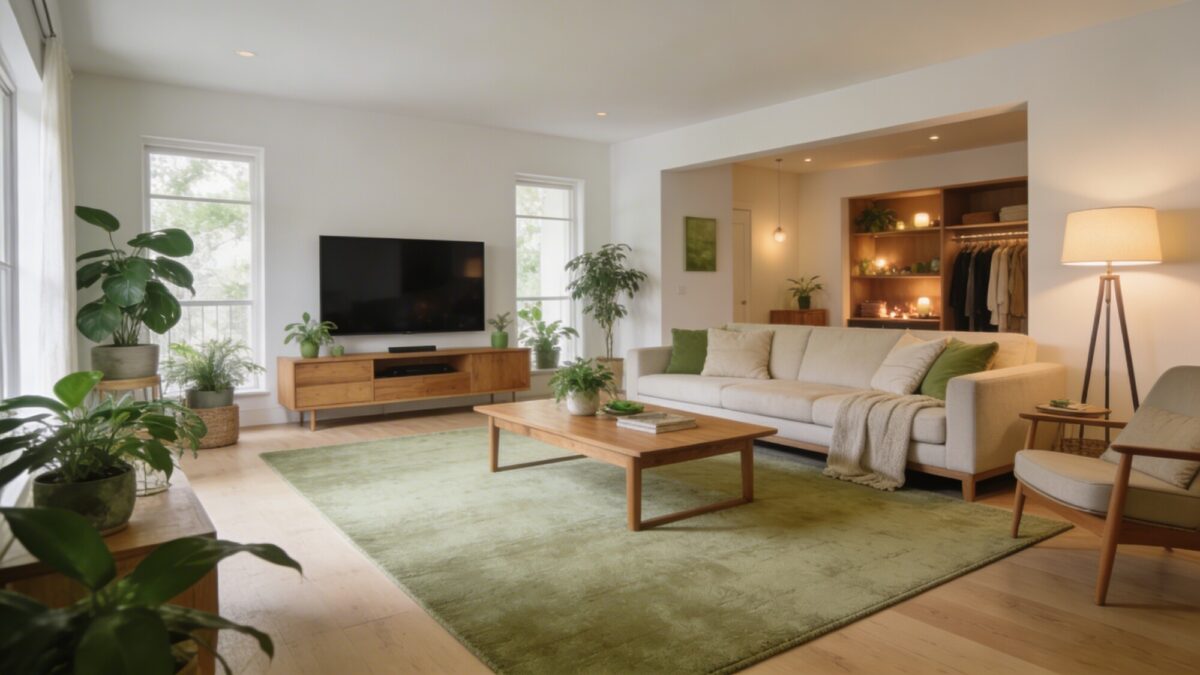
Sage is the most forgiving shade in the green rug living room family. It’s muted enough to pair with almost any wall color and warm enough to avoid feeling cold or clinical — which is why it’s such a popular choice for anyone easing into a green rug bedroom or living room for the first time.
A mid-tone sage rug pairs naturally with creamy whites, light woods, and linen textures. Houseplants reinforce the green palette without adding another strong color to balance.
4. Try a Patterned Green Rug for Added Personality
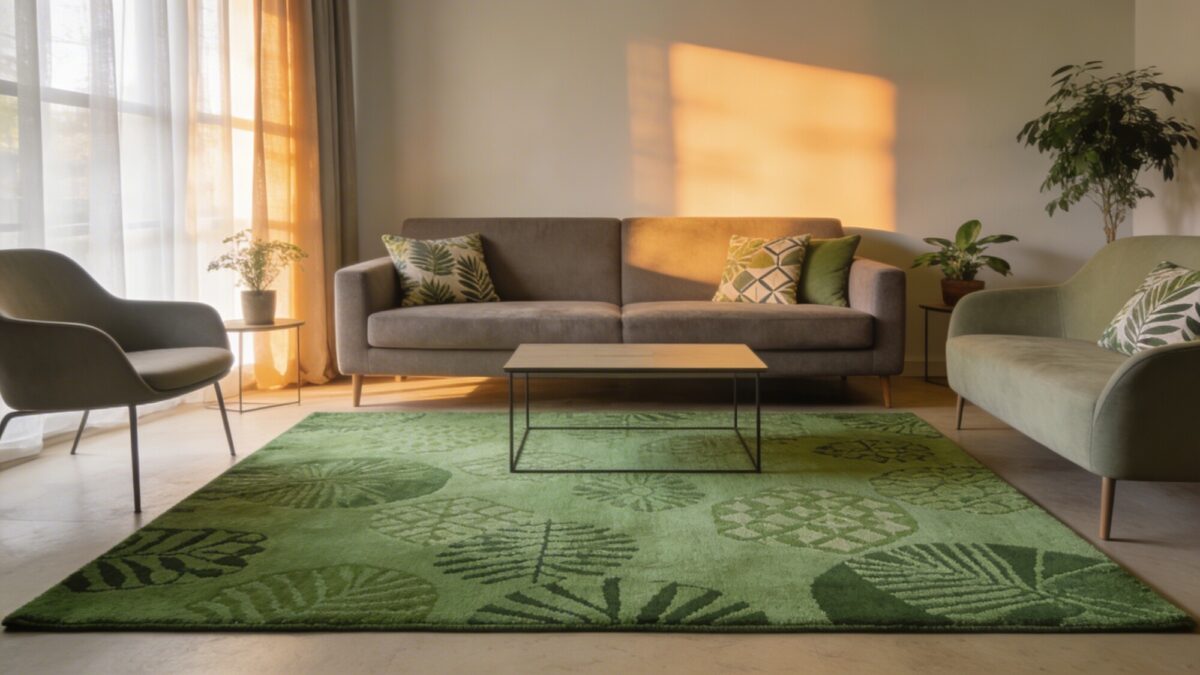
A patterned green rug — botanical, geometric, or a subtle two-tone weave — adds personality without overwhelming the room, provided the surrounding furniture stays simple. Think of it the way you’d think of a patterned shirt: it works best paired with plain, solid pieces around it, not more pattern.
If you’re drawn to layered pattern and texture more broadly, it’s worth browsing boho area rug ideas for the living room, which lean heavily on this same “bold rug, calm furniture” principle.
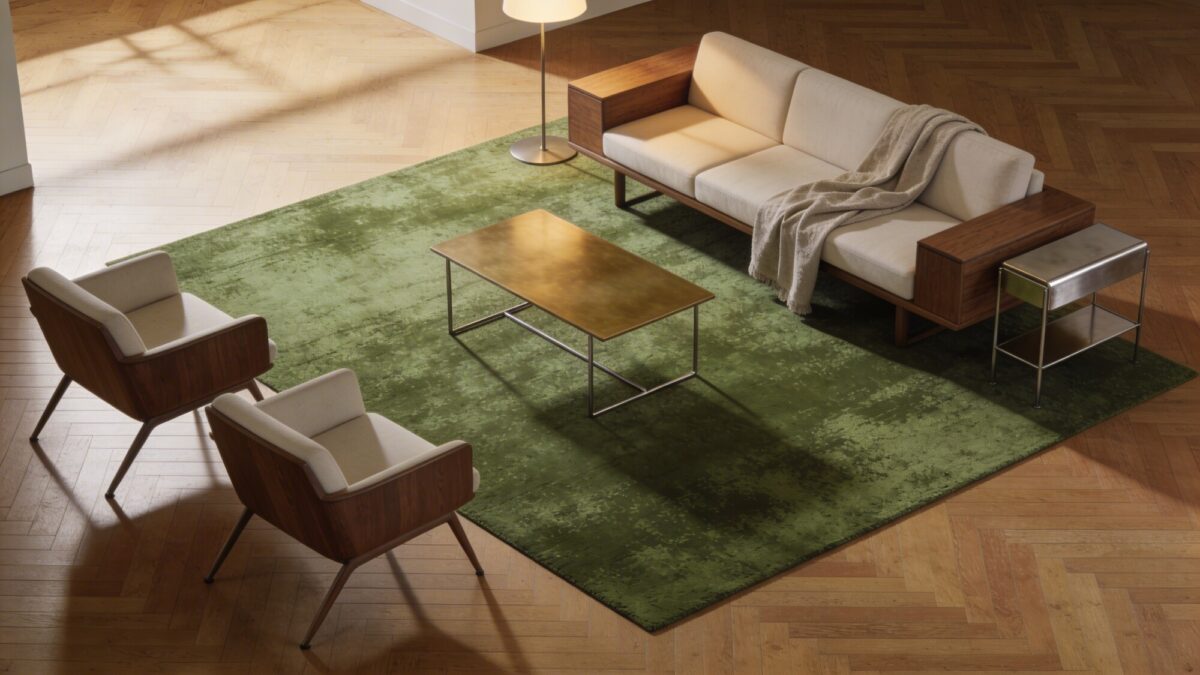
Green rugs and warm wood floors are a reliable pairing — the natural warmth of oak or walnut balances the coolness of green, creating a look that feels organic rather than staged. Adding brushed metal accents (a slim-legged coffee table, a minimalist floor lamp) sharpens the look without fighting the wood tones.
If you’re furnishing around a specific style, a mid-century modern rug buying guide can help you match rug texture and shape to the right wood furniture silhouettes.
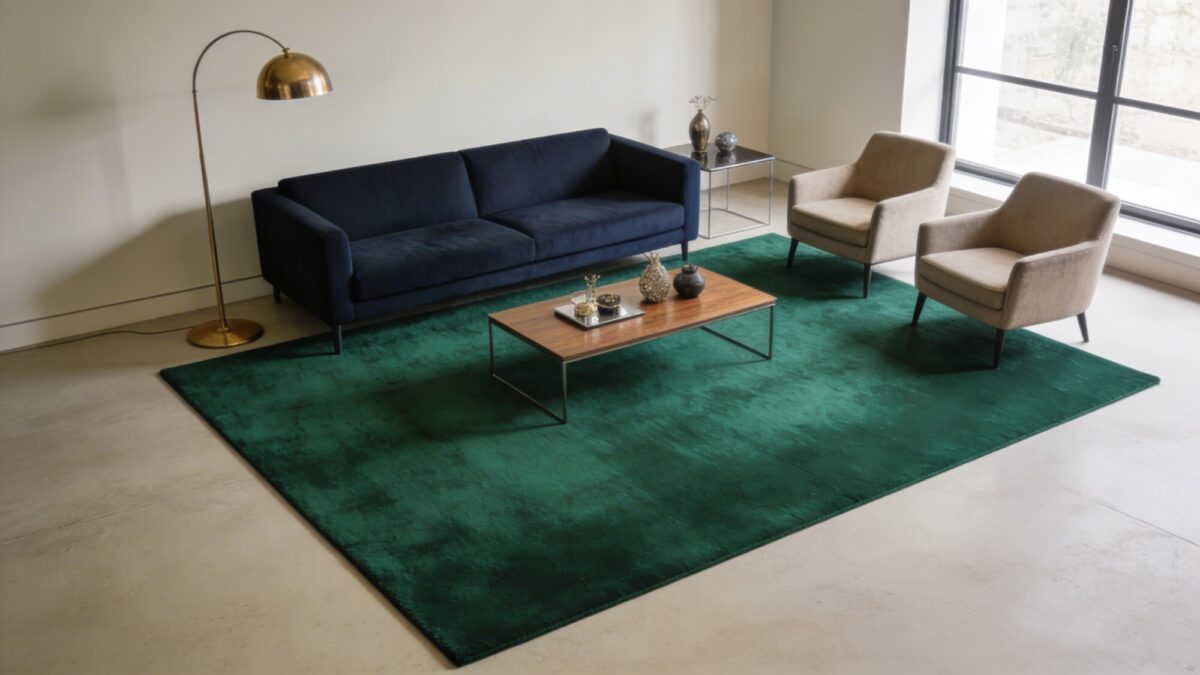
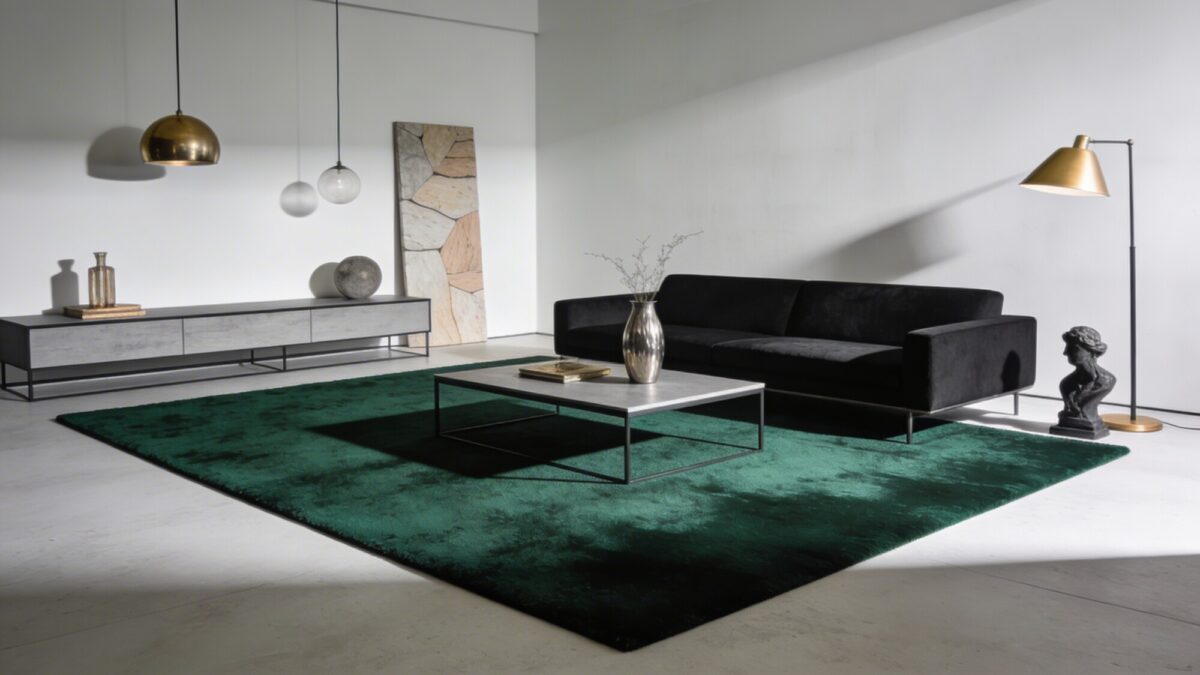
For a more dramatic, modern feel, a deep emerald rug against crisp white or charcoal furniture creates high contrast without feeling loud. Keeping the walls light lets the rug carry the visual weight of the room, while a monochrome backdrop of whites, grays, and blacks makes the green pop rather than compete.
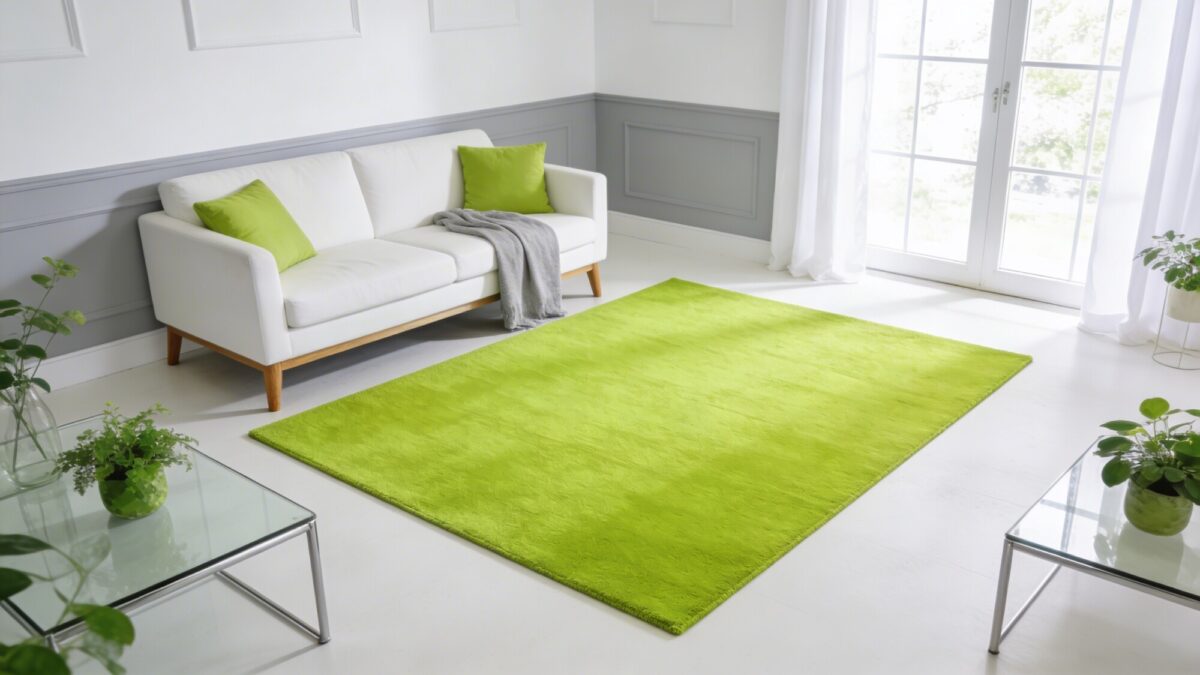
Lime green is the most energetic entry in the green rug living room lineup. It works particularly well in smaller spaces, where a splash of bright color can do a lot of work without overwhelming the room. Pair it with white or pale gray walls, light window treatments, and a few lime accents (cushions, art) to tie the color together without repeating it everywhere.
8. Choose Eco-Friendly Materials for Everyday Luxury
If sustainability matters to you, look for green rugs made from natural wool, jute, or recycled fibers. These materials tend to hold up well in high-traffic living rooms and often improve in texture as they wear in.
Wool in particular is worth a closer look if durability and comfort underfoot are priorities — see this guide to styling wool rugs in the living room for material-specific care and styling tips.
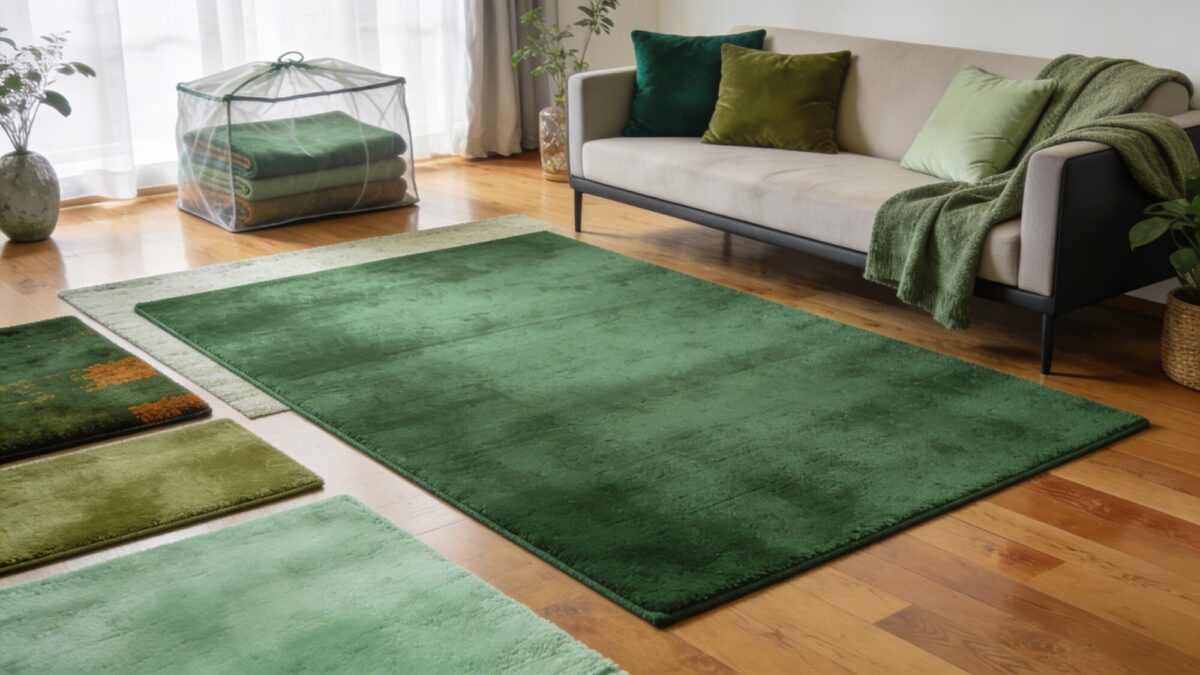
You don’t have to commit to one green rug forever. Rotating between a warmer forest green for fall, a cooler sage for spring, and a lighter mint for summer is a low-effort way to refresh the room throughout the year without buying new furniture.
How to Rotate Rugs Without the Hassle
Store off-season rugs rolled (not folded) in a breathable fabric bag to prevent creasing and moisture buildup.
Swap a few cushions or throws to match the new rug tone.
Use a lightweight rug pad or underlay each time to protect flooring and keep the rug from shifting.
Comparing the Most Popular Green Rug Shades
Shade
Best For
Pairs Well With
Room Feel
Deep Emerald
Statement pieces, modern spaces
White, charcoal, brass accents
Bold, dramatic
Sage
First-time green rug buyers, calm spaces
Cream, light wood, linen
Soft, spa-like
Forest Green
Cozy, traditional living rooms
Warm woods, leather
Grounded, earthy
Lime / Bright Green
Small spaces, playful aesthetics
White, pale gray
Energetic, fresh
Olive
Eclectic or vintage-inspired rooms
Mustard, terracotta, rattan
Warm, vintage
Things to Consider Before You Buy a Green Rug
Size: Undersized rugs are the most common styling mistake — the rug should generally extend under at least the front legs of your main seating pieces.
Material: Wool and natural fibers wear better long-term than synthetic options, especially in high-traffic living rooms.
Undertone: Cool greens (blue-based) pair best with gray and charcoal; warm greens (yellow-based, like olive) pair best with wood tones and warm neutrals.
Maintenance: If you have kids or pets, a green washable rug can offer the same aesthetic with far less maintenance stress.
Placement: Rug placement affects how large a room feels — for a deeper dive, see this guide on living room rug placement.
FAQ: Green Rug Living Room Ideas
What color furniture goes best with a green rug in the living room?
Neutral furniture — white, cream, charcoal, or natural wood tones — tends to work best, since it lets the green rug act as the room’s main color statement rather than competing with it.
Is a green rug too bold for a small living room?
Not necessarily. Lighter shades like sage or a soft mint tend to open up smaller spaces, while very deep or bright greens work best as a bold, singular accent when floor space is limited.
What’s the difference between a green Persian rug and a plain green rug for a living room?
A green Persian rug typically features intricate traditional patterns and a mix of tones within the green family, giving a more ornate, layered look. A plain green rug offers a simpler, more modern base that’s easier to style around.
Can I use a green rug in a bedroom instead of a living room?
Yes — a green rug bedroom follows many of the same principles as a living room: sage and muted tones tend to feel most restful, while bolder emerald or forest greens can add a cozier, more grounded feel underfoot.
How do I keep a green rug looking good long-term?
Rotate the rug periodically to even out wear, vacuum regularly on a low-pile setting, and address spills immediately. Wool and natural-fiber rugs generally age better than synthetic options.
Our Verdict
A green rug living room doesn’t require a full redesign — it just requires picking the right shade for the mood you’re after. Sage and olive tones offer an easy, low-risk entry point, while emerald and lime are better suited to rooms where you want the rug to genuinely lead the design. Whichever direction you choose, prioritizing the right size, material, and placement will matter more to the finished look than the exact shade of green you pick.
Listen to this article 10 10 0:00 / 0:00 Speed 0.75×1×1.25×1.5×2× A jute rug living room farmhouse look is one of the easiest ways to bring warmth and texture into a space without spending a fortune. Jute is a natural fiber area rug material that pairs naturally with wood, linen, and wool, which is exactly…
Listen to this article 10 10 0:00 / 0:00 Speed 0.75×1×1.25×1.5×2× A jute rug is one of the fastest ways to add warmth, texture, and natural character to a living room without a full redesign. Whether you’re drawn to a chunky jute rug for a farmhouse look or a round jute rug for a softer,…
Listen to this article 10 10 0:00 / 0:00 Speed 0.75×1×1.25×1.5×2× A red rug is one of the fastest ways to make a living room feel finished, and one of the easiest ways to make it feel off. The difference usually comes down to three things: the shade of red you pick, what it sits…
Listen to this article 10 10 0:00 / 0:00 Speed 0.75×1×1.25×1.5×2× Choosing among the best rug living room ideas can completely change how a space feels, from the way traffic flows through the room to how furniture visually relates to itself. A well-placed rug does more than cover the floor — it defines zones, adds…
Listen to this article 10 10 0:00 / 0:00 Speed 0.75×1×1.25×1.5×2× Tiny projects often bring the biggest satisfaction, and mug rugs prove it. These miniature quilted mats take very little fabric, finish quickly, and add a surprising amount of charm to coffee tables, desks, and breakfast nooks. If you’ve been searching for creative sewing projects…
Listen to this article 10 10 0:00 / 0:00 Speed 0.75×1×1.25×1.5×2× A thoughtful rug living room layout is one of the easiest ways to make a space feel intentional instead of accidental. The right rug, placed well, anchors your seating, guides traffic, and pulls together everything from color to texture. The wrong layout, on the…