Living Room Rugs With Beige Couch Styling Tips for a Balanced and Sophisticated Look You’ll Love
A beige couch might seem like the safest choice in the room, but don’t mistake “safe” for boring. The right rug can turn a simple beige sofa into the centerpiece of a stylish, polished living space. Whether you love modern minimalism, cozy farmhouse vibes, or a more luxurious look, your rug choice makes a huge difference.
The trick? Finding balance. You want your rug to complement the couch without making the room feel flat or predictable. Let’s dive into some practical styling tips that actually work.
Start With the Right Color Palette
A beige couch gives you a lot of freedom. Think of it as a blank canvas rather than a design challenge.
You can go in several directions:
- Warm earth tones like terracotta, rust, and camel
- Cool shades such as blue, sage green, and charcoal
- Neutral combinations featuring cream, taupe, and ivory
- Bold accent colors like emerald, navy, or burgundy
The biggest mistake people make? Pairing beige with more beige and calling it a day. Unless you layer textures carefully, the room can end up looking like a giant oatmeal bowl.
Create Contrast Without Overdoing It
Contrast adds visual interest. If your couch sits in a light beige tone, consider:
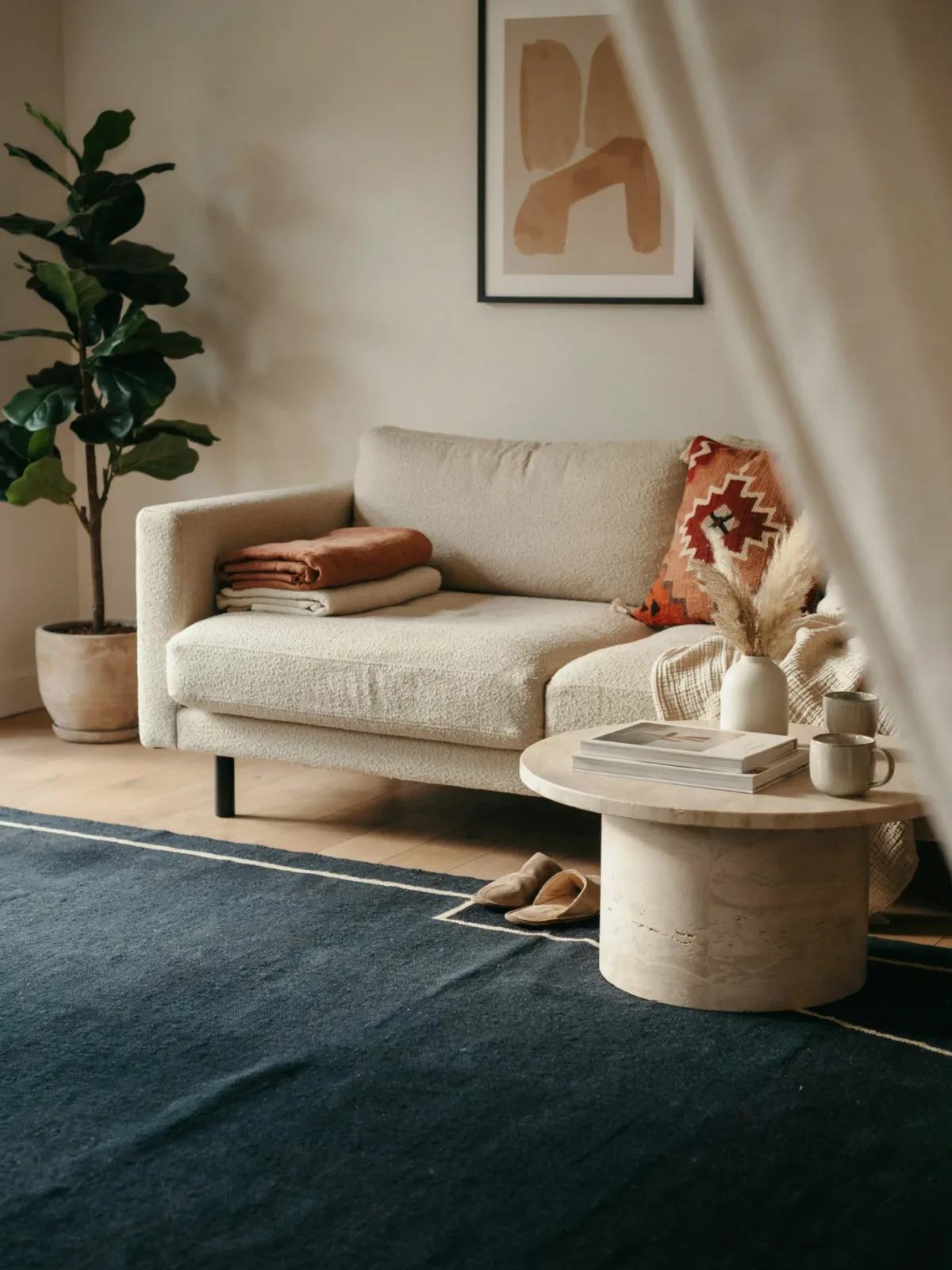
- A deep navy rug
- A charcoal geometric rug
- A rich olive green area rug
These colors create definition while keeping the room sophisticated.
Choose Rug Patterns That Add Personality
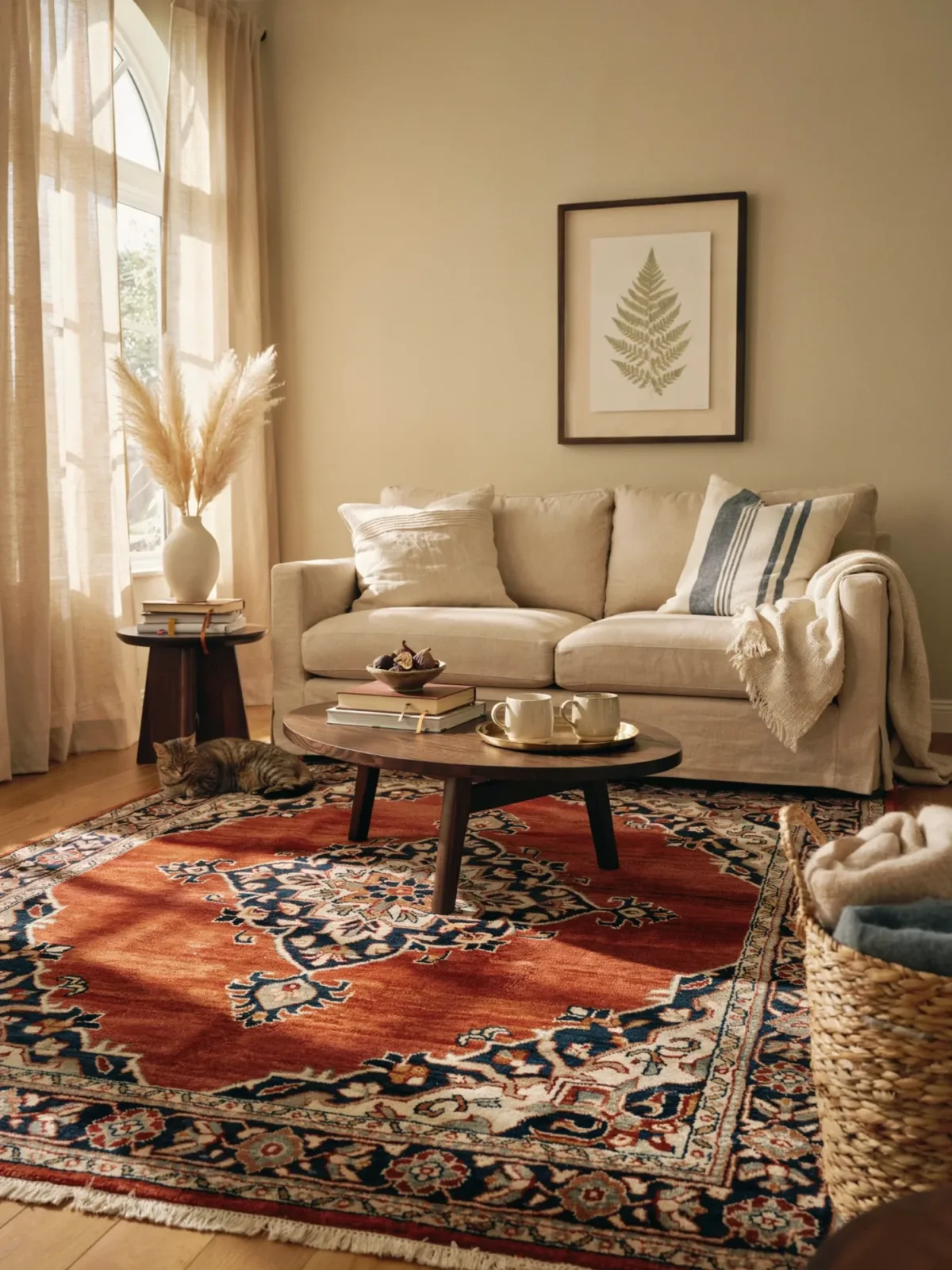
Pattern plays a huge role when your sofa serves as a neutral anchor.
A patterned rug can bring life to the room without overwhelming it. Since beige couches don’t compete for attention, they allow rugs to shine.

- [SUBSTANTIAL & ROBUST]: Up to 3x more material by weight for added durability and comfort; rug sizes may vary slightly d…
- [EASY CLEANING & NON-SHEDDING]: Machine-woven from enhanced synthetic fibers for a comfortable, virtually non-shedding p…
- [KID APPROVED & PET-FRIENDLY]: Durable, easy-care fibers stand up to high-traffic areas and everyday messes; pattern wil…
Popular options include:
- Traditional Persian-inspired designs
- Modern geometric patterns
- Subtle abstract prints
- Vintage distressed rugs
- Moroccan-inspired motifs
If your furniture already includes lots of patterns, choose a simpler rug. If your room feels a little too plain, a bold rug can instantly fix that problem.
Match Pattern Scale to Room Size
Large rooms handle larger patterns beautifully. Small patterns often get lost in spacious living areas.
Smaller rooms benefit from medium-scale designs that add detail without creating visual clutter.
Think of patterns like seasoning. Too little feels bland. Too much feels chaotic.
Layer Different Textures for a Luxurious Feel
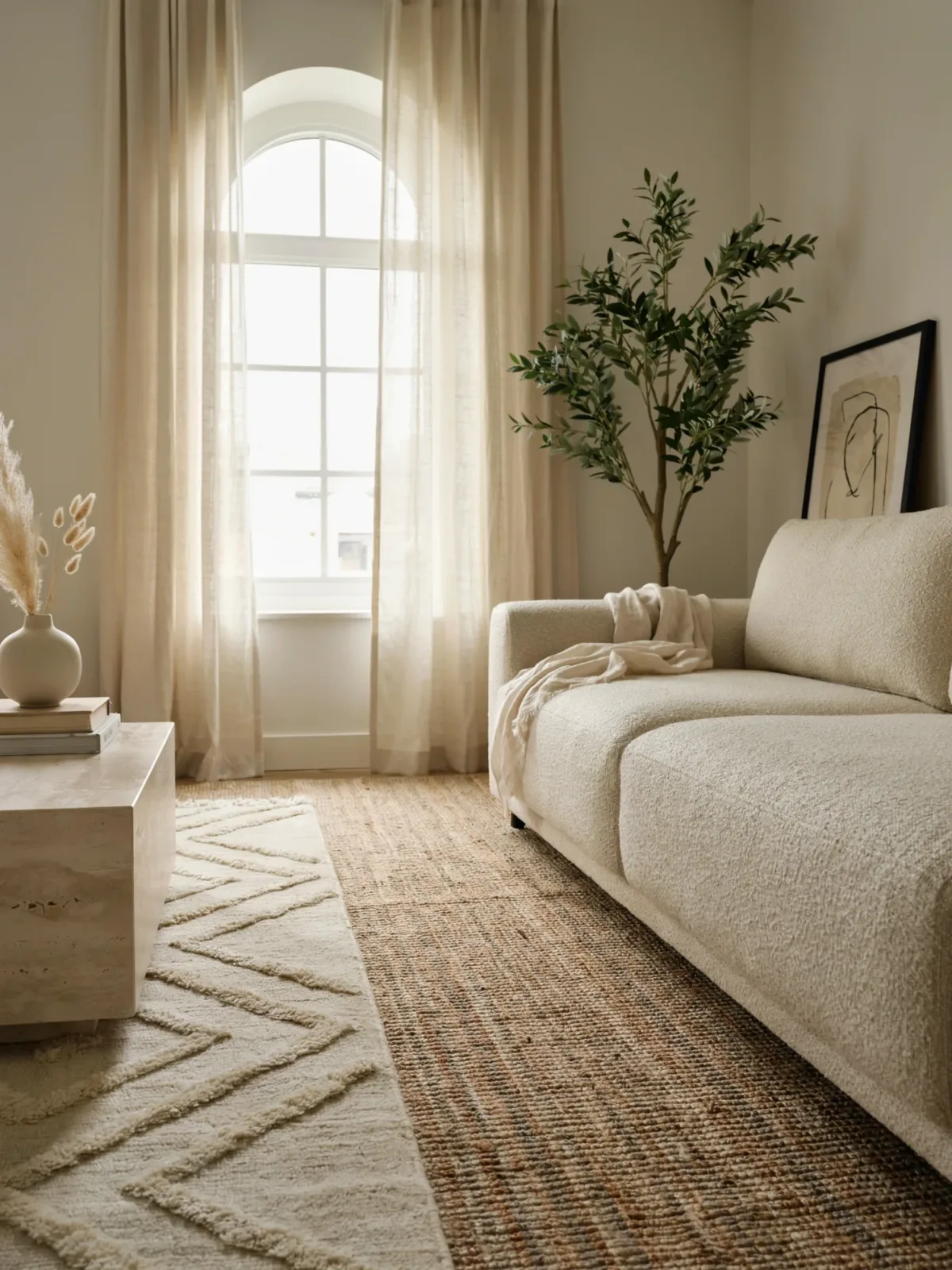
Color matters, but texture often creates the sophisticated look people chase.
A beige couch paired with a flat, lifeless rug can feel uninspired. Introduce texture and suddenly everything looks intentional.
Consider rugs with:
- High-low pile variations
- Wool construction
- Handwoven details
- Plush shag elements
- Natural fibers like jute
Texture creates depth even when you stick to a neutral palette.
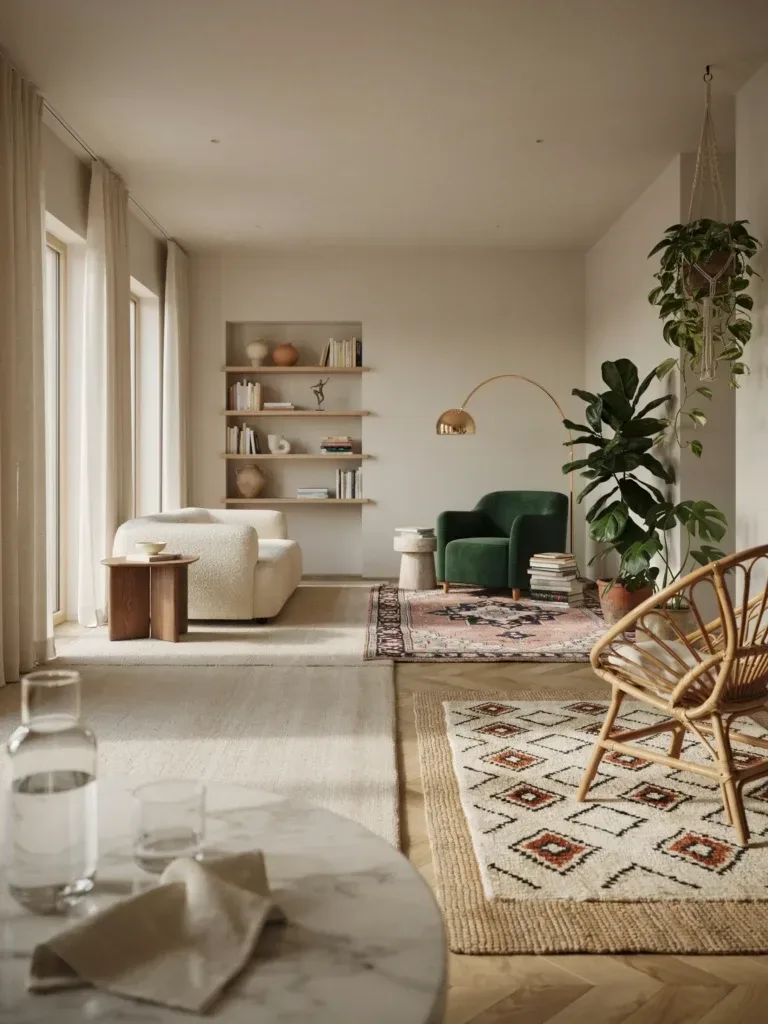
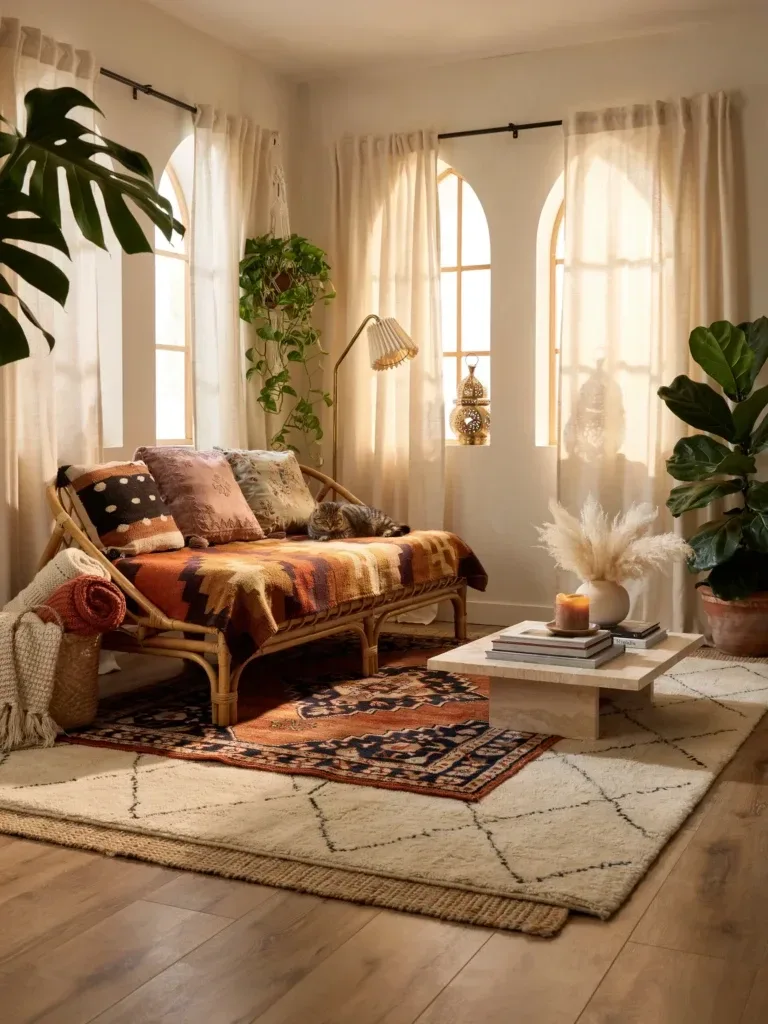
Combining Jute and Plush Rugs
One of my favorite tricks involves layering.
Place a large natural jute rug underneath and layer a smaller plush rug on top. This combination adds warmth, dimension, and a designer-inspired feel without requiring a huge budget.
Plus, it makes the room look like someone actually thought about the design instead of randomly buying furniture on a weekend shopping spree.
Get the Rug Size Right
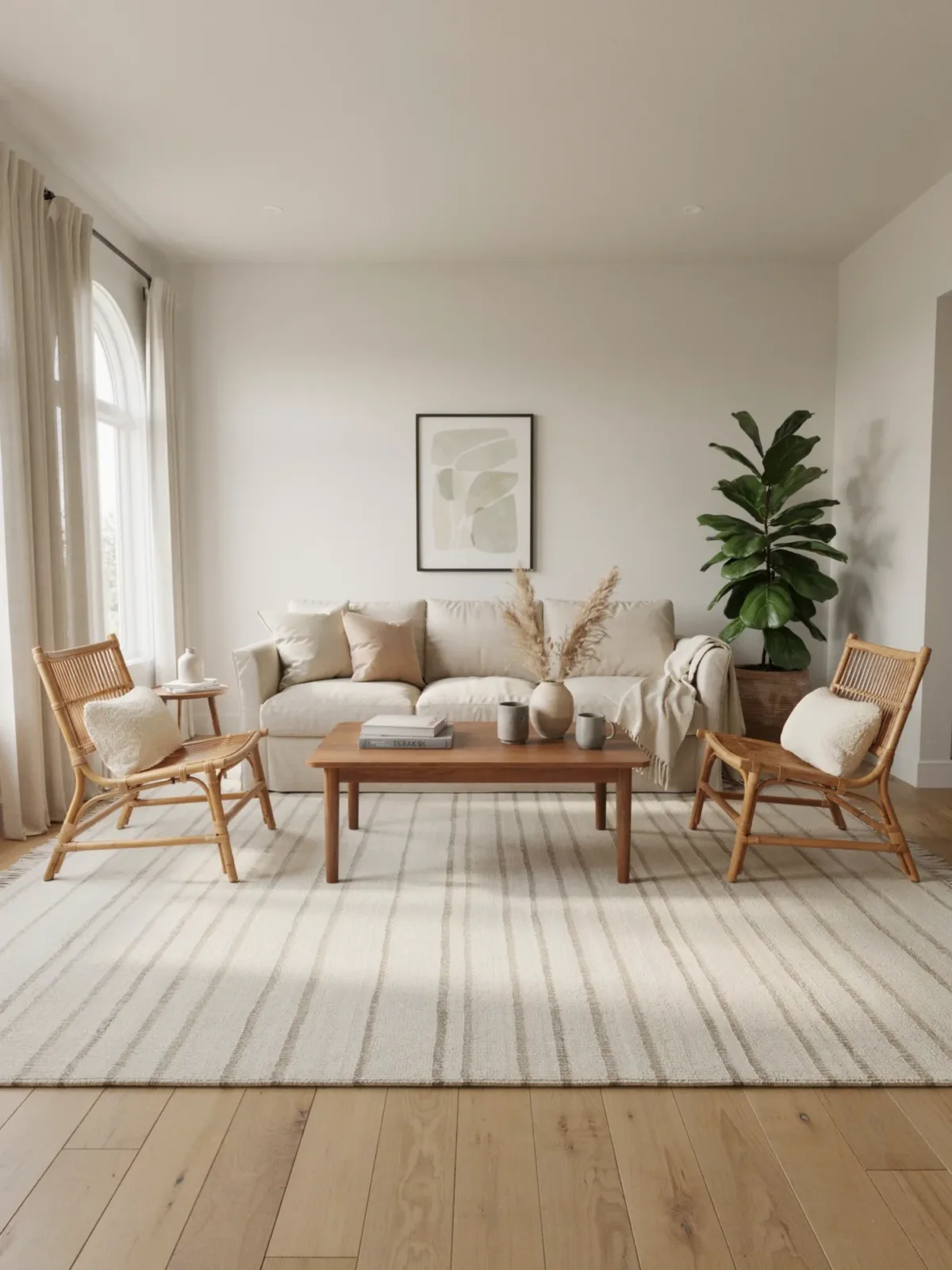
Even the most beautiful rug fails if the size feels wrong.
A rug that’s too small often makes the room look disconnected. Your furniture ends up floating awkwardly around the space.
As a general guideline:
- Front legs of sofas and chairs should sit on the rug
- Larger rooms often benefit from oversized rugs
- Leave consistent flooring borders around the rug edges
Common Rug Size Recommendations
For most living rooms:
1. 8′ x 10′ rugs work well in medium-sized spaces.
2. 9′ x 12′ rugs suit larger living rooms.
3. Smaller spaces may use 5′ x 8′ rugs, but furniture placement becomes critical.
When in doubt, size up. People rarely regret choosing a larger rug, but they often regret choosing one that’s too small.
Use Accent Colors to Tie Everything Together
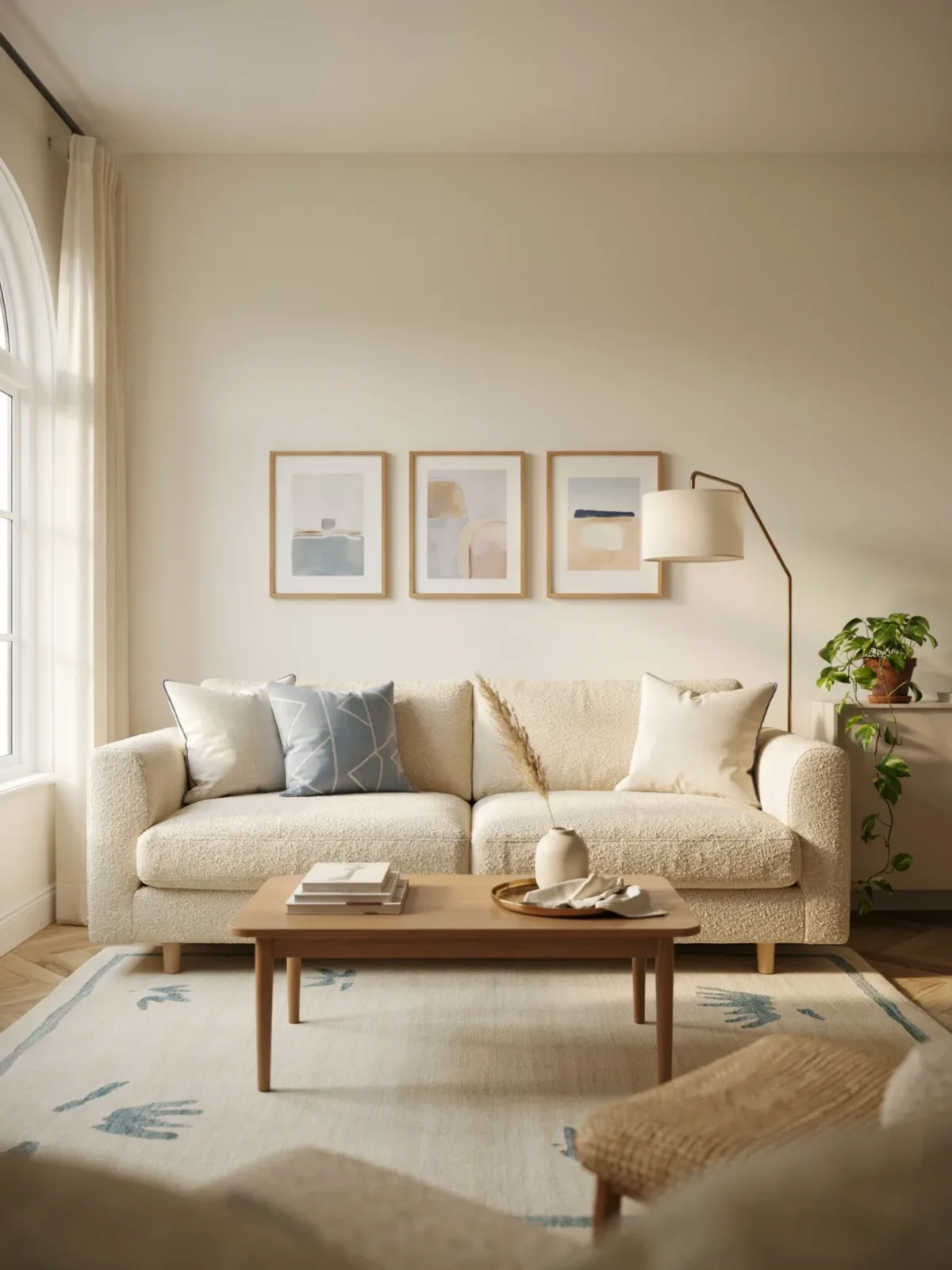
Your rug shouldn’t work alone. It should connect with other elements throughout the room.
Look at the colors inside your rug and repeat them elsewhere.
For example:
- Blue from the rug appears in throw pillows
- Green from the rug shows up in plants and artwork
- Rust tones appear in decorative accessories
This approach creates cohesion without making the room feel overly matched.
The Three-Touch Rule
A simple designer trick involves repeating an accent color at least three times throughout the room.
For example:
- Rug
- Pillow
- Artwork
This repetition helps the space feel balanced and intentional.
Balance Modern and Traditional Elements
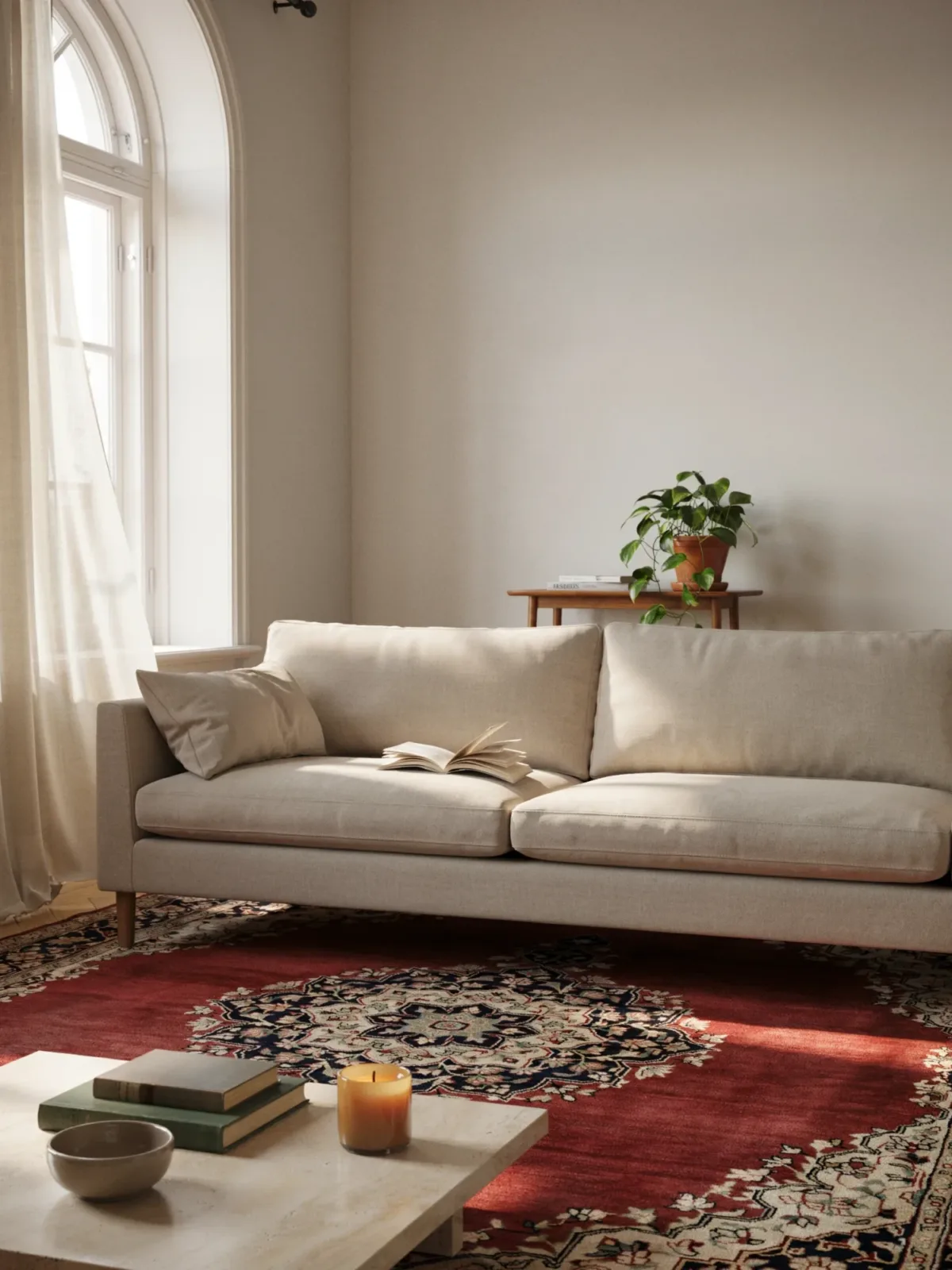
Beige couches work with nearly every design style, which gives you room to experiment.
Pairing contrasting styles often creates the most interesting results.
Some combinations that work beautifully:
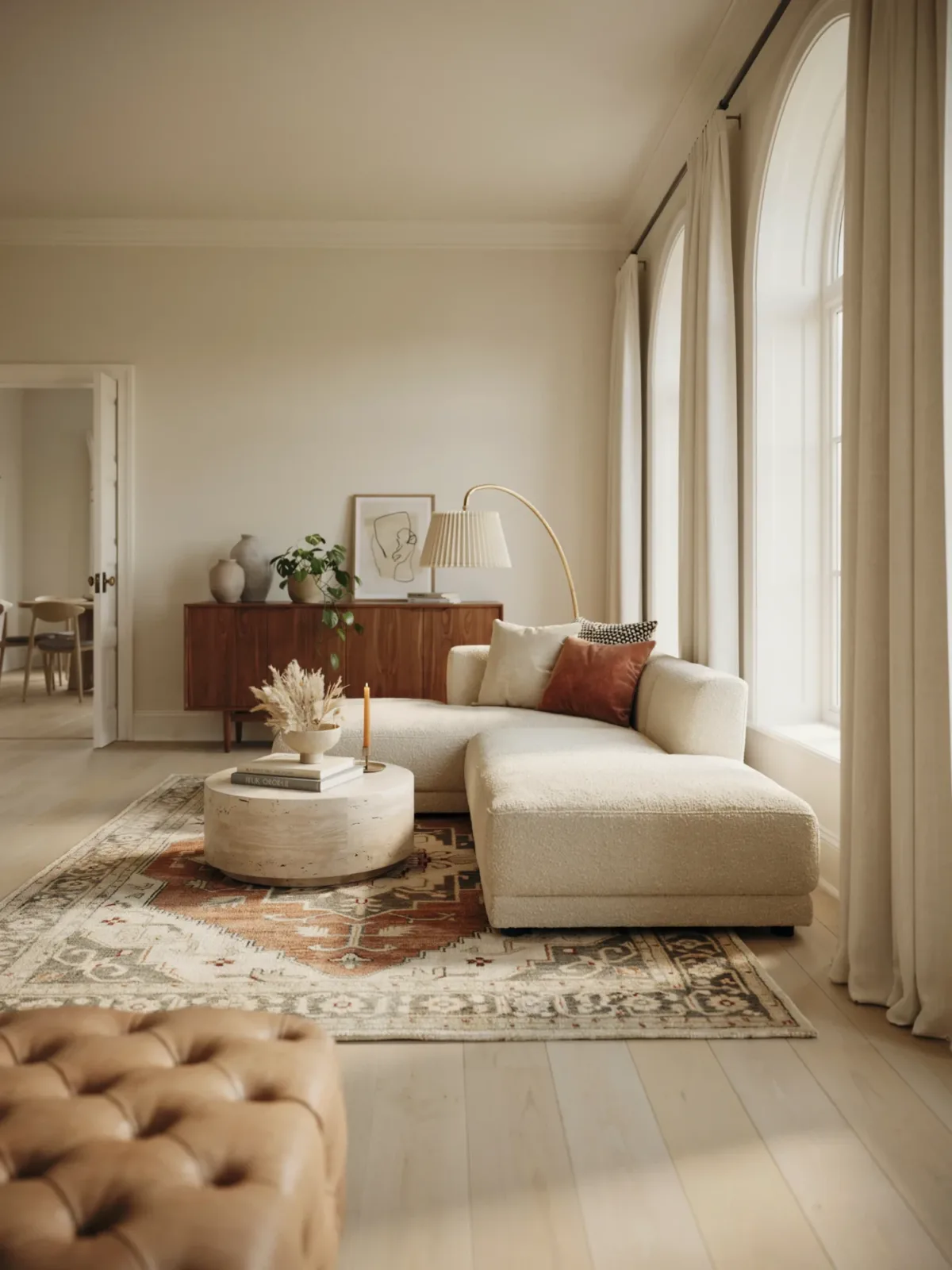
- Modern beige sofa with a vintage Persian rug
- Contemporary sectional with a traditional wool rug
- Minimalist furniture with a richly patterned area rug
- Classic beige couch with a modern abstract design
The contrast keeps the room from feeling like a furniture showroom.
Don’t Fear Vintage-Inspired Rugs
Many homeowners worry that vintage rugs will make the room feel old-fashioned.
In reality, vintage-inspired rugs often add character and warmth. They also hide everyday wear better than many solid-colored options. FYI, that’s a major bonus if kids, pets, or coffee cups regularly visit your living room.
Pay Attention to Lighting
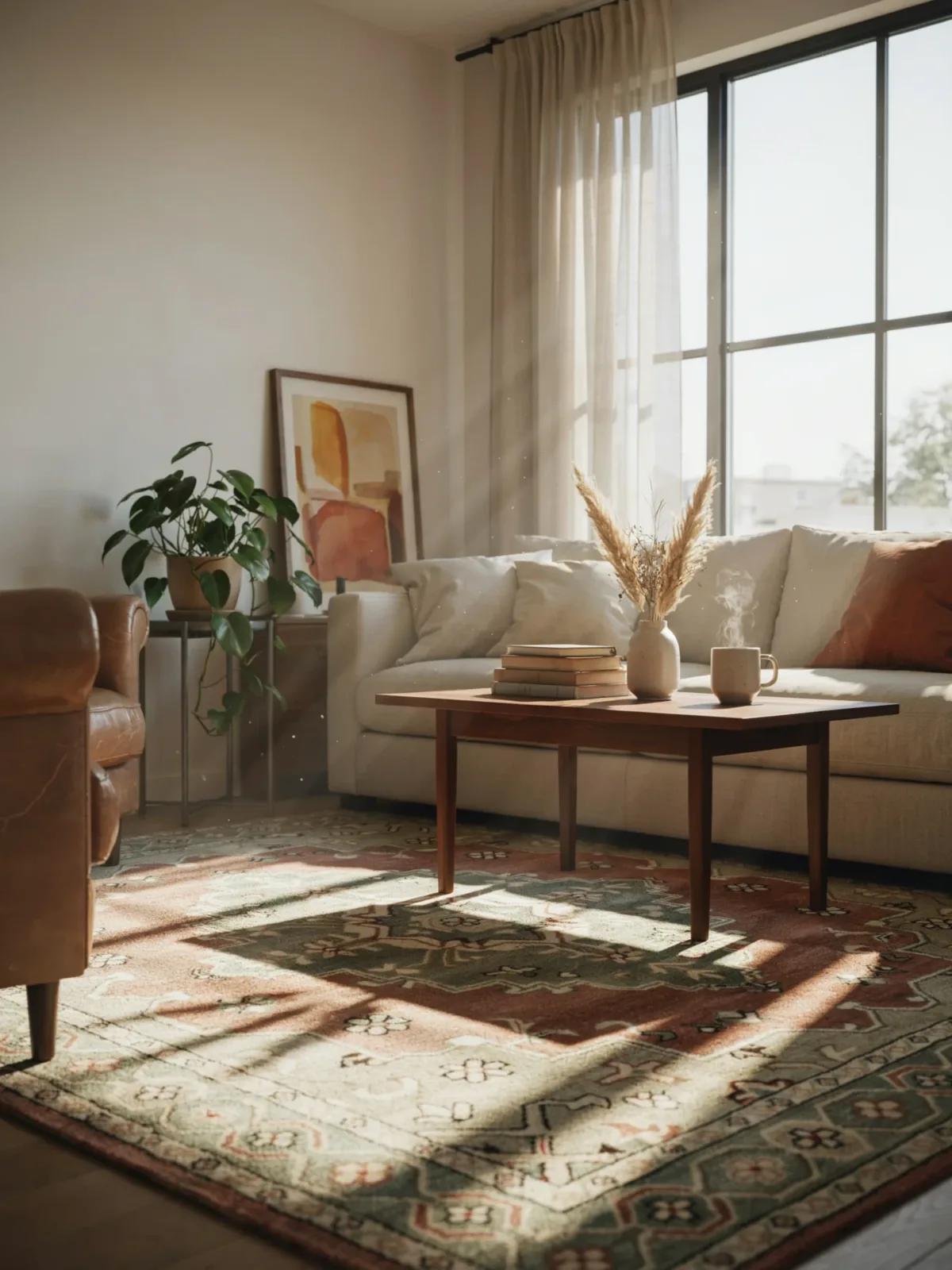
The same rug can look completely different depending on the lighting.
Natural sunlight tends to reveal true colors, while warm artificial lighting can make beige and cream tones appear richer.
Before committing to a rug:
- View samples in daylight
- Check colors during the evening
- Consider nearby wall colors
- Observe how shadows affect the pattern
A rug that looks perfect in a showroom may feel very different in your home.
IMO, this step saves a lot of buyer’s remorse.
FAQ
What color rug looks best with a beige couch?
There isn’t one perfect answer. Navy, sage green, charcoal, rust, cream, and patterned multicolor rugs all pair beautifully with beige couches. The best choice depends on the mood you want to create.
Should my rug be lighter or darker than my beige couch?
Either option can work. A darker rug creates contrast and definition, while a lighter rug delivers a soft, airy look. Consider the overall balance of the room before deciding.
Are patterned rugs better than solid rugs with a beige sofa?
Patterned rugs often add more visual interest because the couch already serves as a neutral foundation. However, textured solid rugs can look equally sophisticated when styled correctly.
What rug material works best in a living room?
Wool remains one of the best options due to its durability, softness, and timeless appearance. Jute, cotton blends, and synthetic performance rugs also work well depending on your lifestyle and budget.
How large should a rug be under a beige couch?
Ideally, the front legs of your couch should sit on the rug. In larger rooms, all furniture legs can rest on the rug for a more cohesive appearance.
Can I layer rugs with a beige couch?
Absolutely. Layering rugs adds depth and texture. A large natural fiber rug topped with a smaller patterned or plush rug creates a stylish, designer-inspired look.
Conclusion
A beige couch gives you incredible flexibility, but the right rug brings the room to life. Focus on color contrast, interesting textures, proper sizing, and thoughtful coordination with your decor. When you balance these elements well, your living room feels polished, welcoming, and effortlessly sophisticated. And that’s exactly the kind of space people never want to leave.