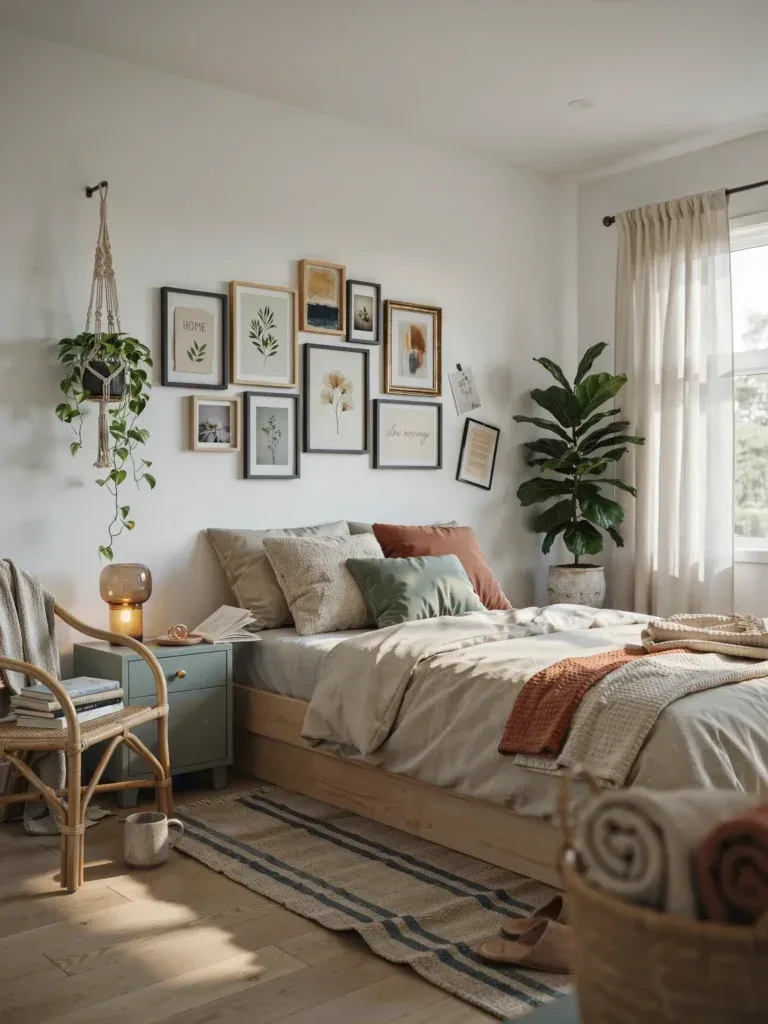
Tile has a reputation for feeling cold and clinical, which is exactly why most people rule it out for a bedroom. That reputation is outdated. Modern bedroom tile flooring ideas now lean on large formats, matte finishes, and warm color palettes that soften the material completely, while still giving you the durability, moisture resistance, and easy upkeep that carpet and hardwood can’t match. Below are nine tile-flooring directions worth considering, what makes each one work in a bedroom specifically, and how to style around it so the room still feels warm underfoot rather than showroom-cold. Quick Takeaways Matte finishes and warm neutral tones are what make tile feel bedroom-appropriate instead of clinical. Large-format tiles with slim grout lines make a room read bigger and cleaner. Patterned or textured tiles (herringbone, pebble, mixed-size) add character without needing extra wall decor. Wood-look tile gives you a hardwood appearance with tile-level durability and water resistance. Rugs, layered lighting, and warm textiles are what keep any tile floor from feeling too hard or too cold at night. 1. Matte Ceramic Tiles With Warm Neutrals Matte ceramic in soft taupe and sand tones is one of the easiest entry points into modern bedroom tile flooring ideas. Because the surface doesn’t reflect light the way a glossy tile does, the floor reads warm rather than stark, which matters more in a bedroom than almost any other room in the house. Photo by Devin Avery on Unsplash The neutral color family is also what makes this option so flexible. Wood furniture, fabric headboards, and metal light fixtures all sit comfortably against it without a clash, so you’re not locked into one design direction later. Why It Works Low glare, which matters for late-night trips to the bathroom or early mornings before the blinds are open A timeless, resale-friendly colorway that won’t date the room in a few years Pairs easily with wood, fabric, and metal accents without competing for attention Tips for Getting It Right Choose a 12×24-inch tile or larger to visually lengthen the room rather than chopping it up with grout lines Add a plush area rug on top for softness underfoot on cold mornings This look pairs especially well with a broader minimalist bedroom design, since both rely on restraint rather than pattern 2. Large-Format Porcelain Tiles That Look Nearly Seamless Large-format porcelain slabs with ultra-thin grout lines create a nearly seamless floor that reads closer to polished concrete than traditional tile. Fewer joints mean fewer visual interruptions, which is what makes a bedroom feel more spacious even without changing its actual square footage. What to Consider Porcelain is naturally durable and moisture-resistant, so beyond an occasional grout refresh, upkeep stays minimal. The finish matters here more than with most other tile types — a glossy porcelain slab can look slick and unwelcoming underfoot, while a satin or matte finish keeps the same seamless effect without the cold shine. Photo by Marc Wieland on Unsplash Key Elements Satin or matte finish to avoid a slick, showroom-like surface A soft bed setup — a plush duvet and layered pillows — to offset the sleekness of the floor A small area rug near the bed rather than wall-to-wall coverage, so the seamless effect stays visible 3. Brick-Style Herringbone for Subtle Drama Herringbone isn’t just a wall or backsplash pattern anymore. Laid in a mid-tone gray or warm taupe, it adds architectural interest to a bedroom floor without relying on bold color or a busy print, which is what makes it feel intentional rather than trendy. Why This Pattern Is Clever Distinct enough to notice, subtle enough not to dominate the room Works with both vintage and contemporary furniture, so it doesn’t force a full redesign Forgiving with a modest, muted color palette, which keeps the overall cost and complexity down Implementation Notes Look for a porcelain or ceramic tile that mimics natural clay tones for warmth Layer lighting — a floor lamp plus wall sconces — to bring out the pattern’s texture rather than flattening it under one overhead light A woven rug on top softens the geometry and keeps the room from feeling too graphic 4. Cool Blue-Gray Tiles for a Serene Night-Sky Feel Blue-gray tiles sit a step warmer than pure gray, which is why they tend to recede into the background instead of feeling clinical. That makes them a strong fit for anyone building a coastal or modern-minimal bedroom where the floor is meant to calm the space, not compete with it. Why It’s Worth Considering A soothing visual temperature that suits a room meant purely for rest Pairs naturally with white, ash, or natural wood furniture Complements a coastal or modern-minimal aesthetic without extra styling effort Pro tip: layer in a periwinkle or dusty blue pillow collection to echo the floor tone without letting it take over. If you’re already leaning into a cool, considered palette, this pairs well with a wider look at modern bedroom color ideas. Photo by Tanya Barrow on Unsplash 5. Textured Slate or Concrete-Look Tiles for an Urban Edge Concrete-inspired tile brings a loft-like, urban character to a bedroom, but the trick to making it feel cozy instead of cold is contrast. Pair the tile’s cool gray tone with warm timber furniture, amber lighting, and soft textiles, and the industrial edge stops feeling harsh. Why This Combination Works High-contrast pairing potential — the cooler the floor, the more the warm accents stand out Natural fissures and micro-texture give the tile character that flat gray flooring lacks Strong durability, which suits a busy household Styling Notes Add a shag or high-pile rug to soften the visual weight of the floor Use timber nightstands and warm-toned bedside lighting to balance the cool tone This works especially well in a bedroom that’s already leaning toward a modern luxe, cozy transformation rather than a strictly minimal one 6. Pebble-Texture or Matte Stone Tiles for a Natural, Spa-Like Mood If the goal is a retreat-like bedroom rather than a strictly modern one, pebble or matte stone-style tile brings genuine tactile warmth. The texture underfoot is part of the appeal here — it invites barefoot mornings instead of just looking good in photos. Key Points The natural texture adds real depth that flat tile can’t replicate Works especially well with earthy, warm color schemes Stain-resistant when properly sealed, which matters given the texture Tips Seal the grout thoroughly to prevent grime from settling into the texture over time Pair with linen bedding and a wood-framed mirror to reinforce the organic, spa-like feel Keep the rest of the room’s decor minimal so the floor’s texture stays the focal point 7. Patterned Tiles as an In-Floor Focal Point Patterned tile isn’t for every bedroom, but used in a restrained, vintage-inspired palette — think muted sage, warm cream, and charcoal — it can act as a floor-level focal point that replaces the need for a statement rug or bold wall art entirely. Photo by Ambitious Studio* | Rick Barrett on Unsplash Why It Shines Adds personality to the room without relying on loud wall decor Historically-inspired patterns tend to read as timeless rather than trendy Can visually function as a built-in area rug, especially when confined to a defined zone Implementation Limit the pattern to a defined section of the floor rather than covering the entire room Keep walls and bedding solid-colored so the pattern doesn’t compete with anything else This approach pairs naturally with a modern vintage bedroom style, since both draw on the same restrained, collected-over-time feel 8. Wood-Look Tile for the Best of Both Worlds Wood-look tile solves a genuine trade-off: it gives you the warmth and grain of real hardwood with the water resistance and low maintenance of tile. The realism comes down to plank width and grain variation — wider planks with visible, varied grain patterns read far more like authentic flooring than narrow, repetitive ones. Why It’s a Strong All-Around Option Hardwearing and simple to clean, without the sealing or refinishing hardwood eventually needs Delivers warmth and texture without the moisture concerns real wood carries in a bedroom Flexible enough to fit rustic, modern, or transitional design directions Care Notes Choose longer plank lengths to mimic the look of genuine flooring more convincingly Add low-profile furniture and a soft rug to keep the proportions balanced This is one of the more forgiving options if you’re still finalizing your overall bedroom interior design direction, since it works with almost any style that follows 9. Mixed-Size Tiles for Dynamic Character Mixing tile sizes — large rectangles, smaller squares, and slim planks — within one cohesive color family creates a floor with real rhythm. Laid in a serpentine or varied pattern, it can visually elongate or broaden a room depending on how it’s oriented, and it’s a genuinely practical way to use leftover tile stock creatively. What to Love About This Approach A unique floor rhythm that guides the eye through the room A practical way to repurpose leftover tile rather than letting it go to waste Delivers a bespoke, custom-designed feel without a fully custom budget How to Pull It Off Stay within one cohesive color family across all the sizes you mix Use a single, unifying grout color so the variation reads as intentional, not mismatched Anchor the look with a statement bench or a small grouping of plants near the transition points Which Tile Idea Fits Your Bedroom? Use this quick reference to match a tile direction to your actual priorities, rather than picking on looks alone. Photo by SarahCreates on Unsplash If your priority is…Best-fit ideaWhyA warm, everyday-livable floorMatte ceramic tiles with warm neutralsLow glare and a flexible, timeless colorwayMaking the room feel biggerLarge-format porcelain tilesFewer grout lines create a nearly seamless floorSubtle architectural interestBrick-style herringboneDistinct pattern that still reads as understatedA calming, coastal feelCool blue-gray tilesA soothing visual temperature that recedes into the backgroundAn urban, loft-inspired lookTextured slate or concrete-look tilesCool, industrial tone that balances with warm textilesA spa-like, natural retreatPebble-texture or matte stone tilesReal tactile texture underfootA bold but tasteful focal pointPatterned tilesActs as a built-in rug without extra decorThe look of wood without the upkeepWood-look tileHardwood warmth with tile-level durabilityA custom, bespoke floorMixed-size tilesVaried sizes create rhythm and reuse leftover stock Things to Consider Before You Choose Prioritize matte or satin finishes over gloss — glossy tile shows more glare and can feel colder underfoot in a bedroom specifically. Decide whether you want the floor to recede (neutral, large-format) or stand out (pattern, mixed-size, herringbone) before comparing individual products. Budget for a rug or two regardless of which tile you choose — even the warmest tile benefits from a soft landing spot by the bed. If you’re mixing tile with an existing design direction, look at your overall modern bedroom ideas first so the flooring choice supports the room rather than dictating it. Frequently Asked Questions Is tile flooring a good choice for a bedroom? Yes, especially with modern matte and large-format options. The main adjustment is adding rugs and layered textiles so the room doesn’t feel cold underfoot. What’s the most space-enlarging tile option for a small bedroom? Large-format porcelain tiles with slim grout lines tend to work best, since fewer visible joints make the floor read as one continuous surface. Does tile flooring feel cold in a bedroom at night? It can, particularly in colder climates, which is why a rug near the bed and warm-toned lighting are worth planning for from the start rather than adding later. Can I mix a patterned or textured tile with simple furniture? Yes — in fact it’s recommended. Keeping walls, bedding, and furniture solid-colored lets a patterned or textured floor act as the room’s focal point without competing for attention. Is wood-look tile a worthwhile alternative to real hardwood? For a bedroom, often yes. You get a similar warmth and grain appearance with better moisture resistance and lower long-term maintenance than solid wood flooring. Our Recommendation There’s no universally “best” tile for a bedroom — the right pick depends on how warm or bold you want the room to feel and how much of that warmth you’re willing to add back in through rugs, lighting, and textiles. Start with the comparison table above to shortlist two or three directions, then choose finish and grout color last, since those details are easiest to adjust once the bigger decision is made.
Tile has a reputation for feeling cold and clinical, which is exactly why most people rule it out for a bedroom. That reputation is outdated. Modern bedroom tile flooring ideas now lean on large formats, matte finishes, and warm color palettes that soften the material completely, while still giving you the durability, moisture resistance, and easy upkeep that carpet and hardwood can’t match.
Below are nine tile-flooring directions worth considering, what makes each one work in a bedroom specifically, and how to style around it so the room still feels warm underfoot rather than showroom-cold.
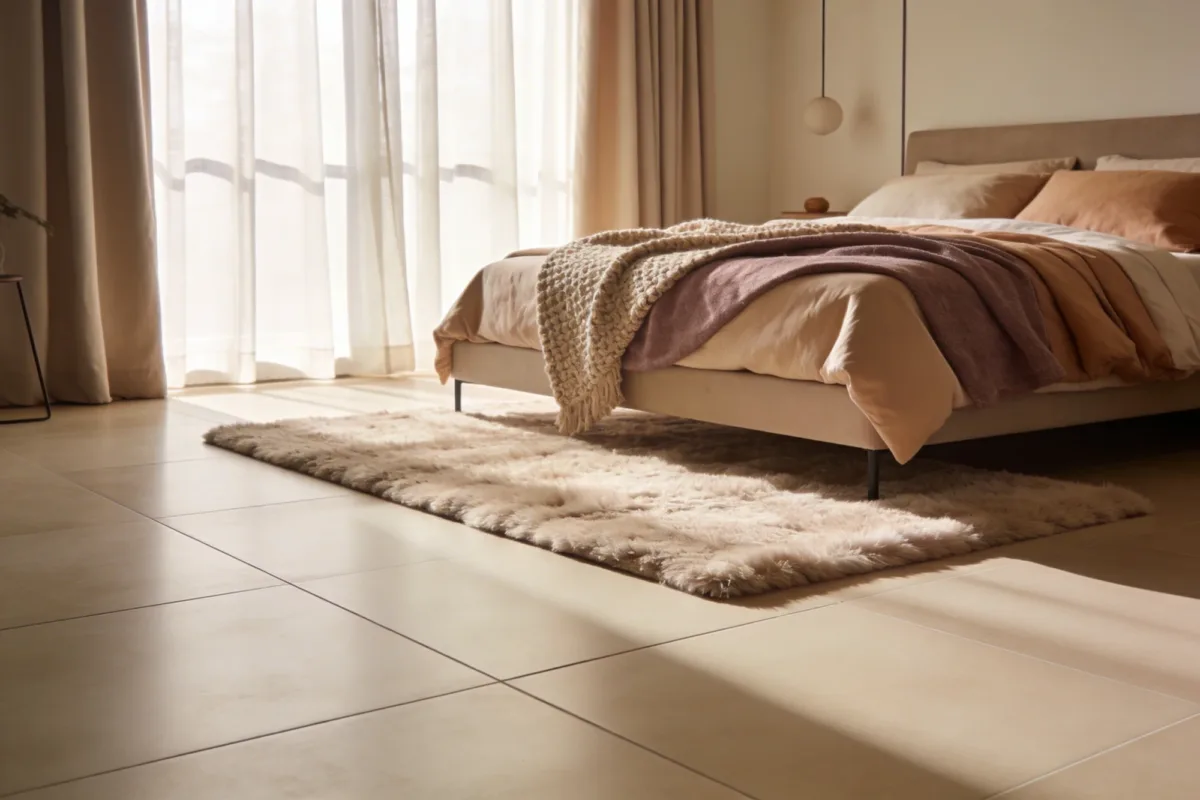
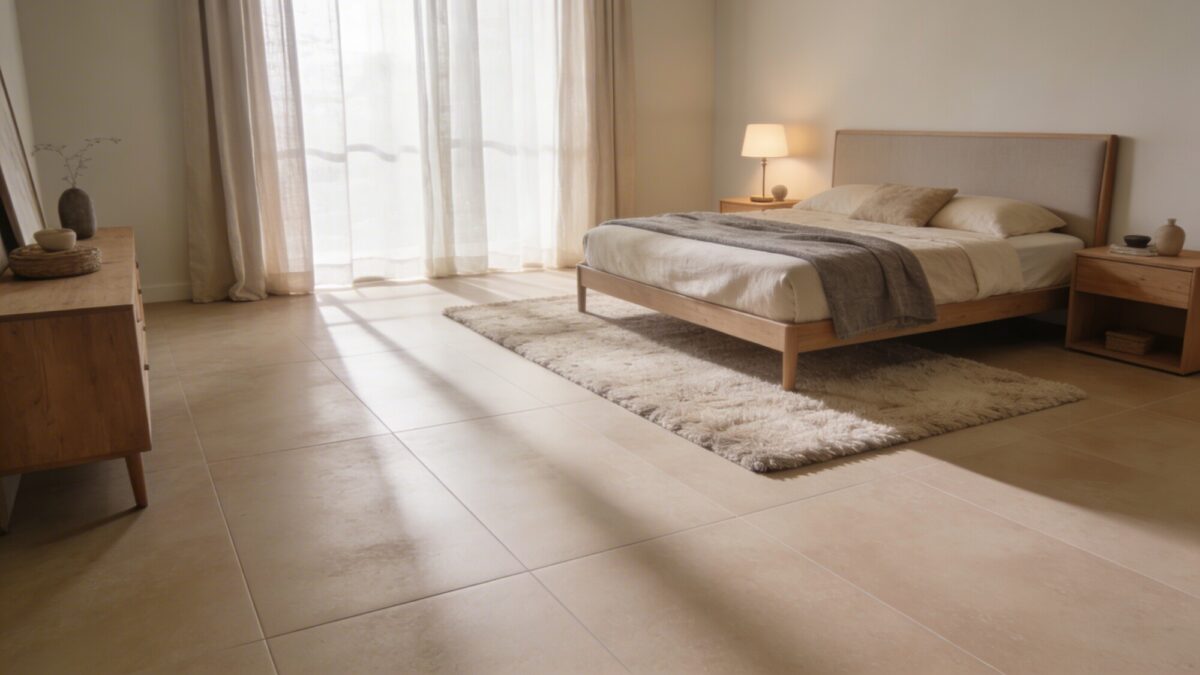
Matte ceramic in soft taupe and sand tones is one of the easiest entry points into modern bedroom tile flooring ideas. Because the surface doesn’t reflect light the way a glossy tile does, the floor reads warm rather than stark, which matters more in a bedroom than almost any other room in the house.
The neutral color family is also what makes this option so flexible. Wood furniture, fabric headboards, and metal light fixtures all sit comfortably against it without a clash, so you’re not locked into one design direction later.
Why It Works
Low glare, which matters for late-night trips to the bathroom or early mornings before the blinds are open
A timeless, resale-friendly colorway that won’t date the room in a few years
Pairs easily with wood, fabric, and metal accents without competing for attention
Tips for Getting It Right
Choose a 12×24-inch tile or larger to visually lengthen the room rather than chopping it up with grout lines
Add a plush area rug on top for softness underfoot on cold mornings
This look pairs especially well with a broader minimalist bedroom design, since both rely on restraint rather than pattern
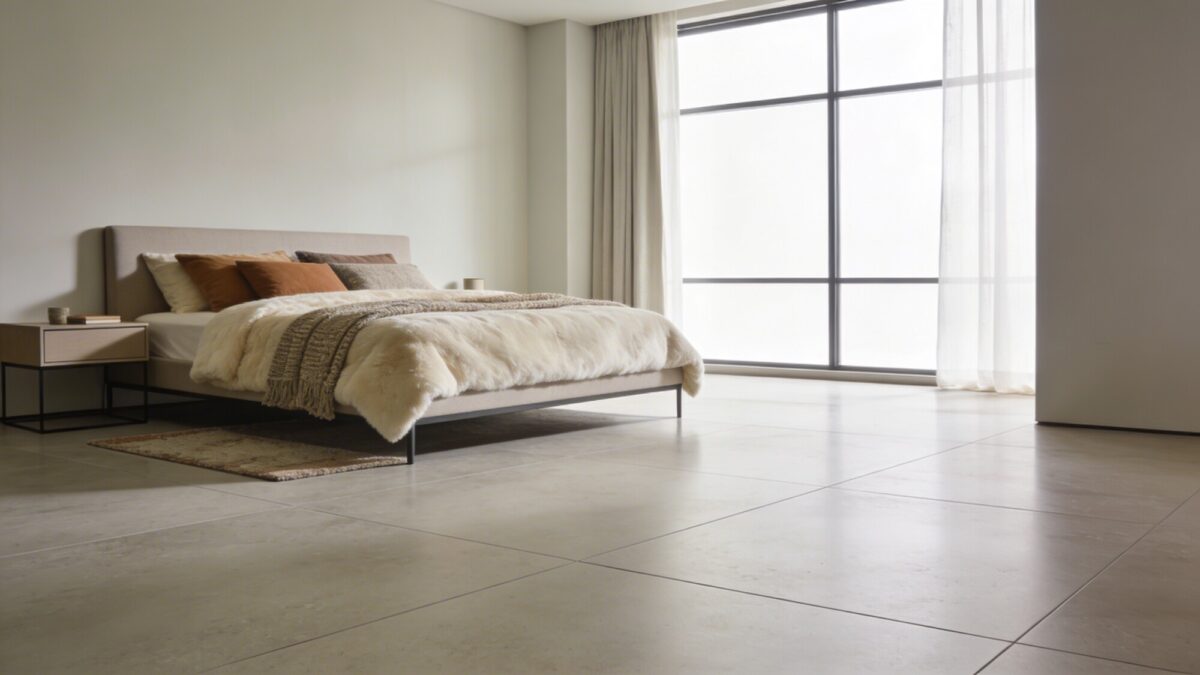
Large-format porcelain slabs with ultra-thin grout lines create a nearly seamless floor that reads closer to polished concrete than traditional tile. Fewer joints mean fewer visual interruptions, which is what makes a bedroom feel more spacious even without changing its actual square footage.
What to Consider
Porcelain is naturally durable and moisture-resistant, so beyond an occasional grout refresh, upkeep stays minimal. The finish matters here more than with most other tile types — a glossy porcelain slab can look slick and unwelcoming underfoot, while a satin or matte finish keeps the same seamless effect without the cold shine.
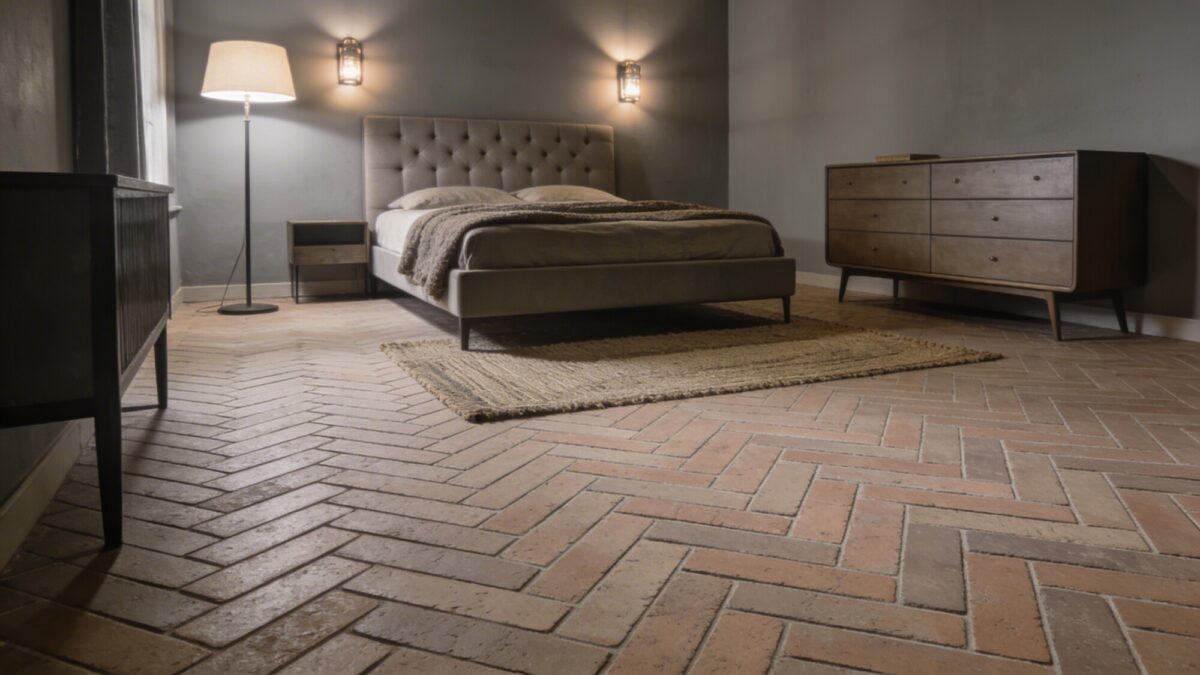
Herringbone isn’t just a wall or backsplash pattern anymore. Laid in a mid-tone gray or warm taupe, it adds architectural interest to a bedroom floor without relying on bold color or a busy print, which is what makes it feel intentional rather than trendy.
Why This Pattern Is Clever
Distinct enough to notice, subtle enough not to dominate the room
Works with both vintage and contemporary furniture, so it doesn’t force a full redesign
Forgiving with a modest, muted color palette, which keeps the overall cost and complexity down
Implementation Notes
Look for a porcelain or ceramic tile that mimics natural clay tones for warmth
Layer lighting — a floor lamp plus wall sconces — to bring out the pattern’s texture rather than flattening it under one overhead light
A woven rug on top softens the geometry and keeps the room from feeling too graphic
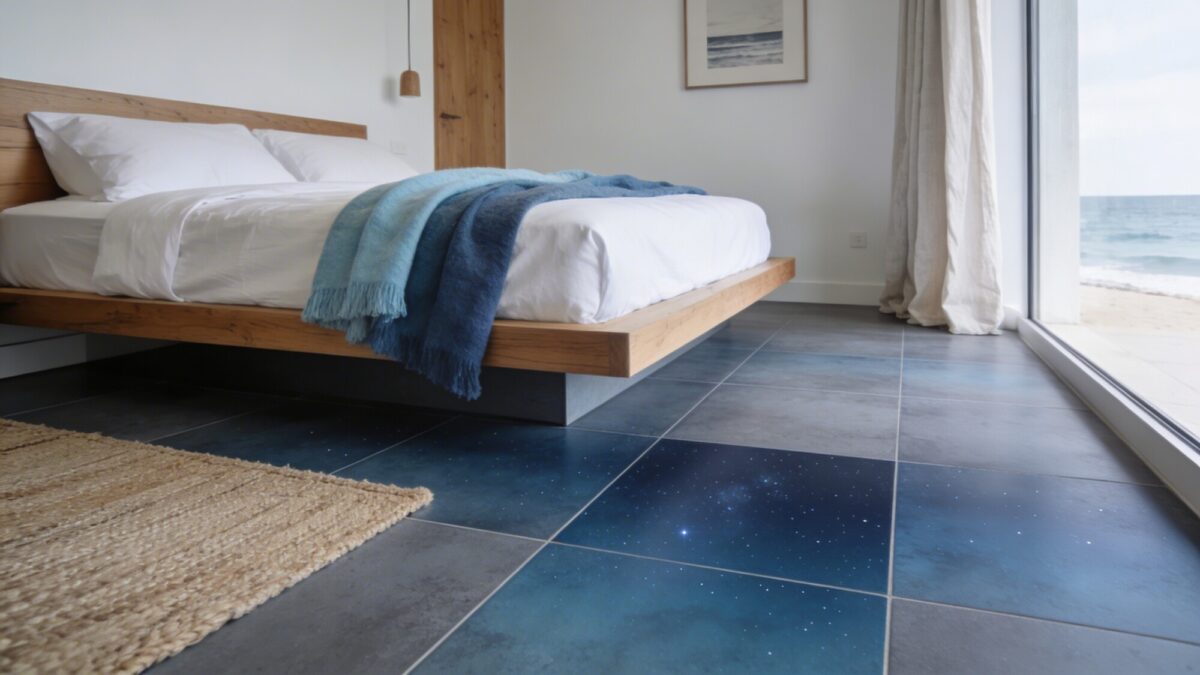
4. Cool Blue-Gray Tiles for a Serene Night-Sky Feel
Blue-gray tiles sit a step warmer than pure gray, which is why they tend to recede into the background instead of feeling clinical. That makes them a strong fit for anyone building a coastal or modern-minimal bedroom where the floor is meant to calm the space, not compete with it.
A soothing visual temperature that suits a room meant purely for rest
Pairs naturally with white, ash, or natural wood furniture
Complements a coastal or modern-minimal aesthetic without extra styling effort
Pro tip: layer in a periwinkle or dusty blue pillow collection to echo the floor tone without letting it take over. If you’re already leaning into a cool, considered palette, this pairs well with a wider look at modern bedroom color ideas.
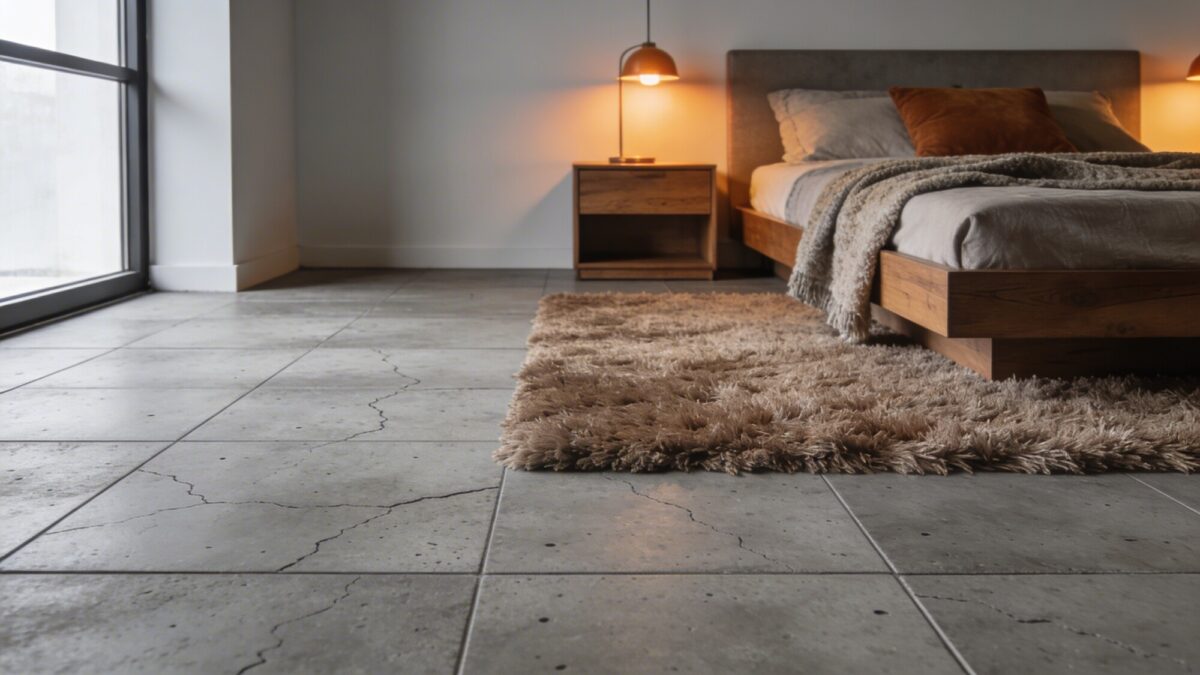
Concrete-inspired tile brings a loft-like, urban character to a bedroom, but the trick to making it feel cozy instead of cold is contrast. Pair the tile’s cool gray tone with warm timber furniture, amber lighting, and soft textiles, and the industrial edge stops feeling harsh.
Why This Combination Works
High-contrast pairing potential — the cooler the floor, the more the warm accents stand out
Natural fissures and micro-texture give the tile character that flat gray flooring lacks
Strong durability, which suits a busy household
Styling Notes
Add a shag or high-pile rug to soften the visual weight of the floor
Use timber nightstands and warm-toned bedside lighting to balance the cool tone
This works especially well in a bedroom that’s already leaning toward a modern luxe, cozy transformation rather than a strictly minimal one
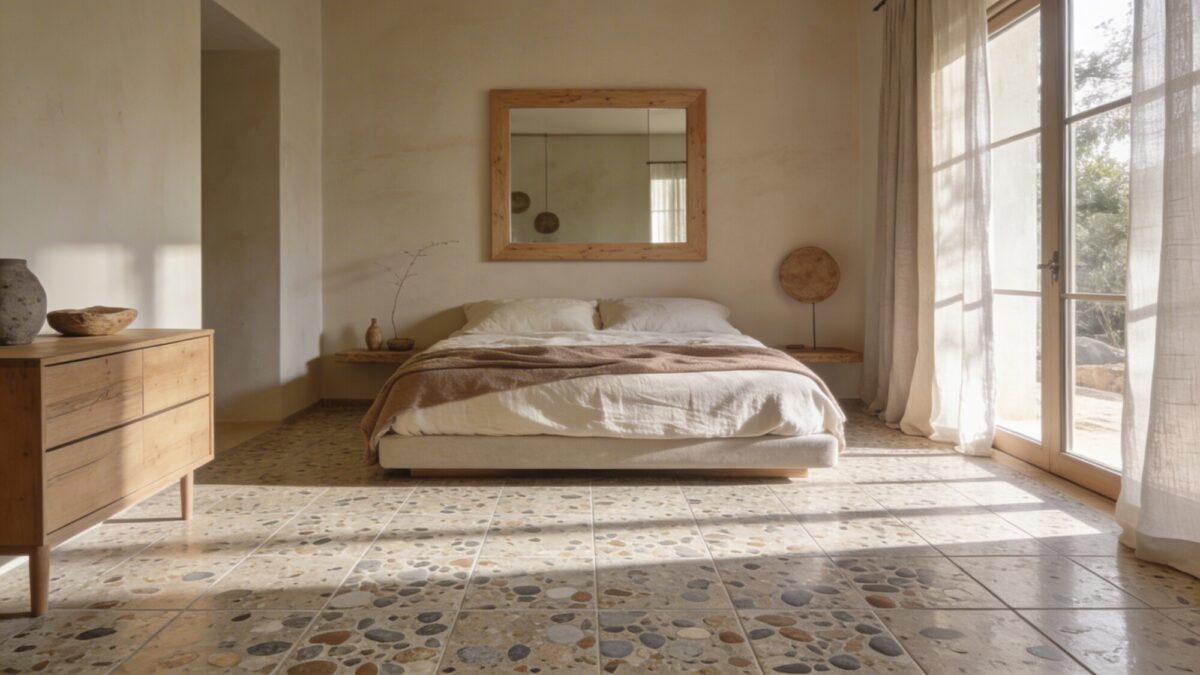
6. Pebble-Texture or Matte Stone Tiles for a Natural, Spa-Like Mood
If the goal is a retreat-like bedroom rather than a strictly modern one, pebble or matte stone-style tile brings genuine tactile warmth. The texture underfoot is part of the appeal here — it invites barefoot mornings instead of just looking good in photos.
Key Points
The natural texture adds real depth that flat tile can’t replicate
Works especially well with earthy, warm color schemes
Stain-resistant when properly sealed, which matters given the texture
Tips
Seal the grout thoroughly to prevent grime from settling into the texture over time
Pair with linen bedding and a wood-framed mirror to reinforce the organic, spa-like feel
Keep the rest of the room’s decor minimal so the floor’s texture stays the focal point
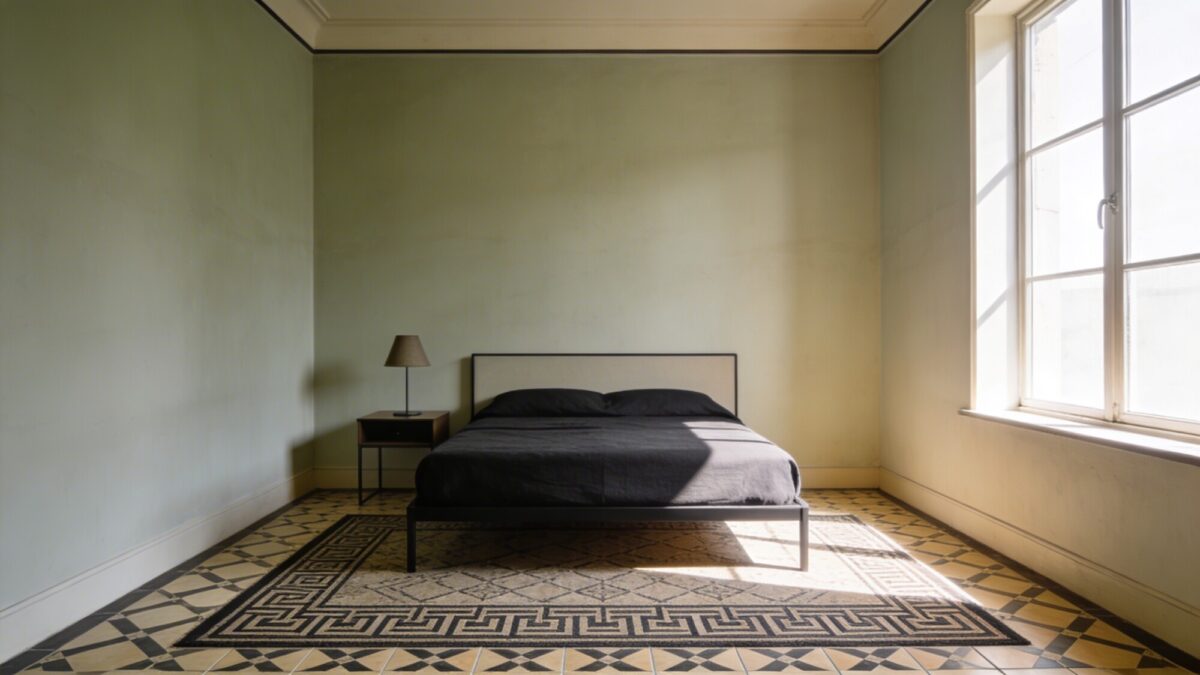
Patterned tile isn’t for every bedroom, but used in a restrained, vintage-inspired palette — think muted sage, warm cream, and charcoal — it can act as a floor-level focal point that replaces the need for a statement rug or bold wall art entirely.
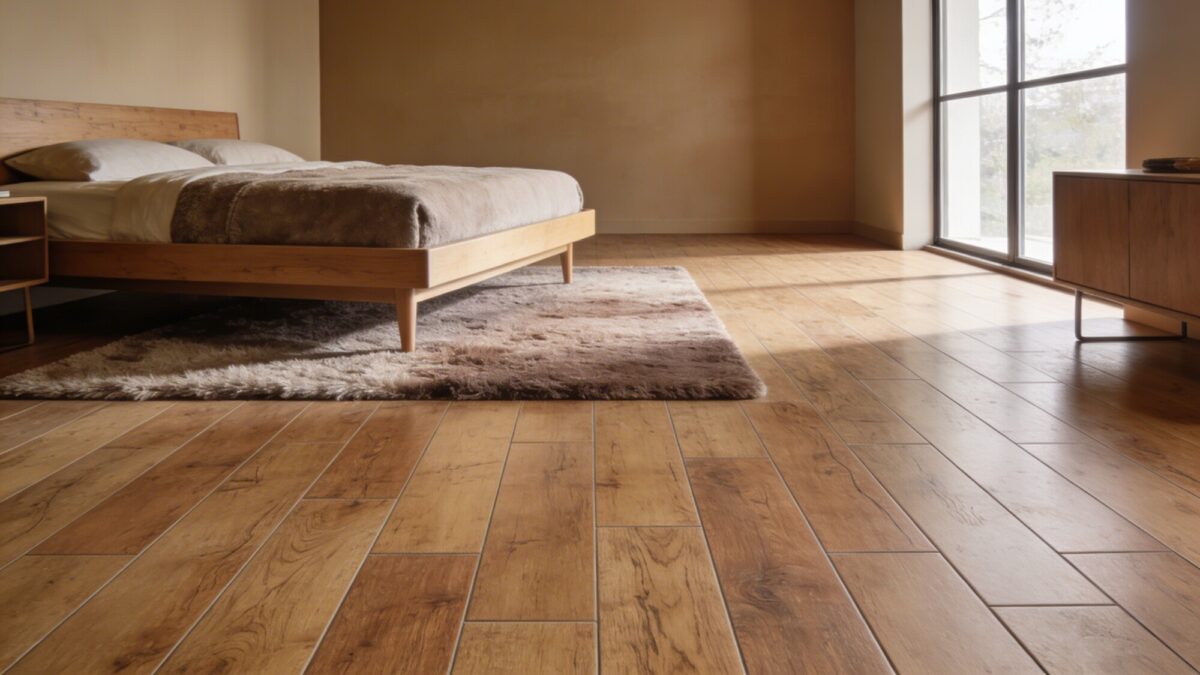
Wood-look tile solves a genuine trade-off: it gives you the warmth and grain of real hardwood with the water resistance and low maintenance of tile. The realism comes down to plank width and grain variation — wider planks with visible, varied grain patterns read far more like authentic flooring than narrow, repetitive ones.
Why It’s a Strong All-Around Option
Hardwearing and simple to clean, without the sealing or refinishing hardwood eventually needs
Delivers warmth and texture without the moisture concerns real wood carries in a bedroom
Flexible enough to fit rustic, modern, or transitional design directions
Care Notes
Choose longer plank lengths to mimic the look of genuine flooring more convincingly
Add low-profile furniture and a soft rug to keep the proportions balanced
This is one of the more forgiving options if you’re still finalizing your overall bedroom interior design direction, since it works with almost any style that follows
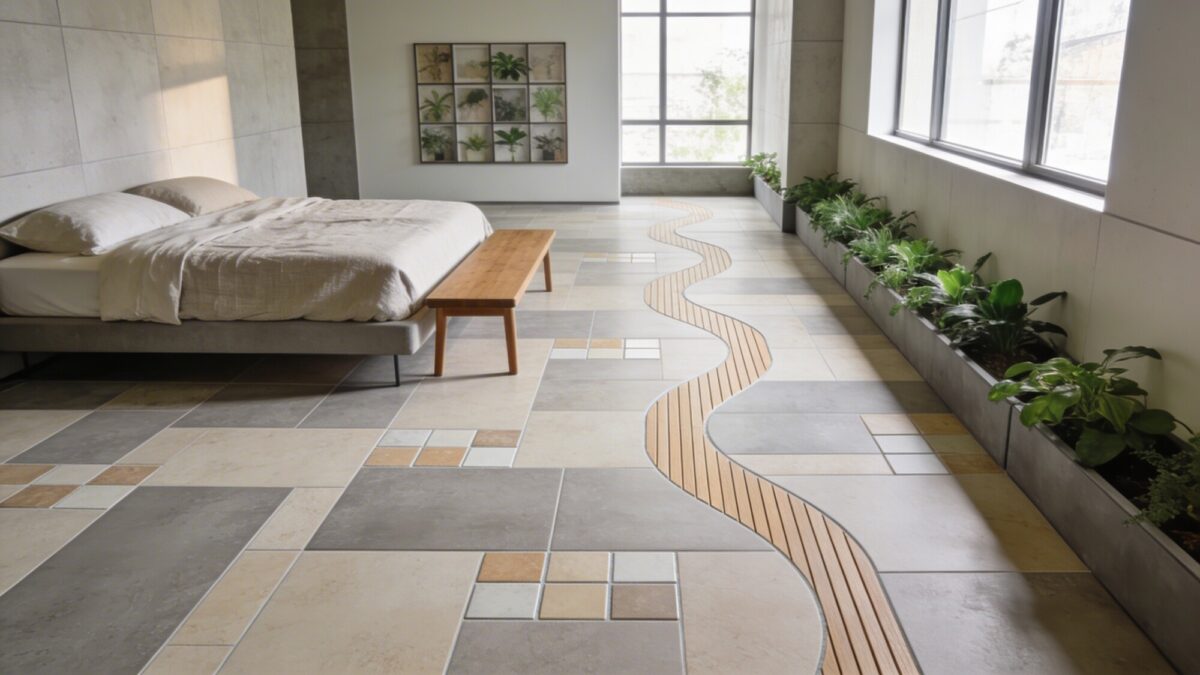
Mixing tile sizes — large rectangles, smaller squares, and slim planks — within one cohesive color family creates a floor with real rhythm. Laid in a serpentine or varied pattern, it can visually elongate or broaden a room depending on how it’s oriented, and it’s a genuinely practical way to use leftover tile stock creatively.
What to Love About This Approach
A unique floor rhythm that guides the eye through the room
A practical way to repurpose leftover tile rather than letting it go to waste
Delivers a bespoke, custom-designed feel without a fully custom budget
How to Pull It Off
Stay within one cohesive color family across all the sizes you mix
Use a single, unifying grout color so the variation reads as intentional, not mismatched
Anchor the look with a statement bench or a small grouping of plants near the transition points
Which Tile Idea Fits Your Bedroom?
Use this quick reference to match a tile direction to your actual priorities, rather than picking on looks alone.
A soothing visual temperature that recedes into the background
An urban, loft-inspired look
Textured slate or concrete-look tiles
Cool, industrial tone that balances with warm textiles
A spa-like, natural retreat
Pebble-texture or matte stone tiles
Real tactile texture underfoot
A bold but tasteful focal point
Patterned tiles
Acts as a built-in rug without extra decor
The look of wood without the upkeep
Wood-look tile
Hardwood warmth with tile-level durability
A custom, bespoke floor
Mixed-size tiles
Varied sizes create rhythm and reuse leftover stock
Things to Consider Before You Choose
Prioritize matte or satin finishes over gloss — glossy tile shows more glare and can feel colder underfoot in a bedroom specifically.
Decide whether you want the floor to recede (neutral, large-format) or stand out (pattern, mixed-size, herringbone) before comparing individual products.
Budget for a rug or two regardless of which tile you choose — even the warmest tile benefits from a soft landing spot by the bed.
If you’re mixing tile with an existing design direction, look at your overall modern bedroom ideas first so the flooring choice supports the room rather than dictating it.
Frequently Asked Questions
Is tile flooring a good choice for a bedroom?
Yes, especially with modern matte and large-format options. The main adjustment is adding rugs and layered textiles so the room doesn’t feel cold underfoot.
What’s the most space-enlarging tile option for a small bedroom?
Large-format porcelain tiles with slim grout lines tend to work best, since fewer visible joints make the floor read as one continuous surface.
Does tile flooring feel cold in a bedroom at night?
It can, particularly in colder climates, which is why a rug near the bed and warm-toned lighting are worth planning for from the start rather than adding later.
Can I mix a patterned or textured tile with simple furniture?
Yes — in fact it’s recommended. Keeping walls, bedding, and furniture solid-colored lets a patterned or textured floor act as the room’s focal point without competing for attention.
Is wood-look tile a worthwhile alternative to real hardwood?
For a bedroom, often yes. You get a similar warmth and grain appearance with better moisture resistance and lower long-term maintenance than solid wood flooring.
Our Recommendation
There’s no universally “best” tile for a bedroom — the right pick depends on how warm or bold you want the room to feel and how much of that warmth you’re willing to add back in through rugs, lighting, and textiles. Start with the comparison table above to shortlist two or three directions, then choose finish and grout color last, since those details are easiest to adjust once the bigger decision is made.
Listen to this article 10 10 0:00 / 0:00 Speed 0.75×1×1.25×1.5×2× Let’s be real—your bedroom shelves can either look like a chaotic storage dump or a Pinterest dream. There’s no in-between. The good news? With the right setup, shelves can completely transform your space while secretly doing all the heavy lifting for storage. Ready to…
Listen to this article 10 10 0:00 / 0:00 Speed 0.75×1×1.25×1.5×2× A dark ceiling might sound intimidating at first, but it can completely transform a bedroom. Instead of making the space feel small, a well-designed dark ceiling often creates a cozy, luxurious atmosphere that feels straight out of a boutique hotel. The secret lies in…
Listen to this article 10 10 0:00 / 0:00 Speed 0.75×1×1.25×1.5×2× Okay, so if you’ve spent any time on Pinterest or TikTok lately, you’ve probably seen the chav bedroom trend everywhere — and I get why. It’s bold, it’s a little glam, it’s unapologetically extra, and honestly? It’s one of the more fun aesthetics I’ve…
Listen to this article 10 10 0:00 / 0:00 Speed 0.75×1×1.25×1.5×2× I used to think “glam” meant tufted headboards, crystal everything, and a room that looked like it was auditioning for a music video. Then I actually lived with one of those bedrooms for about eight months and realized — it’s exhausting. So when I…
Listen to this article 10 10 0:00 / 0:00 Speed 0.75×1×1.25×1.5×2× Your room should feel like your favorite place on earth. If it looks bland, cluttered, or straight out of a furniture catalog, don’t worry—you don’t need a huge budget to change that. A few creative DIY projects can completely transform your space and make…
Listen to this article 10 10 0:00 / 0:00 Speed 0.75×1×1.25×1.5×2× Turning a spare room into a space guests actually enjoy sleeping in doesn’t require a full renovation. The best guest bedroom ideas cozy modern homeowners rely on tend to focus on a handful of details that punch above their weight: bedding quality, lighting layers,…