If your closet still looks like it did in 2015, it’s time for an upgrade. Modern bedroom wardrobe ideas have moved well past plain sliding doors — think hidden lighting, mirrored fronts, color-blocked panels, and storage that adapts to oddly shaped rooms. Whether you’re working with a spacious primary suite or a cramped attic nook, there’s a wardrobe style here that will make your mornings easier and your room look sharper. Below, we break down eight of the most practical and visually striking wardrobe concepts, what makes each one work, and how to decide which fits your space, budget, and daily routine. Quick Takeaways Floating and handle-less wardrobes make small bedrooms feel larger by keeping sightlines clean. Sliding panels and built-in cabinetry save floor space compared to swing-door units. Mirrored fronts do double duty — they bounce natural light and eliminate the need for a separate full-length mirror. Sloped-ceiling and attic layouts need custom shelving, not off-the-shelf units, to avoid wasted space. Multi-functional wardrobes (laundry pull-outs, fold-out desks) work best in smaller homes where every inch has to earn its keep. What’s your top priority? Tap one below. Photo by Backbone on Unsplash Making a small room feel bigger Tight floor space, no room for swing doors Displaying & curating outfits A calm, minimal aesthetic Cutting down on laundry trips Brightening a dim bedroom An attic or sloped-ceiling room A bold, personal design statement Best fit Floating Wardrobe with Hidden Lighting Removes visual clutter at floor level and adds ambient light, so the room reads more open without any structural changes. Best fit Wardrobe Wall with Sliding Panels Panels glide instead of swinging outward, so you don’t need clearance space in front of the wardrobe. Best fit Open-Concept Wardrobe for a Boutique Feel Glass fronts and open shelving keep clothing visible and organized, turning your wardrobe into part of the decor. Photo by mcpeter on Unsplash Best fit Minimalist Built-In Cabinets with Soft Closures Handle-less doors blend into the wall for a calmer, more understated look with no hardware breaking up the surface. Best fit Multi-Functional Wardrobe with Laundry Zone A built-in hamper and fold-out surface reduce extra steps by handling laundry right where you get dressed. Best fit Mirror-Packed Wardrobe for Light and Space Mirrored fronts reflect natural and artificial light, brightening the room while doubling as your outfit check. Photo by Pickawood on Unsplash Best fit Sloped-Ceiling Wardrobes for Attic Nooks Custom shelving uses the awkward angles near the eaves that off-the-shelf units waste. Best fit Color-Blocked Wardrobes for a Playful Vibe Contrasting panels make the wardrobe a feature, not a backdrop, for a bolder, more personal look. .pdh-wtool { –pdh-ink: #2b2620; –pdh-muted: #736b5e; –pdh-line: #e4ddd0; –pdh-bg: #faf7f1; –pdh-accent: #a9744f; –pdh-accent-ink: #ffffff; max-width: 780px; margin: 2em 0; padding: 1.5em; background: var(–pdh-bg); border: 1px solid var(–pdh-line); border-radius: 14px; font-family: inherit; box-sizing: border-box; } .pdh-wtool * { box-sizing: border-box; } .pdh-wtool-input { position: absolute; opacity: 0; pointer-events: none; } .pdh-wtool-prompt { margin: 0 0 0.9em; font-weight: 600; font-size: 1.05em; color: var(–pdh-ink); } .pdh-wtool-tabs { display: flex; flex-wrap: wrap; gap: 0.5em; margin-bottom: 1.2em; } .pdh-wtool-tab { display: inline-block; padding: 0.55em 0.9em; border: 1px solid var(–pdh-line); border-radius: 999px; background: #fff; color: var(–pdh-ink); font-size: 0.92em; line-height: 1.3; cursor: pointer; user-select: none; transition: background 0.15s ease, color 0.15s ease, border-color 0.15s ease; } .pdh-wtool-tab:hover { border-color: var(–pdh-accent); } /* Active tab styling — one rule per input/label pair */ #pdh-t1:checked ~ .pdh-wtool-tabs .pdh-tab-1, #pdh-t2:checked ~ .pdh-wtool-tabs .pdh-tab-2, #pdh-t3:checked ~ .pdh-wtool-tabs .pdh-tab-3, #pdh-t4:checked ~ .pdh-wtool-tabs .pdh-tab-4, #pdh-t5:checked ~ .pdh-wtool-tabs .pdh-tab-5, #pdh-t6:checked ~ .pdh-wtool-tabs .pdh-tab-6, #pdh-t7:checked ~ .pdh-wtool-tabs .pdh-tab-7, #pdh-t8:checked ~ .pdh-wtool-tabs .pdh-tab-8 { background: var(–pdh-accent); border-color: var(–pdh-accent); color: var(–pdh-accent-ink); } .pdh-wtool-panels { background: #fff; border: 1px solid var(–pdh-line); border-radius: 10px; padding: 1.3em 1.4em; min-height: 1px; } .pdh-wtool-panel { display: none; } .pdh-wtool-panel h4 { margin: 0.2em 0 0.4em; font-size: 1.15em; color: var(–pdh-ink); } .pdh-wtool-panel p { margin: 0 0 0.8em; color: var(–pdh-muted); line-height: 1.55; } .pdh-wtool-badge { display: inline-block; font-size: 0.72em; font-weight: 700; letter-spacing: 0.04em; text-transform: uppercase; color: var(–pdh-accent); background: rgba(169,116,79,0.12); padding: 0.25em 0.6em; border-radius: 999px; margin-bottom: 0.5em; } .pdh-wtool-link { display: inline-block; font-weight: 600; color: var(–pdh-accent); text-decoration: none; border-bottom: 1px solid transparent; } .pdh-wtool-link:hover { border-bottom-color: var(–pdh-accent); } /* Panel visibility driven by whichever radio is checked */ #pdh-t1:checked ~ .pdh-wtool-panels .pdh-panel-1, #pdh-t2:checked ~ .pdh-wtool-panels .pdh-panel-2, #pdh-t3:checked ~ .pdh-wtool-panels .pdh-panel-3, #pdh-t4:checked ~ .pdh-wtool-panels .pdh-panel-4, #pdh-t5:checked ~ .pdh-wtool-panels .pdh-panel-5, #pdh-t6:checked ~ .pdh-wtool-panels .pdh-panel-6, #pdh-t7:checked ~ .pdh-wtool-panels .pdh-panel-7, #pdh-t8:checked ~ .pdh-wtool-panels .pdh-panel-8 { display: block; } @media (max-width: 480px) { .pdh-wtool { padding: 1.1em; } .pdh-wtool-tab { font-size: 0.85em; padding: 0.5em 0.75em; } } 1. Floating Wardrobes with Hidden Lighting Floating wardrobes are wall-mounted units that appear to hover above the floor, usually finished in a matte or gloss neutral tone. Because there’s no visible base or plinth, the eye reads more open floor space, which is one of the simplest ways to make a small or mid-size bedroom feel bigger without any structural changes. Photo by mcpeter on Unsplash The real upgrade is the lighting. A soft LED strip installed along the underside of the cabinet casts a gentle glow across the floor, which is both a practical feature — it’s easier to see what you’re grabbing in low light — and a design statement. Why It Works Clean, unbroken lines make a room feel larger, and the underglow adds a bit of drama without requiring overhead fixtures. If you’re planning a broader wardrobe interior layout, this is a good starting point since it pairs well with almost any interior configuration. Tips for Getting It Right Install LED strips beneath the bottom edge for a subtle halo effect, not a harsh glow. Match the finish (matte vs. gloss) to your room’s existing palette rather than the current trend. Stick to push-to-open or minimal hardware so the floating illusion isn’t broken by bulky handles. 2. Wardrobe Wall with Sliding Panels A wardrobe wall turns an entire side of the bedroom into built-in storage, hidden behind full-height sliding panels. Unlike a traditional closet with hinged doors, sliding panels don’t need clearance space to swing open, which makes this option especially useful in bedrooms where furniture is already tight against the walls. Photo by Mahrous Houses on Unsplash What to Consider Not all sliding systems are equal. Look for soft-close, quiet-running tracks so you’re not dealing with a rattling door every time you get dressed. Panel material also affects the feel of the room — high-gloss MDF reads more contemporary, while wood veneer softens the space. Key Elements Soft-close hardware to prevent slamming and wear over time Full-height panels that conceal contents completely when closed Optional interior lighting inside the recess for a lit reveal when panels are open 3. Open-Concept Wardrobe for a Boutique Feel If closed cabinetry feels too impersonal, an open-concept wardrobe with glass-front doors or open shelving turns your clothing into part of the room’s decor. This layout works especially well for anyone who already organizes by color or category, since everything stays visible. Practical Setup Group items by type first (tops, bottoms, dresses), then by color for a showroom look Use woven or fabric baskets for smaller accessories so open shelves don’t look cluttered Protect delicate fabrics with garment sleeves or dust covers if shelves are exposed to sunlight This approach pairs naturally with a mirrored cupboard design, since the reflective surfaces help balance out the visual weight of open shelving. 4. Minimalist Built-In Cabinets with Soft Closures For a calmer, more understated bedroom, handle-less cabinetry with soft-close doors blends directly into the wall. There’s no visible hardware breaking up the surface, and the doors close with a quiet, controlled motion rather than a slam. Materials and Finishes Laminate in neutral tones (beige, taupe, greige) for a durable, low-maintenance surface Solid wood accents on a nearby console or vanity to warm up an otherwise flat palette Matte finishes, which show far fewer fingerprints than gloss over time This style is a strong fit if you’re working through a full small bedroom wardrobe layout, since handle-less cabinetry keeps the room from feeling visually crowded. 5. Multi-Functional Wardrobe with Laundry Zone Combining your wardrobe with a laundry zone sounds like a small change, but it removes an entire category of daily friction. A pull-out hamper built into the cabinetry means dirty clothes have a home instead of piling on a chair, and a small fold-out surface gives you a spot to lay out an outfit before you commit to it. How to Put This Into Action Position the pull-out hamper near an existing laundry chute or the door closest to your laundry area to cut down on extra trips. Add a slim, fold-away surface for last-minute outfit changes or folding fresh laundry. Include adjustable shelving so tall items (dresses, coats) and small accessories both have a proper spot. 6. Mirror-Packed Wardrobe for Light and Space Mirrors are one of the cheapest, most effective ways to make a bedroom feel bigger and brighter. Full-length mirrored wardrobe doors bounce natural light across the room and double as your outfit check, so you skip the need for a separate standing mirror entirely. Mirror Placement Tips Position a tall mirror to reflect a window, not the messiest corner of the room Add a smaller interior accent mirror inside the wardrobe for quick checks while getting dressed Use warm-toned bulbs nearby for more flattering light than cool white LEDs For more layout options built specifically around this idea, see this guide to bedroom cupboard designs with mirrors. 7. Sloped-Ceiling Wardrobes for Attic Nooks Attic bedrooms and rooms with sloped ceilings are notoriously hard to furnish, but they’re also some of the best candidates for custom storage. Standard flat-pack wardrobes waste the awkward triangular space near the eaves — a custom-built unit with angled shelving doesn’t. Smart Adaptations Use shorter hanging rods near the slope, with full-height rods where the ceiling allows Add open bins or baskets at lower, harder-to-reach levels for easy access without bending Run LED strip lighting along the inner corners, since these spaces tend to be dim 8. Color-Blocked Wardrobes for a Playful Vibe Not every wardrobe needs to disappear into the wall. Color-blocked panels — two or three complementary tones arranged vertically — turn the wardrobe into a focal point instead of a background feature, and vertical blocking can visually stretch a low-ceilinged room. How to Approach Color Stick to two or three complementary colors to avoid a busy look Keep interior components (shelves, drawers) neutral so the inside doesn’t compete with the outside Test swatches against your existing bedding and flooring before committing to a full panel run Which Wardrobe Style Fits Your Room? Use this quick reference to match a wardrobe idea to your actual constraints — room size, ceiling shape, and daily habits — rather than picking on looks alone. If your priority is…Best-fit ideaWhyMaking a small room feel biggerFloating wardrobe with hidden lightingRemoves visual clutter at floor level and adds ambient lightTight floor space, no room for swing doorsWardrobe wall with sliding panelsPanels glide instead of swinging outwardDisplaying and curating outfitsOpen-concept boutique wardrobeGlass fronts and open shelving keep clothing visible and organizedA calm, minimal aestheticMinimalist built-in cabinetsHandle-less doors blend into the wallCutting down on laundry tripsMulti-functional wardrobe with laundry zoneBuilt-in hamper and folding space reduce extra stepsBrightening a dim bedroomMirror-packed wardrobeMirrored fronts reflect natural and artificial lightAn attic or sloped-ceiling roomSloped-ceiling wardrobeCustom shelving uses awkward angles that off-the-shelf units wasteA bold, personal design statementColor-blocked wardrobeContrasting panels make the wardrobe a feature, not a backdrop Things to Consider Before You Choose Measure your ceiling height and any slopes before ordering custom shelving — this affects hanging rod placement more than most people expect. Decide whether you want the wardrobe to disappear (handle-less, neutral tones) or stand out (color-blocking, glass fronts) before picking finishes. If you’re combining functions, like a laundry zone or fold-out desk, plan the plumbing or electrical needs early rather than as an afterthought. Check door clearance in your specific room — sliding and floating styles are usually the safer choice in tighter layouts. For more space-specific layouts, see this guide on small bedroom ideas with wardrobe storage. Frequently Asked Questions What is the most space-saving modern bedroom wardrobe idea? Sliding-panel wardrobe walls and floating wardrobes are generally the most space-efficient, since neither requires clearance for doors to swing open. Are mirrored wardrobe doors a good idea for small bedrooms? Yes. Mirrored fronts reflect natural light and make a room feel larger, and they remove the need for a separate standing mirror. Can I add custom wardrobes to a room with a sloped ceiling? Yes, though it typically requires custom-built shelving rather than a flat-pack unit, since standard wardrobes don’t account for angled walls. Do handle-less cabinets cost more than standard wardrobe doors? Pricing varies by material and installer, so it’s worth getting a few quotes rather than assuming one style is automatically more expensive. How do I keep an open-concept wardrobe from looking messy? Organize by category and color, use baskets for small items, and limit what’s on open display to pieces you actually wear regularly. Our Recommendation There’s no single best modern bedroom wardrobe idea — the right one depends on your room’s shape, how much floor space you can spare, and how much of your routine you want the wardrobe to handle. Start with the comparison table above to narrow down two or three options, then think about finishes and lighting last. If you want a deeper walkthrough of layout planning before you commit, this guide on choosing a modern sliding door wardrobe design is a good next step.
If your closet still looks like it did in 2015, it’s time for an upgrade. Modern bedroom wardrobe ideas have moved well past plain sliding doors — think hidden lighting, mirrored fronts, color-blocked panels, and storage that adapts to oddly shaped rooms. Whether you’re working with a spacious primary suite or a cramped attic nook, there’s a wardrobe style here that will make your mornings easier and your room look sharper.
Below, we break down eight of the most practical and visually striking wardrobe concepts, what makes each one work, and how to decide which fits your space, budget, and daily routine.
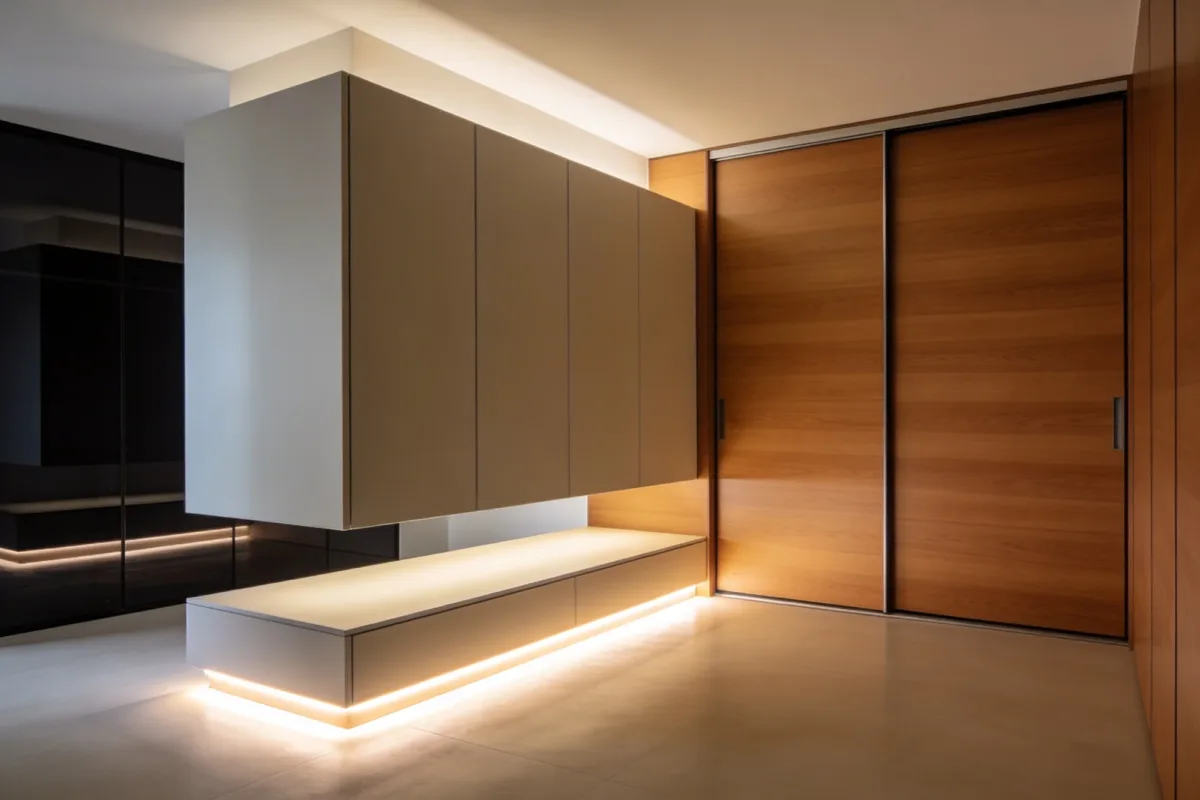
Floating wardrobes are wall-mounted units that appear to hover above the floor, usually finished in a matte or gloss neutral tone. Because there’s no visible base or plinth, the eye reads more open floor space, which is one of the simplest ways to make a small or mid-size bedroom feel bigger without any structural changes.
The real upgrade is the lighting. A soft LED strip installed along the underside of the cabinet casts a gentle glow across the floor, which is both a practical feature — it’s easier to see what you’re grabbing in low light — and a design statement.
Clean, unbroken lines make a room feel larger, and the underglow adds a bit of drama without requiring overhead fixtures. If you’re planning a broader wardrobe interior layout, this is a good starting point since it pairs well with almost any interior configuration.
Tips for Getting It Right
Install LED strips beneath the bottom edge for a subtle halo effect, not a harsh glow.
Match the finish (matte vs. gloss) to your room’s existing palette rather than the current trend.
Stick to push-to-open or minimal hardware so the floating illusion isn’t broken by bulky handles.
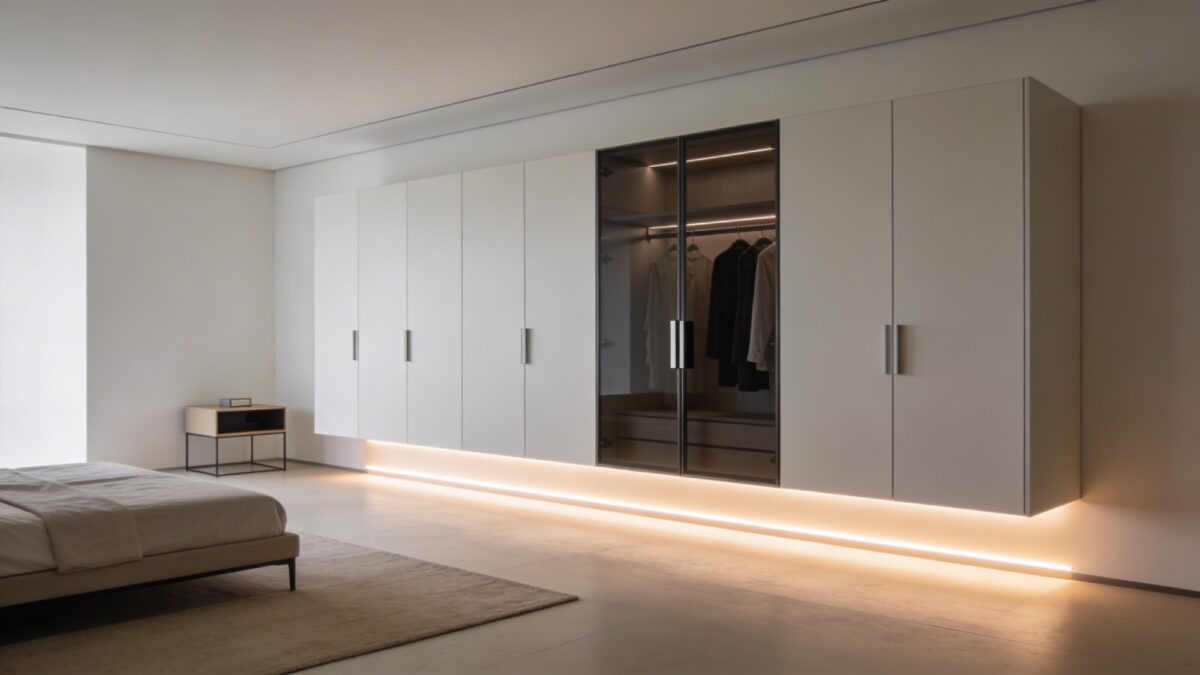
A wardrobe wall turns an entire side of the bedroom into built-in storage, hidden behind full-height sliding panels. Unlike a traditional closet with hinged doors, sliding panels don’t need clearance space to swing open, which makes this option especially useful in bedrooms where furniture is already tight against the walls.
Not all sliding systems are equal. Look for soft-close, quiet-running tracks so you’re not dealing with a rattling door every time you get dressed. Panel material also affects the feel of the room — high-gloss MDF reads more contemporary, while wood veneer softens the space.
Key Elements
Soft-close hardware to prevent slamming and wear over time
Full-height panels that conceal contents completely when closed
Optional interior lighting inside the recess for a lit reveal when panels are open
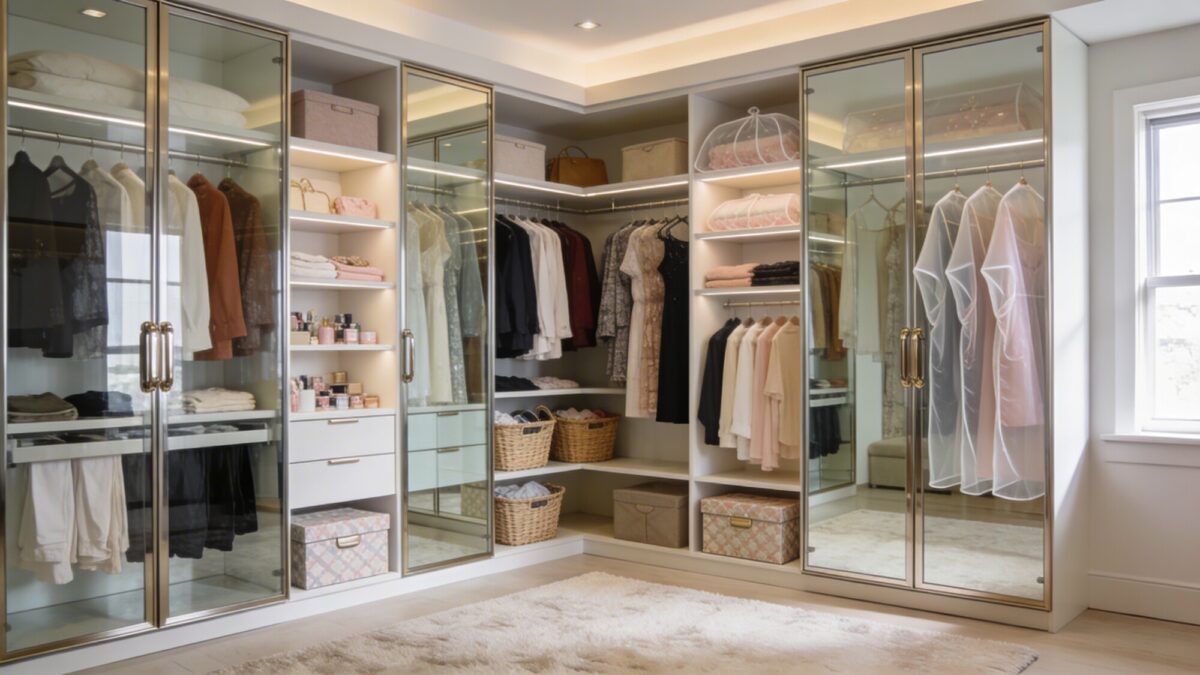
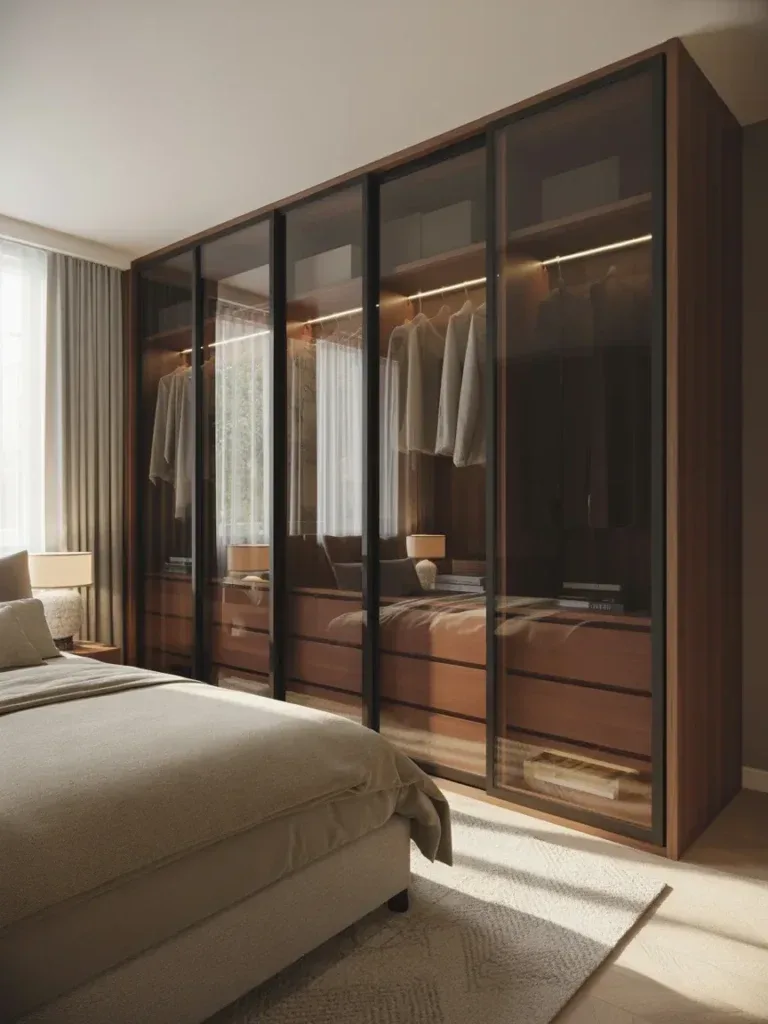
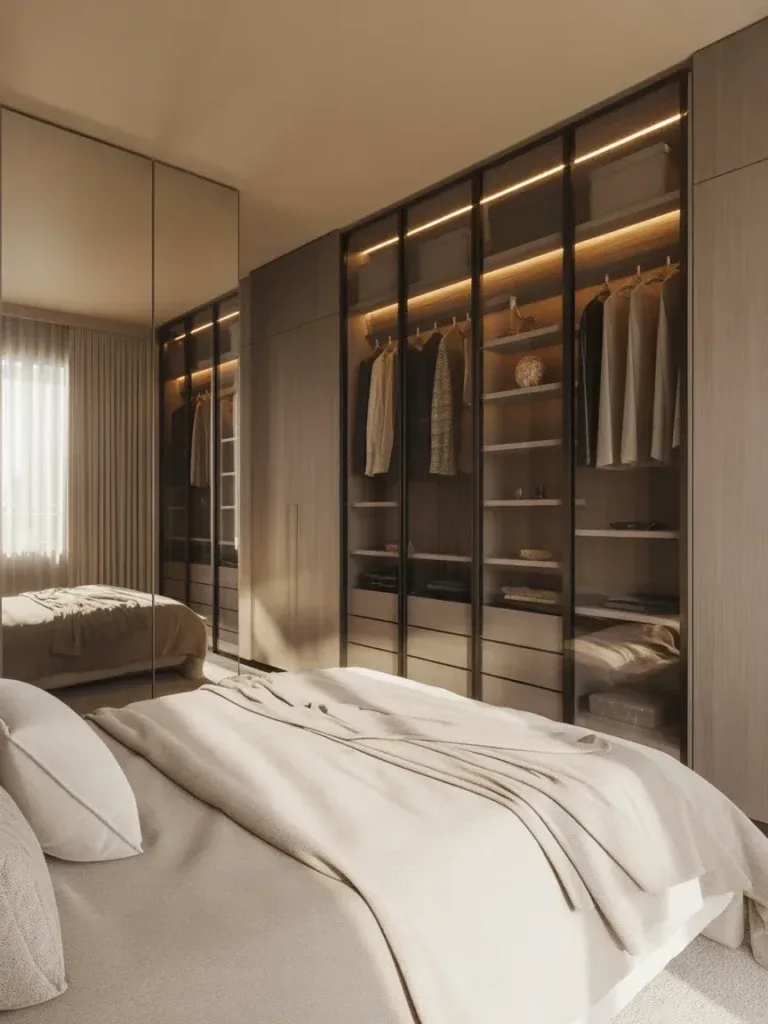
If closed cabinetry feels too impersonal, an open-concept wardrobe with glass-front doors or open shelving turns your clothing into part of the room’s decor. This layout works especially well for anyone who already organizes by color or category, since everything stays visible.
Practical Setup
Group items by type first (tops, bottoms, dresses), then by color for a showroom look
Use woven or fabric baskets for smaller accessories so open shelves don’t look cluttered
Protect delicate fabrics with garment sleeves or dust covers if shelves are exposed to sunlight
This approach pairs naturally with a mirrored cupboard design, since the reflective surfaces help balance out the visual weight of open shelving.
4. Minimalist Built-In Cabinets with Soft Closures
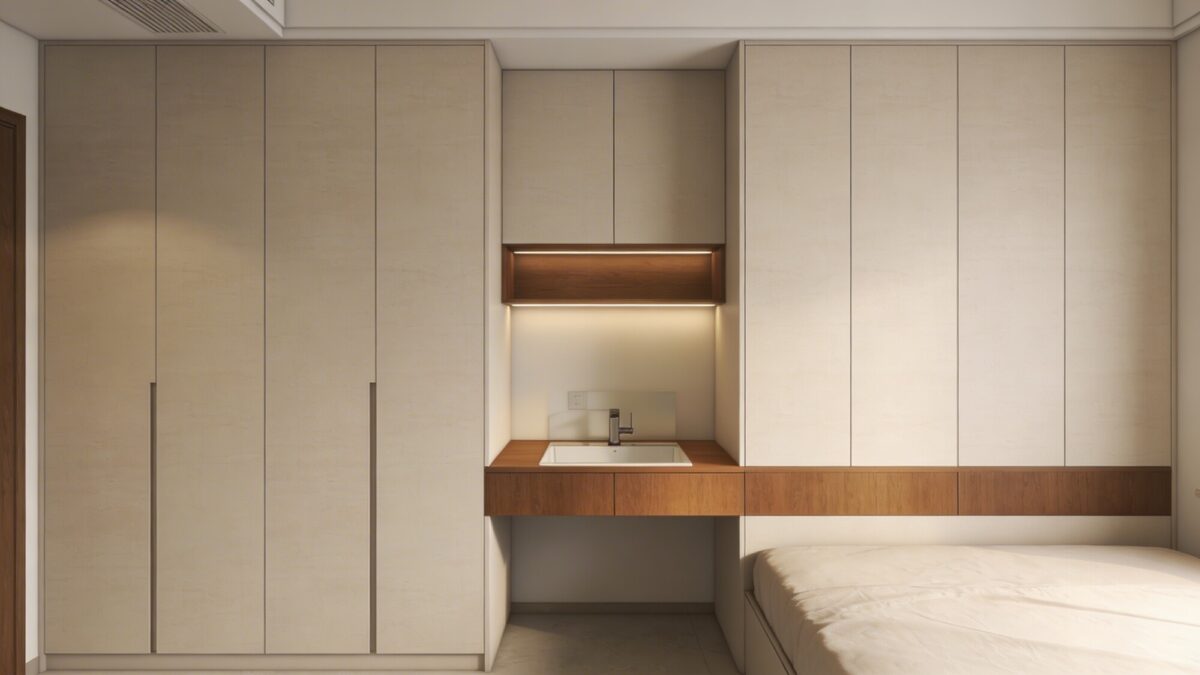
For a calmer, more understated bedroom, handle-less cabinetry with soft-close doors blends directly into the wall. There’s no visible hardware breaking up the surface, and the doors close with a quiet, controlled motion rather than a slam.
Materials and Finishes
Laminate in neutral tones (beige, taupe, greige) for a durable, low-maintenance surface
Solid wood accents on a nearby console or vanity to warm up an otherwise flat palette
Matte finishes, which show far fewer fingerprints than gloss over time
This style is a strong fit if you’re working through a full small bedroom wardrobe layout, since handle-less cabinetry keeps the room from feeling visually crowded.
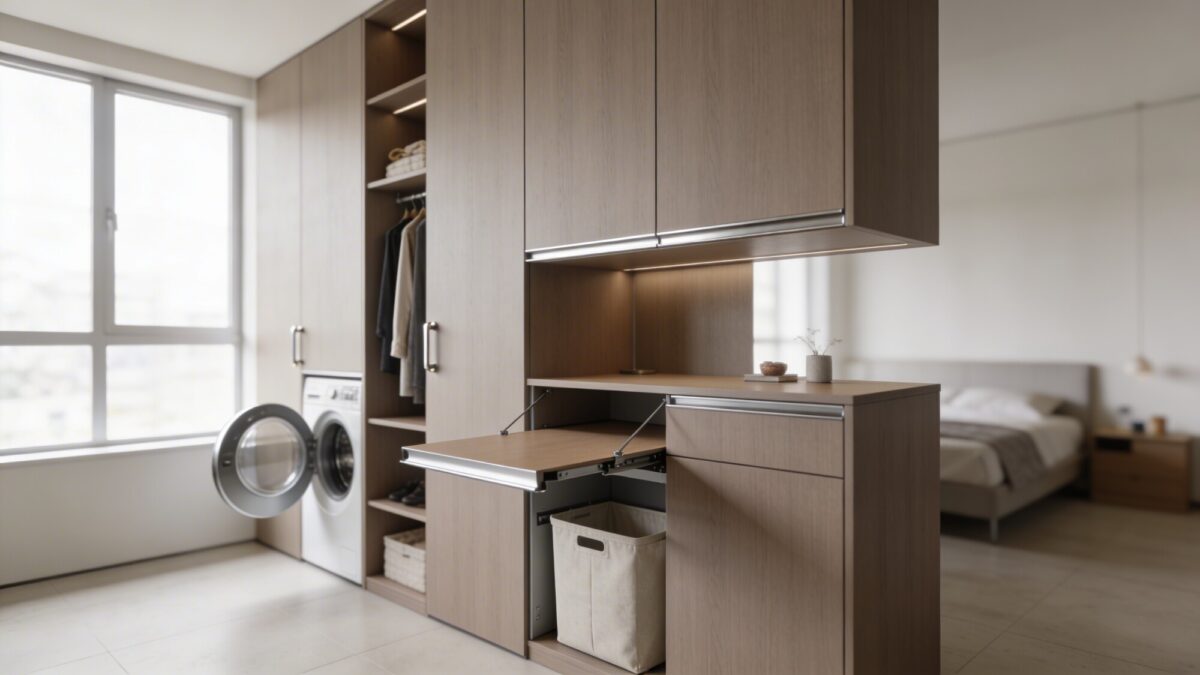
Combining your wardrobe with a laundry zone sounds like a small change, but it removes an entire category of daily friction. A pull-out hamper built into the cabinetry means dirty clothes have a home instead of piling on a chair, and a small fold-out surface gives you a spot to lay out an outfit before you commit to it.
How to Put This Into Action
Position the pull-out hamper near an existing laundry chute or the door closest to your laundry area to cut down on extra trips.
Add a slim, fold-away surface for last-minute outfit changes or folding fresh laundry.
Include adjustable shelving so tall items (dresses, coats) and small accessories both have a proper spot.
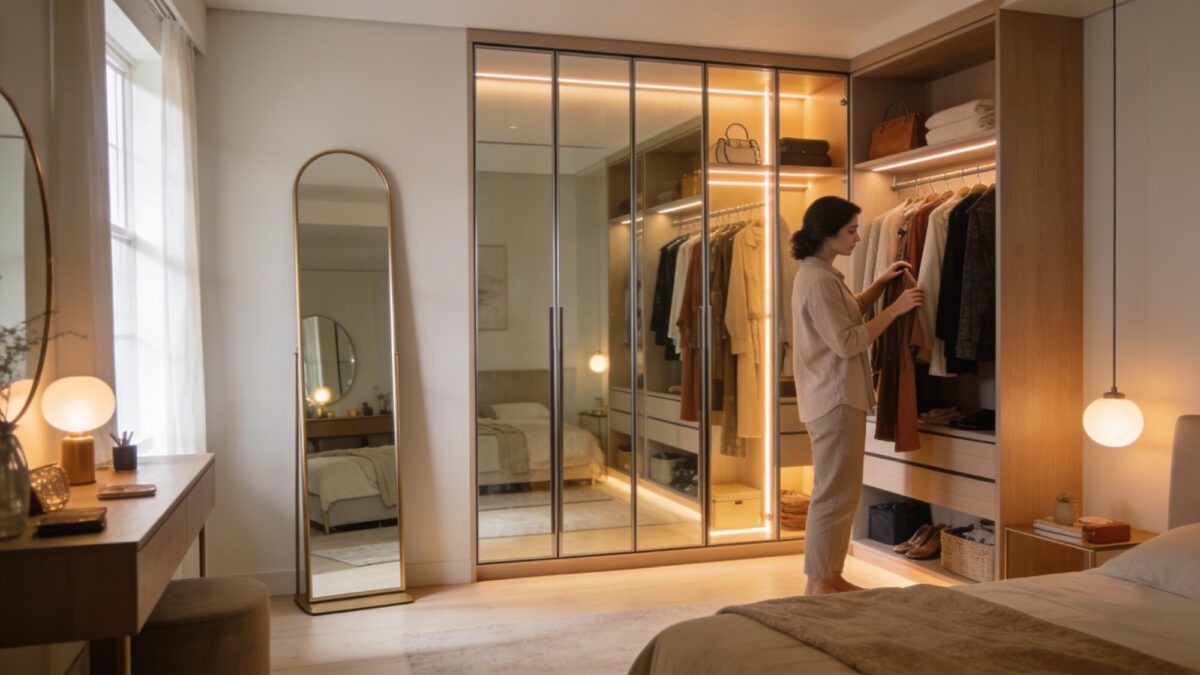
Mirrors are one of the cheapest, most effective ways to make a bedroom feel bigger and brighter. Full-length mirrored wardrobe doors bounce natural light across the room and double as your outfit check, so you skip the need for a separate standing mirror entirely.
Mirror Placement Tips
Position a tall mirror to reflect a window, not the messiest corner of the room
Add a smaller interior accent mirror inside the wardrobe for quick checks while getting dressed
Use warm-toned bulbs nearby for more flattering light than cool white LEDs
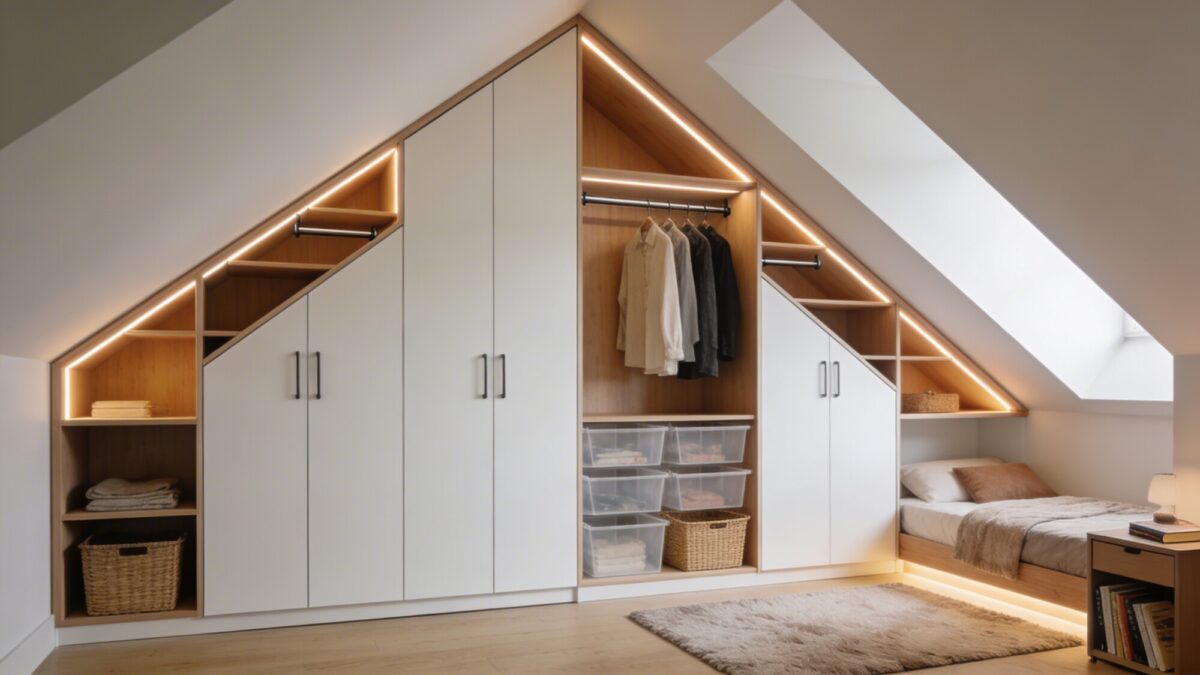
Attic bedrooms and rooms with sloped ceilings are notoriously hard to furnish, but they’re also some of the best candidates for custom storage. Standard flat-pack wardrobes waste the awkward triangular space near the eaves — a custom-built unit with angled shelving doesn’t.
Smart Adaptations
Use shorter hanging rods near the slope, with full-height rods where the ceiling allows
Add open bins or baskets at lower, harder-to-reach levels for easy access without bending
Run LED strip lighting along the inner corners, since these spaces tend to be dim
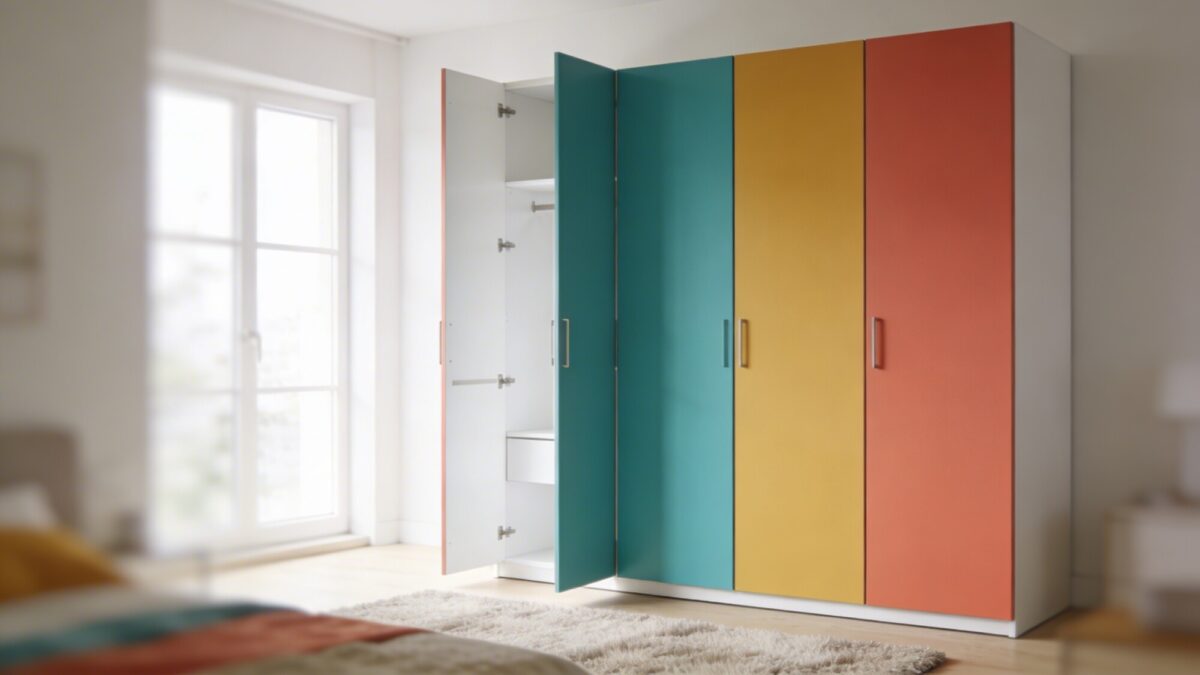
Not every wardrobe needs to disappear into the wall. Color-blocked panels — two or three complementary tones arranged vertically — turn the wardrobe into a focal point instead of a background feature, and vertical blocking can visually stretch a low-ceilinged room.
How to Approach Color
Stick to two or three complementary colors to avoid a busy look
Keep interior components (shelves, drawers) neutral so the inside doesn’t compete with the outside
Test swatches against your existing bedding and flooring before committing to a full panel run
Which Wardrobe Style Fits Your Room?
Use this quick reference to match a wardrobe idea to your actual constraints — room size, ceiling shape, and daily habits — rather than picking on looks alone.
If your priority is…
Best-fit idea
Why
Making a small room feel bigger
Floating wardrobe with hidden lighting
Removes visual clutter at floor level and adds ambient light
Tight floor space, no room for swing doors
Wardrobe wall with sliding panels
Panels glide instead of swinging outward
Displaying and curating outfits
Open-concept boutique wardrobe
Glass fronts and open shelving keep clothing visible and organized
A calm, minimal aesthetic
Minimalist built-in cabinets
Handle-less doors blend into the wall
Cutting down on laundry trips
Multi-functional wardrobe with laundry zone
Built-in hamper and folding space reduce extra steps
Brightening a dim bedroom
Mirror-packed wardrobe
Mirrored fronts reflect natural and artificial light
An attic or sloped-ceiling room
Sloped-ceiling wardrobe
Custom shelving uses awkward angles that off-the-shelf units waste
A bold, personal design statement
Color-blocked wardrobe
Contrasting panels make the wardrobe a feature, not a backdrop
Things to Consider Before You Choose
Measure your ceiling height and any slopes before ordering custom shelving — this affects hanging rod placement more than most people expect.
Decide whether you want the wardrobe to disappear (handle-less, neutral tones) or stand out (color-blocking, glass fronts) before picking finishes.
If you’re combining functions, like a laundry zone or fold-out desk, plan the plumbing or electrical needs early rather than as an afterthought.
Check door clearance in your specific room — sliding and floating styles are usually the safer choice in tighter layouts. For more space-specific layouts, see this guide on small bedroom ideas with wardrobe storage.
Frequently Asked Questions
What is the most space-saving modern bedroom wardrobe idea?
Sliding-panel wardrobe walls and floating wardrobes are generally the most space-efficient, since neither requires clearance for doors to swing open.
Are mirrored wardrobe doors a good idea for small bedrooms?
Yes. Mirrored fronts reflect natural light and make a room feel larger, and they remove the need for a separate standing mirror.
Can I add custom wardrobes to a room with a sloped ceiling?
Yes, though it typically requires custom-built shelving rather than a flat-pack unit, since standard wardrobes don’t account for angled walls.
Do handle-less cabinets cost more than standard wardrobe doors?
Pricing varies by material and installer, so it’s worth getting a few quotes rather than assuming one style is automatically more expensive.
How do I keep an open-concept wardrobe from looking messy?
Organize by category and color, use baskets for small items, and limit what’s on open display to pieces you actually wear regularly.
Our Recommendation
There’s no single best modern bedroom wardrobe idea — the right one depends on your room’s shape, how much floor space you can spare, and how much of your routine you want the wardrobe to handle. Start with the comparison table above to narrow down two or three options, then think about finishes and lighting last. If you want a deeper walkthrough of layout planning before you commit, this guide on choosing a modern sliding door wardrobe design is a good next step.
Listen to this article 10 10 0:00 / 0:00 Speed 0.75×1×1.25×1.5×2× A sliding wardrobe can completely change the vibe of your bedroom. One minute your room looks cramped and chaotic, and the next it feels like a boutique hotel suite. The trick? Picking a design that looks expensive without turning your space into a furniture…
Listen to this article 10 10 0:00 / 0:00 Speed 0.75×1×1.25×1.5×2× I used to think luxury wardrobe design was just about square footage — like you needed a spare bedroom’s worth of space before you could even think about it. Then I helped a friend redo her 6-by-8-foot closet and it ended up looking better…
Listen to this article 10 10 0:00 / 0:00 Speed 0.75×1×1.25×1.5×2× You’re about to see seven knockout ideas where mirrors meet clever storage. These designs amp up light, style, and organization without turning your room into a showroom. Ready to upgrade your wardrobe game? 1. Mirror-Fused Sliding Wardrobe With Hidden Tech Sliding doors save space…
Listen to this article 10 10 0:00 / 0:00 Speed 0.75×1×1.25×1.5×2× Ever walk into a room and instantly feel your shoulders drop? That’s the magic of sage green done right. It’s soft, grounding, and somehow makes your space feel like a deep breath. If your bedroom feels a little chaotic or just…meh, sage green might…
Listen to this article 10 10 0:00 / 0:00 Speed 0.75×1×1.25×1.5×2× A wardrobe can either make your bedroom feel calm and organized… or like a chaotic clothing tornado. There’s rarely an in-between. The good news? You don’t need a celebrity-sized closet to create a space that looks polished and actually works for daily life. The…