Good bedroom ideas modern homeowners actually use tend to share one thing in common: they focus on a few high-impact changes instead of a full renovation. The eight ideas below cover texture, lighting, storage, color, and flooring — the building blocks of any modern bedroom design guide — so you can pick what fits your space and skip the rest. Quick Takeaways Texture and layered lighting do the most to make a room feel intentional, not staged. A statement bed frame or headboard sets the tone for everything else in the room. Storage that doubles as decor keeps a bedroom functional without looking utilitarian. A cohesive color story lets you refresh the room seasonally without redoing it entirely. Flooring affects comfort and acoustics as much as it affects looks. 1. Layer Textures Like a Pro Texture is one of the fastest ways to make a room feel expensive without an expensive budget. A plush area rug underfoot, a sleek leather accent chair, and a few brass or brushed-nickel details create depth that a single-material room can’t match. Contrast matters as much as variety. Pair matte walls with glossy dresser hardware, then finish with something tactile — a velvet throw or a couple of jewel-toned cushions — for instant coziness. The goal isn’t to fill the room with texture; it’s to choose two or three standout pieces that feel deliberate. Photo by Joseph Greve on Unsplash 2. Revamp the Bed Frame as the Focal Point The bed is the largest object in the room, so it makes sense for it to set the tone. A headboard with a strong silhouette — arched, tufted, or geometric — gives the eye somewhere to land the moment you walk in. A dark wood or charcoal-painted finish adds drama without requiring a full color overhaul elsewhere. Coordinate nightstands and lighting around the bed so the whole setup reads as one styled moment instead of separate pieces placed near each other. How to style it Pick a headboard shape that contrasts with the rest of the room’s straight lines, if you have them. Go darker or bolder with the frame finish than you think you need to. Match nightstand and lighting styles so the bed area feels cohesive. 3. Smart Lighting That Sets the Mood A modern bedroom with unique lighting relies on layering, not a single bright overhead fixture. Ambient light — a dimmable ceiling fixture or a chandelier — sets the base, while wall sconces or bedside lamps handle reading without adding clutter to the nightstand. Photo by Joonas Sild on Unsplash A warm-toned LED strip behind the headboard adds a soft glow that makes even a small room feel larger and calmer at night. Layering these three light types (ambient, task, accent) means you can adjust the mood throughout the day instead of being stuck with one setting. 4. Storage That Doubles as Decor Clutter is the fastest way to undercut an otherwise well-designed bedroom. Floating shelves above a dresser can hold curated objects and framed photos while still keeping the surface below clear. An ottoman with storage at the foot of the bed gives you a seat and a hiding spot for extra blankets in one piece. Under-bed drawers or a slim, wall-hugging dresser handle the rest without needing a bulky closet system. If you want a deeper dive into this category, our guide to modern bedroom wardrobe ideas covers closet and wardrobe-specific storage in more detail. Photo by Tom PREJEANT on Unsplash 5. Create a Tiny Workspace Nook Working from bed is convenient until it isn’t — a dedicated, compact desk nook gives you somewhere to focus without dragging your laptop under the covers. A small desk with clean lines and a foldable or tuck-away chair is usually enough; it doesn’t need to be a full home office. A corkboard or pegboard above the desk keeps notes and small supplies organized without taking up floor space. Separating “work” from “sleep” physically, even in a small way, helps your brain switch modes faster at night. 6. Color Stories That Feel Modern, Not Monochrome Color is one of the more overlooked parts of modern bedroom decor inspiration, but it’s also one of the easiest to get wrong by going too flat. Start with a soft neutral base — warm gray or sand — then ground the room with a secondary tone like charcoal or navy in larger pieces such as a bench or built-ins. Photo by Mishaal Zahed (Meschael Zahède) on Unsplash Bold accents (mustard, emerald, or terracotta) are best used sparingly, in cushions or a single piece of art, so they read as intentional rather than overwhelming. A well-chosen palette like this lets you swap textiles seasonally without repainting or replacing furniture. Quick palette guide Base: soft neutrals like warm gray or sand Secondary: charcoal or navy for grounding Accent: mustard, emerald, or terracotta for personality 7. Personalize with Art and Greenery A room can be beautifully designed and still feel generic if it doesn’t say anything about the person living in it. One large statement piece of art above the bed anchors the space, while a gallery wall of mixed photos, abstracts, and typography adds personality on a smaller scale. Low-maintenance plants — snake plants and pothos are reliable choices — add life and a bit of visual softness against harder furniture lines. They’re also a low-effort way to keep the room feeling lived-in rather than staged. Photo by Zain Lee on Unsplash 8. Flooring Choices That Make You Smile Flooring is easy to overlook, but it ties every other design choice in the room together. A medium-density carpet in a soft, warm shade adds comfort and helps absorb sound, which matters more in a bedroom than almost any other room in the house. Warm wood tones — in a low-profile bed frame, nightstands, or a discreet dresser — pair naturally with carpet and add visual warmth. If you have a seating nook, a durable vinyl or laminate finish holds up better in that high-traffic spot than carpet would. Idea Comparison at a Glance IdeaBest ForEffort LevelStarting PointLayered TexturesInstant warmth on any budgetLowRug, throw, or accent chairStatement Bed FrameRooms that need a clear focal pointMedium-HighNew headboardSmart LightingMood flexibility day to nightLow-MediumDimmer switch or smart bulbsDecorative StorageSmall or cluttered bedroomsMediumStorage ottoman or floating shelvesWorkspace NookRemote work or hobby spaceMediumCompact desk and chairColor StoryCohesive, seasonally refreshable roomsLow-MediumNeutral base plus one accent colorArt and GreeneryPersonalizing a generic spaceLowOne statement art pieceFlooring UpdateComfort and acousticsHighCarpet or wood in the main sleeping area Things to Consider Before You Start Budget priority — lighting, textures, and art are the lowest-cost changes; flooring and bed frames cost the most. Room size — a workspace nook and floating storage matter more in smaller bedrooms. Existing furniture — a new color story can often be layered onto pieces you already own. Noise sensitivity — prioritize flooring changes if sound absorption is a concern. FAQ What’s the easiest modern bedroom idea to start with? Layered textures and smart lighting are usually the quickest wins, since both can be added without replacing furniture or repainting. How do I choose a modern bed frame that won’t feel dated? Focus on a clear silhouette — arched, tufted, or geometric — in a finish like dark wood or a solid painted color, rather than following a specific trend that may pass quickly. Can I combine a workspace nook with a small bedroom? Yes. A compact desk with a fold-away or slim chair, paired with wall-mounted storage instead of floor storage, works even in tight layouts. What flooring works best for sound and comfort in a bedroom? Medium-density carpet in the main sleeping area tends to help most with comfort and acoustics, with harder flooring reserved for smaller, high-traffic zones like a seating nook. How many accent colors should I use in a modern color story? Generally one or two. A neutral base, a grounding secondary tone, and a single accent color used sparingly tends to look more intentional than several competing accents. Our Verdict These eight ideas work best as a menu, not a checklist — pick one or two that address your room’s biggest gap, whether that’s flat lighting, a lack of storage, or a bed frame that isn’t pulling its weight. For more direction on specific elements, our guides to modern bedroom headboard ideas and modern bedroom TV wall ideas go deeper into two of the focal points covered above. If you’re earlier in the planning process, our roundup of modern minimalist bedroom ideas pairs well with the storage and color sections here, and our minimalist modern bedroom retreat guide offers a calmer counterpoint if the luxe direction feels like too much at once.
Good bedroom ideas modern homeowners actually use tend to share one thing in common: they focus on a few high-impact changes instead of a full renovation. The eight ideas below cover texture, lighting, storage, color, and flooring — the building blocks of any modern bedroom design guide — so you can pick what fits your space and skip the rest.
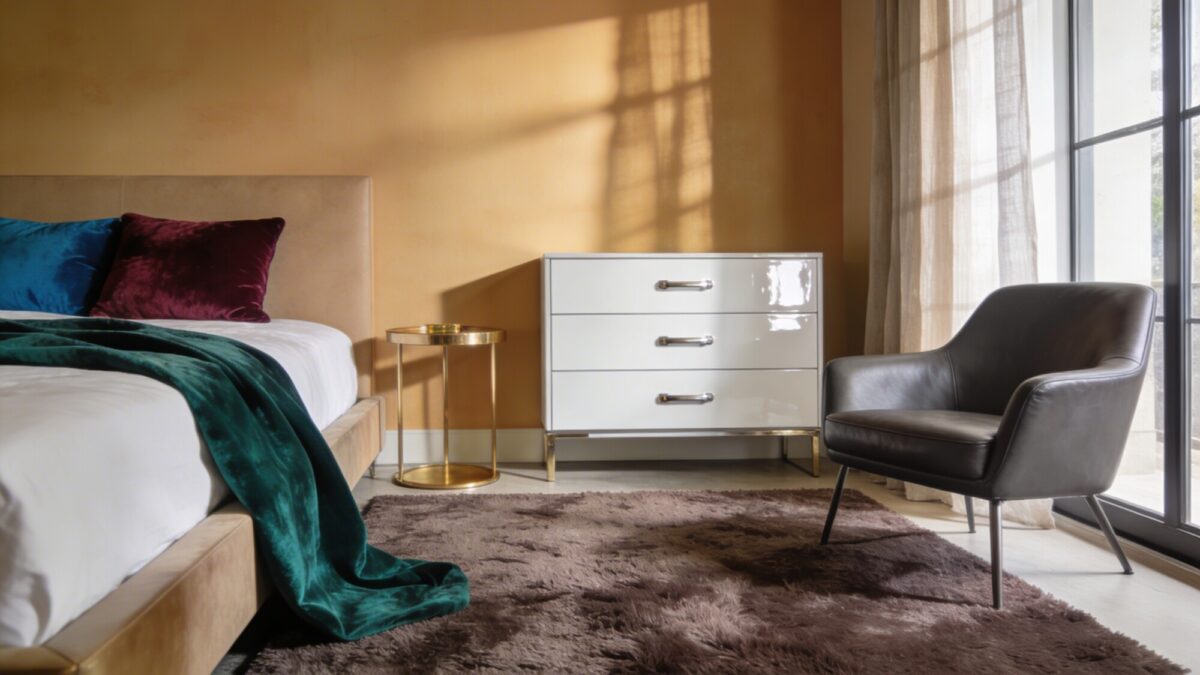
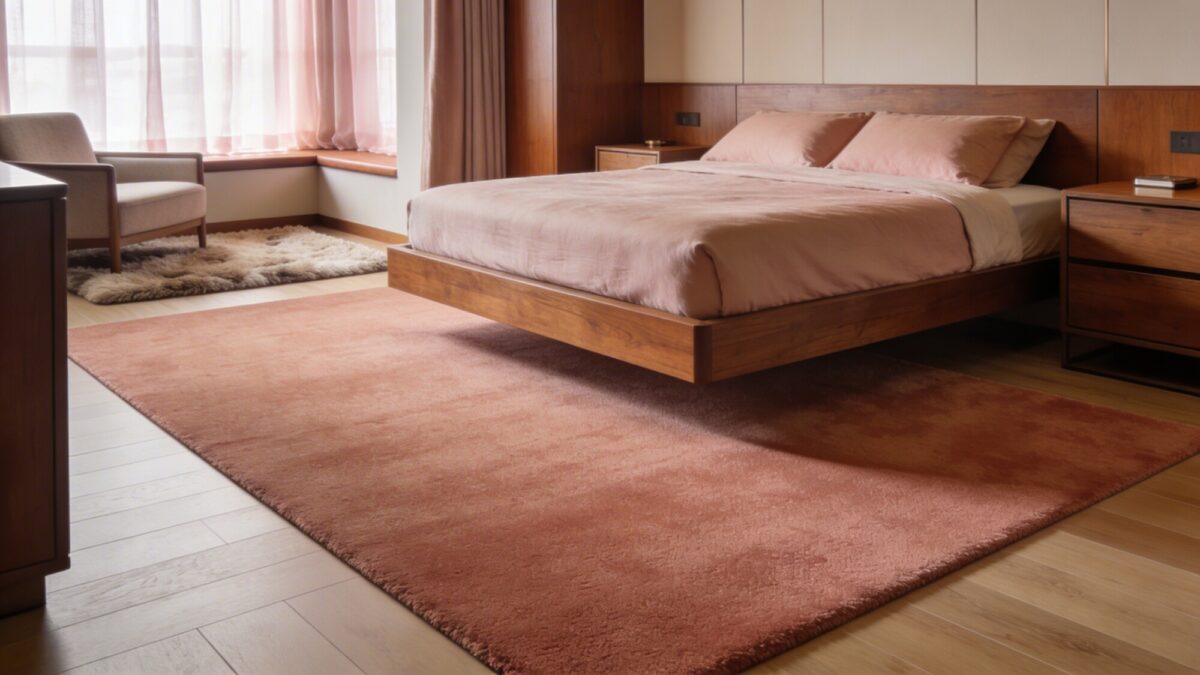
Texture is one of the fastest ways to make a room feel expensive without an expensive budget. A plush area rug underfoot, a sleek leather accent chair, and a few brass or brushed-nickel details create depth that a single-material room can’t match.
Contrast matters as much as variety. Pair matte walls with glossy dresser hardware, then finish with something tactile — a velvet throw or a couple of jewel-toned cushions — for instant coziness. The goal isn’t to fill the room with texture; it’s to choose two or three standout pieces that feel deliberate.
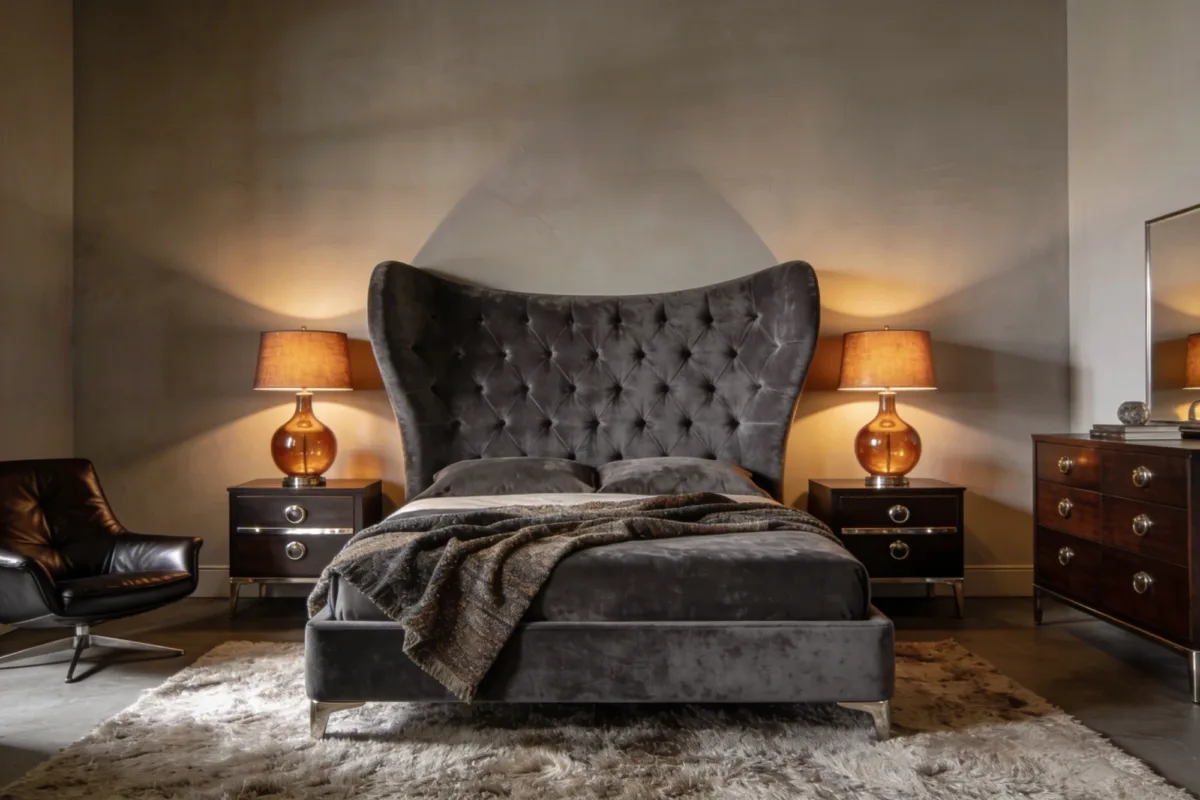
The bed is the largest object in the room, so it makes sense for it to set the tone. A headboard with a strong silhouette — arched, tufted, or geometric — gives the eye somewhere to land the moment you walk in.
A dark wood or charcoal-painted finish adds drama without requiring a full color overhaul elsewhere. Coordinate nightstands and lighting around the bed so the whole setup reads as one styled moment instead of separate pieces placed near each other.
How to style it
Pick a headboard shape that contrasts with the rest of the room’s straight lines, if you have them.
Go darker or bolder with the frame finish than you think you need to.
Match nightstand and lighting styles so the bed area feels cohesive.
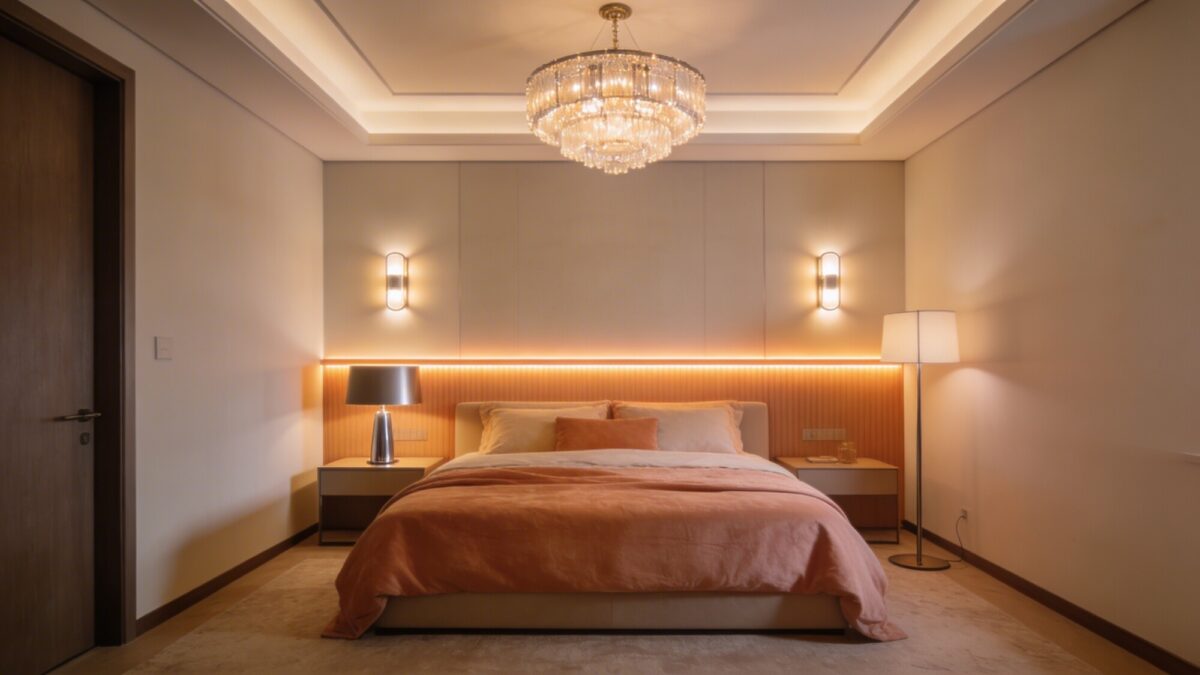
A modern bedroom with unique lighting relies on layering, not a single bright overhead fixture. Ambient light — a dimmable ceiling fixture or a chandelier — sets the base, while wall sconces or bedside lamps handle reading without adding clutter to the nightstand.
A warm-toned LED strip behind the headboard adds a soft glow that makes even a small room feel larger and calmer at night. Layering these three light types (ambient, task, accent) means you can adjust the mood throughout the day instead of being stuck with one setting.
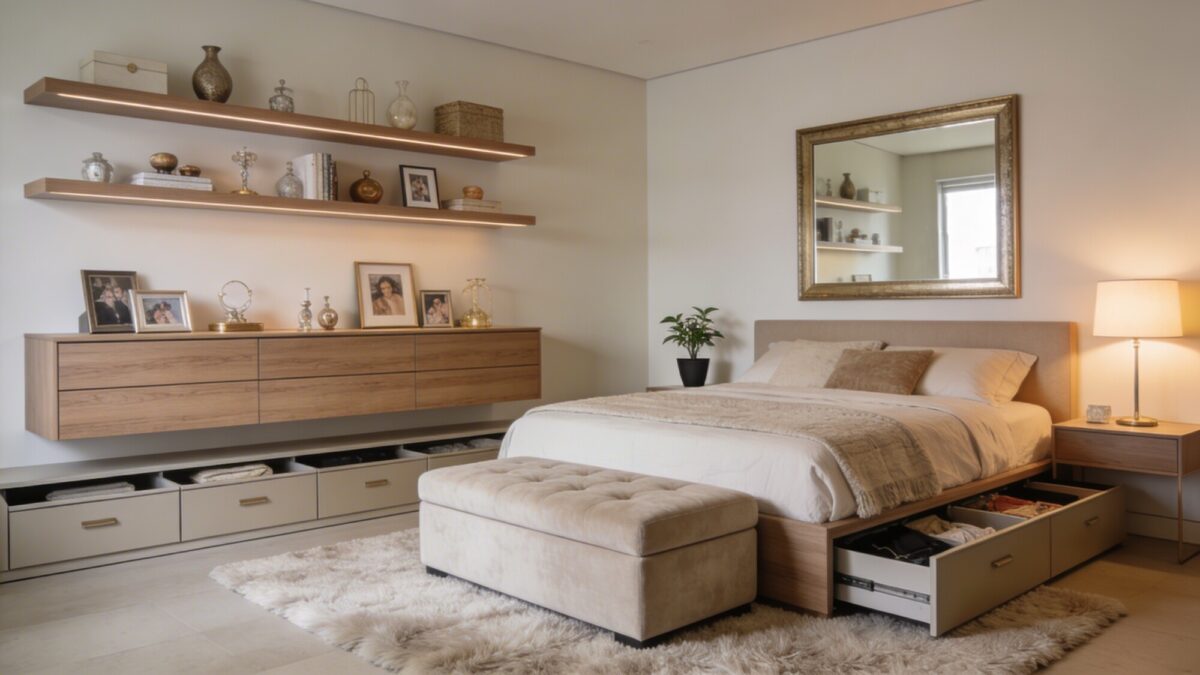
Clutter is the fastest way to undercut an otherwise well-designed bedroom. Floating shelves above a dresser can hold curated objects and framed photos while still keeping the surface below clear.
An ottoman with storage at the foot of the bed gives you a seat and a hiding spot for extra blankets in one piece. Under-bed drawers or a slim, wall-hugging dresser handle the rest without needing a bulky closet system. If you want a deeper dive into this category, our guide to modern bedroom wardrobe ideas covers closet and wardrobe-specific storage in more detail.
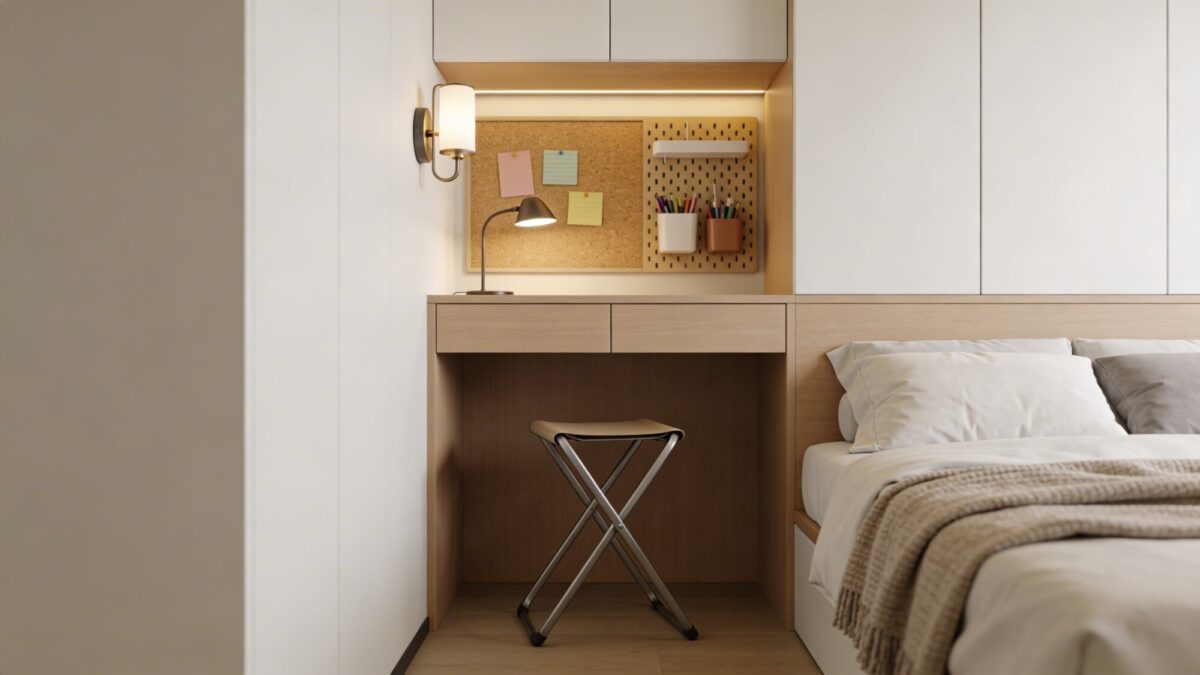
Working from bed is convenient until it isn’t — a dedicated, compact desk nook gives you somewhere to focus without dragging your laptop under the covers. A small desk with clean lines and a foldable or tuck-away chair is usually enough; it doesn’t need to be a full home office.
A corkboard or pegboard above the desk keeps notes and small supplies organized without taking up floor space. Separating “work” from “sleep” physically, even in a small way, helps your brain switch modes faster at night.
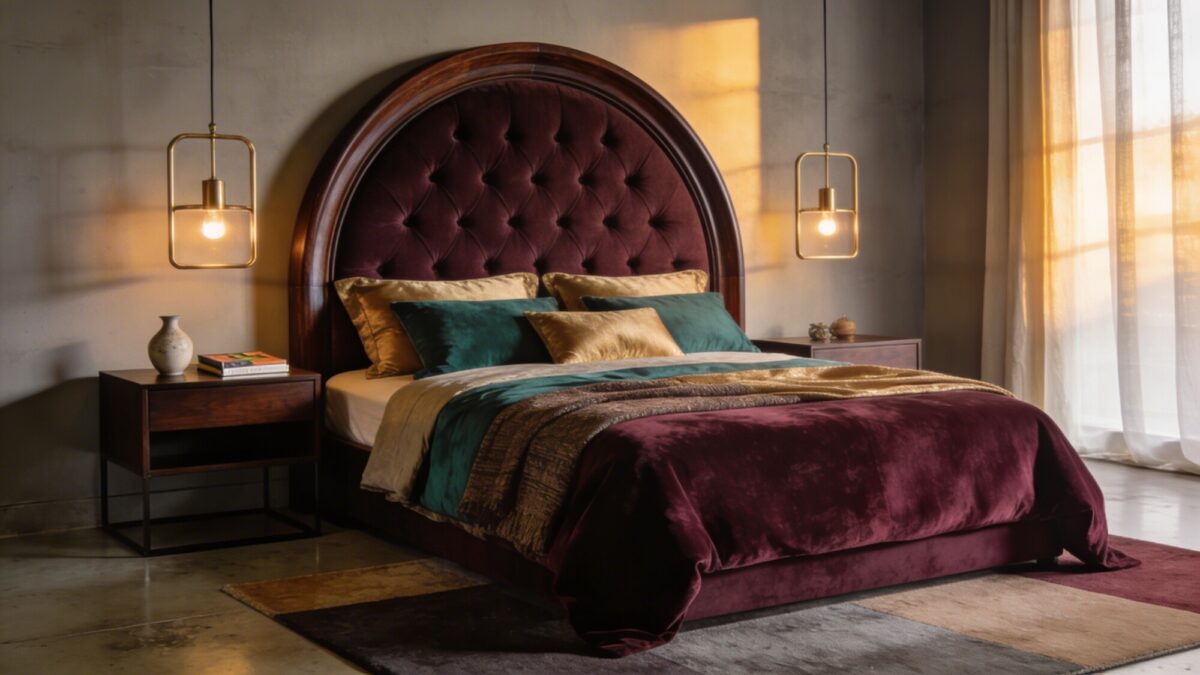
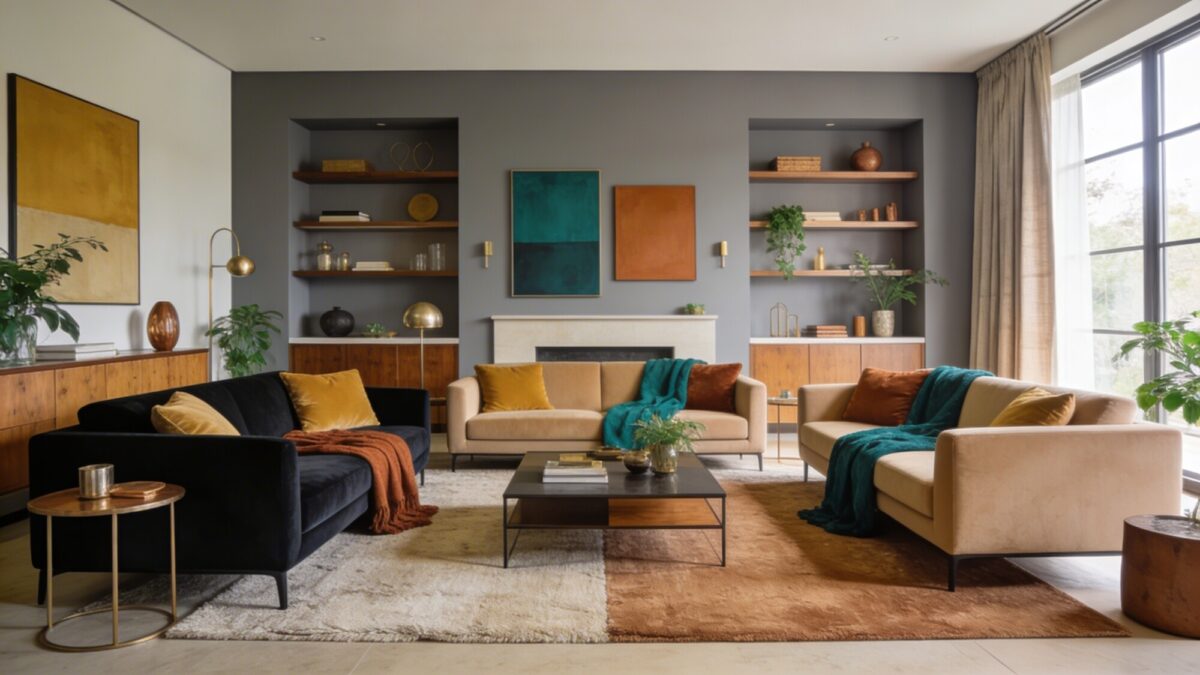
Color is one of the more overlooked parts of modern bedroom decor inspiration, but it’s also one of the easiest to get wrong by going too flat. Start with a soft neutral base — warm gray or sand — then ground the room with a secondary tone like charcoal or navy in larger pieces such as a bench or built-ins.
Photo by Mishaal Zahed (Meschael Zahède) on Unsplash
Bold accents (mustard, emerald, or terracotta) are best used sparingly, in cushions or a single piece of art, so they read as intentional rather than overwhelming. A well-chosen palette like this lets you swap textiles seasonally without repainting or replacing furniture.
Quick palette guide
Base: soft neutrals like warm gray or sand
Secondary: charcoal or navy for grounding
Accent: mustard, emerald, or terracotta for personality
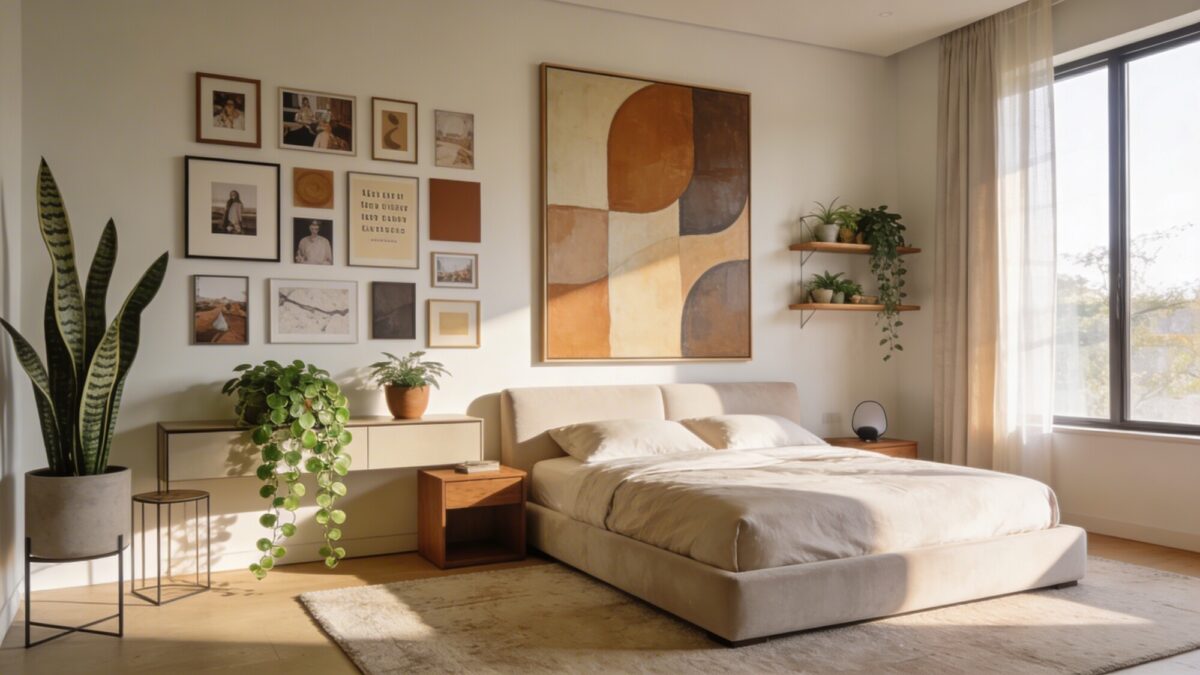
A room can be beautifully designed and still feel generic if it doesn’t say anything about the person living in it. One large statement piece of art above the bed anchors the space, while a gallery wall of mixed photos, abstracts, and typography adds personality on a smaller scale.
Low-maintenance plants — snake plants and pothos are reliable choices — add life and a bit of visual softness against harder furniture lines. They’re also a low-effort way to keep the room feeling lived-in rather than staged.
Flooring is easy to overlook, but it ties every other design choice in the room together. A medium-density carpet in a soft, warm shade adds comfort and helps absorb sound, which matters more in a bedroom than almost any other room in the house.
Warm wood tones — in a low-profile bed frame, nightstands, or a discreet dresser — pair naturally with carpet and add visual warmth. If you have a seating nook, a durable vinyl or laminate finish holds up better in that high-traffic spot than carpet would.
Idea Comparison at a Glance
Idea
Best For
Effort Level
Starting Point
Layered Textures
Instant warmth on any budget
Low
Rug, throw, or accent chair
Statement Bed Frame
Rooms that need a clear focal point
Medium-High
New headboard
Smart Lighting
Mood flexibility day to night
Low-Medium
Dimmer switch or smart bulbs
Decorative Storage
Small or cluttered bedrooms
Medium
Storage ottoman or floating shelves
Workspace Nook
Remote work or hobby space
Medium
Compact desk and chair
Color Story
Cohesive, seasonally refreshable rooms
Low-Medium
Neutral base plus one accent color
Art and Greenery
Personalizing a generic space
Low
One statement art piece
Flooring Update
Comfort and acoustics
High
Carpet or wood in the main sleeping area
Things to Consider Before You Start
Budget priority — lighting, textures, and art are the lowest-cost changes; flooring and bed frames cost the most.
Room size — a workspace nook and floating storage matter more in smaller bedrooms.
Existing furniture — a new color story can often be layered onto pieces you already own.
Noise sensitivity — prioritize flooring changes if sound absorption is a concern.
FAQ
What’s the easiest modern bedroom idea to start with?
Layered textures and smart lighting are usually the quickest wins, since both can be added without replacing furniture or repainting.
How do I choose a modern bed frame that won’t feel dated?
Focus on a clear silhouette — arched, tufted, or geometric — in a finish like dark wood or a solid painted color, rather than following a specific trend that may pass quickly.
Can I combine a workspace nook with a small bedroom?
Yes. A compact desk with a fold-away or slim chair, paired with wall-mounted storage instead of floor storage, works even in tight layouts.
What flooring works best for sound and comfort in a bedroom?
Medium-density carpet in the main sleeping area tends to help most with comfort and acoustics, with harder flooring reserved for smaller, high-traffic zones like a seating nook.
How many accent colors should I use in a modern color story?
Generally one or two. A neutral base, a grounding secondary tone, and a single accent color used sparingly tends to look more intentional than several competing accents.
Our Verdict
These eight ideas work best as a menu, not a checklist — pick one or two that address your room’s biggest gap, whether that’s flat lighting, a lack of storage, or a bed frame that isn’t pulling its weight. For more direction on specific elements, our guides to modern bedroom headboard ideas and modern bedroom TV wall ideas go deeper into two of the focal points covered above.
Listen to this article 10 10 0:00 / 0:00 Speed 0.75×1×1.25×1.5×2× I painted my first turquoise bedroom accent wall on a whim, at like 9pm on a Tuesday, because I couldn’t sleep and I’d been staring at paint swatches for a week. Was it a great idea to start rolling paint that late? Not really….
Listen to this article 10 10 0:00 / 0:00 Speed 0.75×1×1.25×1.5×2× Tiny room? Tiny human? Big challenge. But here’s the good news: you don’t need a massive space to create a dreamy, functional nursery. With a few smart choices and a little creativity, even the smallest corner can feel cozy, organized, and Instagram-worthy. Let’s turn…
Listen to this article 10 10 0:00 / 0:00 Speed 0.75×1×1.25×1.5×2× Sage green and cream might just be the ultimate “quiet luxury” color combo. It feels soft, calming, and expensive without trying too hard. Plus, it works in almost every bedroom style, from modern farmhouse to minimalist chic. If your room currently screams “college apartment…
Listen to this article 10 10 0:00 / 0:00 Speed 0.75×1×1.25×1.5×2× For years I resisted painting my bedroom anything darker than “greige,” because I was convinced a dark room would feel small and depressing the second the sun went down. Then I finally did it — a deep charcoal, almost black-brown, with brass hardware and…
Listen to this article 10 10 0:00 / 0:00 Speed 0.75×1×1.25×1.5×2× Hot nights, bright mornings, and that itch to switch things up—summer has a way of making your bedroom feel… stale. The good news? You don’t need a full renovation to create a space that feels breezy, fresh, and a little bit dreamy. These ideas…
Listen to this article 10 10 0:00 / 0:00 Speed 0.75×1×1.25×1.5×2× Good fairy room decor bedroom ideas lean into softness, light, and a little bit of nature rather than going full theme-park. The best versions feel like an enchanted forest bedroom you’d actually want to sleep in — not a costume set. This guide walks…