9 Bedroom Tv Wall Ideas Modern: Chic Makeovers for Your Space
A TV mounted on a bare wall reads like an afterthought — a black rectangle stuck up because there was nowhere else to put it. A proper bedroom tv wall treats the screen as part of the room’s design instead of something to apologize for. That might mean building a niche around it, backing it with texture and warm light, or hiding it entirely behind a drop-down frame until you actually want to watch something.
None of the nine approaches below require gutting your bedroom. Most can be done over a weekend with a wall mount, some paint or panel material, and a bit of patience with cable routing. Here’s what actually works, what tends to go wrong, and which option fits which kind of room.
Quick Takeaways
- Floating panels and drop-down frames are the two best options if you want the TV to visually disappear when it’s off.
- Textured backdrops and gallery niches do the most to make the wall feel designed rather than functional.
- Mirrored walls are the fastest fix for a small or dark bedroom, but they show fingerprints and dust more than any other option here.
- Cable management is the single most common mistake — plan the wiring path before you mount anything, not after.
1. Sleek Floating Panel With Hidden Wiring
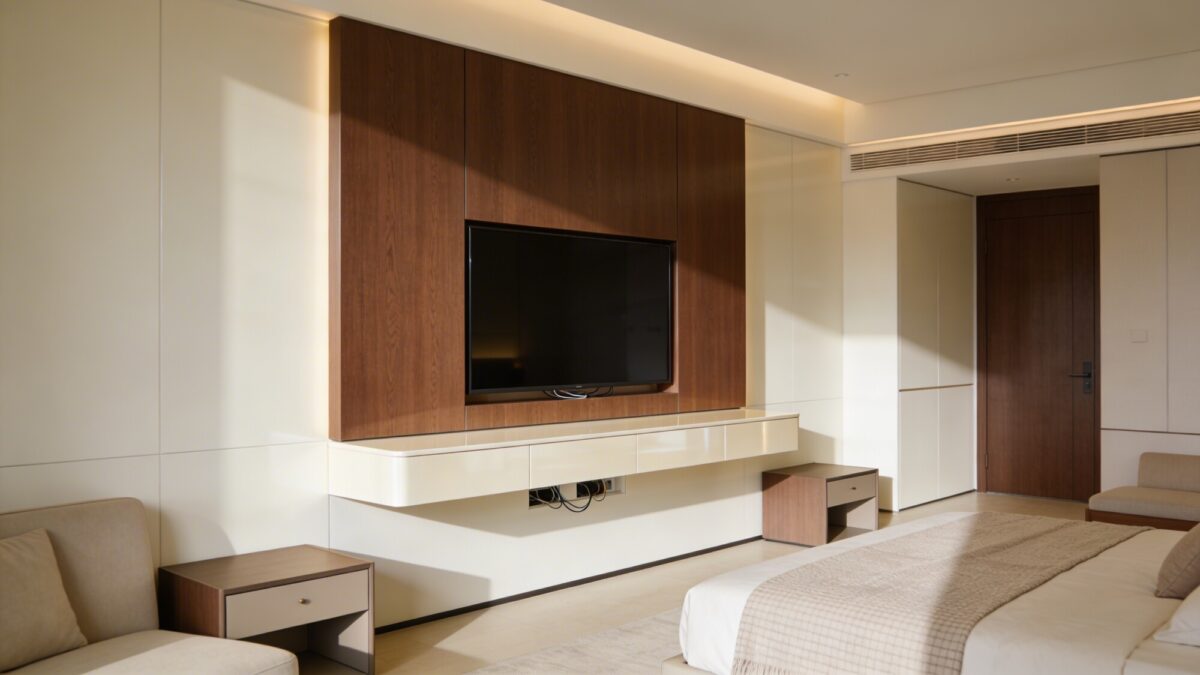
A floating panel is the most straightforward of these modern bedroom tv wall ideas, and it’s the one most people should start with. You mount a low-profile panel — matte walnut or a high-gloss ivory lacquer both work — directly behind the TV, run the cables through the wall or down a channel behind the panel, and skip the media console entirely.
The mistake people make here is picking a panel that’s the same width as the TV. It looks like a frame stuck on the wall instead of a design element. Go at least 6–8 inches wider than the screen on each side so the panel reads as its own feature, not TV packaging.

This is the option to pick if you rent and can’t cut into drywall for a recessed niche — a floating panel is surface-mounted, so it comes down cleanly when you move.
2. Textured Backdrop With Warm Light Accents
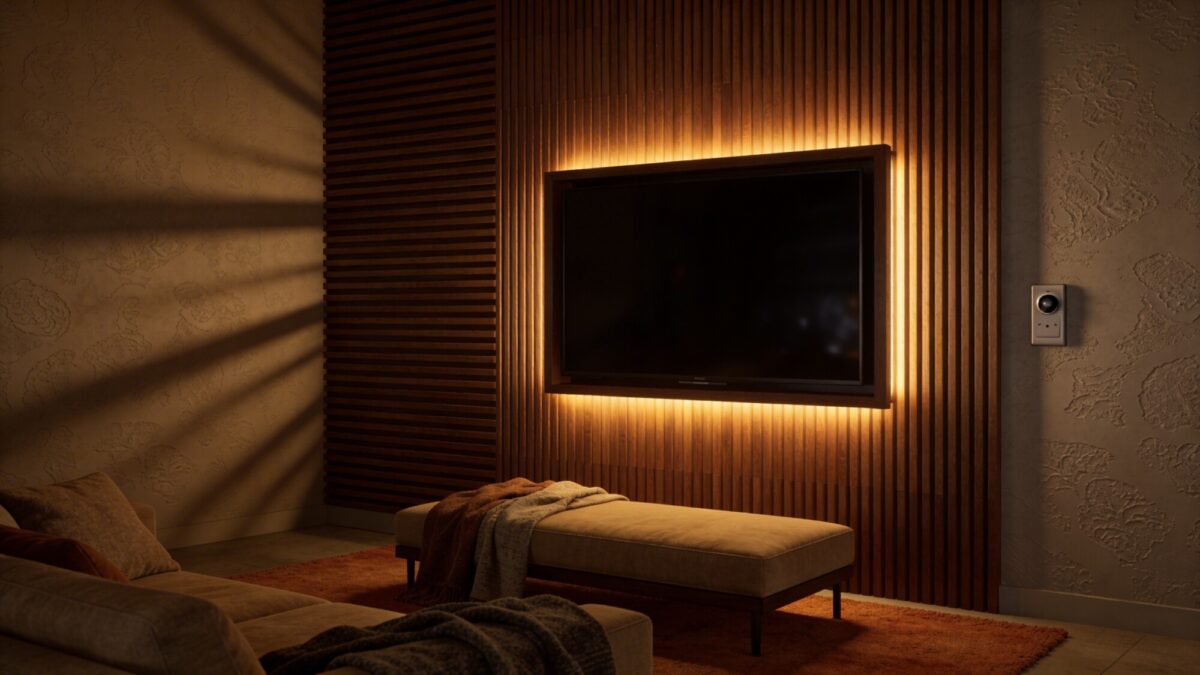
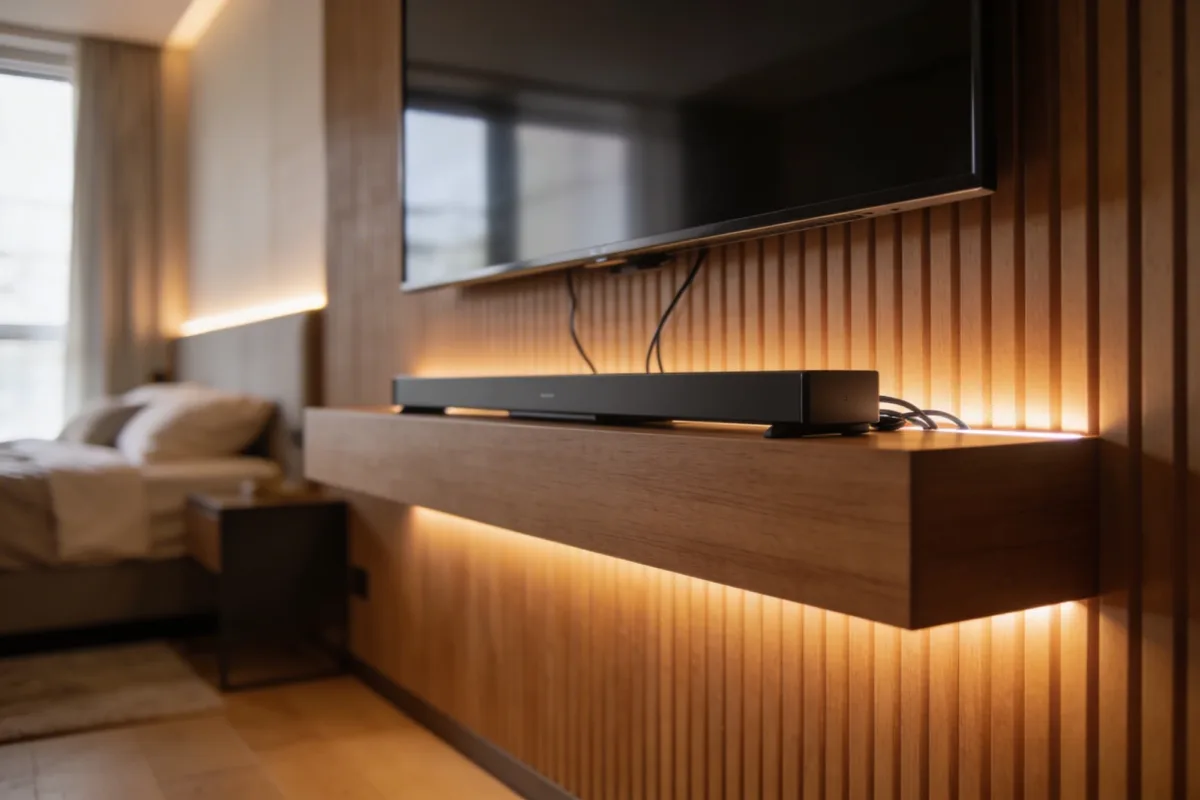
A flat-painted wall behind a TV can look thin, even when everything else in the room is finished. Horizontal wood slats or a subtly embossed wallpaper in caramel or taupe tones give the wall enough depth that the screen stops looking like it’s floating on nothing. Add a warm-toned LED strip behind the panel on a dimmer, and the same wall goes from “office monitor” to “movie night” with one switch.
The trade-off worth knowing: slats add real installation time (expect a full day, not an afternoon), while wallpaper is a weekend job but won’t give you the same shadow play. If you’ve already done a textured tv wall decor treatment elsewhere in the house, matching materials here keeps the whole place feeling connected instead of like separate design decisions per room.
3. Gallery-Style Wall With Integrated TV Niche
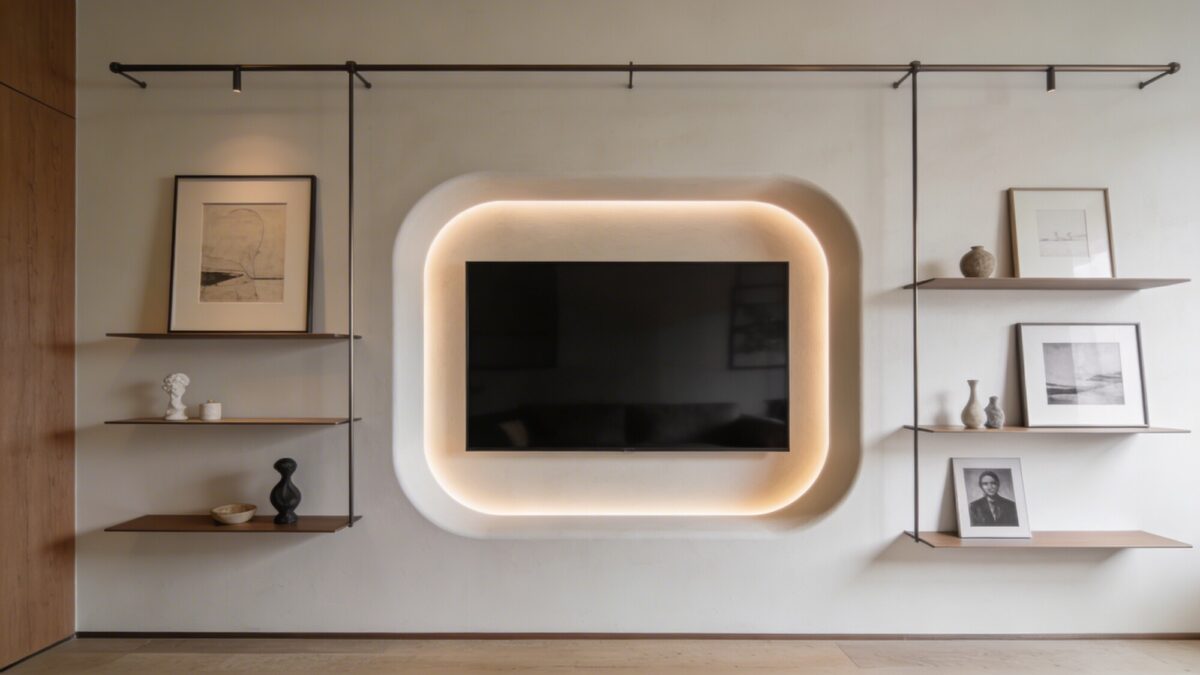
This is the most involved option on this list, and also the one that looks least like “a TV was mounted here.” A recessed niche with soft, rounded borders houses the screen flush with the wall, and you build a gallery rail or a couple of slim floating shelves around it — framed prints, a small sculpture, a few monochrome photos.

Key Points
- Requires framing or a false wall if you don’t already have a recess — not a weekend DIY unless you’re comfortable with drywall work
- Keep art and shelving smaller in scale than the TV itself, or the screen ends up competing with the decor instead of anchoring it
- Accent lighting around the niche (not pointed at the screen) does most of the work making this look curated
If your bedroom already leans toward a gallery aesthetic, this pairs well with the back-wall treatments in our bedroom back wall design ideas guide — a lot of the same framing and shelf-spacing logic applies.
4. Dark Matte Panel With Contrast Cushions
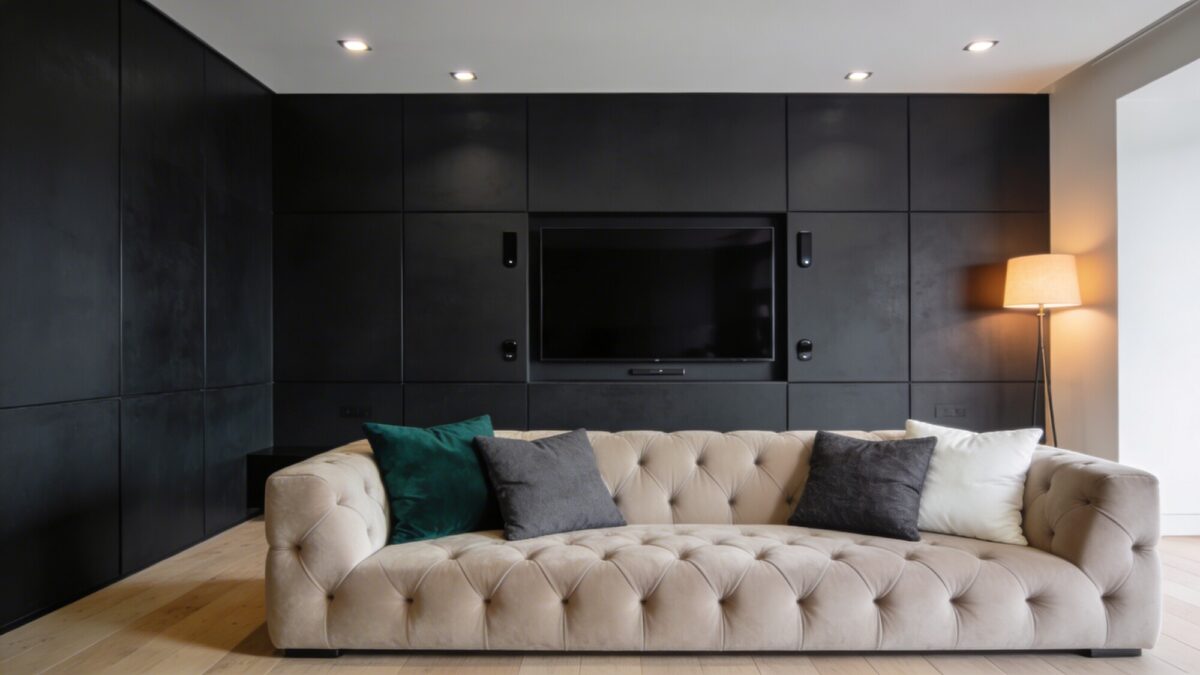
Painting or paneling the TV wall in charcoal or navy does something a light wall can’t: it makes the screen’s bezel disappear into the background instead of standing out as a dark rectangle on a pale wall. That’s the actual functional reason this works, not just the mood factor.
Where people go wrong is doing the dark wall and then keeping everything else in the room dark too — it flattens the space and makes a bedroom feel smaller. Keep the bed linens, rug, and one or two large textiles light (cream, ivory, soft graphite), and let the dark wall stay the single anchor point in the room.

5. Built-In Nordic White System With Soft Corners
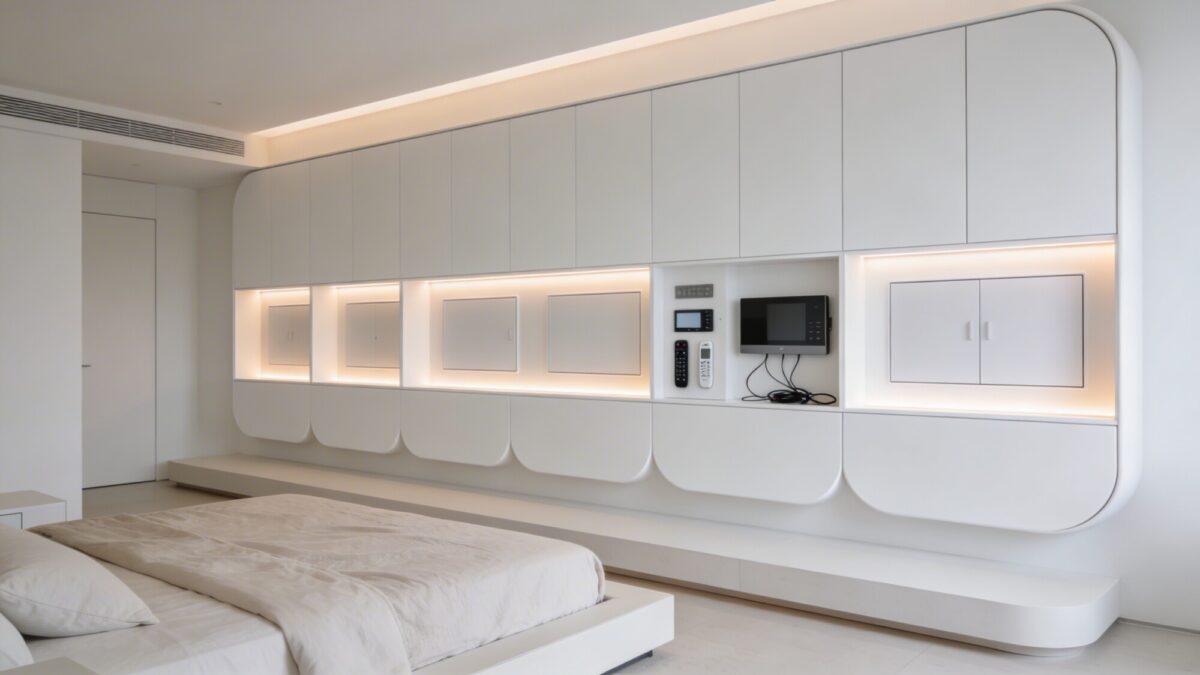
A built-in white cabinet system spanning the wall, with the TV recessed into it, gives you storage for remotes, a console, and cable clutter without any of it being visible. Rounded corners on the panels soften what would otherwise be a hard block of cabinetry — a small detail, but it’s the difference between “Scandinavian” and “office cubicle.”
This is a carpentry job more than a paint-and-mount weekend project — budget for either custom millwork or a modular system (IKEA’s BESTÅ line gets used for exactly this a lot, and it’s a reasonable starting point if you want to keep costs down). If you’re weighing this against other structural changes to the room, our modern bedroom interior design ideas roundup covers a few other built-in options worth comparing.
6. Mirror-Faced TV Wall for Light Play
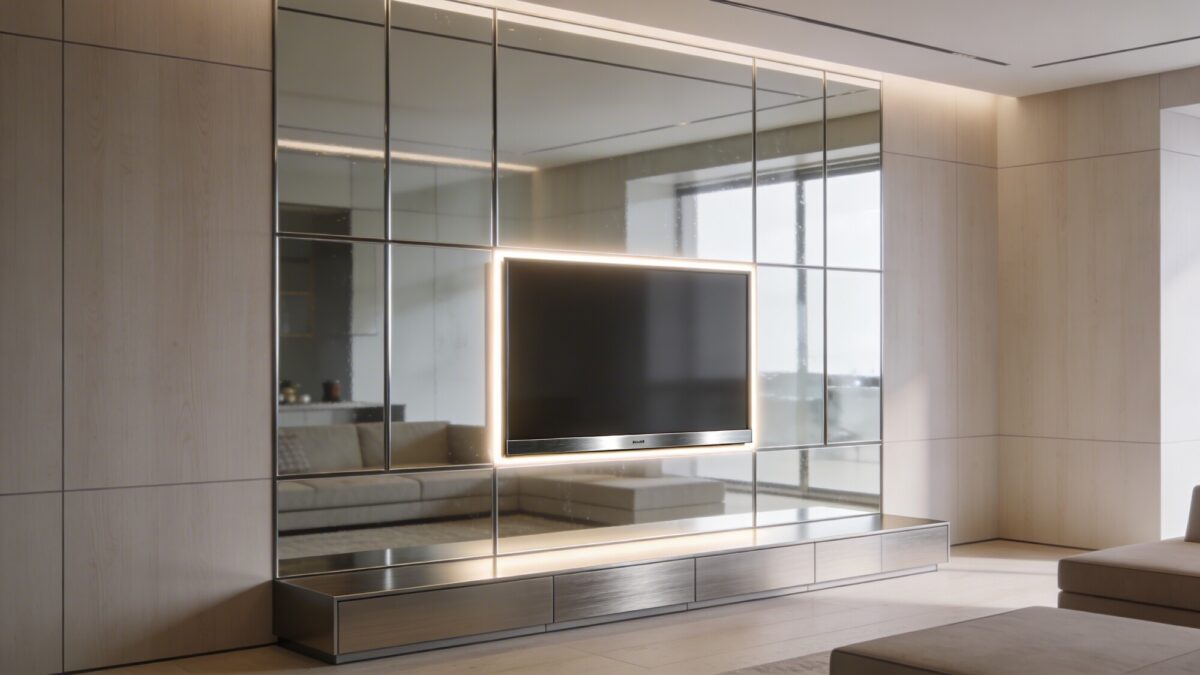
Tinted or frameless mirror panels around the TV bounce whatever light the room has, which makes this the fastest fix if your bedroom is small, dark, or both. Pair it with a slim-bezel TV and aluminum trim and the whole wall reads as bigger than it is.

Here’s the honest trade-off nobody mentions in the glossy photos: mirror panels show fingerprints, dust, and streaks far more than any other finish on this list. If you’re not going to wipe the wall down weekly, this isn’t the low-maintenance option it looks like. It’s also worth avoiding directly opposite a window — you’ll get glare on the TV screen during the day.
7. Drop-Down Frame for Hidden Tech
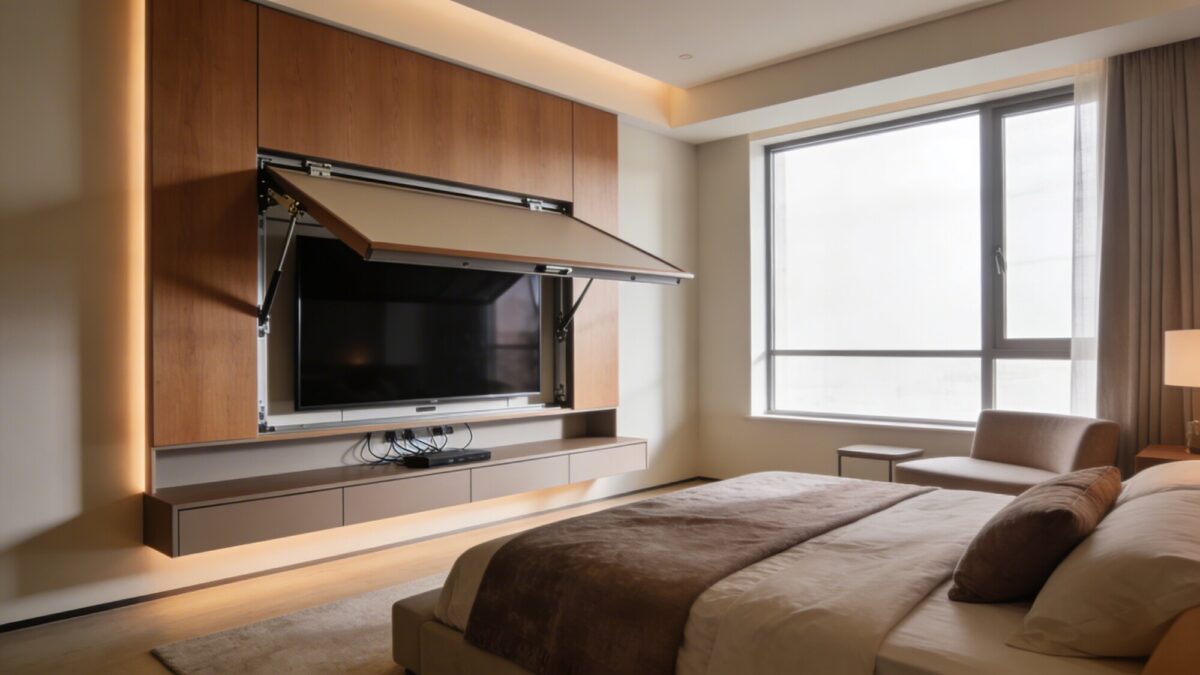
A motorized or manually-lowered frame keeps the TV completely out of sight until you want it. When it’s up, the wall is just a wall — no black screen staring back at you while you’re trying to fall asleep.

Motorized versions run into real money — mechanism plus install is usually the most expensive option on this list, well above a floating panel or a coat of dark paint. A manual pull-down frame is a cheaper middle ground if the budget doesn’t stretch to motorization. Either way, this is the pick for a guest room or studio where you want the TV gone, not just tucked to the side, when it’s not in use.
8. Floating Shelves With Tech Niche and Greenery
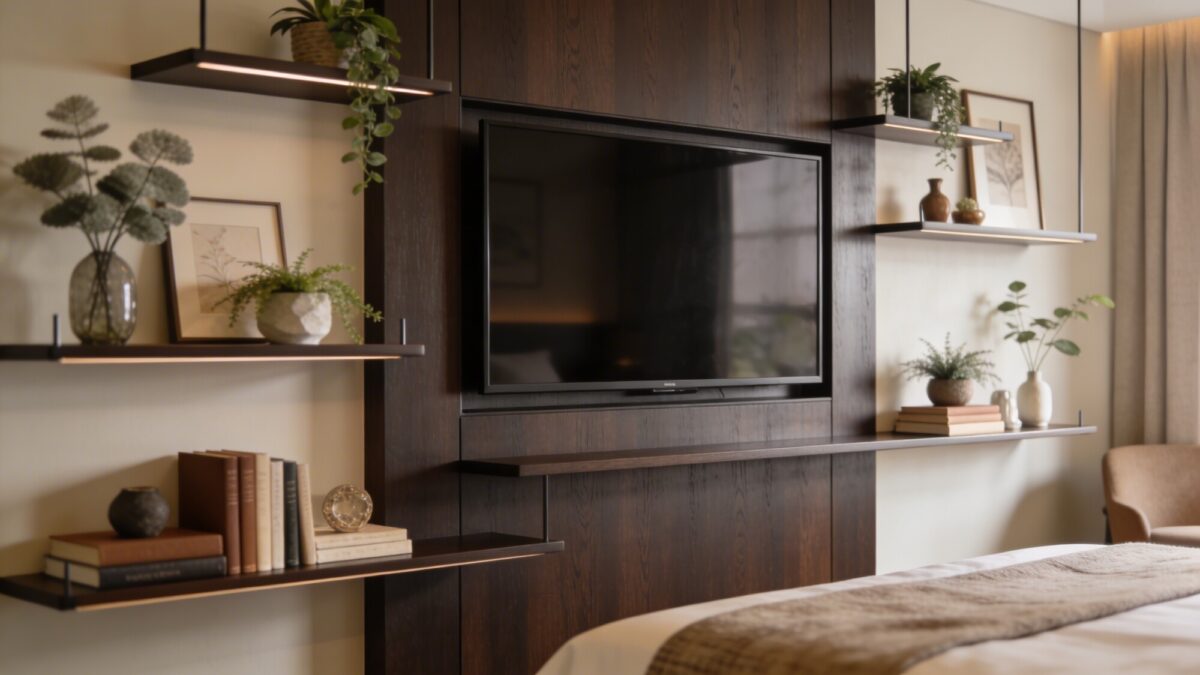
Slim floating shelves at staggered heights around the TV, holding low-maintenance plants, a few books, and small objects, keep a bedroom tv wall from looking sterile without turning it into clutter. The trick is restraint — three or four objects per shelf, not a full display. Pothos or a snake plant both tolerate low bedroom light better than most houseplants, which matters since this wall usually isn’t getting direct sun.
This is a good middle-ground option if you liked the gallery niche in idea #3 but don’t want to take on structural changes — shelves are a half-day install with a stud finder and a level. For more on balancing decor density like this, our cozy modern bedroom ideas piece has a good breakdown of how much is too much.
9. Concrete Slate With Floating Entertainment Console
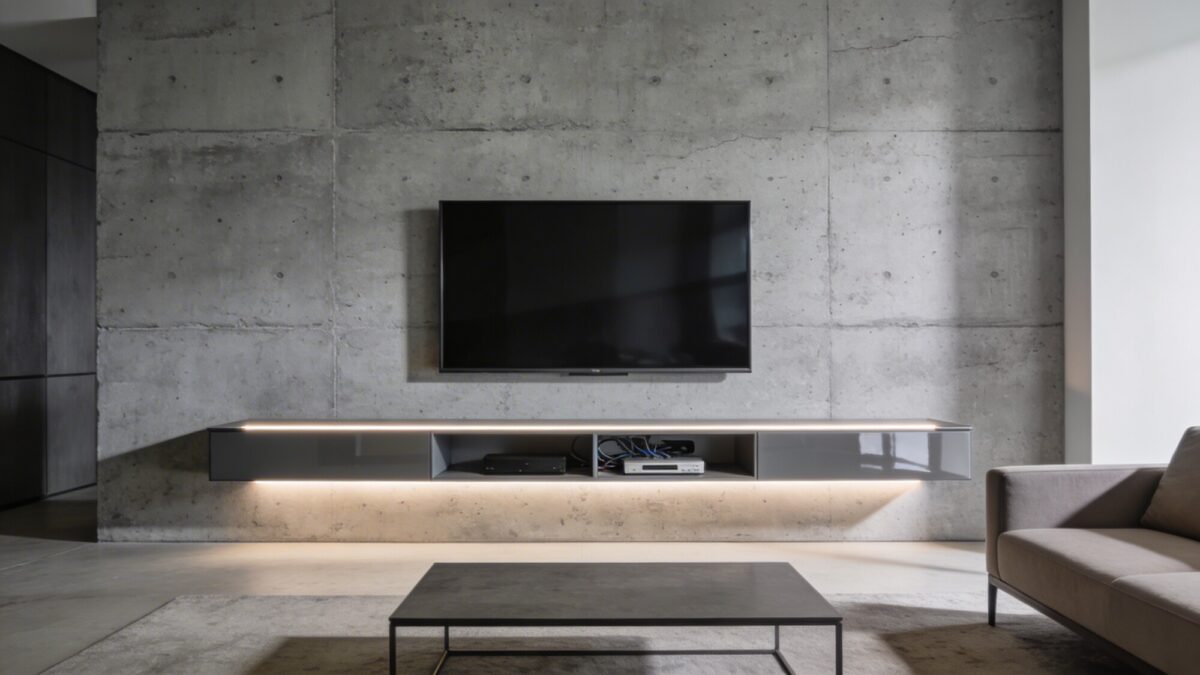
Concrete-look panels (real poured concrete veneer is heavy and usually not practical for a bedroom wall — most people use a cement-look panel product instead) paired with a floating console underneath gives an industrial edge that still reads as intentional rather than unfinished. Hidden LED strips under the console edge add a soft glow without competing with the wall texture.
This is the most durable finish on the list — it resists scuffs and wear better than paint or wallpaper — but it’s also the coldest-looking option unless you counter it with warm wood tones or soft textiles elsewhere in the room. Skip this one entirely if your bedroom already leans minimalist and pale; it needs contrast to work.
Comparing the Top Options
| Option | Install Effort | Best For | Main Trade-Off |
|---|---|---|---|
| Floating Panel | Low (weekend) | Renters, minimalists | Least dramatic visual change |
| Gallery Niche | High (framing/drywall) | Design-focused rooms | Not reversible if you move |
| Drop-Down Frame | High (mechanism + install) | Guest rooms, studios | Highest cost of all nine options |
| Mirror-Faced Wall | Medium | Small or dark bedrooms | Shows fingerprints and dust quickly |
Things to Consider Before You Start
- Check for wiring, plumbing, or structural elements behind the wall before cutting in a recessed niche or drop-down frame.
- Plan the cable path first — in-wall cable channels need to be rated for that use, so don’t run standard cords inside a wall cavity without one.
- Measure viewing distance and mount height before committing to a wall treatment; a beautiful wall built around the wrong TV height means redoing the mount later.
- If you rent, favor surface-mounted options (floating panel, shelves, mirror panels) over anything that requires cutting drywall.
FAQ
What’s the cheapest bedroom TV wall idea on this list?
A floating panel or a dark matte paint treatment. Both use materials you can buy off the shelf and install in a weekend without hiring anyone.
Do I need an electrician for hidden wiring?
If you’re running a standard extension cord through a rated in-wall cable kit, no. If you’re adding new outlets behind the wall or wiring a motorized drop-down frame, yes — that’s an electrical job, not a DIY one.
Will a mirrored TV wall make my bedroom feel bigger?
Yes, mirrors reflect light and visually push the wall back, which is why it’s the go-to pick for small or dark bedrooms on this list. Just budget time for regular cleaning, since mirror panels show smudges more than any other finish here.
Can I combine ideas from different sections?
Yes, and most people end up doing exactly that — a textured backdrop with a floating console, for instance, or a dark matte panel with floating shelves instead of a full niche. Pick the structural element (panel, niche, or drop-down frame) first, then layer texture, lighting, or shelving on top.
Our Take
For most bedrooms, the floating panel or the textured backdrop is the better starting point — both are achievable in a weekend, both are reversible, and both solve the actual problem (a screen that looks like an accessory instead of a design choice) without a construction budget. Save the gallery niche and drop-down frame for when you’re already planning a bigger renovation, since the cost and effort only make sense alongside other structural work. If you’re still mapping out the rest of the room before deciding on the wall, our guide to designing a modern bedroom interior is a good next stop.