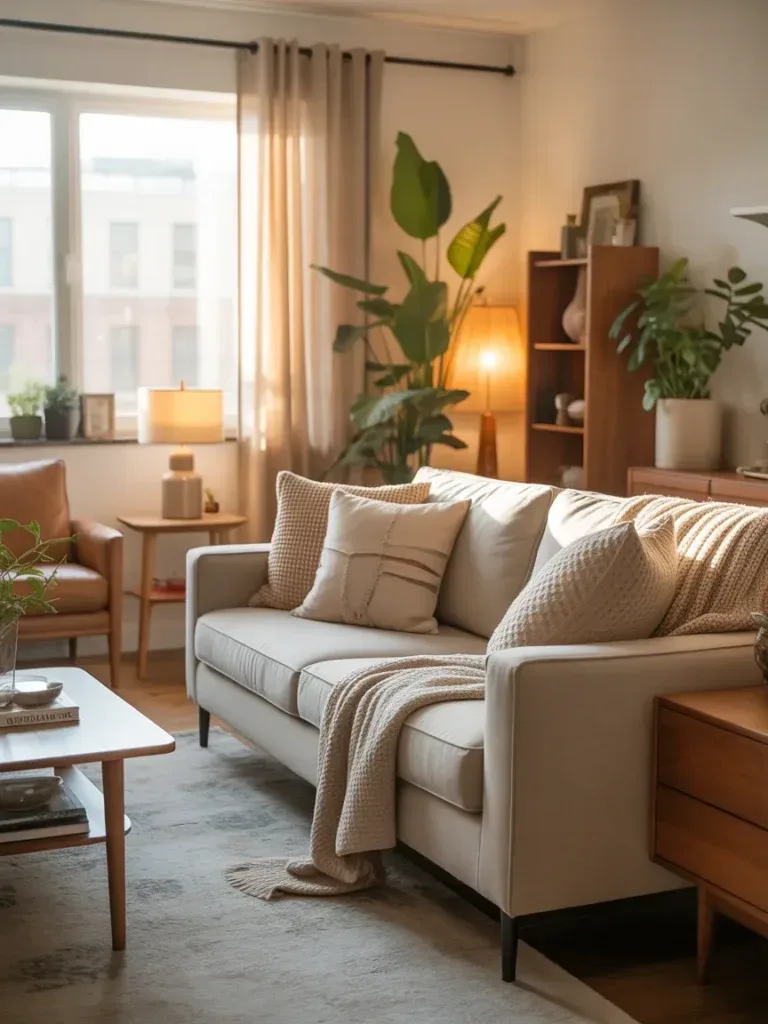
Arhaus Living Room Inspiration: Cozy, Textured Luxury
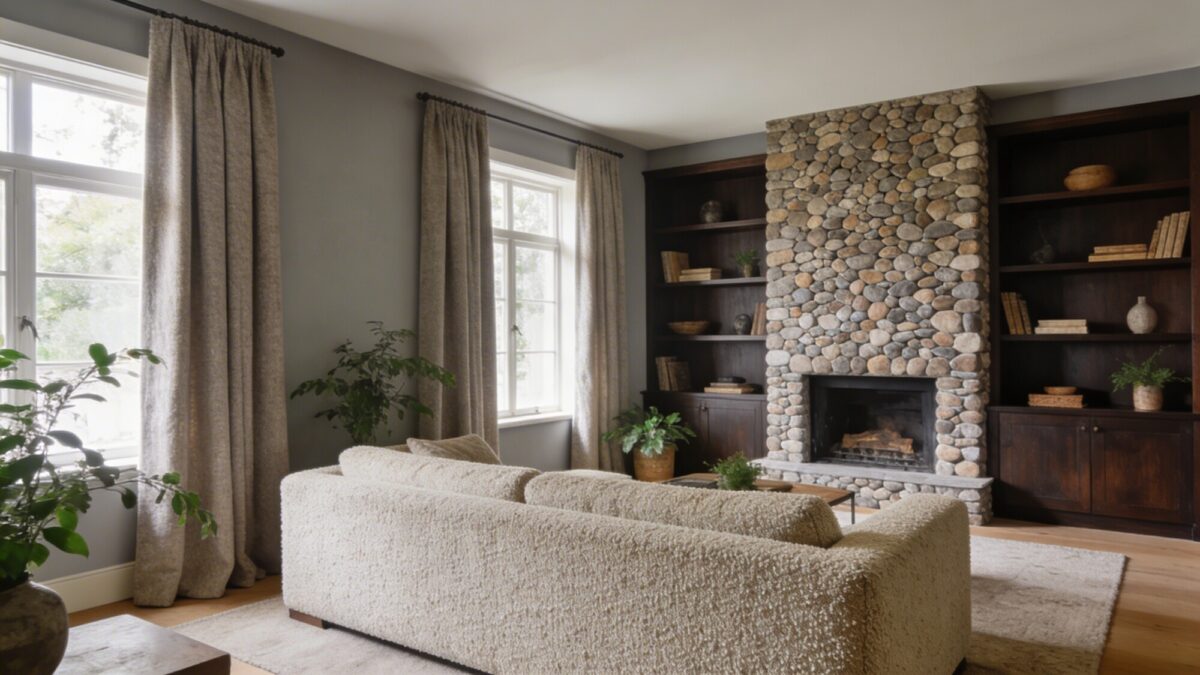
Arhaus living room inspiration gets copied a lot, and most of the copies miss the point. People see the cream sectional and the chunky boucle throw and think the look is about buying beige furniture. It isn’t. It’s about layering three or four different textures at different heights so the room reads as calm instead of flat, then letting one or two pieces carry real weight instead of filling every surface with decor. If you’re weighing this against other directions, our luxury living room inspiration roundup is a useful side-by-side for seeing where the aesthetics overlap and where they split.
This guide walks through what actually makes the look work — color, scale, materials, lighting — and where people waste money chasing it.
Quick Takeaways
- The palette is neutral but not flat: think oatmeal, dune gray, taupe, and warm walnut, not stark white.
- Texture does the work color usually does — jute, linen, bouclé, and leather all in one room, on purpose.
- One or two statement pieces (a sofa, a coffee table) should anchor the room; everything else supports them.
- Lighting should sit low and warm — table and floor lamps do more here than a bright overhead fixture.
- You can approximate this look for less by copying the proportions and mixing in secondhand or mid-range pieces where it won’t show.
Why Arhaus Living Room Inspiration Actually Works in Real Rooms
A lot of showroom styles fall apart once they’re in a house with kids, a dog, and mismatched windows. This one tends to hold up better than most, for a specific reason: it’s built around neutral bones and swappable texture rather than a single trendy color or a matched furniture set. If your gray sofa clashes with a new rug in two years, you’re not repainting a room — you’re swapping a throw.
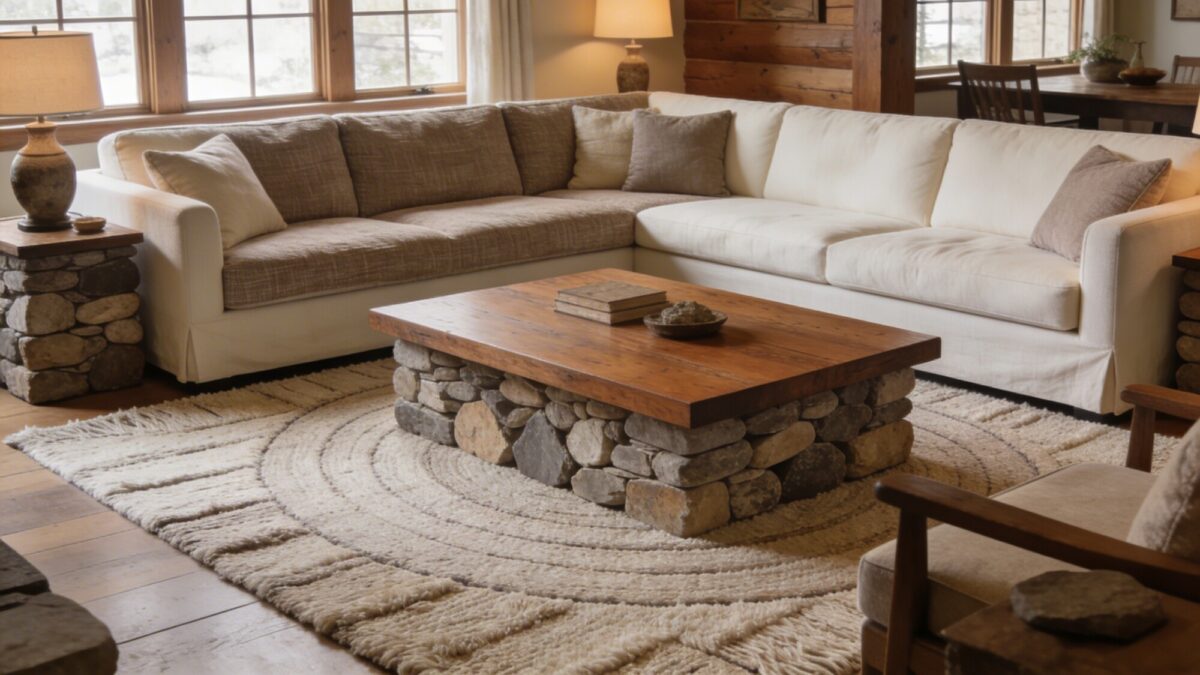
The other reason it reads as expensive rather than just “neutral” is scale discipline. Arhaus rooms tend to use fewer, larger pieces instead of a lot of small ones — a wide sectional instead of a sofa-plus-two-chairs setup crammed with side tables. That restraint is the actual signature, more than any specific color.
Foundations: Color, Texture, and Scale
Start with the wall color, but don’t stop there. Warm white or soft greige walls (something like a Sherwin-Williams “Alabaster” or “Accessible Beige” family, or a comparable warm neutral from whatever brand you use) give you a backdrop that doesn’t fight the furniture. The mistake people make is picking a true gray with blue undertones — it reads cold next to warm wood and leather, and the whole room stops feeling cozy no matter how many throws you add.
Material Magic
The real driver of the look is mixing at least three textures in every seating cluster: something woven (jute, rattan, cane), something soft (linen, bouclé, chenille), and something hard and warm (walnut, oak, leather). A room with only fabric surfaces — sofa, rug, curtains all soft — ends up feeling like a hotel lobby. A room with only hard surfaces feels like a showroom nobody lives in. You need both.
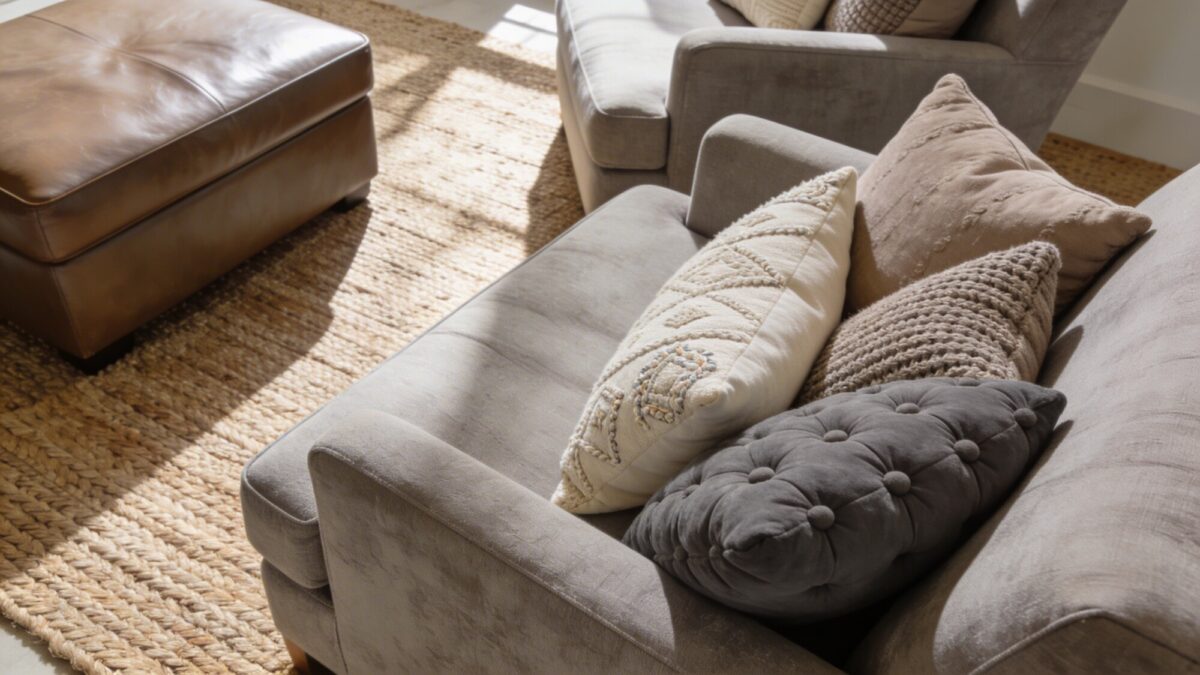
💡 Pro Tip: Bouclé looks incredible in photos but pills fast under pet claws and kids’ shoes. If you have either, ask for a performance-weave bouclé or a bouclé-look polyester blend before you commit — the difference in wear is significant, even though it looks almost identical in the showroom.
Layout That Feels Effortless
“Effortless” layouts are actually the most deliberate part of this style. The floor plan usually centers on one large seating piece — a sectional or a substantial sofa — placed to face the main focal point of the room, whether that’s a fireplace, a media console, or a window. Everything else gets arranged around that anchor instead of competing with it.
Seating Zoning
If your living room has to double as a walkway, don’t try to force a full conversation set into it. Split the room into a primary seating zone (the sofa plus one or two chairs, close enough for actual conversation) and a secondary zone if there’s space — a reading chair by a window, for instance. Trying to fit every function into one cluster is how rooms end up feeling cramped even when they’re not small. If your square footage is tight, our cozy chic on a budget guide has layout tricks specifically for smaller footprints.
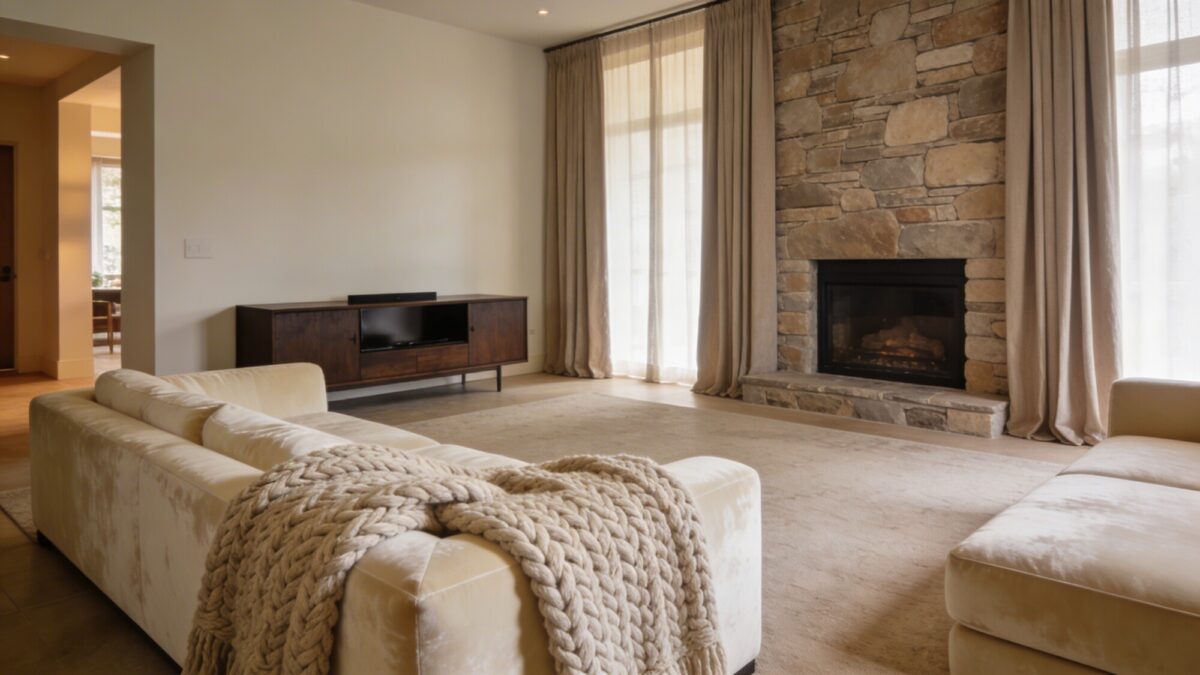
💡 Pro Tip: Keep roughly 30–36 inches of clearance between seating pieces so people can talk without leaning forward, and at least 14–18 inches between the sofa and coffee table so knees have room. Anything tighter and the “spacious lounge” look collapses the second real furniture is in the room instead of a floor plan.
Textures to Try This Season
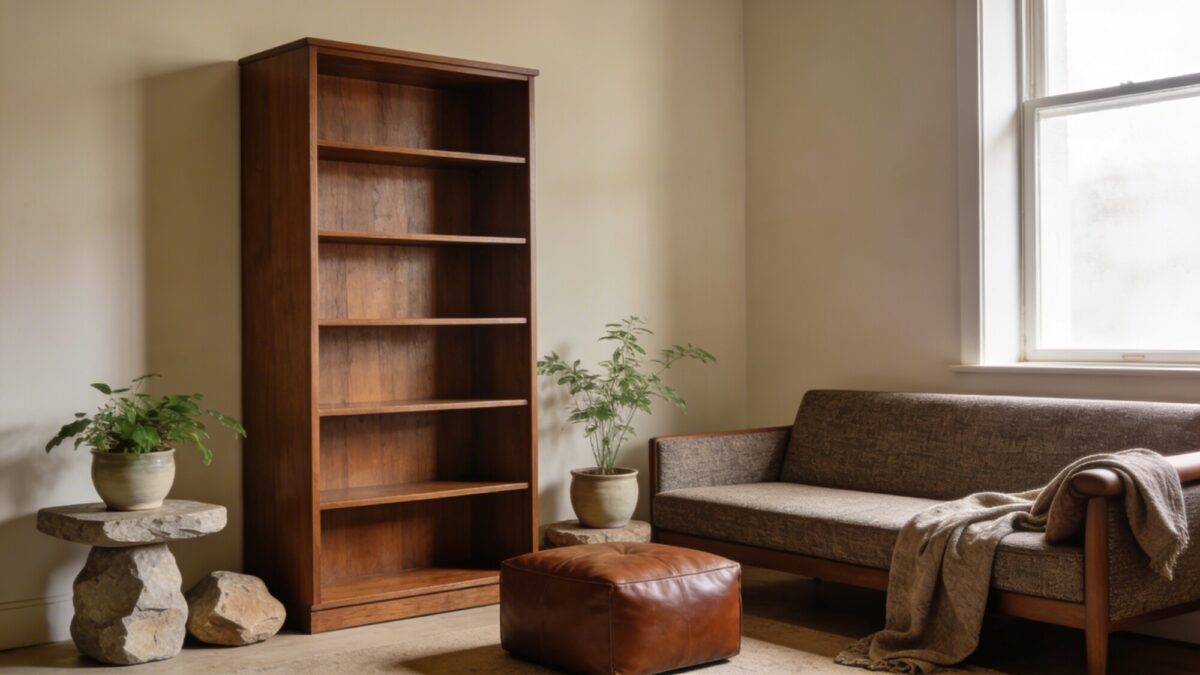
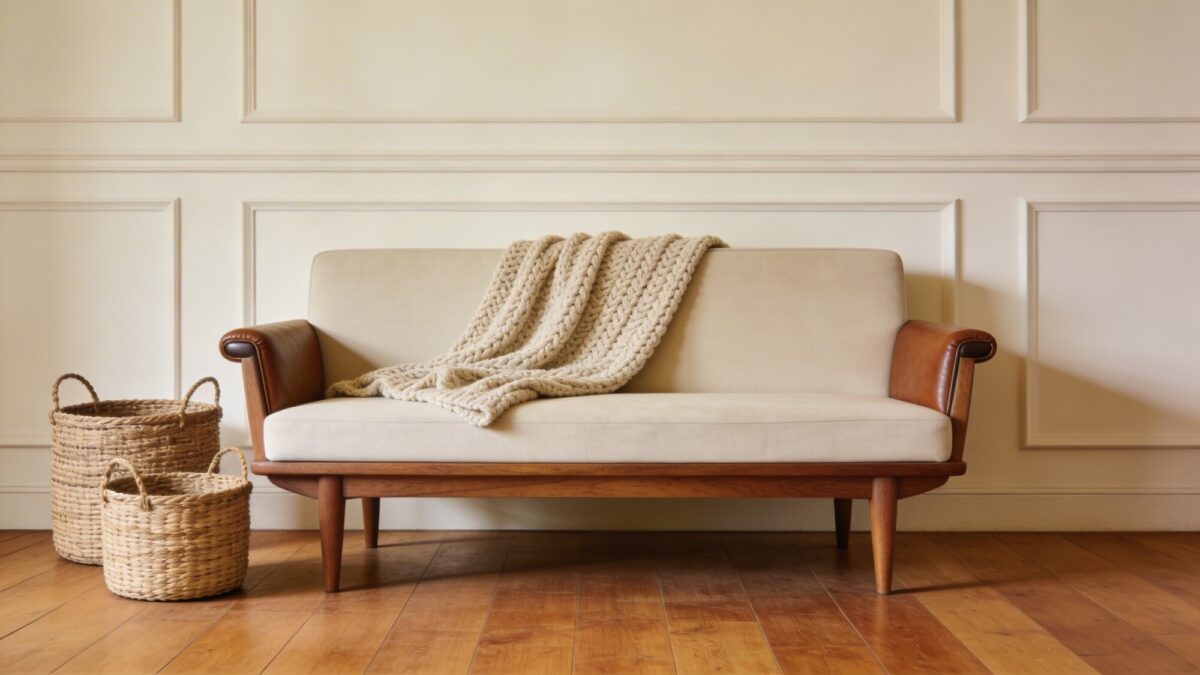
Beyond the sofa and rug, texture shows up in the smaller layers: a linen-blend throw draped (not folded flat) over an arm, a woven basket doing double duty as storage and visual weight, a leather pouf that adds a warm, low note near a taller bookcase. Scale variety matters as much as texture variety — a tall piece, a low piece, and a mid-height piece in the same vignette keeps the eye moving instead of landing on one flat plane.
Rug Strategy
The rug is where most people undershoot. A rug that’s too small makes furniture look like it’s floating in the middle of the room, which is the single most common living room styling mistake. At minimum, the front legs of your sofa and chairs should rest on the rug — ideally all four legs do, if your room can fit a large enough rug. A jute or wool-jute blend rug gets you the right texture without the price of a fully hand-knotted wool piece.
💡 Pro Tip: Measure your seating layout before you shop for a rug, not after. A common size mistake is buying an 8×10 for a room that actually needs a 9×12 or 10×14 — go one size up from what feels “safe” if you’re between two sizes.
Statement Pieces That Don’t Dominate
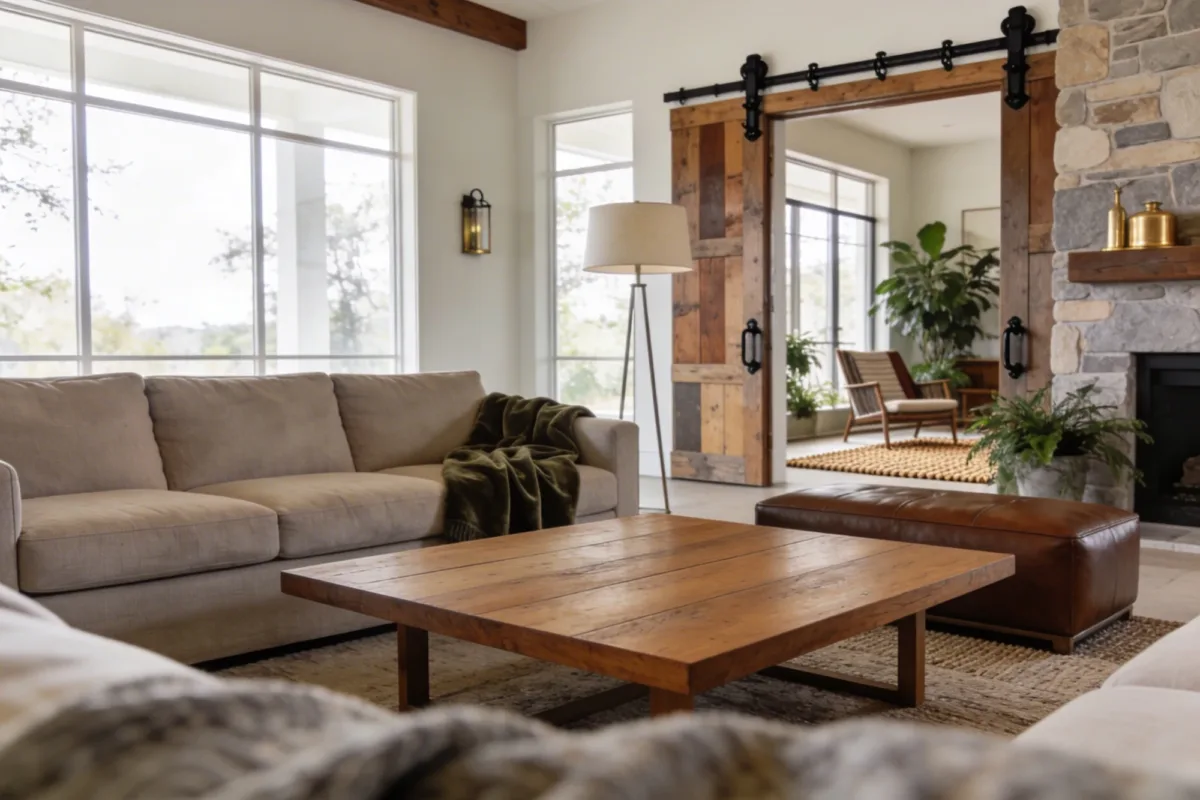
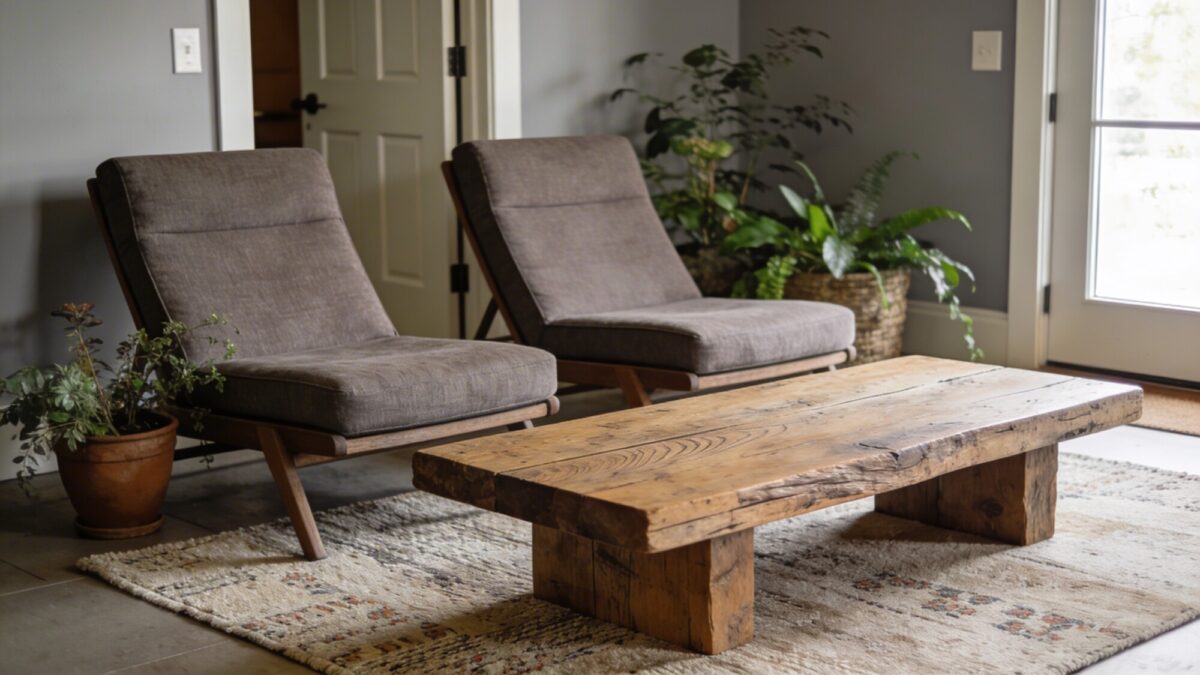
Every room in this style has one piece doing the heavy lifting — usually the sofa or the coffee table — and everything else is quieter by comparison. The trick is that the statement piece isn’t loud in color or pattern; it’s statement through scale, material, or craftsmanship, like a chunky reclaimed-wood coffee table or an oversized boucle sectional. If you want the look but lean toward a warmer, richer palette instead of all-neutral, our brown couch living room inspiration piece shows how brown leather anchors work in a similar layered setup.
Where to Invest
If you’re budgeting, spend on the two pieces you touch and see the most: the sofa and the coffee table. These take the most wear and sit at the visual center of every photo of the room. Arhaus and comparable upper-mid-range retailers price anchor sofas well above mass-market brands like a standard big-box or fast-furniture option — you’re paying for solid-wood frames, better cushion fill, and heavier-duty upholstery, not just the name. Everything else — side tables, lamps, accent pillows — is where it’s fine to shop down.
Lighting That Feels Right, Not Harsh
Overhead lighting is almost never the star in this style. A single bright ceiling fixture flattens texture and makes neutral rooms look sterile instead of cozy — which defeats the entire point of layering all that material in the first place.
Layering Lighting
Aim for three light sources at different heights: a floor lamp, a table lamp, and something low like a small accent light near a plant or shelf. Warm bulbs (2700K, the “soft white” range) matter more than most people expect — a cool 4000K bulb in a warm-toned room will make the whole space look slightly off no matter how good the furniture is.
Artwork and Accessories: The Personal Touch
This is the part that keeps a room from looking like a catalog page. Art and accessories should feel collected, not purchased as a matched set. A single large piece of art (or a loose grid of two or three smaller ones) reads better than a wall of tiny matching frames.
Accessory Rules of Thumb
- Group objects in odd numbers (three or five) rather than pairs — it reads less staged.
- Mix at least one organic element (a plant, dried branches, a stone bowl) into every shelf or table vignette.
- Leave visible empty space on shelves and tables. A shelf packed edge to edge looks cluttered even if every object on it is nice.
- Repeat one metal finish (warm brass or matte black, not both) across lamps, frames, and hardware so accessories feel chosen together.
Arhaus-Inspired vs. Other Living Room Directions
If you’re not sure this is the right direction for your space, here’s how it stacks up against two other common approaches:
| Attribute | Arhaus-Inspired Cozy Luxury | Traditional Formal Luxury | Minimalist Modern |
|---|---|---|---|
| Color palette | Warm neutrals: oatmeal, taupe, dune gray | Deep jewel tones, dark wood, gold accents | Stark white, black, one accent color |
| Materials | Linen, bouclé, jute, walnut, leather | Velvet, mahogany, brass, silk drapery | Glass, steel, smooth lacquer, low-pile textiles |
| Furniture scale | Large, low-profile, generously proportioned | Formal, symmetrical, often matched sets | Compact, sharp-edged, sparse |
| Lighting | Warm, layered, low light sources | Chandeliers, sconces, formal fixtures | Recessed, minimal, often cool-toned |
| Best for | Families wanting durable, lived-in luxury | Formal entertaining spaces, less daily wear | Small spaces, design purists |
Budget-Friendly Hacks That Still Scream “Arhaus”
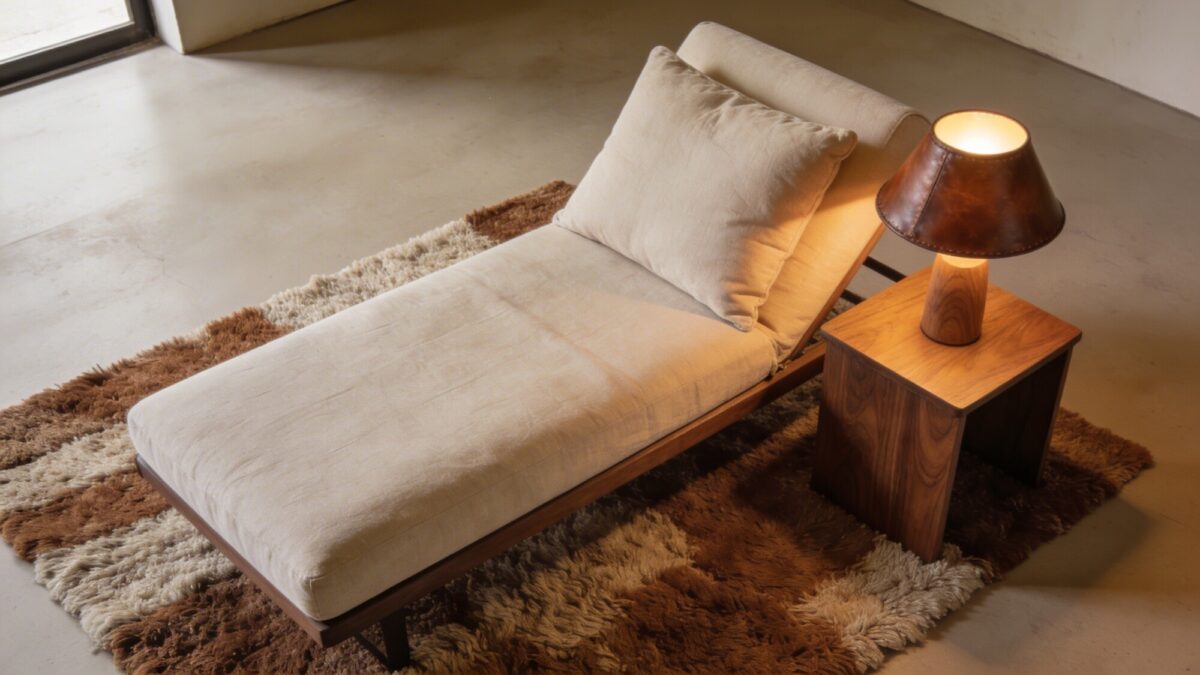
You don’t need to furnish the whole room from one retailer to get this look. Buy the anchor piece — usually the sofa — from a higher-end source if you can swing it, since that’s the piece people notice and the one that shows wear fastest if it’s cheaply made. Then fill in around it with secondhand, marketplace, or mid-range finds for side tables, lamps, and accent chairs, where quality differences are far less visible day to day.
Smarter Sofa Shopping
If the full-price sectional isn’t in the budget, look at floor models, open-box listings, and end-of-season sales — upper-mid-range retailers often discount display pieces by 20–40% since they can’t resell them as new. A slightly worn floor model of a well-made sofa will usually outlast a brand-new fast-furniture sofa anyway.
💡 Pro Tip: Ask any furniture store directly whether they have floor models or discontinued fabrics available — most don’t advertise this, but nearly all of them have some. It’s the single biggest lever for getting a well-built sofa without paying full retail.
FAQ
What defines Arhaus living room style?
Warm neutral colors, mixed natural textures (linen, jute, bouclé, walnut), generously scaled but low-profile furniture, and restrained accessorizing built around one or two statement pieces rather than a lot of small decor.
How can I make a small living room feel like an Arhaus space?
Go bigger on fewer pieces instead of smaller on more. One properly scaled sofa and a large rug will read more spacious and more “designed” than several smaller pieces crowded into the same footprint.
What are essential pieces for an Arhaus-inspired living room?
A neutral upholstered sofa or sectional in a textured fabric, a substantial wood or stone-topped coffee table, a large natural-fiber rug, and layered warm lighting from table and floor lamps rather than overhead fixtures alone.
How important is color in Arhaus aesthetics?
Less than people assume. The palette stays narrow on purpose — the visual interest comes from texture and material contrast within that neutral range, not from adding more colors.
Can I incorporate Arhaus-style elements on a rental budget?
Yes. Focus your money on the sofa and rug since those set the tone for the whole room, then use secondhand or budget pieces for side tables, lamps, and decor. Avoid renter-unfriendly changes like wall paint or built-ins and let furniture and textiles carry the look instead.
Our Take
This style earns its popularity honestly — it’s one of the few “aspirational” looks that actually survives daily use, because it’s built on durable neutrals and texture rather than a trend color or a delicate finish. The failure mode isn’t picking the wrong sofa color; it’s under-scaling the rug or skipping the texture mix and ending up with a beige room that just looks unfinished. Get the scale and the material mix right first, and the rest of the room falls into place. For more direction on pulling a full modern-neutral space together, our modern living room ideas guide is a solid next stop.