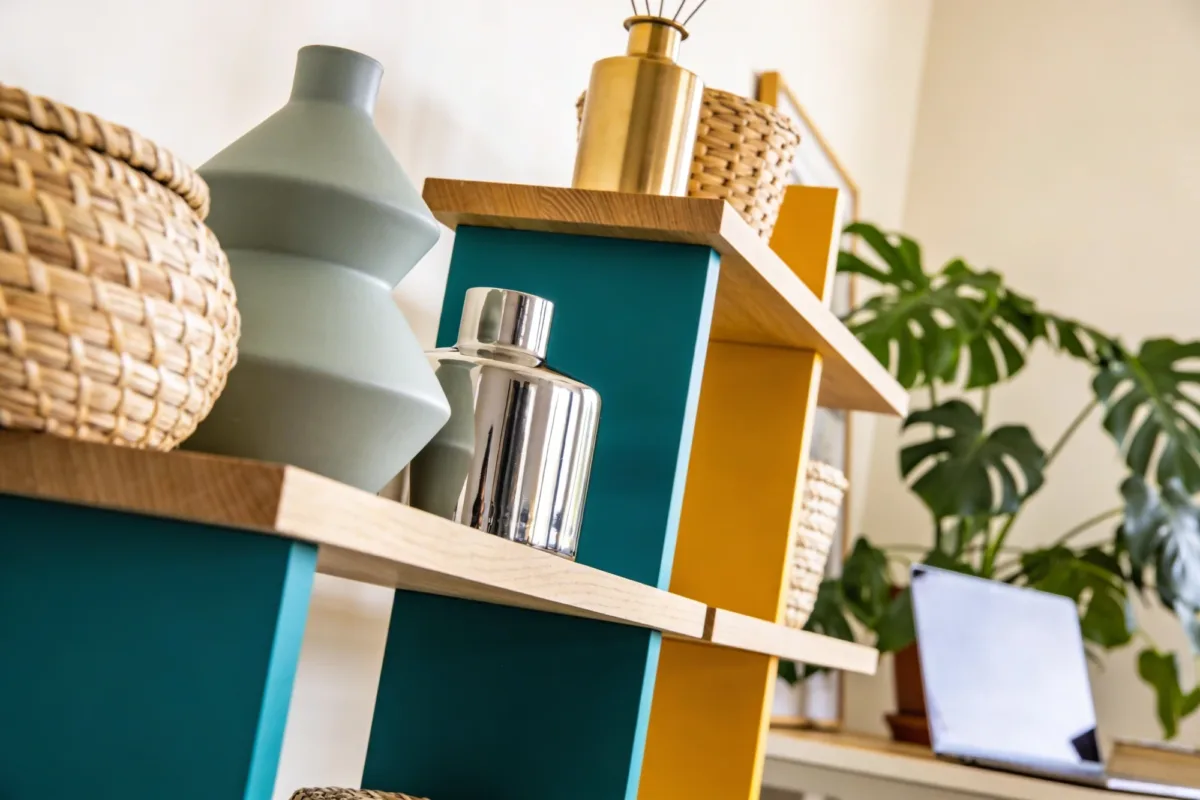
6 Office Shelf Styling: Quick Wins for a Brighter Desk
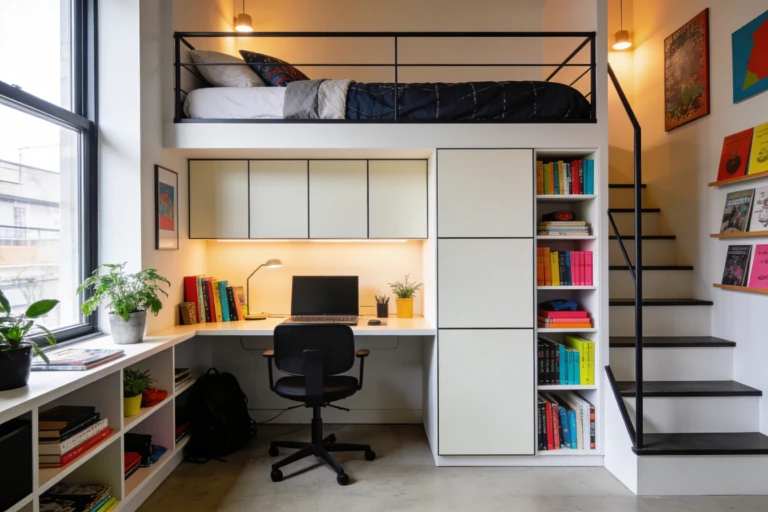
Office shelf styling has one constraint that living room shelves don’t: it has to survive daily use, not just look good in a photo. A shelf you reach past ten times a day needs objects that can take some bumping, plants that forgive inconsistent watering, and a layout that doesn’t fall apart the moment you grab a folder. If you’re working with open shelf styling more broadly, many of the same principles apply, just with less daily wear to plan around.
These six techniques work whether you’re styling a modern industrial bookshelf, a built-in office wall shelving unit, or a basic bookcase from a big-box store — the mechanics don’t change much based on the furniture underneath.
Quick Takeaways
- Texture variety does more visual work than adding more objects — two or three finishes (matte ceramic, wood, one metal) beat a shelf full of similar-looking items.
- A restrained 2–3 color palette keeps a busy work shelf from feeling chaotic, even when it’s holding functional items.
- Low-maintenance plants (pothos, ZZ plant, snake plant) are the only realistic choice for a shelf that gets forgotten during a busy week.
- Purposeful, personal objects — not just generic decor — are what make an office shelf feel like yours instead of a showroom display.
1. Layer Textures Instead of Matching Everything
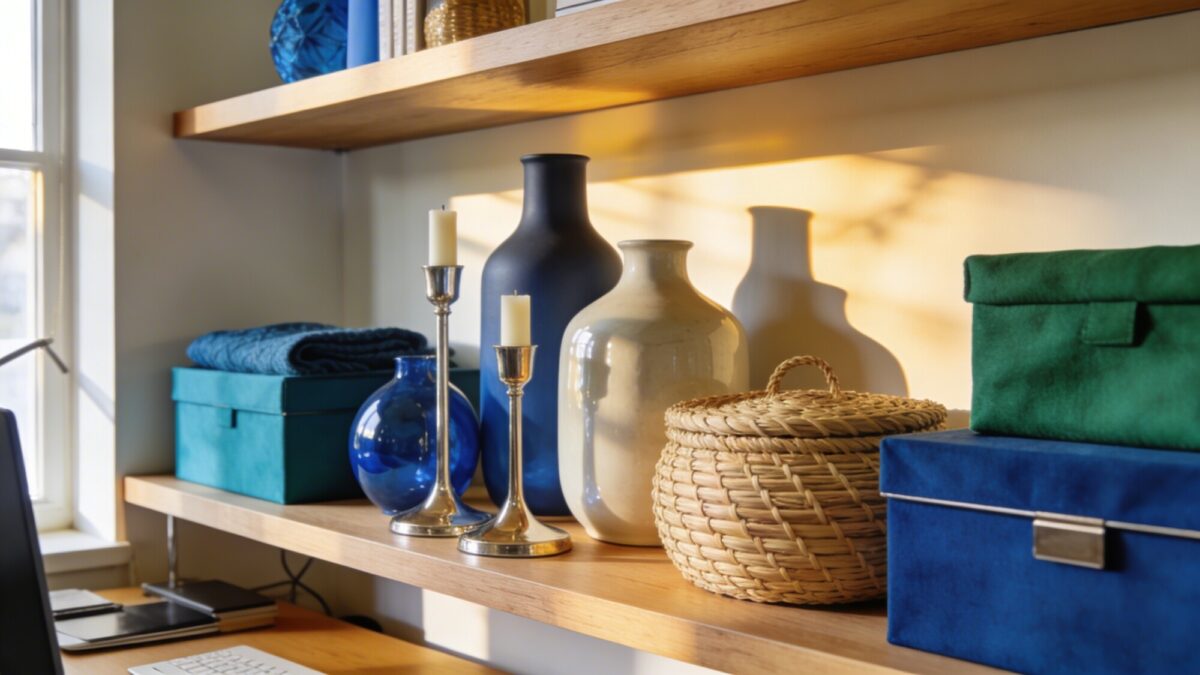
A shelf of all-matching finishes — everything glossy, everything the same wood tone — looks flat under office lighting, which tends to be harsher and more even than the warm lamps you’d use at home. Mixing matte ceramic with a woven basket or fabric-lined box and one metal accent gives the shelf actual dimension.

If you’re working with modern industrial shelving — the kind with black metal frames and wood shelves — the metal is already doing texture work for you. Add warmth with wood-toned objects and one soft element like a woven tray to keep it from feeling cold.
2. Use Color as an Anchor, Not Decoration
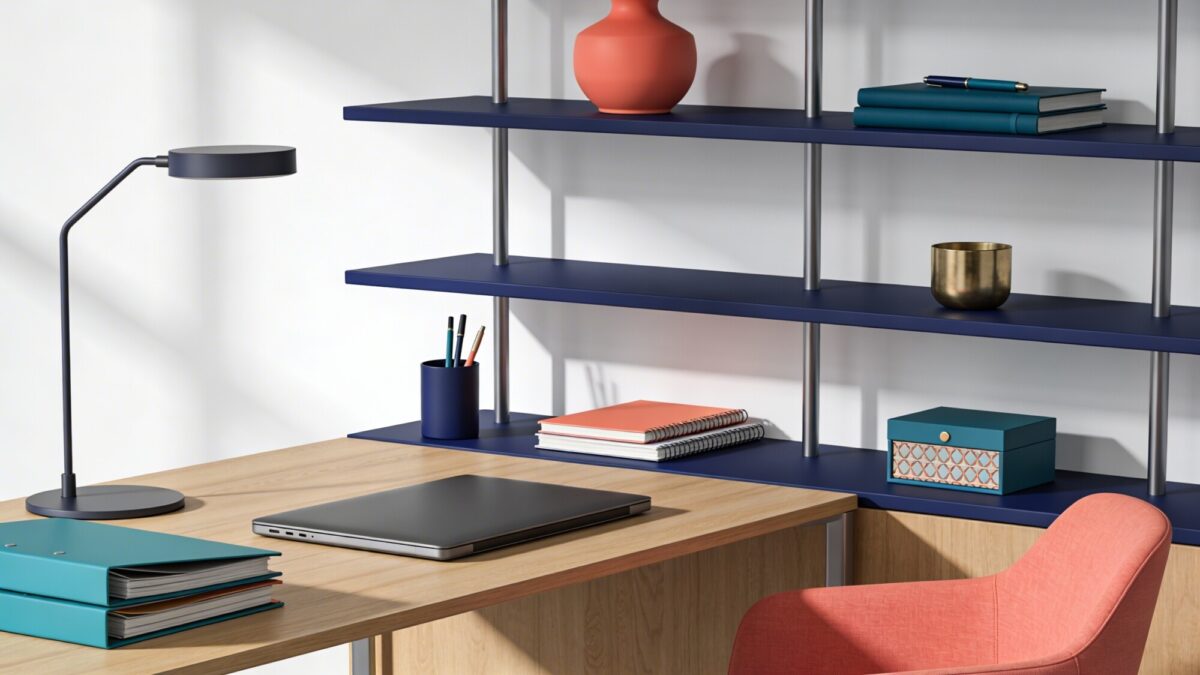
Picking 2–3 core colors — navy, teal, and warm coral is a genuinely workable combination — and applying them across functional items (a notebook, a pen cup, a small storage box) does two things at once: it looks intentional, and it makes your most-used items easy to spot at a glance.
💡 Pro Tip: Limit metallic finishes to one, maybe two, across the whole shelf. Brass mixed with chrome mixed with black hardware is the fastest way to make an otherwise well-planned color scheme look unplanned.
3. Pick Plants That Survive a Busy Work Week
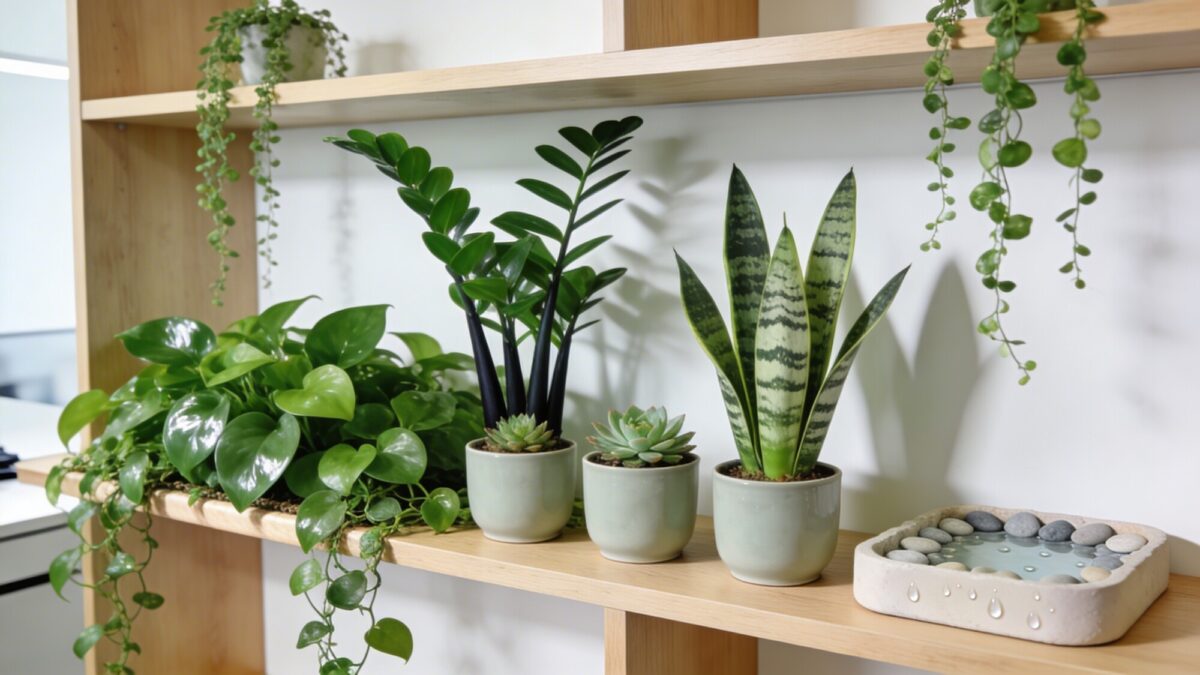
An office shelf gets less consistent attention than a kitchen or living room shelf — you’re not walking past it as often, and a busy week means the watering can doesn’t come out. Pothos, ZZ plant, and snake plant all tolerate a missed week or two, which makes them close to the only realistic choice here.
A small pebble tray under a cluster of succulents catches drips and looks tidy, but it’s optional — the bigger factor in plant survival on an office shelf is picking species that don’t need attention in the first place, not the tray underneath them.
4. Personalize With Objects That Actually Mean Something
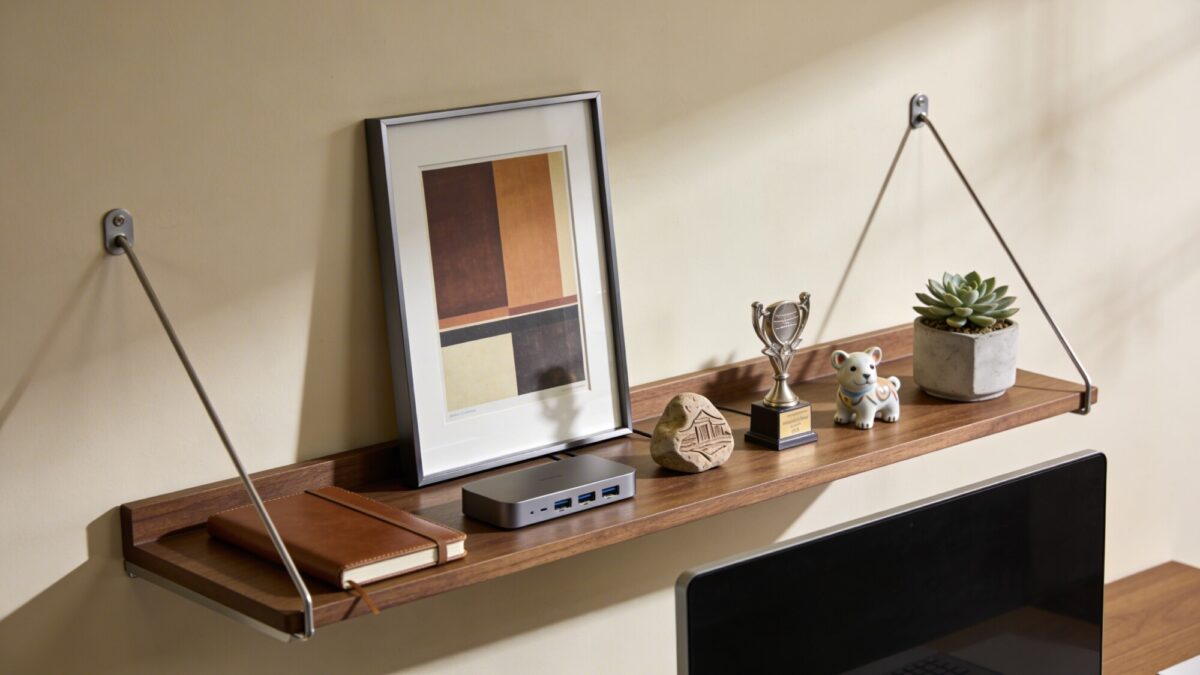
A shelf of generic decor bought specifically to fill space reads as exactly that. Three to five real mementos — a travel keepsake, something from a milestone, one item that’s genuinely a little funny — do more to make a workspace feel like yours than any curated set of matching objects ever will.
Mix in a couple of practical items you actually use daily — a notebook, a small organizer — so the shelf reflects your actual workflow instead of reading as pure display.
5. Build Rhythm With Height Variation
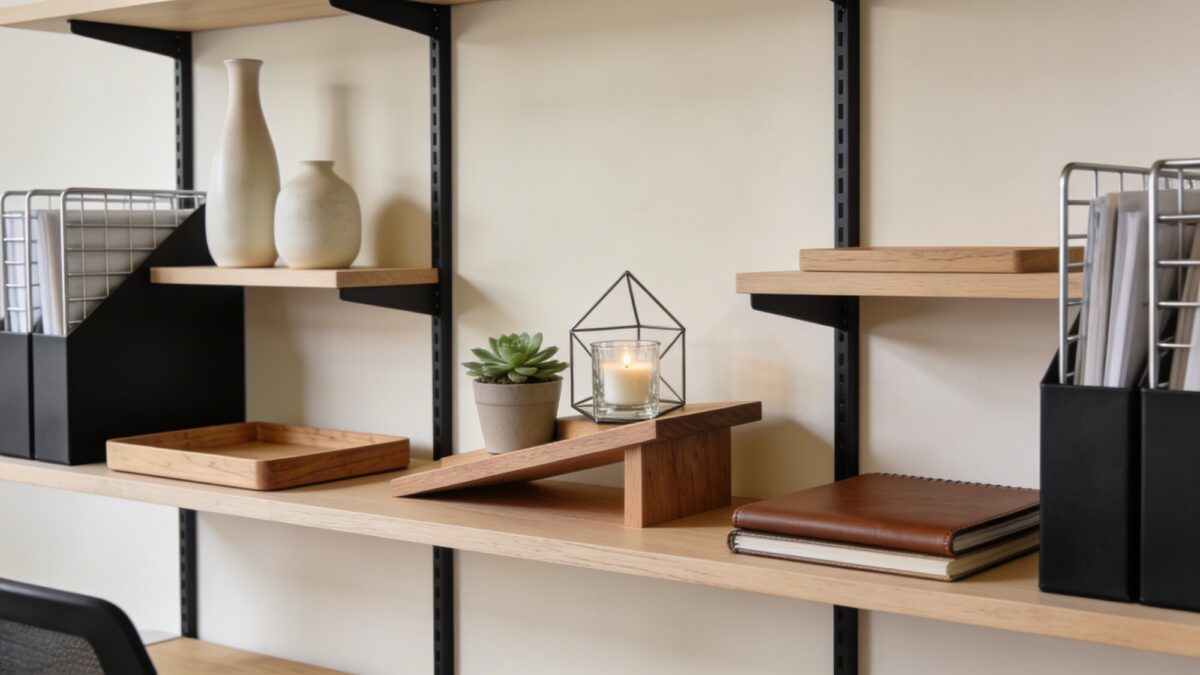
Tall objects toward the edges, shorter ones toward the center, with one small angled cluster as a focal point — this is the same rule that governs good shelf styling in any room, and it holds just as well on wood and metal shelves wall units as it does on a traditional bookcase.
💡 Pro Tip: A small riser or a stack of two books under an object is often all it takes to break up a row of same-height items. You don’t need to buy dedicated risers — anything a couple of inches tall and flat works.
6. Swap One Generic Item for a Statement Piece
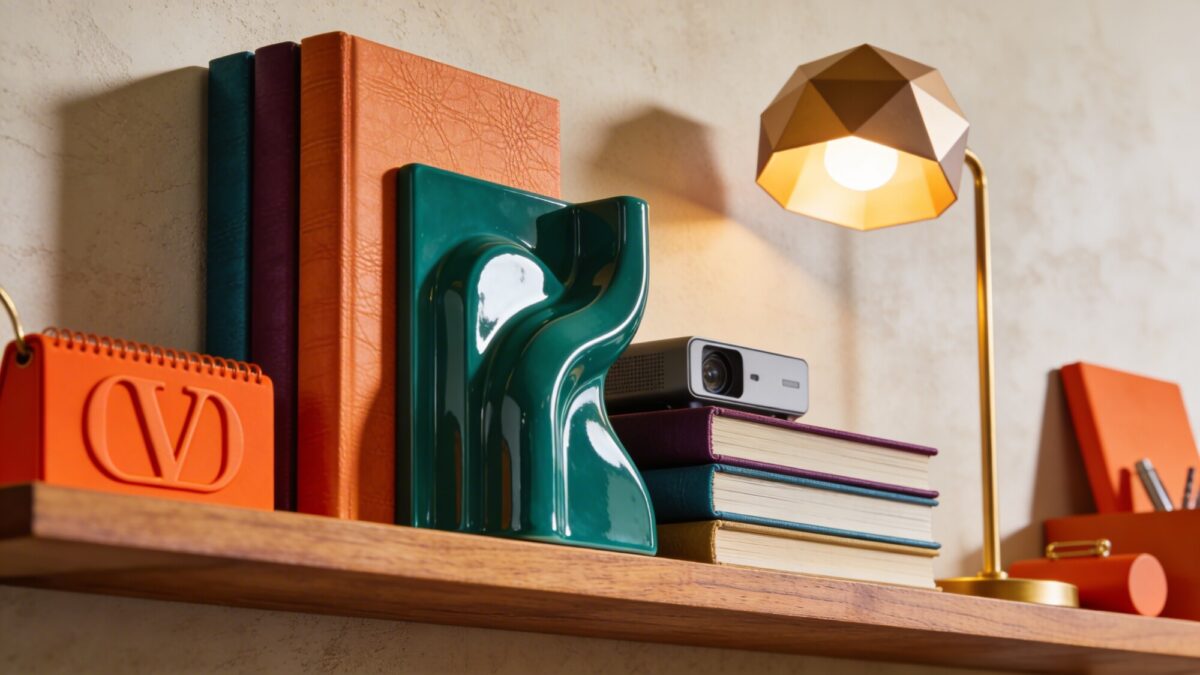
You don’t need to redo the whole shelf to make it feel different. Swapping a plain bookend for a sculptural one, or a generic desk organizer for something in a bold color or unusual material, changes the character of the whole shelf with a single purchase.
Pick one item to be the statement, not two. On a working shelf especially, competing focal points make the space feel busier than it needs to be, and busy is the last thing you want at your desk.
Things to Consider Before You Style
- Decide which items on the shelf need daily access before styling around them — those go at reach height, not tucked behind decor.
- Pick plants based on your actual attention span for care, not what looks best in reference photos.
- Limit your color palette to 2–3 hues before buying anything new, so future purchases have a built-in filter.
- If you’re working with a modern industrial book shelf frame, account for the metal’s visual weight — it usually needs less additional dark or heavy decor than a plain wood shelf would.
Frequently Asked Questions
How do I keep an office shelf from looking cluttered with work supplies on it?
Group functional items by color within your chosen palette, and keep decorative objects to roughly the same count as functional ones — a shelf that’s 80% supplies and 20% decor usually reads as cluttered no matter how it’s arranged.
What’s the best low-light plant for an office shelf?
Snake plant and ZZ plant both tolerate low, indirect light better than pothos, which does best with at least some brighter indirect light to avoid leggy growth.
Should office shelf styling match my home decor style?
It helps for consistency if your office is part of a shared living space, but it doesn’t have to match exactly — a modern industrial bookshelf can coexist with a softer living room a room away without looking disconnected.
How often should I restyle an office shelf?
Less often than a living room shelf, generally. A quarterly swap of one or two items is enough to keep it from feeling stale without disrupting a workspace you rely on daily.
Our Take
Start with the color palette and one statement swap — both are low-effort, and together they do more to make a plain office shelf feel intentional than adding new objects would. For more on general shelf composition techniques that carry over from room to room, see our guide to floating shelf styling secrets.