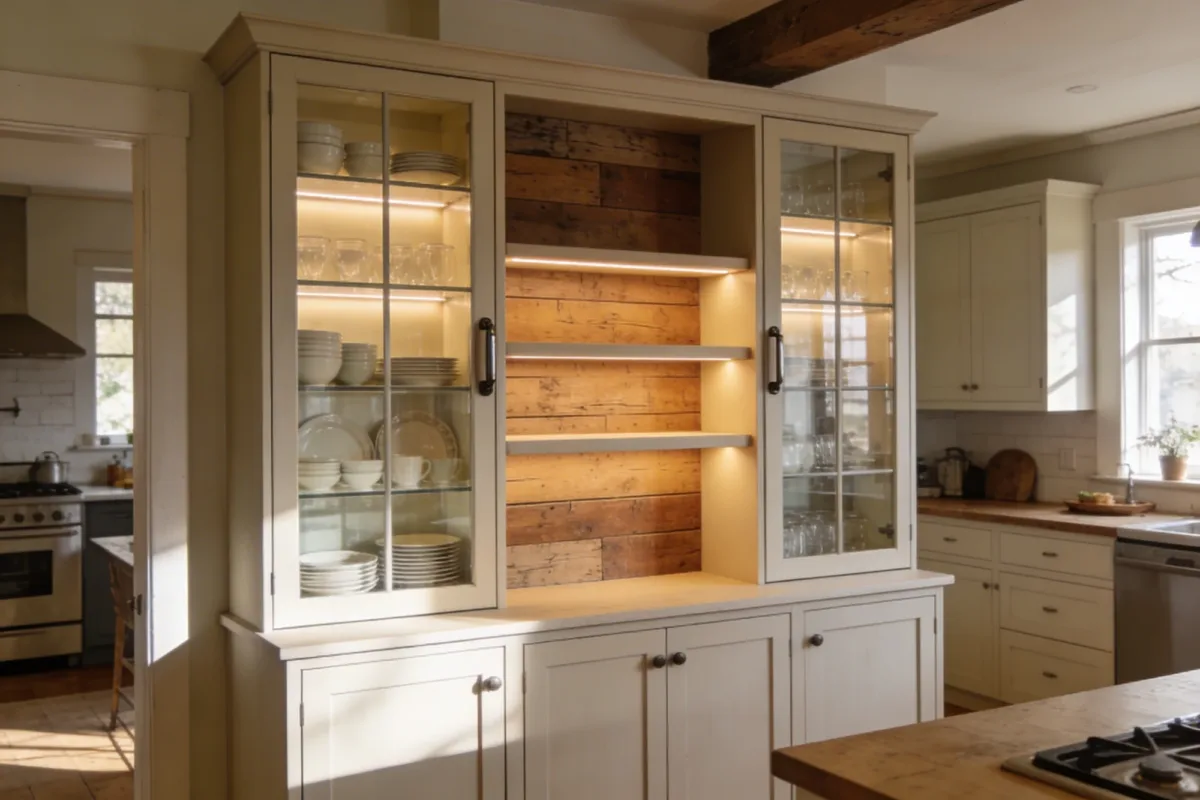
8 Small Farmhouse Kitchen Cabinets: Charming Ideas You’Ll Love
Small farmhouse kitchen cabinets have one job that matters more than any other: storage density. A farmhouse look with poor storage design just means you traded function for aesthetics, and in a tight kitchen you can’t afford that trade. The eight styles below balance both, and if you’re still deciding on your overall small farmhouse kitchen layout, it’s worth settling that first since it determines which of these cabinet styles actually fit your space.
None of these require a full gut renovation. Most are door swaps, hardware changes, or interior reconfigurations you can do cabinet-by-cabinet as budget allows.
Quick Takeaways
- Glass-front cabinets only work if you’re willing to keep what’s inside genuinely tidy — they’re the highest-maintenance option on this list.
- Corner cabinets are the most wasted space in a small kitchen; a lazy Susan or door-within-door insert reclaims real storage most people ignore.
- Two-tone cabinets read best with kitchen storage design that already has a clear “upper vs. lower” function split — don’t force it on a single run of cabinets.
- Pale cabinet finishes pair naturally with kitchen cabinets gray walls; skip this combination if your kitchen doesn’t get much natural light, since gray-on-pale can read flat in dim rooms.
1. Cottage Shaker Doors With Reclaimed Wood Accents
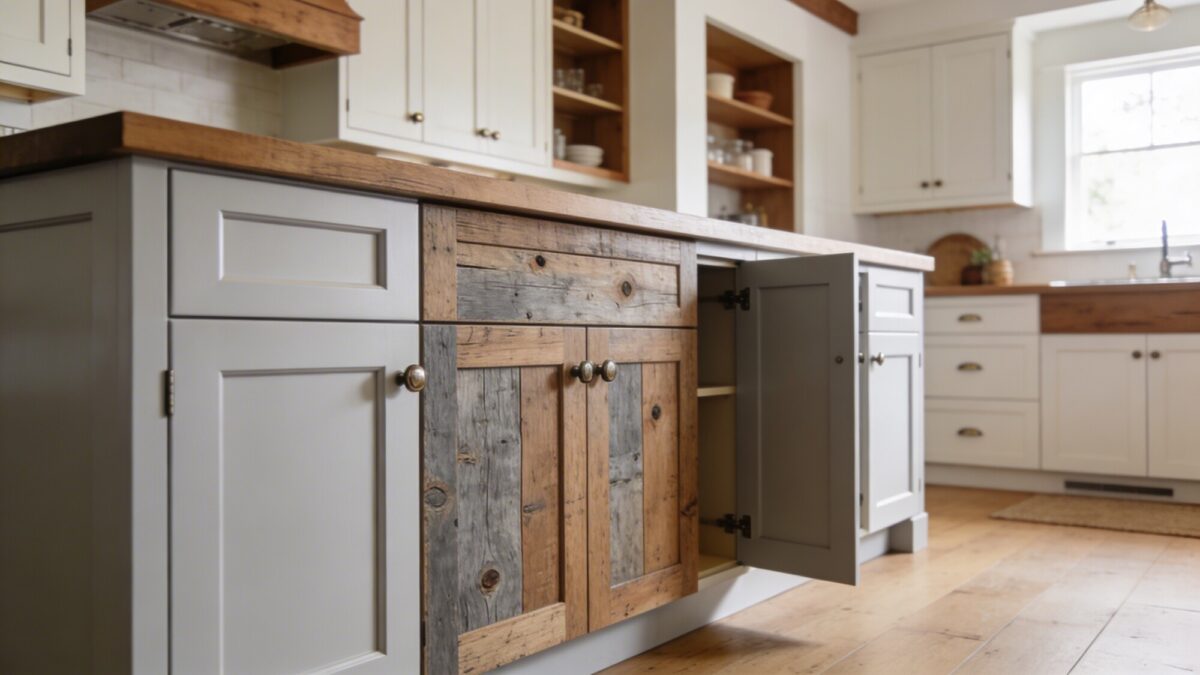
A shaker frame in a light paint with a reclaimed wood center panel is the easiest entry point into farmhouse cabinets, mostly because shaker doors are already the most common cabinet style sold — swapping in a wood-panel version doesn’t require custom millwork in most cases.
💡 Pro Tip: Seal the reclaimed wood panel with a matte topcoat, not satin or gloss. A glossy finish on reclaimed wood catches kitchen light in a way that looks synthetic and undercuts the whole point of using real wood grain.
The trade-off: reclaimed or wood-look panels cost more per door than a flat painted panel, so this is usually a better fit for a partial upgrade — say, just the island or one run of uppers — than a full kitchen replacement.
2. Glass-Front Cabinets With Hidden Storage Tricks
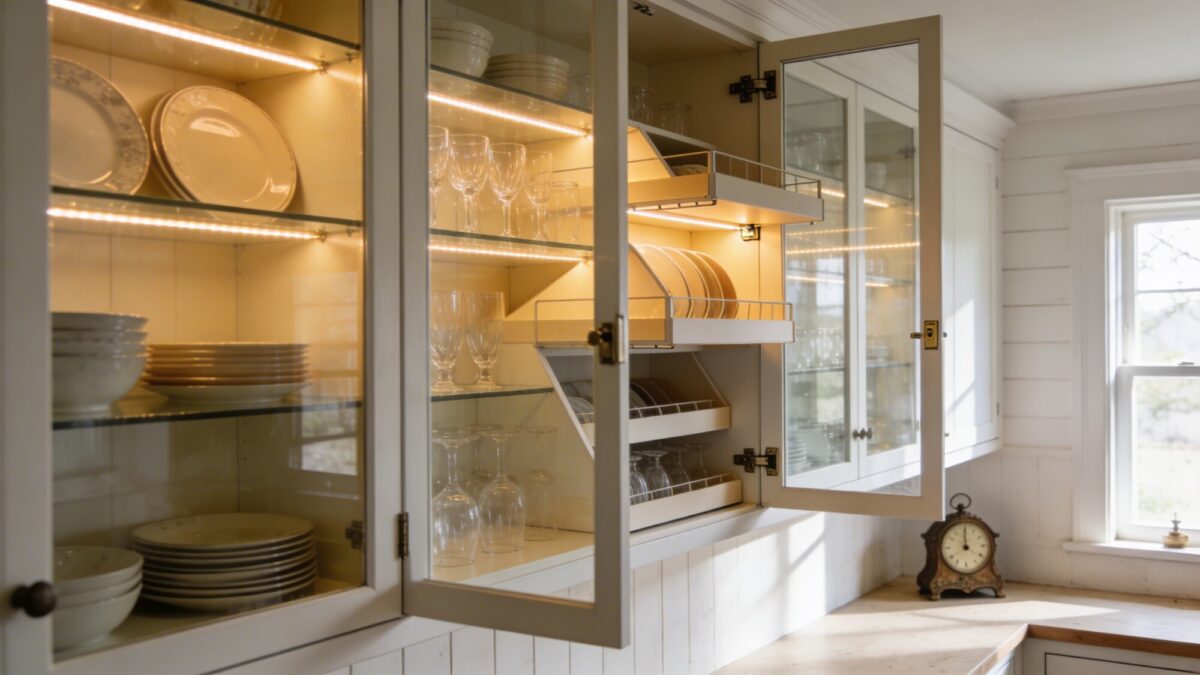
Glass fronts show off your dishware, which is exactly why they’re the riskiest option here. Everything behind that glass is now part of your kitchen’s decor, all the time, whether you meant it to be or not.
If you go this route, use glass on no more than one or two upper cabinets — not the whole run. Pair with soft-close hinges and, if your budget allows, a small LED strip inside to light the glassware at night. Floating shelves inside handle odd-height items like stemware better than fixed shelving does.
💡 Pro Tip: Before committing to glass fronts, open that cabinet every day for a week and note what’s actually in there. If it’s a mix of mismatched Tupperware and dishes, glass will make that obvious — move that stuff to a closed cabinet first.
3. Open-Shelf Hybrid Cabinets for Everyday Access
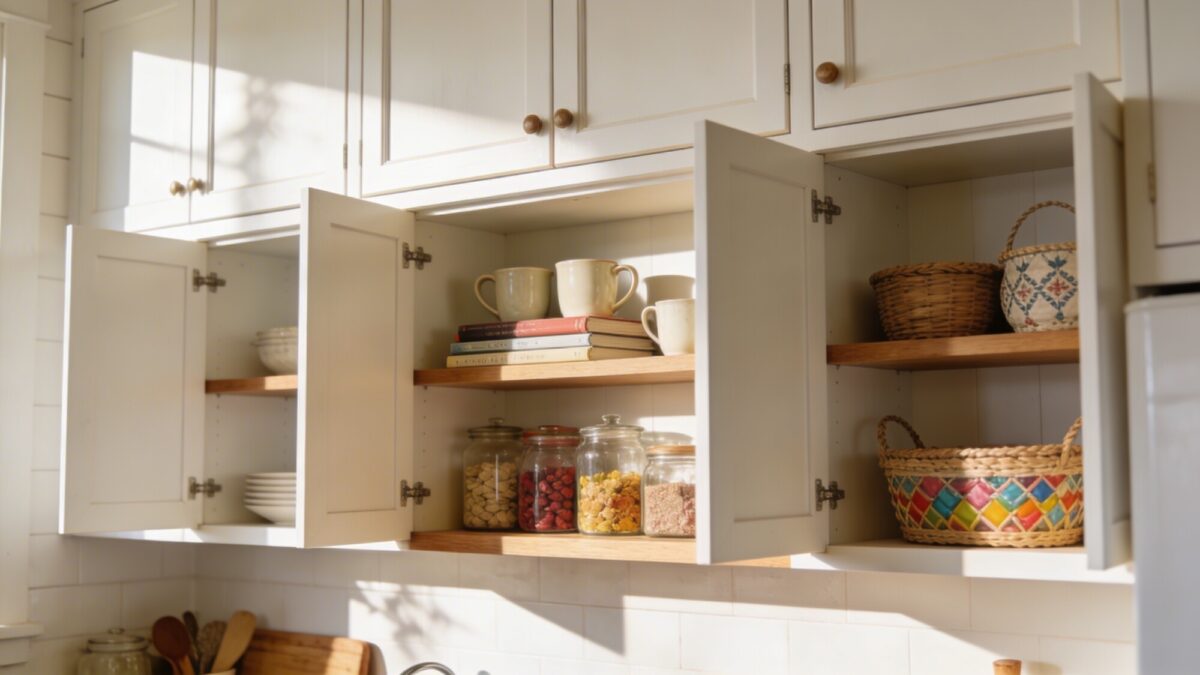
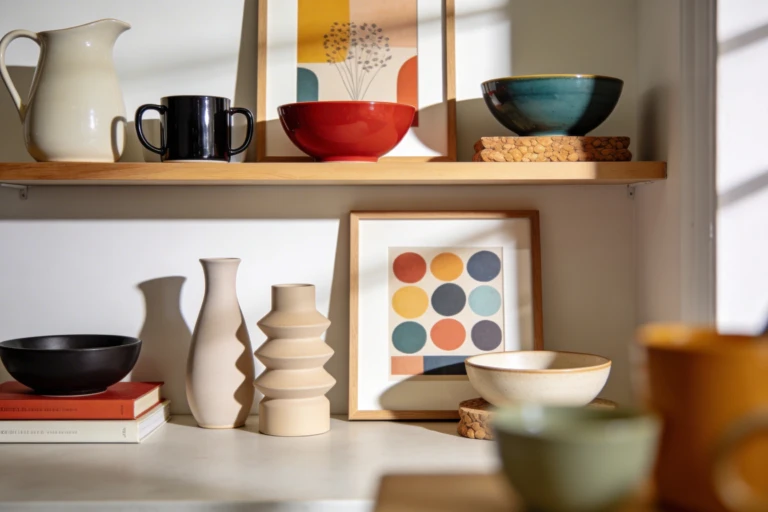
Mixing a few open shelves into an otherwise closed cabinet run gives you fast access to daily items — mugs, a stack of cookbooks, jars of pantry staples — without opening the full farmhouse-open-shelf look on every wall.
This is a genuinely good kitchen storage design compromise for anyone unsure about full open shelving: you get the visual warmth in one or two spots, and the rest of your kitchen storage design stays hidden and dust-free.
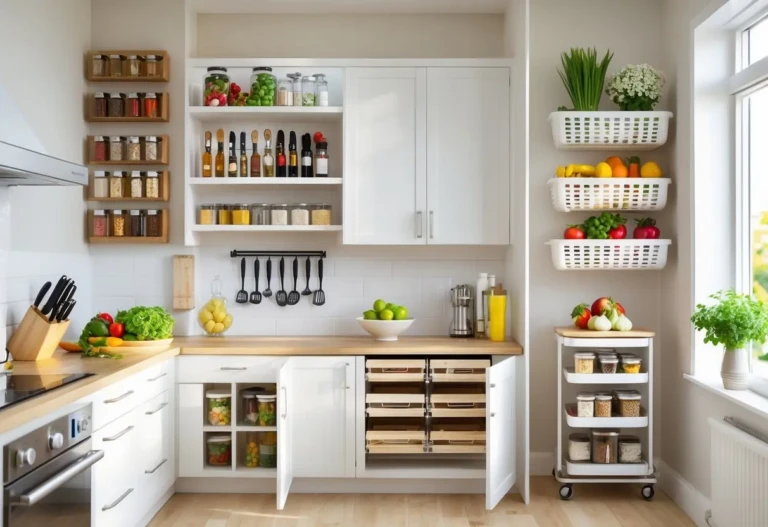
4. Single-Door Pantry Cabinets With Pull-Out Racks
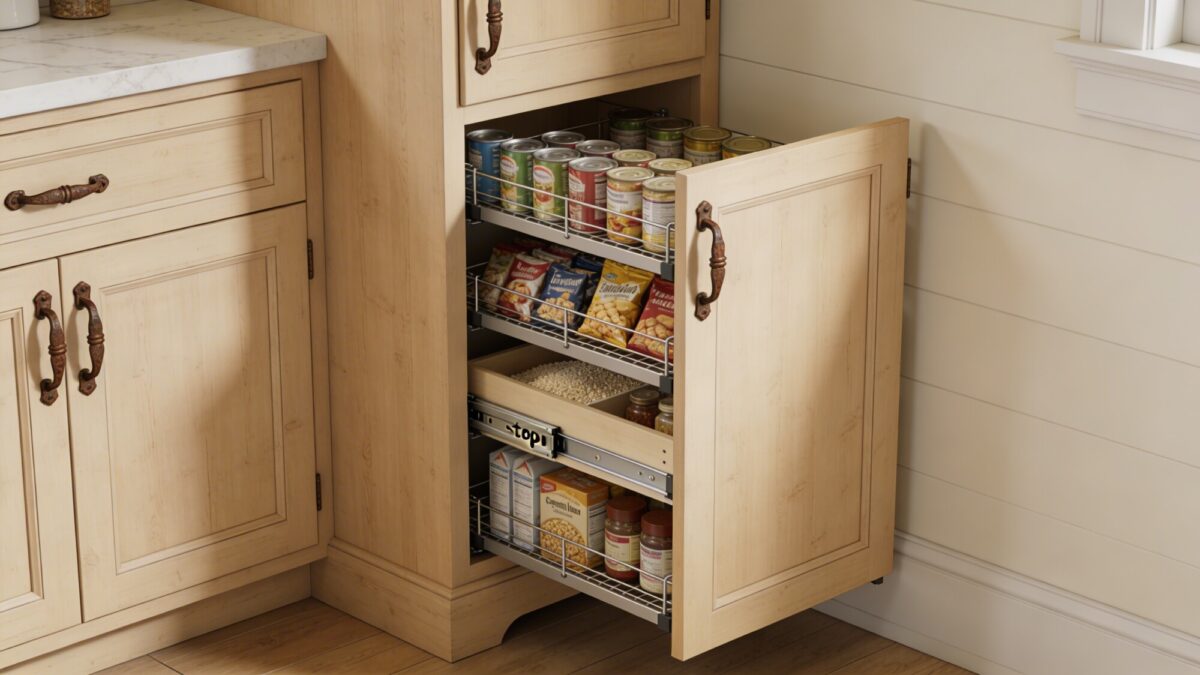
A tall, narrow cabinet with slim pull-out racks behind a single door is one of the most efficient kitchen storage ideas cabinets can offer in a small kitchen, because it uses vertical space that a standard base cabinet wastes. It’s a natural fit for a dead corner or the gap next to a fridge.
Adjustable shelving matters more here than in almost any other cabinet type — canned goods, cereal boxes, and snack bags are all different heights, and a fixed-shelf pull-out wastes the exact space it’s supposed to save.
5. Flat-Panel Cabinets With Contrast Hardware
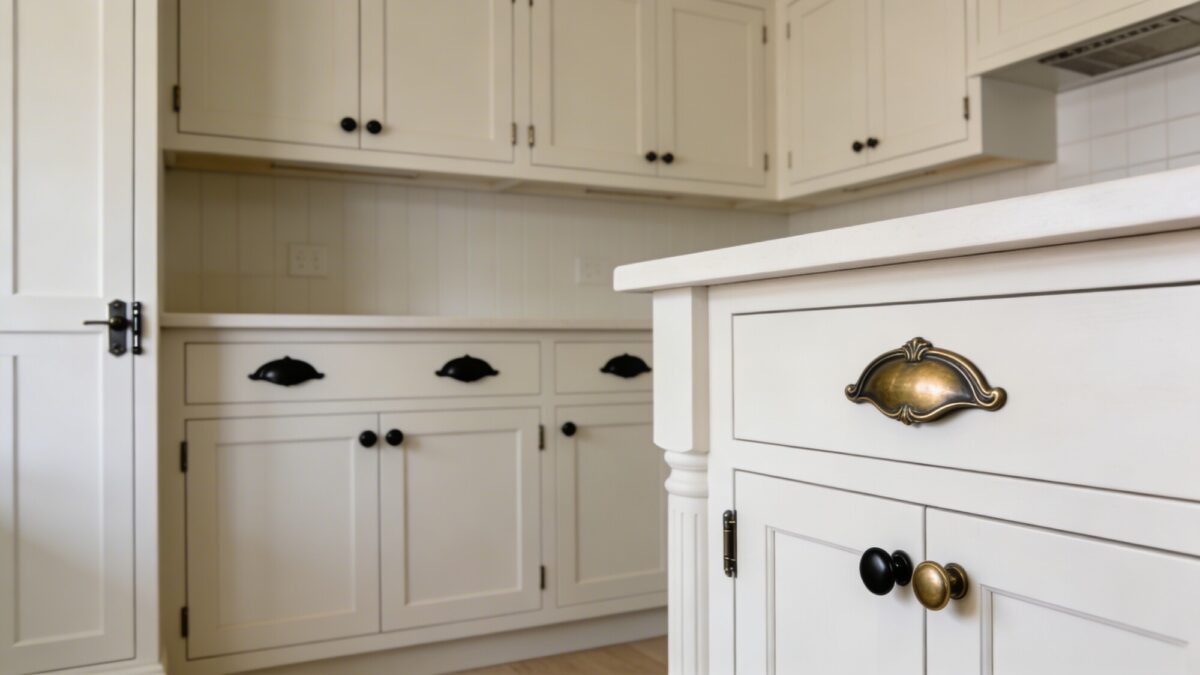
Flat-panel doors keep lines clean, which matters more in a small kitchen than people expect — busy door profiles multiply visually in a tight space. Black or brass hardware against a light panel gives you contrast without adding actual visual clutter, since hardware doesn’t compete for counter or wall space the way decor does.
Keep gaps between doors consistent. Uneven reveal gaps are one of the more noticeable installation mistakes in a flat-panel kitchen, since there’s no molding or detail to distract the eye from a crooked line.
6. Painted Cabinets With Woven Basket Accents
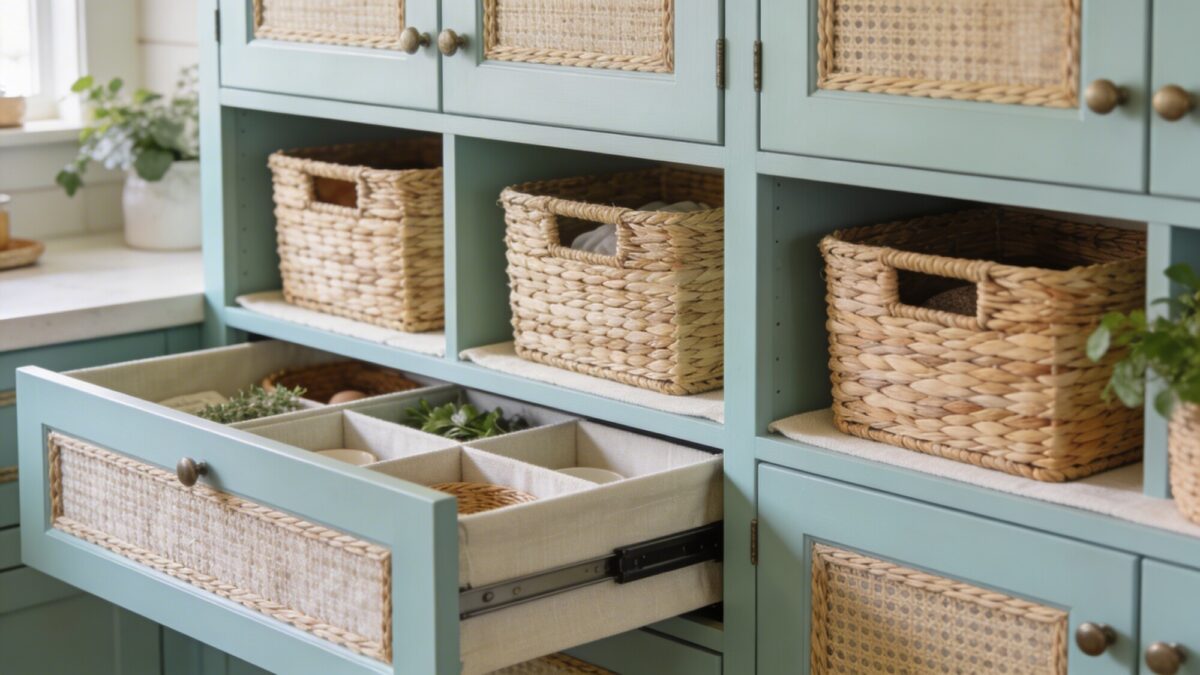
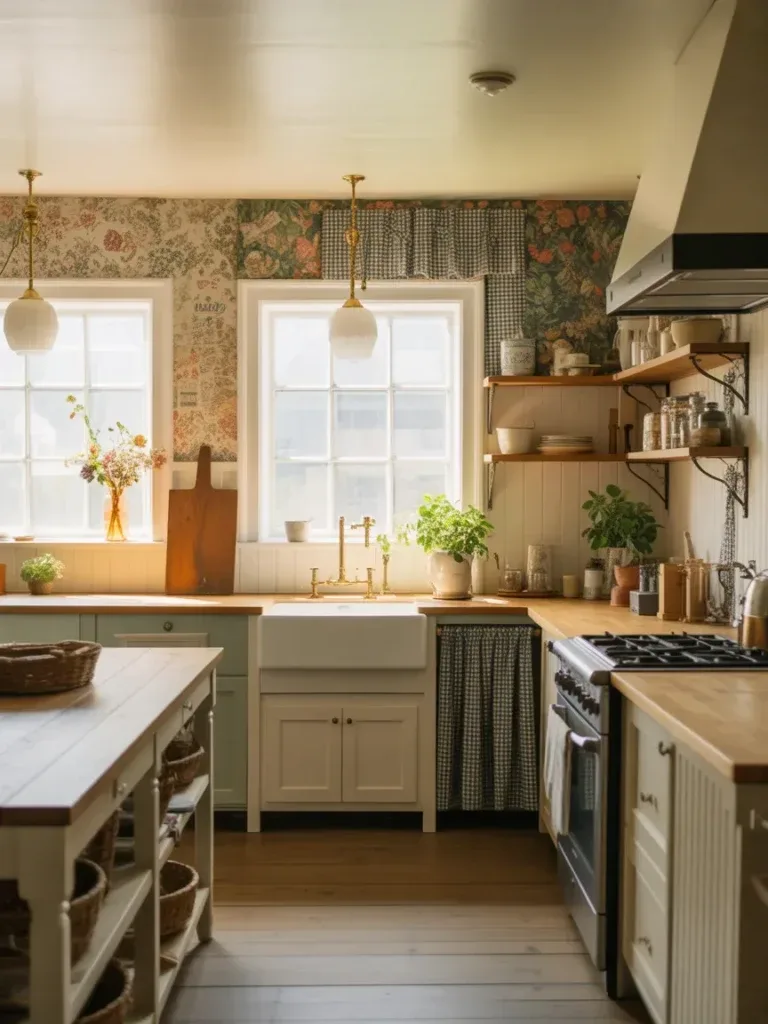
A pale blue or sage cabinet color paired with woven baskets in the open cubbies is one of the softer farmhouse looks, and it works well with kitchen cabinets gray walls if you want a calm, low-contrast palette rather than a bold two-tone statement.
Measure the cubby before buying baskets — a basket that’s even half an inch too wide won’t slide in cleanly, and a basket that’s too small looks lost. Bring a tape measure when you shop, not a guess.
7. Two-Tone Upper and Lower Cabinets
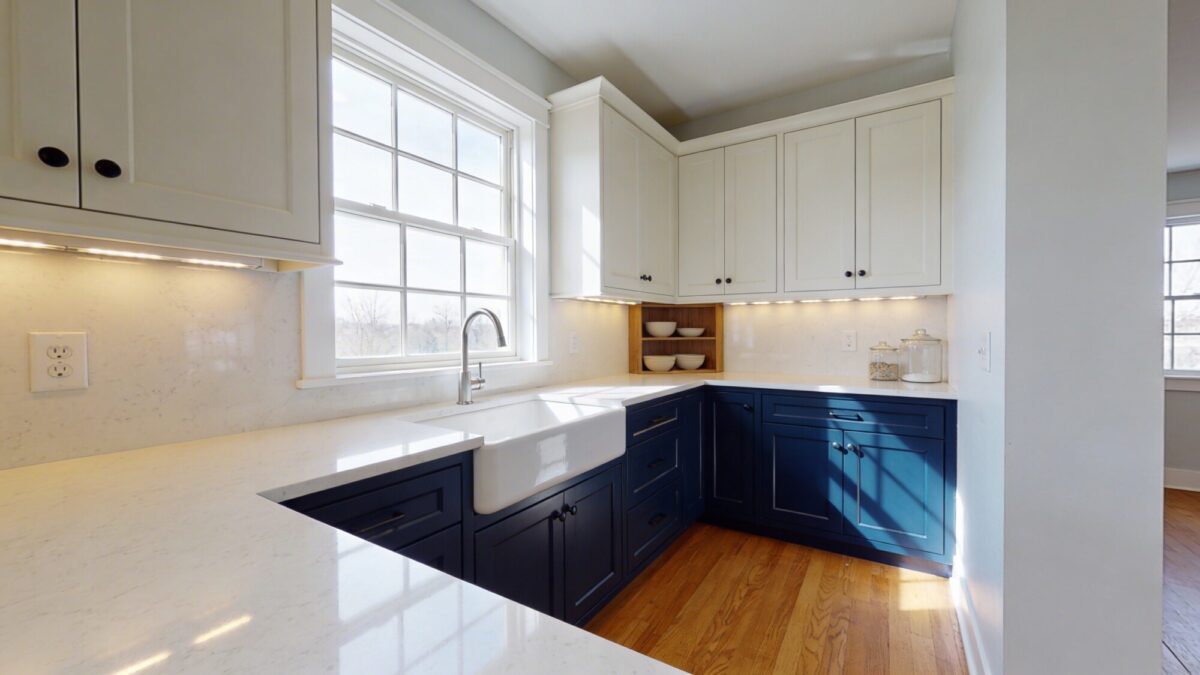
Cream uppers with navy or a deep warm color on the lowers create real depth in a small kitchen, mostly because it breaks the room into two visual zones instead of one flat wall of color. Keep countertops light so they still bounce daylight around the room — a dark counter on top of dark lowers can make a small kitchen feel boxed in.
💡 Pro Tip: If you’re testing two-tone before committing, paint sample boards and prop them against your actual cabinets at different times of day. Navy in particular shifts noticeably under warm bulb light versus daylight, and that’s the detail that trips people up after they’ve already bought the paint.
8. Compact Corner Cabinets With Lazy Susans
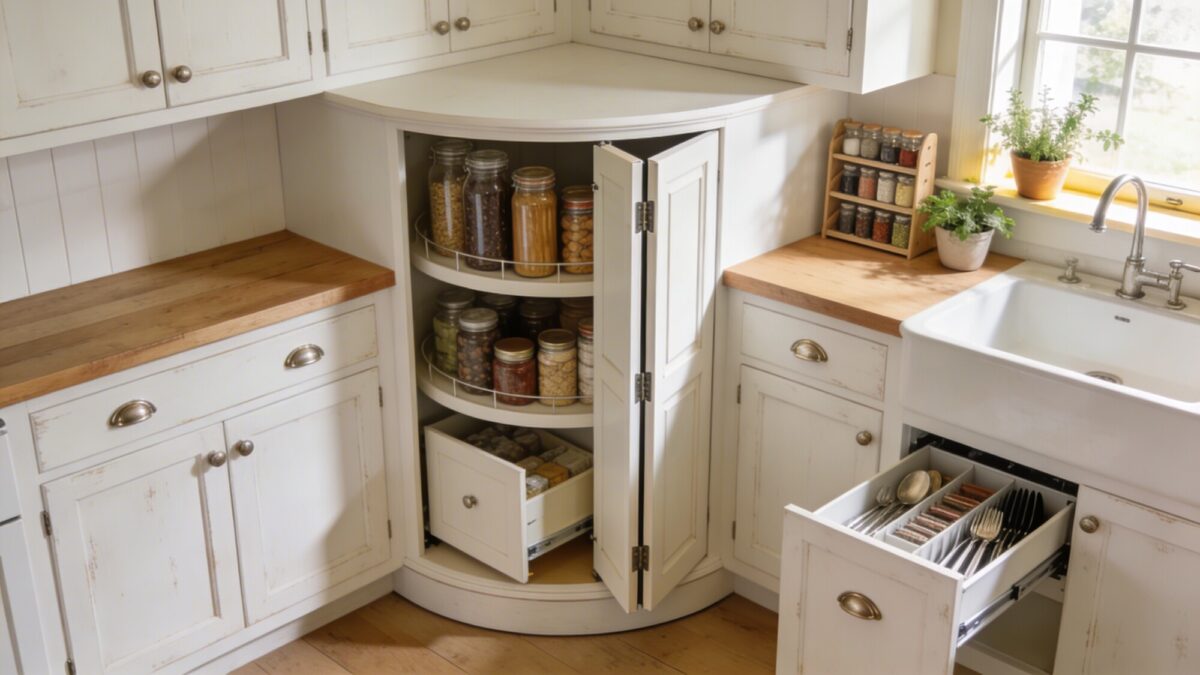
Corner cabinets are the most consistently wasted storage in a small kitchen. A full-height lazy Susan turns that blind corner into usable space for tall jars and canned goods, and bi-fold or door-within-door hardware cuts the swing radius so the door doesn’t collide with an island or a nearby appliance.
This is a good spot for kitchen ideas spice storage, too — a slim pull-out rack mounted on the inside of a bi-fold door holds spice jars without taking up shelf depth elsewhere.
Comparing the Eight Cabinet Styles
| Style | Best For | Maintenance Level | Typical Install Difficulty |
|---|---|---|---|
| Cottage shaker + reclaimed wood | Partial upgrades, islands | Low | Moderate (custom panels) |
| Glass-front | Showing off curated dishware | High | Low (door swap) |
| Open-shelf hybrid | Daily-use items, undecided on full open shelving | Medium | Low |
| Single-door pantry pull-out | Dead corners, narrow gaps | Low | Moderate |
| Flat-panel + contrast hardware | Clean modern-farmhouse blend | Low | Low |
| Painted + woven baskets | Soft, low-contrast palettes | Medium | Low |
| Two-tone upper/lower | Adding depth to a flat layout | Low | Moderate (paint/refinish) |
| Corner cabinet w/ lazy Susan | Reclaiming dead corner space | Low | Moderate-High |
Things to Consider Before You Choose
- Decide your storage priority first — daily access (open-shelf hybrid) and maximum capacity (corner lazy Susan, pantry pull-out) call for different cabinet styles.
- If you’re on gray walls, test your cabinet paint sample against the actual wall color before ordering doors — pale cabinet tones can read cooler or warmer than expected next to gray.
- Budget per-door costs realistically: reclaimed wood panels and glass fronts both cost more than a standard painted flat panel, so mixing styles (one accent cabinet, rest standard) stretches a budget further than converting the whole kitchen.
- Measure corner and pantry cabinet interiors before buying any pull-out hardware — sizing mismatches here are the most common return.
Frequently Asked Questions
Which of these cabinet styles is cheapest to do first?
Flat-panel with contrast hardware, since it’s usually a hardware and paint change rather than new doors or interior reconfiguration.
Do glass-front cabinets make a small kitchen feel bigger?
They can, since glass reads as more open than a solid door, but only if what’s behind the glass is genuinely tidy — otherwise it has the opposite effect.
What’s the best cabinet style for spice storage?
A bi-fold corner cabinet with a door-mounted spice rack, or a pull-out pantry rack — both use vertical space that a standard cabinet shelf leaves empty.
Should I mix two-tone cabinets with an already busy backsplash?
Generally no. Two-tone cabinets are already a strong visual statement; a busy backsplash on top of that tends to make a small kitchen feel cluttered rather than layered.
Is it worth replacing all my cabinet doors at once?
Not necessarily. Doing one run or one accent piece first lets you confirm the style works in your actual light and layout before committing the whole kitchen budget.
Our Take
If you only change one thing, make it the corner cabinet — it’s the most commonly wasted space in a small kitchen and a lazy Susan or door-within-door insert fixes that permanently. Save glass fronts for last, since they demand the most ongoing upkeep of anything on this list. For more on stretching a farmhouse kitchen budget across a full remodel, see our guide to small farmhouse kitchen ideas on a budget.