6 Fairy Room Decor Bedroom Ideas for Dreamy Teens
Good fairy room decor bedroom ideas usually come down to three things: layered light, texture, and restraint. It’s easy to end up with a room that looks like a costume shop rather than a place you actually want to sleep in — the difference is almost always in how much you leave out, not how much you add. If you want more of a full-room transformation rather than just an accent corner, our guide to a full fairy bedroom makeover walks through that version.
Below are six approaches that hold up in a real teen bedroom, not just in a styled photo. Some work as a weekend project with things you can order this week; a couple take longer because they involve paint or a mural. Pick one, not all six — a room built around a single strong idea reads as intentional, and a room with all six competing for attention just reads as busy.
Quick-Reference: The 6 Fairy Room Decor Bedroom Ideas
- Fairy nook — a dedicated reading corner with layered lighting and soft textiles
- Moonlit canopy bed — sheer drapery over the bed frame for a storybook centerpiece
- Nature-inspired details — botanicals, wood, and forest-floor textures grounding the theme
- Night-sky mural or decal wall — a bold accent wall as the room’s focal point
- Scaled-down “tiny” furniture — small-footprint pieces that add character without eating floor space
- Layered lanterns and fairy lights — multiple light sources for day-to-night mood control
1. Build a Fairy Nook for Reading and Winding Down
A fairy nook works because it gives the fairycore aesthetic a boundary. Instead of scattering lights and greenery across the whole room, you concentrate them in one corner — usually the one nearest a window, so it gets real daylight during the day and holds a soft glow at night.
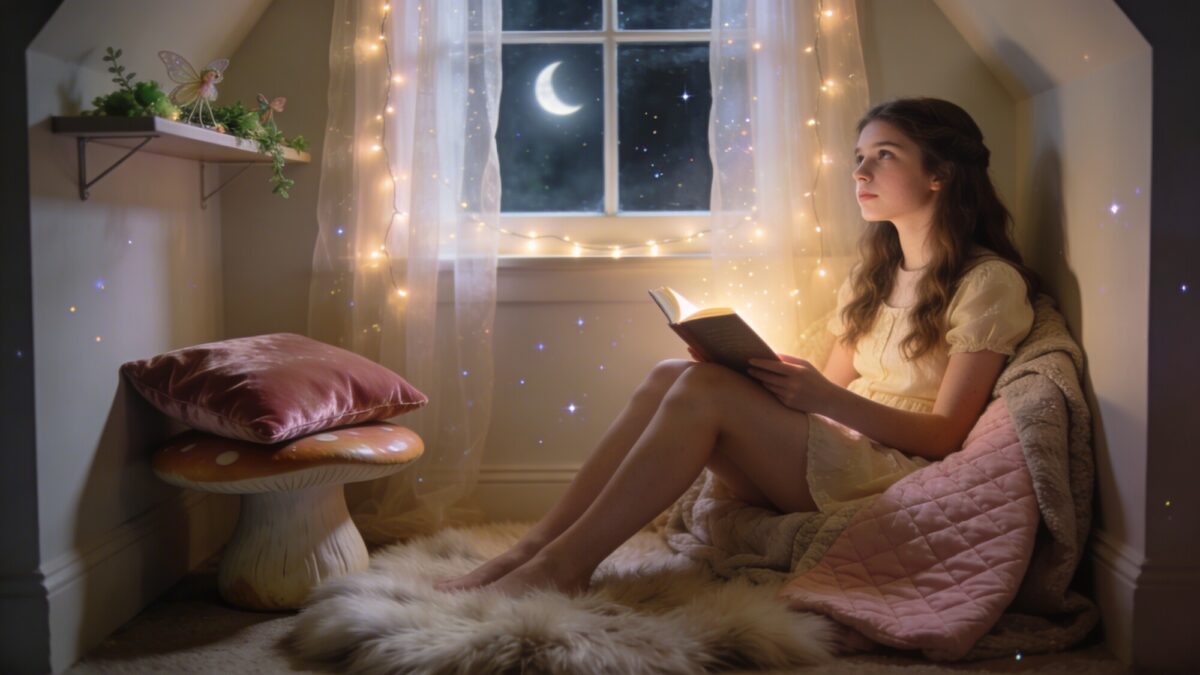
The core pieces are simple: warm-white string lights (skip cool-white or multicolor — they read more “holiday decoration” than fairycore bedroom aesthetic), a low stool or ottoman shaped like a mushroom or tree stump, and soft textiles layered on top of each other — a faux fur rug, a velvet or quilted throw pillow, maybe a knit blanket draped over the seat.
💡 Pro Tip: Run your string lights on a battery-powered remote plug rather than plugging straight into an outlet behind furniture. You’ll actually use the dimming and timer functions if you’re not crawling behind a dresser to reach the switch — and most people who skip this end up leaving the lights on 24/7 out of sheer inconvenience.
The most common mistake in this corner is over-filling it. A nook with six decorative objects on a single shelf stops looking curated and starts looking like a clearance table. Two or three well-chosen pieces — a small potted plant, one meaningful object, a stack of books — read as intentional. Everything else competes for attention instead of adding to the scene.
2. Turn the Bed Into a Moonlit Canopy
Your bed takes up more visual real estate than anything else in the room, so it’s the highest-leverage place to put fairy room decor bedroom ideas to work. A canopy or draped fabric over the frame does more for the whimsical room decor aesthetic than almost any other single change, because it changes the shape of the room, not just its color palette.
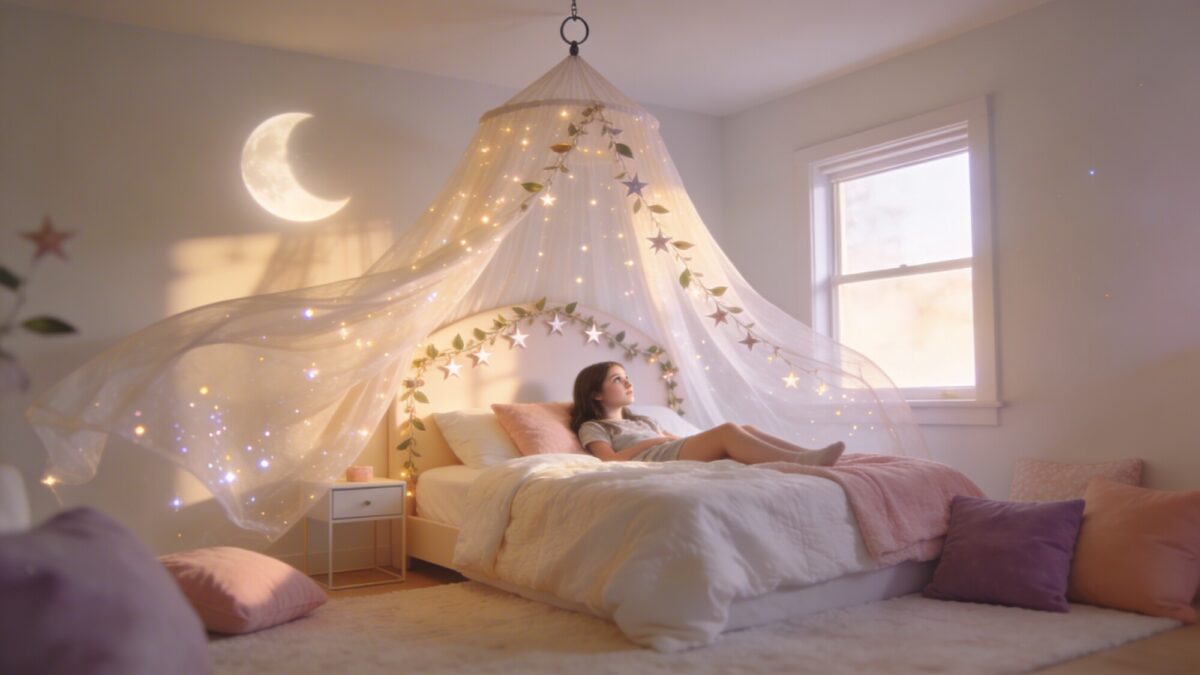
The fabric choice matters more than people expect. A heavy curtain fabric will hang stiff and look more like a room divider than a canopy — you want something sheer enough to move with the air in the room: voile, chiffon, or a lightweight gauze. If you’re hanging it from a single ceiling hook rather than a full frame, get one rated for at least 10–15 lbs; a light fixture hook from a hardware store (roughly $8–15) is usually enough for a few yards of sheer fabric, but check the rating before you trust it over a bed.
Keep the bedding itself relatively plain — ivory, warm white, or one soft pastel. The canopy and any garland woven through it is already doing the visual work; patterned sheets underneath it usually compete rather than complement.
3. Ground the Room With Nature-Inspired Fairy Decor
This is where a fairy room stops looking like a theme party and starts looking like an actual aesthetic. Nature-inspired fairy decor — wood textures, botanicals, forest-floor colors — is what separates enchanted garden room decor from generic “sparkly pink” teen decor.
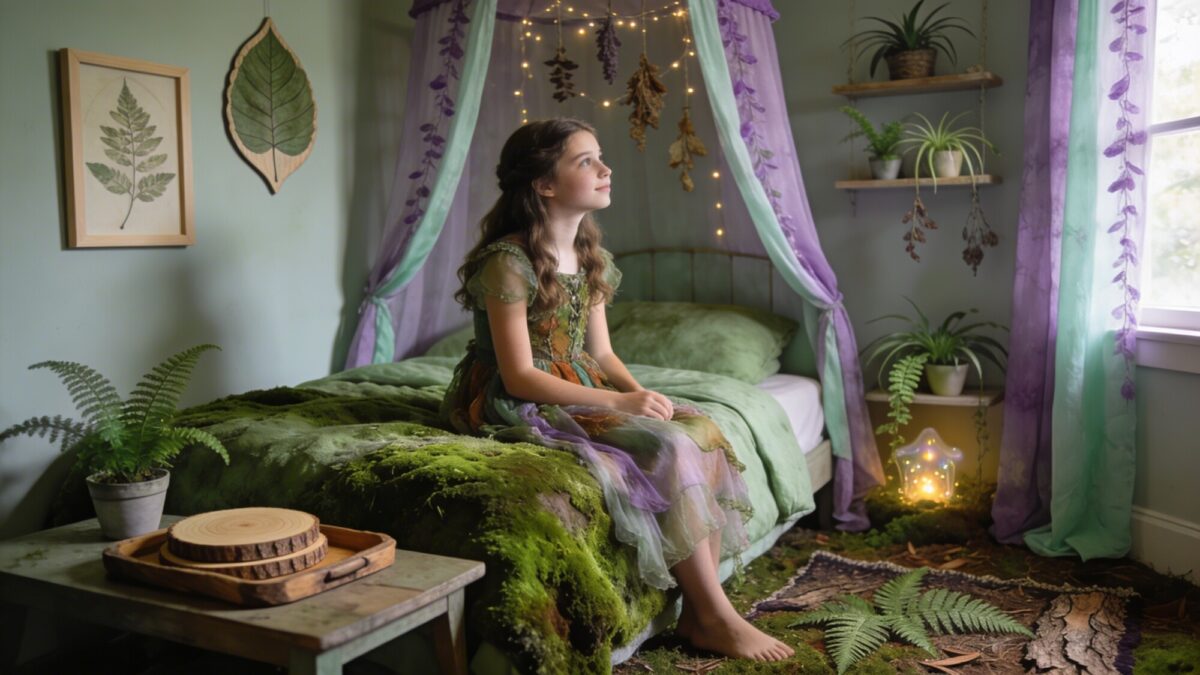
Small, real additions do more here than large decorative ones: a wooden tray or coaster set on the nightstand, one or two low-maintenance plants (pothos and ferns both tolerate indirect light and irregular watering, which matters if this is a teenager’s plant care routine), and pressed botanicals or leaf-shaped wall art in light wood frames.
💡 Pro Tip: If real plants feel like too much upkeep, dried pampas grass or preserved eucalyptus in a small vase gives you the same forest-floor texture without any watering schedule at all — and it won’t wilt the week before you photograph the room.
The trade-off to know going in: leaning too far into muted earth tones (moss, bark brown, sage) can make a small bedroom feel darker and smaller, especially without much natural light. If the room doesn’t get a lot of sun, keep the earthy palette to accents — a tray, a frame, a plant — rather than the walls or bedding, and add one brighter accent color like lavender or dusty pink to keep it from reading heavy.
4. Add a Night-Sky Mural or Star Wall
An accent wall is the highest-commitment idea on this list, and also the one with the biggest visual payoff. A night-sky mural or a dense cluster of peel-and-stick star decals turns one wall into the room’s obvious focal point — everything else in the room can be simpler once this wall is doing the heavy lifting.
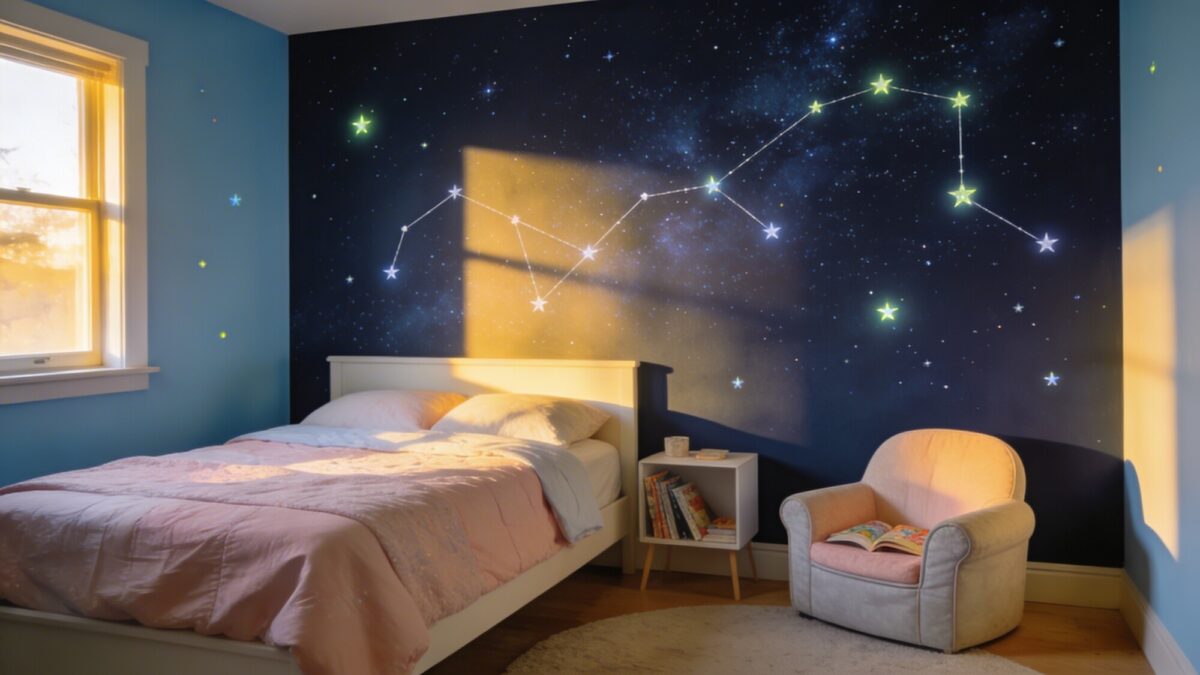
There are two real paths here, and they’re not equivalent:
| Approach | Cost Range | Effort | Renter-Friendly? |
|---|---|---|---|
| Removable star/mural decals | ~$15–40 | 1–2 hours, no painting | Yes — peels off cleanly if applied to a clean, painted wall |
| Painted mural (navy base + hand-painted or stenciled stars) | ~$40–100 in paint and supplies | A full weekend, plus drying time between coats | No — requires repainting before move-out |
If you’re renting or just not sure the theme will stick for years, decals are the lower-risk choice. Glow-in-the-dark star decals specifically are worth adding even on a painted mural — they’re inexpensive and they’re the detail that makes the wall feel different at night versus during the day, rather than just being a static painted surface.
5. Use Scaled-Down Furniture to Add Character Without Losing Space
Small bedrooms are where most fairy room decor bedroom ideas either work or fall apart, because whimsical extras compete directly with the square footage you need for actual storage and movement. Scaled-down, purposeful furniture solves that — a smaller dresser, a floating shelf instead of a full bookcase, a compact chair instead of a full accent seat.
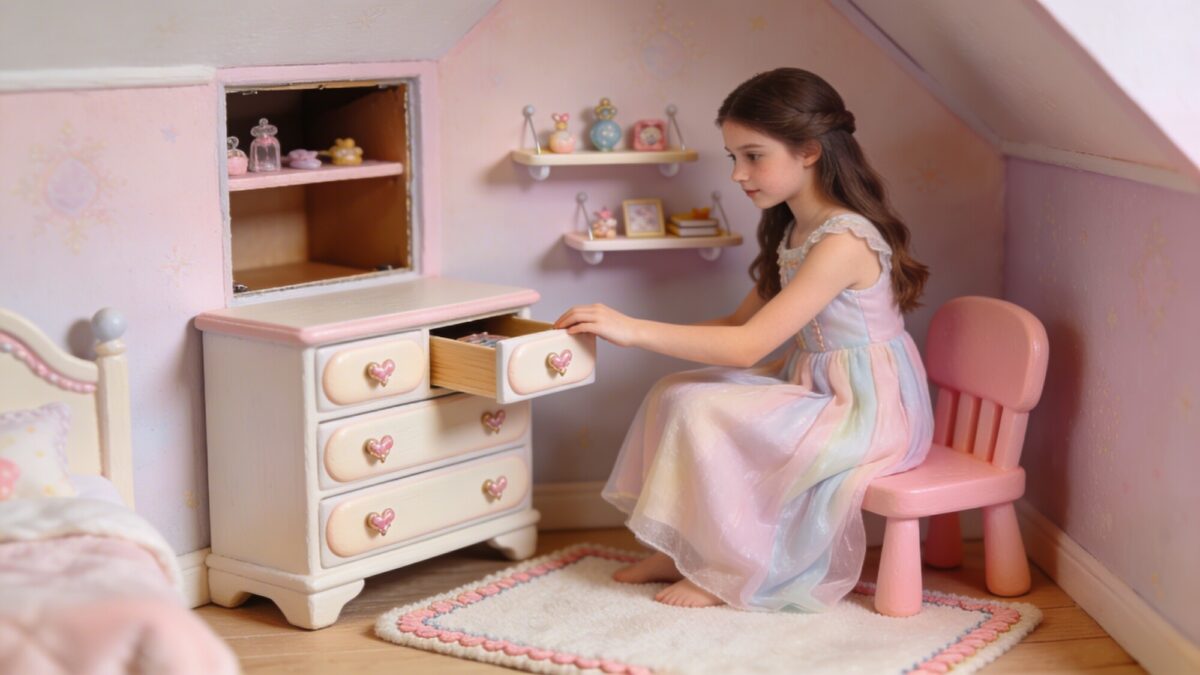
A small rug is doing more work here than it gets credit for. Defining a “zone” — the reading corner, the vanity area — with a rug boundary makes a small room feel sectioned and deliberate instead of just cramped. Floating shelves are the other workhorse: they hold trinkets and small decor without eating floor space the way a full bookshelf does.
💡 Pro Tip: Measure the walkway between your bed and door before buying any “tiny” furniture. A chair that’s technically small can still block circulation in a room under 100 sq ft — scale is relative to your specific floor plan, not to what looked small in a photo.
6. Layer Lanterns and Fairy Lights for Day-to-Night Flexibility
This is the idea that ties the rest together, and it’s the one most people underuse. A single strand of fairy lights around a headboard looks nice, but it only gives you one lighting mode. Layering — a ceiling string, a lantern or two on a shelf, and a dimmable bedside lamp — gives you actual control over the mood instead of an on/off switch.
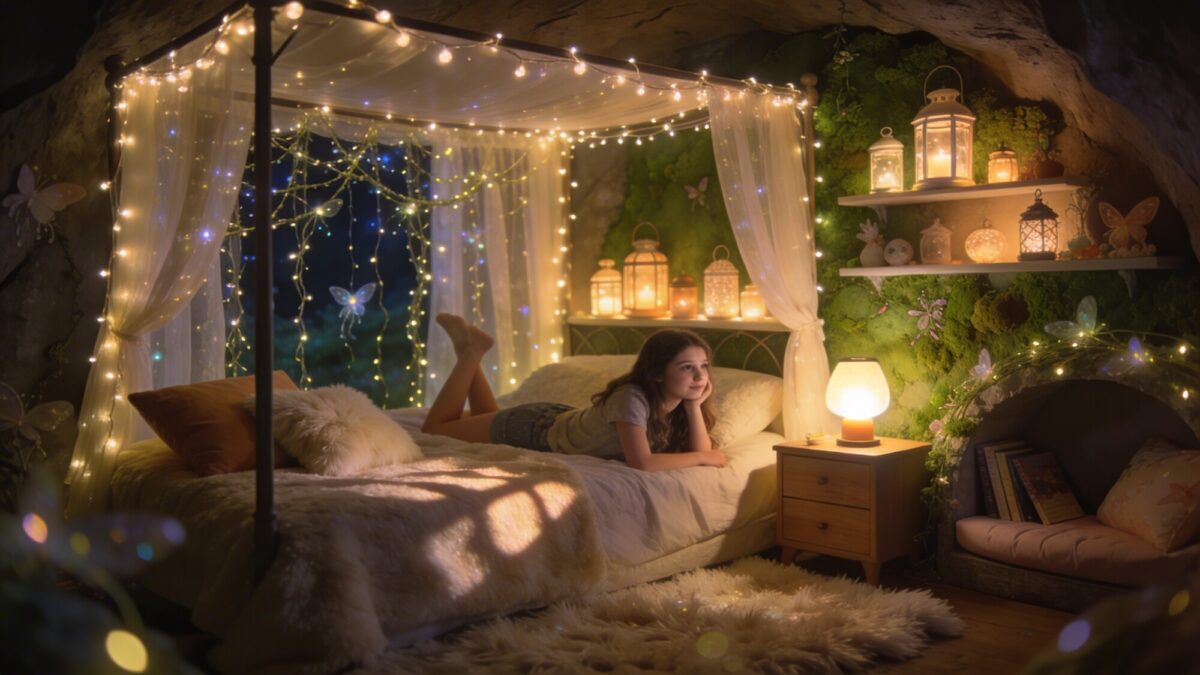
For anyone building this out room by room, our fairy lights bedroom ideas guide goes deeper into placement and specific light types, and the cozy bedroom aesthetic ideas with fairy lights post is useful if you want the fairycore bedroom aesthetic without going full fairycore theme.
Here’s the trade-off most people don’t think through until after they’ve bought everything: string lights on their own timer or remote are good for ambiance but bad for actually seeing anything (getting dressed, finding something on the floor). A dimmable bedside lamp is what makes the room function day-to-day. Skip the lamp and you’ll end up flipping on the overhead light anyway, which kills the whole effect the second you need to see clearly.
💡 Pro Tip: Battery-powered lanterns (the flameless LED kind, not real candles) are the safest way to add warm point-lighting near curtains or bedding — real flame anywhere near sheer fabric is a genuine fire risk, not just a decorating no-no.
Things to Consider Before You Start
- Is this a rental? If so, favor removable decals, string lights on hooks, and freestanding furniture over anything painted or drilled into the wall.
- How much natural light does the room get? Rooms with less daylight can feel smaller under heavy earth-tone palettes — lean lighter on the walls and save the moss/bark tones for accents.
- What’s your actual floor space? A canopy and a mural both work in small rooms; adding tiny furniture on top of both can start crowding a room under 100 sq ft.
- What’s your light source situation? If there’s only one overhead fixture, layering lamps and lanterns matters more, not less — you’re building the mood lighting the room doesn’t already have.
- Real plants or dried ones? Be honest about whether the room’s occupant will actually water something twice a week.
Frequently Asked Questions
Do fairy lights use a lot of electricity?
LED string lights draw very little power — most standard sets are low-wattage enough that running them for hours overnight isn’t a meaningful addition to a power bill. If you’re leaving them on constantly, a timer plug is more about bulb lifespan and safety than about electricity cost.
How do I keep a fairy room from looking too kid-themed for a teenager?
Lean on the nature-inspired and lighting ideas (nooks, layered lanterns, botanicals) over anything overtly sparkly or pastel-heavy. A moss-and-wood palette with warm lighting reads as a whimsical princess bedroom for an older teen; bright pink glitter accents tend to read younger.
What’s the cheapest idea on this list to start with?
Layered lighting. A set of warm-white string lights plus one battery lantern can be under $30 total and doesn’t require any paint, drilling, or furniture changes — it’s the lowest-cost way to test whether the aesthetic works for the room before committing to a mural or canopy.
Can I combine more than one of these ideas?
Yes, but pick one as the anchor. A canopy bed plus a night-sky mural plus a full fairy nook plus tiny furniture all at once usually looks cluttered rather than cohesive. Most rooms that work well lead with one strong idea (usually the canopy or the mural) and use the others — lighting, plants, small furniture — as supporting details.
Are peel-and-stick star decals actually removable?
On a clean, fully cured painted wall, most reputable decal brands come off without pulling paint. They’re less reliable on textured wallpaper or older paint that’s already flaking — test one decal in an inconspicuous spot first if you’re not sure.
Our Verdict
If you only do one thing from this list, layer your lighting — it’s the cheapest, lowest-commitment idea, and it’s also the one that makes every other idea on this list look better once it’s in place. For a bigger visual swing, the moonlit canopy has the best payoff-to-effort ratio: one afternoon of work changes the whole feel of the room. Save the mural for when you’re sure the theme is sticking around, since it’s the one idea here that isn’t easy to undo.
For more ways to build out the aesthetic beyond these six ideas, our bedroom aesthetic decor ideas guide and budget-friendly bedroom decor ideas post are both good next stops depending on whether you’re refining the look or working with a tighter budget.