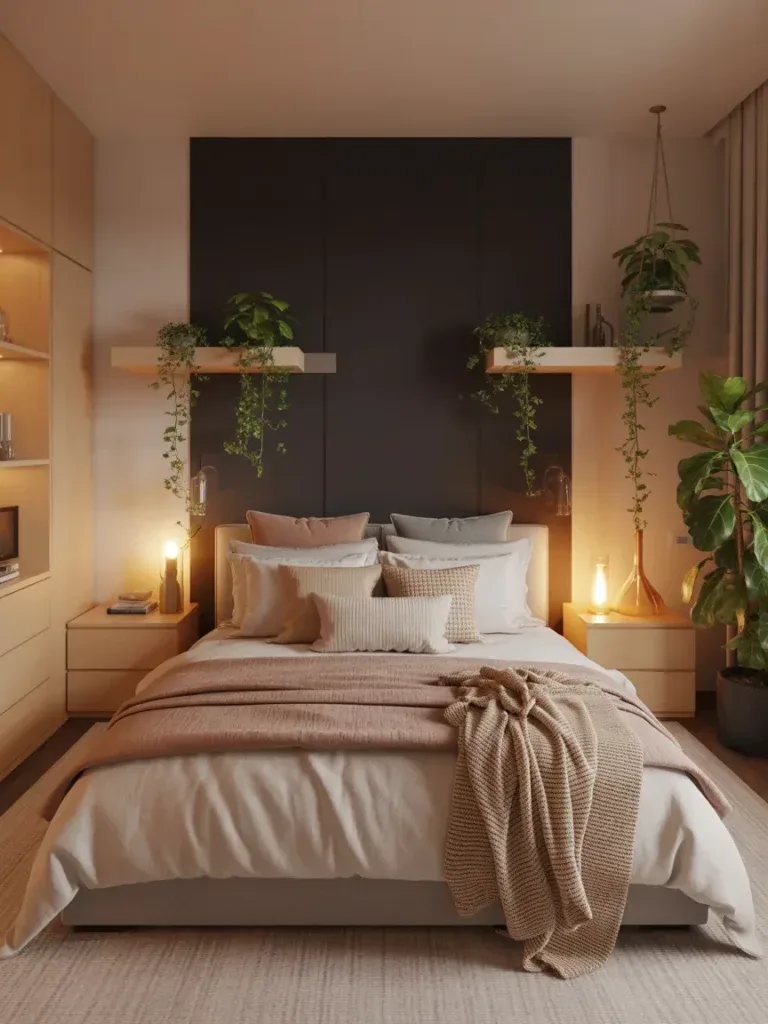
10 Very Small Bedroom Ideas That Transform Limited Space With Smart Design
I lived in a 78-square-foot bedroom for three years. I know that number because I measured it out of pure spite one night after stubbing my toe on a dresser I had wedged into a corner that was clearly not built for a dresser. So when people ask me for very small bedroom ideas, I don’t come at it from a “here’s a Pinterest board I glanced at” place — I come at it from a “I have personally rearranged this furniture eleven times” place.
Small rooms don’t need to feel like storage units with a mattress shoved in. They need a plan. And that’s really what this whole post is about.
Why Very Small Bedroom Ideas Need a Different Strategy Than Big Rooms
Here’s the thing nobody tells you: decorating a small bedroom isn’t just “the same as decorating a normal bedroom, but with less stuff.” It’s a completely different set of problems. In a bigger room, you’re often trying to fill space and create zones. In a tiny one, every single inch is already spoken for before you’ve even moved in a bed.
That means your priorities flip. Instead of asking “what looks nice here,” you start asking “what can this piece of furniture also do.” A nightstand isn’t just a nightstand anymore — it might need to be a charging station, a book storage spot, and the only flat surface within arm’s reach of your pillow. I learned this the hard way after buying a gorgeous marble-top side table that looked incredible in photos and held exactly one lamp and nothing else, because there was no room underneath for anything.
So before you touch a single design element, get honest about function. What does this room actually need to do for you? Sleep, obviously. But also: does it need to hide laundry? Hold a desk? Function as a guest room twice a year? Answer that first, then decorate around it.
1. Go Vertical Before You Go Wide
This is probably the single biggest shift in mindset for small space bedroom ideas. Most people instinctively think about floor space — how much furniture can fit on the ground — but the walls above your head are basically untouched real estate.
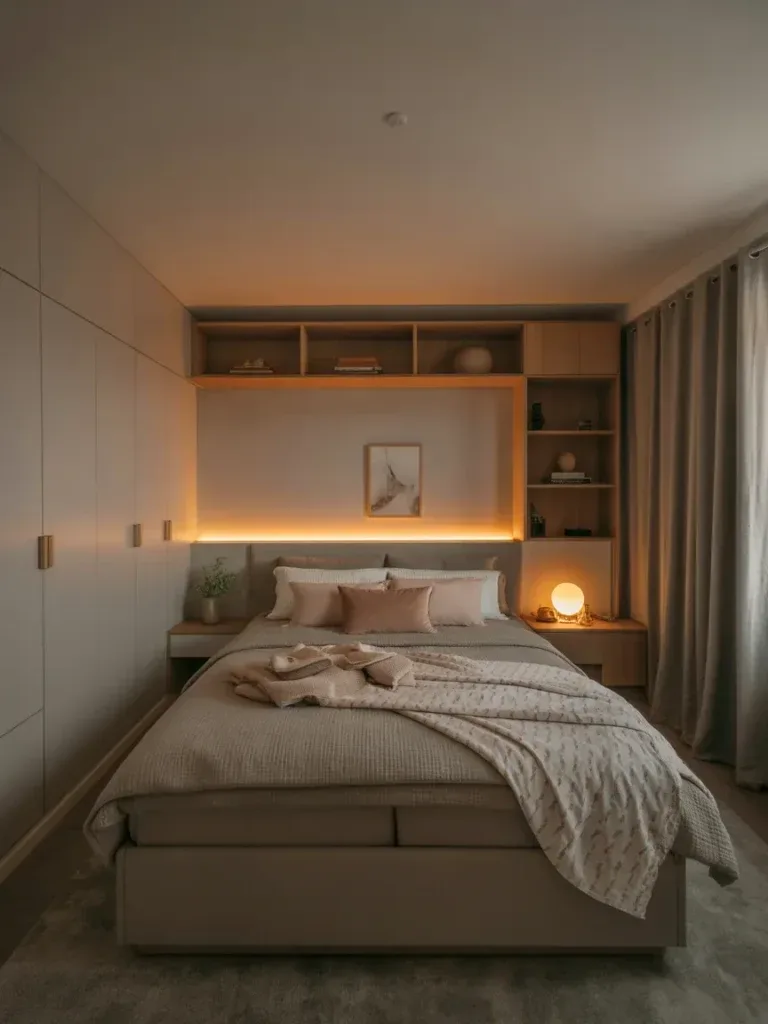
Tall, narrow bookshelves (think 12 inches deep, 6 feet tall) hold almost as much as a wide dresser but take up a third of the footprint. Wall-mounted shelving above a headboard works well for books, small plants, or a reading lamp, freeing up the nightstand for something else. And floating shelves near the ceiling — yes, even ones you need a step stool for — are great for off-season storage like extra blankets or suitcases you only touch twice a year.
I did this in my old apartment with three 60-inch ladder shelves stacked in a row along one wall, and it genuinely changed how the room felt. Not because it made the room bigger (it didn’t, obviously), but because it moved the visual clutter up and out of my direct sightline.
2. Choose a Bed Frame That Works Twice as Hard
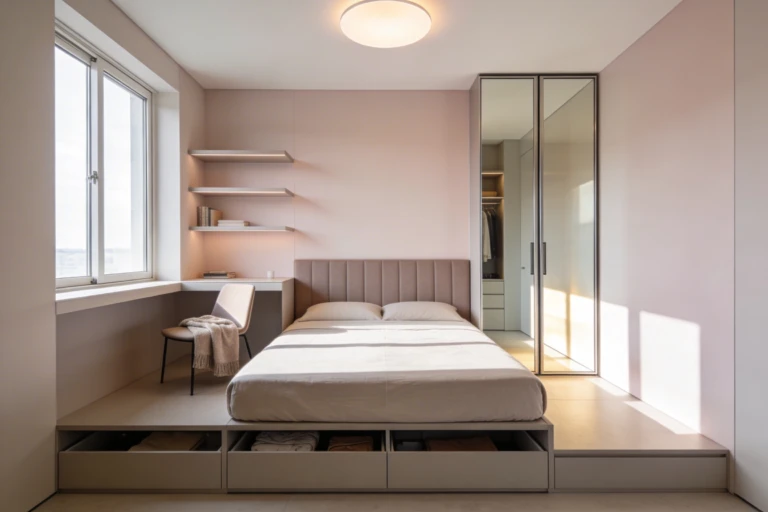
If there’s one piece of advice I’d tattoo onto the forearm of anyone furnishing a tiny bedroom, it’s this: your bed frame is your biggest opportunity for hidden storage, so don’t waste it on a plain metal frame with dead space underneath.
Platform beds with built-in drawers (usually two to four drawers along the base) can easily replace an entire dresser. Ottoman-style storage beds, where the whole mattress platform lifts on a hinge, hold an absurd amount — think out-of-season clothes, spare linens, even flattened moving boxes you’re weirdly attached to. And if you already have a bed you love, under-bed storage bins on wheels are a solid $20–$40 workaround that slide in and out without any assembly.
Honestly, I’m not a huge fan of the ottoman-lift style for everyday use, since you have to clear the whole bed to access it. But for once-a-season storage? It’s fantastic.
Mini Bedroom Interior Design Tricks That Fool the Eye
A lot of mini bedroom interior design comes down to optical illusions more than actual square footage changes, and this is where things get genuinely fun.
Mirrors, obviously, get mentioned in every small-space article ever written (guilty), but placement matters more than people realize. A mirror directly across from a window bounces natural light across the room instead of just reflecting a wall. And a floor-length leaning mirror in a corner does more for the sense of height than a small framed one ever will.
Vertical stripes — whether on wallpaper, curtains, or even just the way you hang artwork in a tall column instead of a wide grid — trick your eye into reading the ceiling as higher than it is. If you’re drawn to pattern at all, this is a genuinely good place to browse bedroom wallpaper ideas that instantly transform your space, since a lot of the options there lean vertical and work beautifully in tight rooms.
3. Keep the Color Palette Tight (But Not Boring)
There’s a persistent myth that small rooms have to be painted stark white to “feel bigger,” and I want to gently push back on that. White absolutely works, but it’s not the only option, and honestly an all-white room with no contrast can feel a little clinical if you’re not careful.
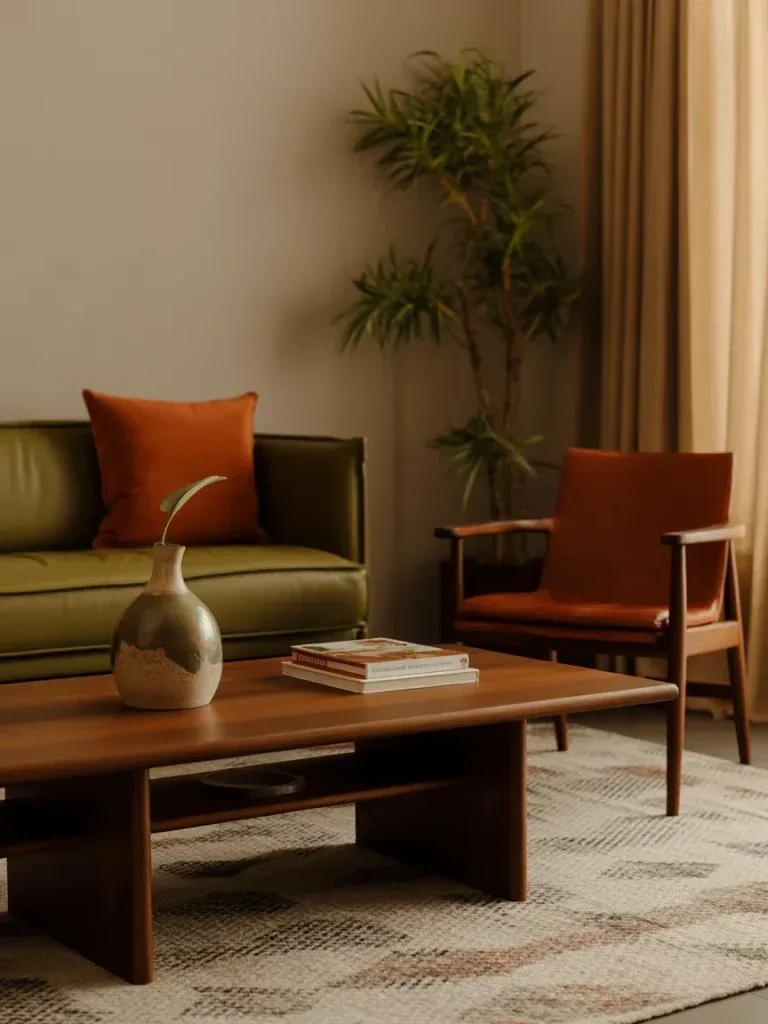
What actually matters more than the specific color is the number of colors. Stick to two, maybe three tones max, and let them flow — walls, bedding, and curtains in a similar family so nothing chops the room visually into sections. A soft warm white paired with natural wood tones and one deeper accent (rust, sage, navy) reads as calm and intentional rather than sparse.
If you want a full deep-dive on this, bedroom color combination ideas that instantly make your space look designer-approved has some genuinely useful pairings that scale down well for tiny rooms. And if you’re leaning toward an all-neutral approach, white bedroom ideas that feel fresh and luxurious shows how to do “all white” without it feeling sterile — texture is doing a lot of the work there, not just the color itself.
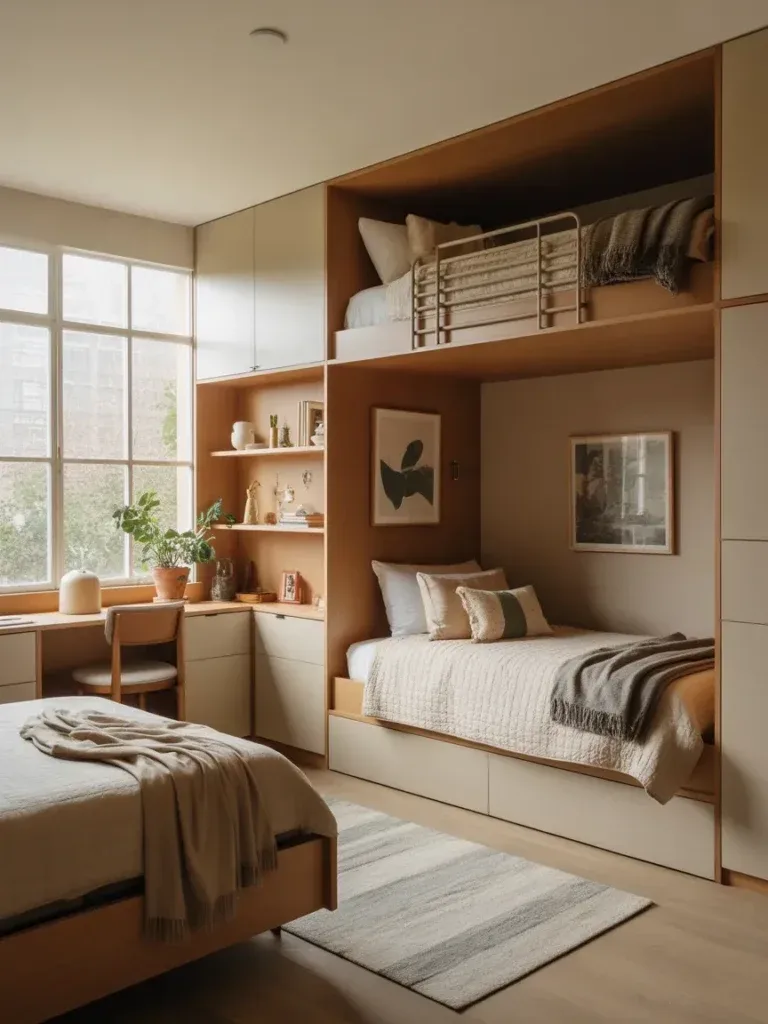
4. Design for Small Rooms Means Furniture Has to Multi-Task
When you’re doing design for very small bedroom spaces, the golden rule is: every piece of furniture should do at least one and a half jobs. A single-purpose item is a luxury you probably don’t have room for.
A few combos that actually earn their keep:
- A desk that doubles as a vanity (skip the separate makeup table entirely)
- A bench at the foot of the bed with a lift-top for extra storage
- A slim rolling cart instead of a nightstand — it tucks under a desk during the day and slides bedside at night
- Wall-mounted folding desks that lie flat against the wall when not in use
I once convinced a friend to ditch her bulky armchair for a wide, deep window seat with cushions and hidden storage underneath, built by a local carpenter for around $300. It became her reading nook, her extra seating for guests, and a place to stash winter coats. One piece, three jobs. That’s the whole philosophy in a nutshell.
5. Curtains and Rugs Can Fake Extra Square Footage
This one sounds like a gimmick, but it’s not: hanging curtains higher than the window frame (as close to the ceiling as you can manage) draws the eye upward and makes the whole wall feel taller. Same logic with rugs — a rug that’s slightly too small makes a room feel chopped up and shrunken, while one that extends a few inches under the bed frame reads as more expansive.
Go for a rug in a low-contrast tone rather than a bold busy pattern here. Busy patterns underfoot, in a room this size, tend to compete with everything else rather than ground it.
6. Very Small Bedroom Ideas for Layout: Where the Bed Actually Goes
Layout is where most small bedroom mistakes happen, and it’s rarely about the furniture itself — it’s about placement.
Pushing the bed into a corner (touching two walls instead of one) frees up an entire third dimension of floor space compared to a bed floating in the middle or centered against one wall. It’s not the most “designer” look on paper, but in practice it opens up a walkway and gives you room for that narrow shelf or reading chair you actually want.
If your room has an awkward nook — a dormer ceiling, an alcove, a weird jog in the wall — that’s often the best spot for the bed, not the worst. Tucking the mattress into an irregular space uses square footage that would otherwise sit empty and unused, since most standard furniture can’t fit there anyway.
7. Small Space Bedroom Ideas for Storage You Don’t See
The best storage in a tiny bedroom is often invisible at first glance, and that’s intentional. Over-door organizers, slim between-the-wall-and-dresser gap shelves (yes, those three-inch-wide rolling carts exist and they’re weirdly great), and closet door hooks all add function without adding visual bulk.
If your closet is small too (rude, but common), a double-hang rod system roughly doubles your hanging space for around $25–$60 depending on the hardware, no contractor needed. And baskets on a closet shelf, labeled or not, beat loose piles every single time — not because they look prettier, though they do, but because you can actually find things.
8. Lighting Changes Everything in a Cramped Room
A single harsh overhead light in a small bedroom is, in my opinion, one of the fastest ways to make a tiny space feel even smaller and more sterile. Layered lighting — a warm-toned floor lamp, a plug-in wall sconce by the bed instead of a bulky nightstand lamp, maybe some low-voltage strip lighting under a shelf — does more heavy lifting than people expect.
Warm white bulbs (around 2700K, if you want the technical number) read cozier than the cool white ones a lot of overhead fixtures ship with by default. It’s a five-dollar bulb swap that genuinely changes the mood of the whole room.
9. Borrow Coziness Tricks From Bigger Rooms, Just Scaled Down
Small doesn’t have to mean sparse, and honestly, some of the coziest bedroom concepts translate really well once you scale the elements down. Layered textiles — a chunky knit throw, two different pillow textures, a soft area rug — bring warmth without adding actual furniture volume. For inspiration on this layered, lived-in feel, cozy bedroom ideas that feel like a warm hug has a lot of texture-driven concepts that work beautifully even in a tight footprint, since none of it depends on extra square footage — just fabric choices.
If you’re drawn to a softer, more romantic mood rather than strictly minimalist, romantic bedroom ideas that create a cozy and dreamy retreat shows how drapery, soft lighting, and a curated color story can make even a small room feel intimate instead of cramped. The trick, again, is texture and lighting doing the emotional work instead of extra furniture.
10. Edit Ruthlessly (This Is the Hard One)
Okay, last one, and it’s the least fun to hear: you probably need to get rid of stuff. Not everything — I’m not telling you to live like a monk — but a small bedroom punishes clutter in a way a bigger room simply doesn’t. One extra chair that “might get used” in a 200-square-foot room is invisible. That same chair in a 90-square-foot room eats 8% of your usable floor space.
Go through what’s currently in the room and ask, honestly, whether each item earns its spot. Duplicate chargers, decorative pillows nobody actually uses, that exercise equipment that’s become a coat rack — be brutal. I promise the room will breathe differently once it’s edited down to what you actually use.
Bringing It All Together
If I had to boil down every very small bedroom idea in this post into one sentence, it’d be this: stop thinking about what fits, and start thinking about what earns its place. Vertical storage over wide furniture. Multi-purpose pieces over single-use ones. Layered lighting and texture over bare minimalism. None of it requires knocking down a wall or hiring a contractor — most of these changes cost under $100 and an afternoon.
My old 78-square-foot room eventually became one of my favorite spaces I’ve ever lived in, not despite the size but partly because of it — it forced a kind of intentionality that a bigger, sloppier room never would have. Give a couple of these ideas a try this weekend, even just one or two, and see how much difference it makes.
If this helped, save this pin for later so you can come back to it next time you’re rearranging — and let me know in the comments which idea you’re trying first.