Rug Living Room Size: Perfect Your Space Fast
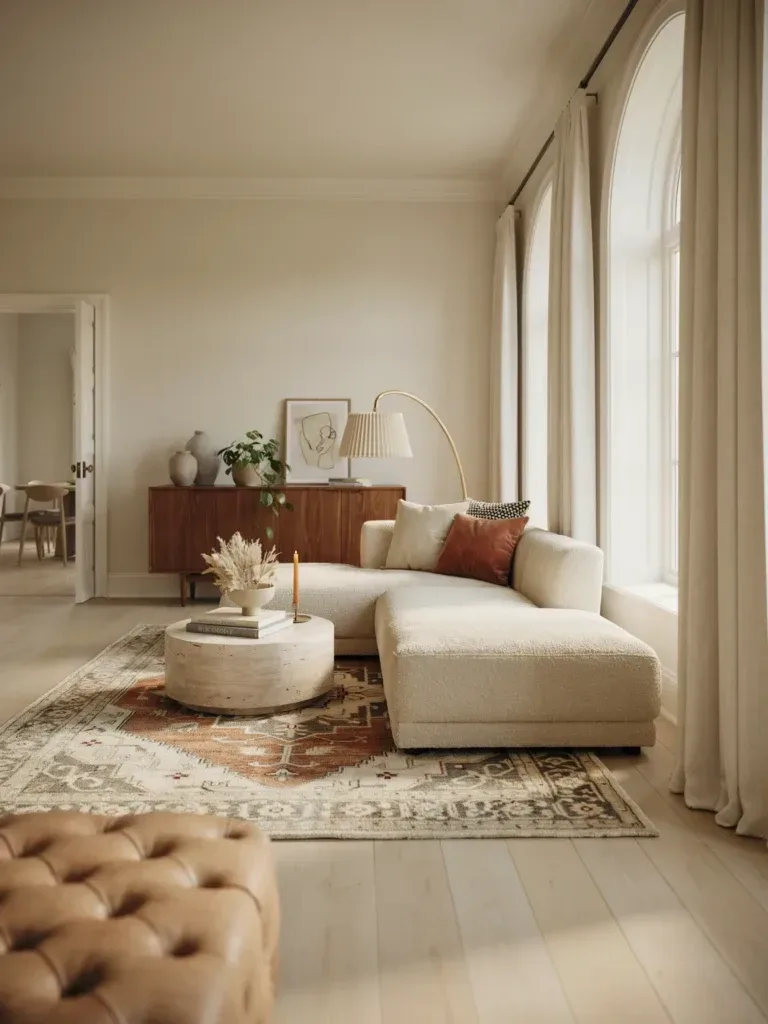
Rug size can make or break a living room vibe. Let’s cut to the chase: the right rug ties furniture together, Getting your rug living room size right is one of the fastest ways to make a space feel pulled together. Size the rug wrong, and even beautiful furniture can look disconnected or cramped. Get it right, and the rug does the quiet work of anchoring your seating, defining the room, and making the whole layout feel intentional.
This guide walks through exactly how to measure for a living room rug, shares a practical rug size chart, and covers the layout tricks that designers rely on — including what to do with sectionals, small rooms, awkward angles, and doorways.
Quick Takeaways
- Aim for at least the front legs of your main seating pieces to rest on the rug.
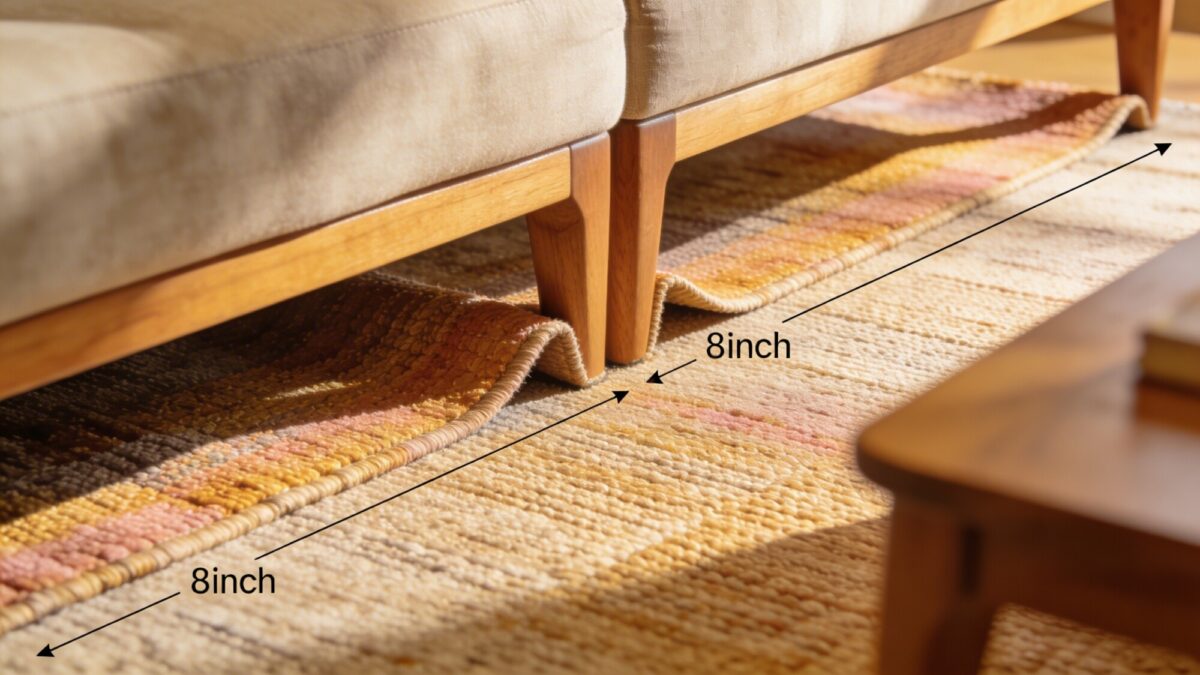
- Leave 6–8 inches of rug showing beyond the sides of your sofa where possible.
- Small living rooms typically work well with a 5×8 ft rug; medium rooms with 8×10 ft; larger rooms with 9×12 ft or bigger.
- A rug pad protects your floors and helps a rug hold its shape and position over time.
- Two coordinating rugs can work better than one oversized rug in open-plan or zoned spaces.
Why Rug Living Room Size Matters
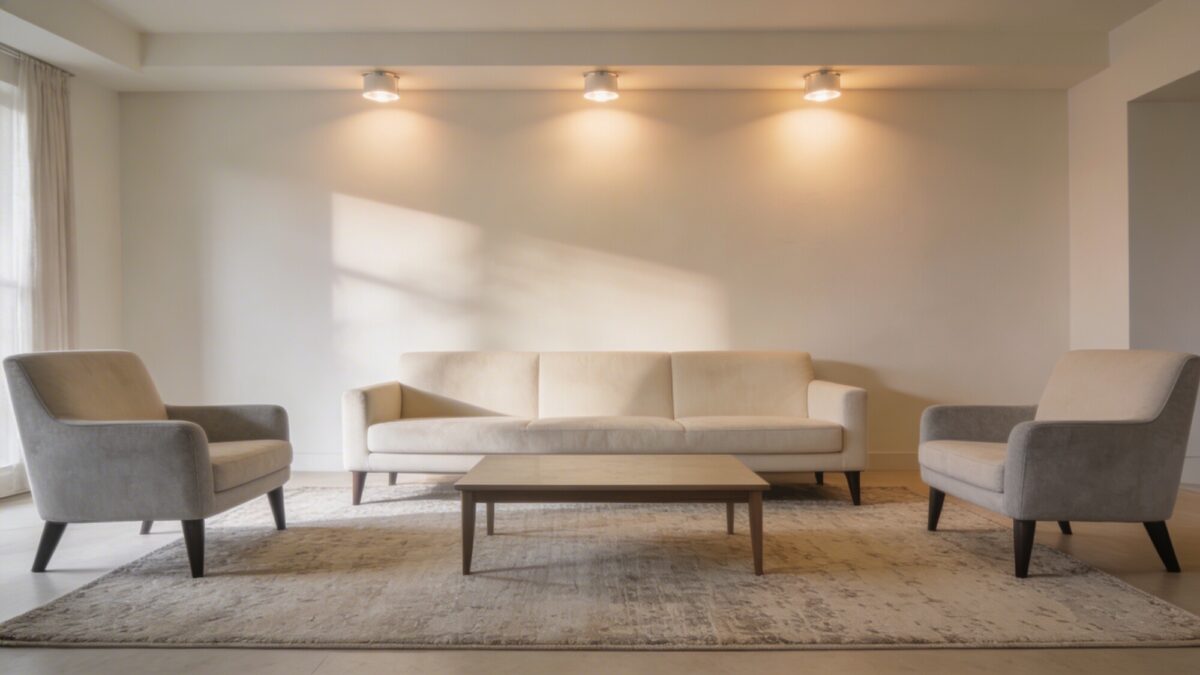
A rug is more than a soft layer underfoot — it’s a visual boundary that tells the eye where a seating area begins and ends. When the rug living room size is too small, furniture looks stranded, and the room can read as choppy or unfinished. When it’s too large, the space can feel like the rug is wearing the room instead of the other way around.
The general goal is for the rug to visually and physically connect the pieces in your seating group. Most designers agree that having at least the front legs of a sofa and chairs on the rug is the minimum threshold; having all four legs on the rug is the more polished, grounded look.
How to Measure for a Living Room Rug
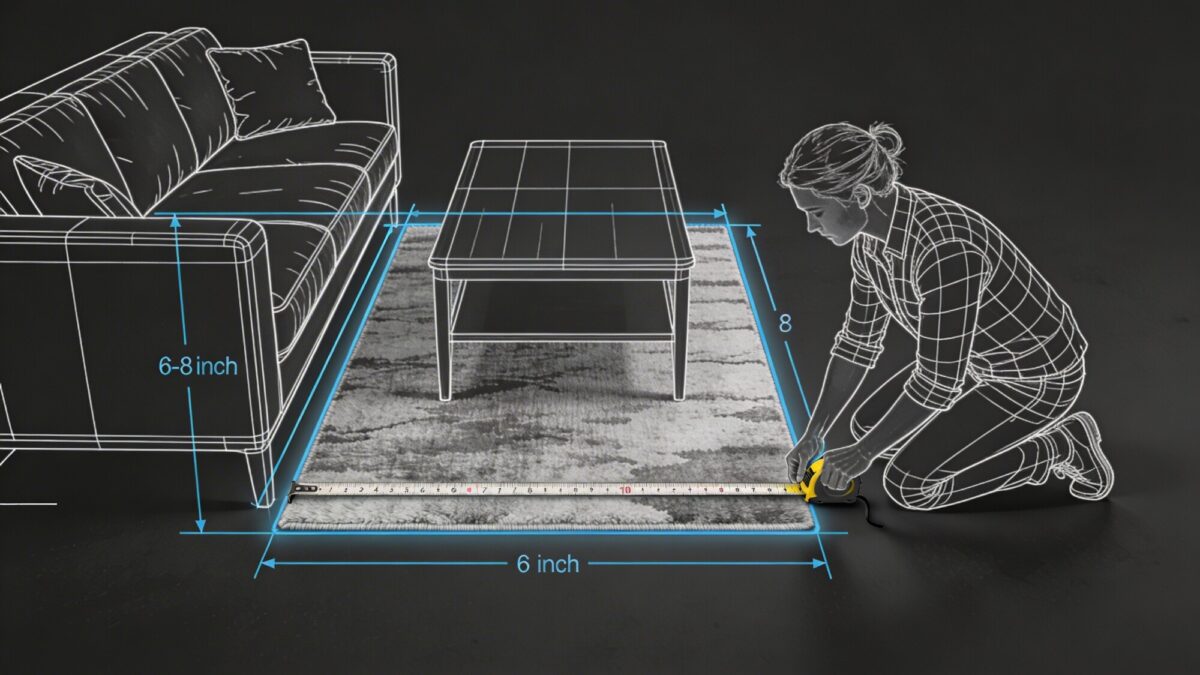
Measuring correctly takes the guesswork out of rug sizing. Here’s a straightforward process to follow before you shop.
- Measure your seating group first. Note the combined length and width of your sofa, chairs, and any sectional pieces as they’re currently arranged.
- Add clearance on all sides. A rug should generally extend 6–8 inches beyond the outer edges of your seating for a balanced look.
- Give the coffee table breathing room. Leave roughly 12–18 inches of rug beyond the coffee table so chairs can be pulled out without catching the edge.
- Map your traffic paths. Walk the room and note where people naturally move. You want enough bare floor for movement, but not so little rug that the space feels rugless.
- Choose a shape that fits your layout. Rectangular rugs suit most conventional seating arrangements, while round rugs work well in smaller rooms or to soften a corner nook.
If you want more layout-specific guidance, our guide to living room rug placement techniques breaks down positioning for several common furniture arrangements.
Rug Size Chart for Living Rooms
Use this rug size chart as a starting reference point, then fine-tune based on your specific furniture footprint.
| Room Size | Recommended Rug Size | Notes |
|---|---|---|
| Small living room (roughly 8×10 ft) | 5×8 ft | Center under the main seating area; leave floor visible at the edges. |
| Medium living room (roughly 12×14 ft) | 8×10 ft | Works as a single anchor rug, or split into two zones with smaller rugs. |
| Large living room (15×20 ft or more) | 9×12 ft or larger | Consider layering multiple rugs to define separate zones. |
| Floating seating arrangement | Sized to fit sofa plus two chairs | Leave enough rug for all furniture legs, with a margin to spare. |
What Size Rug for a Small Living Room
In a small living room, the instinct is often to size down the rug so it doesn’t overwhelm the space — but going too small usually backfires and makes the room feel more cramped, not less. A 5×8 ft rug is typically the sweet spot for compact rooms, positioned so the front legs of your sofa and chairs sit on it.
If floor space is especially tight, a round rug can be a smart alternative. It softens the geometry of the room and can make a small footprint feel more intentional than a rectangular rug that has to be scaled way down.
What Size Rug for a Large Sofa or Sectional
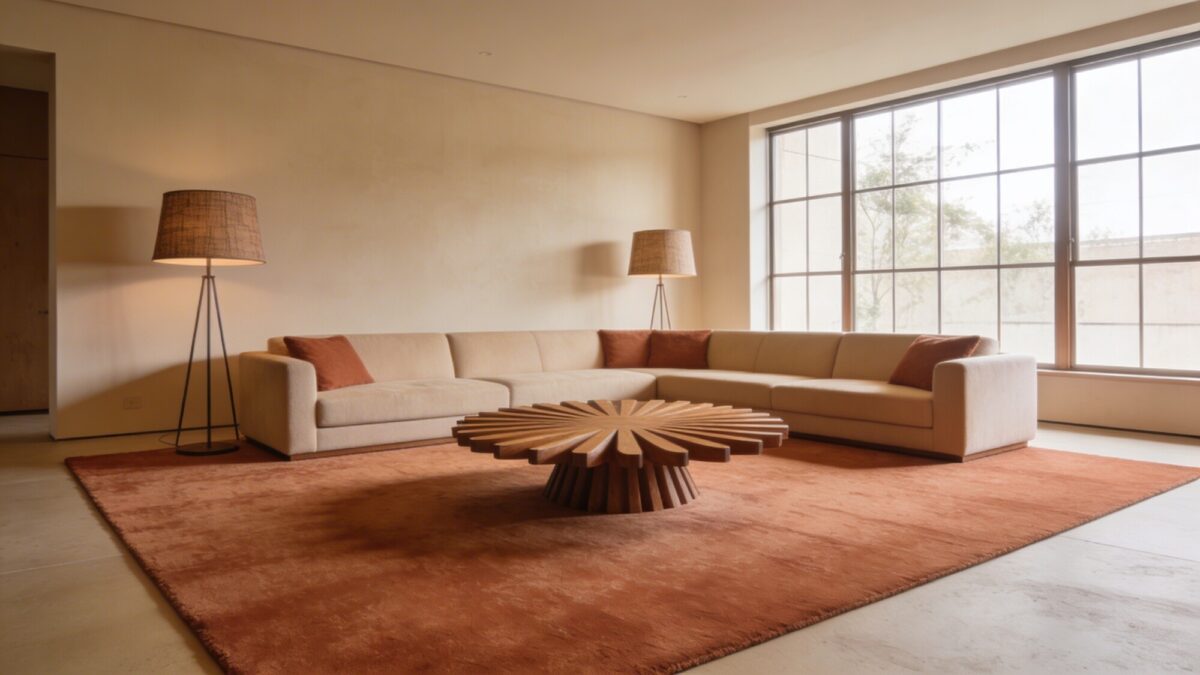
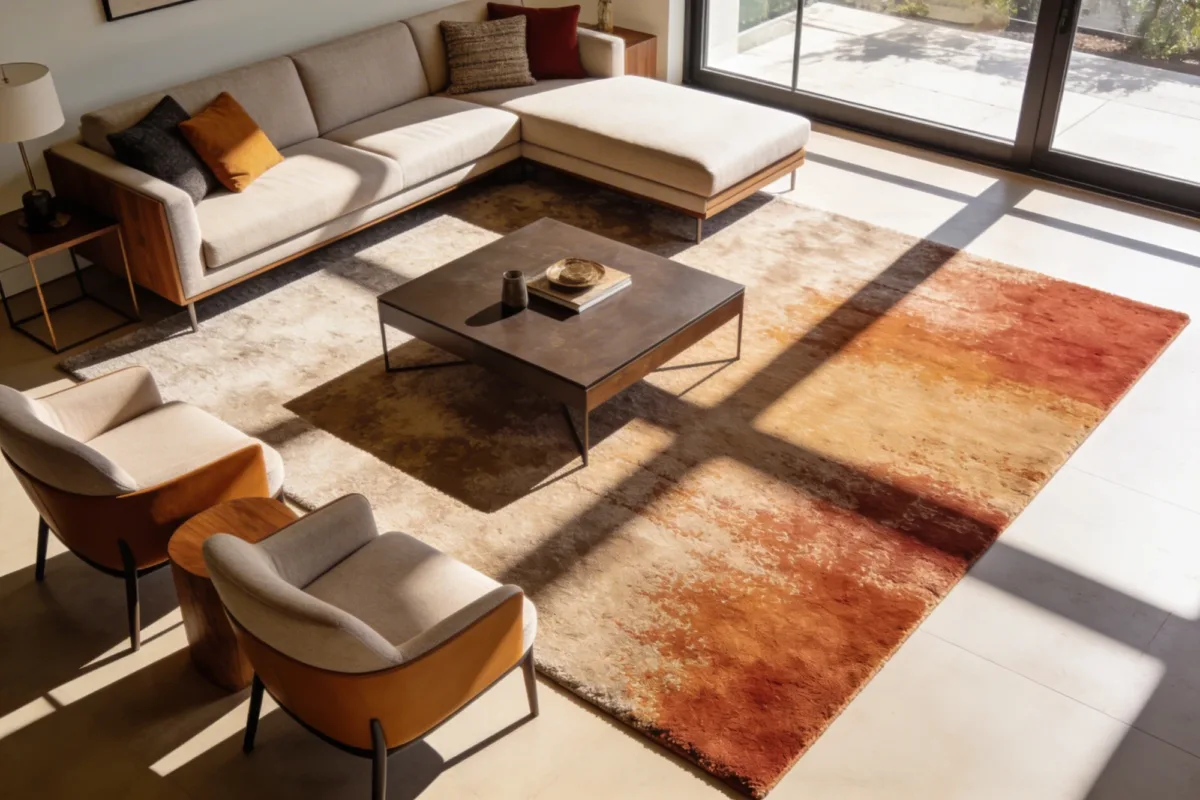
Longer sofas and sectionals need a rug with enough surface area to feel proportional. For a large sofa, the rug should extend well past both armrests — 6–8 inches minimum, more if you have the floor space. With sectionals, aim to get the front legs of every seating piece, including the chaise, resting on the rug so the whole group reads as one connected zone.
As a general guide, a rug in the 9×12 ft range often gives a large sofa or sectional the visual support it needs, though your exact room dimensions and furniture layout should always be the final word.
Popular Living Room Rug Placement Layouts
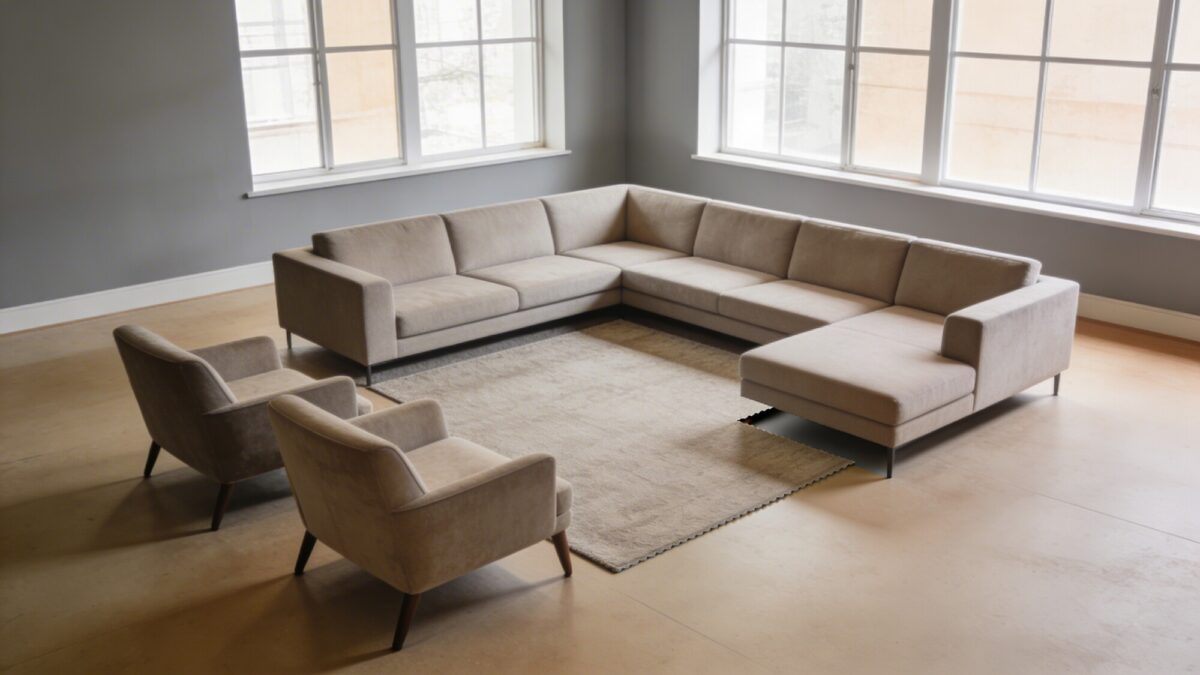
There isn’t just one “correct” way to place a rug. These three approaches are among the most commonly used, and each suits different room shapes and furniture styles.
- All-in-One Anchor: A single rectangular rug sits beneath the sofa, chairs, and coffee table, with front legs (or all legs) resting on it. This creates a cohesive, grounded look and works well in most standard living rooms.
- Offset Layering: A smaller rug sits under the coffee table while a larger rug floats under the broader seating group, adding depth and texture without one rug dominating the room.
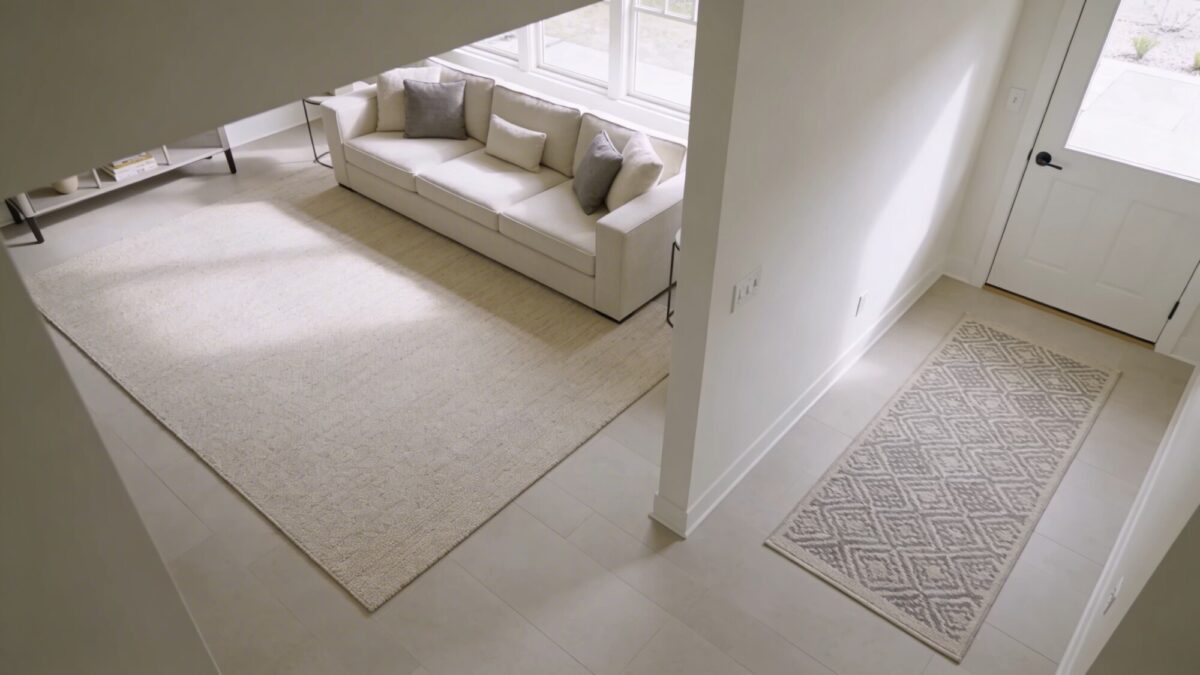
- Multiple Rugs, One Theme: Two coordinating rugs define separate zones — for example, one under the main sofa and another under a secondary seating area — which works especially well in open-plan spaces.
For more layout ideas tailored to different furniture arrangements, see our full living room rug layout guide.
Handling Tricky Layouts: Doors, Angles, and Open Floor Plans
Not every living room is a clean rectangle. Doors that swing inward, awkward angles, and open floor plans all add a layer of complexity to rug sizing.
Dealing with Door Clearance
- Measure the door’s swing arc and compare it against where the rug edge would land.
- Position the rug so the door doesn’t catch on a corner — sometimes a slightly narrower rug solves this instantly.
- Consider a high-low transition: a thinner mat or runner near the doorway, and your main rug set back from the swing path.
The same core principle still applies in irregular rooms: the rug needs to support the main seating group while keeping walkways clear. If you’re working around a fireplace, bay window, or open staircase, our guide on designer rug placement rules covers several of these edge cases in more depth.
Matching Rug Size to Style and Texture
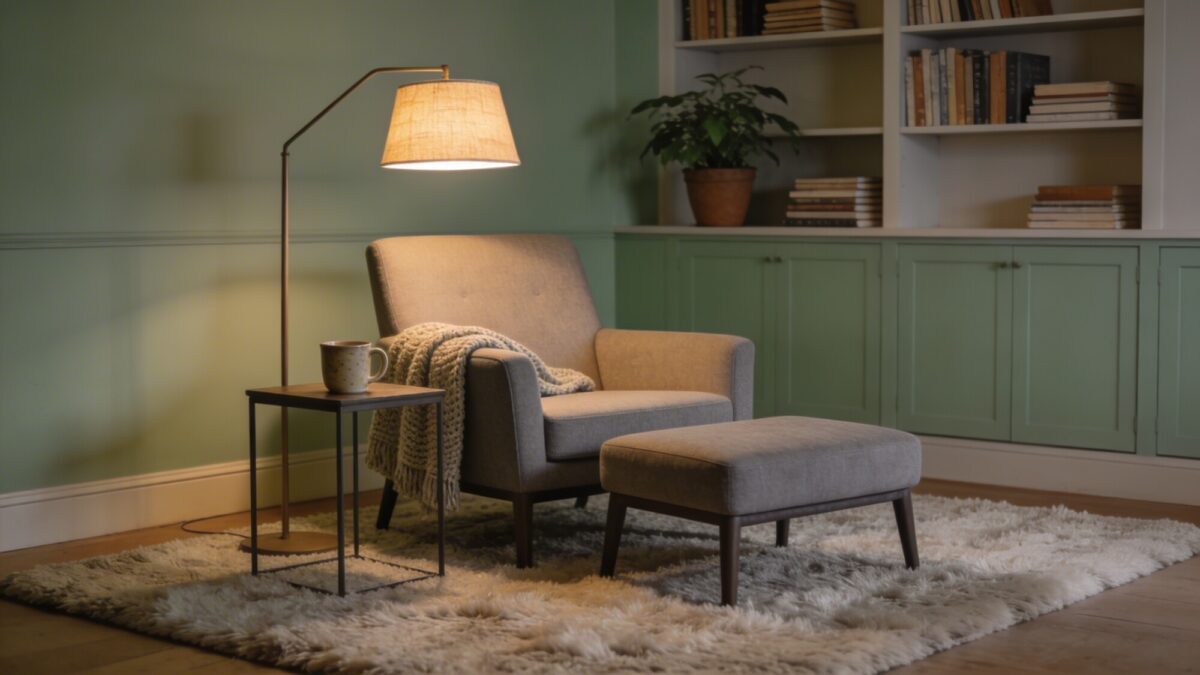
Rug sizing isn’t only about inches — scale should also feel right for your furniture style. A chunky, oversized sofa generally pairs well with a larger, grounded rug, while more delicate furniture, like mid-century pieces, often looks better with a slightly smaller footprint that doesn’t overwhelm the piece.
Texture plays into this too. Thick pile or shag rugs feel luxurious under a low-profile sofa, while flatweave or jute rugs help keep small-to-medium rooms feeling open and airy. If you’re shopping for a specific aesthetic, our mid-century modern rug buying guide and our styling tips for rugs with a beige couch both dig into pairing rug scale with specific furniture and color palettes.
Comfort and Practical Benefits of a Properly Sized Rug
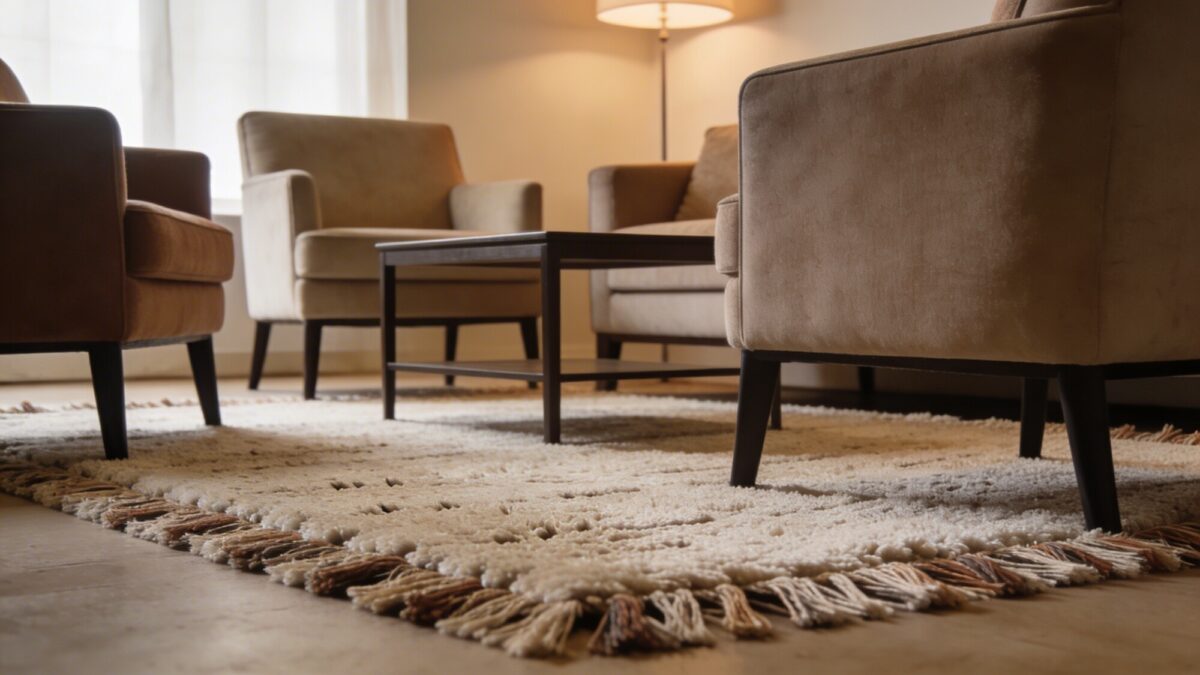
Beyond looks, rug size affects everyday comfort. A rug that’s sized too small leaves bare floor in the middle of your seating area, meaning cold feet and more foot noise. A properly sized rug cushions steps, softens sound, and makes the space feel warmer for lounging, movie nights, or floor-level play with kids.
Caring for Your Rug: Pads, Cleaning, and Longevity
Rug size also affects how you care for it. Larger rugs are heavier to move for cleaning, so a good maintenance routine matters more as size increases.
Choosing the Right Rug Pad
- Use a thicker pad on plush carpet and a thinner pad on hard flooring.
- Look for a pad with non-slip grip and some moisture resistance.
- A rug pad reduces wear at high-traffic seams and helps the rug hold its position over time.
Beyond the pad, regular vacuuming, prompt stain treatment, and periodic professional or deep cleaning will help a properly sized rug last for years.
Things to Consider Before You Buy a Living Room Rug
- Have you measured your seating group, not just the room dimensions?
- Does the rug leave 6–8 inches of clearance beyond your furniture?
- Is there enough space around the coffee table to pull out chairs comfortably?
- Does your chosen shape (rectangular, round, runner) match your room’s layout?
- Have you accounted for doorways, traffic paths, and any architectural quirks?
- Would a rug pad improve grip, comfort, or longevity in your space?
Frequently Asked Questions
What’s the best rug size for a standard 10×12 living room?
For a 10×12 ft living room, an 8×10 ft rug is a solid standard choice, and a 9×12 ft rug works well if you want a bigger, more immersive seating area. Either option should still leave some floor visible around the rug’s edges.
Can I use two rugs in a living room, and how do I pick sizes?
Yes — using one larger rug under the main seating area and a smaller one to anchor a secondary zone or entryway is a common and effective approach. Try to tie the two together with a shared color or texture, and keep traffic flow clear between them.
How do I measure for a rug if I have a sectional?
Place the rug so the front legs of the sofa and every seating piece in the sectional, including any chaise, rest on it. This keeps the whole seating group visually unified rather than split across bare floor and rug.
What if my living room is long and narrow?
A rectangular rug that runs the length of the seating area typically works best in long, narrow rooms. You can also add a runner in an adjoining hallway-like space to guide the eye and create a sense of width.
Is a round rug ever a good choice for a living room?
Yes — round rugs work particularly well in small spaces or to define a corner seating area, and they can soften an otherwise angular room. Just make sure the circle still supports your furniture layout without blocking traffic.
Our Recommendation
Getting your rug living room size right starts with measuring your seating group, not just guessing based on room square footage. Use the rug size chart above as a baseline, add clearance for your coffee table and traffic paths, and adjust for your room’s specific quirks — whether that’s a sectional, a small footprint, or an awkward door swing.
If you’re still exploring styles once your sizing is locked in, browsing options like cowhide rugs for a bolder statement look can help you find a rug that fits both your dimensions and your design goals.