8 Bedroom Ceiling Ideas Modern: Luxe Loft Concepts
Most bedroom makeovers stop at the walls. New paint, a headboard, maybe a rug swap — and the ceiling gets left flat white and forgotten, the way it’s been since the house was built. That’s a mistake, because the ceiling is the one surface you look at every night before you fall asleep. If you’re searching for bedroom ceiling ideas modern enough to actually change how a room feels, the good news is that most of these projects don’t require a contractor crew or a torn-open budget.
Below are eight approaches that work in real bedrooms, not just in styled photos. Each one includes what it actually takes to pull off, where it tends to go wrong, and who it’s best suited for.
Quick Takeaways
- Flat white with light texture is the safest option for small or low-light bedrooms — it won’t date and it won’t overwhelm.
- Coffered and paneled ceilings add the most visual depth but need at least 8.5–9 feet of ceiling height to avoid feeling cramped.
- Dark ceilings are dramatic but unforgiving in rooms under roughly 120 square feet — they can make a small space feel like it’s closing in.
- Wood slats and gypsum panels both hide LED strip lighting well, which is where most of the “wow” in these photos actually comes from.
- A painted accent border is the cheapest of the eight ideas and the easiest to redo if you change your mind in a year.
1. Sky-High White With Subtle Texture
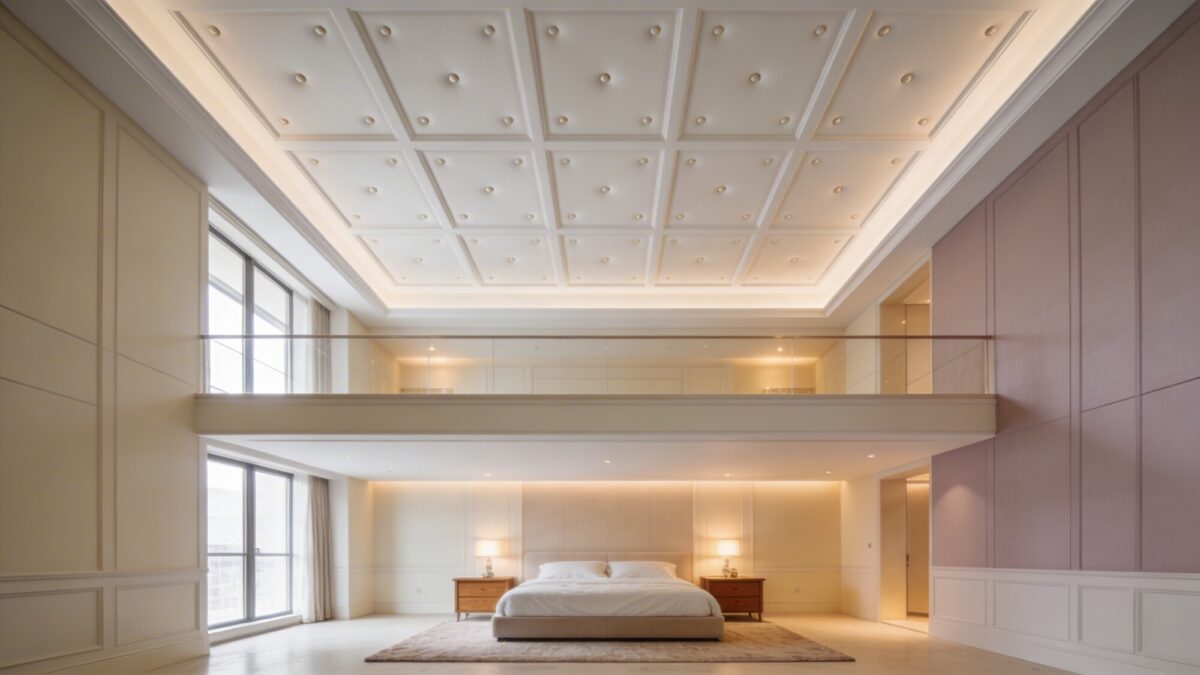
A flat white ceiling is the default for a reason — it bounces light around a room and never fights with your wall color. The upgrade here isn’t color, it’s texture. A soft eggshell finish or a barely-there riveted panel pattern catches ambient light without reading as busy, which is exactly what a modern bedroom ceiling design should do: add interest without adding visual noise.
This is the option to reach for if your bedroom is under 150 square feet or gets limited natural light. Anything darker or more textured in a small room tends to make the ceiling feel lower than it is.

What Makes This Work
- Flat white or eggshell base coat
- Subtle plaster or riveted-panel texture — nothing with deep shadow lines
- Ambient, indirect lighting that grazes the ceiling rather than pointing straight up at it
One thing people get wrong here: they pick a stark, cool white and end up with a room that feels clinical instead of calm. Warm the walls up with taupe, greige, or cream, and the white ceiling reads as fresh rather than sterile.
2. Coffered Ceilings That Dictate Luxury
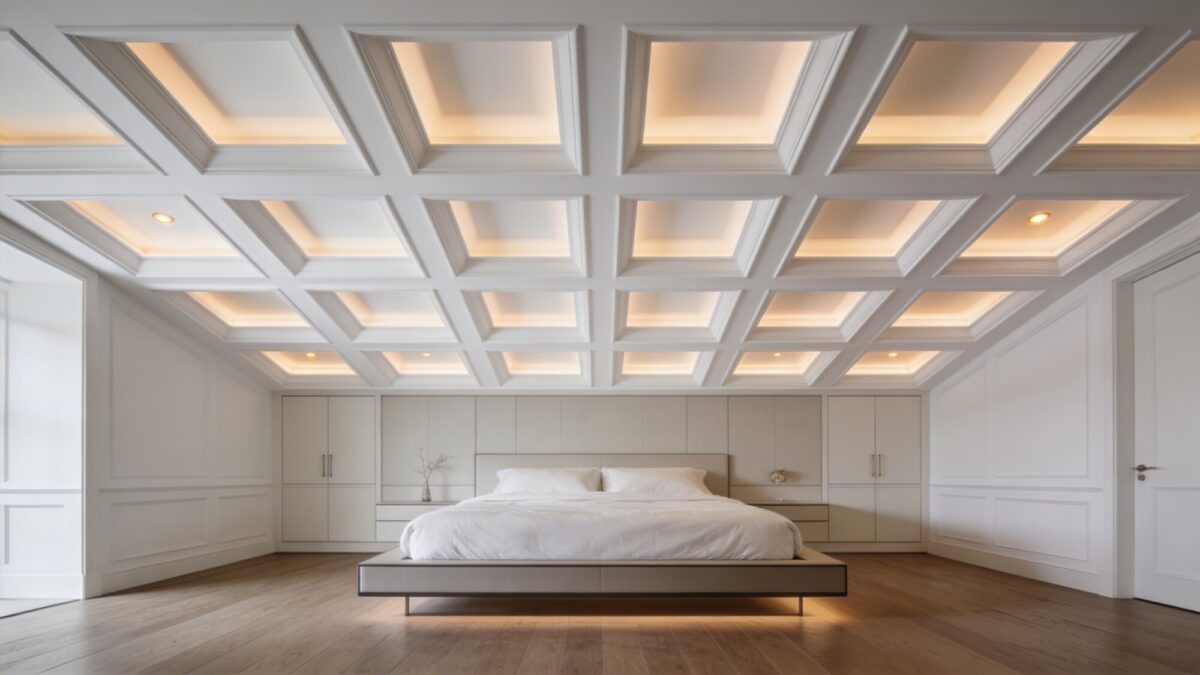
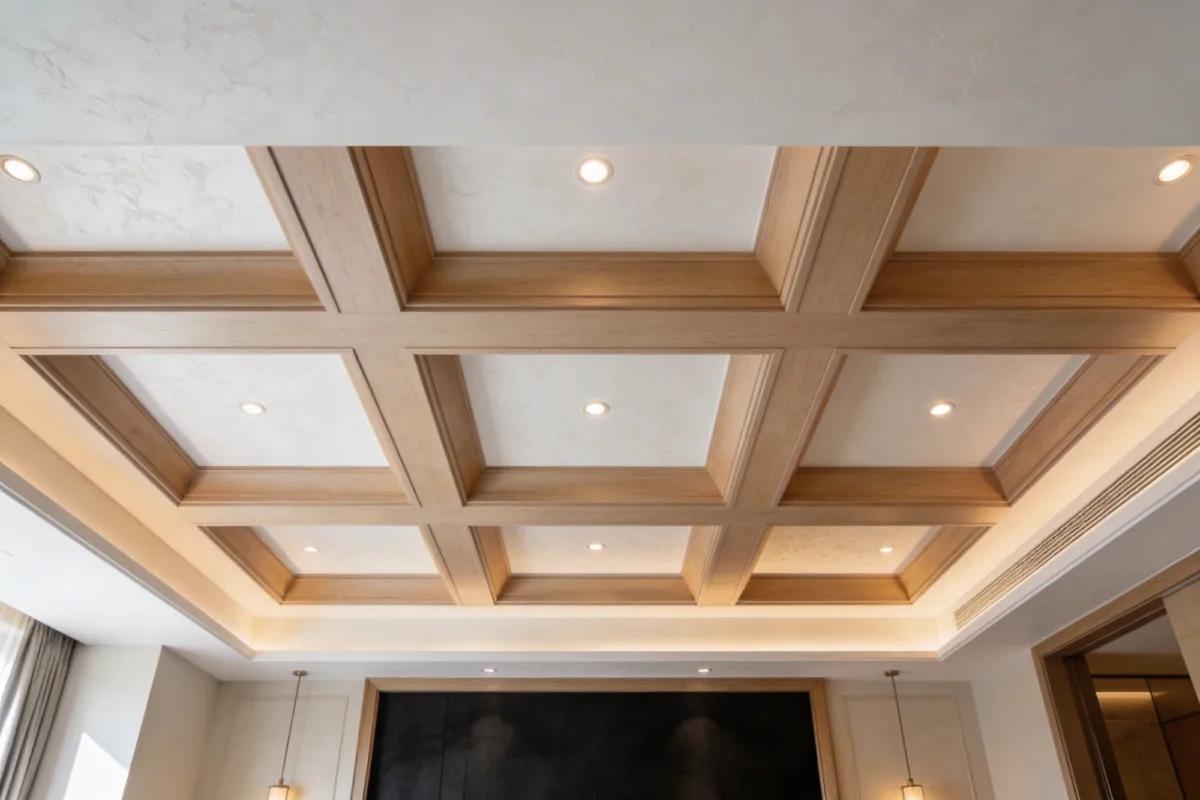
Coffering — a grid of recessed panels, usually formed with wood trim or plaster — adds architectural weight without eating into floor space. It’s the ceiling equivalent of crown molding: a detail that signals the room was actually designed, not just decorated.
The trade-off is height and budget. Coffering physically drops the ceiling plane in the recessed sections, so a room with 8-foot ceilings can start to feel boxed in. This idea works best at 9 feet or taller, or in a room where the coffers only cover part of the ceiling — say, the area directly over the bed — rather than the whole thing. If you want the full architectural version of this look, these luxury false ceiling designs show how far you can take the concept.

Getting It Right
- Wood or plaster grid forming even squares or rectangles
- Recessed lighting set into the coffers, not just mounted on the flat ceiling around them
- Neutral wood tones or all-white paint to keep it from looking heavy
Start with just the section over the bed if you’re not ready to commit to the whole ceiling. It reads as an intentional focal point, not a half-finished project.
3. Dark, Dramatic Ceilings
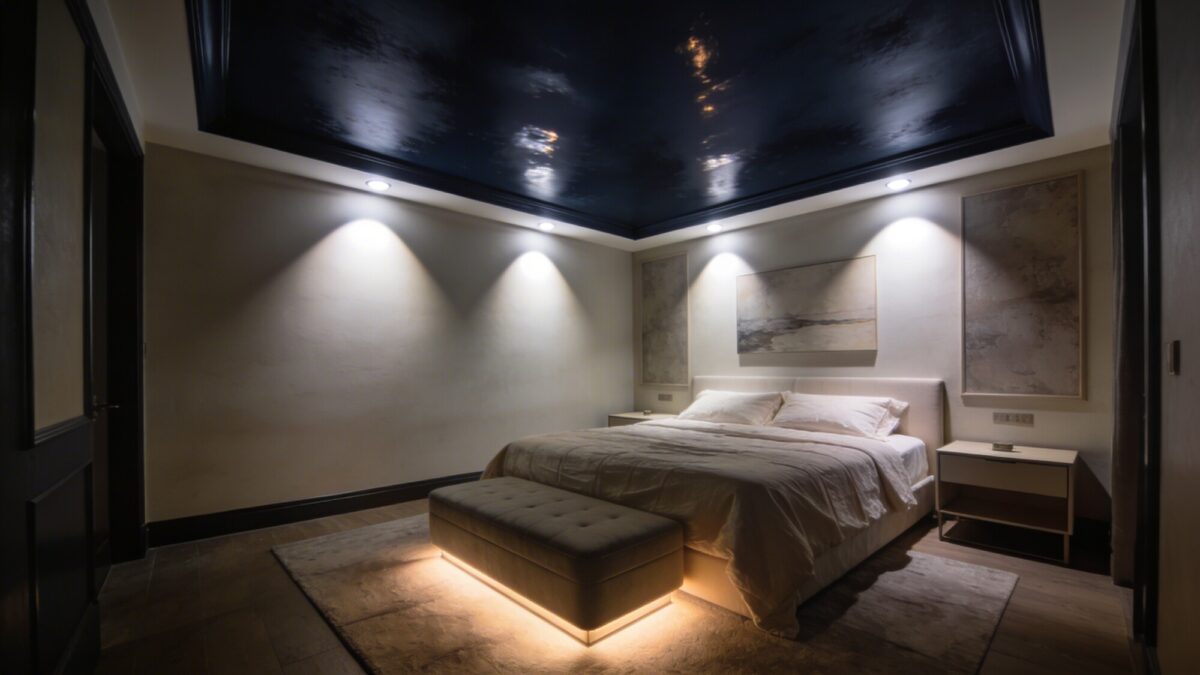
Painting a ceiling navy, charcoal, or espresso is the single most dramatic thing you can do to a bedroom for the cost of a gallon of paint. It anchors the room, makes white or pale bedding pop, and — done with the right lighting — feels intentional rather than accidental.
The part people skip: dark ceilings absorb light instead of reflecting it, so your existing fixtures may suddenly feel dim. Plan for warm-white LED downlights before you paint, not after. And be honest about your room size — a dark ceiling in a bedroom under about 120 square feet can start to feel like it’s pressing down on you, especially with 8-foot ceilings. For a closer look at how this plays out room by room, these dark ceiling bedroom design tips are worth reading before you buy paint.

Light Balance
- Warm white LED downlights, not cool white — cool white on a dark ceiling reads harsh
- Muted, matte-adjacent tones: navy, charcoal, deep espresso
- A satin (not glossy) finish, which reflects just enough light without turning the ceiling into a mirror
4. Wood Slat Ceilings for Cozy Modern Vibes
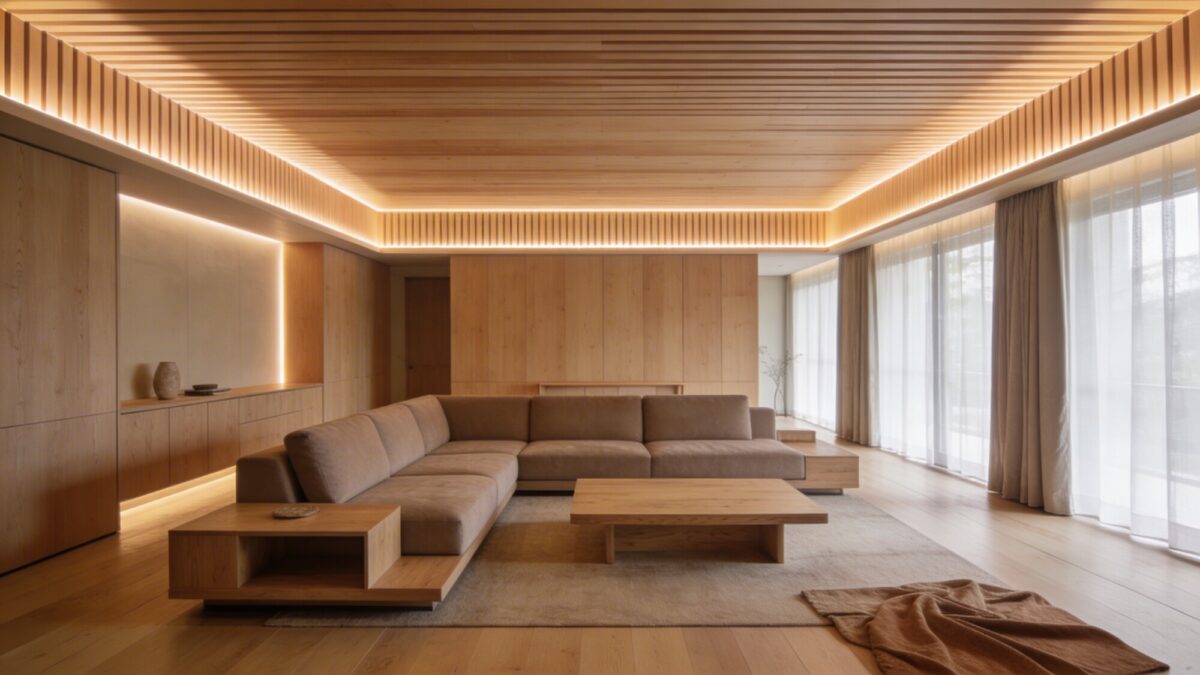
Wood slats bring texture and warmth without tipping into cabin-kitsch, as long as you keep the slats thin and evenly spaced. The real trick isn’t the wood — it’s the hidden LED strip lighting tucked behind or between the slats, which is what turns a plain wood ceiling into the kind of shot people save on Pinterest.
Matte or low-sheen sealant matters more than people expect. A glossy finish on wood slats under direct light creates glare and hot spots that show up in photos and in person. For a full breakdown of slat spacing, wood species, and finish options, this wooden ceiling design guide covers it in more depth than we can here.

Quick Setup
- Thin vertical or horizontal slats, evenly spaced
- LED strip lighting hidden along the slat edges or behind the run
- Matte finish to keep reflections soft
Pair this with light wood furniture rather than dark, heavy pieces — two competing wood tones in the same room tends to look accidental rather than curated.
5. Textured Plaster or Gypsum Panels
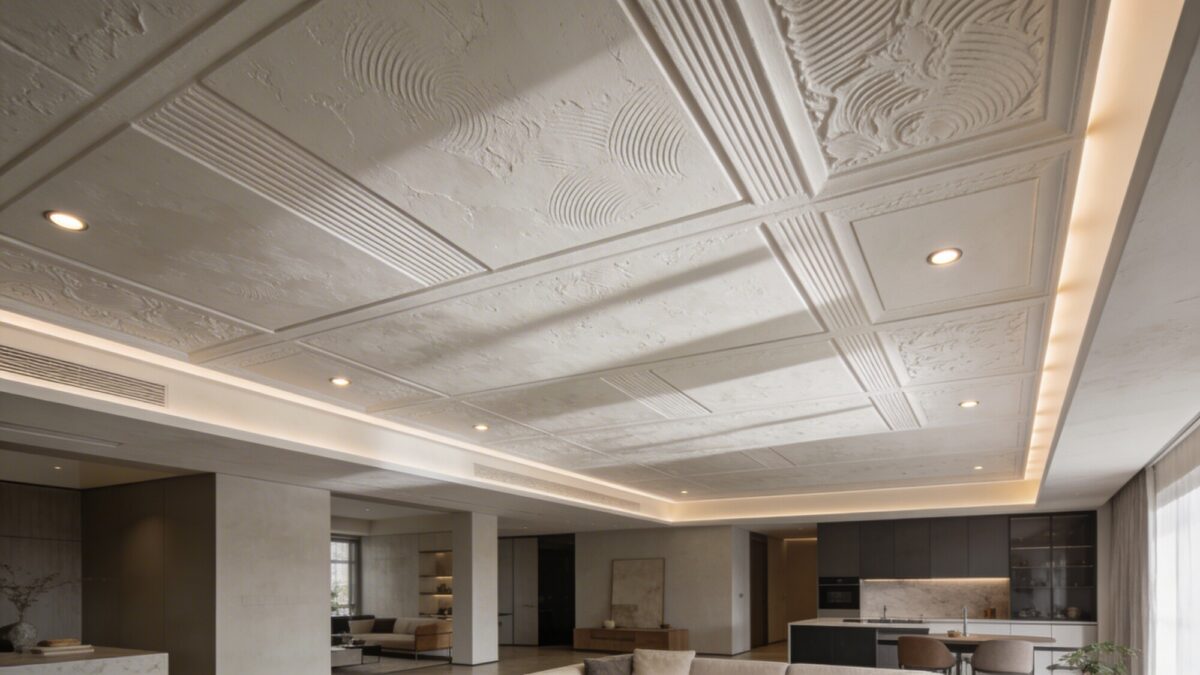
Hand-scraped or combed plaster gives you a handmade quality that flat drywall simply can’t fake, and gypsum panels let you build in soft-relief patterns without the labor cost of custom plasterwork. Both are a step up from a plain ceiling design bedroom without going as far as full coffering.
The mistake we see most: people pick a busy, high-contrast texture and then light it with a single center fixture, which throws one hard shadow instead of the soft, dimensional shadows that make texture worth having. If you’re considering this route, these gypsum ceiling design ideas show a range of patterns from subtle to statement-making.

Pattern Play
- Hand-scraped or combed plaster for subtle line texture
- Gypsum panels with soft relief for a more defined pattern
- Matte paint in a calm, neutral family — greige, alabaster, warm white
6. Minimalist Metallic Accents
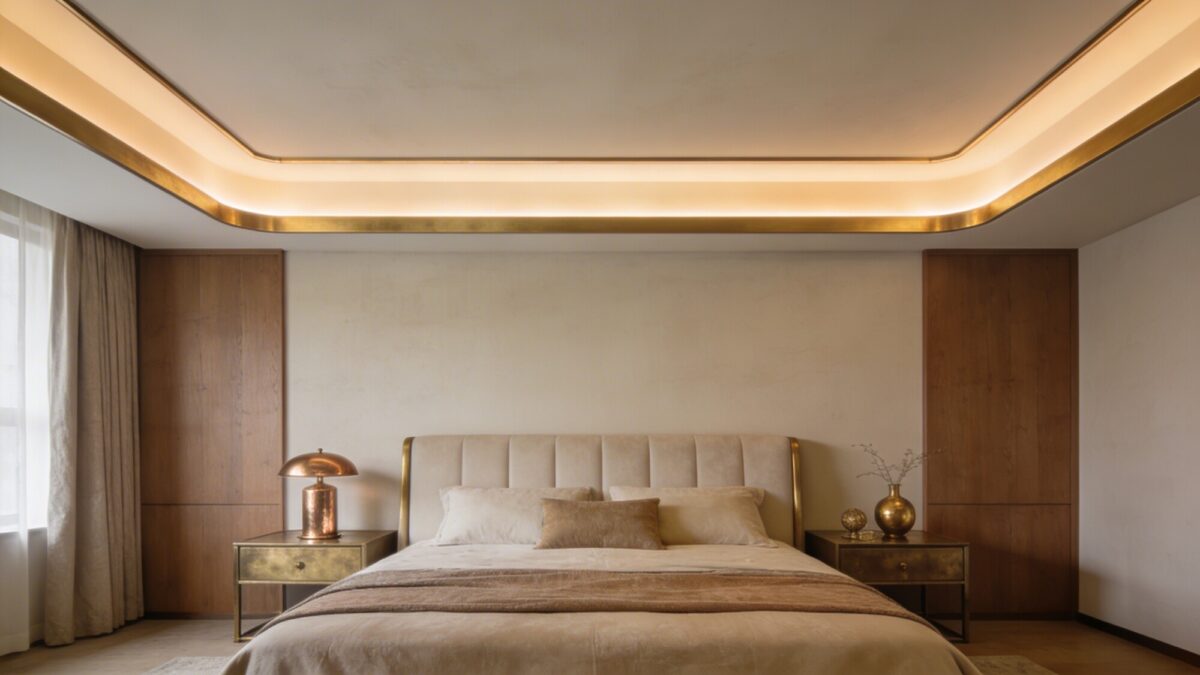
A slim metallic border — brushed brass, copper, or antique gold — along the ceiling perimeter is a small detail with an outsized effect. It’s understated enough to work in almost any bedroom, and it’s one of the few ceiling upgrades you can genuinely finish in a weekend.
Keep it warm-toned. Cool metals like chrome or polished nickel tend to read as commercial rather than residential when used on a ceiling edge, and they clash with the warm-white lighting most bedrooms use.
How to Do It
- Metallic corner caps or a slim continuous border, not a full metallic ceiling
- A soft LED glow behind the edge rather than a hard, visible light source
- Warm-toned metals only — brass, copper, antique gold
A little goes a long way here. This is the kind of simple bedroom ceiling detail where restraint reads as intentional and overdoing it reads as trying too hard.
7. Paneled Ceiling With Hidden Cove Lighting
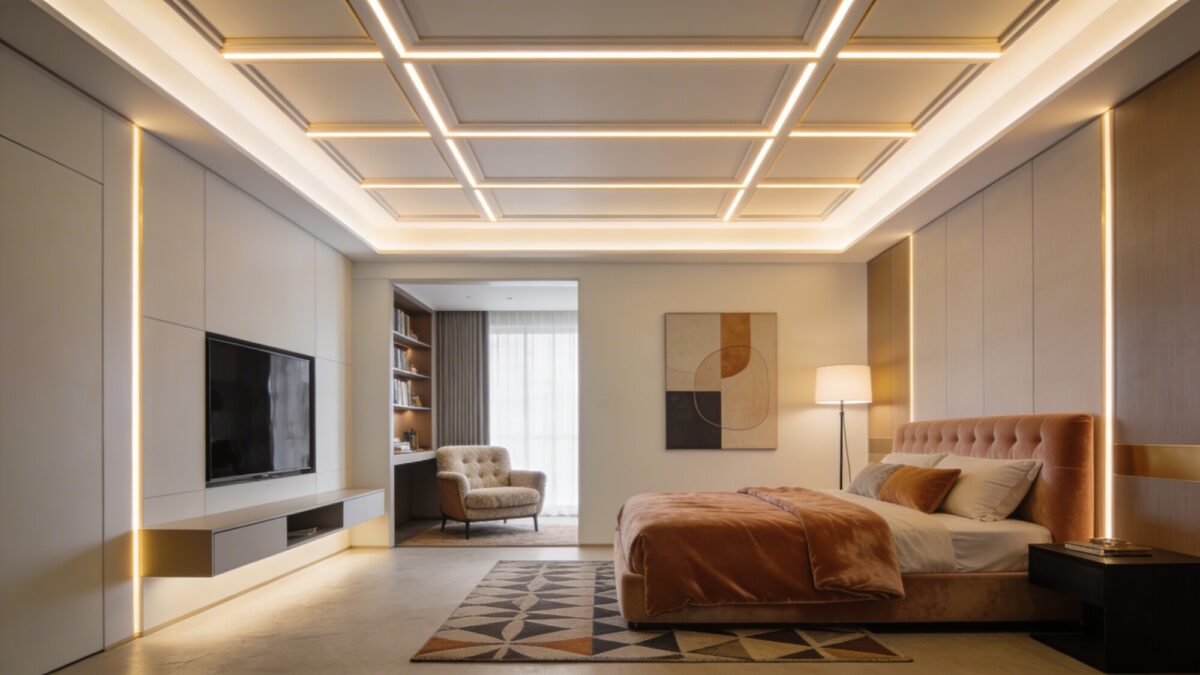
Slim rectangular or square panels with LED strips tucked into the seams give you clean, geometric lines and functional lighting zones in one move. This is a strong pick if your bedroom doubles as a reading nook or a media space, since you can light different zones independently instead of relying on one overhead fixture for the whole room.
Cove lighting is really the star of this idea — the panels are just the frame for it. If you want to go deeper on placement, dimming, and fixture options, this guide to cove lighting ceiling ideas is a good next stop.
Lighting & Panels
- Rectangular or square panels with a slim, low-profile edge
- LED strips hidden in the panel seams, not surface-mounted
- Dimmable warm white so the mood can shift from reading light to sleep light
8. Painted Ceiling With a Bold Accent Border
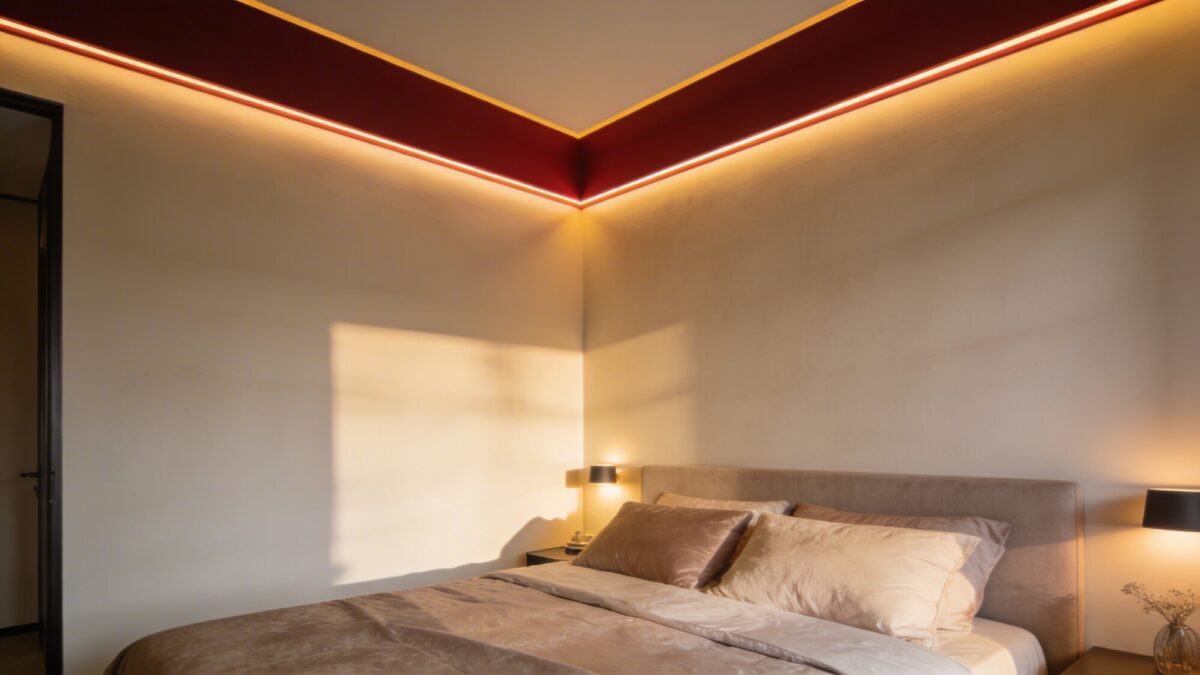
A painted border around the ceiling perimeter — a color that echoes or contrasts the walls — is the lowest-commitment idea on this list. It’s a can of paint, painter’s tape, and a free weekend, and it’s fully reversible if you repaint next year.
The detail that separates a clean result from a sloppy one is the painter’s line. Take the time to tape it properly and cut in slowly; a wavy border line is the fastest way to make a bedroom ceiling makeover idea look unfinished instead of intentional.
Border Basics
- A two-tone contrast that complements, rather than clashes with, your wall color
- A satin or semi-gloss finish on the border to catch light
- A crisp, taped painter’s line — this is where the whole effect lives or dies
How the 8 Options Compare
| Idea | Typical Cost | Difficulty | Best Ceiling Height | Best For |
|---|---|---|---|---|
| Textured white | $ | Easy | Any | Small or dim bedrooms |
| Coffered | $$$$ | Hard (pro install) | 9 ft+ | Larger, formal bedrooms |
| Dark ceiling | $ | Easy–Moderate | 9 ft+ | Rooms over 120 sq ft |
| Wood slats | $$$ | Moderate | Any | Cozy, natural-material rooms |
| Plaster/gypsum | $$–$$$ | Moderate–Hard | Any | Rooms wanting texture without pattern |
| Metallic border | $ | Easy | Any | A subtle, low-risk upgrade |
| Paneled + cove | $$$ | Moderate | 8.5 ft+ | Multi-use bedrooms |
| Painted border | $ | Easy | Any | Renters or frequent redecorators |
Things to Consider Before You Start
- Measure your actual ceiling height before picking coffering or paneling — anything that adds depth needs the room to spare.
- Check your existing electrical setup. Cove and strip lighting usually needs a dedicated switch or dimmer, which may mean an electrician visit even for a “simple” project.
- Test paint or finish samples under your bedroom’s actual lighting at night, not just in daylight — dark ceiling colors especially can look completely different under lamplight.
- If you’re renting, favor the reversible options: painted borders and metallic accents come off (or get painted over) far more easily than structural panels.
FAQ
What’s the most budget-friendly modern bedroom ceiling idea?
A painted accent border or a subtle texture on white paint. Both are achievable with standard paint and tools and don’t require structural changes.
Will a dark ceiling make my bedroom feel smaller?
It can, especially in rooms under roughly 120 square feet with 8-foot ceilings. In larger rooms with good downlighting, it usually reads as cozy rather than cramped.
Do I need an electrician for cove or LED strip lighting?
If you’re adding a new switch, dimmer, or hardwired fixture, yes. Plug-in LED strips on a existing outlet can sometimes be a DIY job, but check your local code before assuming.
Can I combine two of these ideas?
Yes — wood slats with hidden LED lighting and a painted border are a common pairing, and textured white ceilings work with almost any of the lighting-based ideas on this list.
How long does a ceiling makeover usually take?
A painted border or metallic accent is a weekend project. Wood slats, plaster texture, or paneling with cove lighting typically take several days to a couple of weeks depending on whether you’re hiring it out.
Our Recommendation
If you only take one thing from this list: start with lighting, not paint or panels. Every idea here — from the dark dramatic ceiling to the paneled cove option — depends more on how it’s lit than on the material itself. A textured white ceiling with the wrong lighting looks flat and dated; a plain ceiling with warm, well-placed light looks intentional even before you add texture. If you’re short on budget or time, the painted border and the metallic accent give you the best return for the least commitment. If you’ve got the height and the budget, coffering and paneled cove lighting are the two that photograph best and hold up longest as a design choice rather than a trend. For more on getting the lighting layer right before you touch paint or panels, these bedroom lighting ideas are a useful starting point.