A plain ceiling fixture is one of the easiest things to overlook when planning a bedroom — and one of the quickest to upgrade. These bedroom lighting ideas ceiling modern homeowners are choosing right now range from statement pieces that double as art to hidden systems you’ll never actually see, just feel. Below is a breakdown of seven approaches, what each one requires, and how to decide which fits your room. Quick Takeaways Before You Choose a Fixture Warm color temperatures (2700–3000K) read as cozy; anything cooler tends to feel clinical in a bedroom. Dimmers are worth adding to almost every option on this list — they turn a single fixture into two or three moods. Statement fixtures (orbs, flush mounts) work best as the room’s one focal point; layered or hidden lighting works best when nothing else is competing for attention. Mounting height and fixture scale matter as much as style — a piece that’s too small looks like an afterthought, and one that’s too large can dominate a small room. 1. Floating Orb or LED Cloud — A Ceiling Showpiece A cluster of glowing orbs or a single large sculptural sphere turns the ceiling into part of the room’s art collection rather than just a light source. Dimmable LEDs at a warm 2700–3000K color temperature keep the effect soft and inviting instead of stark, which matters for a fixture that’s meant to set mood, not just provide brightness. Scale is the detail most people get wrong here. A fixture sized to a large living room will overwhelm a standard bedroom, and one sized for a hallway will disappear against a bigger ceiling. As a rough guide, add the room’s length and width in feet, and use that number in inches as a starting point for the fixture’s diameter — then adjust based on ceiling height. Photo by Tsuyoshi Kozu on Unsplash Key Points Choose dimmable LEDs for flexibility Aim for a warm color temperature around 2700–3000K Keep wiring clean with a recessed canopy or surface-mount bracket 2. Layered Recessed Lighting With a Twist Recessed can lights rarely get design credit, but a well-planned layout does more for a room than a single overhead fixture ever could. Mixing standard line-voltage cans around the room’s perimeter with a few low-voltage adjustable spots near a desk or vanity gives you both ambient fill and task lighting from the same system. Adding one central pendant above the seating or bed area breaks up the flatness that an all-recessed ceiling can have, giving the room a visual focal point without adding clutter. A smart dimmer on the whole circuit — or a separate one for the pendant — makes it easy to shift between a bright, functional room and a dim, wind-down one. For a broader look at ceiling layouts that support this kind of setup, see this guide to modern bedroom ceiling design ideas. Tips for This Layout Mix line-voltage cans with low-voltage adjustable spots Layer ambient light around the edges and task light near desks or vanities Add a smart dimmer so you can switch moods on demand 3. Architectural Downlights With a Hidden Purpose Downlights tucked into crown molding or a ceiling cove wash the walls in soft, even light instead of casting the harsh downward pools you get from standard recessed cans. The effect reads as intentional and architectural — like the lighting was planned alongside the room’s structure rather than added afterward. Photo by Albert Vincent Wu on Unsplash This approach works especially well for highlighting a textured headboard wall or artwork, since the light source itself stays out of view and the wall does the visual work. It’s one of the lower-maintenance options here too: once installed, there’s no fixture to dust or restyle when trends shift. For more on integrating hidden architectural lighting, this collection of profile light ceiling design ideas covers several variations. What to Love About This Option Soft, even wash across the walls Low-profile trims keep the ceiling looking clean and minimalist Works well for accenting headboards or architectural details 4. Pendant Clusters Over the Nightstands Pendant lighting has moved well beyond kitchen islands. Hanging a small cluster of pendants above each nightstand — instead of relying on table lamps — creates a hotel-like symmetry and frees up nightstand surface space for a book or a glass of water. Mixing finishes like matte black, brushed brass, and frosted glass within the same cluster gives the fixture some visual texture without looking mismatched, as long as the shapes stay loosely consistent. Dimmable bulbs are worth prioritizing here specifically, since bedside pendants often double as reading lights late at night. Photo by engin akyurt on Unsplash Key Elements Matched or intentionally varied pendant shapes Dimmable bulbs for late-night reading and winding down Soft finishes such as matte black, brushed brass, or frosted glass 5. Hidden Cove Lighting for a Subtle Glow Cove lighting is the option for anyone who wants ambience without a visible fixture at all. A warm LED strip installed behind a ceiling cornice or along a recessed ledge creates a soft halo of light that makes the room feel larger and more finished, without a single bulb or shade in view. Sticking to a warm white temperature around 2700K keeps the glow cozy rather than sterile, and choosing an IP-rated strip is worth the small extra cost if the room is near a bathroom or humid area. Driver compatibility and heat management are also worth confirming before installation, since poorly ventilated LED strips can degrade faster than expected. This roundup of cove lighting ceiling ideas is a good next stop if this is the direction you’re leaning toward. Practical Notes Use warm white LEDs around 2700K Choose IP-rated strips if the room is near moisture-prone areas Confirm driver compatibility and proper heat management before install 6. Ceiling Fans That Double as Design Icons A ceiling fan doesn’t have to be a compromise between airflow and style. Modern fans with integrated light kits and sculptural blade designs handle both jobs at once, and finishes like matte black, brass, or natural wood tones can match existing hardware in the room rather than standing apart from it. Photo by Marin huang on Unsplash Mount height is the detail that makes or breaks this option. Too low, and the fan becomes a hazard near a tall bed frame or platform; too high, and the integrated light feels distant and dim. A mid-range mounting height — generally leaving at least seven feet of clearance from the floor — tends to balance both function and visual proportion. Why They’re Worth Considering Built-in light kits reduce the need for a separate ceiling fixture Efficient motors help manage energy use over time Design-forward finishes include matte black, brass, nickel, and wood tones 7. Statement Flush Mounts With Personality When you want one confident, unmissable choice, a large sculptural flush mount can carry the entire room. Artisan glass, geometric metalwork, or a sleek orb-shaped shade all read as art first and light source second, which is exactly the point. Because the fixture is doing so much visual work, it’s worth building the rest of the room’s hardware finishes — door handles, furniture legs, nightstand lamps — around whatever metal tone the flush mount uses. Pairing it with a dimmer switch lets the same fixture handle both bright daytime function and a low, moody evening glow. For more high-impact fixture inspiration, this guide to high-end bedroom lighting ideas covers similar statement pieces. Photo by Raju Kumar on Unsplash Ideas to Consider Metal finishes that echo door hardware or furniture legs Warm-toned bulbs to keep the room feeling homey rather than showroom-bright Pairing with a dimmer to shift between work mode and wind-down mode Comparing the Seven Ceiling Lighting Options OptionBest ForInstallation EffortFloating orb / LED cloudRooms wanting a sculptural focal pointModerate — needs a secure mounting pointLayered recessed lightingFlexible, everyday functionHigher — multiple fixtures and wiringArchitectural downlightsHighlighting walls, headboards, or artHigher — often needs molding or covesPendant clustersBedside reading and hotel-style symmetryLow to moderateHidden cove lightingAmbient glow with no visible fixtureHigher — requires a cove or corniceDesign-forward ceiling fanAirflow plus style in warmer climatesModerateStatement flush mountA single bold focal pointLow — usually a direct fixture swap Things to Consider Before You Commit Whether your ceiling has the structural support for a heavier fixture like an orb chandelier or flush mount. Your room’s existing hardware finishes, so the new fixture’s metal tone doesn’t clash. How much of the installation requires an electrician versus a straightforward fixture swap. Whether you want one statement piece or a fully layered system — mixing too many bold ideas at once can compete rather than complement. Frequently Asked Questions What color temperature works best for bedroom ceiling lighting? Most designers aim for 2700–3000K, which reads as warm and cozy rather than the cooler, more clinical tones used in kitchens or offices. Do I need an electrician to install cove or hidden lighting? In most cases, yes — cove lighting typically requires a cornice or recessed ledge, plus wiring for the LED driver, which usually calls for professional installation. Can I combine more than one of these lighting ideas in the same room? Yes, but it’s best to pick one statement piece — like an orb chandelier or flush mount — and pair it with a quieter, layered system rather than combining two bold focal points. Are ceiling fans still considered modern for bedrooms? Yes, especially models with integrated lighting and sculptural blades in finishes like matte black or brass, which read as design pieces rather than purely functional add-ons. What’s the easiest upgrade on this list for a rental or budget project? A statement flush mount is typically the simplest — it’s often a direct swap for an existing ceiling fixture and doesn’t require structural changes. Our Verdict If you’re only making one change, prioritize dimmers — they make almost every option on this list more useful, regardless of which fixture style you choose. From there, pick a statement piece like a flush mount or orb chandelier for immediate visual impact, or invest in layered and hidden lighting if you’d rather the room feel finished without a fixture calling attention to itself. For more ceiling-specific inspiration, this guide to modern luxe loft ceiling concepts and this collection of simple modern false ceiling designs are worth exploring next.
A plain ceiling fixture is one of the easiest things to overlook when planning a bedroom — and one of the quickest to upgrade. These bedroom lighting ideas ceiling modern homeowners are choosing right now range from statement pieces that double as art to hidden systems you’ll never actually see, just feel. Below is a breakdown of seven approaches, what each one requires, and how to decide which fits your room.
Warm color temperatures (2700–3000K) read as cozy; anything cooler tends to feel clinical in a bedroom.
Dimmers are worth adding to almost every option on this list — they turn a single fixture into two or three moods.
Statement fixtures (orbs, flush mounts) work best as the room’s one focal point; layered or hidden lighting works best when nothing else is competing for attention.
Mounting height and fixture scale matter as much as style — a piece that’s too small looks like an afterthought, and one that’s too large can dominate a small room.
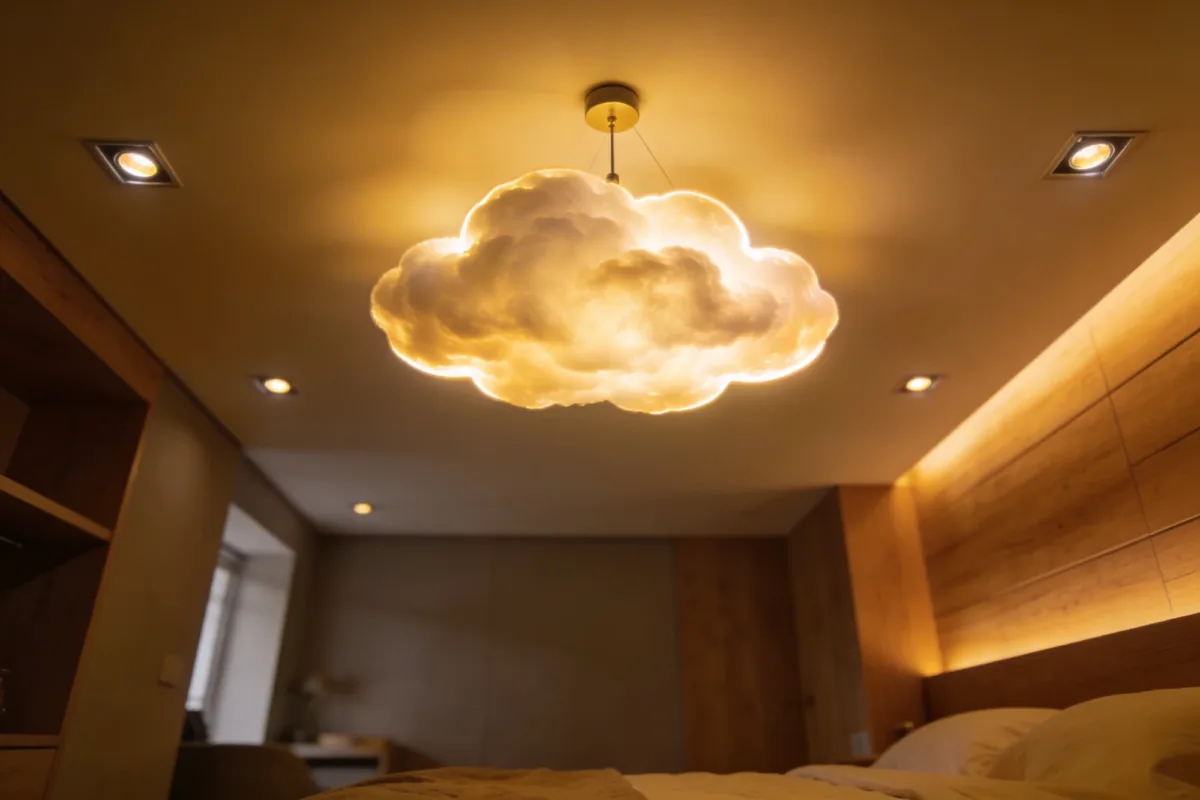
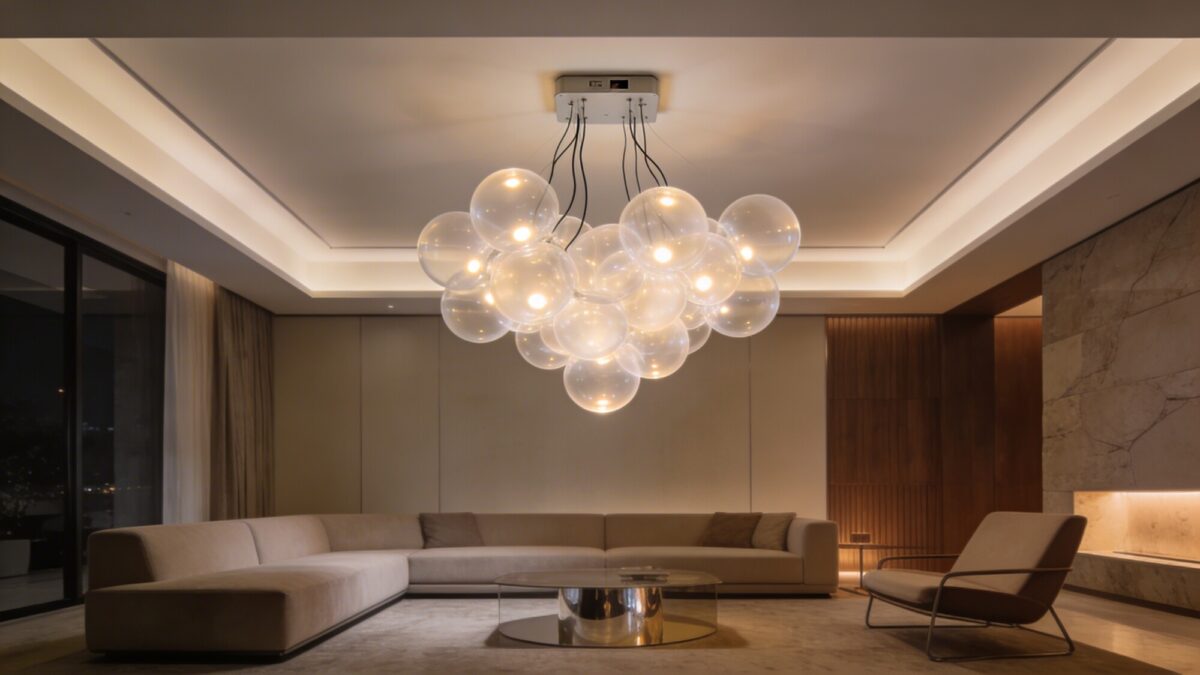
A cluster of glowing orbs or a single large sculptural sphere turns the ceiling into part of the room’s art collection rather than just a light source. Dimmable LEDs at a warm 2700–3000K color temperature keep the effect soft and inviting instead of stark, which matters for a fixture that’s meant to set mood, not just provide brightness.
Scale is the detail most people get wrong here. A fixture sized to a large living room will overwhelm a standard bedroom, and one sized for a hallway will disappear against a bigger ceiling. As a rough guide, add the room’s length and width in feet, and use that number in inches as a starting point for the fixture’s diameter — then adjust based on ceiling height.
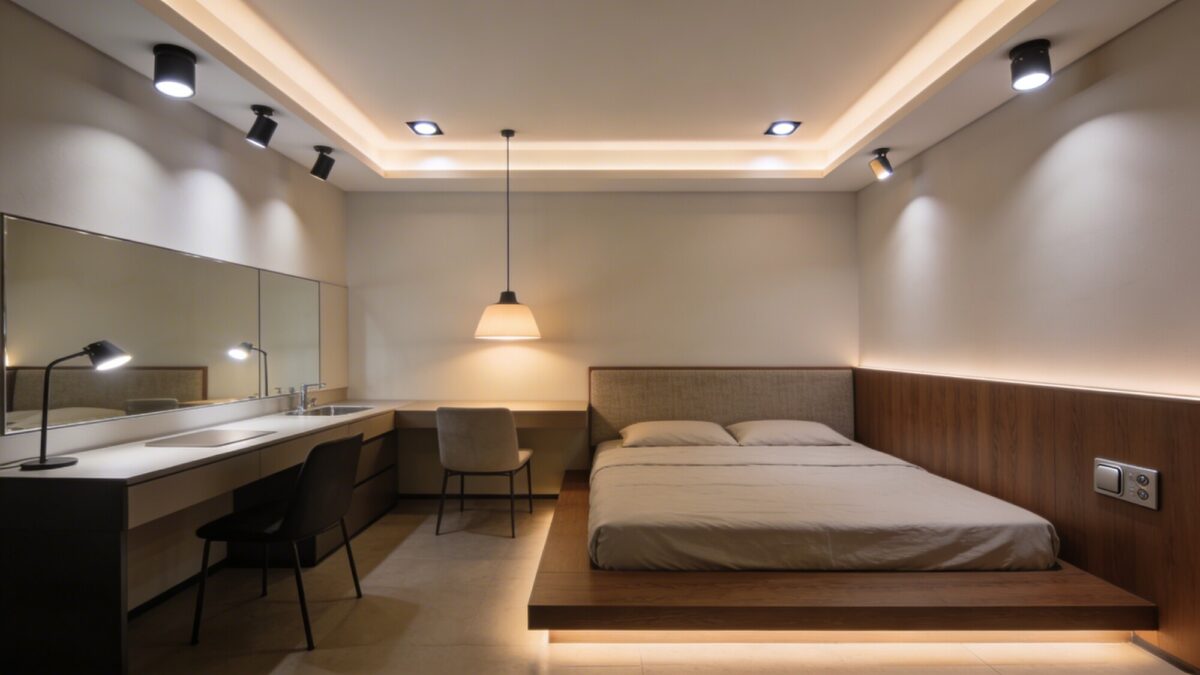
Recessed can lights rarely get design credit, but a well-planned layout does more for a room than a single overhead fixture ever could. Mixing standard line-voltage cans around the room’s perimeter with a few low-voltage adjustable spots near a desk or vanity gives you both ambient fill and task lighting from the same system.
Adding one central pendant above the seating or bed area breaks up the flatness that an all-recessed ceiling can have, giving the room a visual focal point without adding clutter. A smart dimmer on the whole circuit — or a separate one for the pendant — makes it easy to shift between a bright, functional room and a dim, wind-down one. For a broader look at ceiling layouts that support this kind of setup, see this guide to modern bedroom ceiling design ideas.
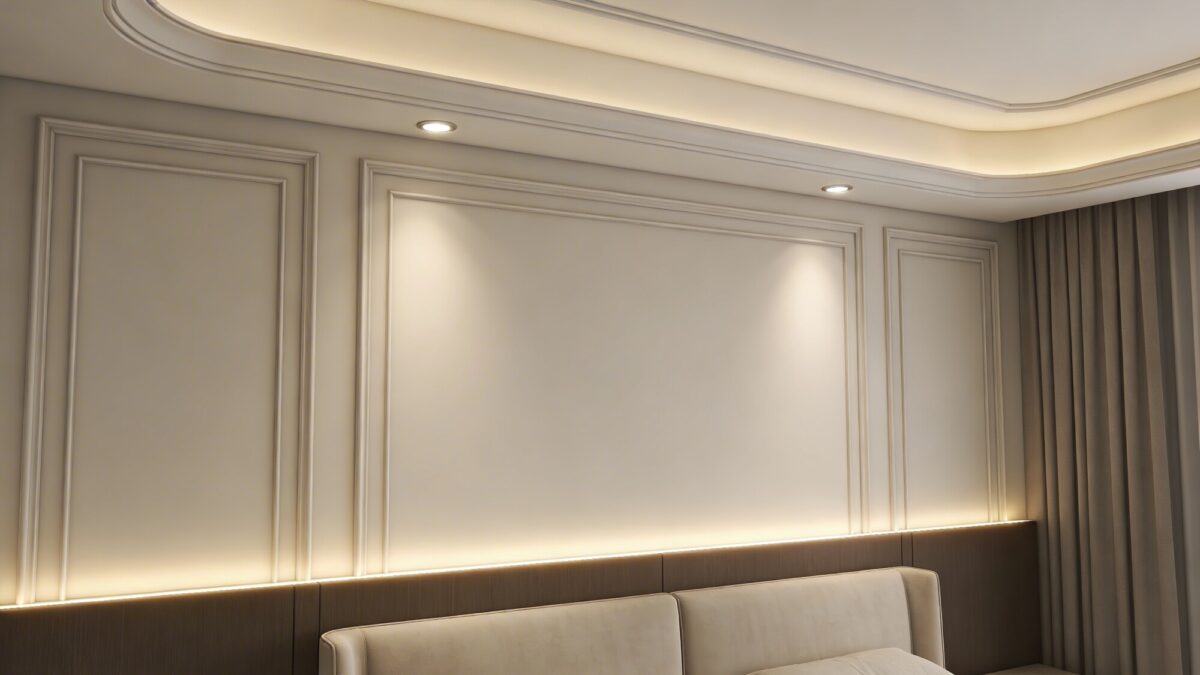
Downlights tucked into crown molding or a ceiling cove wash the walls in soft, even light instead of casting the harsh downward pools you get from standard recessed cans. The effect reads as intentional and architectural — like the lighting was planned alongside the room’s structure rather than added afterward.
This approach works especially well for highlighting a textured headboard wall or artwork, since the light source itself stays out of view and the wall does the visual work. It’s one of the lower-maintenance options here too: once installed, there’s no fixture to dust or restyle when trends shift. For more on integrating hidden architectural lighting, this collection of profile light ceiling design ideas covers several variations.
What to Love About This Option
Soft, even wash across the walls
Low-profile trims keep the ceiling looking clean and minimalist
Works well for accenting headboards or architectural details
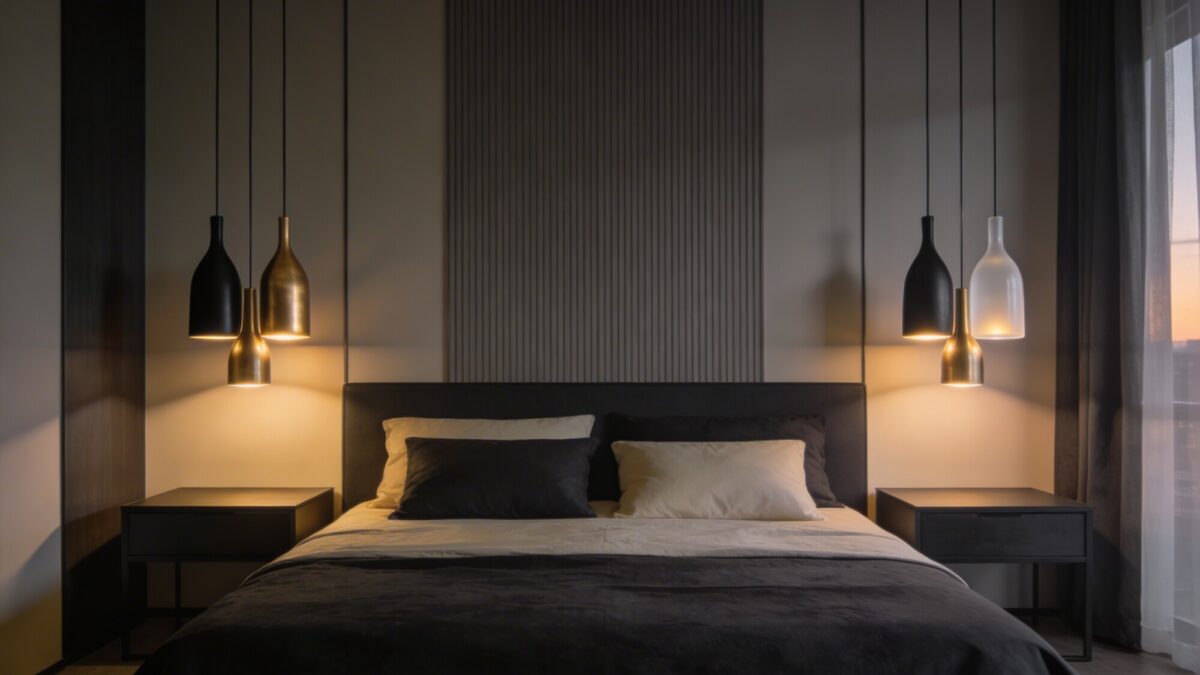
Pendant lighting has moved well beyond kitchen islands. Hanging a small cluster of pendants above each nightstand — instead of relying on table lamps — creates a hotel-like symmetry and frees up nightstand surface space for a book or a glass of water.
Mixing finishes like matte black, brushed brass, and frosted glass within the same cluster gives the fixture some visual texture without looking mismatched, as long as the shapes stay loosely consistent. Dimmable bulbs are worth prioritizing here specifically, since bedside pendants often double as reading lights late at night.
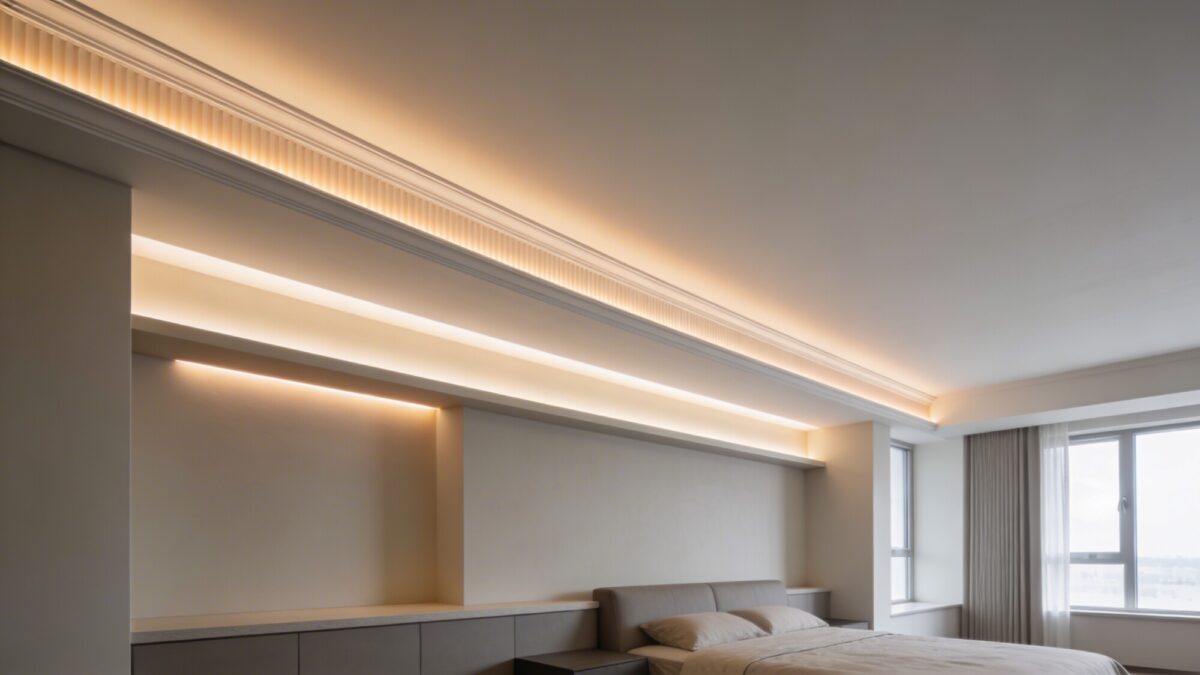
Cove lighting is the option for anyone who wants ambience without a visible fixture at all. A warm LED strip installed behind a ceiling cornice or along a recessed ledge creates a soft halo of light that makes the room feel larger and more finished, without a single bulb or shade in view.
Sticking to a warm white temperature around 2700K keeps the glow cozy rather than sterile, and choosing an IP-rated strip is worth the small extra cost if the room is near a bathroom or humid area. Driver compatibility and heat management are also worth confirming before installation, since poorly ventilated LED strips can degrade faster than expected. This roundup of cove lighting ceiling ideas is a good next stop if this is the direction you’re leaning toward.
Practical Notes
Use warm white LEDs around 2700K
Choose IP-rated strips if the room is near moisture-prone areas
Confirm driver compatibility and proper heat management before install
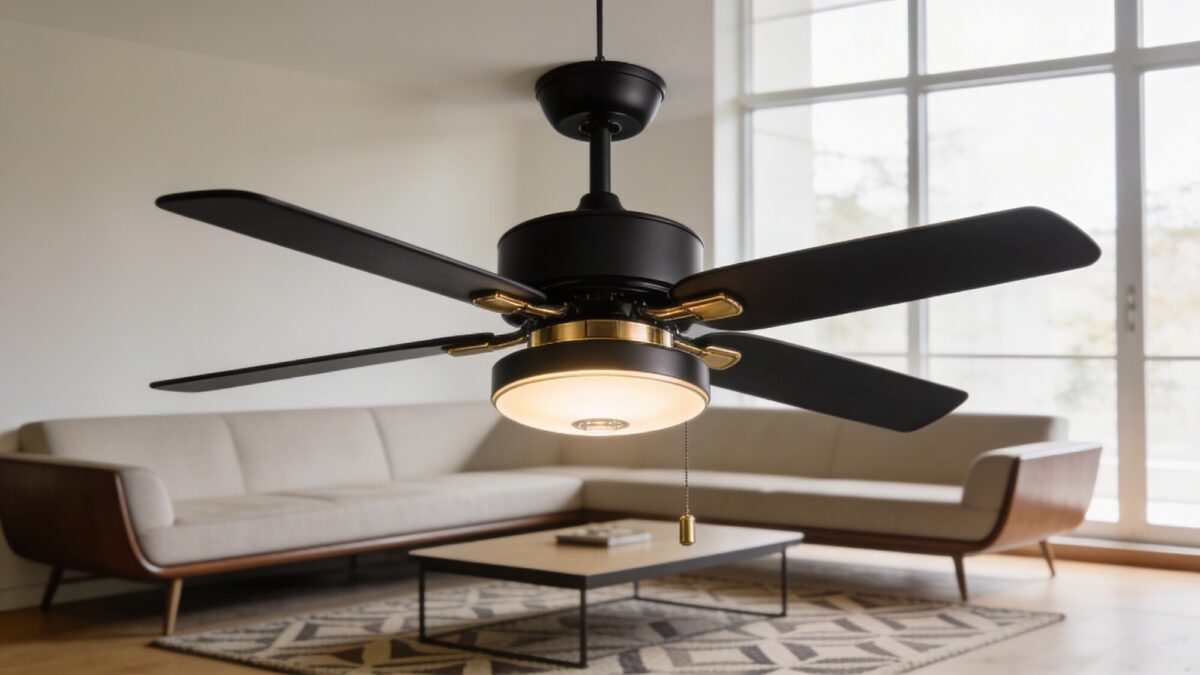
A ceiling fan doesn’t have to be a compromise between airflow and style. Modern fans with integrated light kits and sculptural blade designs handle both jobs at once, and finishes like matte black, brass, or natural wood tones can match existing hardware in the room rather than standing apart from it.
Mount height is the detail that makes or breaks this option. Too low, and the fan becomes a hazard near a tall bed frame or platform; too high, and the integrated light feels distant and dim. A mid-range mounting height — generally leaving at least seven feet of clearance from the floor — tends to balance both function and visual proportion.
Why They’re Worth Considering
Built-in light kits reduce the need for a separate ceiling fixture
Efficient motors help manage energy use over time
Design-forward finishes include matte black, brass, nickel, and wood tones
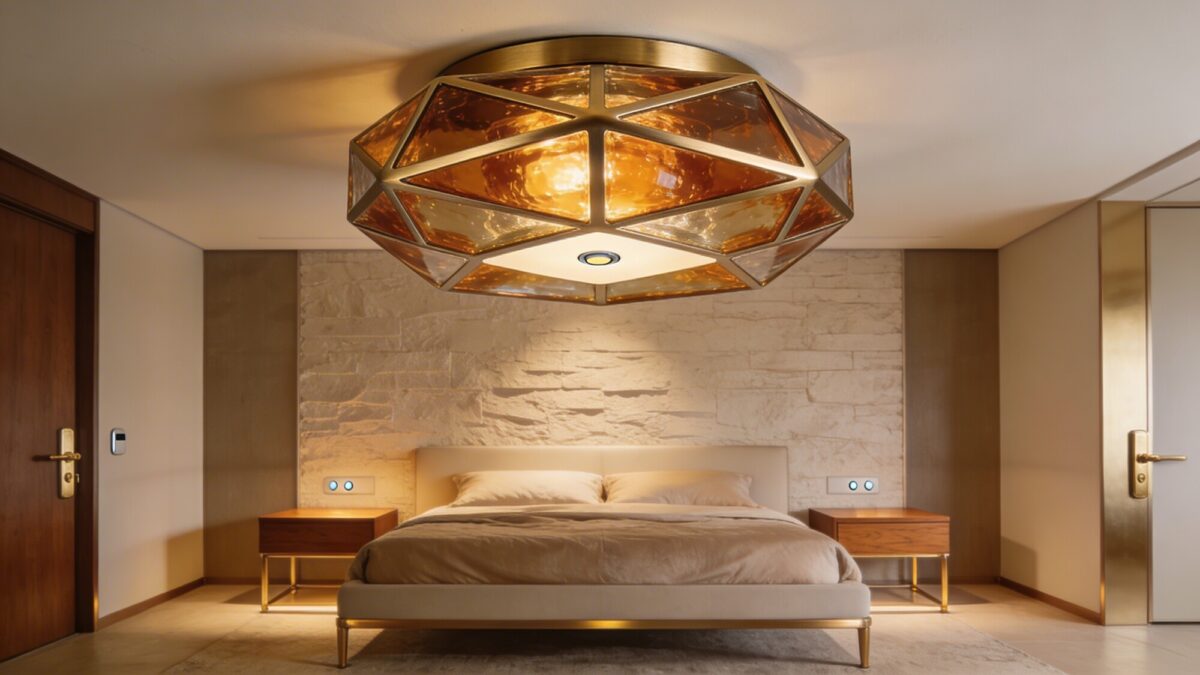
When you want one confident, unmissable choice, a large sculptural flush mount can carry the entire room. Artisan glass, geometric metalwork, or a sleek orb-shaped shade all read as art first and light source second, which is exactly the point.
Because the fixture is doing so much visual work, it’s worth building the rest of the room’s hardware finishes — door handles, furniture legs, nightstand lamps — around whatever metal tone the flush mount uses. Pairing it with a dimmer switch lets the same fixture handle both bright daytime function and a low, moody evening glow. For more high-impact fixture inspiration, this guide to high-end bedroom lighting ideas covers similar statement pieces.
Metal finishes that echo door hardware or furniture legs
Warm-toned bulbs to keep the room feeling homey rather than showroom-bright
Pairing with a dimmer to shift between work mode and wind-down mode
Comparing the Seven Ceiling Lighting Options
Option
Best For
Installation Effort
Floating orb / LED cloud
Rooms wanting a sculptural focal point
Moderate — needs a secure mounting point
Layered recessed lighting
Flexible, everyday function
Higher — multiple fixtures and wiring
Architectural downlights
Highlighting walls, headboards, or art
Higher — often needs molding or coves
Pendant clusters
Bedside reading and hotel-style symmetry
Low to moderate
Hidden cove lighting
Ambient glow with no visible fixture
Higher — requires a cove or cornice
Design-forward ceiling fan
Airflow plus style in warmer climates
Moderate
Statement flush mount
A single bold focal point
Low — usually a direct fixture swap
Things to Consider Before You Commit
Whether your ceiling has the structural support for a heavier fixture like an orb chandelier or flush mount.
Your room’s existing hardware finishes, so the new fixture’s metal tone doesn’t clash.
How much of the installation requires an electrician versus a straightforward fixture swap.
Whether you want one statement piece or a fully layered system — mixing too many bold ideas at once can compete rather than complement.
Frequently Asked Questions
What color temperature works best for bedroom ceiling lighting?
Most designers aim for 2700–3000K, which reads as warm and cozy rather than the cooler, more clinical tones used in kitchens or offices.
Do I need an electrician to install cove or hidden lighting?
In most cases, yes — cove lighting typically requires a cornice or recessed ledge, plus wiring for the LED driver, which usually calls for professional installation.
Can I combine more than one of these lighting ideas in the same room?
Yes, but it’s best to pick one statement piece — like an orb chandelier or flush mount — and pair it with a quieter, layered system rather than combining two bold focal points.
Are ceiling fans still considered modern for bedrooms?
Yes, especially models with integrated lighting and sculptural blades in finishes like matte black or brass, which read as design pieces rather than purely functional add-ons.
What’s the easiest upgrade on this list for a rental or budget project?
A statement flush mount is typically the simplest — it’s often a direct swap for an existing ceiling fixture and doesn’t require structural changes.
Our Verdict
If you’re only making one change, prioritize dimmers — they make almost every option on this list more useful, regardless of which fixture style you choose. From there, pick a statement piece like a flush mount or orb chandelier for immediate visual impact, or invest in layered and hidden lighting if you’d rather the room feel finished without a fixture calling attention to itself. For more ceiling-specific inspiration, this guide to modern luxe loft ceiling concepts and this collection of simple modern false ceiling designs are worth exploring next.
Listen to this article 10 10 0:00 / 0:00 Speed 0.75×1×1.25×1.5×2× I used to think beige was the design equivalent of a sigh. Safe, a little sleepy, the color you pick when you can’t commit to anything else. Then I redid my own bedroom in a beige bedroom aesthetic almost by accident — I ran…
Listen to this article 10 10 0:00 / 0:00 Speed 0.75×1×1.25×1.5×2× Blending old-world charm with modern ease is one of the most enduring approaches in interior design, and these modern vintage bedroom ideas make it approachable without turning your room into a thrift-store scavenger hunt. From textured walls to antique bedframes, each idea below pairs…
Listen to this article 10 10 0:00 / 0:00 Speed 0.75×1×1.25×1.5×2× Curtains do more heavy lifting in a master bedroom than almost any other soft-furnishing choice. The right panel controls light, adds warmth, and can make an ordinary window feel like the focal point of the room. These eight bedroom curtain ideas master modern homeowners…
Listen to this article 10 10 0:00 / 0:00 Speed 0.75×1×1.25×1.5×2× Your home should feel like your home—not a copy-and-paste version of a furniture catalog. The good news? You don’t need a huge budget or professional design skills to create a space that feels unique. A few clever DIY projects can add personality, charm, and…
Listen to this article 10 10 0:00 / 0:00 Speed 0.75×1×1.25×1.5×2× Ready to ditch the boring and go bold? These black and white bedroom ideas are simple, chic, and Black and White Room Decor Bedroom Ideas: 9 Ways to Style a Modern Monochrome Bedroom A well-executed black and white bedroom is one of the most…
Listen to this article 10 10 0:00 / 0:00 Speed 0.75×1×1.25×1.5×2× I didn’t think I’d ever own a black metal bed frame. Honestly, I always pictured them as cold, dorm-room-ish, the kind of thing you’d find in a rental unit and immediately want to upgrade. Then a friend talked me into one for my guest…