English Cottage Bedroom Design Ideas for Creating a Cozy and Timeless Retreat
I fell in love with the idea of an English cottage bedroom about three years ago, standing in a rented stone cottage in the Cotswolds, staring at a lumpy old bed piled with quilts and thinking, “why doesn’t my bedroom feel like this?” That trip changed how I decorate. An English cottage bedroom isn’t about spending a fortune — it’s about layering warmth, imperfection, and a little bit of storybook charm into a space that actually feels lived in. So if you’ve been pinning cozy floral wallpaper and worn wood furniture for months and haven’t done anything about it, this one’s for you.
What Makes an English Cottage Bedroom Different from Other Styles
Here’s the thing — a lot of people confuse cottage style with farmhouse style, and honestly, I get why. They both love wood, both love texture. But an English cottage bedroom leans more romantic and slightly fussy in the best way, while farmhouse tends to stay clean-lined and utilitarian. Think chintz florals instead of buffalo check. Think brass and porcelain instead of galvanized metal.
The English cottage look pulls from centuries-old countryside homes — small windows, low ceilings, thick walls — and translates that coziness into furniture choices, textiles, and color. It’s less about matching everything perfectly and more about pieces that look like they’ve been collected over decades, even if you bought half of them last month at a flea market (no judgment, we’ve all done it).
If you want a broader sense of how vintage elements translate across different bedroom styles, this roundup of vintage bedroom ideas is a great place to see the overlap and the differences side by side.
Start With Walls: Why White Walls Make English Cottage Bedrooms Glow
I used to think white walls were boring. Flat, sterile, a little cold. Then I painted my own bedroom a soft chalky white — not bright white, more of a warm “old plaster” white — and the whole room changed. Light bounced differently. Everything else in the room, the wood tones, the linens, the brass hardware, suddenly looked richer by comparison.
White walls house interiors work so well for cottage style because they mimic the whitewashed plaster you’d find in an actual 200-year-old English farmhouse. A few paint suggestions that read authentic rather than sterile:
- Farrow & Ball’s “Wimborne White” or “Slipper Satin” for a soft, aged warmth
- Benjamin Moore’s “White Dove” if you want something more accessible and still slightly creamy
- Avoid stark blues-whites like “Chantilly Lace” — they read modern, not cottage
And don’t skip texture. A lot of real cottage walls have a slight roughness to them, whether that’s actual plaster, limewash, or just a matte finish that isn’t perfectly smooth. If you’re renting and can’t touch the walls, textured wallpaper in a subtle stripe or tone-on-tone floral gets you 80% of the way there. For more direction on pattern choices that won’t overwhelm a small cottage-style room, this wallpaper idea guide has some genuinely useful picks.
Vintage English Cottage Furniture: What to Look For (and What to Skip)
This is where people either nail the look or completely miss it. A vintage English cottage bedroom needs furniture with history — real or faked convincingly. You’re looking for:
Worn wood, not distressed-on-purpose wood. There’s a difference between a nightstand that’s actually 60 years old with real wear patterns and one that was sanded down at a factory to look “rustic.” The real thing has uneven wear — more scuffing near handles, slight color variation from sun exposure. If you’re buying new, look for reclaimed pine or oak pieces rather than anything with a uniform “distressed” finish.
Iron or brass bed frames. A simple iron frame with slightly curved rails, or a brass frame with a soft patina (not shiny new brass — that reads more glam than cottage), instantly sets the tone. I found mine at an estate sale for $80 and nearly cried with joy.
Mismatched nightstands. This one feels counterintuitive if you’re used to matching bedroom sets, but two different nightstands — say, a small painted chest on one side and a simple wood table on the other — actually reads more authentic. Real cottages were furnished over generations, not from one catalog order.
For a sense of how furniture pairing works when you want that “collected, expensive-looking” effect without actually collecting for decades, this luxury bedroom furniture guide breaks down some smart shortcuts.
Layering Textiles: The Real Secret to Cottage Coziness
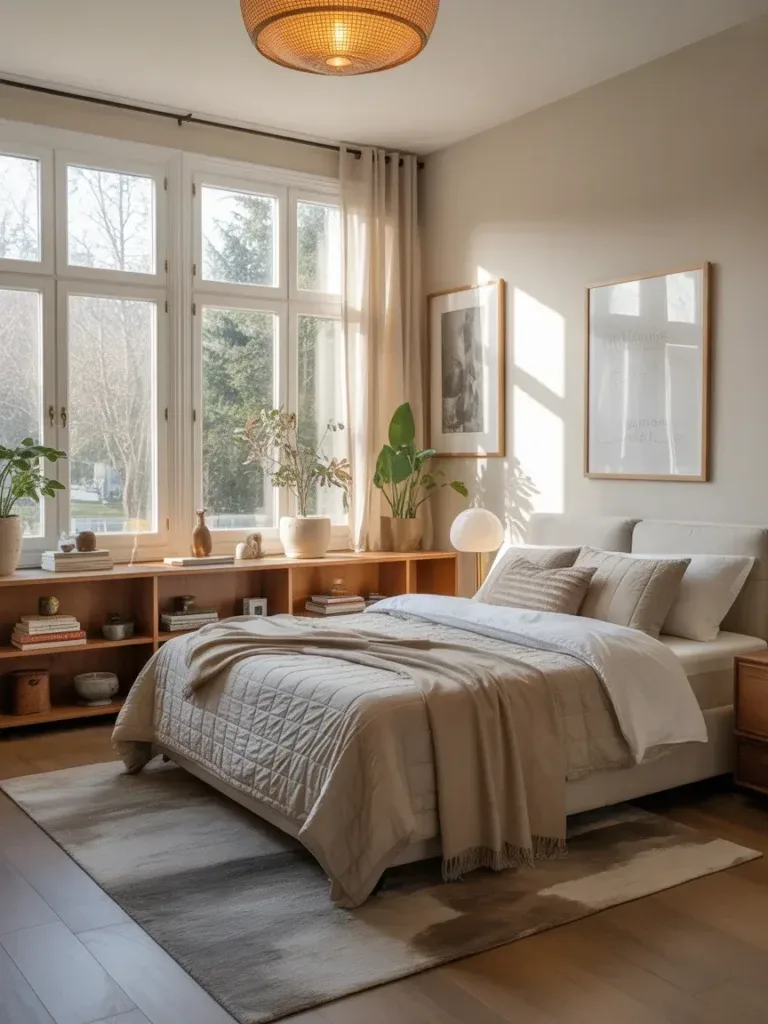
Okay, I’ll be honest — this is the part people skip, and it’s the biggest mistake. You can have the perfect bed frame and perfect walls, but if you skip the textile layering, the room will feel flat. English cottage bedrooms are built on layers: a fitted sheet, a top sheet, a light quilt, a heavier quilt or coverlet, and then a throw folded at the foot of the bed. Sounds like a lot. It is a lot. But that’s the whole point.
A few textile combinations that work beautifully:
- A white or cream linen duvet as your base layer
- A faded floral or gingham quilt layered on top (this is where you can bring in that classic English chintz pattern if you want it)
- A wool or knit throw in a muted color — sage, dusty rose, oatmeal — draped loosely, not folded stiffly
- Mismatched pillow shams — one solid, one patterned, maybe a small lumbar pillow with embroidery
Don’t wash everything until it’s stiff and new-looking, either. Slightly rumpled, slightly soft-from-use bedding actually looks more inviting than a perfectly pressed hotel-style bed. And if florals feel too much for your taste, a simple striped ticking fabric (the kind you see on old French and English mattress covers) gives you texture without going full grandma’s-house.
Color Palettes That Read Classic European Bedroom, Not Costume
A classic European bedroom in the English cottage tradition tends to stay in a muted, slightly faded color family — nothing too saturated, nothing neon. Think of colors that look like they’ve been slightly sun-bleached over the years:
- Sage green and cream — my personal favorite combo, especially with brass accents
- Dusty rose and soft white — leans a bit more romantic
- Warm taupe and butter yellow — cozier, works well in rooms with less natural light
- Soft blue-grey and white — a little cooler, still cottage-appropriate if you keep the fabrics soft
I’ll admit, I went through a phase where I tried a deep forest green accent wall in my own cottage-style bedroom, and it just didn’t work. Too heavy, too modern-moody for the look I was going for. I repainted within two months. Lesson learned: keep the palette soft and slightly desaturated, and save the bold, saturated colors for a different style altogether.
If you’re still narrowing down your palette, this bedroom color combination guide has some solid, designer-approved starting points that translate well into cottage tones.
Small Details That Make a Designed Bedroom Feel Like an English Cottage
A truly designed bedroom in this style lives in the details, honestly — the big furniture pieces get you most of the way, but it’s the small stuff that sells it.
- Ceramic or porcelain lamp bases with simple linen or pleated shades, rather than sleek metal or modern geometric lamps
- A small writing desk or vanity tucked into a corner, even if it’s tiny — cottages rarely have huge floor plans, so a petite desk with a single drawer feels right
- Dried flowers or a small jar of fresh garden flowers on the nightstand (I keep a chipped little creamer jug on mine — it’s not fancy, but it’s mine)
- Woven baskets for storage instead of plastic bins — even one basket tucked under a bench does a lot of visual work
- A small area rug with a faded, almost antique-looking pattern, layered over wood or painted floors rather than wall-to-wall carpet
None of these cost much. Most of them you can find secondhand for under $20 each. But together, they build a room that feels curated rather than staged.
Vintage Mid Century Interior Design Touches — Yes, They Can Work Here Too
This might surprise you, but a few vintage mid century interior design pieces can actually blend into an English cottage bedroom really well, as long as you’re selective. I know that sounds like mixing eras that shouldn’t go together. And in a lot of ways, they shouldn’t — but a single mid-century piece against a cottage backdrop can add just enough contrast to keep the room from feeling like a period film set.
A simple, tapered-leg wood chair in the corner, or a small mid-century side table with clean lines, can actually ground a room that’s otherwise heavy on florals and texture. The trick is restraint — one piece, maybe two, never more. If you overdo it, you end up with a confused room that doesn’t commit to either style. I tried adding three mid-century pieces at once in my guest room and it just looked like I couldn’t make up my mind. Pulled two of them out, kept one chair, and suddenly it worked.
Bringing in Softness: Curtains, Headboards, and Textures That Finish the Look
Curtains matter more in this style than people expect. Heavy blackout curtains in a slick fabric will fight against the whole aesthetic. Instead, go for:
- Light linen curtains in cream or soft sage, slightly gathered rather than perfectly pressed
- Café curtains on smaller windows, which feel very true to actual English cottages with their smaller window openings
- A simple wood or rattan curtain rod rather than anything shiny or ornate
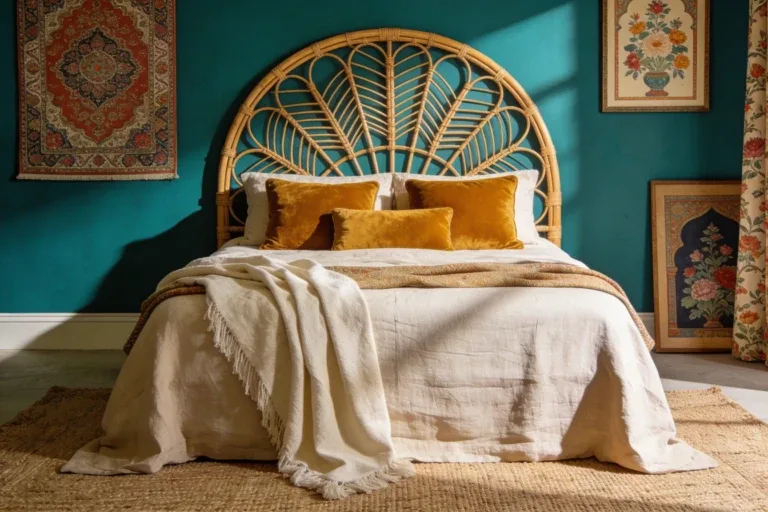
For the bed itself, an upholstered or white headboard in a soft linen or cotton can add a gentle, romantic touch without pulling focus from the room’s textiles. This white headboard guide has some good examples of headboard shapes and fabrics that read soft and timeless rather than stiff and formal.
Making It Feel Cozy, Not Cluttered
There’s a fine line in cottage style between “cozy layered charm” and “cluttered flea market.” I’ve crossed that line before — my first attempt at this style had so many patterns and knickknacks that the room felt busy instead of calm. What fixed it: picking one dominant pattern (my floral quilt) and letting everything else stay solid or subtly textured. One statement pattern, a few solid layers, and a handful of curated objects — that’s the actual formula, even if Pinterest makes it look like more is happening.
If cozy, relaxed bedrooms are more your overall goal beyond just the English cottage aesthetic specifically, this cozy bedroom decor roundup has some great ideas for layering warmth without tipping into visual chaos.
Final Thoughts on Creating Your Own English Cottage Bedroom
What I love most about this style is that it never feels finished, exactly — you keep finding one more little thing at an estate sale or a secondhand shop that fits perfectly, and the room just keeps evolving. That’s kind of the whole charm of it. An English cottage bedroom isn’t built in a weekend. Mine certainly wasn’t. It came together over about a year and a half of slow additions, a few paint mistakes, and one truly ugly lamp I eventually gave away.
Start with the walls, layer in worn wood furniture, pile on the textiles, and let the small details fill in over time. Don’t rush it, and don’t feel like you need to buy everything at once.
If this gave you a few ideas worth trying, save this pin for later and come back to it as you start layering your own space together — and let me know in the comments which detail you’re adding first.