DIY Loft Bed Plans and Tips for Maximizing Space in Small Bedrooms Like a Pro
Small bedrooms can feel like a daily game of Tetris. You need a place to sleep, store your stuff, work, relax, and somehow still leave room to walk without bumping into furniture. That’s where a DIY loft bed comes to the rescue.
A well-built loft bed lifts your sleeping area off the floor and unlocks valuable square footage underneath. Whether you want a cozy study nook, extra storage, or a mini living space, a loft bed can make a tiny room feel surprisingly spacious.
Why a DIY Loft Bed Makes So Much Sense
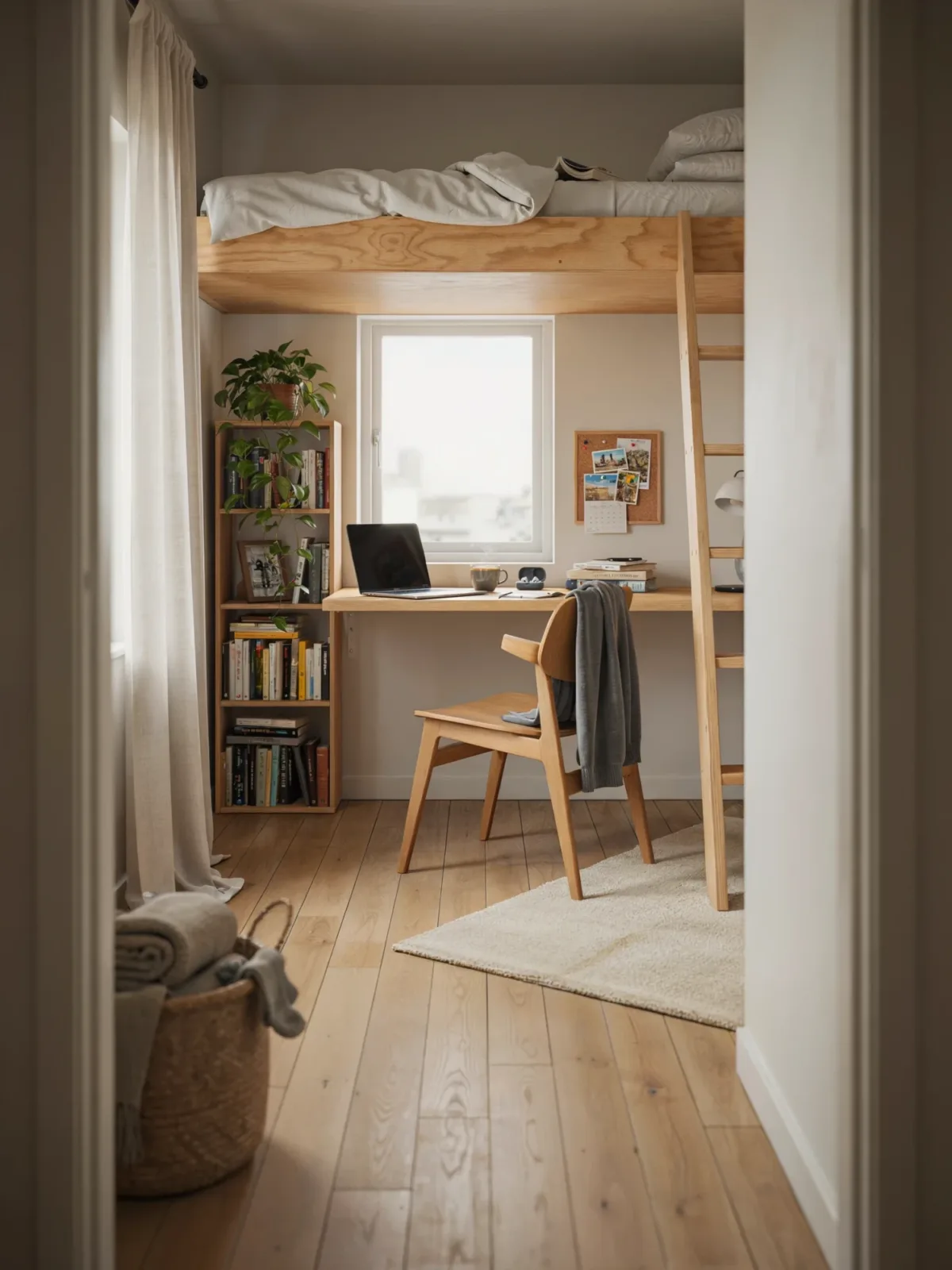
A loft bed doesn’t just save space—it creates space. Instead of letting the area beneath your bed go to waste, you can transform it into something useful.
Think about it. Your bed already takes up one of the biggest footprints in the room. Why not stack functions vertically?
Some popular uses for the space underneath include:
- A desk and workstation
- Built-in storage cabinets
- A reading corner
- A small sofa or lounge area
- Clothing racks and drawers
- Gaming setups
Plus, building your own loft bed often costs less than buying a custom one. You also get complete control over dimensions, materials, and style.

- FUNCTIONAL ELEGANCE – Revitalize your space with a tall bookcase that combines style and practicality, perfect for showc…
- CUSTOMIZED STORAGE – Enjoy three adjustable shelves that allow you to modify heights, accommodating everything from larg…
- VERSATILE USE – Ideal for any room, this bookcase offers ample space for books, office supplies, or linens, helping you …
Planning Your DIY Loft Bed Before You Build
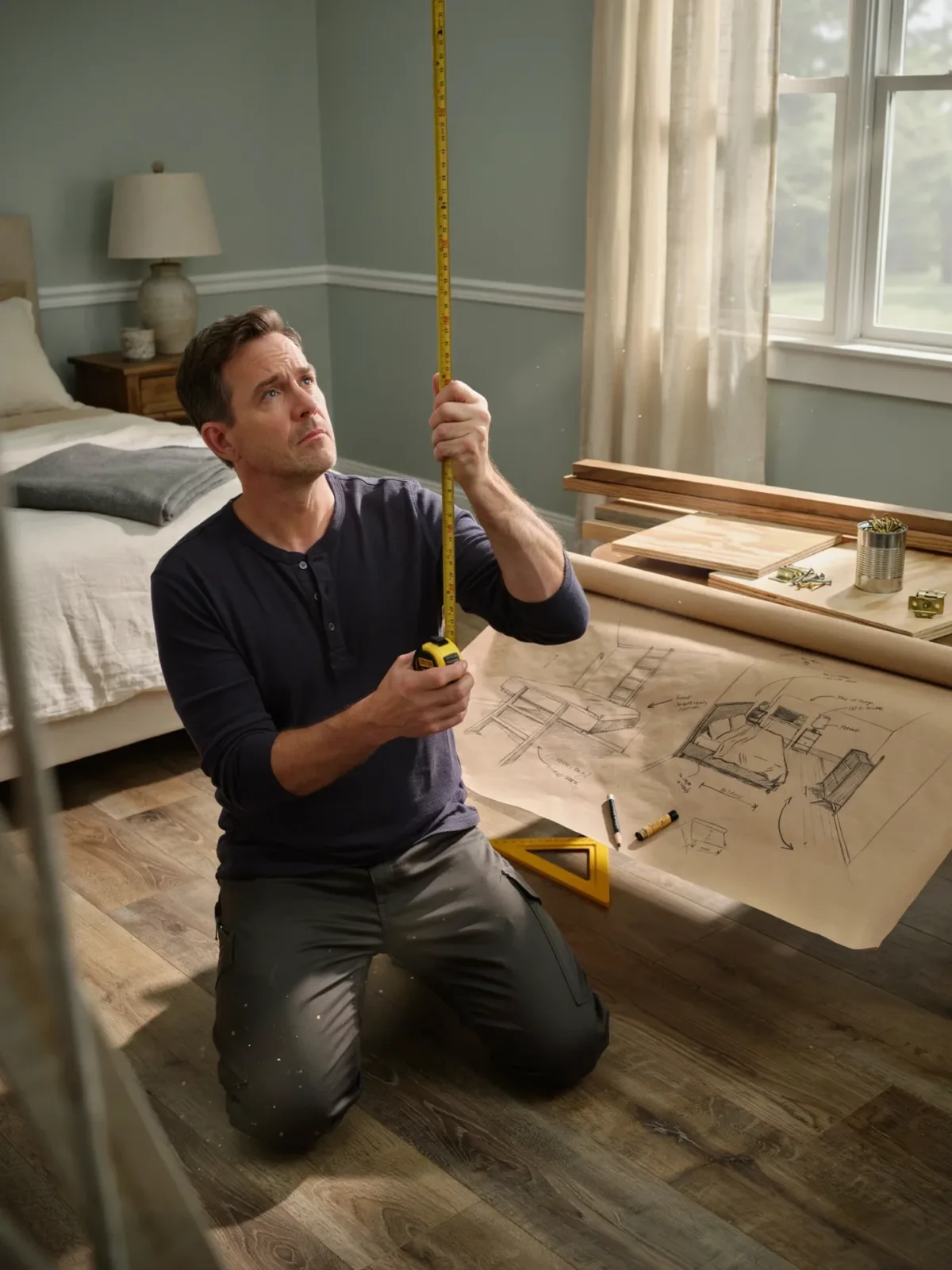
Before you grab a saw and start cutting lumber, spend some time planning. Trust me, a little preparation saves a lot of frustration later.
Measure your room carefully and pay special attention to ceiling height. Nobody wants to sit up in bed and immediately headbutt the ceiling.
A good rule of thumb:
- Leave at least 30 to 36 inches between the mattress and ceiling.
- Allow enough space underneath for your intended use.
- Account for mattress thickness.
Consider Your Room Layout
Take a close look at windows, doors, outlets, and light fixtures. These details can affect where your loft bed fits best.
Sketch a simple floor plan and experiment with different layouts. Sometimes moving the bed just a few feet changes everything.
Choose the Right Height
Not every loft bed needs to sit near the ceiling.
Lower loft beds work well for children and rooms with lower ceilings. Higher loft beds maximize usable space underneath and suit teenagers or adults.
IMO, finding the sweet spot between comfort and functionality matters more than squeezing every possible inch out of the room.
Materials That Create a Strong and Safe Loft Bed
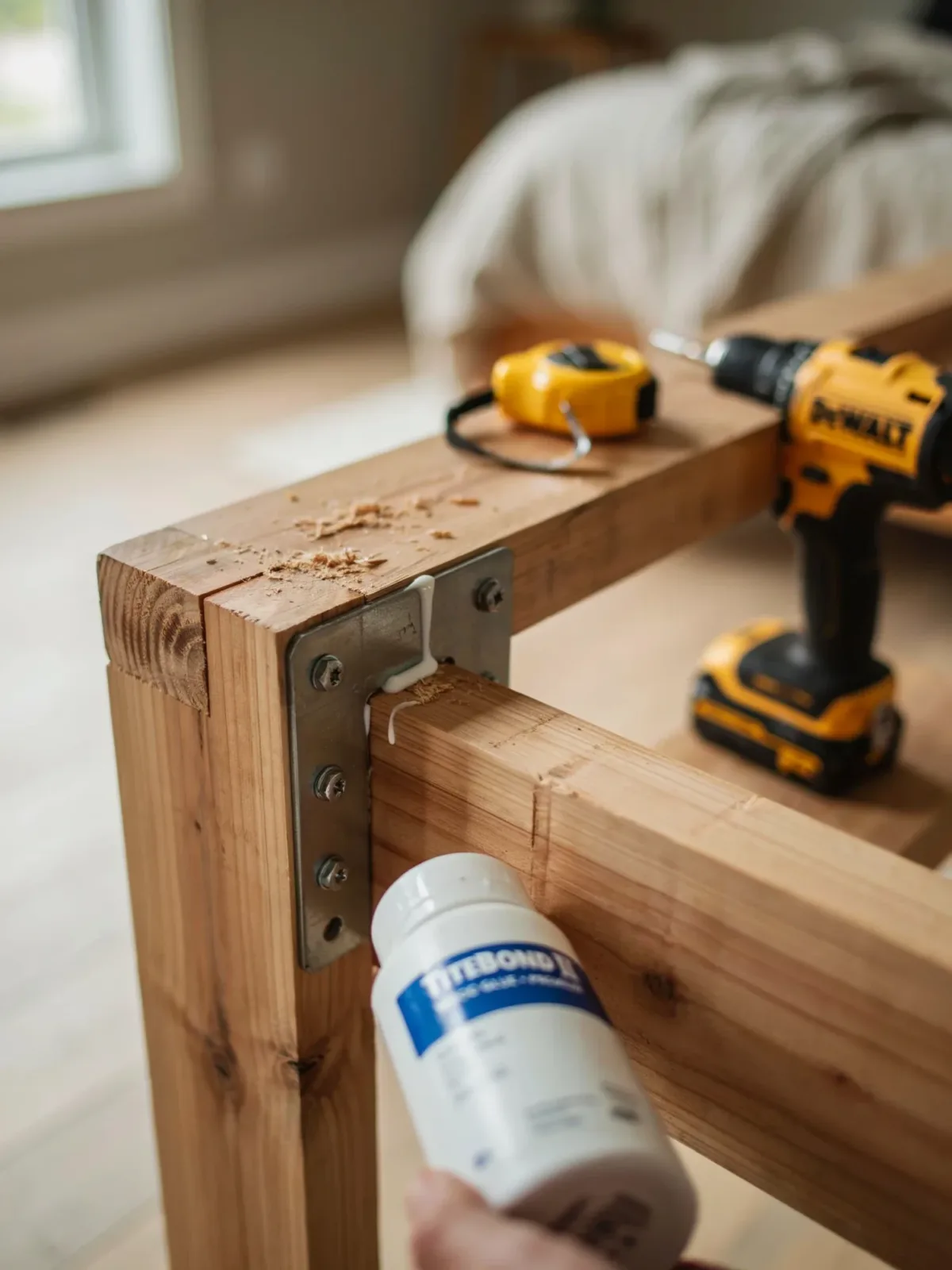
Safety should always come first. A loft bed supports both your mattress and your body weight every night.
Most DIY builders choose wood because it offers strength, affordability, and easy customization.
Popular options include:
- Pine for budget-friendly projects
- Douglas fir for extra strength
- Oak for durability and a premium look
- Plywood for platform surfaces
You’ll also need:
- Heavy-duty screws
- Wood glue
- Brackets and hardware
- Sandpaper
- Paint or stain
Avoid cutting corners on structural components. Saving a few dollars isn’t worth hearing mysterious creaks at 2 a.m.
Simple DIY Loft Bed Design Ideas
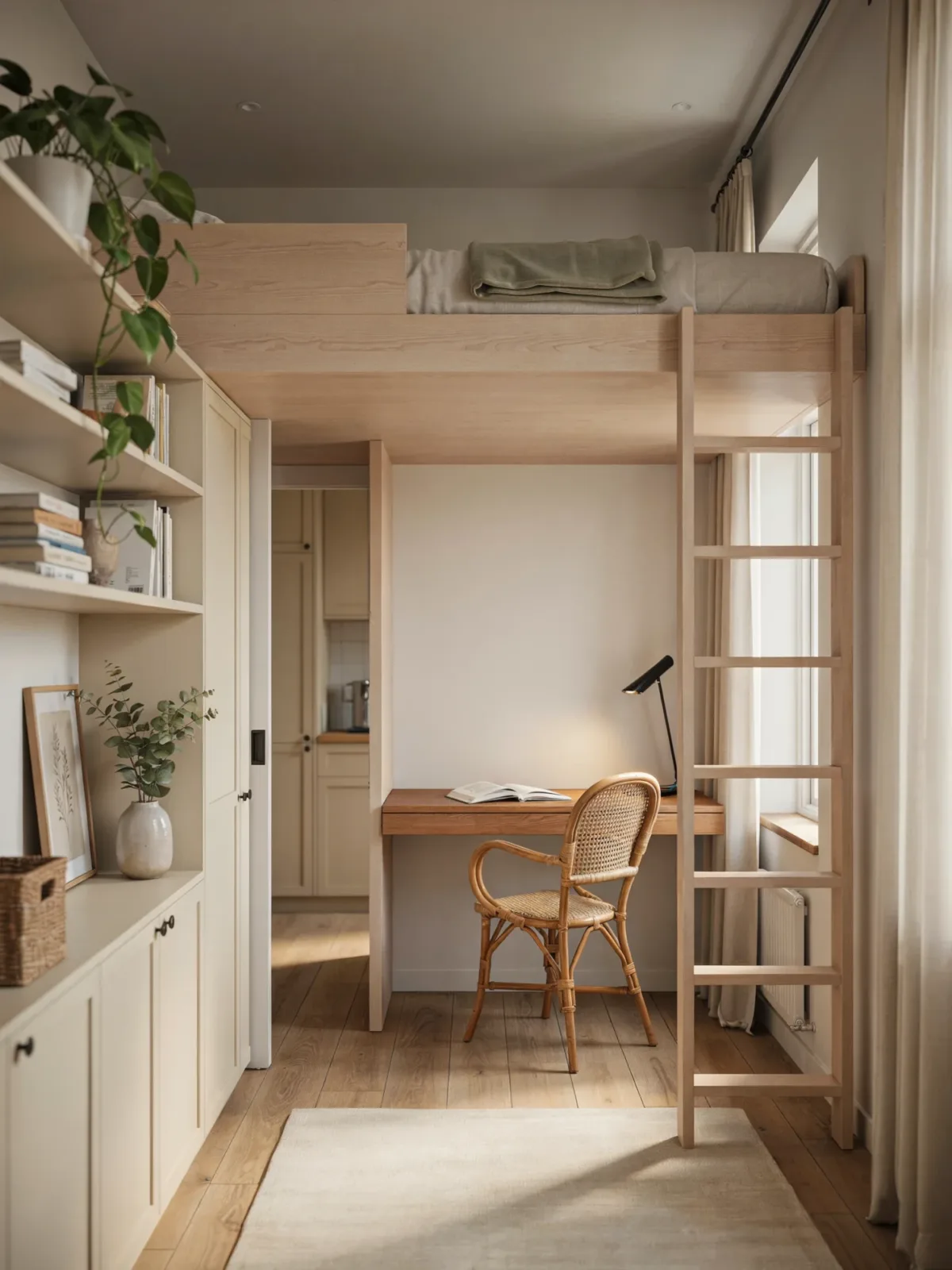
One of the best things about building your own loft bed is flexibility. You can design it around your specific needs.
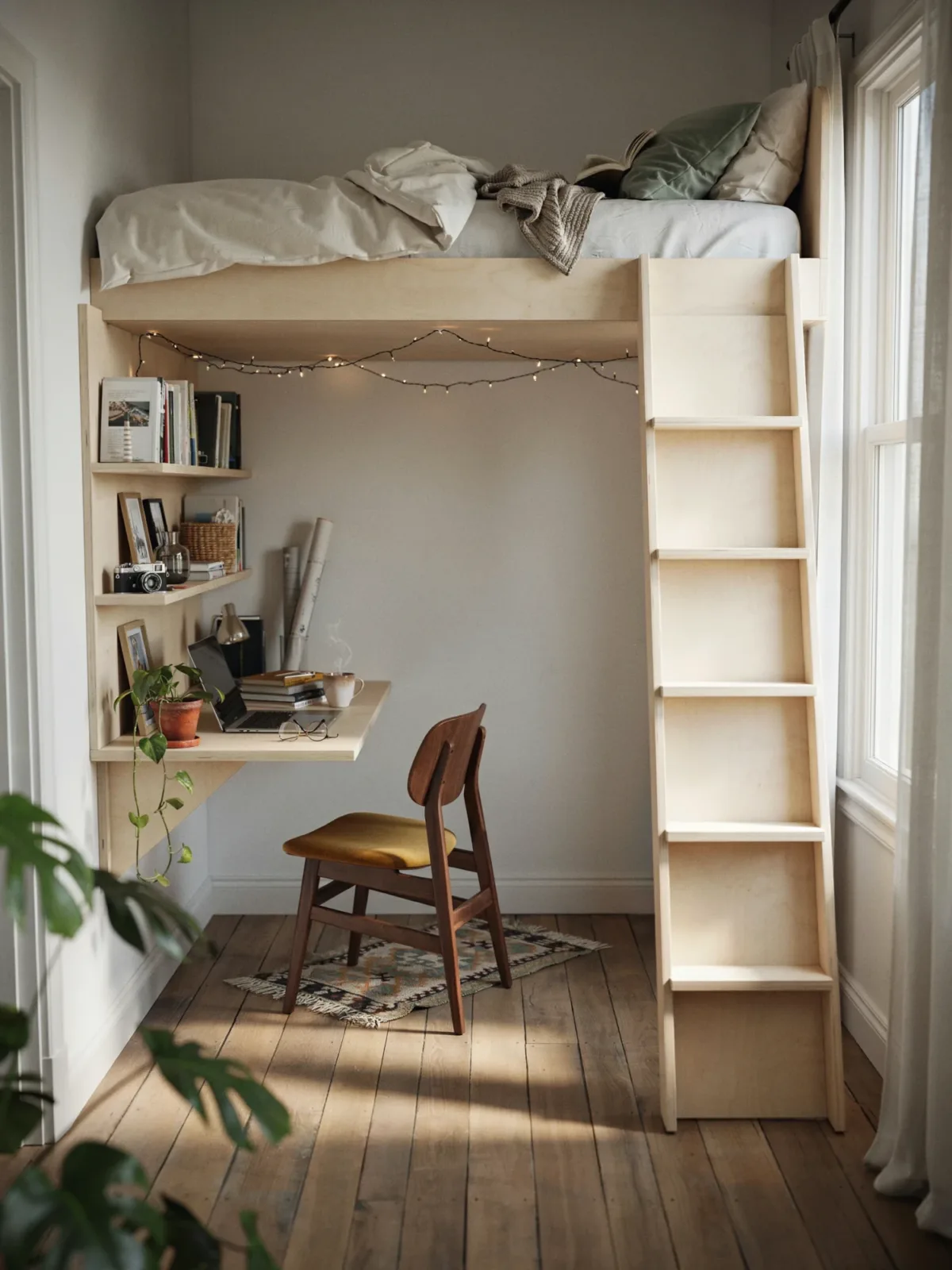
The Study Loft
This design places a desk underneath the bed.
Students and remote workers love this setup because it combines sleeping and working areas without sacrificing floor space.
Add shelves above the desk for books, supplies, and decorations.
The Storage Loft
Need more storage than workspace?
Install:
- Drawers
- Cabinets
- Open shelving
- Clothing rods
This setup works especially well in apartments where closet space barely exists.
The Lounge Loft
Want your room to feel bigger and more inviting?
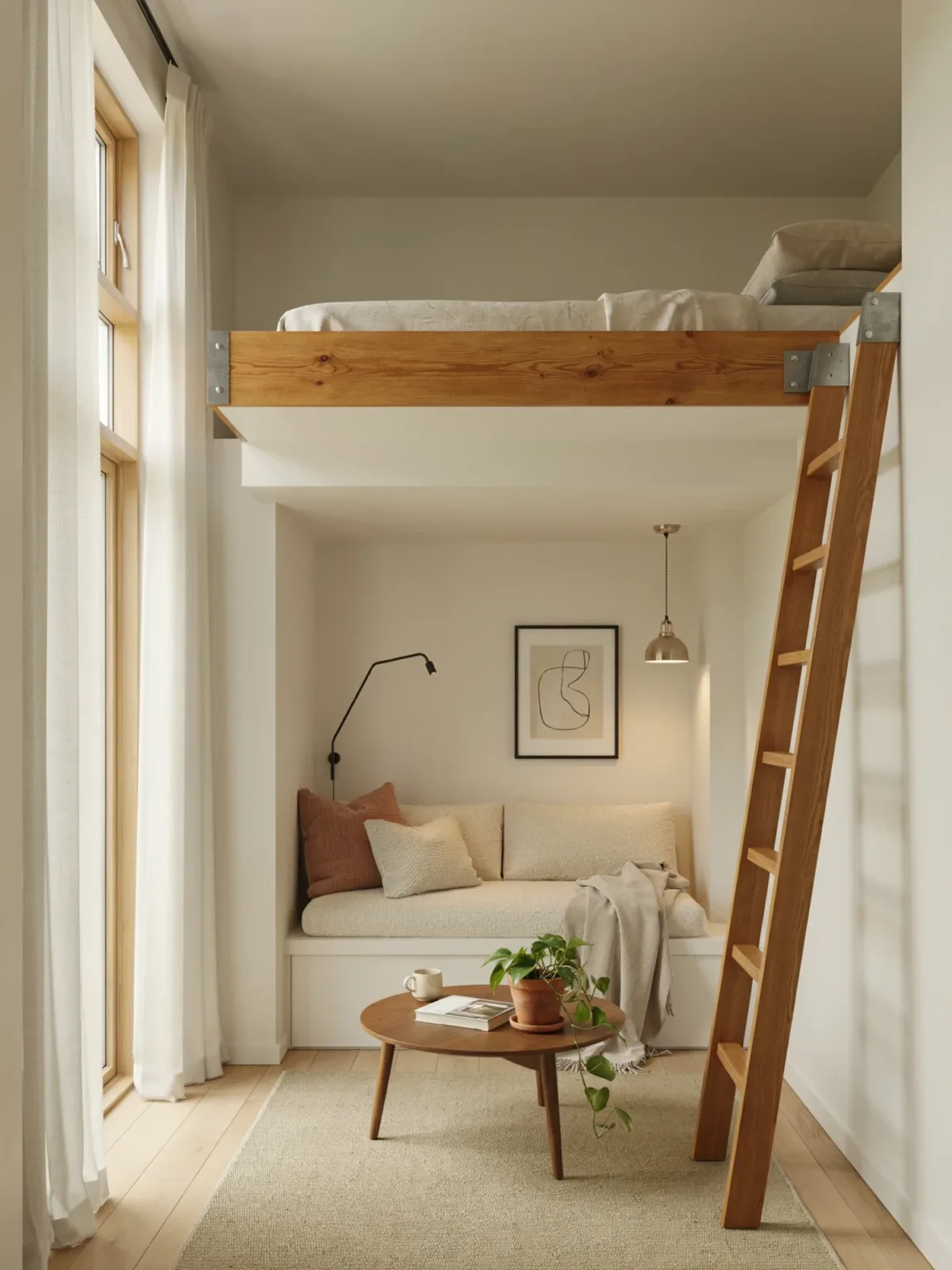
Create a mini living area underneath your loft bed with:
- A compact loveseat
- Bean bags
- Floor cushions
- Soft lighting
It feels surprisingly cozy and turns unused space into a relaxing retreat.
Smart Space-Maximizing Tricks
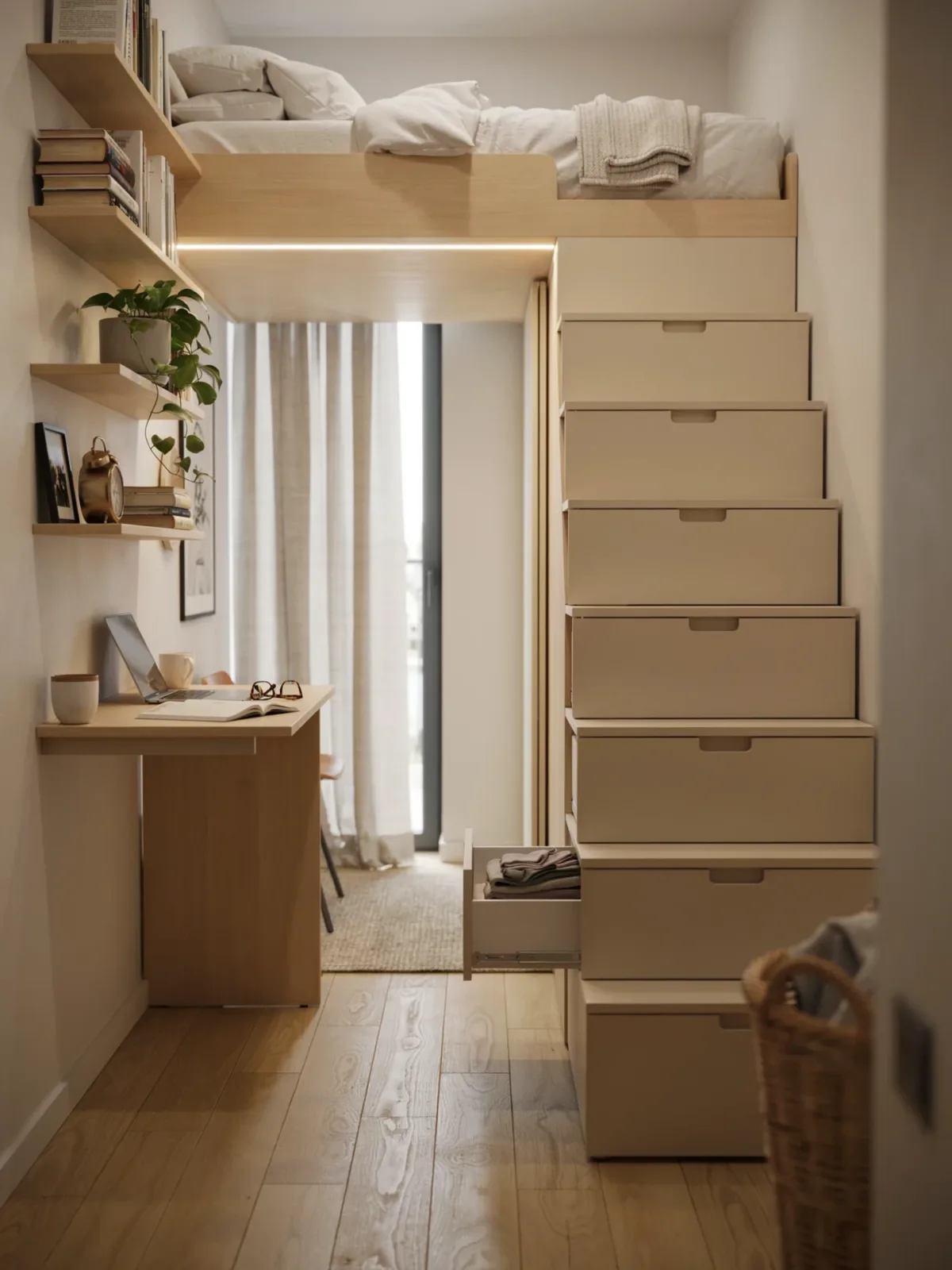
A loft bed provides the foundation, but a few extra tricks can make your room feel even larger.
Use Vertical Storage Everywhere
Once you embrace vertical living, don’t stop with the bed.
Add:
- Floating shelves
- Wall-mounted organizers
- Pegboards
- Tall bookcases
Every inch of wall space counts in a small bedroom.
Build Storage Into the Stairs
Traditional ladders save space, but storage stairs offer a clever upgrade.
Each stair can double as a drawer or storage compartment. Suddenly, your staircase becomes a mini dresser.
Now that’s multitasking.
Keep Colors Light
Dark colors can make small rooms feel cramped.
Choose:
- White
- Soft gray
- Beige
- Light wood tones
These colors reflect more light and create an open, airy feel.
Add Strategic Lighting
Poor lighting makes any small room feel smaller.
Install:
- LED strip lights under the loft bed
- Wall sconces
- Task lighting for desks
- Soft ambient lamps
Good lighting adds depth and helps define separate zones within the room.
Common DIY Loft Bed Mistakes to Avoid
Even experienced DIYers make mistakes. Learning from them can save time, money, and headaches.
Ignoring Weight Capacity
Always calculate how much weight your loft bed must support.
Factor in:
- Mattress weight
- Bedding
- Your body weight
- Additional users or pets
Build stronger than you think you need.
Skipping Proper Anchoring
Freestanding loft beds can wobble if you don’t secure them properly.
Whenever possible, anchor the structure to wall studs for added stability.
Forgetting About Access
The coolest loft bed design becomes annoying if climbing into bed feels like scaling a mountain.
Choose a ladder or staircase that’s comfortable and practical for daily use.
Overcrowding the Space Below
The whole point involves creating more usable space.
Don’t fill every inch underneath with furniture. Leave some breathing room so the room still feels open.
FAQ
How much does it cost to build a DIY loft bed?
Most DIY loft bed projects cost between $150 and $800, depending on materials, size, and complexity. Basic pine designs cost less, while hardwood builds with storage features cost more.
Are loft beds safe for adults?
Yes. A properly designed and constructed loft bed can safely support adults. Use strong materials, quality hardware, and appropriate weight ratings.
What ceiling height works best for a loft bed?
Most loft beds work best with ceilings at least 8 feet high. Higher ceilings provide more flexibility and comfort.
Can I build a loft bed without advanced woodworking skills?
Absolutely. Many beginner-friendly plans use simple cuts and basic tools. Start with a straightforward design and focus on accurate measurements.
Is a ladder or staircase better?
A ladder saves more space, while a staircase offers easier access and can include built-in storage. Your choice depends on available room and personal preference.
Do loft beds make rooms feel smaller?
Quite the opposite. When designed correctly, loft beds free up floor space and make small rooms feel larger and more organized.
Conclusion
A DIY loft bed ranks among the smartest upgrades for a small bedroom. It transforms wasted vertical space into valuable living space while adding personality and functionality to your room. With careful planning, sturdy materials, and a few clever design choices, you can create a setup that feels custom-built for your lifestyle. And let’s be honest—having an entire extra zone appear beneath your bed feels a little like magic.