Bedroom Modern Ideas: Chic Vibe, Calm Sleep
Most “modern bedroom” advice stops at a mood board — gray walls, a low bed, a plant in the corner. That’s a look, not a plan. If you’ve ever repainted a wall and hated it a week later, or bought a headboard that made the room feel smaller instead of calmer, you already know the gap between a Pinterest photo and a room that actually works. This guide walks through the decisions that matter most: color, furniture, lighting, storage, and the small details that keep a modern bedroom from feeling cold. For a faster version you can act on tonight, see our quick bedroom refresh ideas.
None of this requires a full renovation. The rooms that read as “modern” almost always come down to restraint — fewer colors, fewer competing textures, better light — rather than more furniture or more decor.
- Color: one neutral base, one accent color, used in no more than three places.
- Furniture: pick pieces that do two jobs — storage plus seating, or storage plus a headboard.
- Lighting: layer three types (ambient, task, accent) instead of relying on one overhead fixture.
- Texture: mix at least two — smooth and woven, or matte and warm wood — so the room doesn’t feel flat.
- Clutter: a modern bedroom needs closed storage more than it needs new furniture.
Bedroom Modern Ideas Start With Color, Not Furniture
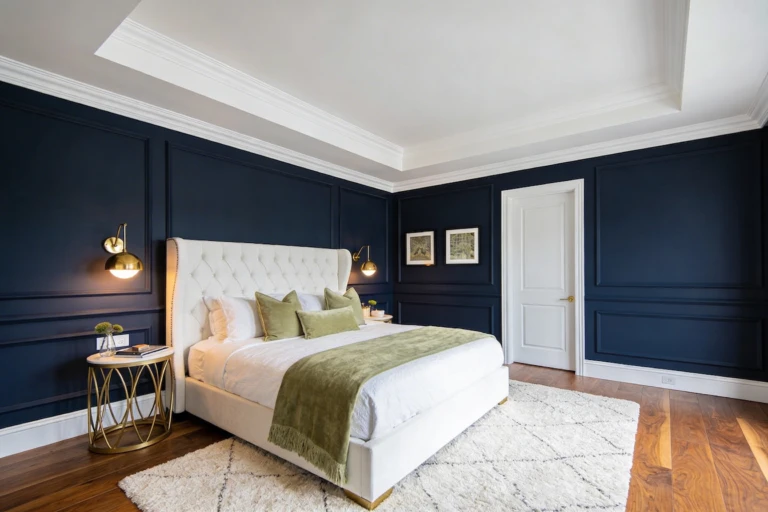
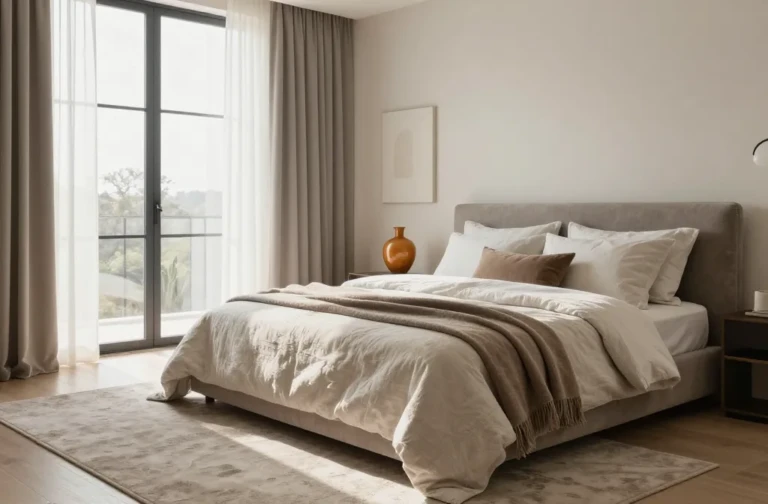
The single biggest mistake in modern bedroom design isn’t the furniture — it’s picking three or four “safe” neutrals instead of one. Greige, warm gray, taupe, and off-white all look fine on a paint chip and muddy when they’re on the same wall. Pick one neutral base (a taupe or warm gray works in most light), and let a single accent color — blush, sage, rust, ink blue — show up in exactly two or three places: a throw pillow, a piece of art, one wall. That restraint is what makes a room read as “modern” instead of “generic beige.”
Subtle Contrast: Where Most Neutral Bedrooms Go Wrong
A room that’s all one shade of gray goes flat under normal daylight — everything blends and nothing anchors the eye. The fix is contrast in value, not color: pair a light wall with a dark wood nightstand, or a pale duvet with a charcoal throw. You don’t need a bold color to create depth, you need a light-to-dark range.
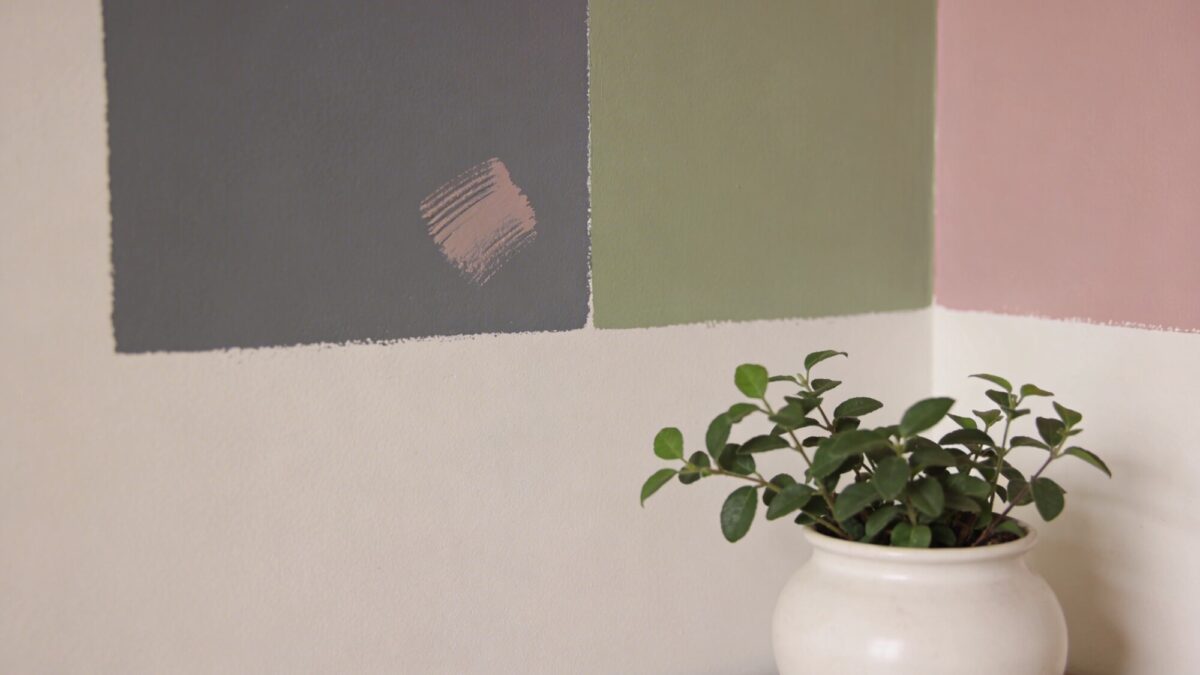
💡 Pro Tip: Test paint on the actual wall, not a swatch card, and look at it at 8am and 8pm before deciding. North-facing rooms pull cool and gray undertones read blue; south-facing rooms warm everything up and the same “gray” can look green.
Furniture With Practical Flair
A modern bedroom doesn’t need less furniture — it needs furniture that earns its footprint. Before buying anything new, ask whether a piece can do double duty: a bench that opens for storage, an ottoman that also serves as a footrest and a spot to fold laundry, nightstands with a drawer instead of an open shelf that collects clutter by week two.
Storage Solutions That Don’t Kill the Vibe
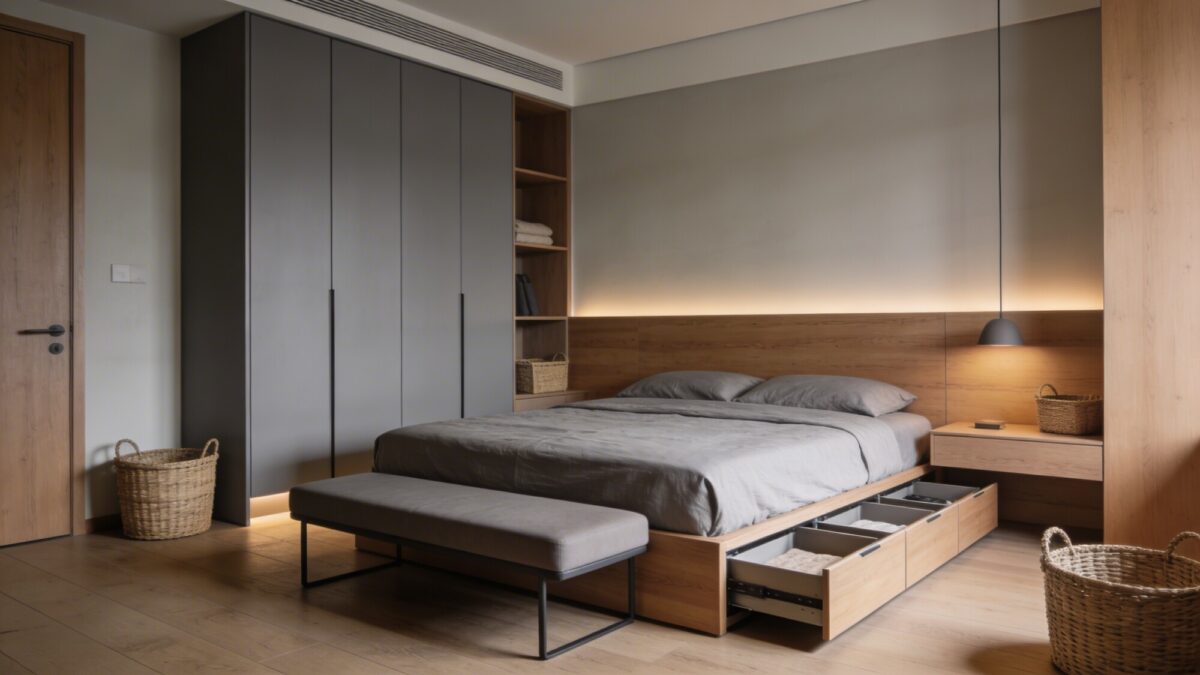
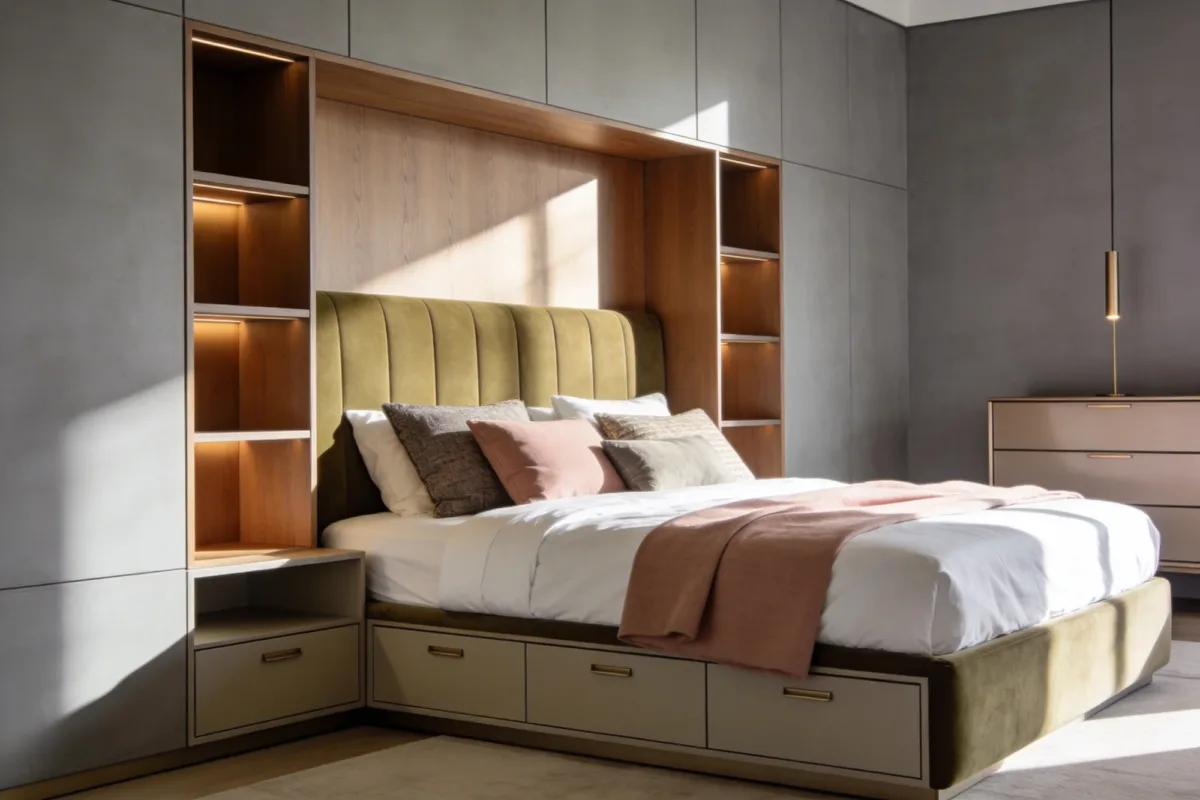
Under-bed drawers are the most underused storage option in small bedrooms — they hold off-season clothes or extra bedding without adding a single visible piece of furniture. A platform bed with built-in drawers costs more upfront than a basic frame (often $150–$400 more depending on the brand), but it replaces a dresser drawer or two, which usually pencils out. If you’re weighing a storage bed against buying more furniture, see our minimalist bedroom storage ideas for layouts that lean on fewer, smarter pieces.
| Approach | Pros | Cons |
|---|---|---|
| Storage bed frame | No extra furniture footprint; hides seasonal items | Heavier to move; drawers can be shallow depending on model |
| Separate dresser | More usable depth; easier to access daily | Takes up floor space; another surface that collects clutter |
| Open shelving + baskets | Cheap, flexible, easy to reconfigure | Requires discipline — visible mess reads as “not modern” fast |
💡 Pro Tip: If you go with open shelving, commit to matching baskets in one material (all rattan, all canvas). Mismatched bins are the #1 reason an otherwise clean layout still looks cluttered.
Bed as the Focal Point
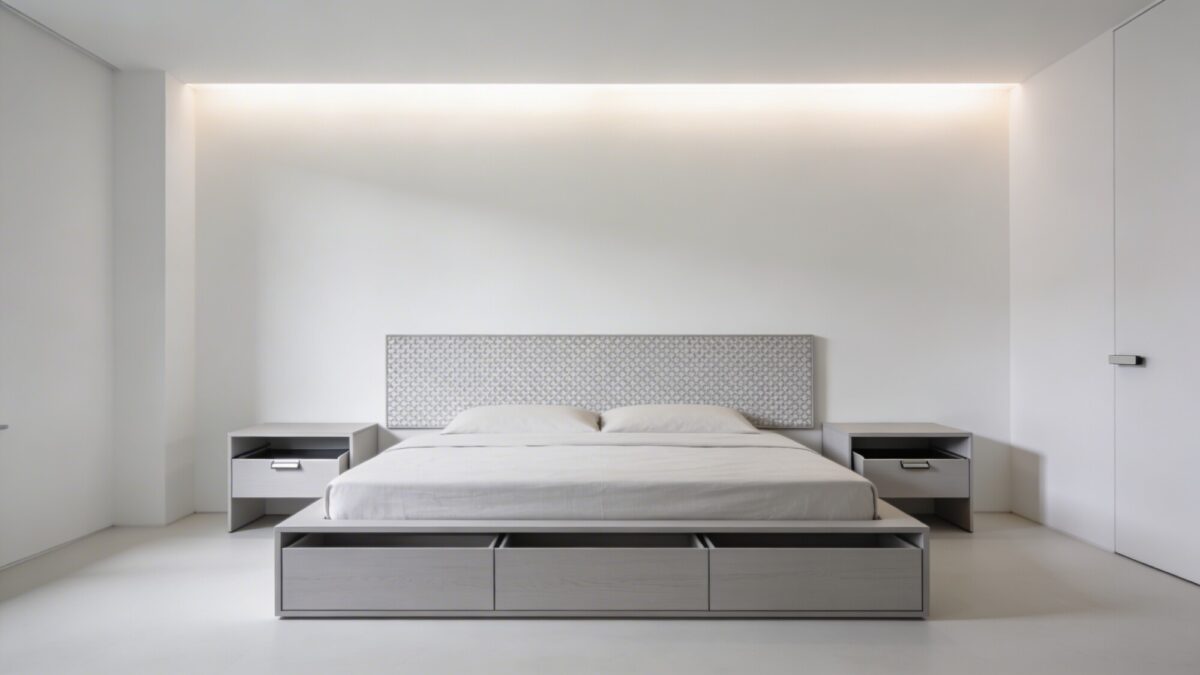
The bed carries more visual weight than anything else in the room, so it’s worth spending the design effort there before touching walls or accessories.
- An upholstered headboard adds comfort for reading in bed and softens a room that’s otherwise all hard surfaces.
- Layer bedding in three pieces: a crisp duvet, one folded throw, and two to four pillows in varied (not matching) textures.
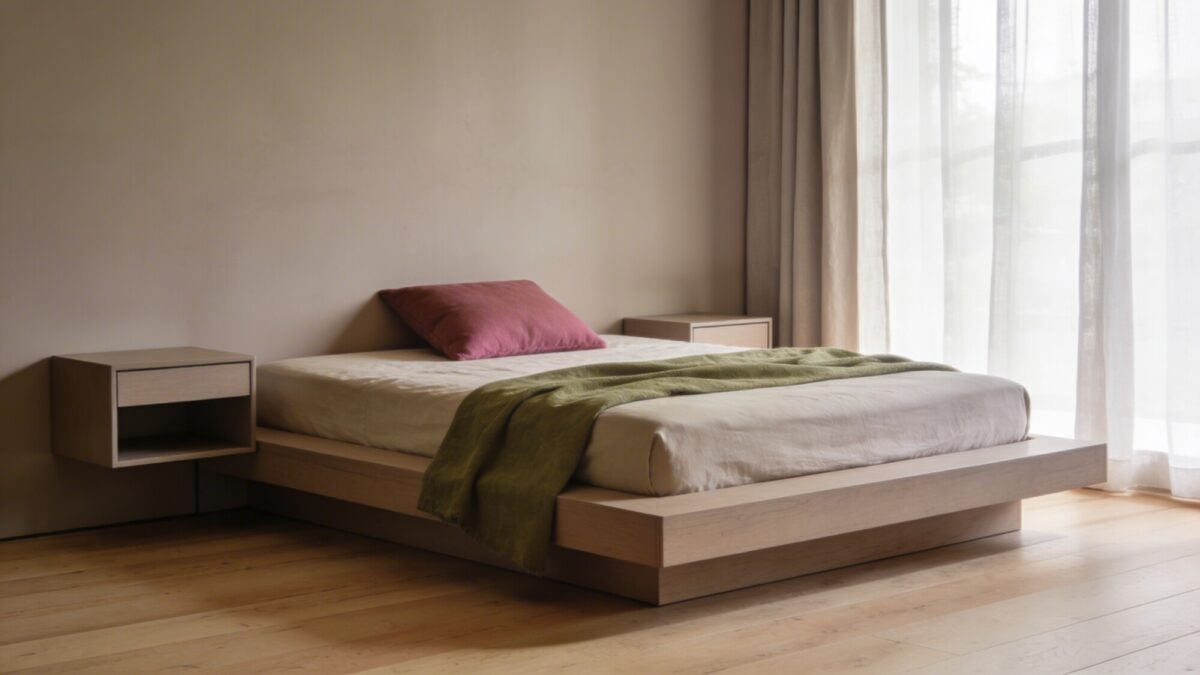
- Keep the frame low — platform beds under 14 inches read as more modern and make small rooms feel taller by comparison.
Headboard Hacks
If a full upholstered headboard is out of budget, a single wall-mounted panel behind the pillows does most of the same visual work for a fraction of the cost — plywood wrapped in fabric and foam, mounted with a French cleat, runs well under $100 in materials. It’s a weekend project, not a professional install.
Texture, Light, and Layering
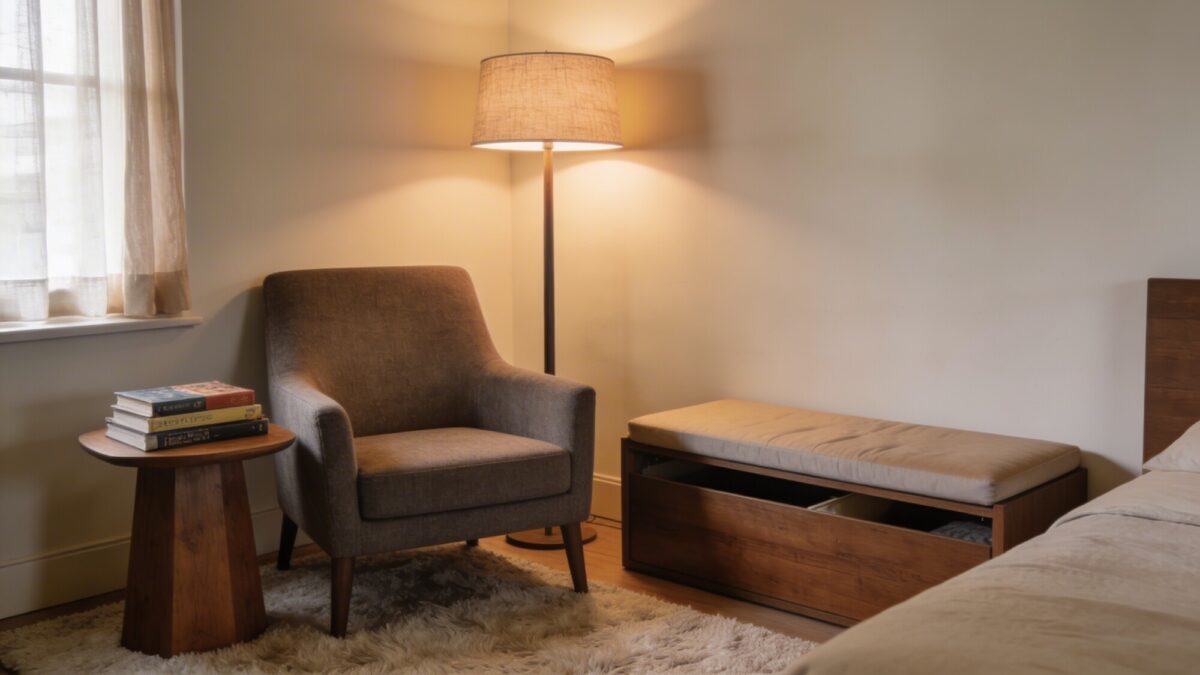
A room built entirely from smooth, matte surfaces — painted drywall, a flat duvet, a bare floor — looks correct in a photo and cold in person. Texture is what makes a space feel lived-in rather than staged.
Texture Pairings That Play Nice
Stick to two or three textures per room: something woven (a rattan chair, a jute rug), something soft (a bouclé throw, a velvet cushion), and something hard and warm (wood, not metal, if you want the room to feel calm rather than industrial). A reading chair with a small side table and a floor lamp, tucked in an unused corner, does more for how “finished” a bedroom feels than another wall decoration would.
Smart Lighting Without the Tech Fatigue
One overhead fixture on a single switch is the most common reason a bedroom feels flat and clinical instead of calm. Layering light sources fixes this without any smart-home setup required.
- Ambient: soft overhead or recessed lighting on a dimmer — this is your base layer, dimmed low most nights.
- Task: bedside lamps or wall sconces at a height you can read by without straining.
- Accent: a warm lamp on a dresser, or LED strip lighting under a floating shelf, for the layer that actually creates atmosphere.
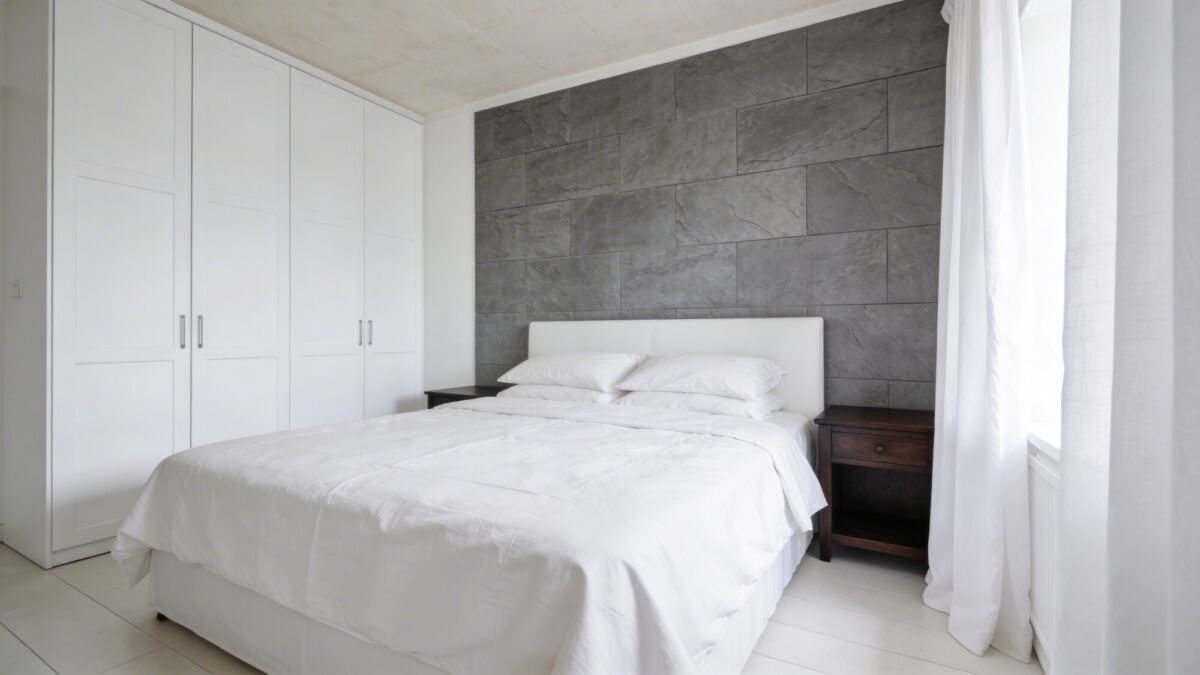
Color Temperature Cheat Sheet
Bulb temperature matters more than most people budget for. Warm white (2700K–3000K) is the standard for bedrooms — it reads as relaxing rather than office-bright. Anything above 4000K (cool white or daylight) will fight against a calm color palette no matter how good the paint color is; it’s the most common reason a carefully chosen neutral wall ends up looking sterile instead of soft.
💡 Pro Tip: Buy one bulb before you buy three. Bulb color rendering varies by brand even at the same “2700K” label — test it in the actual fixture before committing to a whole set.
Personal Touches Without Clutter
A modern bedroom isn’t a blank showroom — it just edits personal items down to the ones that matter. Two art pieces say more than six. One healthy plant does more for the room than a shelf of small ones.
- Choose one or two art pieces you’d actually stop and look at, not filler prints.
- A single larger plant (a fiddle leaf fig, a snake plant) reads as more intentional than several small pots scattered around.
- If you want a gallery wall, keep the frames one color and the mats one width — consistency does more than the images themselves.
Plant Placement for Best Vibes
Corners near a window but out of direct afternoon sun work for most low-maintenance bedroom plants. Avoid placing a plant directly above the headboard — it’s a common styling choice that looks great in photos and is genuinely awkward to dust or water in daily life.
Flooring and Rugs: Ground Your Space
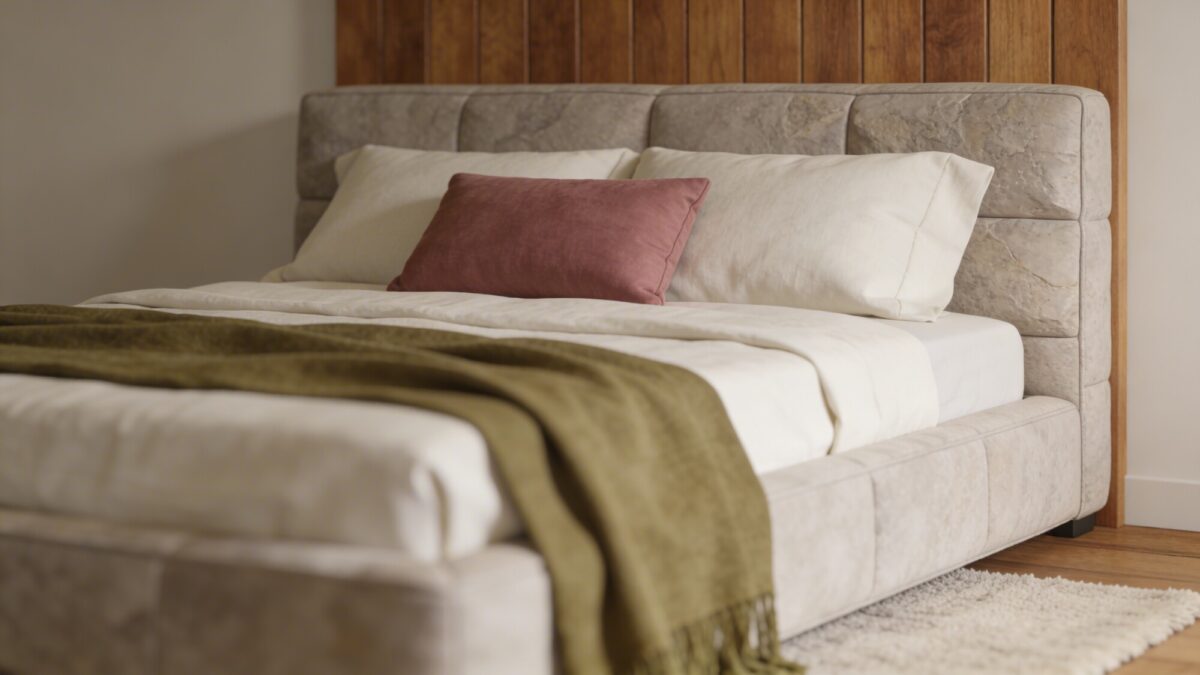
A rug does more to make a bedroom feel finished than most people expect — it’s often the last thing added and the first thing that would be missed if removed.
Rug Rules of Thumb
Size is where most rug purchases go wrong. A rug that only sits under the nightstands and doesn’t reach the sides of the bed reads as too small no matter how nice the pattern is. For a queen bed, look for at least a 5×8, ideally an 8×10, so the rug extends 18–24 inches past the sides of the mattress. Wool or a wool blend holds up better underfoot than a flat synthetic weave and is worth the extra cost if you’re barefoot in the room daily.
💡 Pro Tip: If budget only allows one splurge item in the room, make it the rug over the throw pillows. It touches more square footage and lasts longer than almost any other decor purchase.
Soundproofing? Yes, Please
This gets skipped in most “modern bedroom” guides, but noise control is part of why some bedrooms feel calmer than others even with similar decor.
- Thick curtains and a rug both absorb sound, not just light — a bare-floor, bare-window bedroom echoes more than people expect.
- Weatherstripping on the bedroom door blocks hallway noise for under $20 in materials and a half-hour install.
- A white-noise machine or a small speaker set to low-level ambient sound helps in apartments with thin walls more than any decor choice will.
Closet and Storage: The Tidy Zen
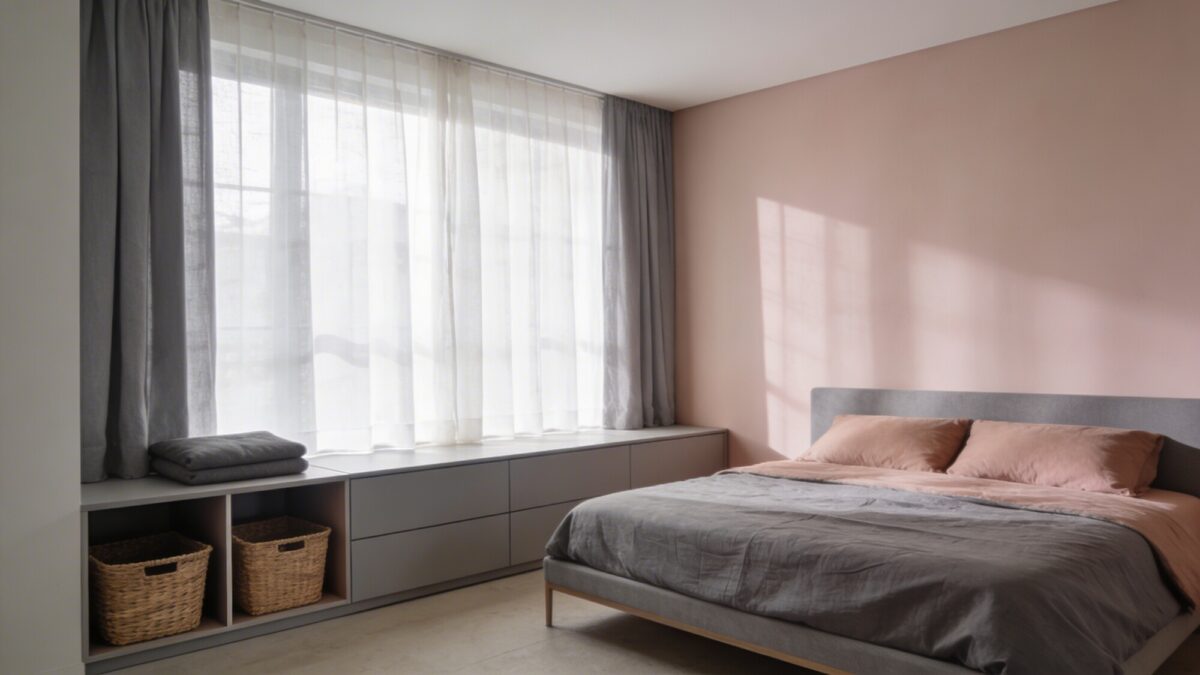
An overstuffed closet with the door left open undoes a well-designed room faster than almost anything else. If closed storage isn’t available, treat open storage the way you’d treat visible furniture — curated, not just contained. For layout ideas built specifically around smaller closets and open storage, our minimalist retreat bedroom ideas cover a few workable configurations.
Wardrobe Wonders
If you’re choosing between a closed wardrobe and an open clothing rack, the honest answer is: a closed wardrobe almost always looks calmer, but an open rack forces you to actually curate what you own, since everything’s visible. Neither is wrong — it depends on whether you’ll keep an open rack tidy on a Tuesday, not just for a photo.
Quick Self-Assessment: Is Your Bedroom Ready for a Modern Refresh?
Answer yes or no to each question, then check your score below.
- Do you have more than one “neutral” wall color competing in the room?
- Is your only light source a single overhead fixture?
- Can you see visible clutter (cords, stacked items, mismatched bins) from the doorway?
- Is your rug smaller than the bed itself, or is there no rug at all?
- Have you bought new decor in the last year without removing anything old?
Scoring: 0–1 “yes” answers — your room mostly needs small edits, not a redesign. 2–3 “yes” answers — start with color and lighting, the two changes with the biggest visual payoff. 4–5 “yes” answers — a full room reset will likely serve you better than piecemeal fixes; work through the sections above in order, starting with color.
FAQ
What is the easiest way to start a bedroom makeover?
Start with color, not furniture. Repainting or even just swapping bedding to a tighter, one-accent-color palette changes how the whole room reads before you spend money on anything new.
How can I make a small bedroom feel bigger?
Use a low-profile bed frame, keep the color palette light and consistent from wall to ceiling, and prioritize under-bed or built-in storage over freestanding furniture that eats floor space.
What lighting should I use for a modern bedroom?
Warm white bulbs (2700K–3000K) layered across ambient, task, and accent sources. Skip cool or daylight bulbs — they work against a calm color palette even when the paint color is right.
What are budget-friendly ways to upgrade a bedroom?
A rug, a new duvet cover, and swapping to warm-temperature bulbs cover most of the visual impact for well under $300 combined, without touching paint or furniture.
How do I choose the right color palette?
One neutral base color, one accent used in two or three spots. Test paint directly on the wall at different times of day before committing — swatch cards under store lighting are misleading.
Can I mix modern with boho or other styles?
Yes — the two blend well through texture (woven baskets, rattan, jute) layered onto a modern, restrained color base. The mistake to avoid is mixing too many decor styles’ color palettes at once; keep the base neutral and modern, and let boho show up in texture and accessories only.
Our Verdict
If you only change three things, make it color discipline, layered lighting, and a properly sized rug — in that order. They cost the least relative to the visual impact and don’t require any furniture purchases. Storage beds and upholstered headboards are worth the investment if you’re buying new furniture anyway, but they’re not where a modern bedroom starts. For a full-room approach once the basics are in place, see our modern luxury bedroom ideas for how these same principles scale up in a larger space.