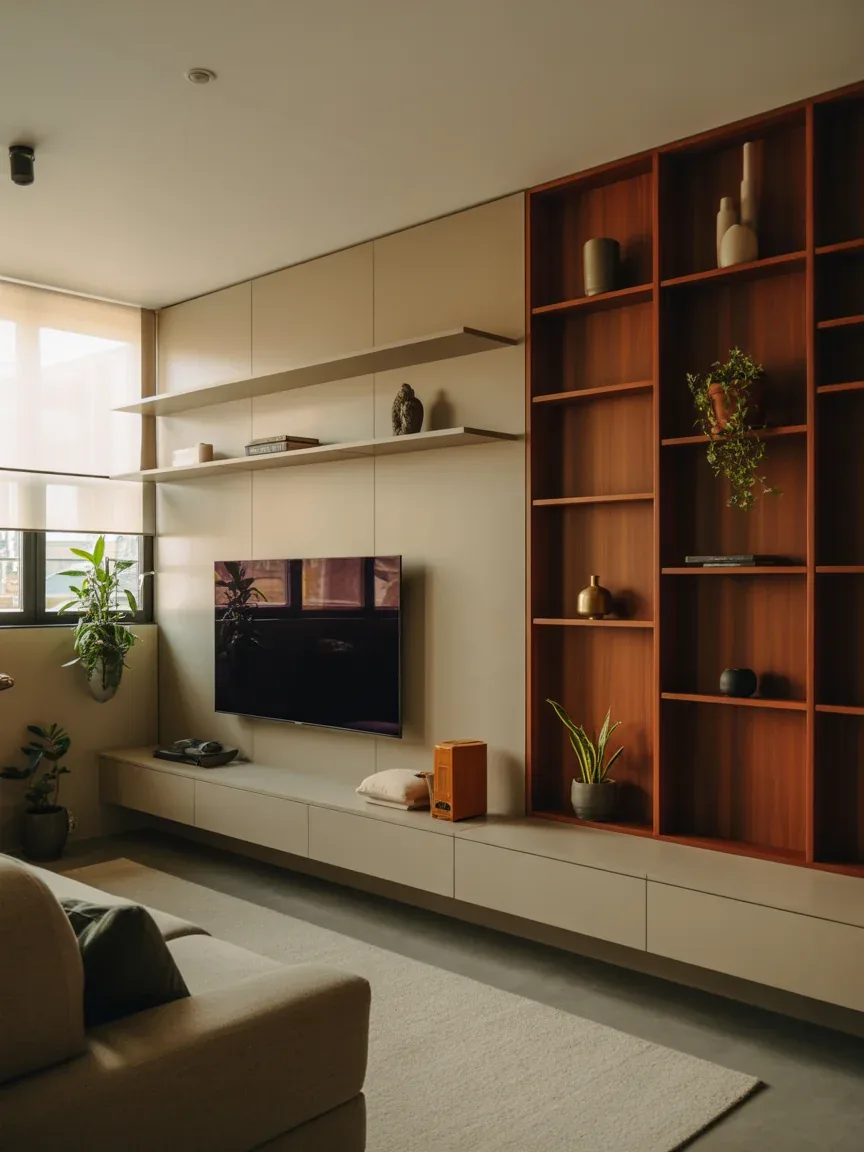
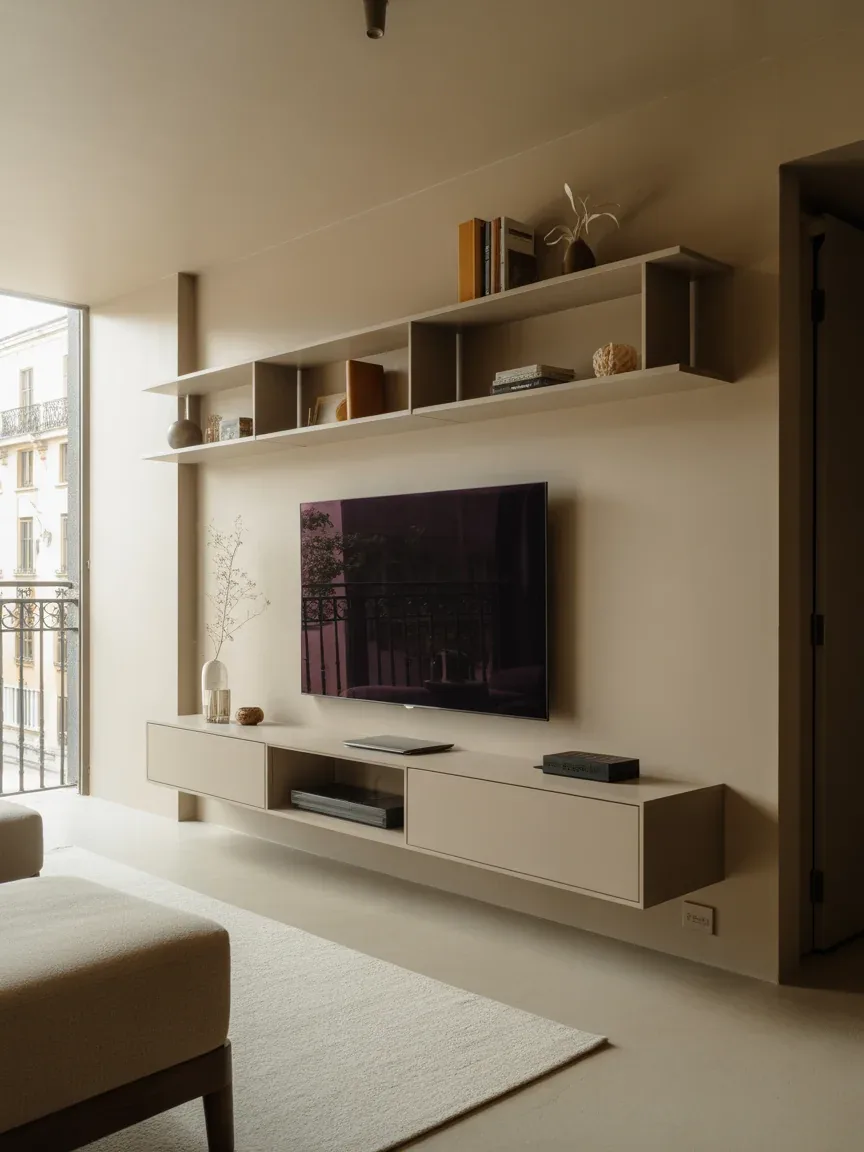
Your living room feels cramped, but your TV setup doesn’t have to make it worse. The battle between floating media walls and built-in units is real—and choosing wrong can eat up precious space fast. So which one actually works better for small living rooms? Let’s break it down in a way that actually helps you decide (no fluff, promise). Why Media Walls Matter More in Small Living Rooms In a compact space, every inch pulls double duty. Your media wall isn’t just for your TV—it’s also storage, style, and sometimes even a focal point. A bulky setup can make your room feel like a storage closet. A smart one? It opens things up and makes your space look intentional. Photo by Nick Karvounis on Unsplash Here’s the deal: Small rooms amplify bad design choices Visual clutter feels twice as heavy Smart layouts can make a room feel bigger than it actually is So yeah, your media wall choice matters more than you think. Vivelove 12″ Deep Floating Shelves for Wall 55″ Long, Wall Shelve… Well-designed Floating Shelves – The rustic style floating shelves combining both practicality and style. These shelves … Sturdy Support – Each wall shelf measures 55″W x 12″D x 2″H. Enhanced Military Grade Hardware brackets hold up to 85 lbs… Invisible Bracket – Farmhouse vibe fill in empty wall space above a desk, fireplace, entryway, vanity, between windows. … $173.99 Buy on Amazon What Is a Floating Media Wall? A floating media wall uses wall-mounted elements—think a mounted TV, floating shelves, and a suspended console. Nothing touches the floor (or very little does). Photo by Nick Karvounis on Unsplash Why People Love Floating Designs Floating setups scream modern and minimal. They create breathing room, which small spaces desperately need. Visually lighter — more floor visible = bigger-feeling room Easier to clean (no awkward corners collecting dust) Flexible—you can rearrange shelves anytime And let’s be honest, it just looks cool. Where It Can Go Wrong Floating doesn’t always mean flawless. Photo by Iris Wang on Unsplash Limited storage if you don’t plan well Cable management can turn into a nightmare Cheap floating units can look… well, cheap If you go this route, commit to clean lines and proper installation. No half-measures. Solid Oak Floating Wall Shelf, Natural Wood Finish, Modern Style … SOLID OAK CONSTRUCTION: Crafted from real solid oak wood, this floating shelf offers a warm, natural finish that adds ti… MODERN STYLE: The clean, minimalist design complements a wide range of home decor styles, from contemporary to rustic an… VERSATILE DISPLAY SURFACE: Perfect for showcasing vases, plants, books, photos, and other decorative accents in living r… $69.99 Buy on Amazon What Is a Built-In Media Wall? A built-in media wall integrates storage, shelves, and the TV into one fixed structure. It often stretches from wall to wall or floor to ceiling. Think custom cabinetry—but for your entertainment setup. Photo by Ries Bosch on Unsplash Why Built-Ins Feel Luxe Built-ins bring that “designer home” vibe instantly. Maximized storage — everything has a place Seamless look—no mismatched furniture pieces Great for hiding clutter (bye, tangled wires) If you hate visual mess, this setup feels like a dream. The Downsides You Shouldn’t Ignore Built-ins can overwhelm small spaces if you’re not careful. Photo by Artem Korolev on Unsplash They can look bulky if poorly designed Expensive compared to floating options Not flexible—you’re stuck with the layout Basically, once it’s in, it’s in. Vivelove 12″ Deep Floating Shelves for Wall 55″ Long, Wall Shelve… Well-designed Floating Shelves – The rustic style floating shelves combining both practicality and style. These shelves … Sturdy Support – Each wall shelf measures 55″W x 12″D x 2″H. Enhanced Military Grade Hardware brackets hold up to 85 lbs… Invisible Bracket – Farmhouse vibe fill in empty wall space above a desk, fireplace, entryway, vanity, between windows. … $173.99 Buy on Amazon Floating vs Built-In: Which Saves More Space? Here’s where things get interesting. Floating Wins on Visual Space Floating designs trick your eyes. The visible floor space makes your room feel larger, even if the actual square footage stays the same. If your living room already feels tight, this illusion matters—a lot. Built-Ins Win on Storage Efficiency Built-ins use every inch, especially vertical space. You get more storage without adding extra furniture. So the real question becomes: Do you need more storage, or do you need your room to feel bigger? Spoiler: most small living rooms benefit more from feeling bigger. Style Showdown: Modern Minimal vs Cozy Custom Let’s talk aesthetics, because function alone won’t cut it. Floating = Clean & Contemporary Floating media walls pair perfectly with: Neutral color palettes Scandinavian or modern interiors Open, airy layouts They keep things light and uncluttered. If you love minimalism, this is your lane. Built-In = Tailored & Cozy Built-ins shine in: Traditional or transitional spaces Homes with lots of decor pieces Rooms that need warmth and character They feel intentional, like the room got custom-tailored. IMO, built-ins look amazing—but only if your space can handle the visual weight. Smart Design Tips for Small Living Rooms No matter which route you choose, execution matters more than the concept. If You Choose Floating Keep shelves minimal and curated Use hidden cable management systems Stick to light colors to enhance openness Avoid overcrowding with decor Less is more. Seriously. If You Choose Built-In Go for slim profiles, not chunky cabinets Use open shelving to break visual heaviness Add lighting to create depth Match colors with your walls for a seamless look A bulky built-in in a small room? That’s a design crime. Hybrid Ideas: The Best of Both Worlds Can’t decide? You don’t have to. A hybrid media wall combines floating elements with built-in features. For example: A wall-mounted TV with a low-profile built-in base Floating shelves paired with recessed storage Partial built-ins that don’t span the entire wall This approach gives you storage and visual breathing room. Honestly, this might be the sweet spot for most small living rooms. FAQ Is a floating media wall cheaper than a built-in? Usually, yes. Floating setups cost less because they require fewer materials and less labor. Built-ins often involve custom carpentry, which adds up quickly. Which option is better for renters? Floating media walls win here. You can install and remove them without major structural changes. Built-ins? Not exactly landlord-friendly. Do built-ins make a room look smaller? They can if they’re bulky or dark. But a well-designed built-in with light colors and open sections can still feel balanced. How high should I mount my TV on a floating wall? Keep it at eye level when seated. Too high, and your neck will hate you. Too low, and it feels awkward. Can I mix both styles in a small room? Absolutely. Hybrid designs often work best because they balance storage and openness. What’s the biggest mistake to avoid? Overloading your media wall with stuff. Whether floating or built-in, clutter kills the look instantly. Conclusion So, floating vs built-in—what’s the best choice? If your priority is making your small living room feel bigger, go floating. If you need serious storage and a polished look, built-ins make more sense. But if you want the smartest move? Combine both. A hybrid setup gives you flexibility, function, and style without overwhelming your space. At the end of the day, your media wall should work with your room—not fight it.
Your living room feels cramped, but your TV setup doesn’t have to make it worse. The battle between floating media walls and built-in units is real—and choosing wrong can eat up precious space fast. So which one actually works better for small living rooms? Let’s break it down in a way that actually helps you decide (no fluff, promise).
A floating media wall uses wall-mounted elements—think a mounted TV, floating shelves, and a suspended console. Nothing touches the floor (or very little does).
A hybrid media wall combines floating elements with built-in features. For example:
A wall-mounted TV with a low-profile built-in base
Floating shelves paired with recessed storage
Partial built-ins that don’t span the entire wall
This approach gives you storage and visual breathing room.
Honestly, this might be the sweet spot for most small living rooms.
FAQ
Is a floating media wall cheaper than a built-in?
Usually, yes. Floating setups cost less because they require fewer materials and less labor. Built-ins often involve custom carpentry, which adds up quickly.
Which option is better for renters?
Floating media walls win here. You can install and remove them without major structural changes. Built-ins? Not exactly landlord-friendly.
Do built-ins make a room look smaller?
They can if they’re bulky or dark. But a well-designed built-in with light colors and open sections can still feel balanced.
How high should I mount my TV on a floating wall?
Keep it at eye level when seated. Too high, and your neck will hate you. Too low, and it feels awkward.
Can I mix both styles in a small room?
Absolutely. Hybrid designs often work best because they balance storage and openness.
What’s the biggest mistake to avoid?
Overloading your media wall with stuff. Whether floating or built-in, clutter kills the look instantly.
Conclusion
So, floating vs built-in—what’s the best choice?
If your priority is making your small living room feel bigger, go floating. If you need serious storage and a polished look, built-ins make more sense.
But if you want the smartest move? Combine both. A hybrid setup gives you flexibility, function, and style without overwhelming your space.
At the end of the day, your media wall should work with your room—not fight it.
Listen to this article 10 10 0:00 / 0:00 Speed 0.75×1×1.25×1.5×2× Album cover wall decor is one of the easiest ways to bring personality into a room without a full renovation. Whether you’re working with vinyl sleeves, CD covers, or poster reproductions, the right layout can turn a blank wall into a genuine focal point….
Listen to this article 10 10 0:00 / 0:00 Speed 0.75×1×1.25×1.5×2× Designing a nursery feels like a big deal—because it is. You’re creating a space your baby will grow into, not just sleep in for a few months. So the big question hits fast: go neutral or go bold? One feels safe, the other feels…
Listen to this article 10 10 0:00 / 0:00 Speed 0.75×1×1.25×1.5×2× Let’s be honest — your TV wall is basically the main character of your living room. It’s the first thing people see when they walk in, and it’s the backdrop to every movie night, every scroll session, every “let’s just watch one episode” that…
Listen to this article 10 10 0:00 / 0:00 Speed 0.75×1×1.25×1.5×2× Dark rooms can feel cozy for about five minutes. After that? They start looking like a cave with throw pillows. The good news is that mirrors work like magic when you place them the right way, and they can completely shift the mood of…
Listen to this article 10 10 0:00 / 0:00 Speed 0.75×1×1.25×1.5×2× Your walls are basically begging for personality—so why not give them a soundtrack too? Album cover decor hits that sweet spot between art and nostalgia, turning your favorite music into a visual vibe. Whether you’re into vintage vinyl or modern pop icons, there’s a…
Listen to this article 10 10 0:00 / 0:00 Speed 0.75×1×1.25×1.5×2× Your bedroom deserves a soundtrack, and these album-cover wall ideas hit all the right notes. They’re 7 Album Cover Wall Decor Bedroom Ideas for Your Vibe Album cover wall decor bedroom ideas are one of the easiest ways to turn a plain wall into…