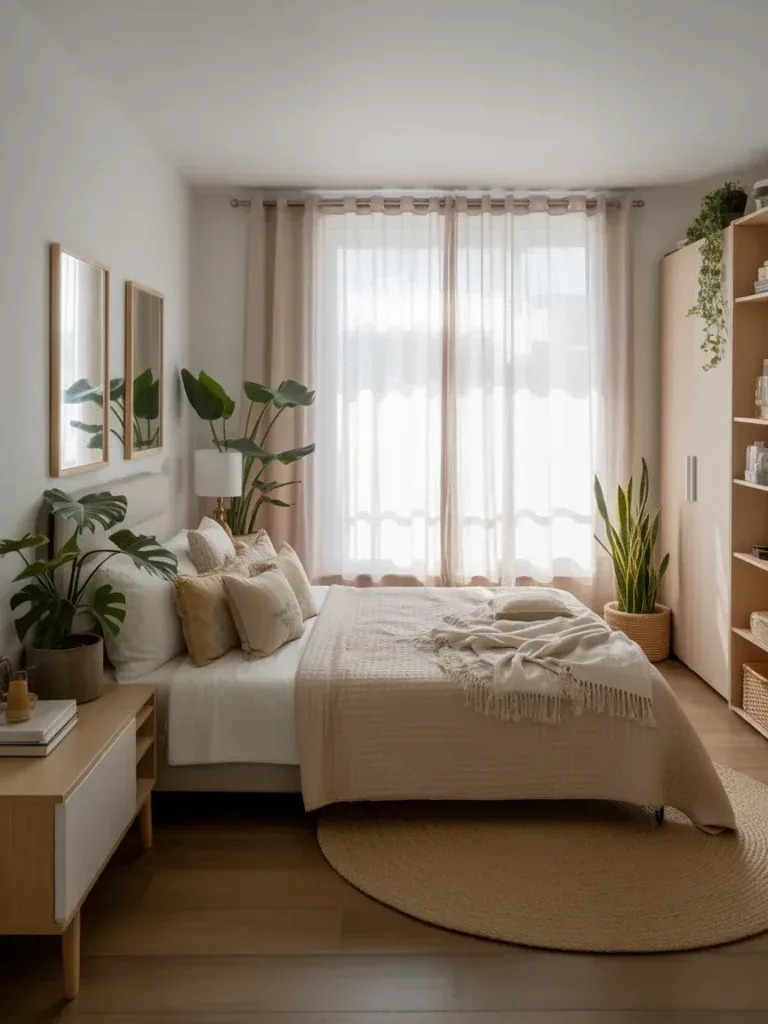
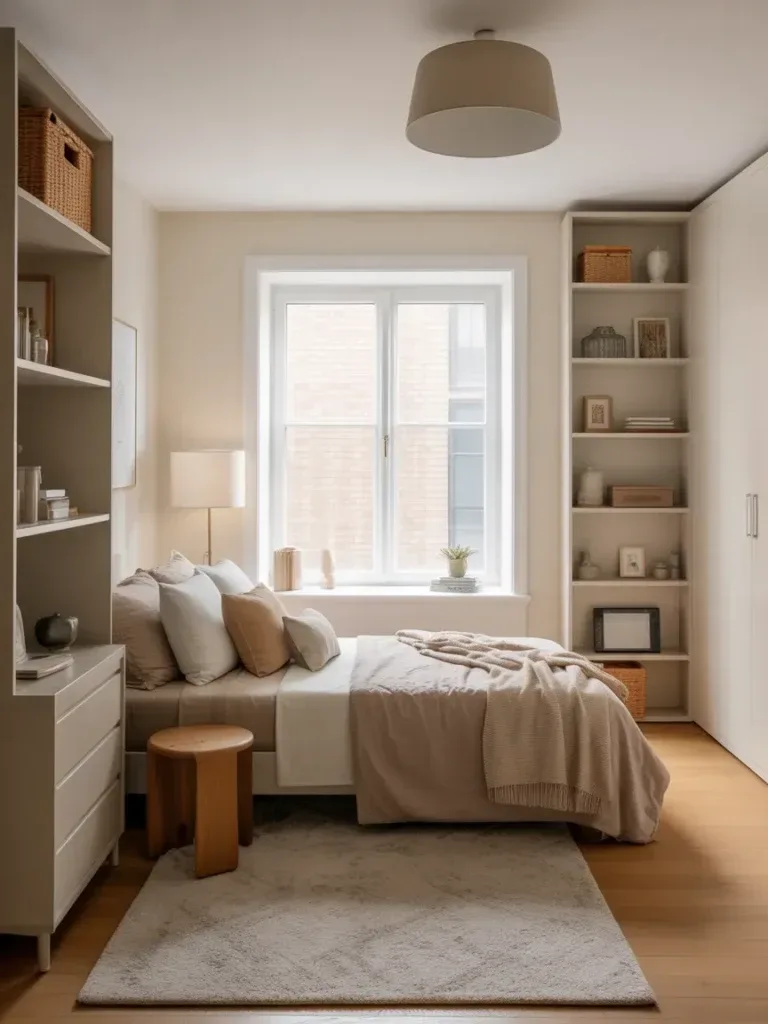
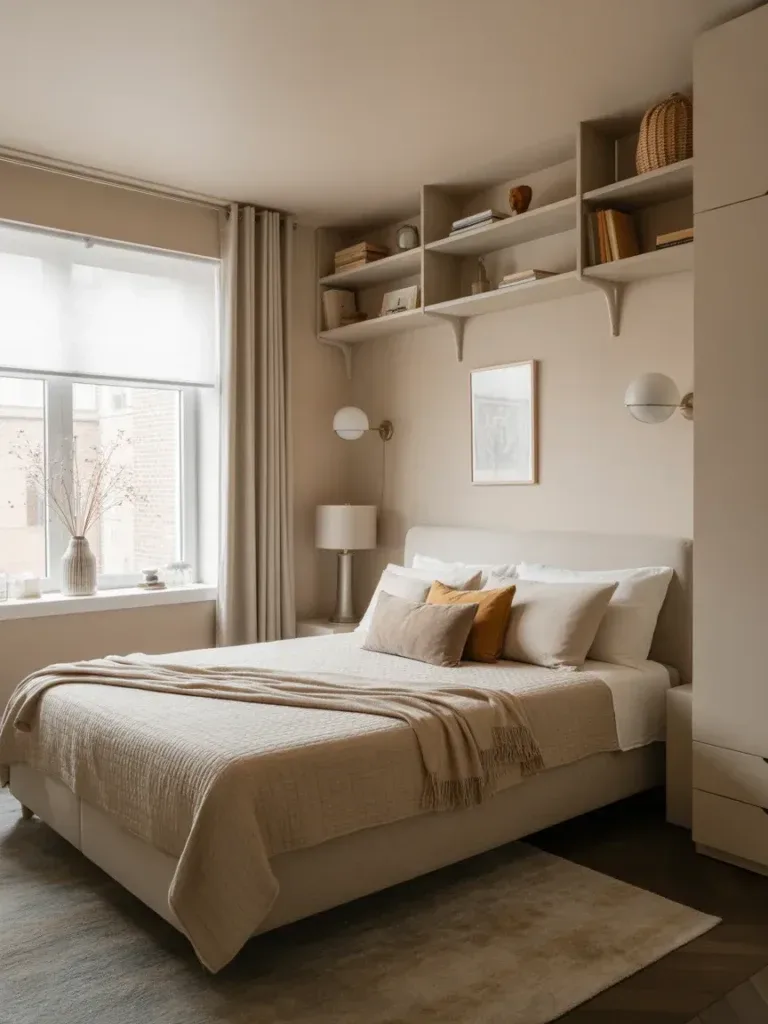
Small bedrooms can feel limiting, but you can shape them into comfortable, stylish spaces that work for sleep, storage, and daily life. This article shows six practical inspirations that help you maximize space, boost functionality, and create a calming aesthetic without sacrificing style. You’ll explore straightforward strategies—like smart storage, multifunctional furniture, clever lighting, and visual tricks—to make the most of every square foot. Expect clear, actionable ideas that fit small-room realities and help you design a bedroom that feels larger and more livable. Table of Contents1) Use vertical shelving to maximize storage without sacrificing floor space2) Incorporate a loft bed to free up room underneath for a desk or seating area3) Choose multi-functional furniture like ottomans with hidden storage4) Apply light, neutral paint colors to create a sense of openness5) Install wall-mounted lamps to save bedside table space6) Utilize mirrors strategically to reflect light and enlarge the room visuallySpace Optimization StrategiesCreative Floor PlansBuilt-In Storage SolutionsMultipurpose Furniture IdeasDesign and Decor TipsColor Schemes for Airy AtmospheresMaximizing Natural LightVisual Space Enhancement Techniques 1) Use vertical shelving to maximize storage without sacrificing floor space Place shelves up the wall to free floor area and keep your room feeling open. Tall, narrow units fit between windows or beside wardrobes and hold books, baskets, or décor. Combine open shelves with closed cabinets to hide clutter while still showing off a few items. Floating shelves create storage without bulky furniture, and adjustable brackets let you change heights as your needs evolve. Use corner shelving to make use of often-wasted angles. You can stack boxes or display plants there, turning a dead corner into functional space. Best Choice Products Set of 4 9x12in Water Hyacinth Pantry Basket… INCLUDED CHALKBOARD LABEL & MARKER: Comes complete with a water- and scratch-resistant chalkboard; use the marker to sta… EASY ORGANIZATION: Help eliminate the excess clutter by organizing items for easy access or storing them away in style SPACE SAVING: These baskets are built large to comfortably hold up to 15 pounds of items and optimize any space for stor… $54.99 Buy on Amazon Install a ladder-style unit or wall-mounted rails for hanging baskets and hooks. These add vertical capacity and make frequently used items easy to reach. 2) Incorporate a loft bed to free up room underneath for a desk or seating area A loft bed lifts your sleeping area so you can use the floor space below for a purposeful zone. You can fit a compact desk, a cozy seating nook, or built-in storage without crowding the room. Place the loft in a corner to keep the layout tidy and open the center of the room for movement. Positioning it against a wall also gives you a secure anchor for shelves, lighting, and power outlets. Choose a design that matches your needs: a simple metal frame for a minimalist look, or a wooden build with integrated drawers for more storage. Ensure the ladder placement and rail height meet safety standards for daily use. Lighting matters: task lighting under the loft helps create a focused workspace, while soft overhead lighting keeps the sleep area comfortable. Measure headroom carefully so the area beneath feels usable and the loft doesn’t feel cramped. Vanselia Ceramic Flower Vase Home Decor – Farmhouse Table Vases R… 【Perfect Size】Measuring 6.3 inches wide and 7.4 inches high, ideal for both fresh and artificial flowers. 【Handcrafted & Rich in Texture】Featuring intricate detailing and a rich texture, this vase complements a variety of home… 【Waterproof & Versatile】Featuring a waterproof interior, ceramic vase can hold water for fresh flowers or display faux, … $27.99 Buy on Amazon 3) Choose multi-functional furniture like ottomans with hidden storage Pick pieces that do two jobs at once so your room stays uncluttered without feeling cramped. A storage ottoman works as seating, a footrest, and a place to stow bedding, toys, or out-of-season clothes. Look for sturdy hinges and a lined interior to protect fabrics and keep small items contained. Choose a size and shape that complements your layout—square ottomans fit corners, while long benches can sit at the foot of a bed. Match materials and colors to your decor to keep the space cohesive; neutral tones visually expand a room. If you need extra function, consider ottomans with removable trays or convertible tops that serve as a coffee table or workspace. Combine one or two multi-functional pieces with minimal other furniture to maintain breathing room. That balance gives you practical storage without sacrificing movement or a clean aesthetic. 4) Apply light, neutral paint colors to create a sense of openness Choose light neutrals like soft whites, pale grays, or warm beiges to reflect more light and make walls feel less imposing. These tones create a calm backdrop that lets furniture and textiles stand out without crowding the room. Match the paint to your room’s natural light; cooler neutrals work well in bright north-facing rooms, while warmer neutrals suit sunnier east- or south-facing spaces. You can use the same color on trim for a seamless, taller-looking wall or add a slightly lighter ceiling to boost perceived height. Keep saturation low to avoid colors reading as heavy. If you want subtle contrast, paint one short wall a fractionally deeper neutral rather than introducing a bold accent that could shrink the space visually. Test large swatches on different walls and view them at several times of day. This helps you see how the hue shifts with light and ensures the final color supports the open, airy feel you want. 5) Install wall-mounted lamps to save bedside table space Swap bulky table lamps for wall-mounted fixtures to free valuable surface area on your bedside table. You gain room for essentials like a book, glasses, or a glass of water without crowding the nightstand. Choose swing-arm sconces or adjustable wall lamps to direct light where you need it for reading or tasks. That flexibility lets you keep one fixed overhead light while tailoring bedside illumination individually. Hardwired sconces look clean and save cord clutter, but plug-in options provide an easier, non-permanent solution. Position fixtures about 40–60 cm above the mattress top for comfortable reach and glare-free reading. Pick finishes and lamp styles that complement your decor to make the installation feel intentional rather than an afterthought. Proper placement transforms a small bedroom into a neater, more functional space without sacrificing style. 6) Utilize mirrors strategically to reflect light and enlarge the room visually Place a large mirror opposite a window to bounce natural light across the room. This simple swap increases brightness and creates a sense of depth without altering the footprint. Mount mirrors at eye level or slightly above to extend sightlines and make walls recede. A tall, narrow mirror can add perceived height; a wide mirror can widen the room. Use a single oversized mirror or a thoughtful cluster of smaller mirrors depending on your wall space. Keep frames minimal to avoid visual clutter and preserve the illusion of openness. Integrate mirrors into furniture or doors when possible, such as mirrored wardrobe panels or a mirrored bedside table. These choices reflect light while serving a practical function. Avoid placing mirrors where they reflect clutter or dark corners; instead aim them at light sources or pleasant focal points. Thoughtful placement makes the room feel larger and more inviting. Space Optimization Strategies Plan placement, storage, and furniture so every square foot serves a purpose. Prioritize traffic flow, usable storage, and pieces that perform more than one task. Creative Floor Plans Place the bed against the longest uninterrupted wall to free up floor area and create a clear sightline from the door. If your room is narrow, orient the bed along the long wall rather than the short end to make walking space feel wider. Use a floating nightstand or wall-mounted shelf to keep floor space open. Define zones with rugs and lighting instead of walls. Put a slim desk at the foot of the bed or under a window to combine sleeping and work areas without blocking circulation. Keep 24–36 inches of clear walkway beside the bed and at entry points to maintain comfortable movement. Consider diagonal placement only if it improves flow; it saves space in some odd-shaped rooms but can reduce usable wall storage. Measure before you rearrange—draw the floor plan to scale or use an app to test layouts. Built-In Storage Solutions Use built-ins to turn wasted nooks into storage without bulky furniture. Install floor-to-ceiling closets on one wall to maximize vertical space and reduce the need for separate dressers. Opt for adjustable shelves and a mix of hanging rails to handle seasonal clothes efficiently. Under-bed drawers or a raised platform with integrated compartments capture the largest unused area. Convert a recessed window alcove into shelving or a small seat with drawers beneath. For a tight room, choose sliding closet doors to avoid swing clearance. Keep frequently used items at eye level and store less-used items higher up. Add hooks on the inside of closet doors and a narrow ledge by the bed for daily essentials to prevent surface clutter. Multipurpose Furniture Ideas Select furniture that doubles up: a bed with built-in drawers, a fold-down desk that becomes a vanity, or an ottoman that stores linens. A Murphy bed frees floor space entirely during the day, letting you use the room as an office or lounge. Choose a narrow dresser that can also act as a TV stand or a tall thin bookshelf that serves as a room divider. Use a wall-mounted drop-leaf table for dining or work; when folded, it becomes invisible and saves walking space. Prioritize pieces with slim profiles and exposed legs to keep sightlines open. When buying multifunctional items, check mechanics and weight capacity—secure wall anchors for fold-down units and test drawer slides for smooth operation. Design and Decor Tips Focus on practical choices that increase perceived space, boost light, and keep the room functional. Prioritize paint, window treatment, lighting placement, and a few visual tricks to make the room feel larger without major renovations. Color Schemes for Airy Atmospheres Use a limited palette of two to three colors to avoid visual clutter. Paint walls in a pale, cool neutral—soft greige, muted blue, or warm off-white—to reflect light and create a continuous background. Reserve one accent color for textiles and a single focal wall; choose a deeper tone that complements the neutrals rather than competes. Keep trim and ceiling at least one shade lighter than walls to visually raise the ceiling. For bedding and rugs, pick mid-tone neutrals with one accent hue repeated in pillows and art to tie the room together. Use matte finishes on walls to hide imperfections and satin or semi-gloss for trim to add crispness. Maximizing Natural Light Remove heavy drapery in favor of sheer panels or minimal roller shades that mount close to the window frame. Position your bed and taller furniture away from direct window zones to avoid blocking sunlight paths. Use mirrors opposite or adjacent to windows to double light—place one large mirror rather than multiple small ones for a clearer, more reflective surface. Choose low-profile window hardware and keep windows clean for maximum transmission. If privacy is needed, layer with top-down shades so you can admit light while maintaining sightline control. For rooms with a single small window, supplement with daylight-spectrum fixtures near task areas to match natural light color. Visual Space Enhancement Techniques Create vertical emphasis with tall, narrow shelving or a floor-to-ceiling headboard to draw the eye upward. Use multifunctional furniture: a bed with drawers, a floating desk, or a slim dresser that doubles as a bedside table. Keep furniture legs exposed where possible; visible floor beneath pieces increases perceived floor area. Define zones with a small rug that fits under the front two-thirds of the bed to anchor the sleeping area without overwhelming the floor. Maintain clear sightlines by arranging the largest piece (usually the bed) first, then fitting storage around it. Apply consistent, minimal hardware and slim-profile lighting to reduce visual weight and maintain a streamlined look.
Small bedrooms can feel limiting, but you can shape them into comfortable, stylish spaces that work for sleep, storage, and daily life. This article shows six practical inspirations that help you maximize space, boost functionality, and create a calming aesthetic without sacrificing style.
You’ll explore straightforward strategies—like smart storage, multifunctional furniture, clever lighting, and visual tricks—to make the most of every square foot. Expect clear, actionable ideas that fit small-room realities and help you design a bedroom that feels larger and more livable.
Place shelves up the wall to free floor area and keep your room feeling open. Tall, narrow units fit between windows or beside wardrobes and hold books, baskets, or décor.
Combine open shelves with closed cabinets to hide clutter while still showing off a few items. Floating shelves create storage without bulky furniture, and adjustable brackets let you change heights as your needs evolve.
Use corner shelving to make use of often-wasted angles. You can stack boxes or display plants there, turning a dead corner into functional space.
Install a ladder-style unit or wall-mounted rails for hanging baskets and hooks. These add vertical capacity and make frequently used items easy to reach.
2) Incorporate a loft bed to free up room underneath for a desk or seating area
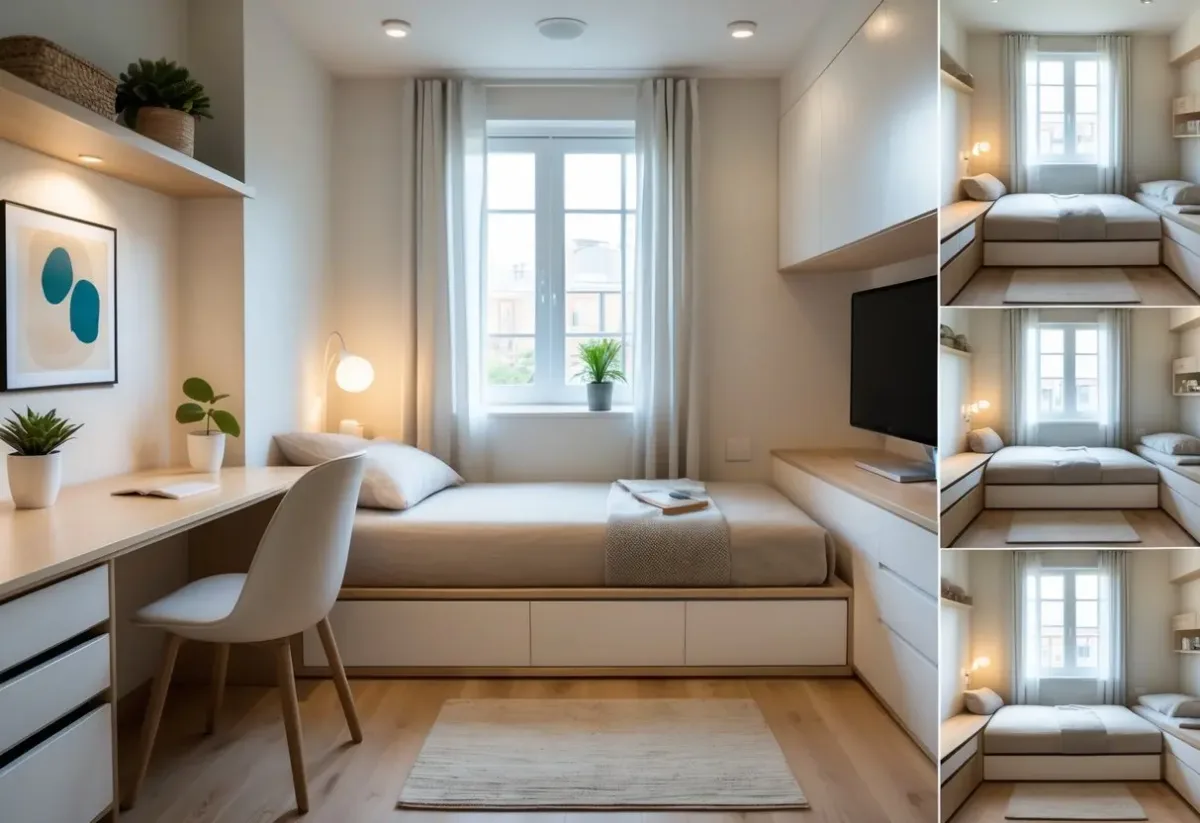
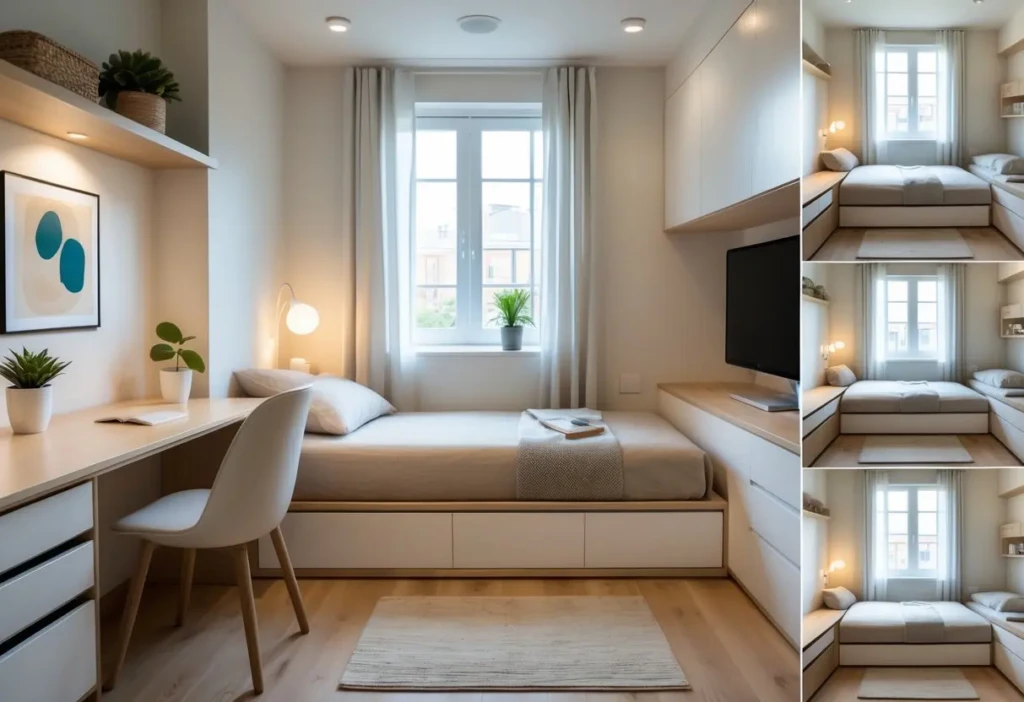
A loft bed lifts your sleeping area so you can use the floor space below for a purposeful zone. You can fit a compact desk, a cozy seating nook, or built-in storage without crowding the room.
Place the loft in a corner to keep the layout tidy and open the center of the room for movement. Positioning it against a wall also gives you a secure anchor for shelves, lighting, and power outlets.
Choose a design that matches your needs: a simple metal frame for a minimalist look, or a wooden build with integrated drawers for more storage. Ensure the ladder placement and rail height meet safety standards for daily use.
Lighting matters: task lighting under the loft helps create a focused workspace, while soft overhead lighting keeps the sleep area comfortable. Measure headroom carefully so the area beneath feels usable and the loft doesn’t feel cramped.
Pick pieces that do two jobs at once so your room stays uncluttered without feeling cramped. A storage ottoman works as seating, a footrest, and a place to stow bedding, toys, or out-of-season clothes.
Look for sturdy hinges and a lined interior to protect fabrics and keep small items contained. Choose a size and shape that complements your layout—square ottomans fit corners, while long benches can sit at the foot of a bed.
Match materials and colors to your decor to keep the space cohesive; neutral tones visually expand a room. If you need extra function, consider ottomans with removable trays or convertible tops that serve as a coffee table or workspace.
Combine one or two multi-functional pieces with minimal other furniture to maintain breathing room. That balance gives you practical storage without sacrificing movement or a clean aesthetic.
4) Apply light, neutral paint colors to create a sense of openness
Choose light neutrals like soft whites, pale grays, or warm beiges to reflect more light and make walls feel less imposing. These tones create a calm backdrop that lets furniture and textiles stand out without crowding the room.
Match the paint to your room’s natural light; cooler neutrals work well in bright north-facing rooms, while warmer neutrals suit sunnier east- or south-facing spaces. You can use the same color on trim for a seamless, taller-looking wall or add a slightly lighter ceiling to boost perceived height.
Keep saturation low to avoid colors reading as heavy. If you want subtle contrast, paint one short wall a fractionally deeper neutral rather than introducing a bold accent that could shrink the space visually.
Test large swatches on different walls and view them at several times of day. This helps you see how the hue shifts with light and ensures the final color supports the open, airy feel you want.
5) Install wall-mounted lamps to save bedside table space
Swap bulky table lamps for wall-mounted fixtures to free valuable surface area on your bedside table. You gain room for essentials like a book, glasses, or a glass of water without crowding the nightstand.
Choose swing-arm sconces or adjustable wall lamps to direct light where you need it for reading or tasks. That flexibility lets you keep one fixed overhead light while tailoring bedside illumination individually.
Hardwired sconces look clean and save cord clutter, but plug-in options provide an easier, non-permanent solution. Position fixtures about 40–60 cm above the mattress top for comfortable reach and glare-free reading.
Pick finishes and lamp styles that complement your decor to make the installation feel intentional rather than an afterthought. Proper placement transforms a small bedroom into a neater, more functional space without sacrificing style.
6) Utilize mirrors strategically to reflect light and enlarge the room visually
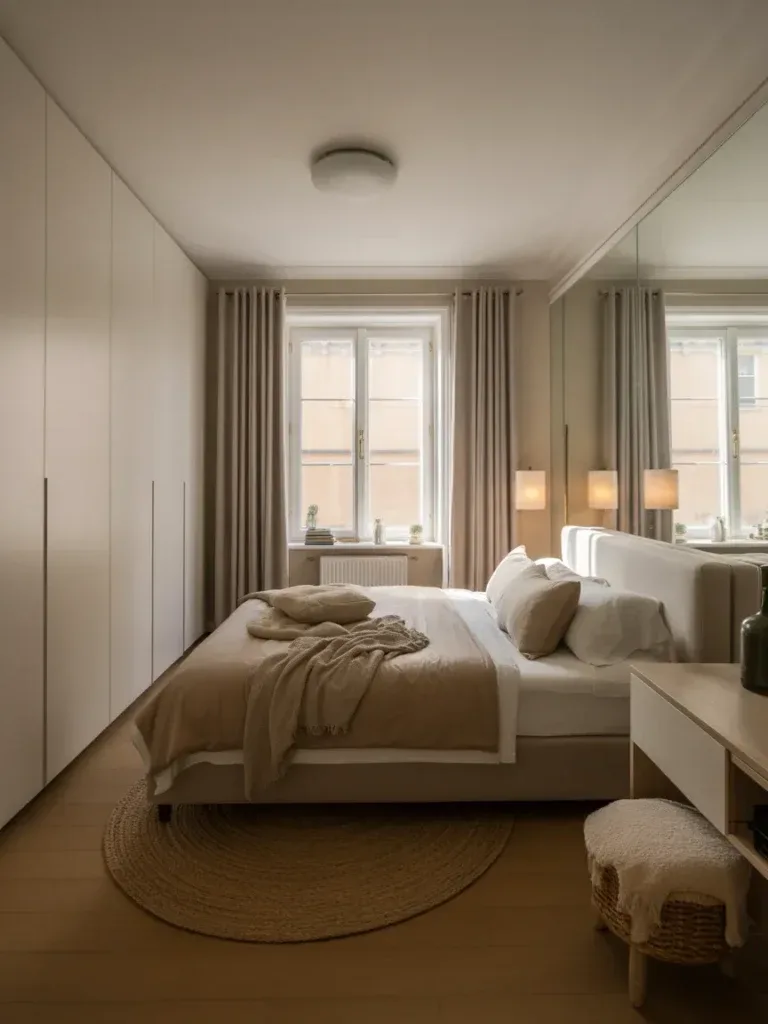
Place a large mirror opposite a window to bounce natural light across the room. This simple swap increases brightness and creates a sense of depth without altering the footprint.
Mount mirrors at eye level or slightly above to extend sightlines and make walls recede. A tall, narrow mirror can add perceived height; a wide mirror can widen the room.
Use a single oversized mirror or a thoughtful cluster of smaller mirrors depending on your wall space. Keep frames minimal to avoid visual clutter and preserve the illusion of openness.
Integrate mirrors into furniture or doors when possible, such as mirrored wardrobe panels or a mirrored bedside table. These choices reflect light while serving a practical function.
Avoid placing mirrors where they reflect clutter or dark corners; instead aim them at light sources or pleasant focal points. Thoughtful placement makes the room feel larger and more inviting.
Plan placement, storage, and furniture so every square foot serves a purpose. Prioritize traffic flow, usable storage, and pieces that perform more than one task.
Creative Floor Plans
Place the bed against the longest uninterrupted wall to free up floor area and create a clear sightline from the door. If your room is narrow, orient the bed along the long wall rather than the short end to make walking space feel wider. Use a floating nightstand or wall-mounted shelf to keep floor space open.
Define zones with rugs and lighting instead of walls. Put a slim desk at the foot of the bed or under a window to combine sleeping and work areas without blocking circulation. Keep 24–36 inches of clear walkway beside the bed and at entry points to maintain comfortable movement.
Consider diagonal placement only if it improves flow; it saves space in some odd-shaped rooms but can reduce usable wall storage. Measure before you rearrange—draw the floor plan to scale or use an app to test layouts.
Built-In Storage Solutions
Use built-ins to turn wasted nooks into storage without bulky furniture. Install floor-to-ceiling closets on one wall to maximize vertical space and reduce the need for separate dressers. Opt for adjustable shelves and a mix of hanging rails to handle seasonal clothes efficiently.
Under-bed drawers or a raised platform with integrated compartments capture the largest unused area. Convert a recessed window alcove into shelving or a small seat with drawers beneath. For a tight room, choose sliding closet doors to avoid swing clearance.
Keep frequently used items at eye level and store less-used items higher up. Add hooks on the inside of closet doors and a narrow ledge by the bed for daily essentials to prevent surface clutter.
Multipurpose Furniture Ideas
Select furniture that doubles up: a bed with built-in drawers, a fold-down desk that becomes a vanity, or an ottoman that stores linens. A Murphy bed frees floor space entirely during the day, letting you use the room as an office or lounge.
Choose a narrow dresser that can also act as a TV stand or a tall thin bookshelf that serves as a room divider. Use a wall-mounted drop-leaf table for dining or work; when folded, it becomes invisible and saves walking space.
Prioritize pieces with slim profiles and exposed legs to keep sightlines open. When buying multifunctional items, check mechanics and weight capacity—secure wall anchors for fold-down units and test drawer slides for smooth operation.
Focus on practical choices that increase perceived space, boost light, and keep the room functional. Prioritize paint, window treatment, lighting placement, and a few visual tricks to make the room feel larger without major renovations.
Color Schemes for Airy Atmospheres
Use a limited palette of two to three colors to avoid visual clutter. Paint walls in a pale, cool neutral—soft greige, muted blue, or warm off-white—to reflect light and create a continuous background. Reserve one accent color for textiles and a single focal wall; choose a deeper tone that complements the neutrals rather than competes.
Keep trim and ceiling at least one shade lighter than walls to visually raise the ceiling. For bedding and rugs, pick mid-tone neutrals with one accent hue repeated in pillows and art to tie the room together. Use matte finishes on walls to hide imperfections and satin or semi-gloss for trim to add crispness.
Maximizing Natural Light
Remove heavy drapery in favor of sheer panels or minimal roller shades that mount close to the window frame. Position your bed and taller furniture away from direct window zones to avoid blocking sunlight paths. Use mirrors opposite or adjacent to windows to double light—place one large mirror rather than multiple small ones for a clearer, more reflective surface.
Choose low-profile window hardware and keep windows clean for maximum transmission. If privacy is needed, layer with top-down shades so you can admit light while maintaining sightline control. For rooms with a single small window, supplement with daylight-spectrum fixtures near task areas to match natural light color.
Visual Space Enhancement Techniques
Create vertical emphasis with tall, narrow shelving or a floor-to-ceiling headboard to draw the eye upward. Use multifunctional furniture: a bed with drawers, a floating desk, or a slim dresser that doubles as a bedside table. Keep furniture legs exposed where possible; visible floor beneath pieces increases perceived floor area.
Define zones with a small rug that fits under the front two-thirds of the bed to anchor the sleeping area without overwhelming the floor. Maintain clear sightlines by arranging the largest piece (usually the bed) first, then fitting storage around it. Apply consistent, minimal hardware and slim-profile lighting to reduce visual weight and maintain a streamlined look.
Listen to this article 10 10 0:00 / 0:00 Speed 0.75×1×1.25×1.5×2× Small bedrooms can feel like a daily game of Tetris. One wrong move and suddenly your space feels cramped, cluttered, and mildly stressful. But here’s the good news: layout matters more than size. Get that right, and even the tiniest room can feel surprisingly…
Listen to this article 10 10 0:00 / 0:00 Speed 0.75×1×1.25×1.5×2× Small bedroom? No problem. You don’t need more square footage—you need smarter ideas. The right layout, colors, and a few clever tricks can completely flip the vibe of your space. Ready to make your tiny room feel intentional, stylish, and actually enjoyable to live…
Listen to this article 10 10 0:00 / 0:00 Speed 0.75×1×1.25×1.5×2× Tiny bedroom? No problem. The right design can turn even the smallest space into something that feels intentional, stylish, and surprisingly spacious. We’re talking smart layouts, sneaky storage, and vibes that make you forget the square footage entirely. Ready to rethink your room? 1….
Listen to this article 10 10 0:00 / 0:00 Speed 0.75×1×1.25×1.5×2× Tiny bedroom? No problem. You don’t need a massive space to create something that feels stylish, cozy, and straight-up impressive. The secret isn’t square footage—it’s smart choices. With the right layout, colors, and a little creativity, your small room can feel like a big…