9 Floating Shelf Christmas Decor: Tiny, Wow-Worthy Shelf Styling
A single floating shelf can carry more holiday atmosphere than a whole mantel, mostly because there’s less real estate to fill and every piece you put on it actually gets noticed. Floating shelf Christmas decor works best when you treat the shelf as a small, tightly edited scene rather than a place to pile everything from the decorations bin. If you’re weighing whether a single shelf or a full living room floating shelf setup makes more sense for your space, that’s worth sorting out before you start buying ornaments.
The nine approaches below aren’t a checklist to do all at once. Pick one or two that fit your shelf’s size and your room’s existing style, then build from there.
Quick Takeaways
- Small shelves hold 3–5 objects well; past that, the display starts reading as clutter rather than a scene.
- Mixed textures (metal, wood, fabric) create more visual interest per object than adding more objects of the same material.
- Battery-powered LED lights are the safer choice for an open shelf — no cord to snag, no heat source near dry greenery.
- A two-to-three-color palette unifies mismatched pieces better than buying a matching ornament set.
- Plan for at least one swap-out mid-season; a shelf that looks the same on December 1st and December 24th tends to stop getting noticed by week two.
1. Layer Textures Like a Pro

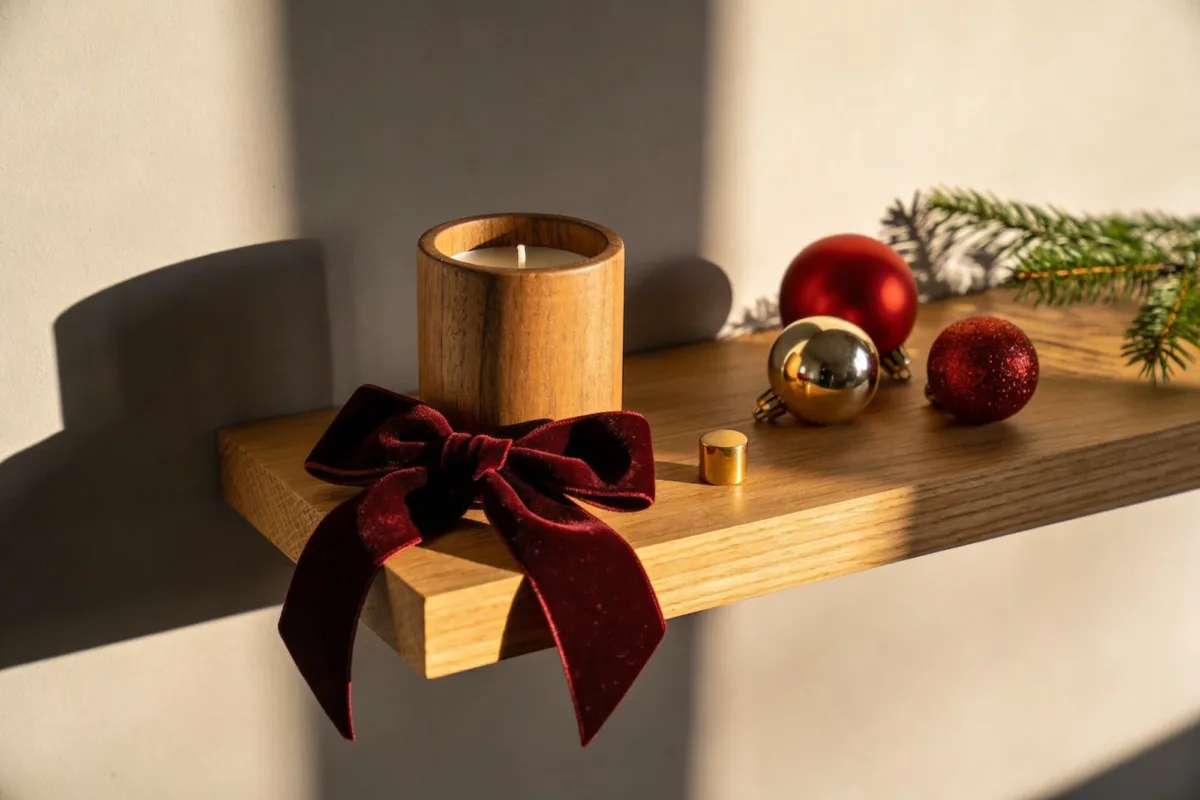
Texture does more work than color on a small shelf, because color alone can look flat under holiday lighting, while texture holds up in low light and reads as intentional from across the room. Pair something hard (a brass candle holder, a ceramic piece) with something soft (a velvet ribbon or bow) and something organic (a sprig of evergreen), and you’ve covered the three textures that make a shelf feel finished rather than sparse.
The mistake people make here is grabbing three items in the same material — three ceramic pieces, say — because they match. Matching finish isn’t the same as good texture variety, and a shelf full of one material tends to look like leftover inventory rather than a styled scene.
💡 Pro Tip: Anchor the arrangement with your heaviest-looking object toward the back or one side, not dead center. A centered heavy piece makes the whole shelf look static; an off-center anchor gives the eye somewhere to travel.
2. Minimalist Ornaments That Still Say Christmas
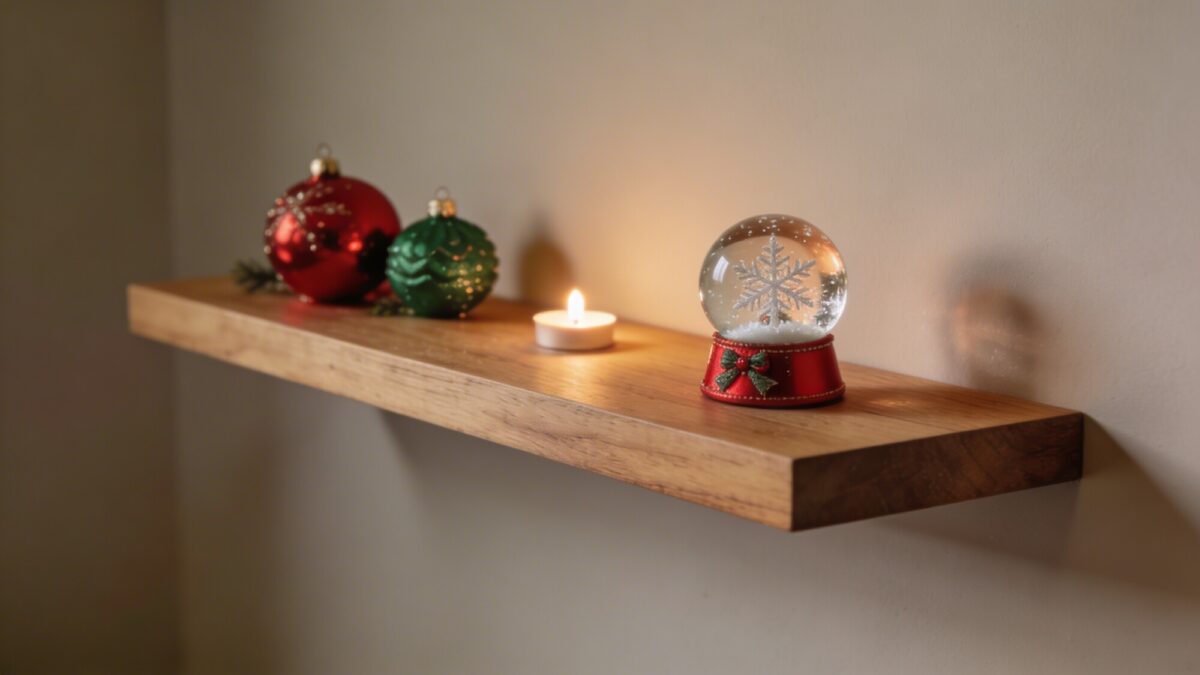
A shelf with just two or three well-chosen pieces — a glass ornament, a small faux snow globe, one coordinating accent — reads as deliberate in a way that a fully loaded shelf doesn’t. This is the better call if the shelf sits in a room that already has a tree, garland, and stockings competing for attention; you don’t need every surface doing the same job.
The trade-off: with this few objects, spacing and negative space matter more than usual. Push everything to one side and it looks unfinished; center it too perfectly and it looks staged. Aim for a loose asymmetry instead — one main piece slightly off-center, the smaller pieces trailing toward one edge.
3. Greenery on Guardrail-Style Shelves
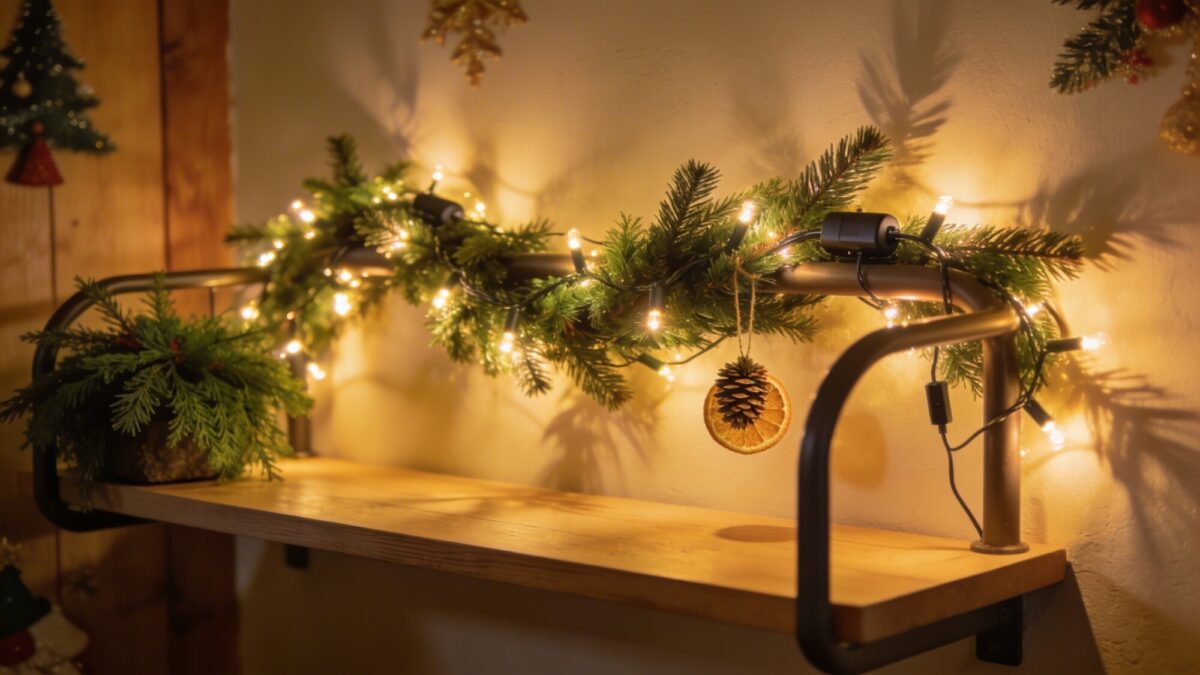
A shelf with a raised lip or guardrail edge is the easiest place to tuck a short garland, since the edge keeps trailing greenery from sliding off. Pine or fir sprigs woven with battery-operated fairy lights fill the shelf without needing any other objects — the greenery is the decor.
Keep the garland to one side rather than running it the full length of the shelf. A garland that spans the entire shelf front to back reads as a Christmas-store display; tucked to one side with the lights spilling onto the bare wall next to it, it reads as a considered design choice.
4. Personal Touches That Actually Tell a Story
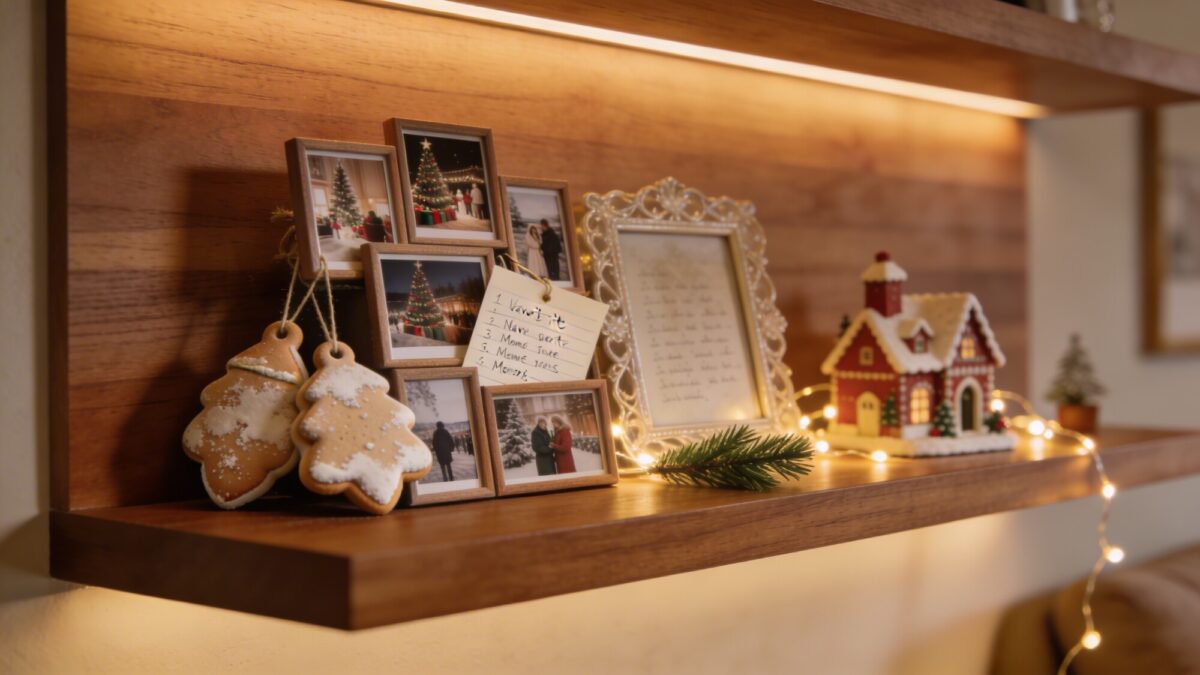
Store-bought ornaments look fine, but a shelf holding a handmade salt-dough ornament or a small framed photo from a past holiday gets noticed differently by guests — it invites a question instead of a glance. This is also the lowest-cost idea on this list, since you’re using things you already own rather than buying new decor.
One genuine trade-off: personal items are usually irregular in size and finish, which makes them harder to style cleanly than a matched ornament set. Give each piece its own small footprint on the shelf rather than clustering them tightly — crowding mismatched objects together is what makes a sentimental shelf start to look cluttered instead of intentional.
5. Lighting That Does Most of the Work
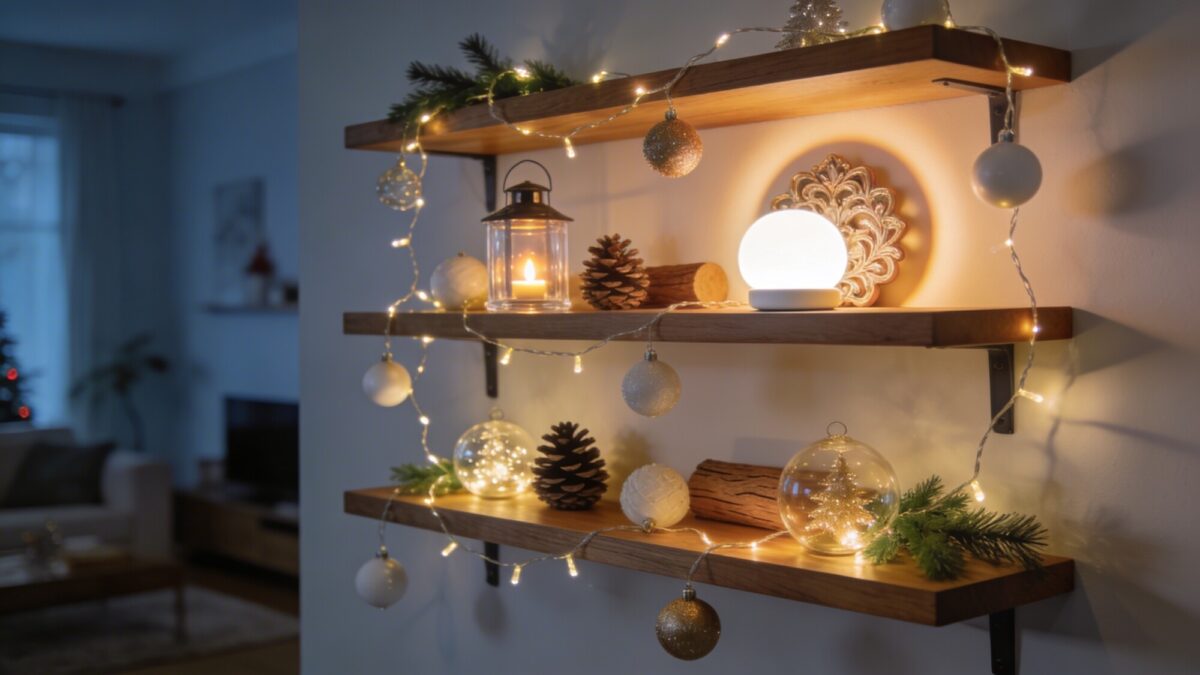
A shelf with average decor and good lighting will outperform a shelf with great decor and flat overhead lighting almost every time — light is what makes ornaments and greenery photograph and read as festive after dark, when most people are actually seeing the room. Battery-operated LED string lights tucked behind or among the objects, rather than draped loosely on top, throw a soft halo instead of a visible strand of bulbs.
If your shelf display includes any dry greenery, skip open-flame candles near it entirely — a puck light or battery tea light gives you the same warm glow without the fire risk that comes with dried pine needles.
💡 Pro Tip: Tuck the light source behind your tallest object rather than laying it flat along the shelf front. Backlighting one piece creates a soft glow and shadow play that a strand of visible lights across the whole shelf can’t match.
6. Pick One Color Story and Stay in It
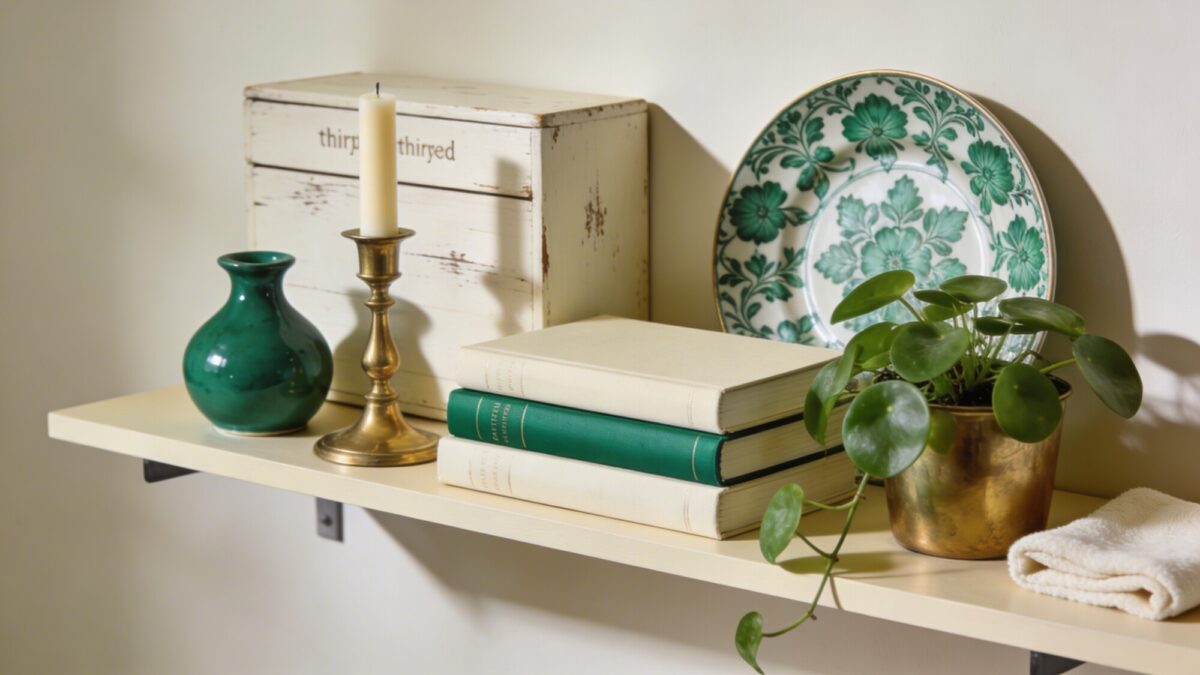
Committing to two or three tones — emerald and brass, rust and natural wood, navy and gold — does more to unify a shelf than buying a matching decor set. It means a thrifted candlestick and a big-box ornament can sit side by side and still look like they belong together, as long as both fit the palette.
The common misstep is picking a palette and then breaking it for “just one” off-palette piece because it’s pretty on its own. That one piece is usually the thing that makes the whole shelf look accidental instead of styled. If a piece doesn’t fit the palette, save it for a different shelf or a different season.
7. The Scandi-Cozy Approach for Calmer Rooms
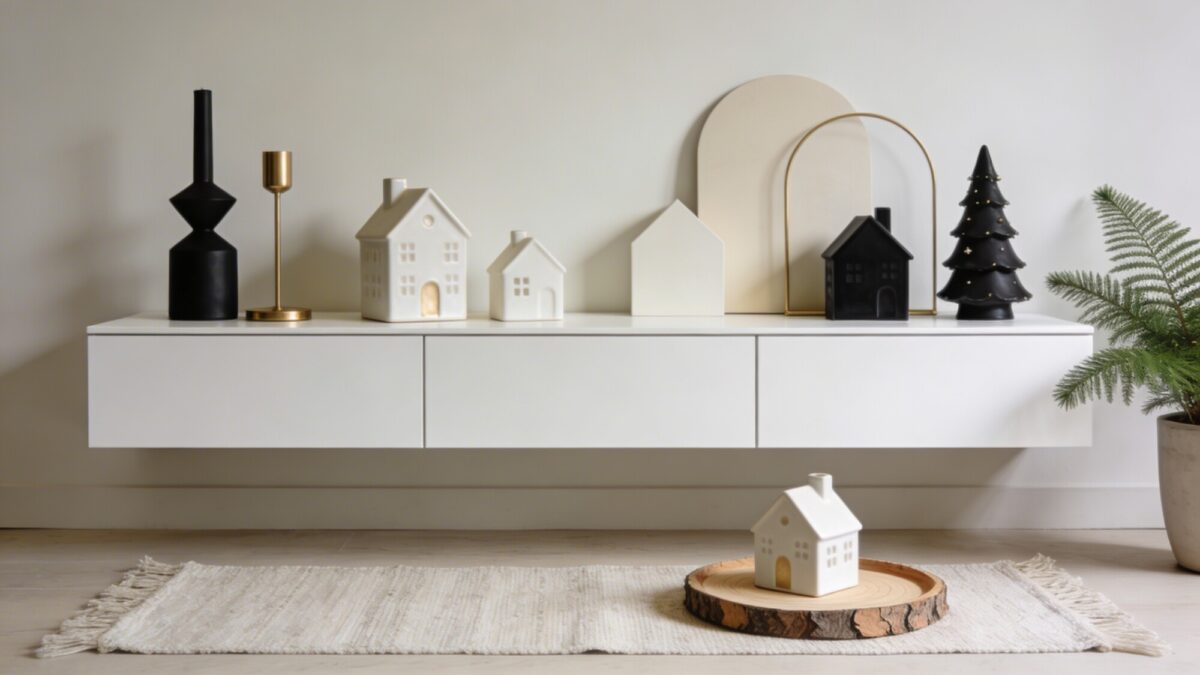
Not every room wants a full red-and-green holiday scene. Light wood, muted whites and charcoals, and a couple of matte black or brass accents give a shelf a Christmas mood without the saturated color most holiday decor defaults to — useful if the rest of your living room already leans neutral and a bright shelf would clash with it.
This look depends on restraint more than the other ideas here. Ample negative space is doing real work; adding “just one more” piece to fill a gap tends to undercut the calm, edited feel that makes this style work in the first place. For more on getting negative space and layout right across a full wall of open shelving, see our guide to styling a wall with floating shelves.
8. Metallics — Used Sparingly
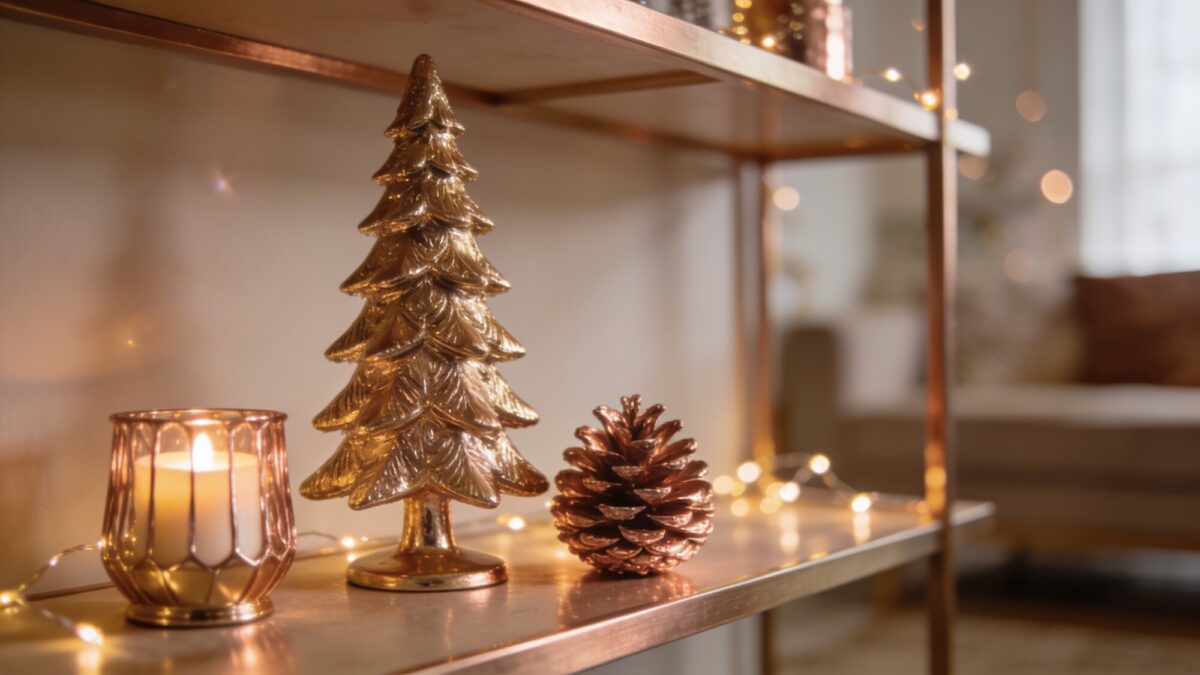
One standout metallic piece — a brass miniature tree, a copper pinecone ornament — catches ambient light in a way that matte materials can’t, which makes it a good option for a shelf that doesn’t have its own dedicated lighting. The key word is “one.” Multiple metallic pieces on the same small shelf tend to compete for the light rather than sharing it, and the shelf starts to look busy instead of luxe.
Warm metals (brass, copper, gold) pair more easily with a holiday palette than cool metals (chrome, silver) do — silver tends to read more New Year’s Eve than Christmas unless you’re deliberately going for a modern, cool-toned look.
9. Plan for at Least One Mid-Season Swap
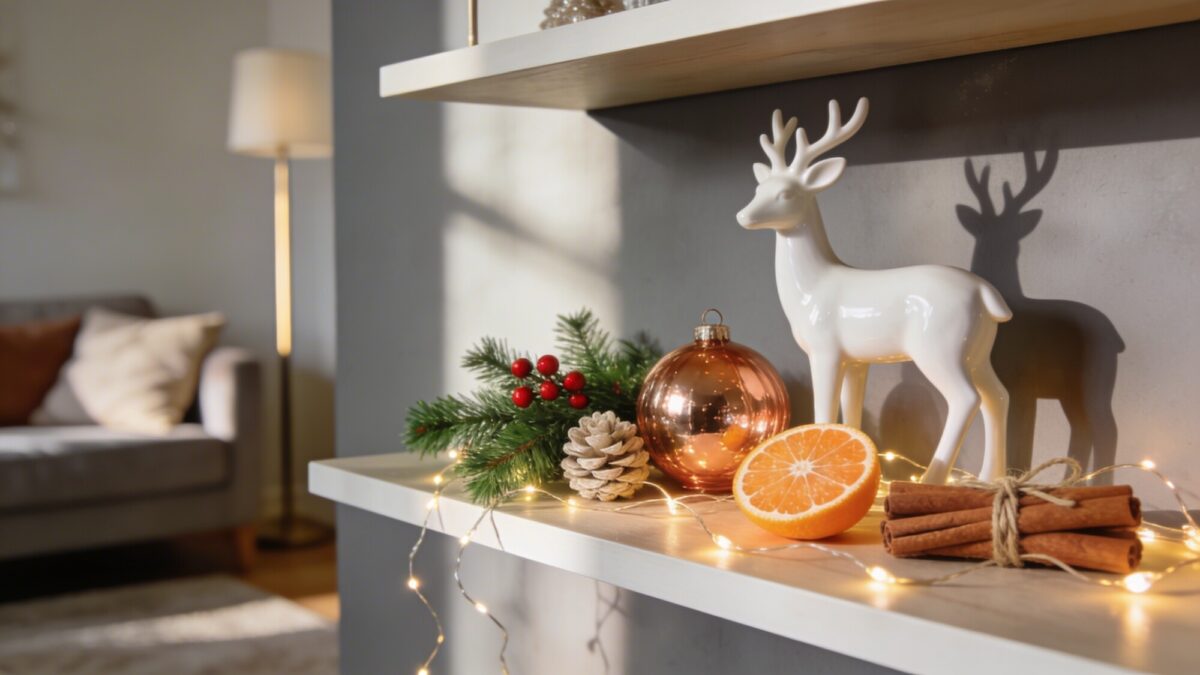
A shelf styled once on December 1st and left untouched through New Year’s tends to fade into the background by the second week — people stop seeing decor once it’s been in the same spot long enough. Swapping one or two elements partway through the season (a fresh citrus slice, a different sprig, changing the light color from warm to cool for a “crisp winter” feel post-Christmas) keeps the shelf getting noticed.
Keep a small backup box of 3–4 extra pieces specifically for this swap so you’re not digging through storage bins on December 15th looking for something festive.
Staggered vs. Asymmetrical: Two Layouts for Multi-Shelf Displays
If you’re working with more than one shelf rather than a single floating shelf, layout matters as much as styling. Staggered floating shelves — evenly spaced but offset left-to-right — create a rhythm that’s easy to style consistently across each shelf. Asymmetrical floating shelves — different lengths, uneven spacing — give more visual energy but are harder to balance, since each shelf needs to work both on its own and as part of the whole wall.
| Layout | Best For | Styling Difficulty |
|---|---|---|
| Single shelf | Small spaces, apartments, rentals | Low — easiest to get right on a first try |
| Staggered shelves | Hallways, stairwells, narrow walls | Medium — consistent spacing does a lot of the work |
| Asymmetrical shelves | Open-plan or high-ceiling living rooms | Higher — needs a strong color story to hold together |
If you’re planning a full wall of staggered or asymmetrical shelves rather than a single accent shelf, our roundup of floating shelf decor ideas has more layout combinations to pull from before the holidays.
FAQ: Floating Shelf Christmas Decor
How many items should go on a small Christmas floating shelf?
Three to five is the range that tends to hold up visually. Fewer than three can look sparse unless you’re deliberately going minimalist; more than five on a shelf under about 24 inches usually starts to look crowded.
Are real candles safe on a floating shelf with greenery?
Skip open flame near dried greenery — it’s a genuine fire risk as pine and fir dry out over the season. Battery tea lights or small puck lights give a similar warm glow without that risk.
What’s the easiest way to make mismatched ornaments look cohesive?
Commit to a two- or three-tone color palette rather than trying to match finishes or styles. Items that share a color story read as coordinated even when they came from completely different places.
Should I decorate every shelf on a wall the same way?
Not necessarily — but they should share a color palette or material thread even if the specific objects differ shelf to shelf. Wildly different styles side by side tend to look like two separate projects rather than one wall.
How do I keep a Christmas shelf from looking dated by New Year’s?
Plan a light swap-out around mid-December — new sprig, different light color, one new small object. It’s a five-minute refresh that keeps the display from going stale before the season’s even over.
Our Take
If this is your first time styling a shelf for the holidays, start with idea #2 (minimalist ornaments) or #6 (a single color story) — both are forgiving, both use pieces you likely already own, and both are easy to build on next year once you know what worked. Save the greenery-and-lighting combination for a shelf you’re willing to check on through the season, since dried greenery and light placement need occasional adjusting. For more single-shelf styling approaches once the holidays wrap up, our guide to small floating shelf decor covers year-round versions of the same principles.