9 Long Floating Shelf Decor Ideas You’Ll Crave
A long floating shelf is one of the few pieces of wall shelf decor that can carry an entire room, but it’s also the one most people overload in the first week and never touch again. The width is the whole appeal — you get room to tell a story instead of squeezing everything onto one 24-inch bracket — and it’s also the trap, because empty space on a six-foot shelf feels wrong to fill, so people keep adding until it looks like a yard sale.
These nine floating shelf decor ideas are built around that tension: how to actually use the length without turning it into clutter. Some lean into a full, curated look. Others go the other direction and prove that a long shelf with almost nothing on it can be the stronger move.
Quick Takeaways
- A long shelf reads best with 3–5 “zones” of visual weight rather than items spaced evenly along its length.
- Odd-numbered groupings (3, 5, 7 objects) photograph and read better than even ones — it’s a basic styling rule that holds up on shelves specifically.
- Negative space is not wasted space on a long shelf — it’s what keeps 6+ feet of surface from looking like storage.
- Weight distribution matters more than symmetry: a shelf can look balanced with a big item on one end and three small ones on the other.
- Command strips and light 3M hooks are fine for hanging small items off the shelf edge, but anything over a pound or two needs real hardware into a stud.
1. Build a Gallery Wall on a Single Plane
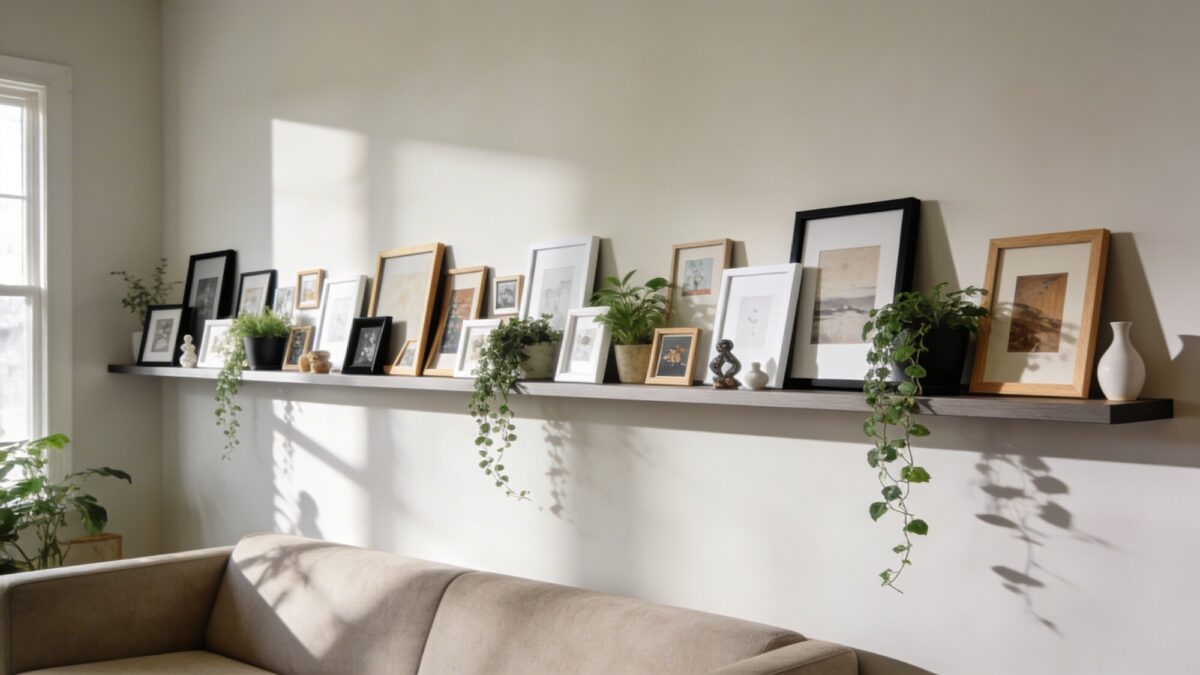
This is the idea that gets requested most: turning a long shelf into a horizontal gallery wall instead of a vertical one. The advantage over a traditional gallery wall is real — no measuring nail placement, no patching drywall when you inevitably rearrange, and no risk of a frame hanging crooked six months later.
The mistake people make here is leaning every frame flat against the wall in a straight line. It reads flat, literally. Angling a few frames slightly forward, overlapping the front edge of one frame onto the back of the next, and mixing in a couple of freestanding objects (not just frames) is what makes it look styled instead of shelved.
- Mix frame finishes — black, white, and natural wood — rather than matching them
- Add one or two plants to break up the hard edges of the frames
- Leave a visible gap of at least 4–6 inches somewhere in the arrangement
💡 Pro Tip: Lay the whole arrangement out on the floor first, in the shelf’s exact length, before you hang or place anything. It’s the fastest way to catch a lopsided grouping before it’s on the wall.
2. Stack Books and Vintage Finds for Instant Character
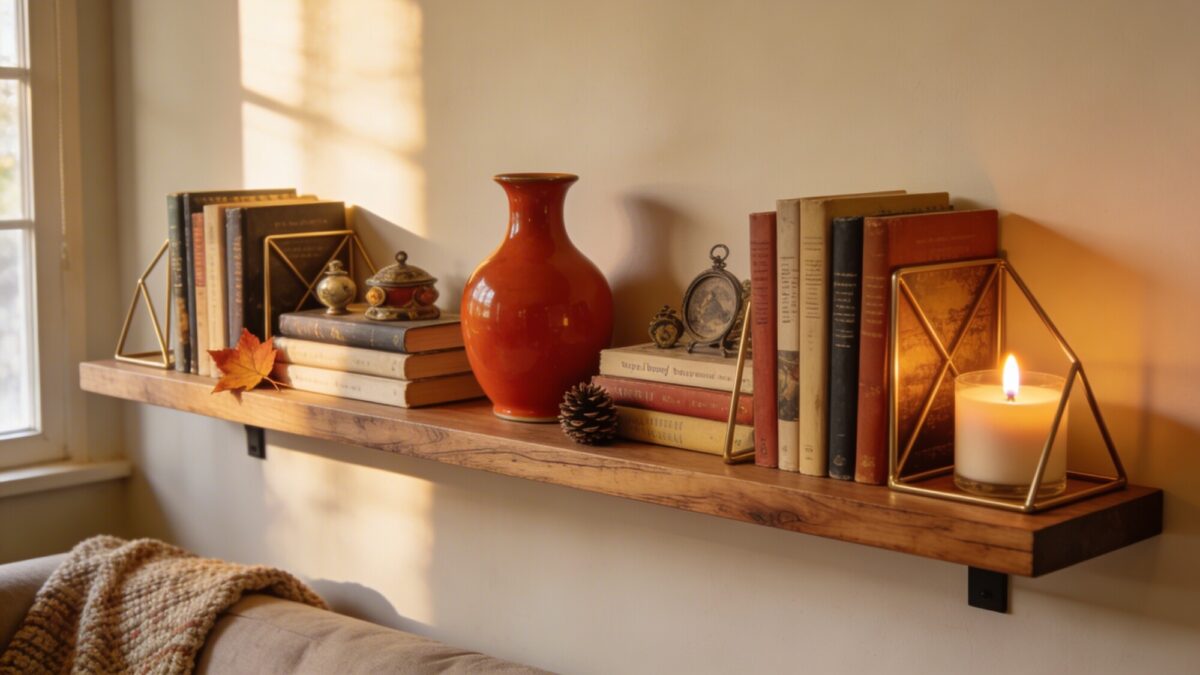
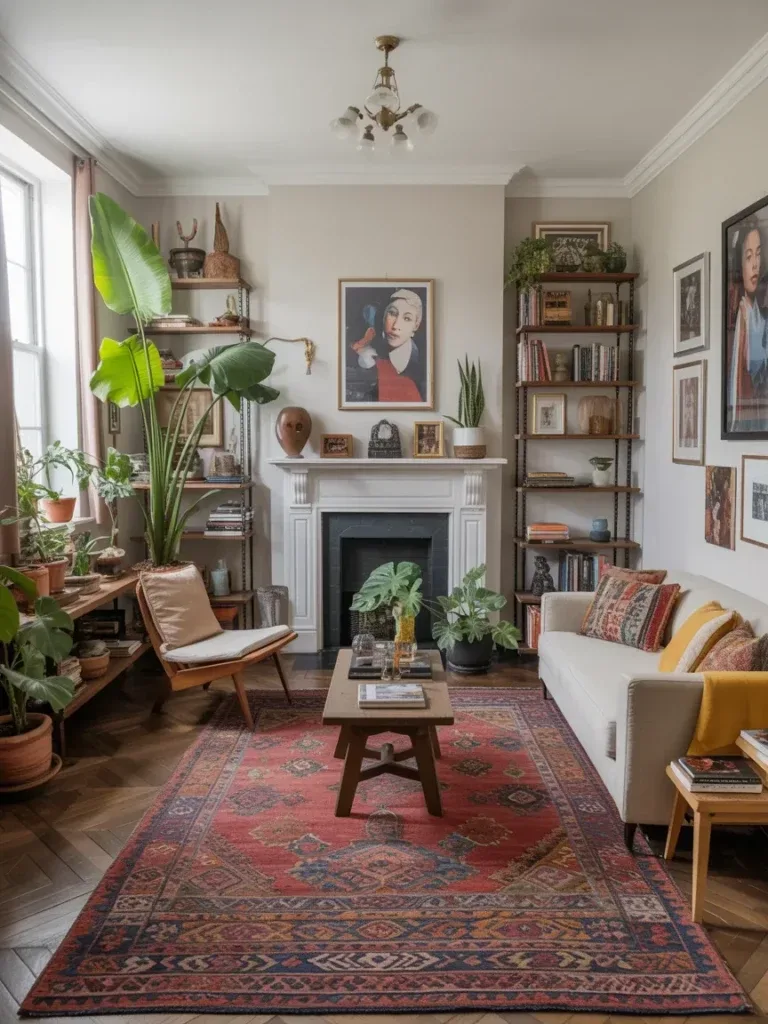
This is the version I’d point a first-time shelf decorator toward, because books solve the hardest part of shelf decor — filling space — without you having to buy anything. A long shelf gives you room to build two or three separate book stacks instead of one, which is what actually makes it look collected rather than staged.
Mix orientations. A stack of five books lying flat with one object on top, next to two or three standing books held by a bookend, reads far more natural than a uniform row of spines. The trinkets matter less than people think — one genuinely meaningful object (a candle, a small bowl, a single photo) does more work than five random ones.
- Use bookends that match your shelf’s finish, not the books
- Rotate two or three pieces seasonally instead of the whole shelf
- Leave one full “clean” section with no stacking at all
3. Layer Plant Decor That Doesn’t Demand a Green Thumb
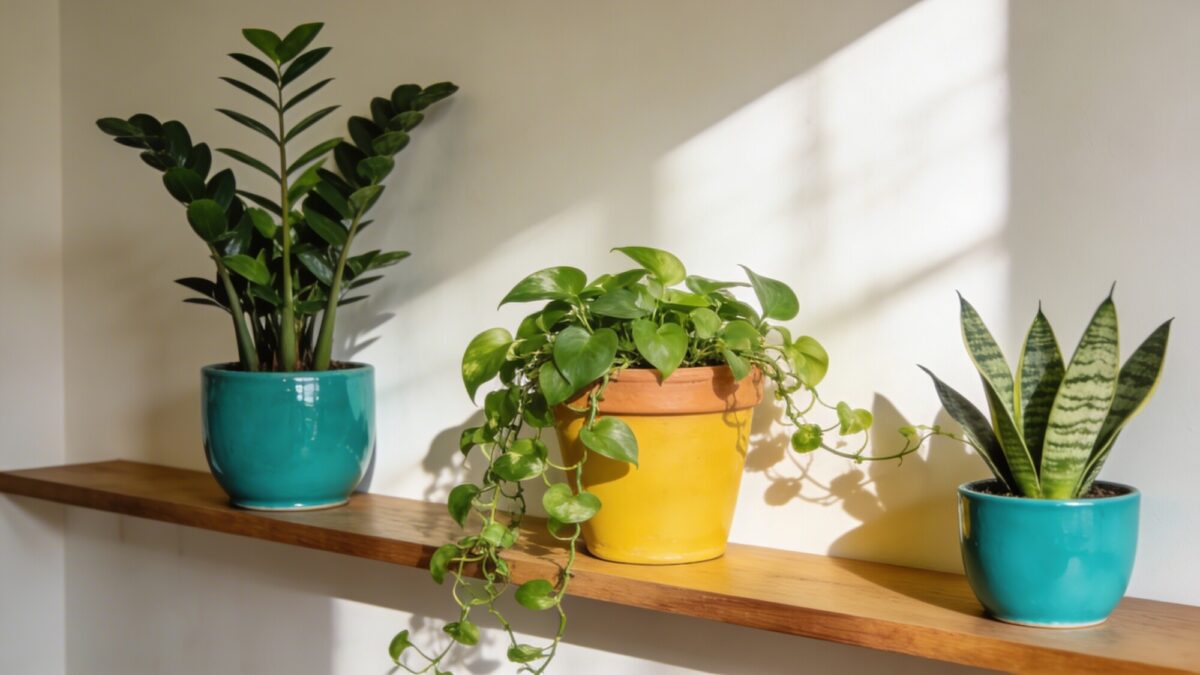
Plant decor is what turns a hard, straight shelf line into something that actually feels like a cozy house rather than a display case. The trick on a long shelf specifically is height variation — one tall plant, one trailing plant, one low one — because three plants at the same height just look like a row of pots.
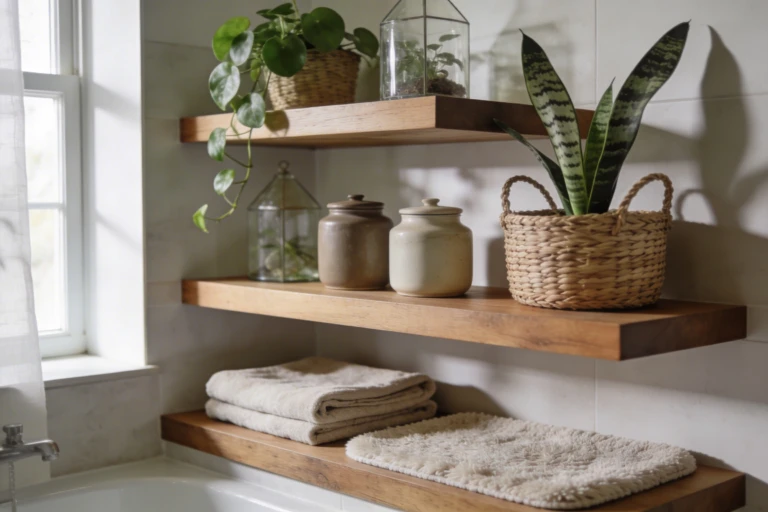
Pothos, ZZ plants, and snake plants show up in almost every version of this idea for a reason: they tolerate indirect light, they don’t need daily attention, and a trailing pothos over the shelf edge does more visual work than almost any other single object you could add. If you’ve killed plants before, start with a snake plant — it’s genuinely hard to overwater it into trouble in under a month.
- Pothos, ZZ plant, or snake plant for low-maintenance options
- Terracotta or a single bold color pot to break up neutral wood tones
- Trailing pothos or string of pearls positioned near a shelf end, not the center
💡 Pro Tip: Put your trailing plant at the far end of the shelf, not the middle. Vines pulling attention toward the edge make the whole shelf feel longer than it is — centered vines just look like a centerpiece.
4. Build a Monochromatic Story for Sleek Continuity
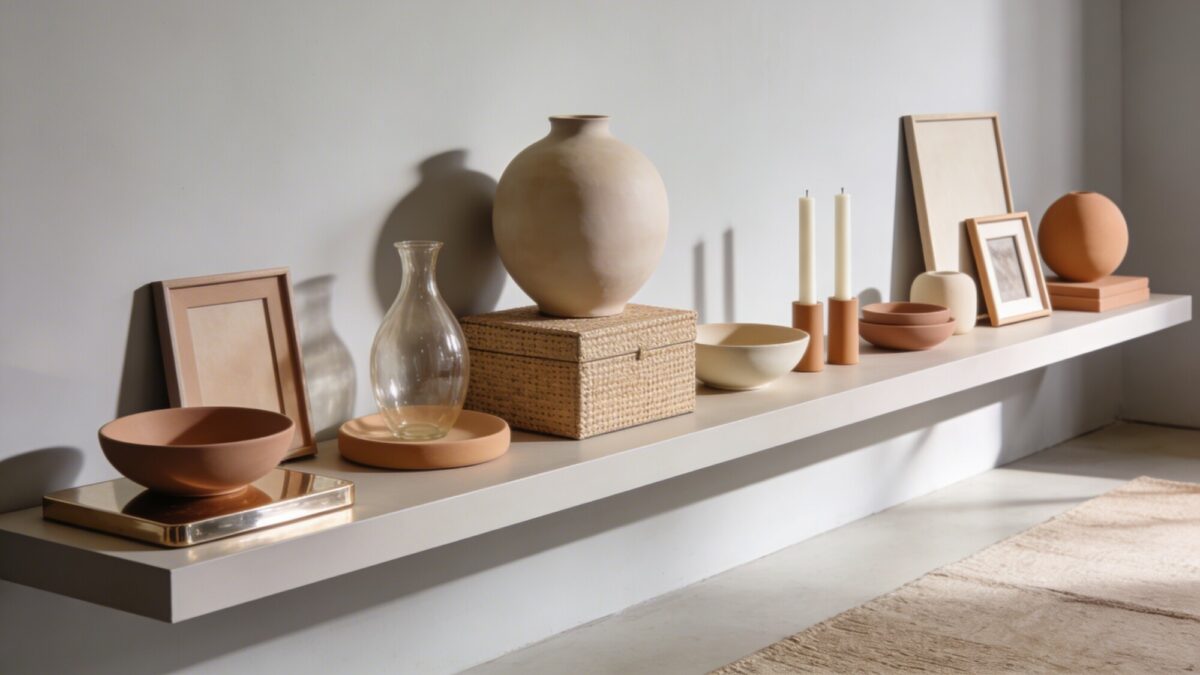
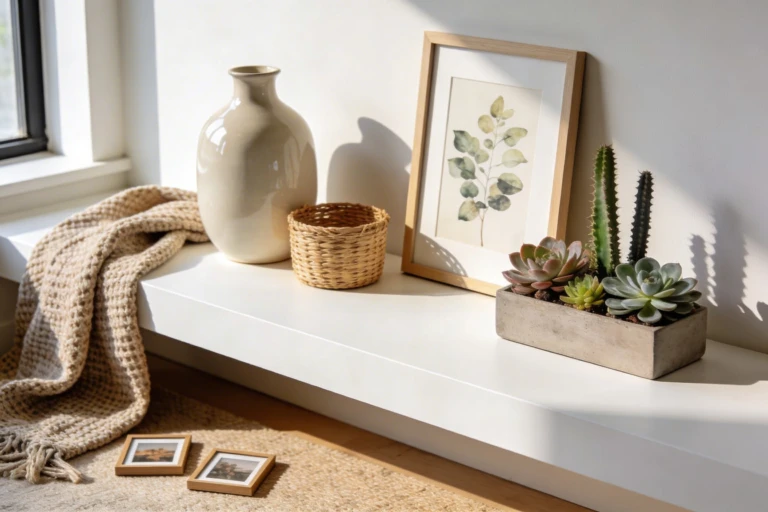
A single-color story is the fastest way to make a long shelf look intentional even if the individual objects don’t match in style or price point. Pick three to four tones in the same family — ivory, warm beige, dusty taupe, pale caramel, or if you want something bolder, a deep plum-purple decoration paired with brushed brass — and every object you place reads as part of the same set.
What actually unifies the look isn’t the color match alone, it’s repeating two or three shapes. If you’ve got a round vase, look for a round bowl and a round mirror or clock, even if the finishes differ. Repetition of form is doing more of the work than people give it credit for.
- Cap the palette at 3–4 tones — more than that and it stops reading as intentional
- Repeat two or three shapes across different objects
- Pair one glossy finish (glass, glazed ceramic) with matte pieces for depth
5. Mix Materials — Wood, Metal, and Stone
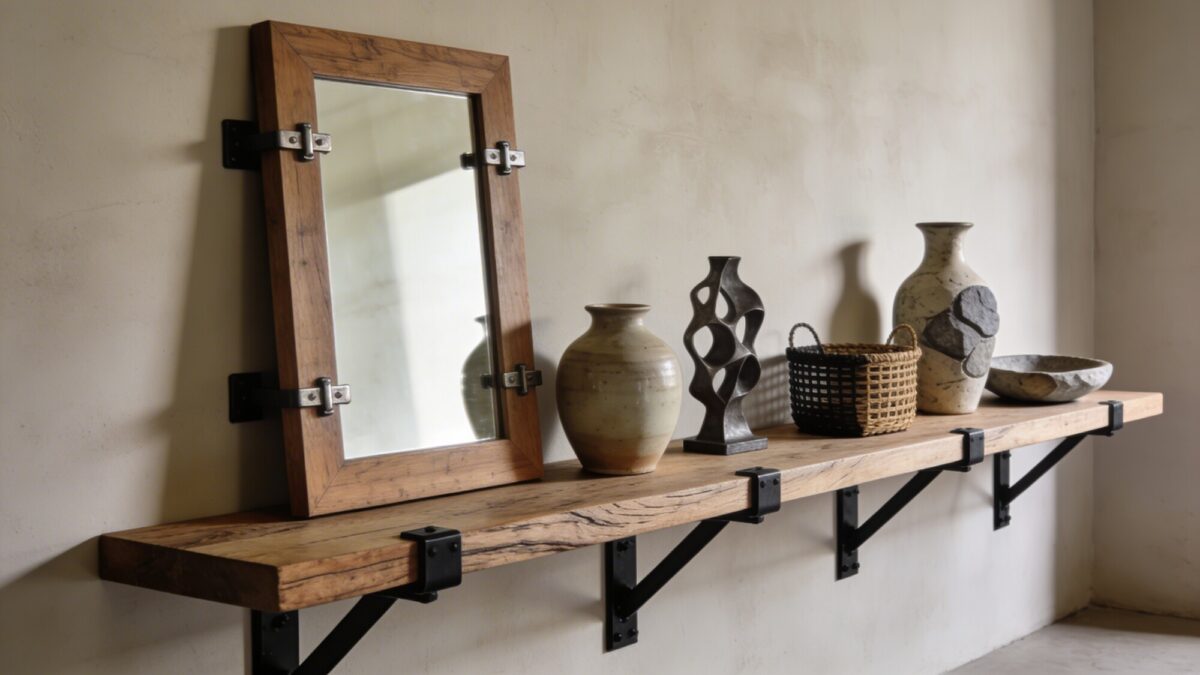
Contrast does what a matching set can’t: it pulls the eye down the entire length of the shelf instead of letting it land on one spot. This is the approach that reads most “designed” of the nine, but it’s also the easiest to get wrong, because too much contrast in a short span just looks busy.
The move that keeps it from tipping into chaos is picking one material to be dominant and treating the others as accents. If your shelf is warm wood, let wood-adjacent tones lead, add matte black metal brackets or a small sculpture as the contrast note, and use stone or concrete sparingly — one dish, one vase — rather than repeating it across the shelf.
- Wood-framed mirror with metal brackets as an anchor piece
- One metal sculpture or object for contrast, not multiple
- A rattan or woven basket to add a fourth texture without adding another hard material
💡 Pro Tip: If you’re not sure whether a mixed-material shelf looks curated or chaotic, take a photo and check it in black and white. Color hides a busy composition; grayscale exposes it instantly.
6. Set Up Seasonal Rotations Without Rehanging Everything
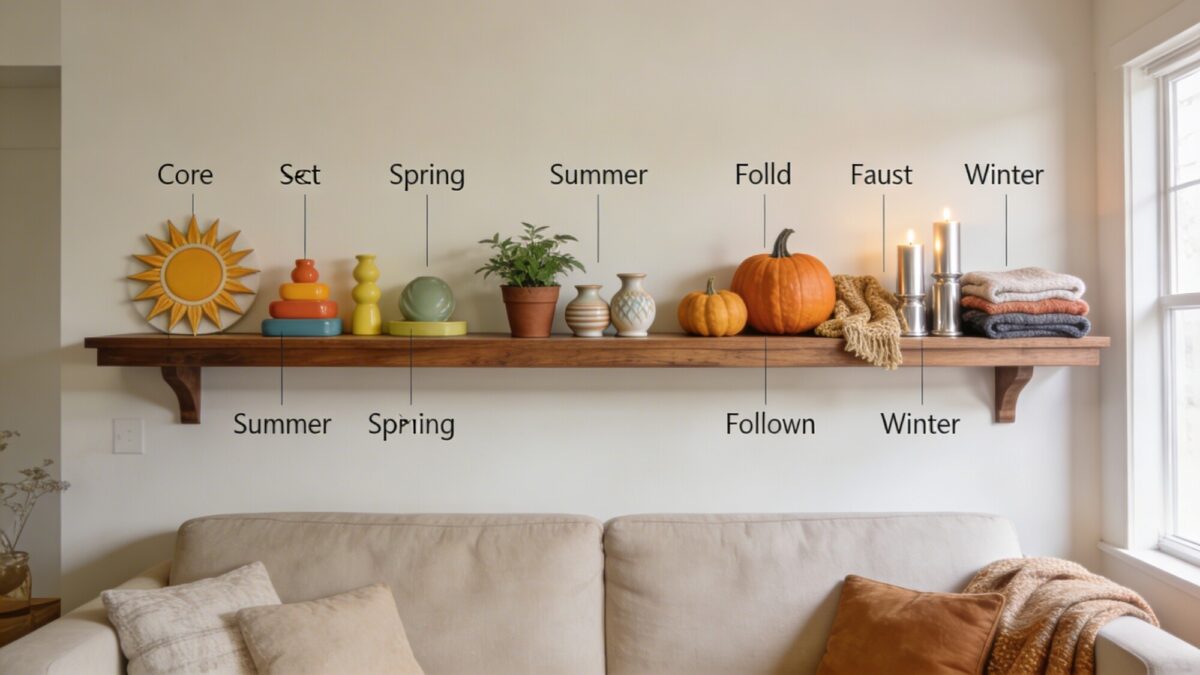
This idea isn’t a separate style so much as a system you build on top of any of the others. Pick a core group of three or four pieces you’ll never move — a vase, a piece of art, a plant — and reserve one end of the shelf, usually about a third of the total length, as your rotating zone.
That’s the whole system: everything else stays put, and only the rotating third changes. It keeps the shelf from ever needing a full redo, which is the actual reason most people abandon seasonal decor after year one — not because they don’t like it, but because “redoing the whole shelf” is a bigger task than they wanted to sign up for.
- Spring: light ceramics, fresh-cut or faux greenery
- Summer: brighter accent colors, no heavy textiles
- Fall: warm tones, dried florals, a single pumpkin if you like the look
- Winter: metallics, a candle, heavier throws or textures nearby
7. Go Minimalist — Fewer Objects, More Impact
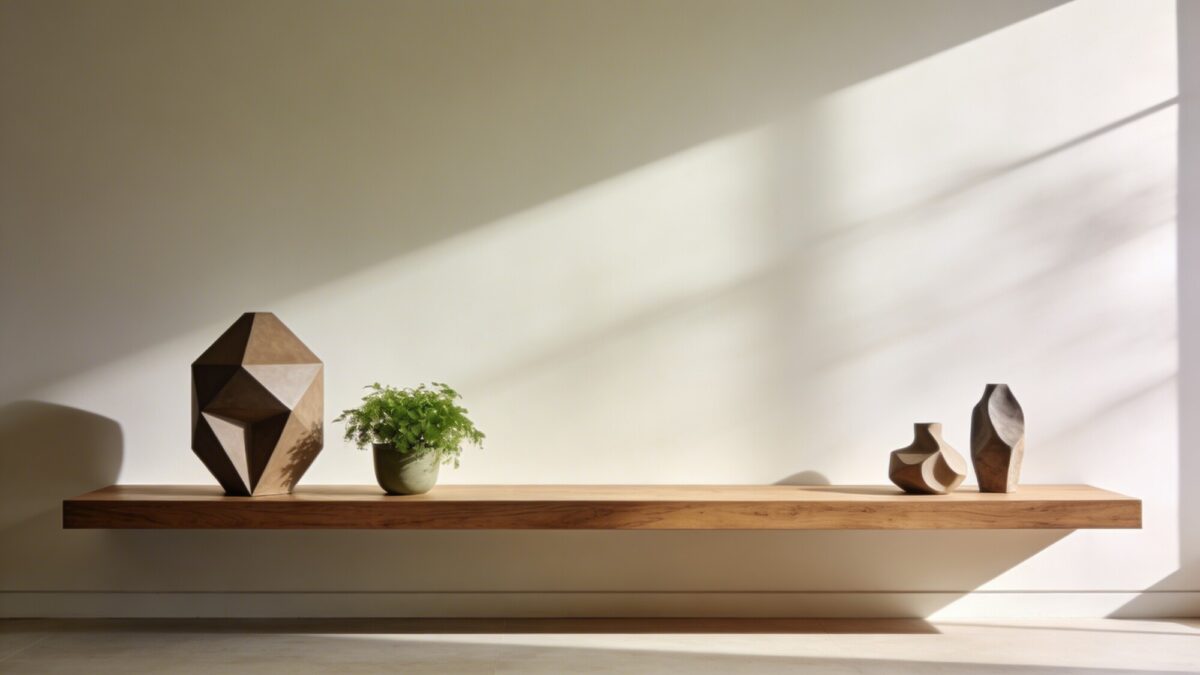
Every list like this eventually gets to the “less is more” entry, but on a long shelf specifically, this isn’t just a design cliché — it’s a genuinely different technique. With a short shelf, minimalism means one or two objects. With a six-foot shelf, it means one or two objects and roughly five feet of intentional emptiness, which takes more confidence to commit to than filling the space does.
This is also modern shelf decor at its most low-maintenance: nothing to dust weekly, nothing to rearrange when it starts looking tired, and no risk of the shelf reading as clutter no matter how the rest of the room changes around it.
- One sculptural anchor object, ideally with an interesting silhouette
- One small plant, positioned off-center rather than next to the anchor piece
- Everything else: nothing
8. Use It as Functional Storage That Still Looks Good
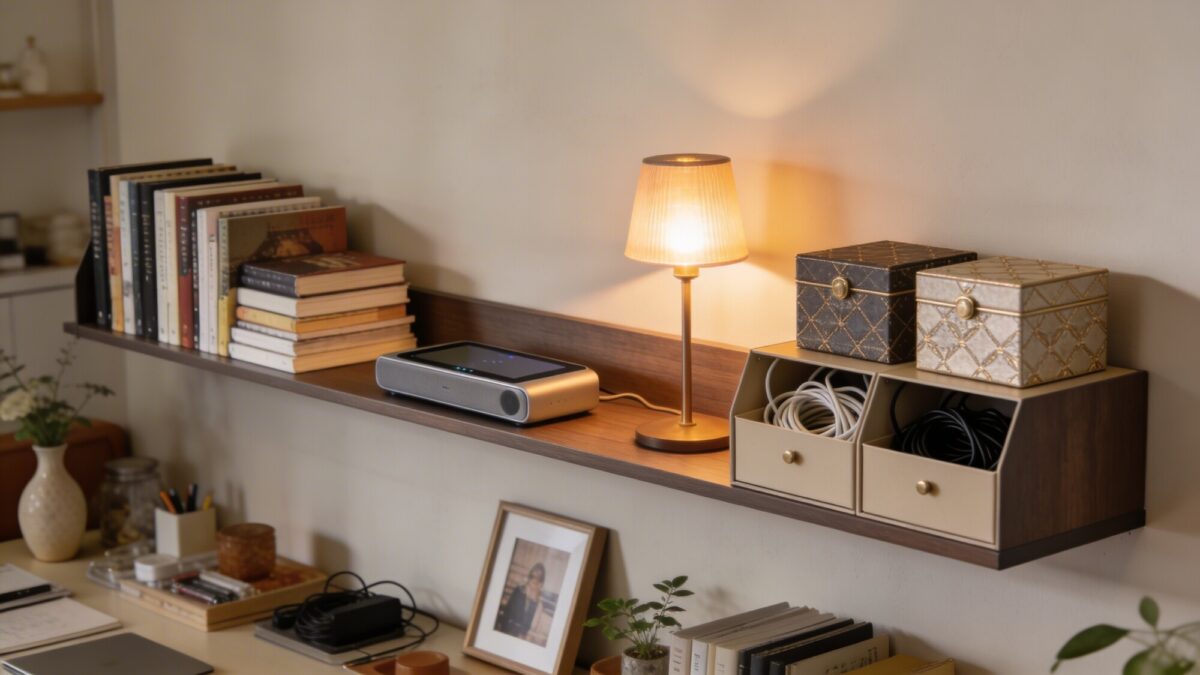
Not every long shelf gets to be purely decorative — a lot of them sit in a living room that doubles as a home office, or above a desk in a study corner where the shelf needs to actually hold something. That’s fine. The goal here isn’t hiding function, it’s making function look intentional.
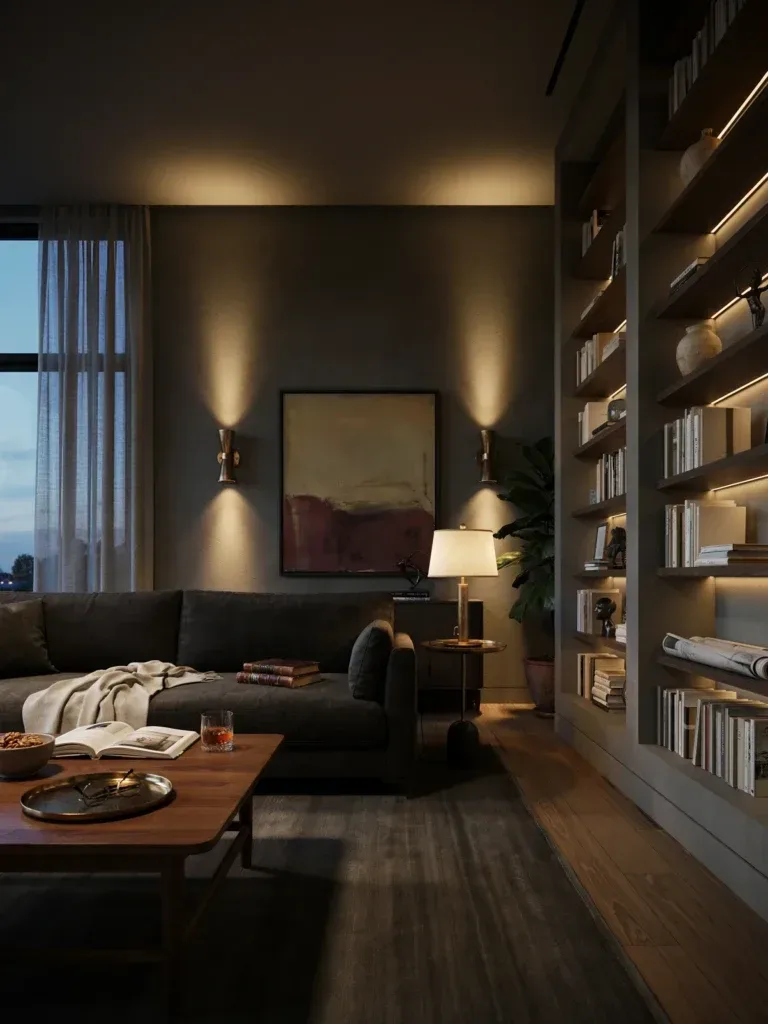
Lidded boxes are doing the real work in this setup: route a router, a charging brick, or loose cables into one, and the visible clutter drops immediately. A small lamp at one end adds warmth in the evening and gives you a reason to keep that section a little emptier than the rest, which balances out a busier stretch of books and gadgets on the other side.
- One or two decorative boxes to route cables and small electronics out of sight
- A small lamp for ambient light and to anchor one end
- Books and tech kept to one half, decor-only items on the other, rather than mixed evenly
💡 Pro Tip: If you’re hiding a router in a box, don’t fully enclose it — a box with an open back or a few drilled vent holes keeps the signal from dropping, which a sealed decorative box will absolutely do.
9. Try Playful Asymmetry Instead of Matching Ends
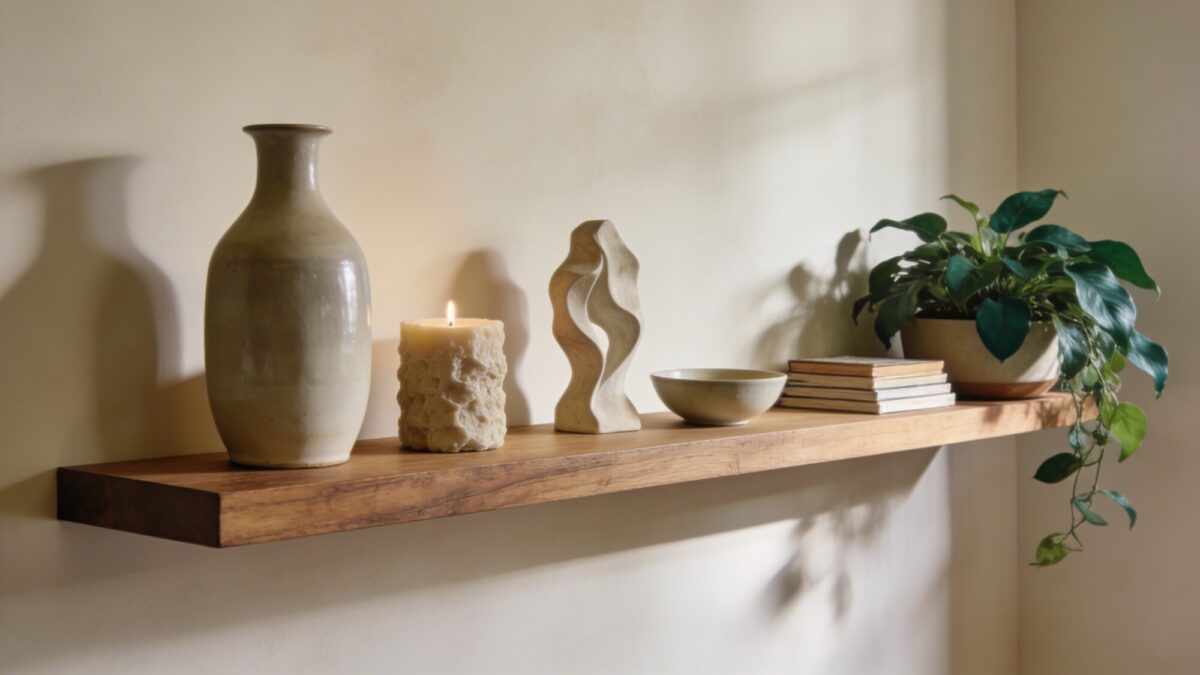
Symmetry is the safe choice, and on a long shelf it can also be the boring one. Asymmetry works when the visual weight is balanced even though the objects aren’t mirrored — a tall, heavy vase on one end can be offset by two or three smaller, lighter items grouped on the other, rather than one matching tall piece.
The failure mode here isn’t asymmetry itself, it’s random placement mistaken for asymmetry. There’s still a rule: heavier or taller items closer to one end, lighter and shorter ones trailing toward the other, with the color palette held consistent so the eye reads it as one arrangement rather than two unrelated ones.
- Group by visual weight, not by matching object count on each side
- Keep the color palette consistent across the whole shelf even when heights vary
- Step back and check the arrangement from across the room, not just up close
Which Approach Fits Your Shelf?
| Approach | Best For | Upkeep | Clutter Risk |
|---|---|---|---|
| Gallery Wall (Idea 1) | Living rooms, hallways, aesthetic bedroom wall decor | Low — set it and leave it | Medium if frames aren’t varied |
| Books & Vintage Finds (Idea 2) | Readers, first-time decorators | Low | Low if you keep one clean zone |
| Plant Decor (Idea 3) | Bright rooms, anyone wanting a cozy house feel | Medium — watering, occasional pruning | Low |
| Minimalist (Idea 7) | Modern shelf decor, low-maintenance households | Very low | Very low |
| Functional Storage (Idea 8) | Home offices, shared living/work rooms | Medium — cable and box upkeep | High if boxes aren’t used |
Things to Consider Before You Style Yours
- Shelf depth: anything under 8 inches deep struggles with books standing upright — plan for stacking flat instead.
- Weight limits: most floating shelves are rated for 15–50 lbs depending on the bracket system and whether it’s anchored into studs — check before loading up ceramics and books together.
- Lighting: a long shelf without any nearby light source (window, lamp, or picture light) will look flat in photos and dim in the evening, no matter how it’s styled.
- Room use: a shelf in a shared space like a study corner needs more functional storage than one in a purely decorative living room wall.
Frequently Asked Questions
How many items should go on a long floating shelf?
Think in terms of 3–5 visual groupings across the length, not a total item count. A six-foot shelf styled as five groupings of two to three objects each will look more curated than the same number of items spaced individually.
What’s the ideal shelf depth for books versus decor?
For books standing upright, aim for at least 8–10 inches of depth. If your shelf is shallower, lean into decor-forward styling (Ideas 1, 4, 7, or 9) rather than book storage, or stack books flat instead of upright.
Do I need to hit a wall stud for a long floating shelf?
For anything wider than about 36 inches, yes — at minimum the end brackets should hit studs, with a center support if the shelf holds books or ceramics. Toggle bolts can work in drywall alone for lighter, mostly decorative loads, but they’re not a substitute for a stud on a long, heavily loaded shelf.
How do I keep a long shelf from looking cluttered?
Leave at least one visible gap of several inches somewhere in the arrangement, and resist the urge to fill the entire surface evenly. Uneven spacing with intentional negative space reads as styled; even spacing with no gaps reads as storage.
Can this work in a bedroom, not just a living room?
Yes — most of these ideas translate directly to floating shelves bedroom ideas, especially the gallery wall and minimalist approaches, which tend to suit a bedroom’s quieter tone better than the busier mixed-material or functional-storage versions.
Our Take
If you’re decorating a long shelf for the first time, start with Idea 2 (books and vintage finds) or Idea 7 (minimalist) — both are forgiving of a slightly uneven hand and hard to get visibly wrong. Save the mixed-material and asymmetrical approaches for once you’ve styled a shelf or two and have a feel for how objects balance against each other in person, not just in a photo.
For more ways to work with the format, our single floating shelf styling guide covers the tighter version of this same problem, and the living room floating shelf ideas roundup has more room-specific pairings if you’re planning the wall around a sofa or TV setup. If none of these quite fit your space, the full floating shelf decor idea collection has a wider range to pull from.