![6 Bedroom Ideas for Small Rooms Men Modern That Wow]]>](https://primedecorhub.com/wp-content/uploads/2026/03/temp_1772967532073-scaled.webp)
6 Bedroom Ideas for Small Rooms Men Modern That Wow
A small bedroom fails for one of two reasons: too much furniture for the footprint, or the right furniture in the wrong configuration. Square footage matters less than people assume — a 100-square-foot room with a built-in wall system and layered lighting reads bigger than a 130-square-foot room with a bulky dresser blocking the walking path. If you want a broader set of layouts to compare against these six, our roundup of small bedroom interior design ideas is a good place to see more options side by side.
These six bedroom ideas for small rooms focus on the choices that actually move the needle — storage, bed placement, color, lighting, furniture, and texture — along with where each one tends to go wrong.
1. Maximize Wall Presence With Built-Ins
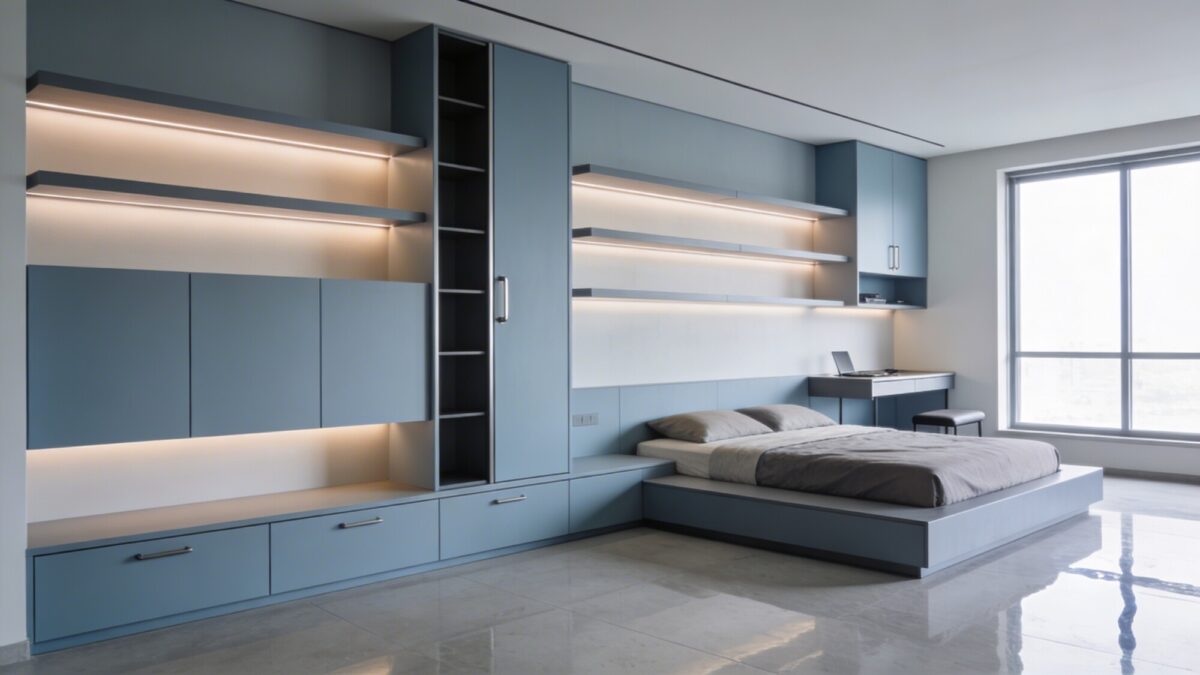
A built-in wall system does more for a small bedroom than almost any other single change, because it moves storage off the floor and onto a plane you’re not walking through. Floating shelves and low-profile cabinets in a single light tone — bluish-gray or warm sand — keep the wall from reading as a block of furniture. Hidden LED strips behind the shelving add depth without adding another lamp to find space for.
The mistake here is treating built-ins like a floor-to-ceiling storage wall. In a small room, that reads as a wall of cabinets, not a design feature. Keep the lower third open — a floating shelf and open air below it, not another bank of cabinets — so the storage still leaves the room feeling like it has a floor plan and not just a perimeter of boxes.
- Choose a light, single-tone finish to keep the wall from feeling heavy
- Run hidden LED lighting behind shelving instead of adding a separate lamp
- Use slim, vertical storage that draws the eye upward, not across
💡 Pro Tip: Measure your wall height before ordering shelving, not just the width. A wall unit that stops 18 inches short of the ceiling reads as unfinished; one that runs all the way up (even with the top shelf left empty) reads as intentional and pulls the eye upward the way it’s supposed to.
Built-ins pair naturally with a closet upgrade — if your current wardrobe is eating floor space a wall system could reclaim, our guide to small bedroom ideas with wardrobe covers how to combine the two without doubling up on storage in the same corner.
2. Lift the Bed, Weight the Style
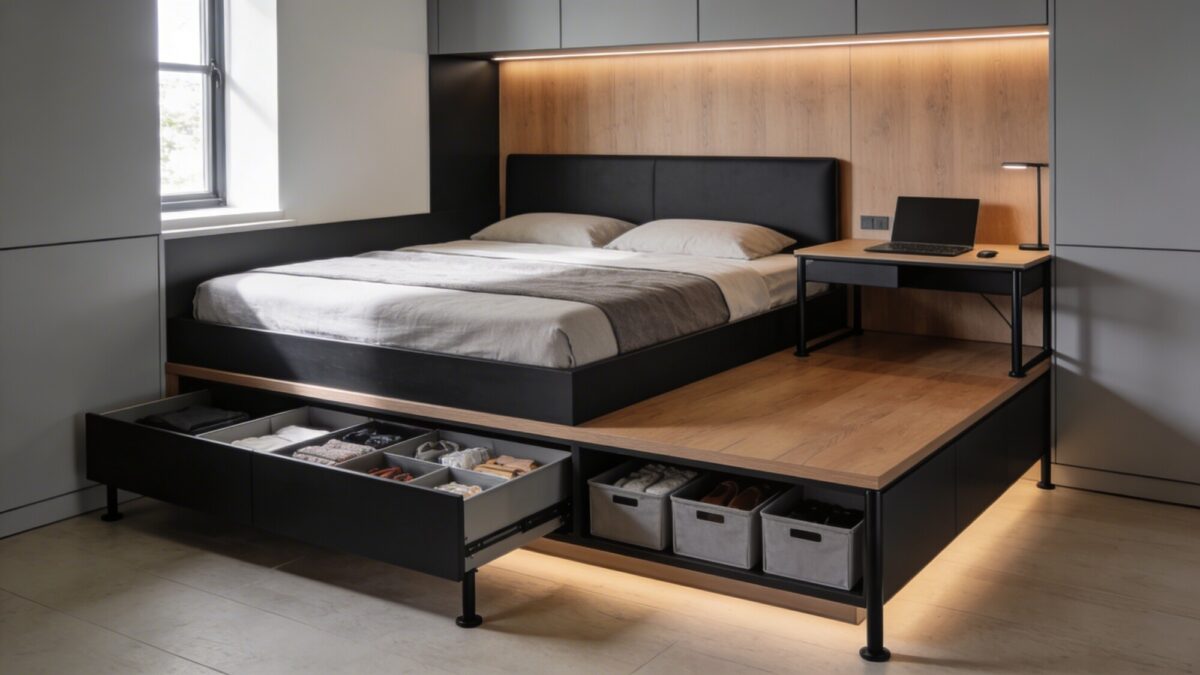
A raised platform bed does two things a standard frame can’t: it opens up airspace underneath for storage, and it gives the room a lower visual weight since the mattress sits higher off the floor and the frame itself reads slimmer. A platform bed with built-in drawers, or a frame that incorporates a small desk, keeps the floor clear in a way that a bed-plus-separate-dresser combination never will in a room under 120 square feet.
The trade-off is clearance. Under-bed storage only works if there’s enough gap to actually pull drawers out — 10 to 12 inches minimum, more if you’re storing anything bulkier than folded clothes. A frame with drawers built into the base solves this automatically since the drawers are designed for the exact clearance the frame provides, but a generic platform bed with loose bins underneath needs that clearance measured before you buy, not after.
- Use a low-profile headboard so it doesn’t crowd the ceiling line
- Keep under-bed storage in labeled bins so you’re not digging through all of them for one item
- Matte black or dark metal legs read more current than polished chrome in a small space
If you’re handy and want to build storage into the bed frame yourself rather than buying it pre-built, the DIY projects for small rooms guide has approaches that specifically target this kind of under-bed build.
3. Create a Calm Color Engine
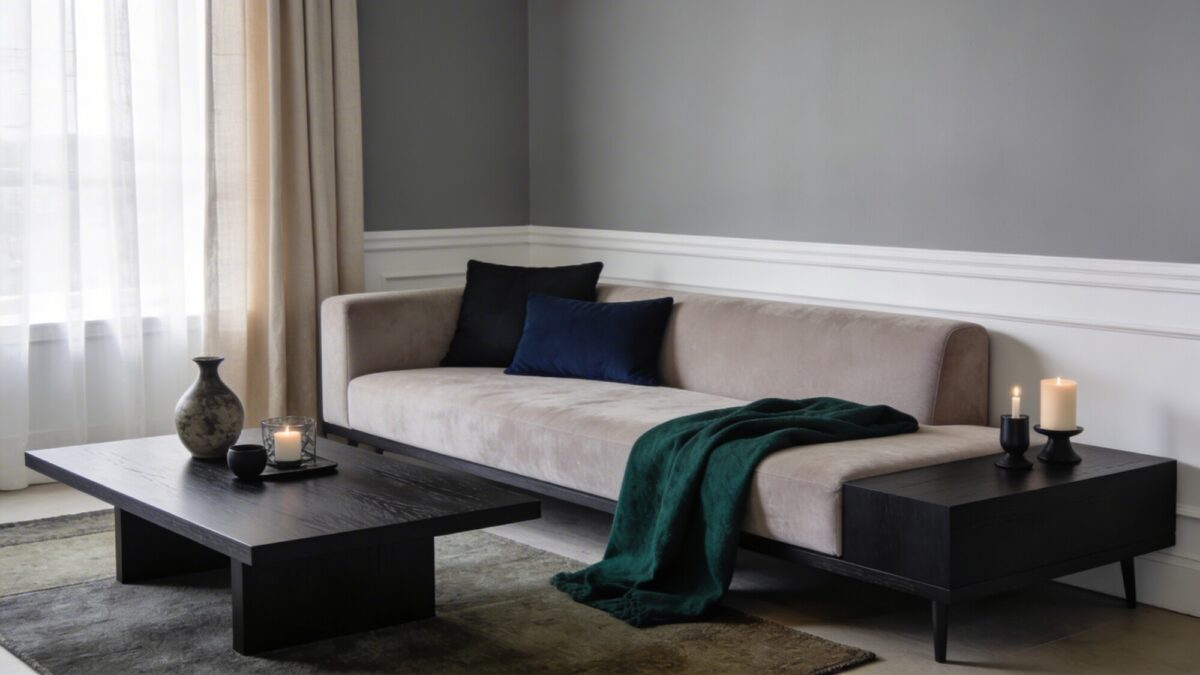
Color decisions matter more in small rooms because there’s less room for a mismatch to hide. A neutral base — soft gray, warm beige, or cool white — with exactly one bold accent color reads as curated. The same neutral base with three or four “accent” colors competing for attention reads as cluttered, even if every individual piece is nice on its own.
Where people usually get this wrong: they put the accent color on the walls, which commits the whole room to it and makes it hard to change later. Put the bold color in textiles instead — a throw pillow, a blanket, a rug — so you can swap it out in an afternoon if charcoal-and-navy stops working for you in two years.
- Accent options that read well against a neutral base: charcoal, navy, forest green
- Put color in textiles and small decor, not on the walls
- A matte finish on furniture keeps the palette from looking glossy or cheap
💡 Pro Tip: If you’re not sure a bold accent will hold up over time, buy the throw pillow or blanket before you buy anything permanent in that color. Textiles are the cheapest way to test a color commitment, and swapping a $30 pillow cover costs a lot less than repainting a wall you decided you don’t like after all.
4. Smart Lighting For Mood And Practicality
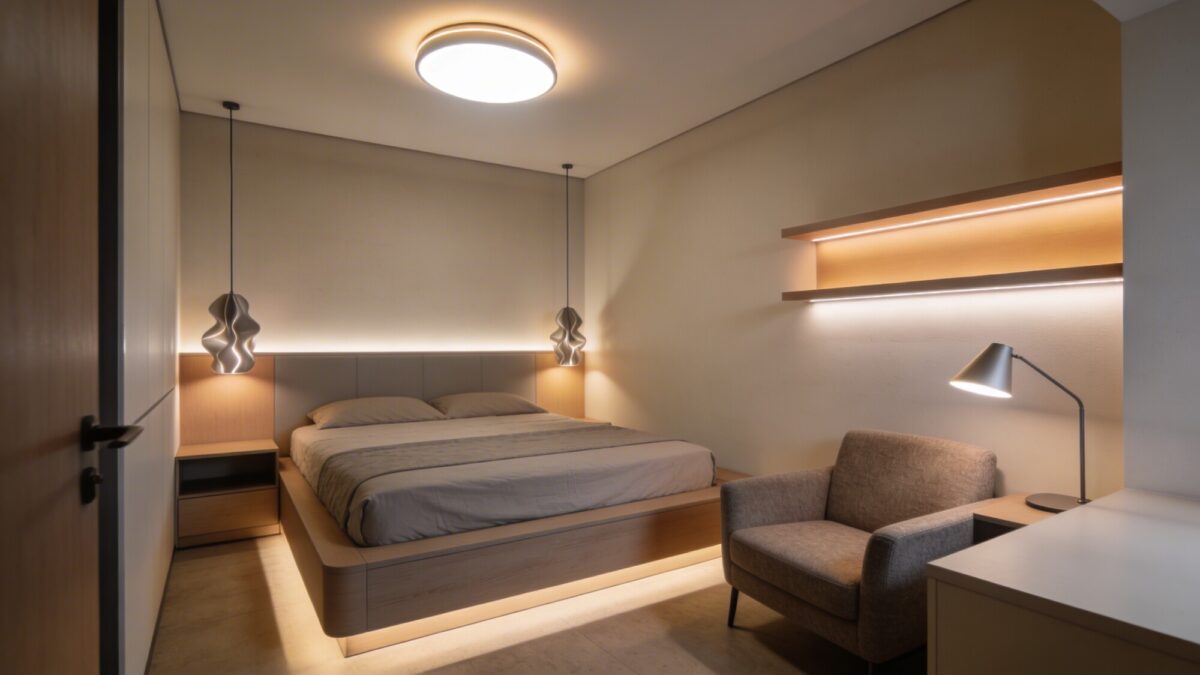
Lighting does more per dollar in a small room than in a large one, because there’s less square footage for a single overhead fixture to fail to cover evenly. A layered setup — a dimmable ceiling light for ambient coverage, a reading lamp near any seating, and one or two sculptural fixtures that double as visual interest near the headboard — lets the room shift from a working space during the day to something that actually feels restful at night.
Warm white bulbs around 2700K matter more than people expect. A cool white bulb in the 4000K–5000K range makes a small room feel clinical, almost like a hallway, no matter how good the furniture is. It’s a five-dollar bulb swap that changes the entire mood of the room.
- Install LED strips under shelving for ambient depth without another visible fixture
- Stick to warm white bulbs, not daylight or cool white, for a bedroom
- A statement pendant near the headboard can double as the room’s main piece of visual interest
5. Multi-Functional Furniture That Earns Its Keep
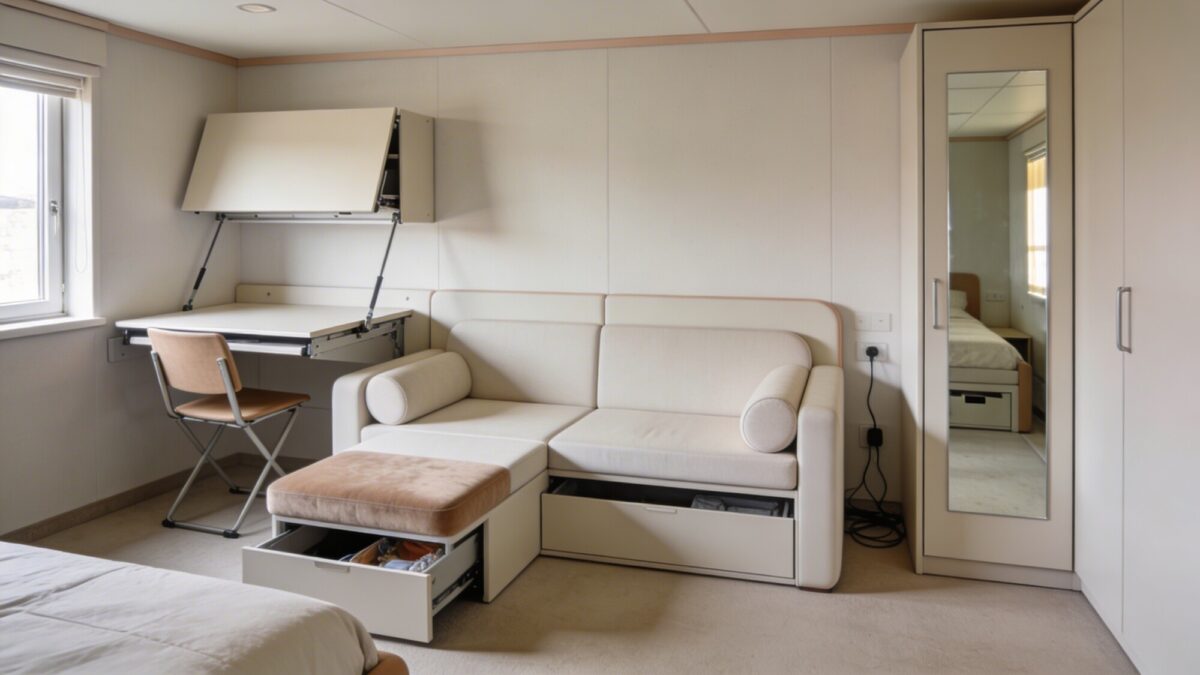
In a small room, a piece of furniture that only does one job is a piece of furniture you probably don’t have space for. A wall-mounted desk that folds flat when it’s not in use, an ottoman that opens for storage, a mirror that also serves as the wardrobe door — these aren’t gimmicks, they’re the difference between a room that has a workspace and one that doesn’t have room for a desk at all.
The trade-off with modular or fold-down furniture is durability. Hinges and folding mechanisms wear out faster than a fixed desk or a solid ottoman, especially with daily use. If you’re using a fold-down desk every day for work, spend more on the hardware than you would on a decorative piece — a cheap hinge mechanism is usually the first thing to fail, and it’s annoying to replace once it’s built into the wall.
- Choose pieces with hidden storage to keep surfaces clear
- Modular seating that can be rearranged handles more than one layout need
- Rounded edges keep tight walking paths feeling less cramped than sharp corners
For more specific furniture and layout picks sized for tight square footage, room decor ideas for small bedrooms goes deeper into this category specifically.
6. Textures That Do the Heavy Lifting
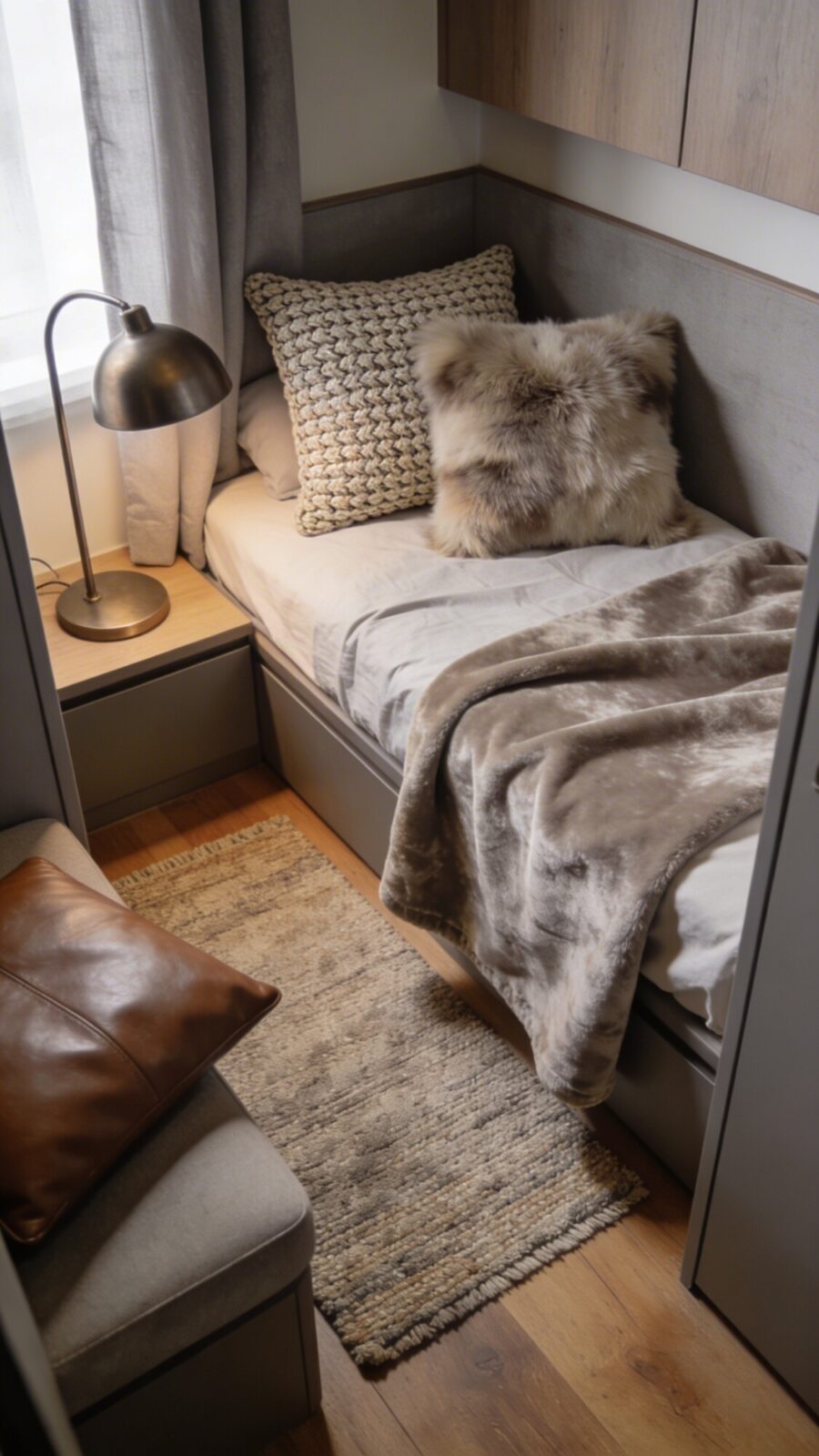
A small room with one flat texture throughout — all smooth cotton, all matte paint, all the same finish — reads as flat no matter how good the color scheme is. Layering two or three textures (a woven rug, a velvet throw, a leather accent piece) adds depth without adding bulk, which is exactly what a tight floor plan needs.
Keep the rug low-pile and sized to the room — a thick, plush rug in a small space eats visual floor area the same way an oversized piece of furniture does. Two contrasting textures in pillows and throws is usually the ceiling; past that, the room starts looking busy instead of layered.
- Choose a compact, low-pile rug to avoid crowding the floor
- Two contrasting textures in pillows and throws is enough — resist a third
- Combine wood, metal, and fabric for contrast rather than sticking to one material family
Things to Consider Before You Start
- Measure clearance before buying anything with under-storage — drawers and bins both need real pull-out space, not just a gap that looks big enough
- Pick your accent color in textiles first, not paint, so it’s easy to change your mind later
- Warm white bulbs (2700K) over cool white — this single swap changes the whole feel of a small room
- Don’t stack built-ins floor to ceiling — leave the lower third open so the wall doesn’t read as a block of cabinets
Small-Space Furniture: What’s Actually Worth Buying Multi-Functional
| Piece | Worth Buying Multi-Functional | Skip and Buy Simple Instead |
|---|---|---|
| Desk | Yes — a wall-mounted, fold-down desk reclaims real floor space | — |
| Ottoman | Yes — storage underneath is easy to add without sacrificing seating | — |
| Bed frame | Yes, if under-bed clearance is confirmed first | — |
| Wardrobe/mirror combo | — | Only if you actually need a full mirror — otherwise a plain door saves on hinge wear |
| Nightstand | — | A simple, fixed nightstand is more durable than a folding or nesting one for daily use |
FAQ
What’s the single biggest mistake in small bedroom design?
Buying furniture sized for a normal room and hoping it fits. A dresser that would look proportionate in a 150-square-foot room will block the walking path in a 90-square-foot one. Measure the room and the walking clearance before shopping, not after.
Do built-ins actually make a room feel bigger, or just more organized?
Both, but for different reasons. They make the room more organized because storage comes off the floor. They make it feel bigger because a clean wall with slim, vertical lines draws the eye upward, which reads as more ceiling height than the room actually has.
Is a raised platform bed worth it if I’m renting?
Usually yes, since most platform beds with storage are freestanding furniture, not built-ins — you can take them with you. Check that the frame doesn’t require wall anchoring before assuming it’s fully portable.
How many accent colors should a small bedroom have?
One. A neutral base with a single bold accent color in textiles reads as intentional. Two or more competing accents usually reads as cluttered, even in a room with otherwise good furniture choices.
What lighting temperature should I use in a small bedroom?
Warm white, around 2700K. Cooler bulbs in the 4000K+ range make small rooms feel clinical rather than restful.
Our Verdict
If you’re only changing one thing this weekend, make it the wall — a built-in shelving system or even a single floating shelf setup does more to change how the room feels than a new bed or a new color scheme. Lighting is the second-cheapest, highest-impact change: a warm bulb swap and one dimmer switch cost less than almost anything else on this list. For more layouts built specifically around tight square footage, cozy modern small bedroom designs is worth a look before you commit to a full plan.