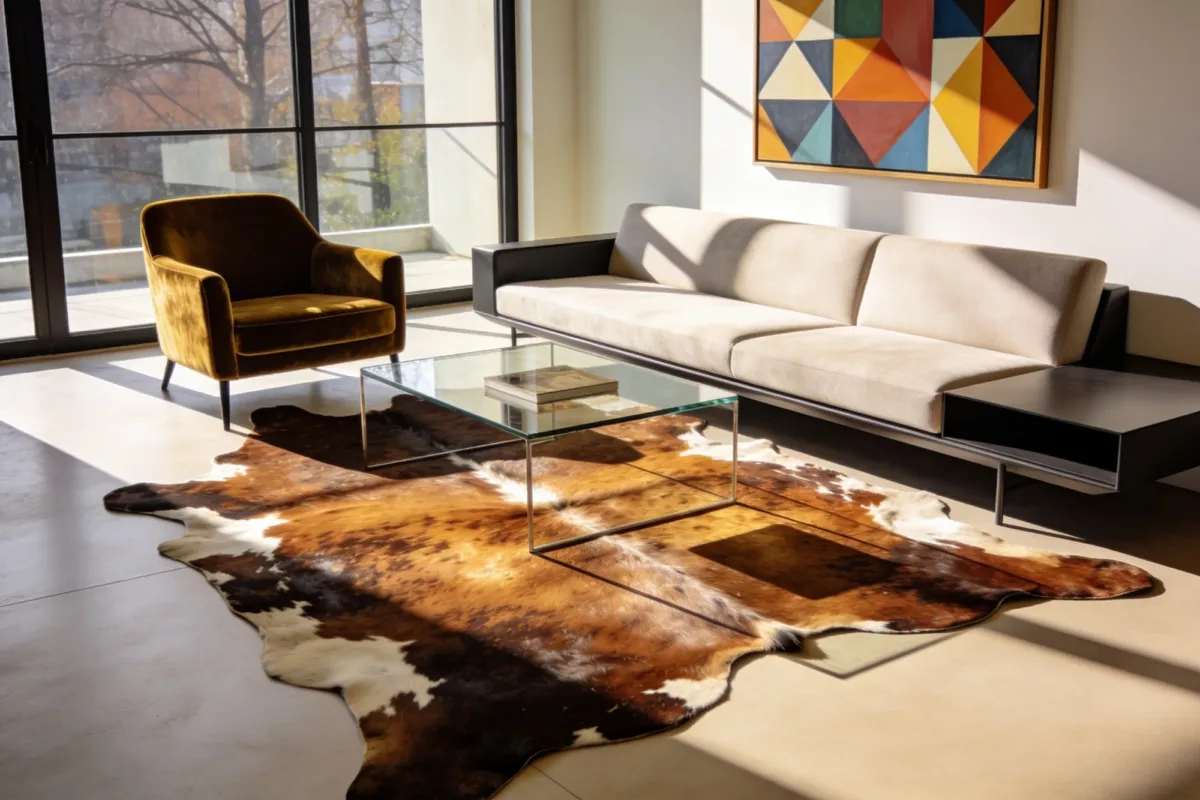
Cowhide Rug Living Room: Style That Wows
A cowhide rug living room look is one of the easiest ways to add texture, contrast, and a bit of personality to a space that feels flat. Cowhide catches light in a way most rugs can’t, hides everyday wear surprisingly well, and can anchor a seating arrangement with real presence. Done right, it doesn’t read as “Western saloon” — it reads as intentional, layered design.
This guide covers how to choose the right hide, where to place it, how to style it with your existing furniture, and how to keep it looking its best over time.
Quick Takeaways
- Size the rug so at least the front legs of your sofa rest on it — too small and it floats; too big and it crowds the room.
- Natural hides bring warmth and subtlety; dyed or patchwork cowhide rugs make a bolder statement.
- Layering a cowhide rug over a larger neutral base rug adds texture without visual chaos.
- Cowhide pairs naturally with leather, wood, and metal accents.
- Cleaning is simple: regular vacuuming, occasional shaking out, and blotting (never soaking) for spills.
Why a Cowhide Rug Changes the Room’s Whole Vibe
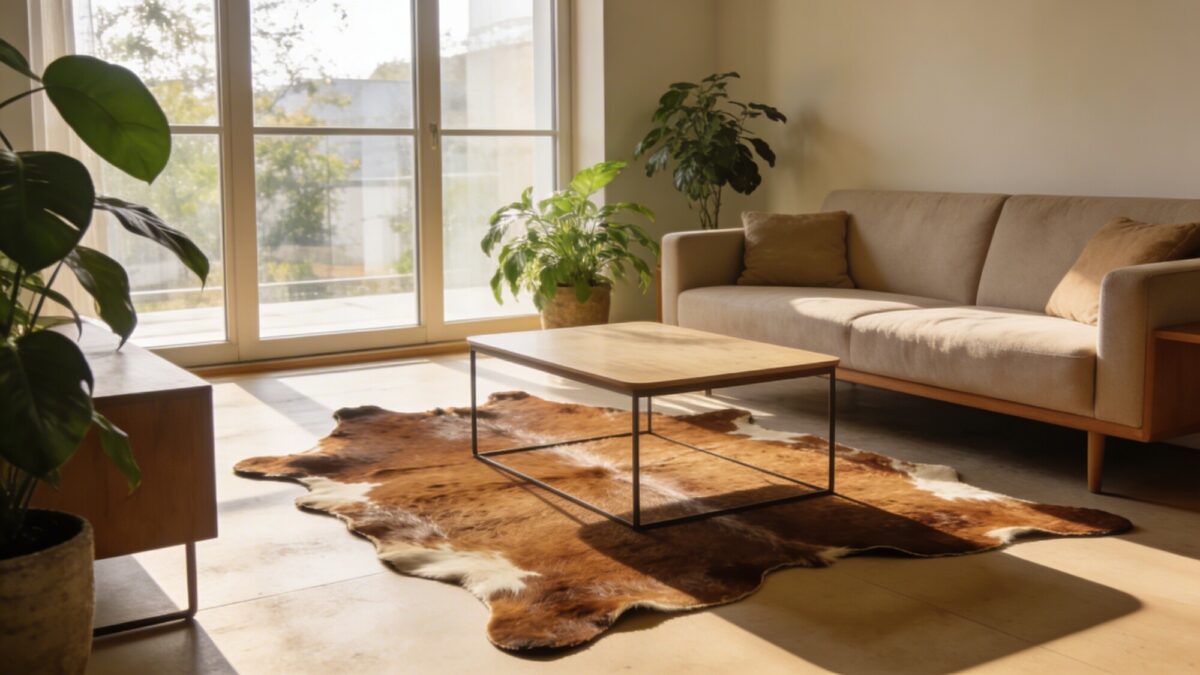
Cowhide brings a kind of texture and contrast that flat-woven or synthetic rugs simply can’t replicate. The natural markings catch light differently depending on the angle and time of day, giving a room a subtle, ever-changing focal point. If a living room feels like it’s missing an anchor piece, a cowhide rug is often the spark that pulls everything else into focus.
Beyond looks, cowhide is also more forgiving in daily life than people expect — it resists staining better than many woven materials, which makes it a practical choice as well as a stylish one.
Choosing the Right Cowhide Rug for Your Space
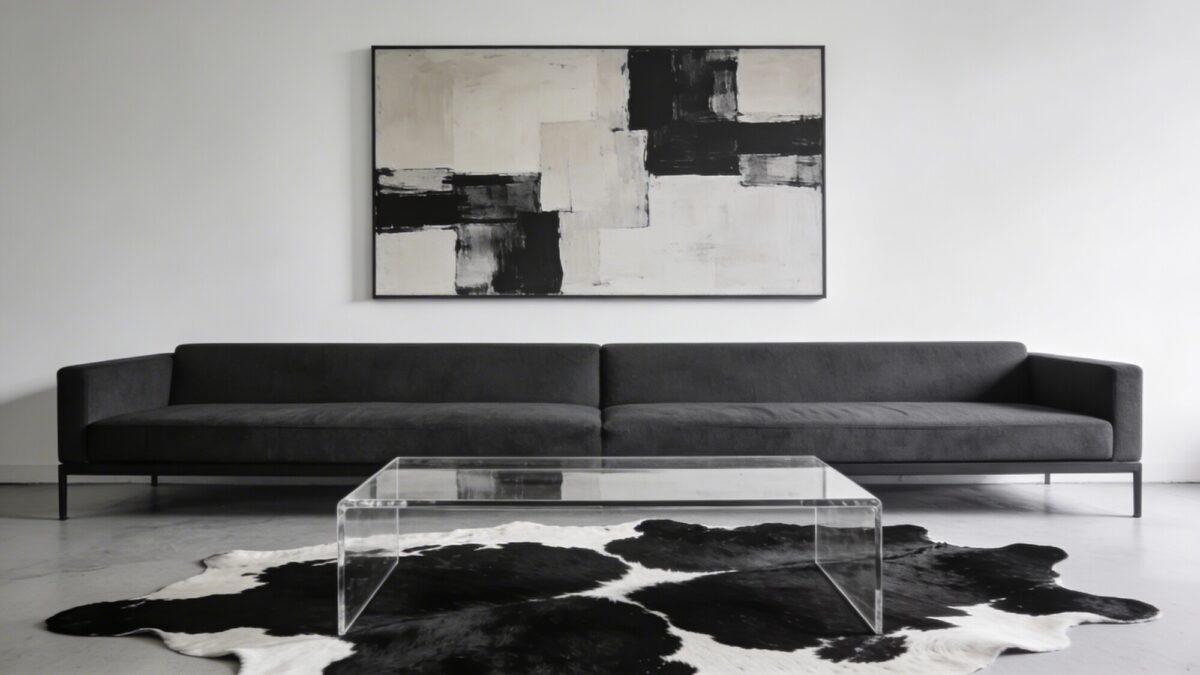
Not every cowhide rug suits every room. A few factors matter more than the others when narrowing down your choice.
- Size: A rug that’s too small will look like it’s floating in the middle of the room, while one that’s too large can crowd your furniture. Aim for at least the front legs of your sofa to rest on the hide.
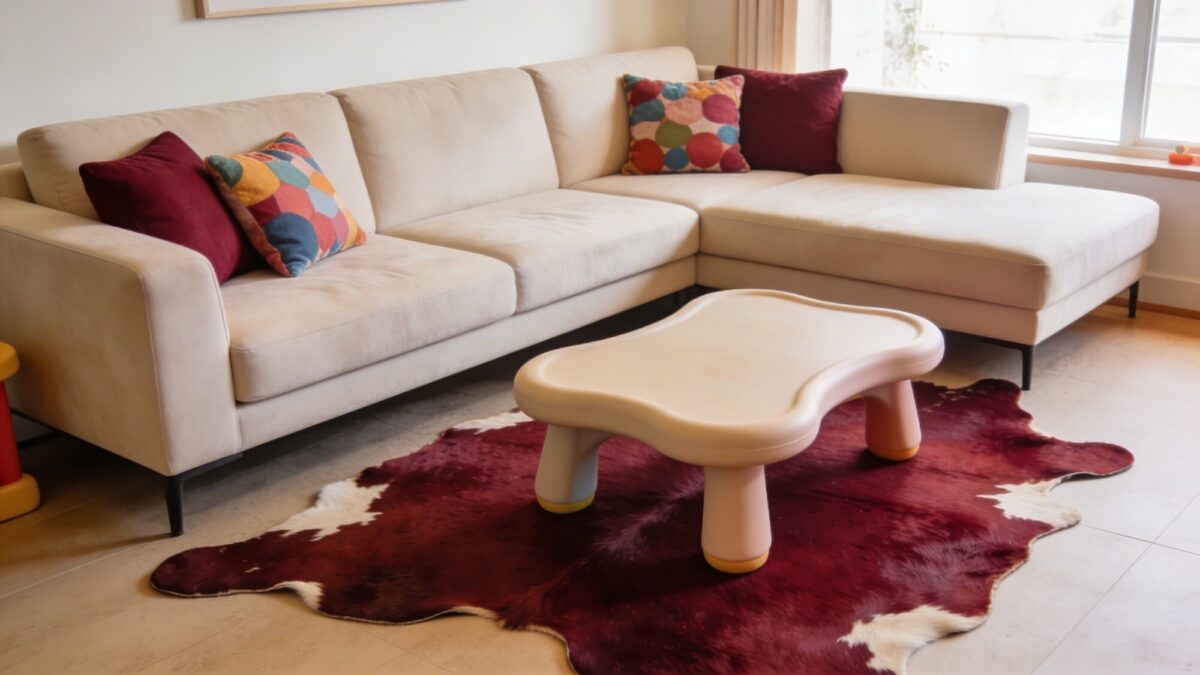
- Color and pattern: Natural, undyed hides bring warmth and work well in earthy or neutral rooms. A dyed or patchwork cowhide rug, on the other hand, adds a bolder pop of color or graphic pattern — think carefully about your room’s existing palette before choosing.
- Pile and hair length: Shorter-haired hides are easier to vacuum and maintain, while longer hair gives a plusher, shaggier feel. Choose based on your household’s lifestyle and cleaning tolerance.
If you’re still working out the right overall dimensions for your seating group, our rug living room size guide covers measuring and sizing in more depth.
Placement Ideas: Where to Put a Cowhide Rug
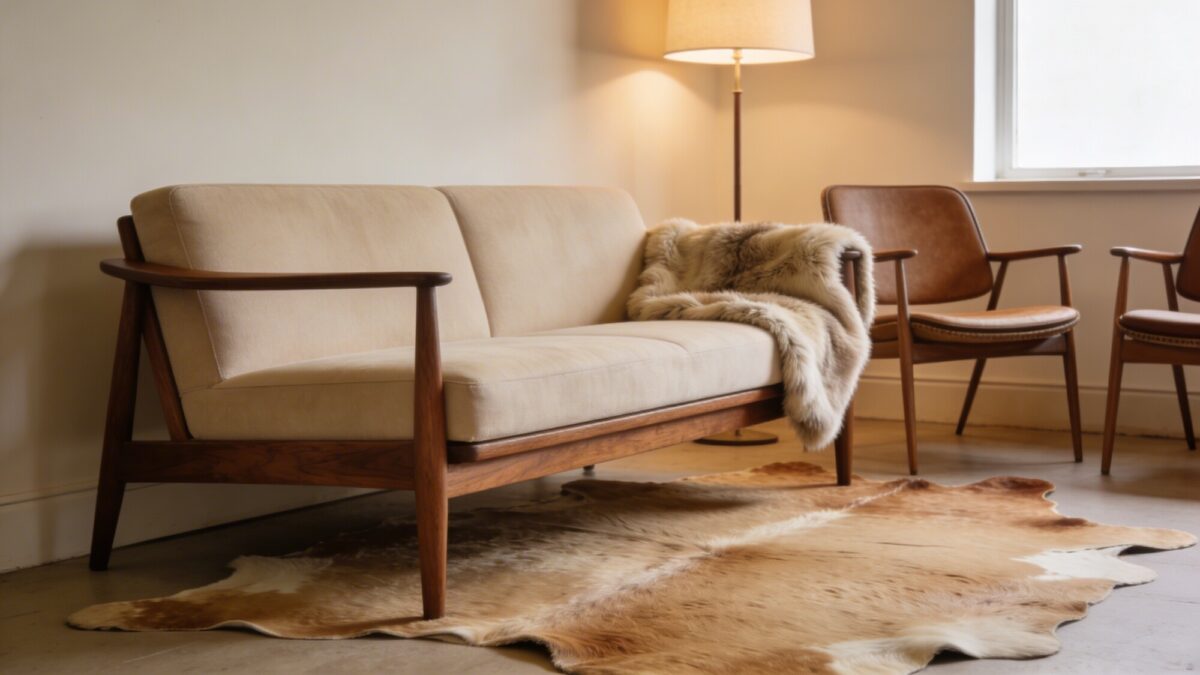
Cowhide rugs work well in a few distinct placement styles, depending on the effect you’re after.
- Under the coffee table. This keeps the room cohesive and clearly defines the seating zone, similar to how a standard area rug would function.
- As a standalone statement. Placing the rug in front of a fireplace or behind a low-profile sofa turns it into a striking focal point on its own.
- Layered over a larger rug. If your floor already has a busy pattern or you want more visual depth, layer the cowhide over a larger neutral base rug for texture without overwhelming the space.
Layering Tips for Maximum Impact
Start with a neutral base rug, then position the cowhide on top at a slight angle for visual interest rather than squaring it off perfectly. Keep your main furniture anchored on the base rug, and let the cowhide’s edge peek out casually. Matching your furniture’s metal or wood tones to the hide’s natural coloring helps tie the whole layout together.
Styling With Cowhide: What Works and What to Avoid

Cowhide’s natural texture pairs especially well with certain materials and doesn’t always play nicely with others.
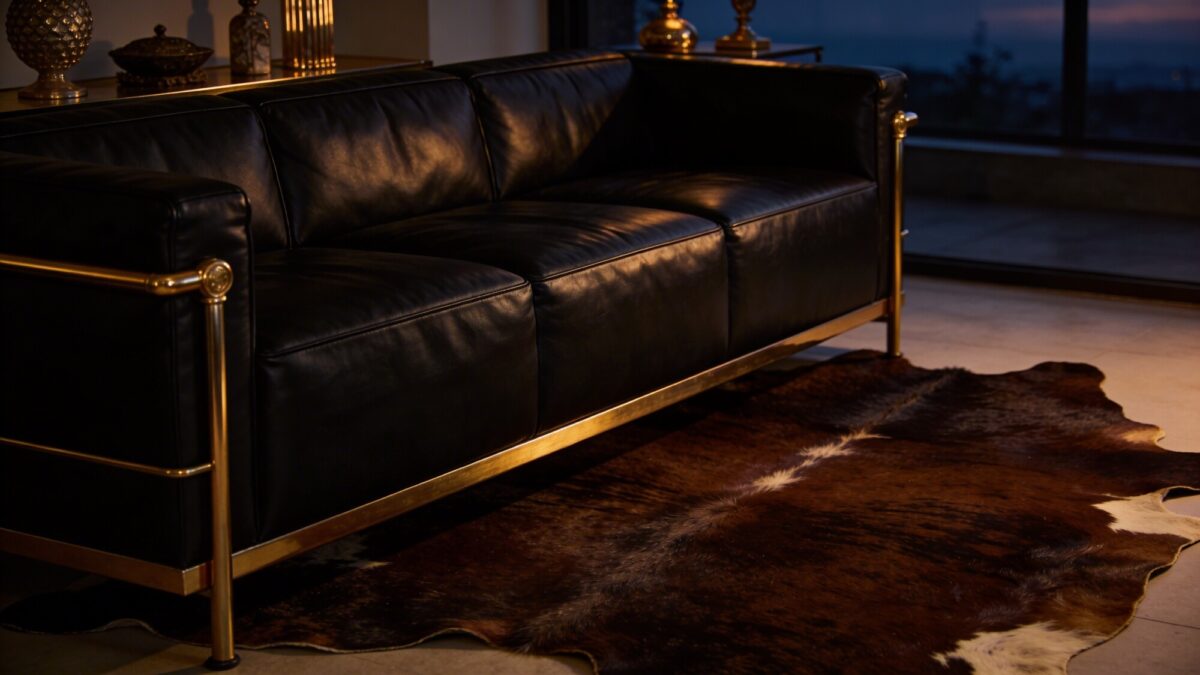
- Pair with leather and wood. The rugged, organic texture of cowhide complements leather chairs, oak coffee tables, and brass accents particularly well.
- Don’t compete with other prints. A cowhide rug is already a statement piece — avoid layering in other bold patterns in the same zone, which can make the space feel busy rather than curated.
- Balance color intentionally. If the rug is neutral, bring in color through cushions or art. If the rug itself is bold or dyed, keep the surrounding pieces calmer.
Color Coordination Cheat Sheet
| Cowhide Color | Pairs Well With |
|---|---|
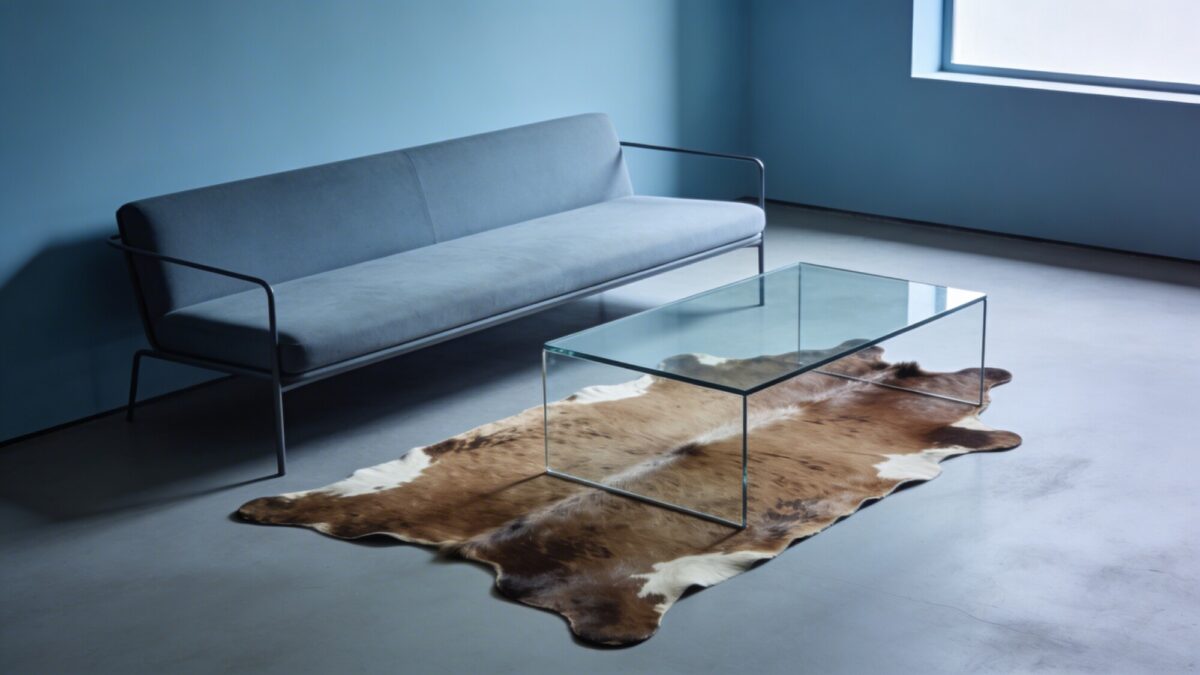
| Neutral (black, white, tan) | Moody blues, forest greens, charcoal |
| Whitewashed or pale hides | Warm woods, earthy ochre tones |
| Black or dyed hides | Brass, marble, deep jewel tones |
If you’re drawn to bold color pairings more broadly, our guide to bold red rug living room ideas explores a similarly dramatic direction that can work alongside or instead of cowhide.
Maintenance Made Simple
Caring for a cowhide rug is far less complicated than it might seem. Regular vacuuming with a brush attachment on low power, along with an occasional shake-out, keeps it looking sharp. Avoid soaking the hide in water, and never put it in a washing machine.
Cleaning Hacks That Actually Work
- Vacuum regularly using a brush attachment set to low power.
- Dust with a dry microfiber cloth for quick touch-ups between deeper cleans.
- For spills, blot — don’t rub — with a damp cloth and a touch of mild soap, then let it dry thoroughly.
Things to Consider Before You Buy
- Will the rug size comfortably fit under your sofa’s front legs?
- Does the hide’s color and pattern complement your existing furniture and wall tones?
- Are you prepared for occasional vacuuming and spot-cleaning as maintenance?
- Do you want a standalone statement piece, or a layered look over a base rug?
- If sourcing matters to you, have you checked the brand’s sourcing or certification claims?
Personal Touches: Making It Yours
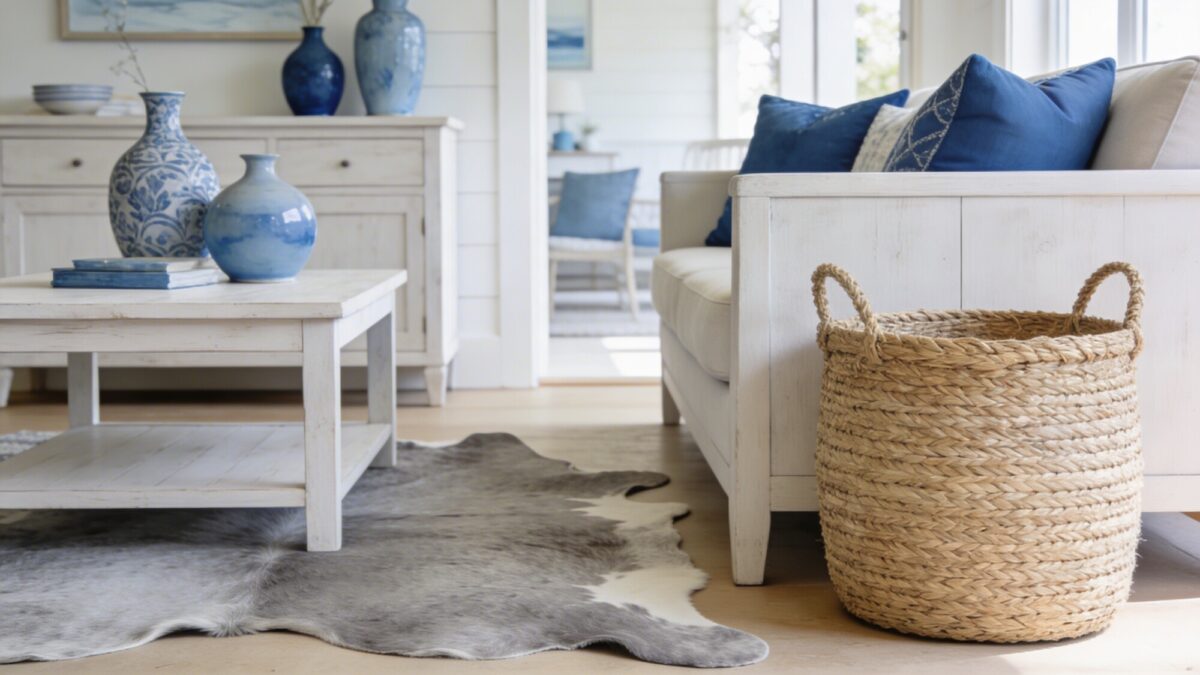
A cowhide rug works best as an anchor piece that you then layer personality around. A couple of throw pillows in tactile materials — knit, velvet, or linen — complement the rug’s texture without competing with it. A well-placed plant or a sculptural floor lamp can also play nicely off the hide’s natural, organic pattern.
Common Mistakes and How to Avoid Them
- Overloading the room with patterns. The cowhide rug is enough of a statement on its own — let other textiles stay calm and simple.
- Skimping on lighting. A cowhide rug’s texture and markings need light to really show. A mix of ambient, task, and accent lighting helps it stand out.
- Choosing the wrong size. Too small and the rug looks like an afterthought; too large and it can overwhelm the seating area.
FAQ: Your Cowhide Rug Questions, Answered
Is a cowhide rug kid- and pet-friendly?
Cowhide rugs are surprisingly durable, but it helps to stay balanced. Vacuum regularly, watch for snagging from pets’ claws, and consider keeping especially rough play areas elsewhere if wear is a concern.
Can I put a cowhide rug on carpet?
Yes. Position it so it sits neatly under the front legs of a sofa or seating cluster, and use a non-slip pad underneath if possible to prevent slipping and keep the hide lying flat.
Do cowhide rugs shrink or stretch over time?
Not typically. They’re a sturdy material, but it’s best to avoid prolonged exposure to direct heat or harsh sunlight, which can fade the color and dry out the hide.
How do I style a white cowhide rug without it looking dirty?
Regular cleaning helps most, but placement matters too — a white cowhide rug tends to look its best in bright rooms with good natural light and minimal surrounding clutter.
Are cowhide rugs ethical or environmentally friendly?
Many brands source hides as a byproduct of the meat industry, though practices vary between suppliers. If this is important to you, look for certifications or transparent sourcing information before buying.
Our Recommendation
A cowhide rug living room look is bold enough to give a space real energy, while still feeling warm and lived-in rather than gimmicky. It pairs well with almost any decor direction, from mid-century to industrial to coastal, which makes it a genuinely versatile investment rather than a one-trick style choice.
If you’re ready to try it, start small — a medium-sized rug, one layered texture, and a single metallic accent is usually enough to test the look before committing further. For more ideas on pairing rugs with different design styles, see our guide to mid-century modern living room rugs.