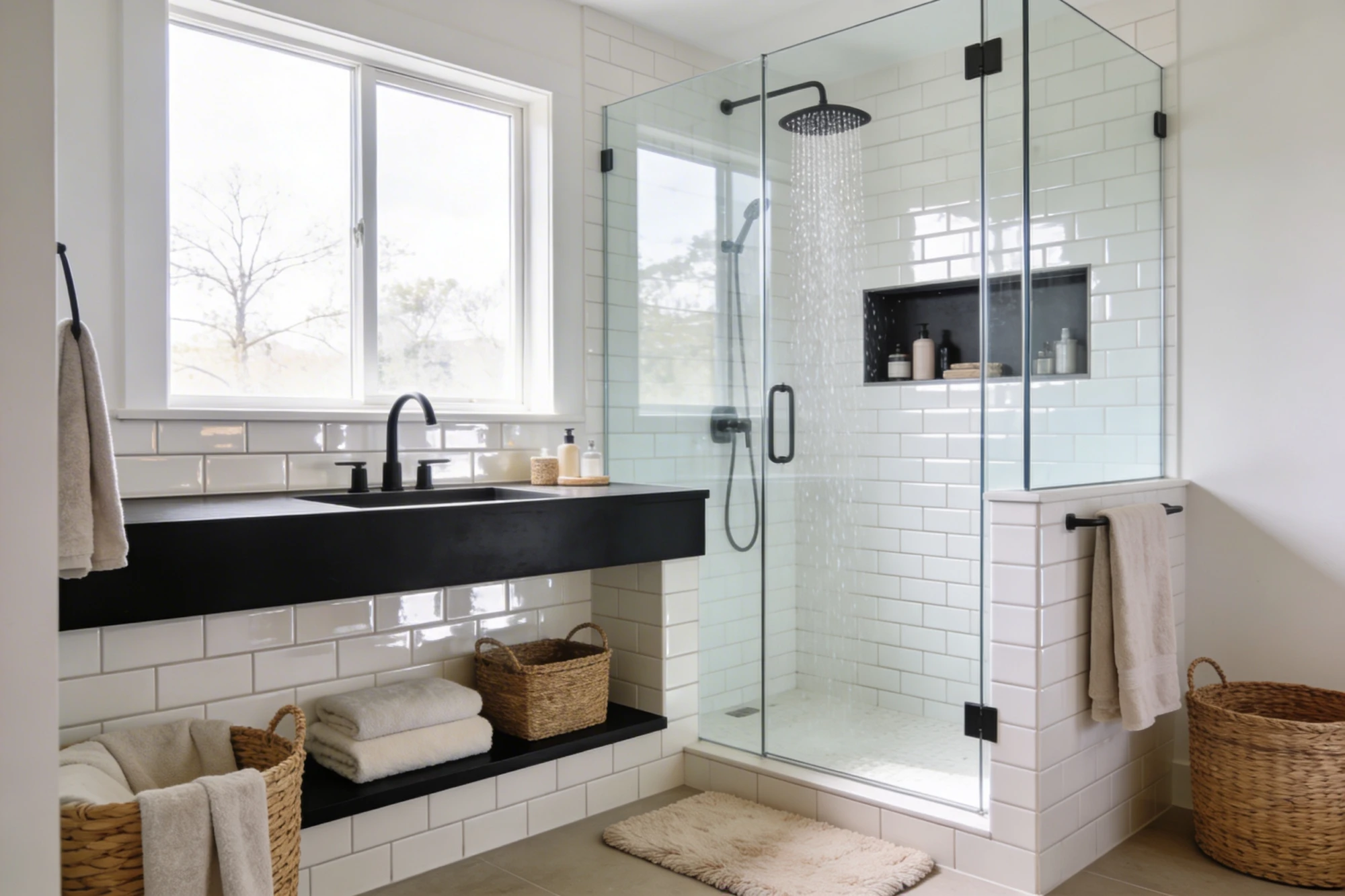
9 Bathroom Remodel Ideas That Wow on a Budget
Most bathroom remodel ideas people search for actually mean “how do I make this room feel new without ripping out plumbing.” That’s a fair goal — a full gut renovation is expensive and disruptive, and in a lot of bathrooms it’s not even necessary. If your layout works and your fixtures are sound, the changes that move the needle most are texture, lighting, storage, and a handful of surface-level swaps, not a new floor plan. For a lower-cost entry point specifically, our quick bathroom remodel upgrades guide covers changes that can happen in a weekend rather than a full project timeline.
The nine ideas below split roughly into two categories: things you can do yourself in a weekend, and things that need a contractor or at least a plumber for part of the job. Knowing which is which before you start matters more than most people realize — a lot of budget overruns come from underestimating which “simple swap” actually touches plumbing or electrical.
Quick Takeaways
- Lighting and storage upgrades typically deliver the most visible change per dollar spent — more than a full tile replacement in most cases.
- A floating vanity changes the whole feel of a small bathroom by opening up the floor line, but it usually requires moving or extending plumbing behind the wall, which pushes it into contractor territory.
- Anything involving the shower valve, drain, or toilet supply line needs a licensed plumber — DIY here risks water damage that costs far more than the upgrade itself.
- Color and pattern changes (accent walls, tile, mirrors) are the lowest-risk, highest-reversibility upgrades if you’re not sure yet what you want long-term.
- Dual-flush or low-flow fixtures pay for themselves gradually through the water bill, not immediately — treat them as a long-term swap, not a quick win.
1. Layer Textures Like a Pro
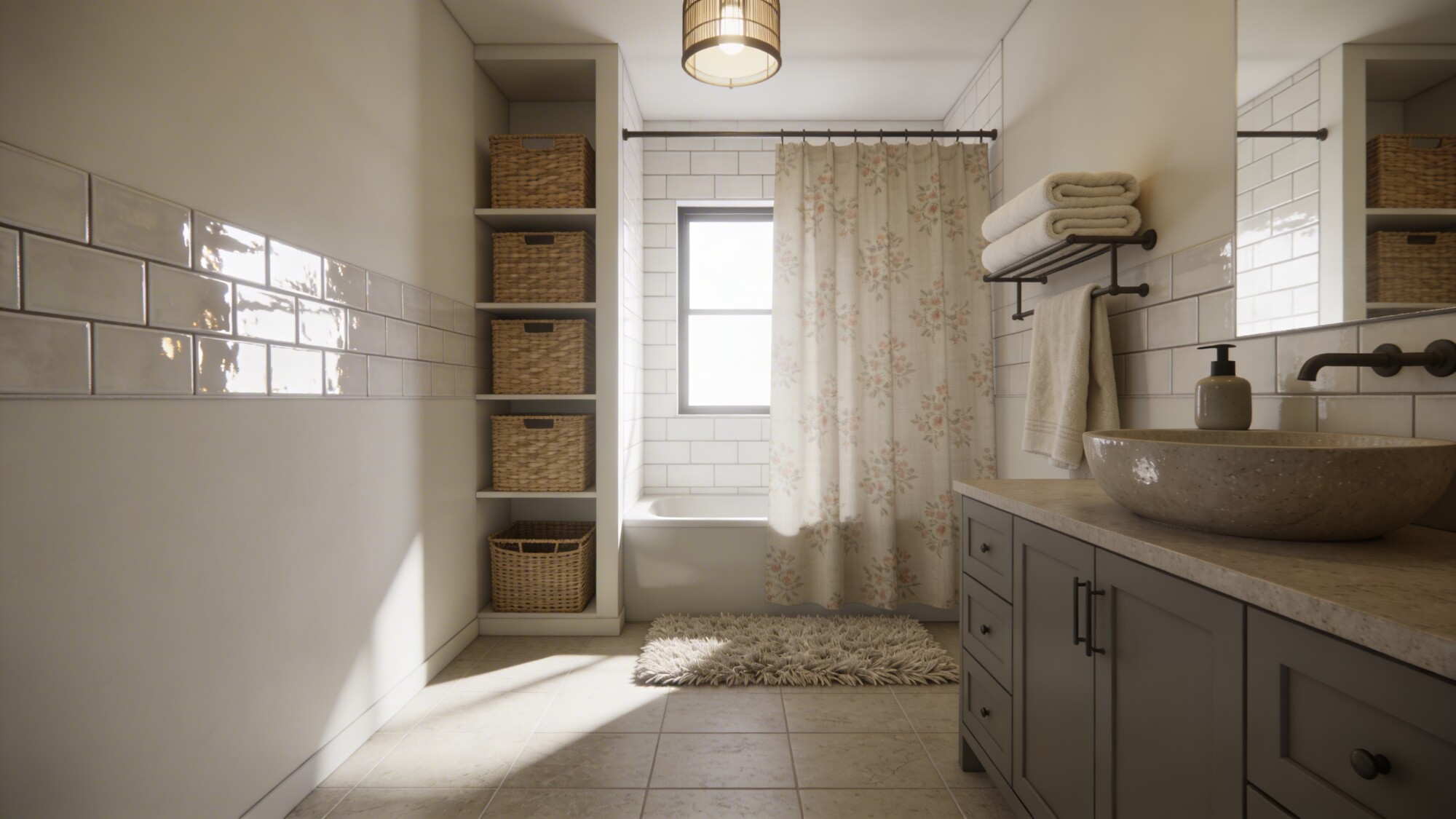
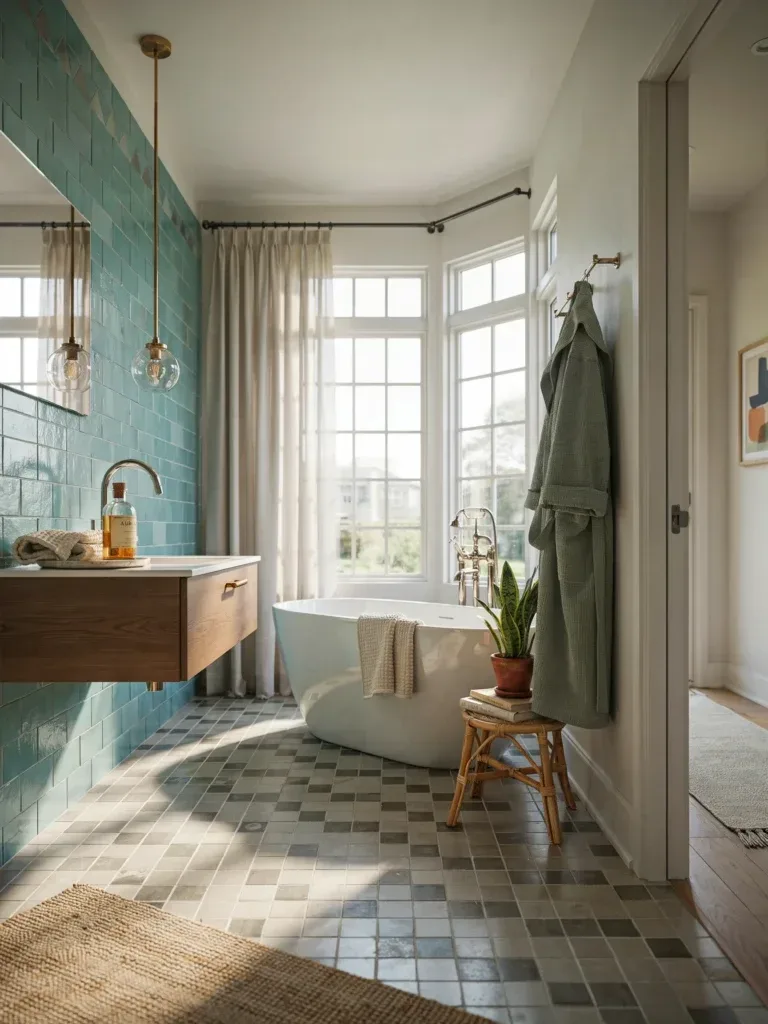
Texture does more for a bathroom’s feel than color does, and it’s one of the cheapest bathroom remodel ideas on this list because most of it involves swapping soft goods rather than fixtures. Pairing a matte floor tile with a glossy subway accent on one wall creates depth through light reflection alone — no demolition required if the tile’s already in place and you’re just adding an accent panel.
Where people overdo this: adding texture in five or six different materials at once — a woven rug, a patterned curtain, ribbed tile, a textured countertop, wicker storage, and a nubby bath mat all in the same small room reads as cluttered, not luxe. Pick two or three textures max and repeat them, rather than touching every surface.
- Matte ceramic floor tile paired with one glossy accent surface
- Woven baskets for open storage instead of enclosed cabinets
- Soft cotton towels and one plush bath mat as the tactile anchor
💡 Pro Tip: If you’re adding a textured accent wall in tile, keep it to one wall only — a full-room textured tile job usually costs 2–3x more than a single accent wall and reads as busier, not more luxurious.
2. Upgrade the Shower Without a Full Reno
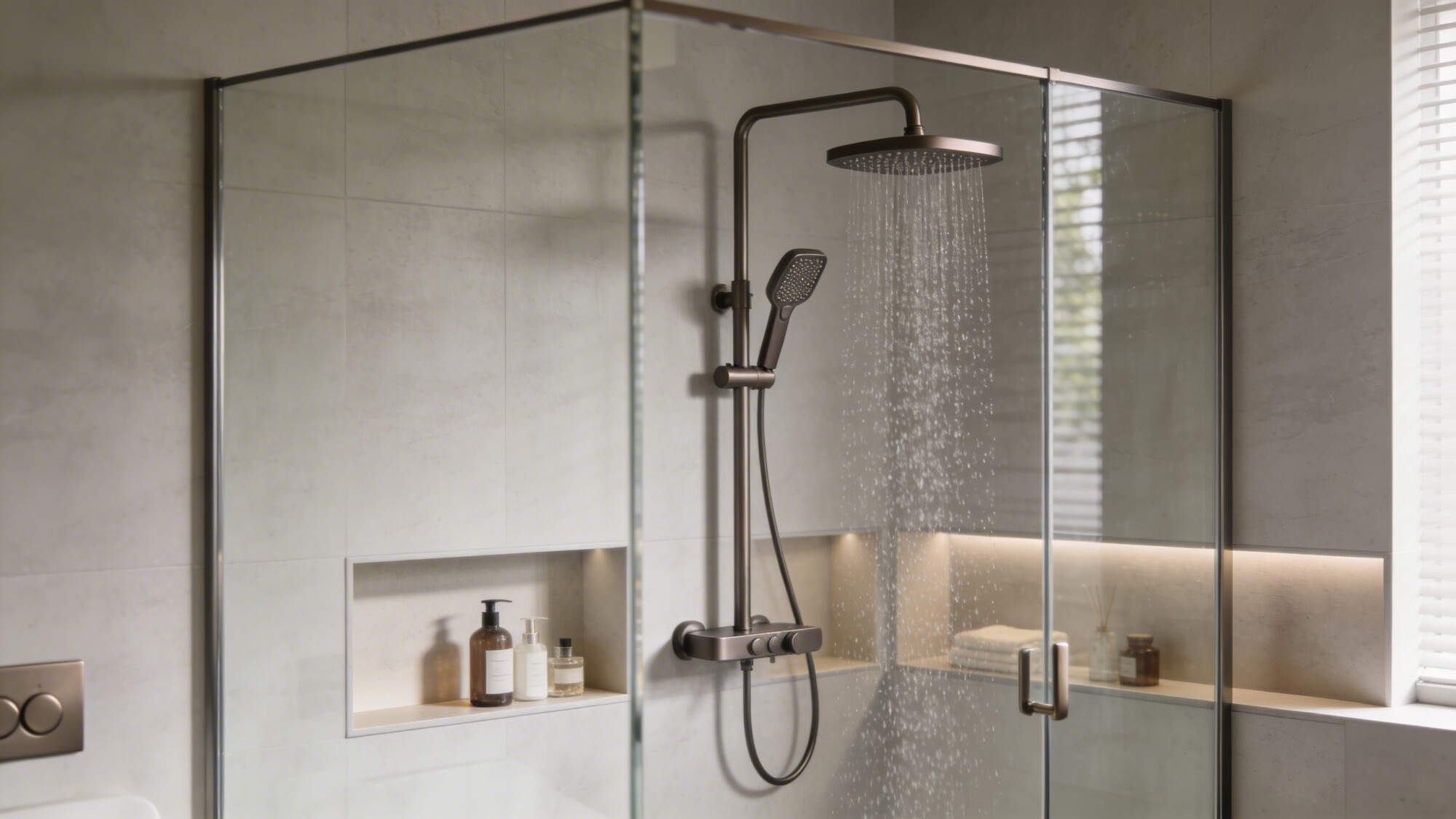
The shower is usually the room’s focal point, so upgrading it changes the whole bathroom’s feel even if nothing else moves. A rain shower head with an adjustable handheld wand is a straightforward swap if your existing plumbing rough-in is in a workable spot — but check that before you buy, since relocating the shower arm means opening the wall.
Frameless glass replacing a shower curtain or framed door is the single biggest visual upgrade in this list for the buck, but it’s not a pure DIY job for most people — glass panels are heavy, and getting the seal right against leaks takes real experience. This is a case where the “shower upgrade” people picture (glass, rain head, built-in niches) is really three separate projects of very different difficulty.
- Frameless glass enclosure for an open, unobstructed look
- Rain shower head paired with an adjustable handheld wand
- Built-in tiled niches to replace freestanding shower caddies
3. Add Color Through Strategic Accents
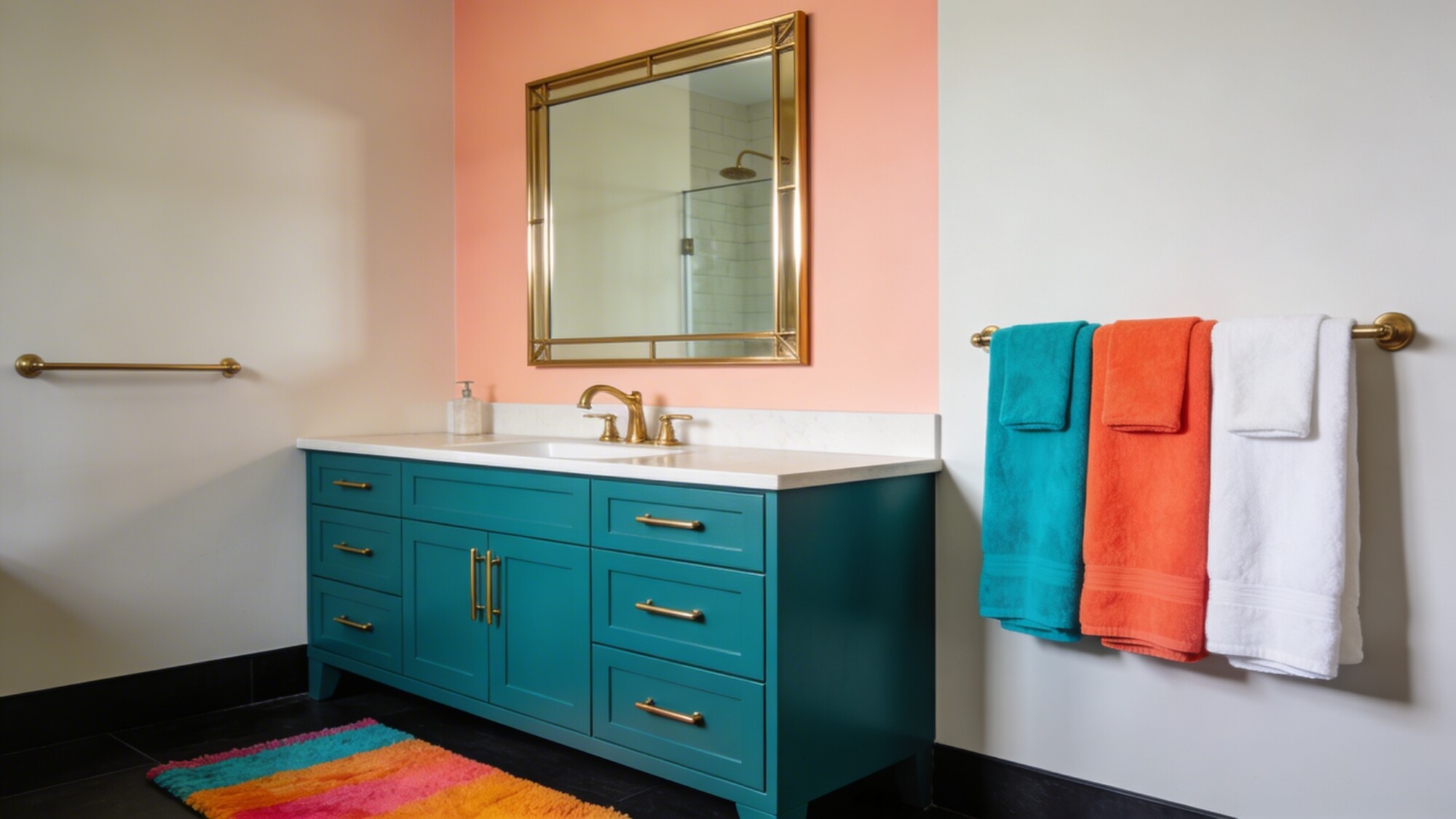
A painted vanity is the single lowest-cost, highest-impact swap on this whole list — it’s a weekend project, it’s fully reversible, and it changes the room’s entire mood without touching a single pipe. Matte teal, deep green, or navy against brass hardware reads as intentional and current; the same vanity in the original builder-grade white or oak often looks dated by comparison even when nothing else in the room has changed.
The real decision here isn’t which color — it’s calm versus punch, and that choice should drive everything else. A bold vanity paired with a loud accent wall fights itself; a bold vanity against calm neutral walls lets the vanity actually read as the statement piece.
- Bold vanity color or a single accent wall, not both at full saturation
- Brass or matte black hardware to add contrast against the paint
- Coordinating towels and a small rug to tie the palette together without overcommitting
💡 Pro Tip: Test your vanity paint on the actual cabinet doors, not a wall swatch — cabinet-grade paint and wall paint read differently under bathroom lighting, and a color that looks right on the wall sample can look flat or too dark once it’s on the cabinet finish.
4. Build in Smart Storage That Actually Gets Used
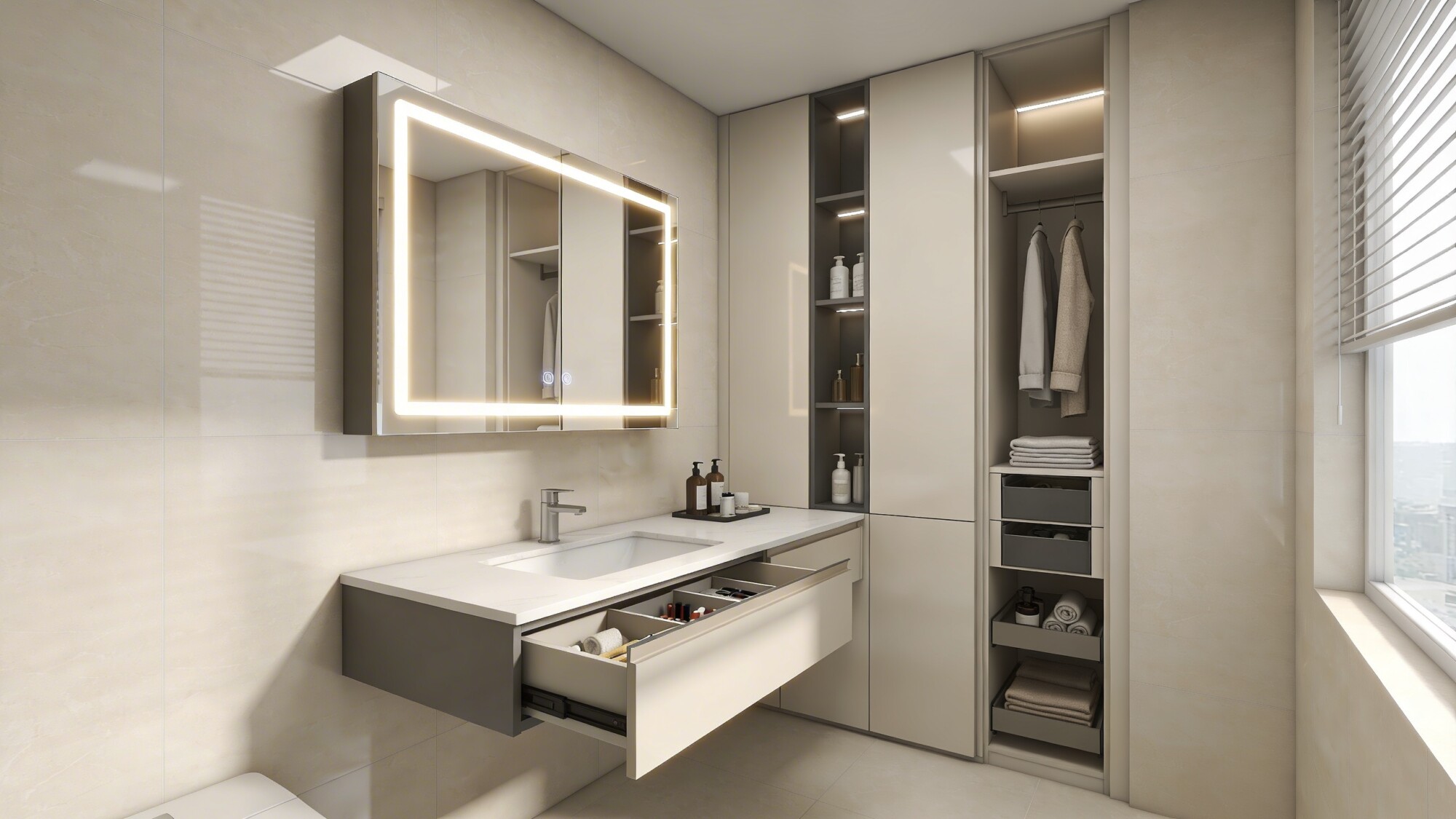
A cluttered countertop is usually a storage design problem, not a discipline problem — people don’t put things away when there’s nowhere convenient to put them. An illuminated medicine cabinet solves two problems at once: it hides daily-use items behind a door and it doubles as a light source near the mirror, which most builder-grade bathrooms are missing.
Pull-out bins inside vanity cabinets make a real difference for anyone who’s tired of kneeling and digging through a dark cabinet for something in the back. This one’s genuinely DIY-friendly if your existing vanity has the depth for it — most hardware stores sell drop-in organizer kits that don’t require replacing the cabinet itself.
- Illuminated medicine cabinet in place of a plain mirror
- Pull-out bins or drawer organizers inside existing vanity cabinets
- Vertical storage — shelving above the toilet or beside the vanity — to use height instead of floor space
5. Consider a Floating Vanity for an Airier Feel
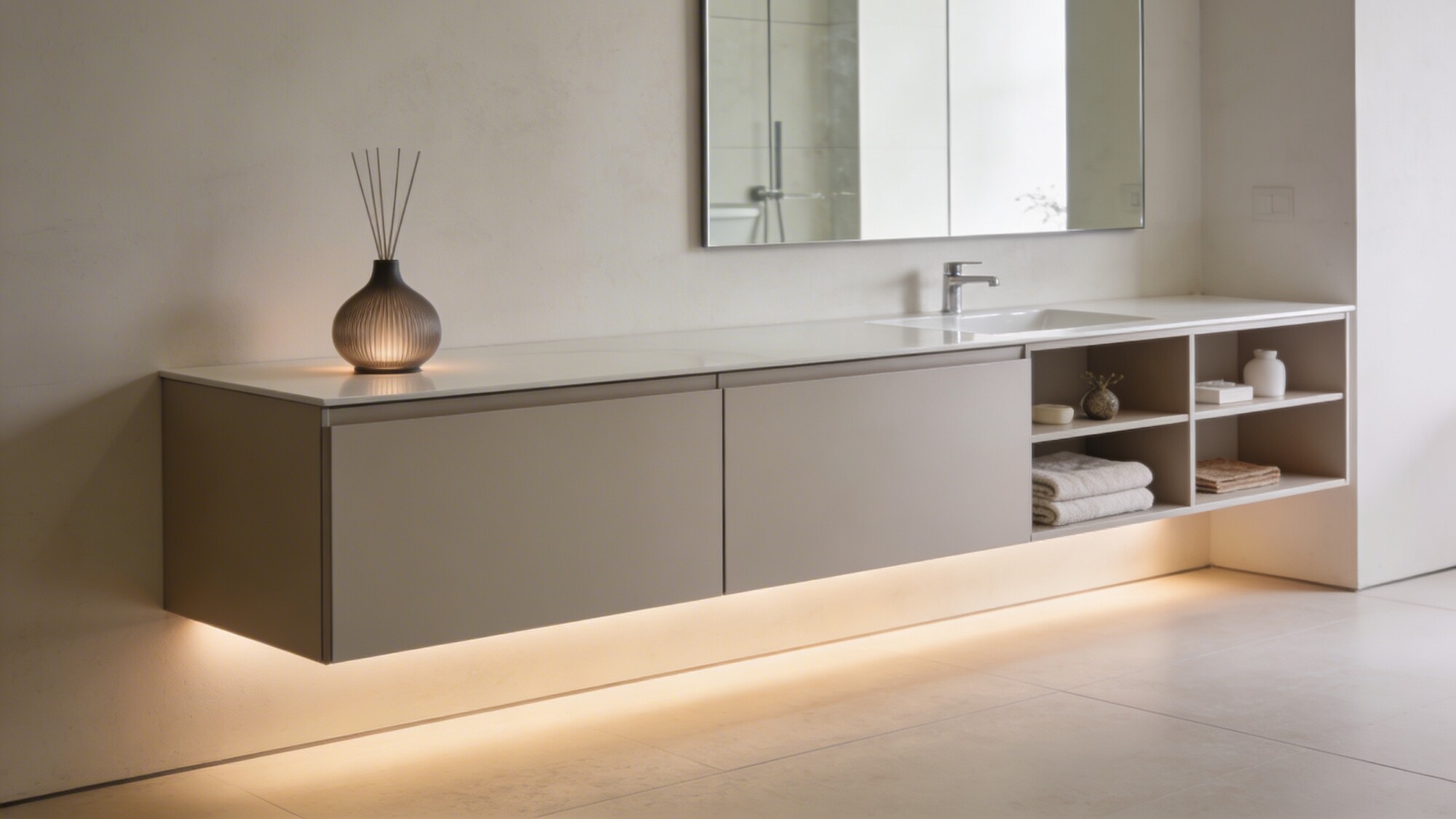
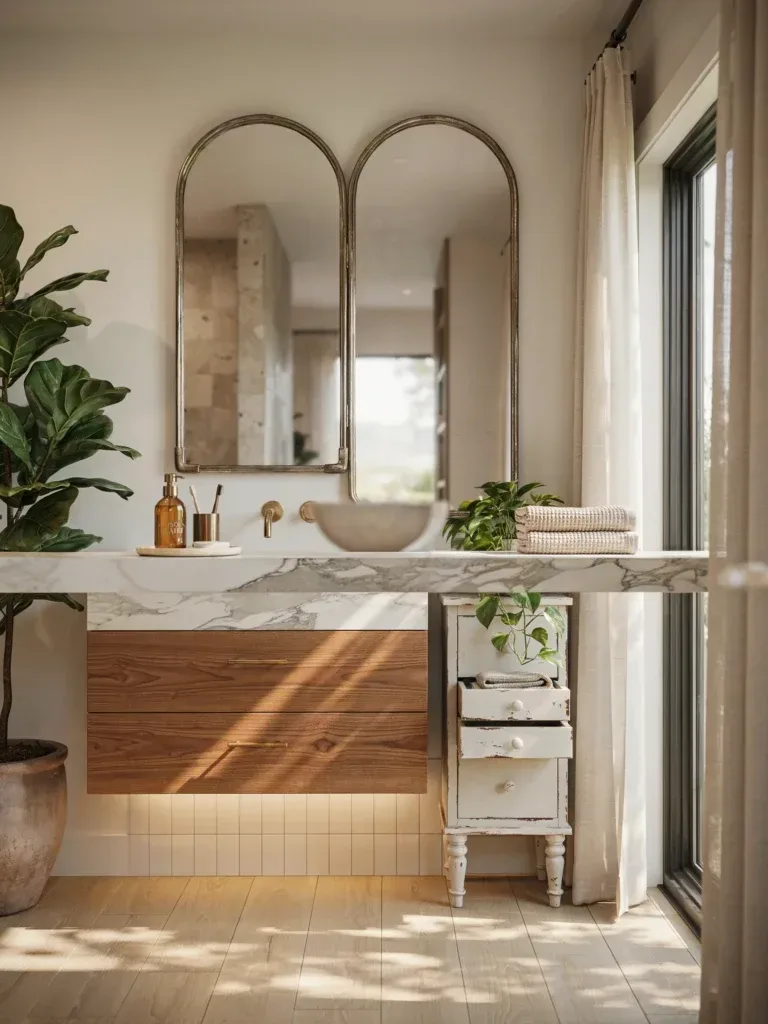
A floating vanity opens up the floor line, which makes a small bathroom read larger without changing a single square foot of actual space — it’s one of the few visual tricks in remodeling that genuinely works as advertised. Matte finish doors are worth the small upcharge over gloss here, since gloss shows every water spot and fingerprint under bathroom lighting.
Be aware this is a plumbing-adjacent project, not a pure surface swap: mounting a vanity off the floor usually means the drain and supply lines need to be reworked to sit behind the wall instead of below the cabinet. It’s a good upgrade, but budget it as a contractor job, not a weekend DIY.
- Matte finish doors to resist fingerprints and water spots
- Soft under-vanity LED lighting for a floating, glowing effect
- Open shelving beside or beneath the vanity for curated, visible storage
6. Make Eco-Friendly Swaps That Pay Off Over Time
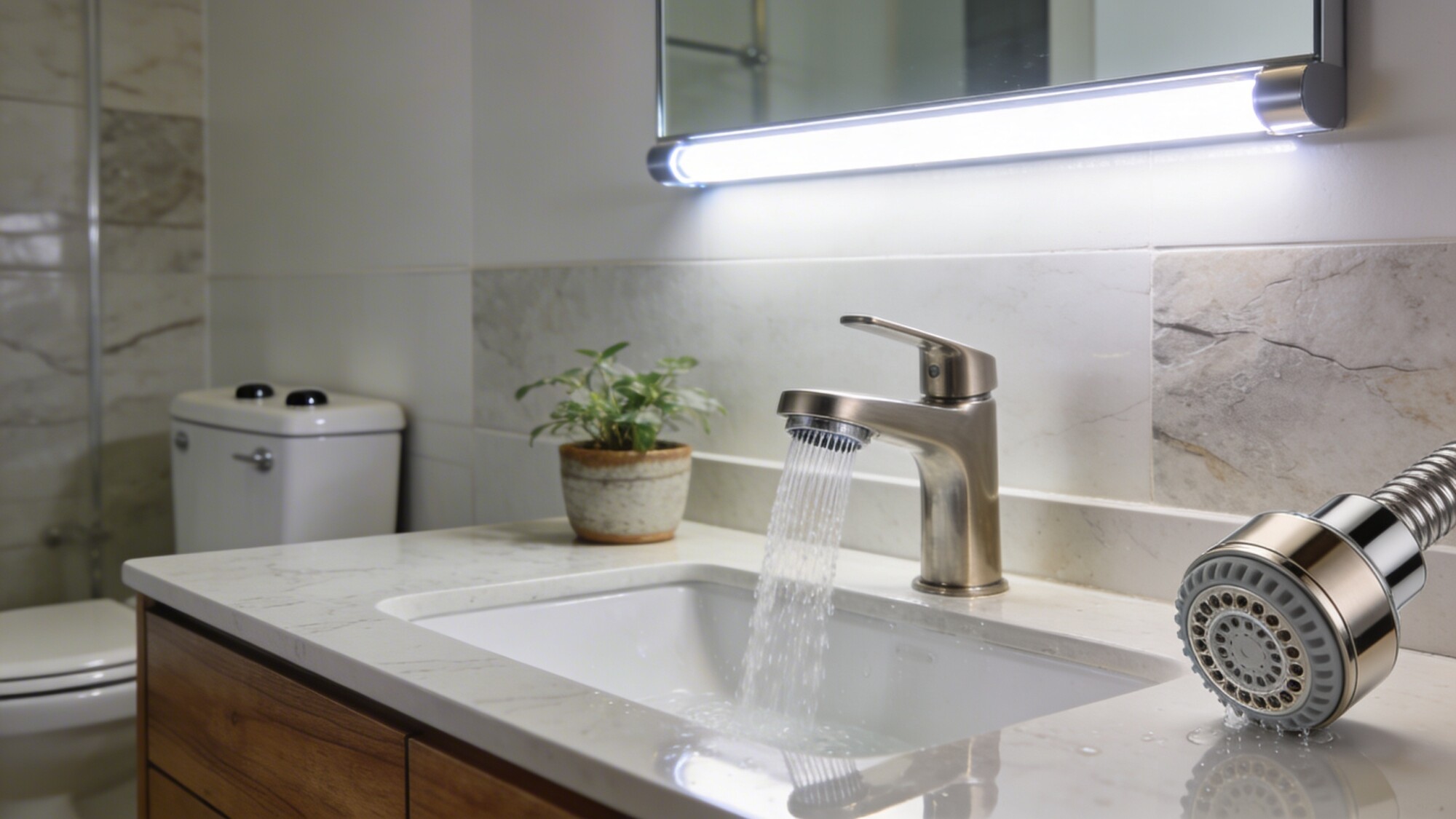
These aren’t the flashiest bathroom remodel ideas, but they’re the ones that keep saving money long after the project’s done. Low-flow faucet aerators are the cheapest fix in this entire list — often under $10 and a five-minute install — while a dual-flush or pressure-assisted toilet is a bigger swap that needs a plumber if your existing rough-in doesn’t match the new unit’s specs.
Don’t feel obligated to swap everything at once. Aerators and LED bulbs are near-zero-risk, immediate installs; the toilet and any pressure-related fixture changes are worth doing when you’re already having plumbing work done for something else, so you’re not paying a separate service call just for that one swap.
- Low-flow faucet aerators — cheap, fast, and reversible
- Dual-flush or pressure-assisted toilet for a bigger long-term water saving
- LED vanity lighting in place of incandescent or older fluorescent bulbs
💡 Pro Tip: Check your current toilet’s rough-in measurement (the distance from the wall to the center of the floor drain, usually 10, 12, or 14 inches) before buying a replacement — mismatched rough-ins are the most common reason a “simple” toilet swap turns into an unplanned plumbing job.
7. Use Lighting to Change the Whole Mood
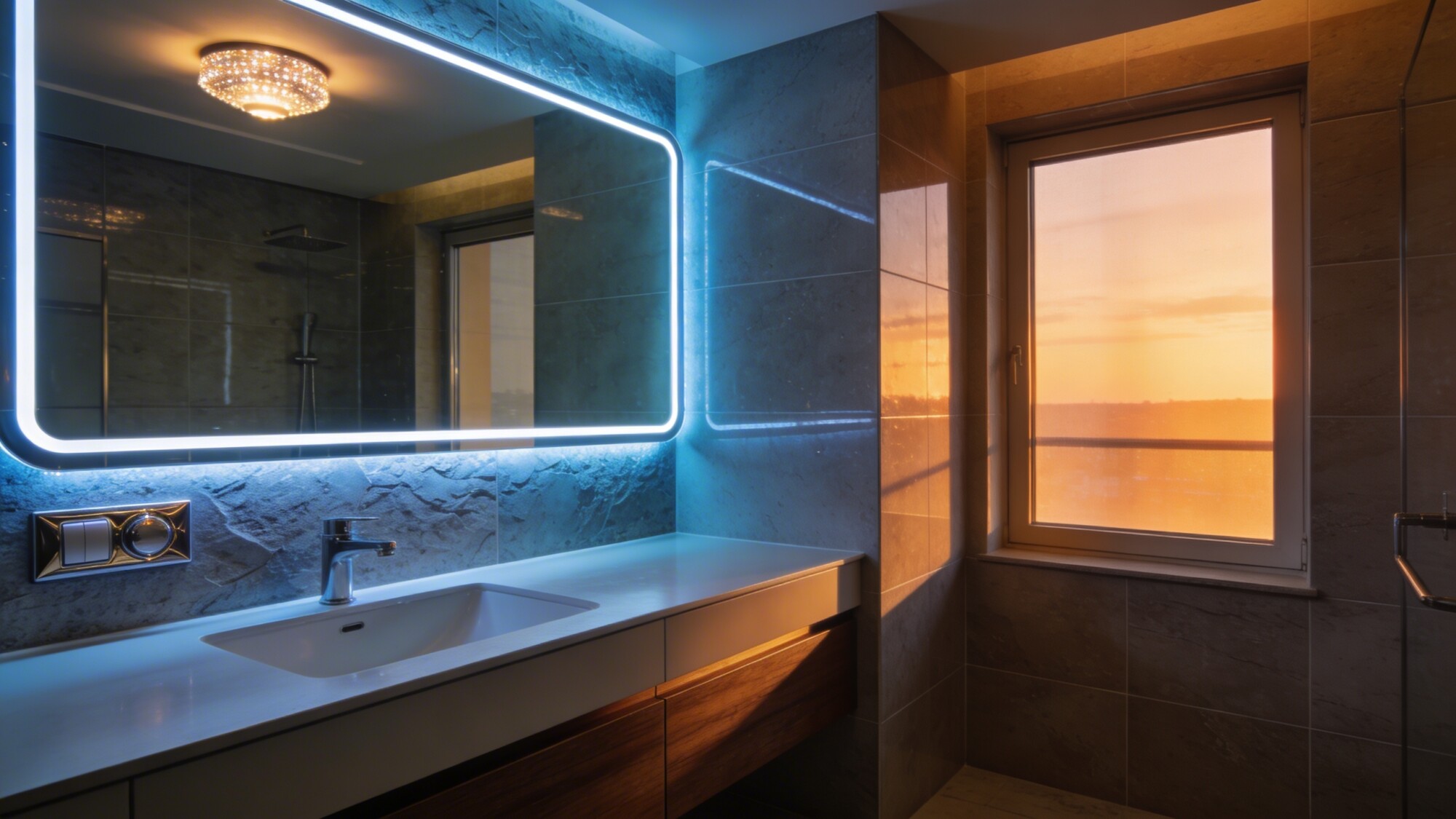
Bad lighting is the most common reason a decent bathroom photographs — and feels — flat, and it’s also the cheapest fix on this list relative to the impact. Layering three light types (ambient overhead, task lighting at the mirror, and accent lighting on texture or tile) does more for the room than any single fixture upgrade on its own.
A backlit or edge-lit mirror solves the task-lighting problem most bathrooms have: a single overhead fixture casts shadows under your chin and eyes exactly where you need even light for grooming. Dimmer switches are a small add that makes a bigger difference than people expect — cooler light in the morning, warmer light in the evening, without buying two separate fixtures.
- Layered lighting — ambient, task, and accent — rather than a single overhead fixture
- A backlit or edge-lit mirror for even, shadow-free task lighting
- Dimmer switches to shift color temperature and brightness by time of day
8. Try Tactile Tile Patterns for a Custom Feel
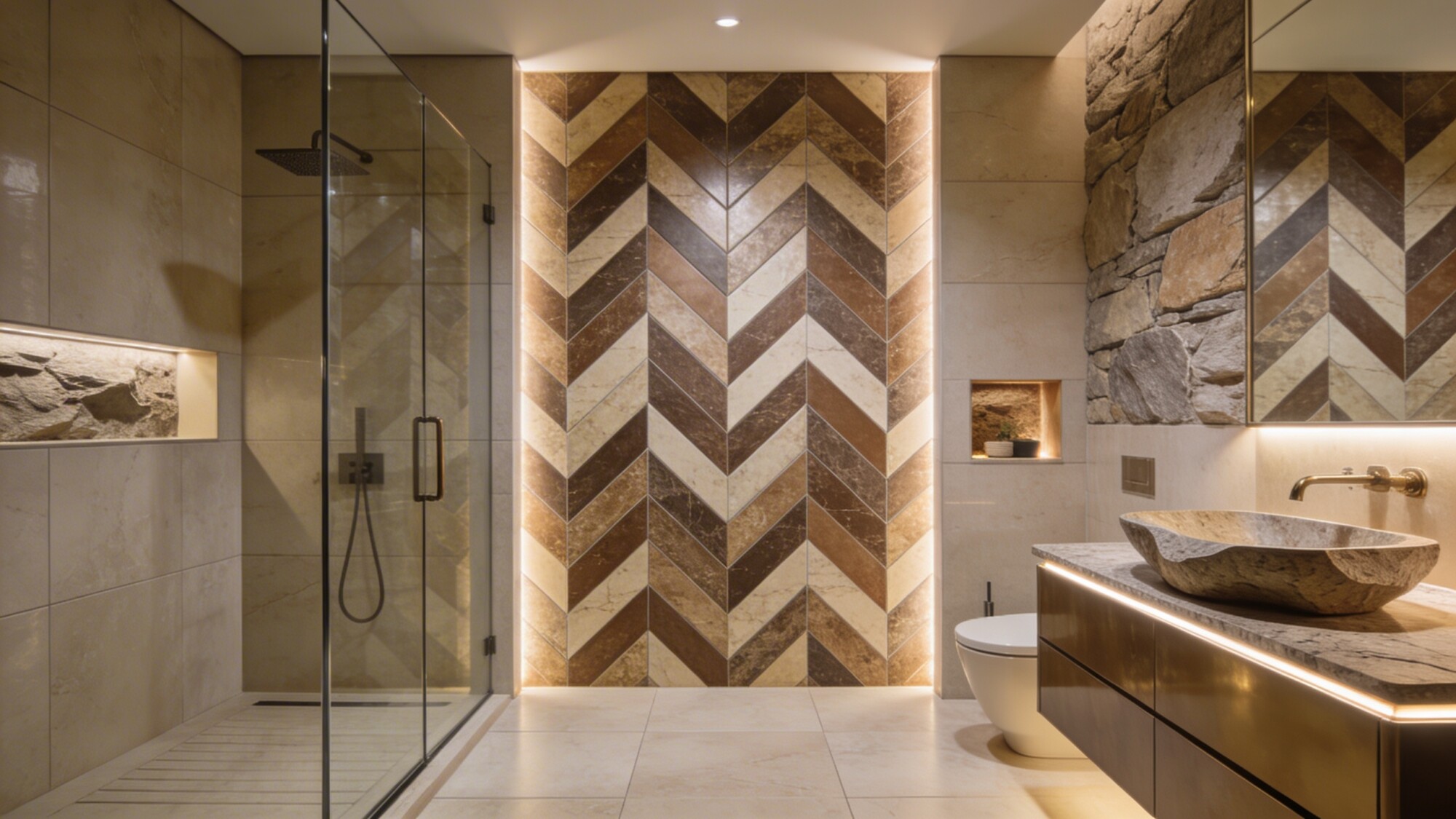
A herringbone or chevron pattern on one accent wall gives a bathroom a custom, designed feel that a single flat tile never quite achieves, and it’s one area where committing to one bold choice beats spreading a modest budget across several smaller changes. Large-format tile elsewhere in the room reduces grout lines, which cuts down on both visual busyness and long-term cleaning.
The trade-off worth knowing: pattern tile like herringbone takes noticeably longer to install than a straight lay, because of the cuts and alignment involved, and that labor time shows up directly in the quote. If budget’s tight, patterned tile on one accent wall (not the whole room) gets you most of the visual impact for a fraction of the labor cost.
- Herringbone or chevron pattern as a single accent wall, not a full-room treatment
- Large-format tile elsewhere to minimize grout lines and cleaning
- Textured porcelain that mimics stone for a higher-end look without natural stone’s price or maintenance
9. Don’t Underestimate the Mirror
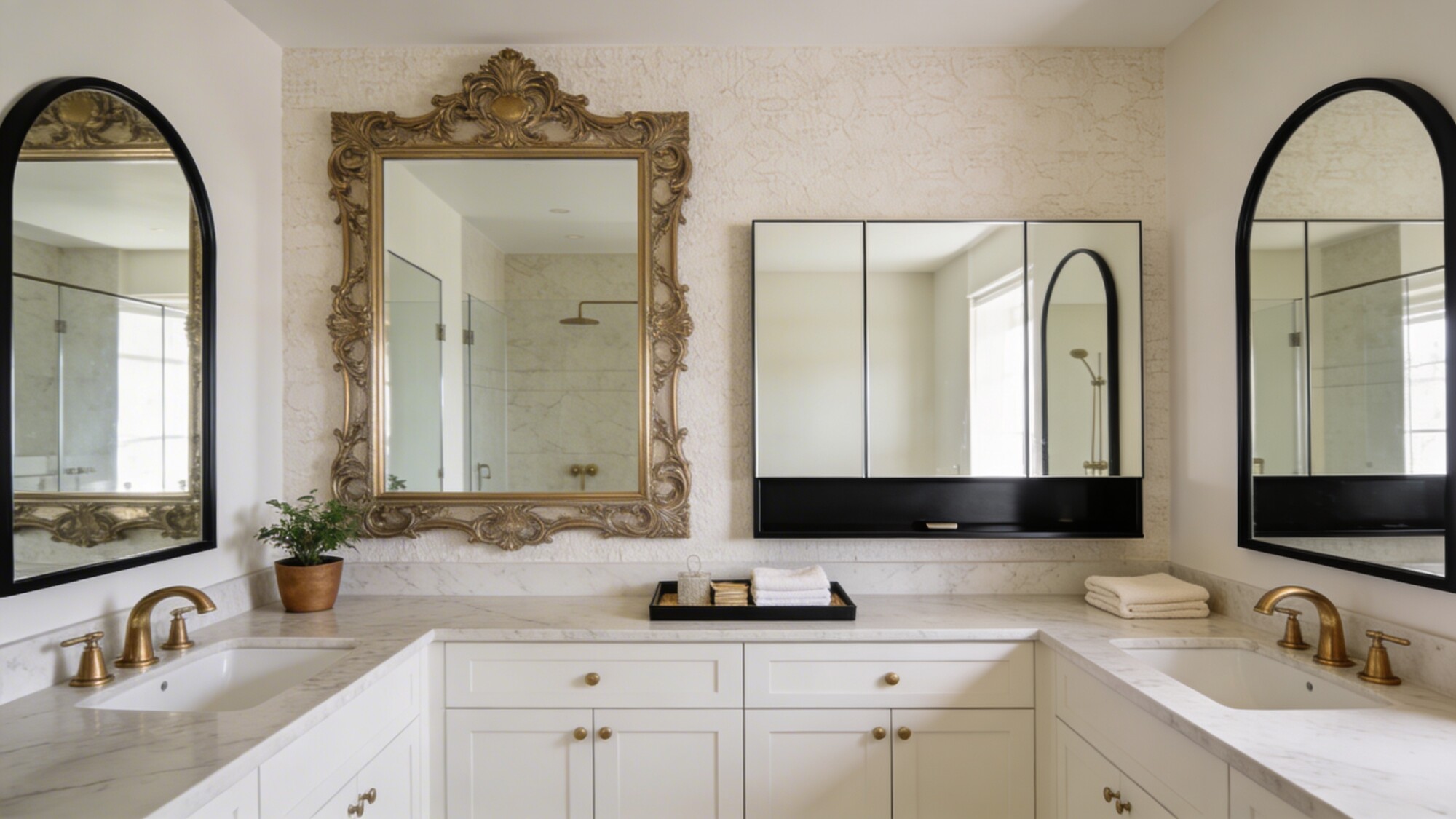
A mirror swap is one of the fastest ways to change a bathroom’s whole character, because it sits at eye level and does double duty reflecting light and the rest of the room’s design. An ornate frame reads boutique-hotel; a frameless edge-lit mirror reads modern and minimal — the same vanity and tile underneath can feel like two entirely different rooms depending on which direction you go.
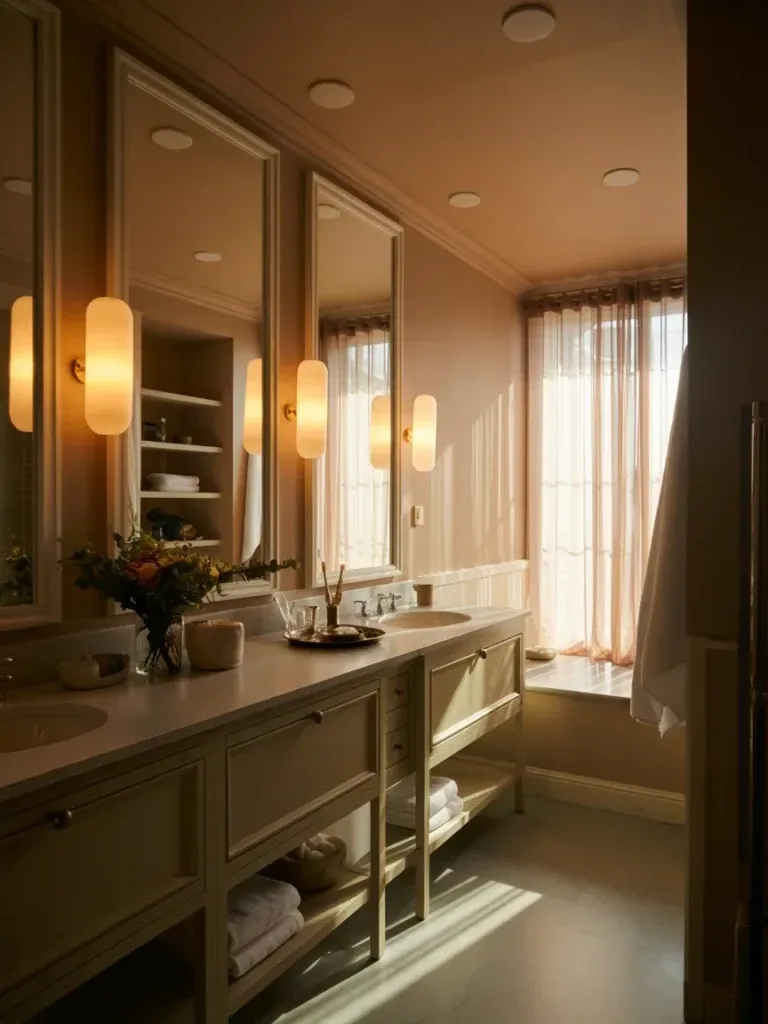
Two smaller matching mirrors flanking a double vanity, instead of one large mirror stretched across both sinks, tends to look more intentional and hotel-like — it’s a detail that costs about the same either way but changes how “designed” the room feels.
- Ornate framed mirror for a boutique feel, or frameless for minimalism
- A mirrored medicine cabinet to combine reflection with hidden storage
- Two matching mirrors over a double vanity instead of one continuous mirror
DIY vs. Contractor: What’s Actually Feasible Yourself
| Upgrade | Typical Skill Level | Plumbing/Electrical Involved |
|---|---|---|
| Painted vanity, accent wall | Beginner DIY | None |
| Faucet aerators, LED bulb swaps | Beginner DIY | Minimal — no shutoff needed |
| Mirror swap, medicine cabinet | Intermediate DIY | Minor electrical if cabinet is illuminated |
| Frameless glass shower enclosure | Professional recommended | None, but precision and weight make DIY risky |
| Floating vanity, dual-flush toilet | Professional required | Plumbing rework behind the wall |
Things to Consider Before You Start
- Layout vs. surface changes: if your existing plumbing layout works, prioritize surface-level upgrades (paint, lighting, mirrors, tile accents) before considering anything that moves fixtures.
- Ventilation: if you’re adding a frameless glass shower or upgrading to a rain head, confirm your existing exhaust fan is rated for the room’s square footage — better showers mean more steam.
- Sequencing: tile and vanity work should happen before final paint and mirror installs, not after — it’s the most common ordering mistake in a phased remodel.
- Water shutoff access: before any project touching a supply line, confirm you know where the shutoff valve is and that it actually works — a stuck shutoff turns a small swap into an emergency call.
Frequently Asked Questions
What’s the single best bathroom remodel idea for the money?
Lighting. A layered lighting setup — ambient, task, and accent — changes how the entire room feels for a fraction of what a tile or vanity replacement costs, and most of it can be done without touching plumbing.
Can I install a floating vanity myself?
Only if your existing plumbing rough-in already sits at the right height and position for a wall-mounted unit. In most bathrooms it doesn’t, which means moving the drain and supply lines behind the wall — that part is a plumber’s job.
Is a frameless glass shower worth the upgrade?
It’s the highest visual-impact swap on this list, but it’s not a beginner DIY project — the glass is heavy, and a poor seal leads to leaks. Budget it as a professional install rather than a weekend project.
How do I avoid overdoing texture or pattern?
Cap yourself at two or three materials or patterns total in one bathroom, and repeat them rather than introducing a new texture on every surface. If you’re adding a bold tile pattern, keep the rest of the room — paint, fixtures, textiles — deliberately calm.
Do eco-friendly fixtures actually save meaningful money?
Aerators and LED lighting pay for themselves quickly since they’re low-cost with an immediate reduction in use. A dual-flush or pressure-assisted toilet saves more over time but has a longer payback period — it’s worth doing when you’re already replacing the fixture, not as a standalone project purely for savings.
Our Take
If your budget and time are limited, start with paint, lighting, and a mirror swap — none of it touches plumbing, all of it is reversible, and together they change more about how the room feels than most people expect from surface-level work. Save the shower enclosure and floating vanity for when you’re ready to bring in a contractor, since both genuinely need one to be done safely and correctly.
If your bathroom is on the smaller side, our small bathroom remodel ideas guide has more space-specific approaches to several of these same upgrades, and the bathroom floating shelf ideas roundup is a good next stop if the storage section above is the piece you’re most focused on solving.